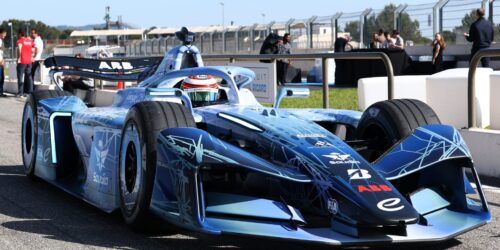
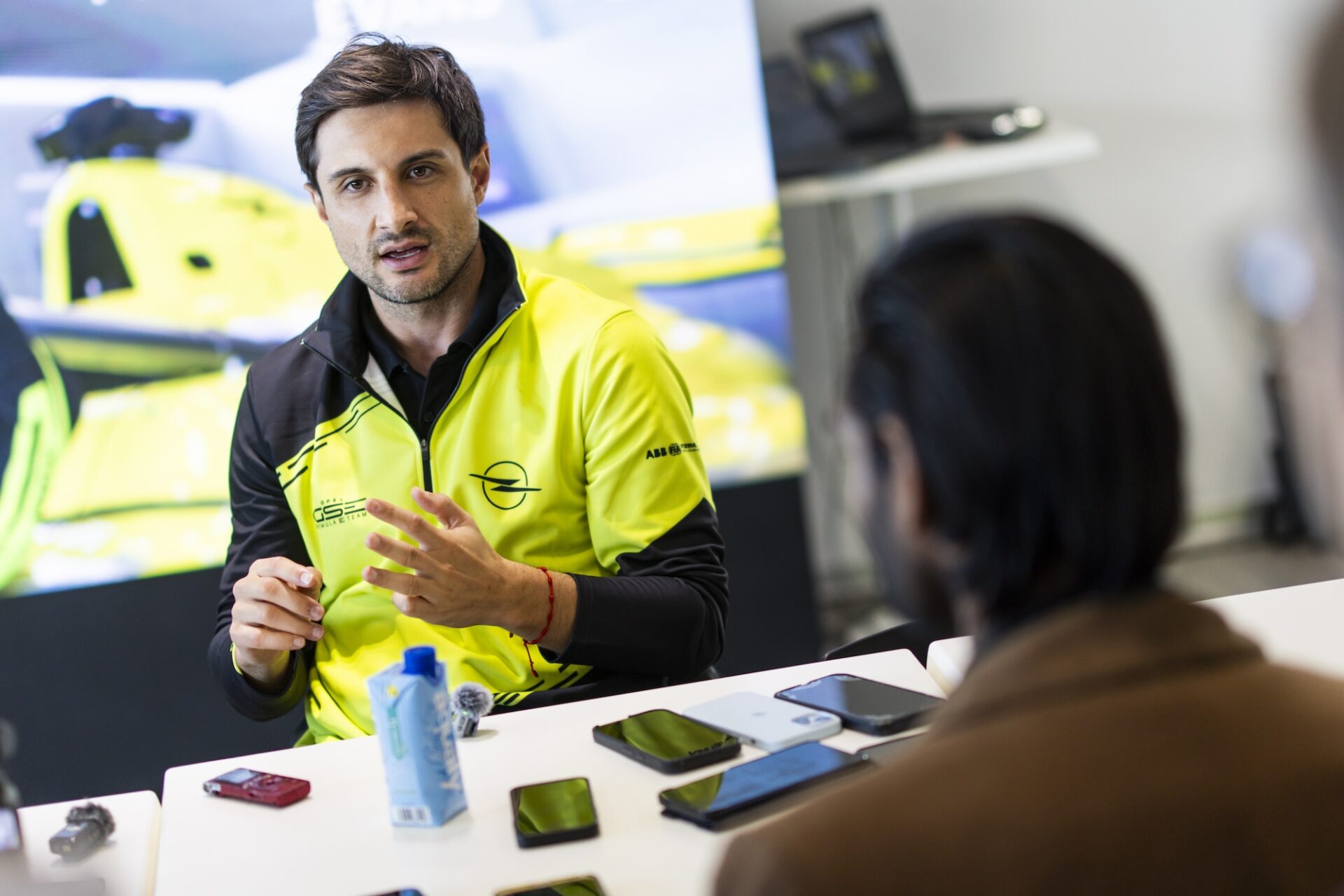
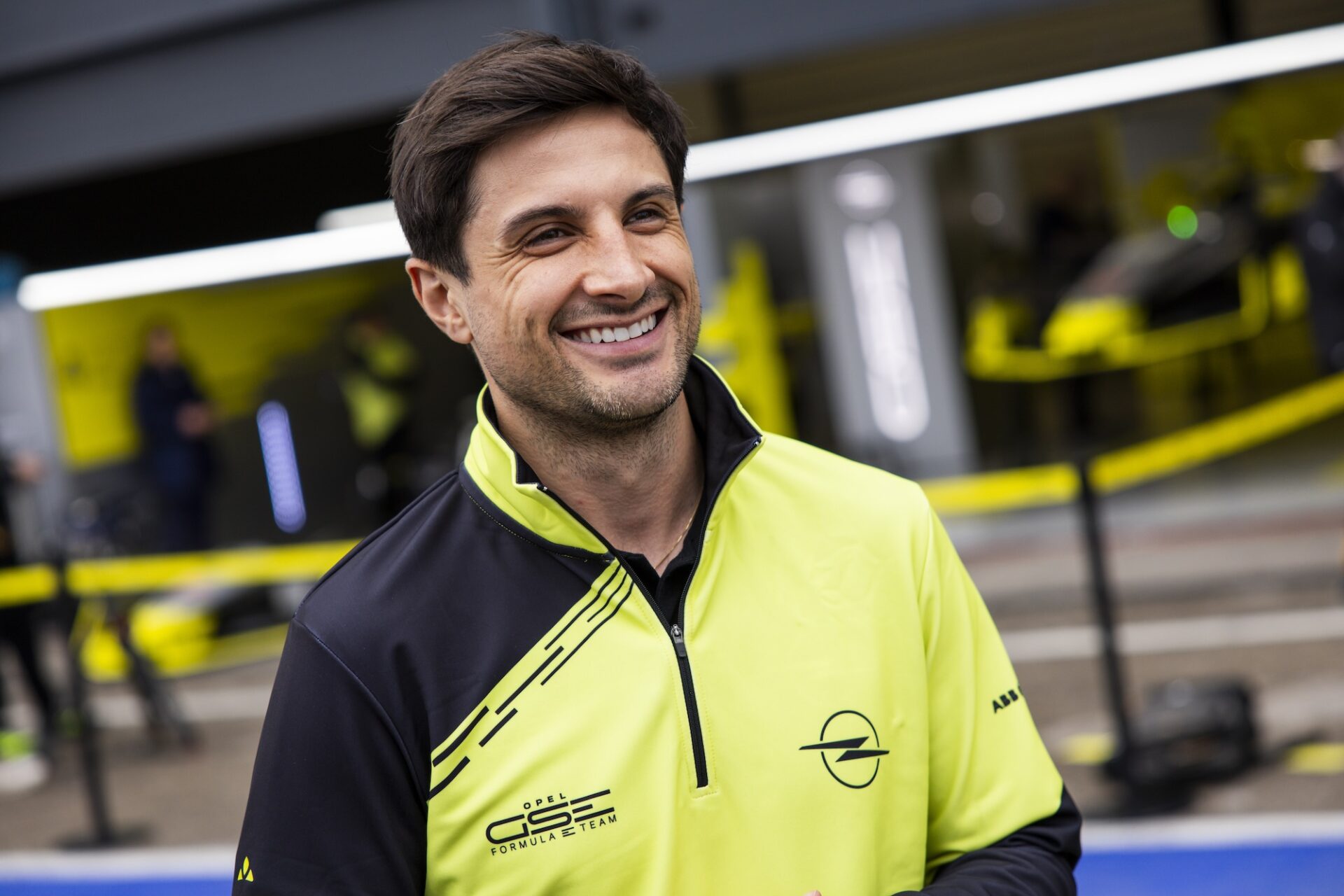
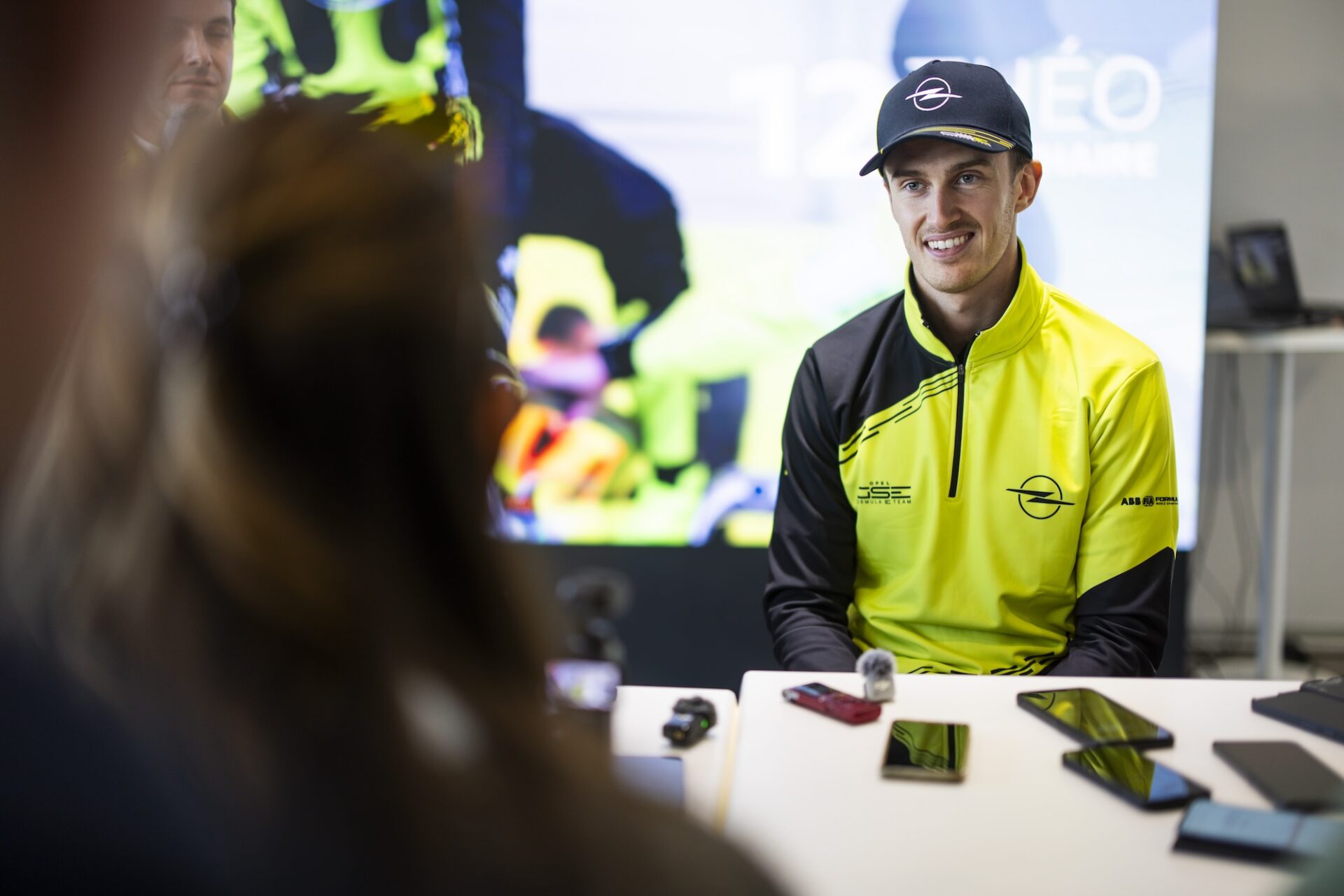
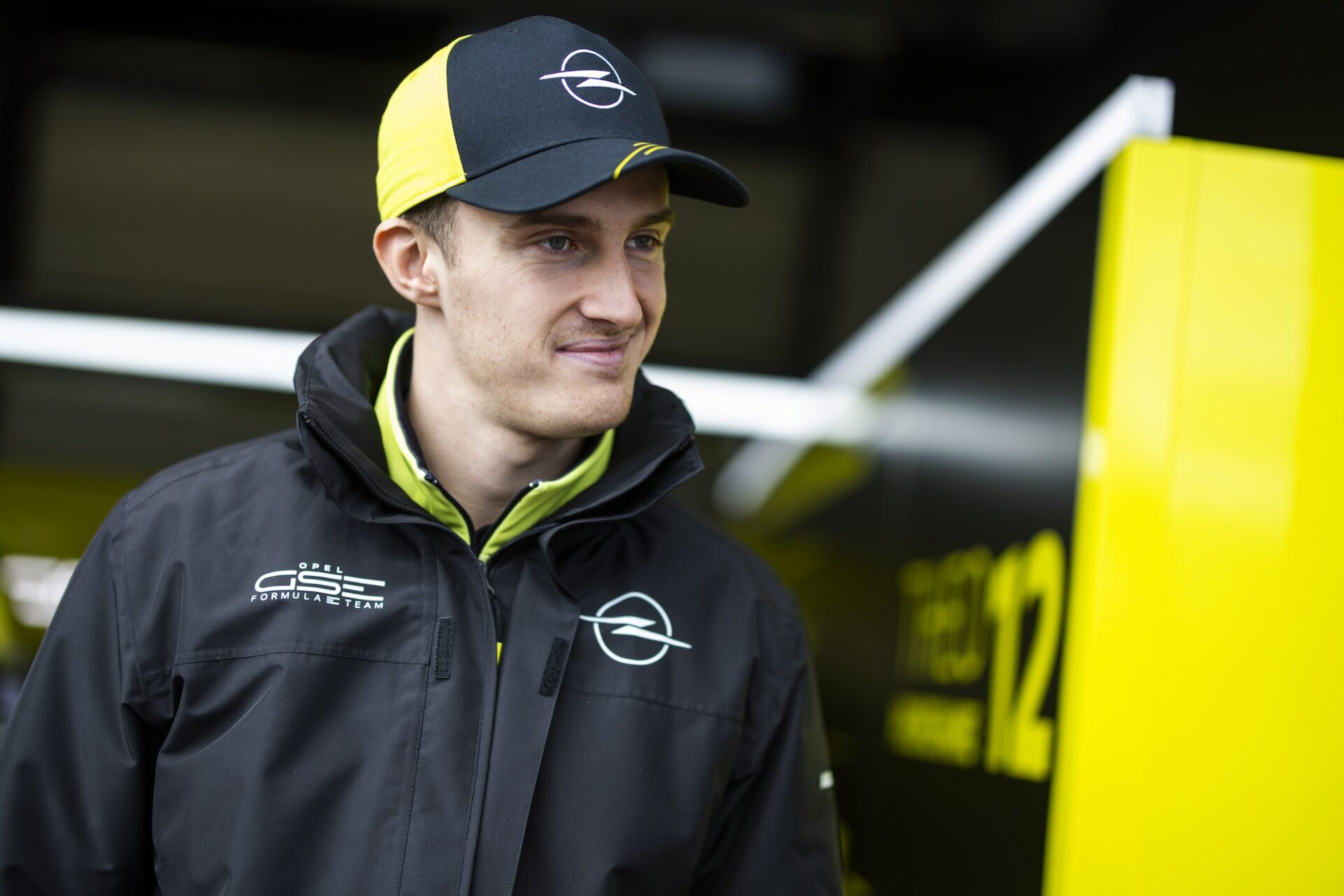
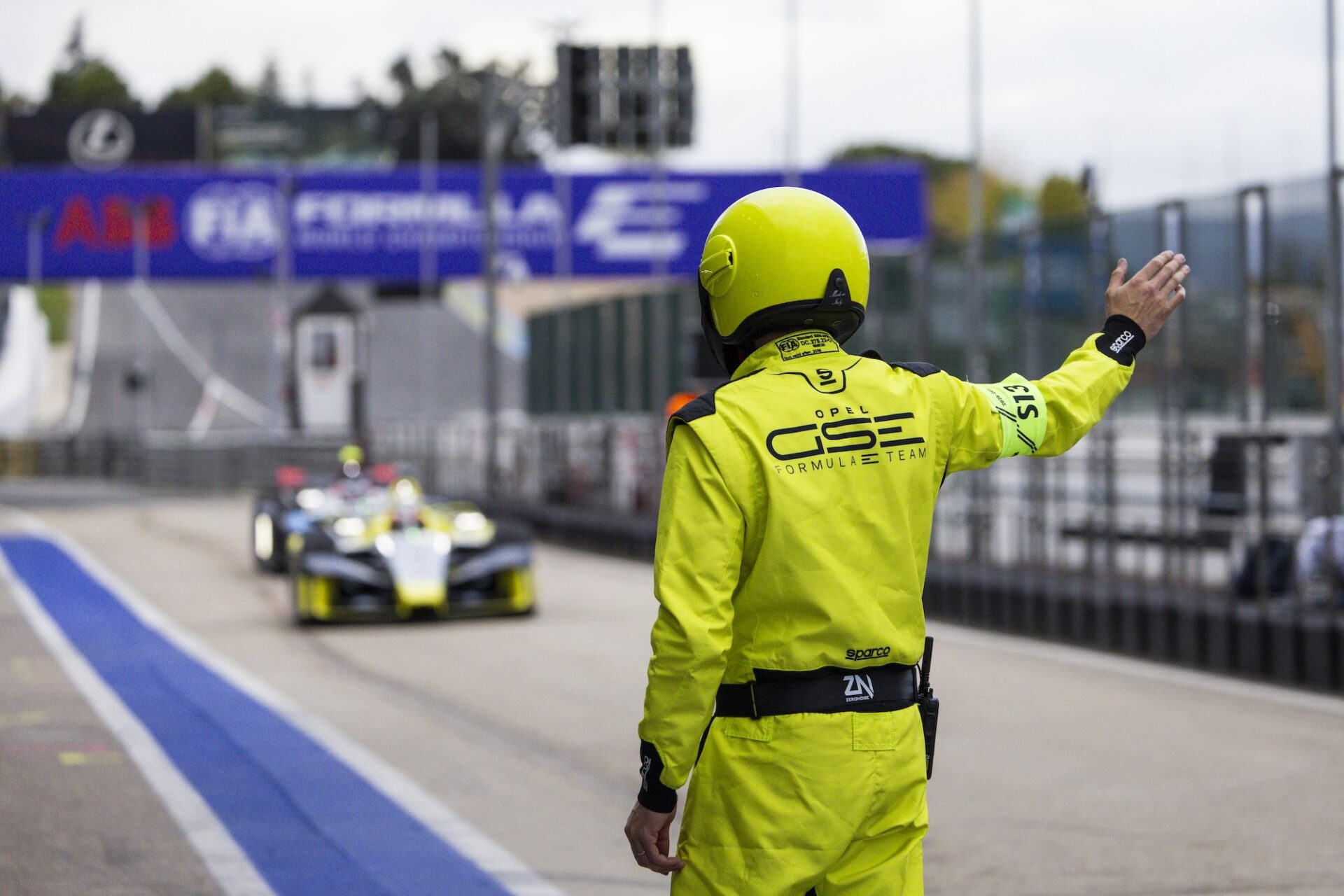
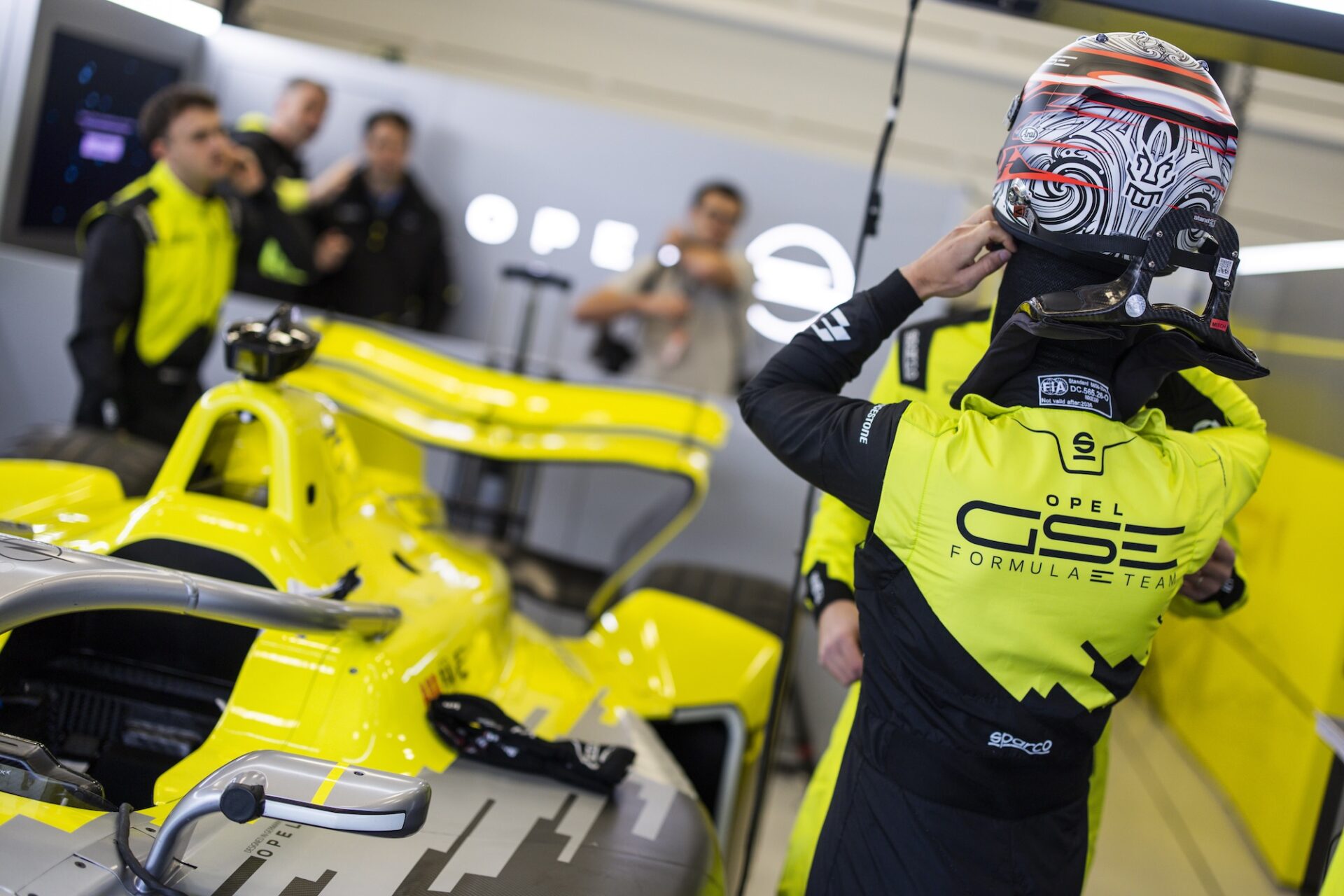
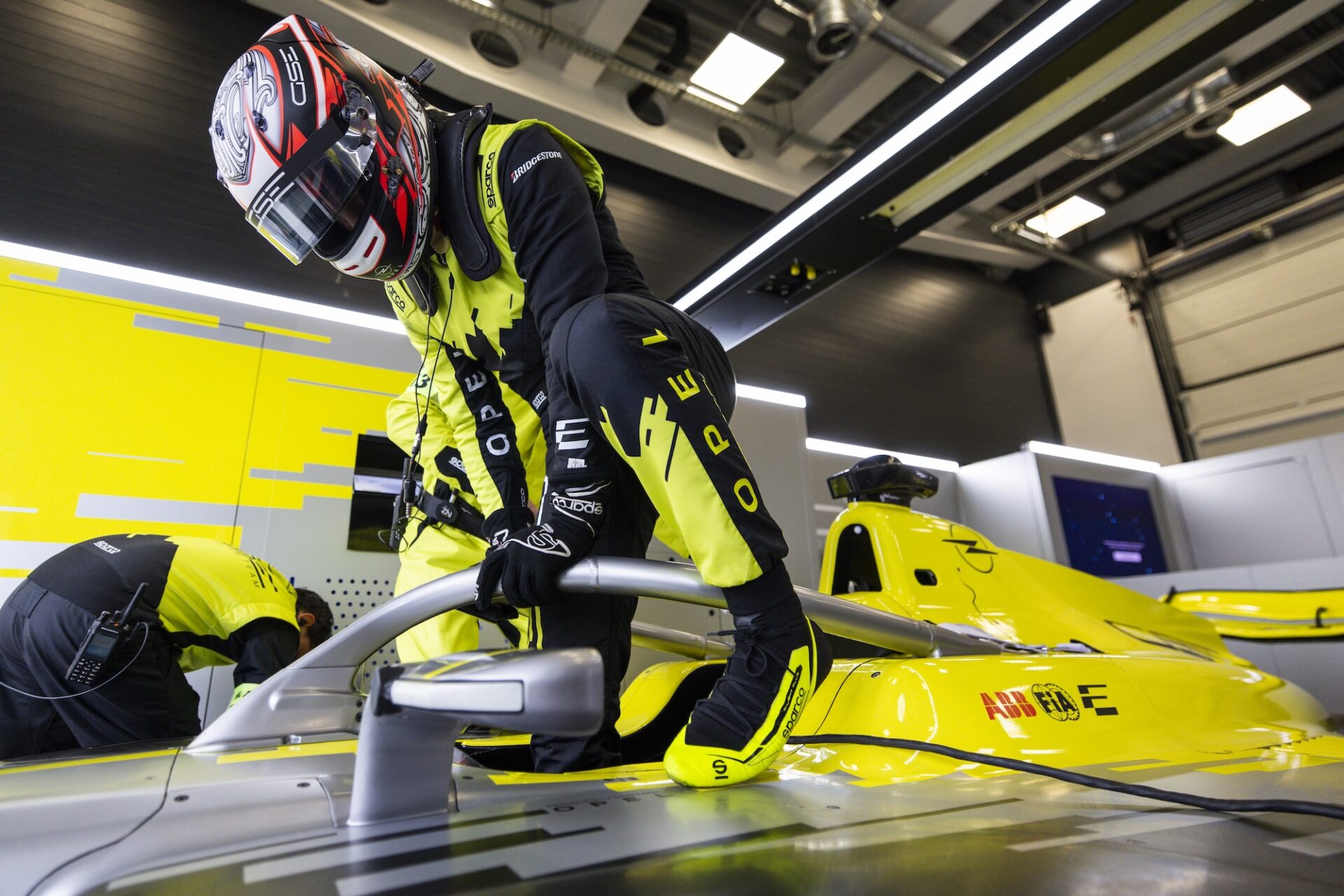
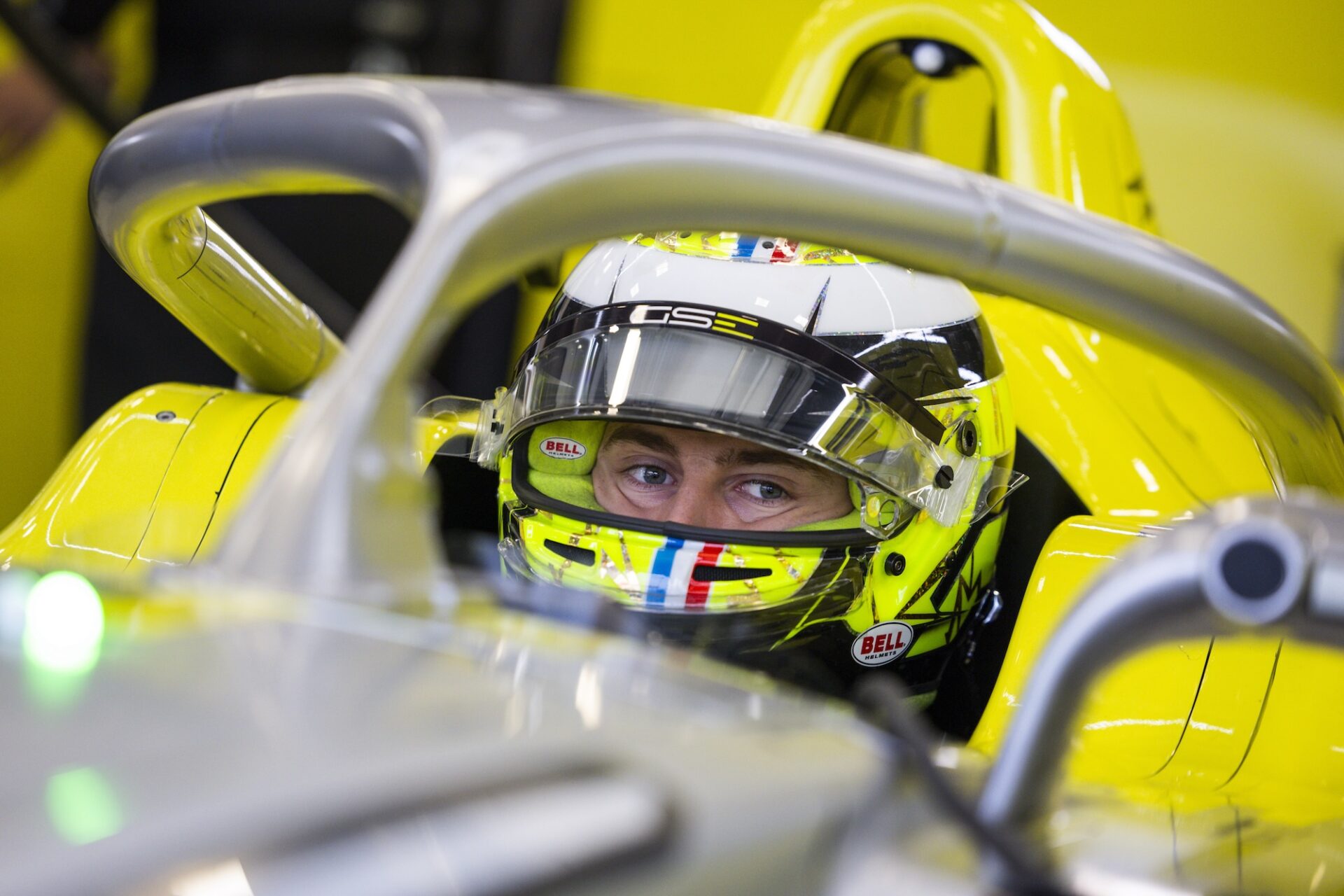
For its Formula E debut, Opel has bet on the most successful driver in the series’ history, with 16 wins, and on the 2023 Formula 2 champion. At Jarama, Mitch Evans and Théo Pourchaire talked about driving the unforgiving Gen4, their careers and their ambitions. Their first season will also be their last, as Stellantis announced on 23 November that Opel and Citroën will withdraw from Formula E at the end of the 2027 season, a heavy blow for Opel and for Citroën, which will bow out after just two seasons.
Mitch Evans: The acceleration. We now have permanent four-wheel drive and almost twice as much power as before. The first time, I just thought, wow. It also demands more respect in fast corners, because it can bite a bit harder than the Gen3.
Théo Pourchaire: The acceleration too, it’s crazy. And without engine noise, you lose your reference points. When we went from 450 to 600 kW on a qualifying lap, we were 20 or 30 km/h faster without really noticing. Normally, sound plays a huge part in your sense of speed. To compensate, we have information displayed on the steering wheel, but you have to look at it while driving. It becomes second nature, but it’s one more difficulty.
Mitch Evans: Staying ten years with the same manufacturer is almost unheard of in our sport. I’ve won more races than anyone, but I’ve never won the title, and that haunts me every day. The first discussions with Opel were very positive. I saw how serious and ambitious the project was, and it matched my mindset. After ten years, I have to learn a new culture and a new way of communicating with the engineers. That doesn’t happen overnight, I’m still learning everyone’s first names. But it’s the challenge I wanted to take on, and so far the transition has been seamless.
Théo Pourchaire: The car is heavier because of the battery, so it’s harder to tell where you are with the balance. If you ask a bit too much of it, you can pay dearly. And the level of technology is in a different league. You can adjust the car on corner entry, mid-corner and exit, with two differentials, braking and traction. In F2, it’s more the engineers who set up the car. Here, everything changes from one lap to the next.
Théo Pourchaire: I’ve come from F2 and F1 testing, and I’ve raced in IndyCar and endurance. I bring that experience of very fast cars. Mitch is the best of all time at winning Formula E races. I want to learn how he approaches a race. When I was younger, I saw a strong teammate as someone who could expose my weaknesses. Today, I think a strong teammate lifts the car and the team, and I’ll try to push him too.
Théo Pourchaire: In a race, you do everything at once. You have to drive fast, recover as much energy as possible, overtake and defend. Meanwhile, the engineers are talking to us on the radio. They don’t have access to all the data, so they ask us about the battery’s condition, its temperature or the remaining charge. We have that information in front of us, but we’re busy driving. Sometimes they repeat the question and we can’t answer. During Wednesday’s race simulation, it also started raining while we were on slicks. We had to change the settings on the move to adapt. It’s really tough, but that’s what I enjoy.
Mitch Evans: Physically, it’s both easier and harder. Thanks to the power assistance, the steering is no longer as heavy as with the Gen3, which made some races gruelling. But we’re faster everywhere, so the body takes more punishment in certain corners. The real difference is mental. At this speed, you have to be far more focused, and the margin for error is smaller.
Théo Pourchaire: I braked two or three metres too late. It’s not much, but with this car you arrive at Turn 3 so fast that there’s no margin at all. On a classic circuit, you run a bit wide and get away with it. Here, you hit the gravel and can end up straight in the wall. Braking also depends on lots of electronic systems that stop the wheels locking. If they’re badly set up, you feel as if the car isn’t slowing down enough. The car wasn’t badly damaged, and it’s testing, it shows we’re looking for the limits. I think we’ll see more and more driver errors this season. It’s a great challenge for us, and I love it.
Théo Pourchaire: When I told my father I was going to drive for Opel, he was really pleased. I’m young, I didn’t know the brand’s motorsport history. I’ve discovered it and I’m proud to wear these colours. We’re not here just to make up the numbers, we have big ambitions.
Mitch Evans: There’s a lot of excitement around the new generation of cars, but also around Opel, which is entering Formula E for the first time. It’s a real honour to have been chosen to drive for the brand, with the responsibility that comes with it. I can’t wait to see what we can achieve together. My motivation is to put Opel on the top step, first in a race, then in the championship.
Mitch Evans: To build a good foundation with the team and score points straight away. I think we have the potential to fight for wins, and I’ll be going to Mexico City to try to win. As a new team, our garage is at the far end of the pit lane. I want it to be much further up by next year.
Théo Pourchaire: First and foremost, to be the best rookie on the grid and hold my own against lots of drivers I grew up with. Based on what we’ve shown here, a top-five or top-seven finish in the championship would make us happy, but some teams are hiding their hand. I’m a competitor, my dream is to win.
Mitch Evans: These are the most efficient racing cars in the world, and the fastest from 0 to 100 km/h, which they cover in 1.7 or 1.8 seconds. In a race, it’s one of the most exciting spectacles there is. People love the unexpected. In recent years it was sometimes too extreme, but the Gen4 can strike the right balance. You’ve probably got the most competitive grid in the world and some of the most technically advanced cars, in some of the most beautiful cities on the planet. If you don’t like that, I don’t know what you like.
Théo Pourchaire: It would be possible, and it would be great. Mitch is a benchmark. Before joining, I went through his career with my manager. He may well be the best driver never to have won this championship. He’s very strong in races and wins very often. I’ll try to do as well as him.
The boss’s view
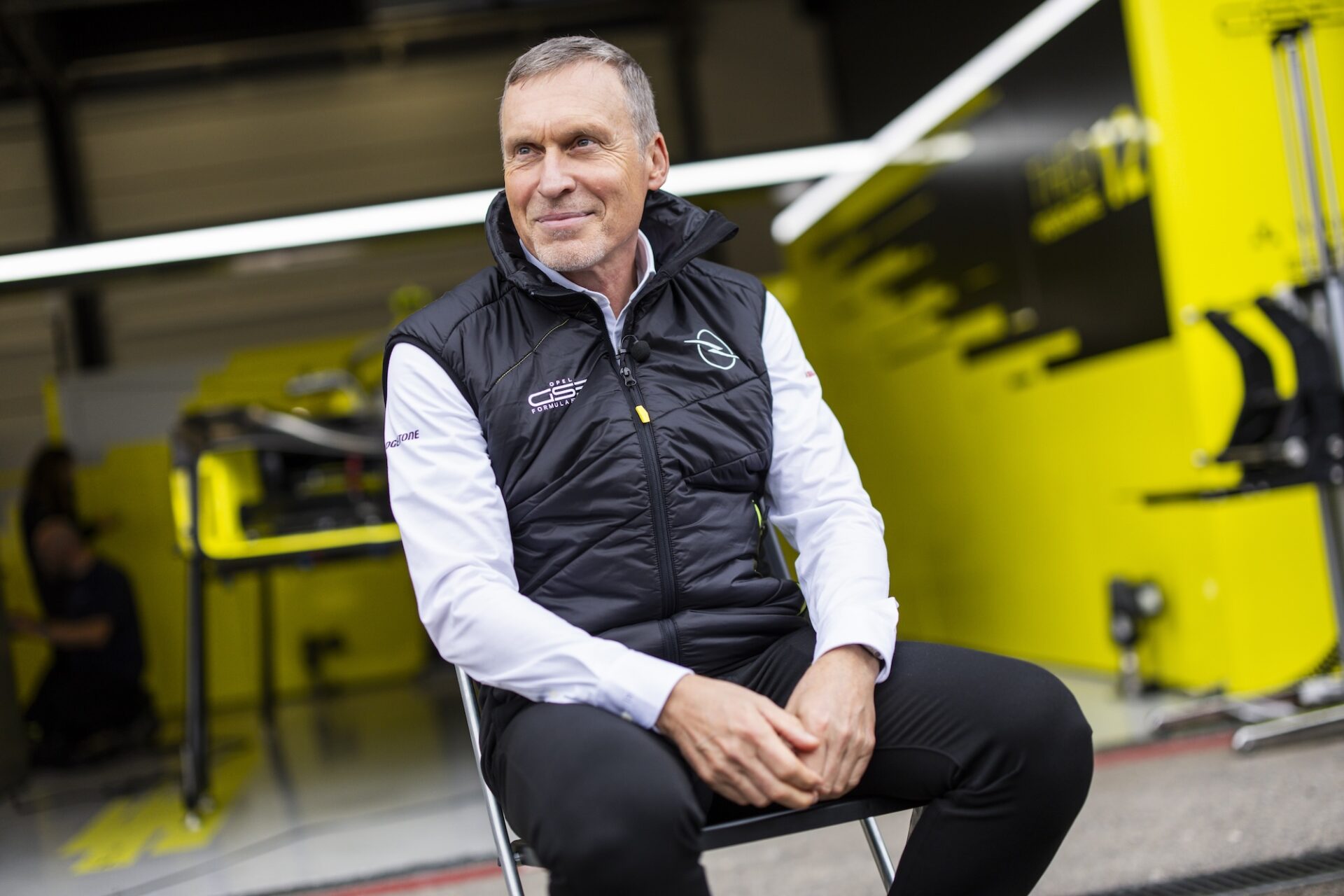
Team principal Jörg Schrott sees Mitch Evans as a leader. “He’s doing exactly what we expected of him. He’s speeding up the progress of a brand-new team and showing everyone the way.” The New Zealander also forms a close-knit pairing with Théo Pourchaire, a driver who is “always smiling” and highly motivated, according to Schrott. “He still lacks experience. His engineer has to give him much more information than Mitch. But he’s quick, there’s no doubt about that. The whole question is how fast he’ll learn the race strategy specific to Formula E.” On Opel’s ambitions, he remains measured. “Internally, we’re confident but very realistic. Formula E is one of the most competitive categories in motorsport. There will be good weekends and difficult moments. I’d be disappointed if we didn’t learn quickly.”
Interview conducted at the Opel GSE Formula E Team round tables, Jarama circuit, 19 November 2026.
We translate our articles into German and English. This article is an automated translation of the original French version. It will then be reviewed by a proofreader within a few days. During this time, the automated translation may contain errors or inaccuracies. Only the original French version is authoritative.