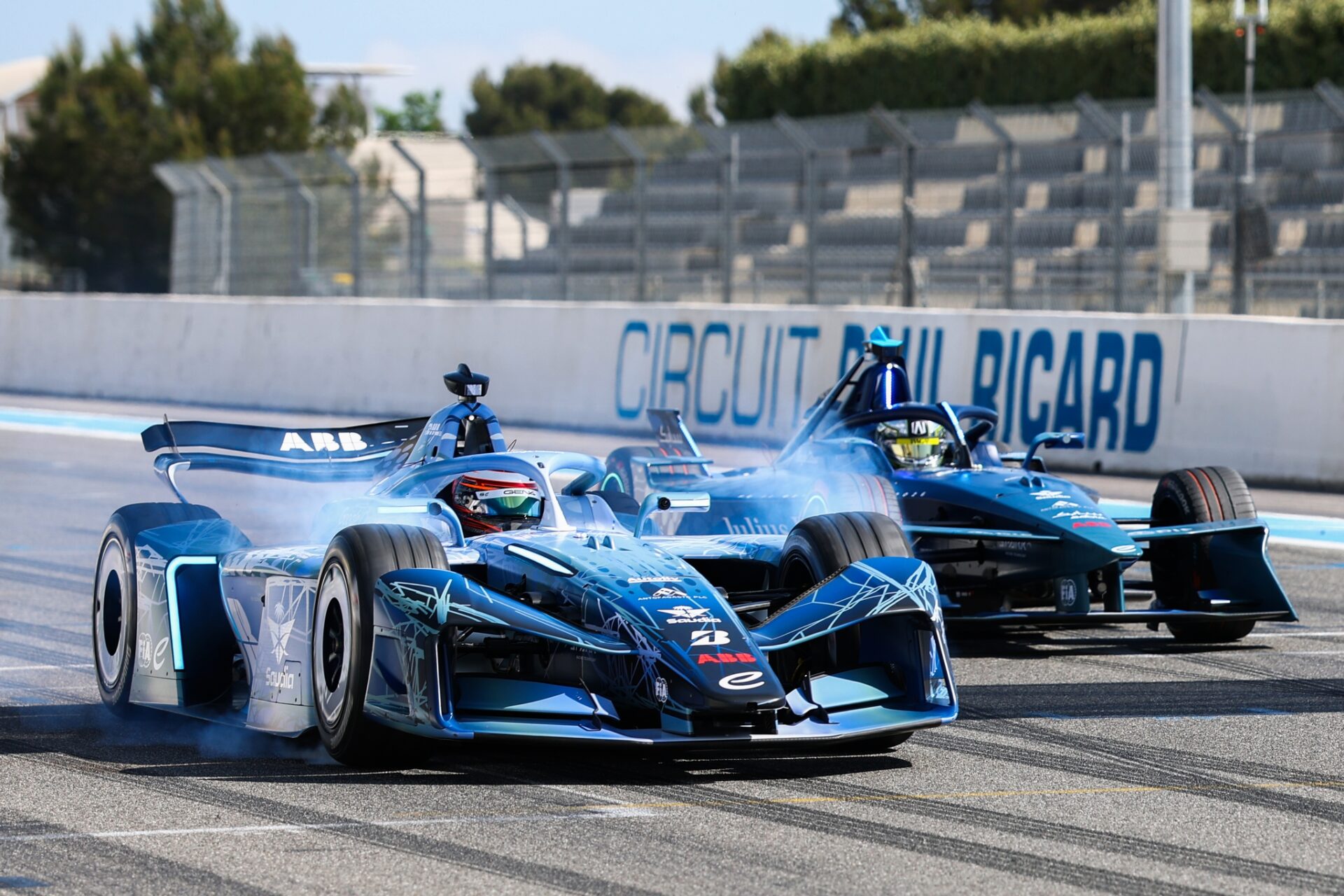
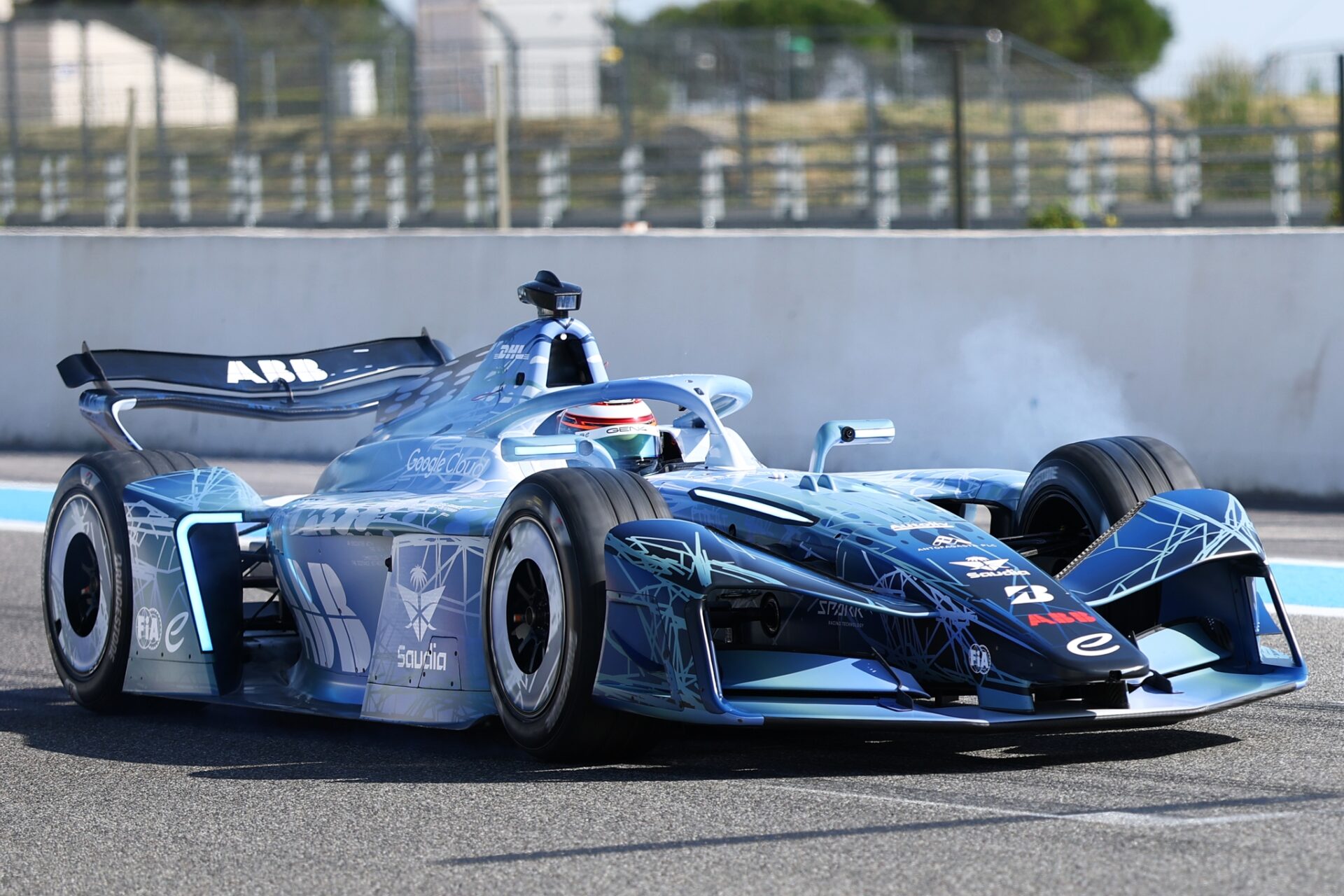
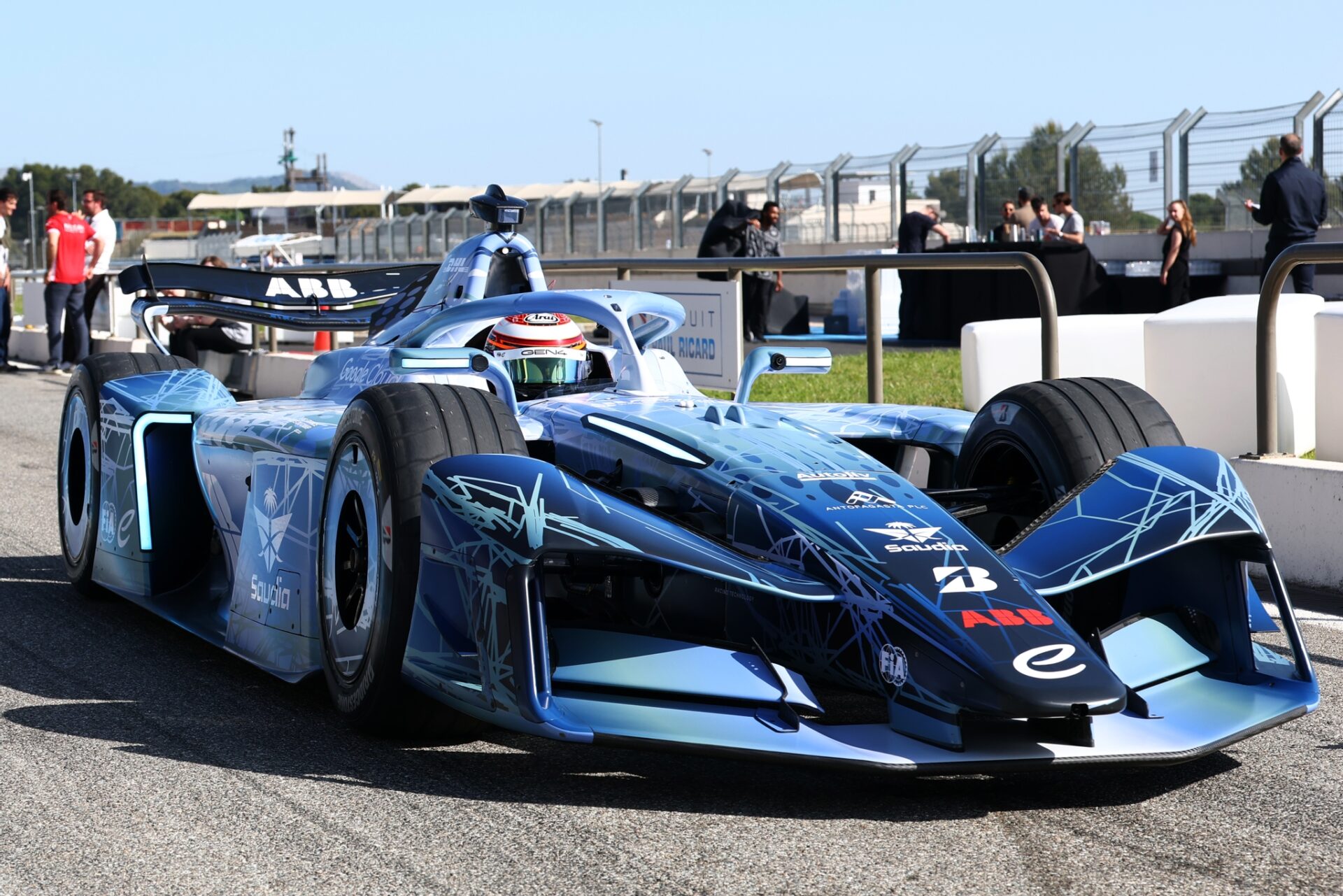
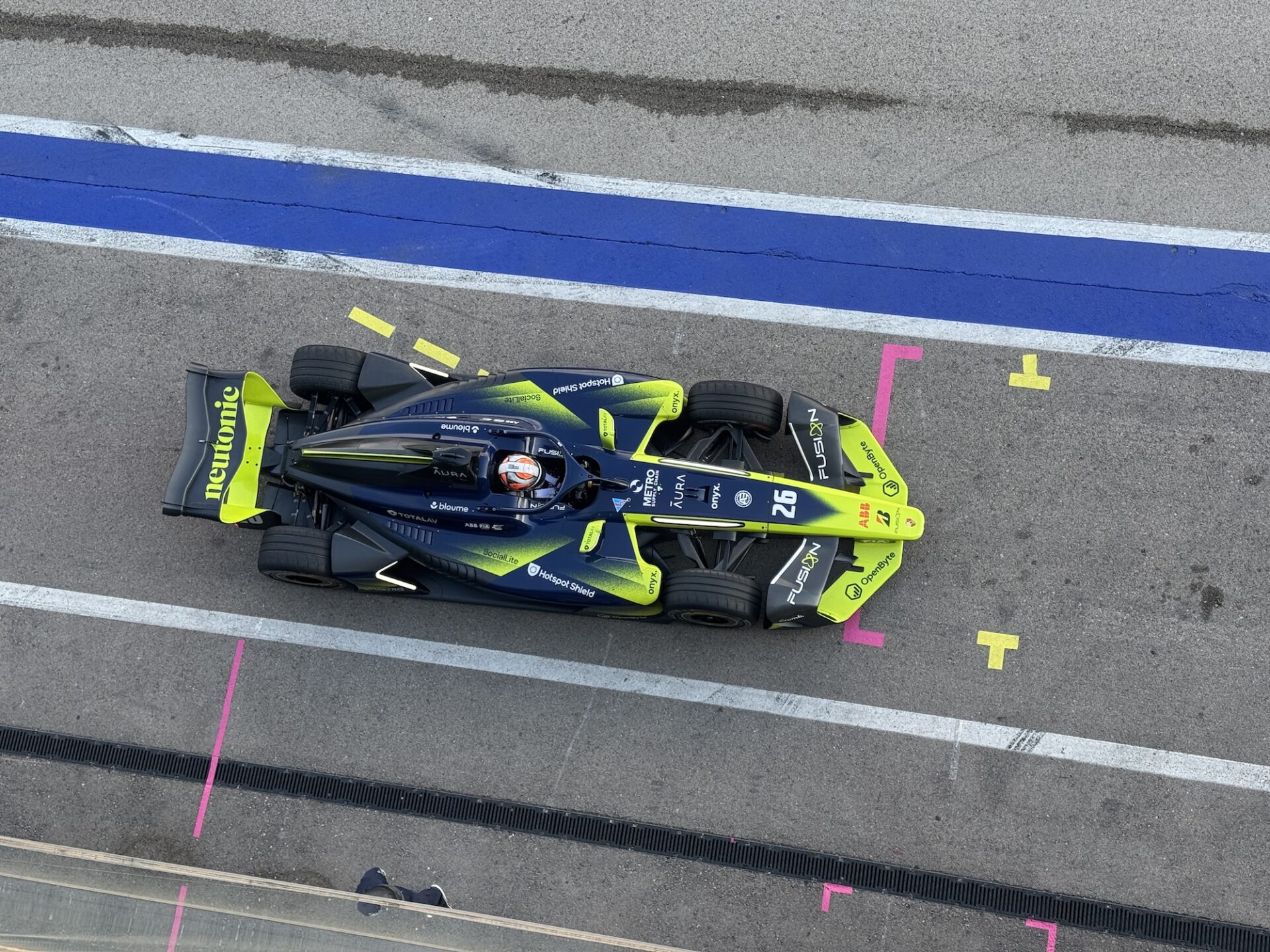
Longer, more powerful and much faster, the Gen4 ran for the first time with all twelve of the championship’s teams during pre-season testing at the Jarama circuit near Madrid. Our first impressions, two months before the season opens in Mexico City.
One afternoon was enough to gauge the leap. On 16 November, the first day of collective testing, Edoardo Mortara (Mahindra) lapped Jarama in 1:24.344. Two years ago, on the same 3.85 km layout, the quickest Gen3 Evo in testing, driven by New Zealander Mitch Evans, set a 1:27.461. That is a gap of more than three seconds, and five seconds quicker than the fastest lap of the E-Prix held here in March. “It’s a beast,” sums up the New Zealander, now an Opel driver.
More than 800 hp, four-wheel drive
The fourth-generation Formula E car breaks with its predecessors. Its four-wheel drive is now permanent, whereas the Gen3 Evo only used it in high-power mode. It delivers 450 kW (612 hp) in race trim, 50% more than its predecessor, and 600 kW (816 hp) in qualifying and Attack Mode. The claimed 0–100 km/h time is 1.8 s and 0–200 km/h takes 4.4 s, around 1.5 s quicker than the Gen3. Top speed is 335 km/h.
“What surprised me most was the acceleration. The first time I drove the car, I just thought, wow,” says Mitch Evans, the championship’s record race winner. Théo Pourchaire, 23, one of the rookies on the grid and Evans’s teammate at Opel, goes further. “During the development days, I nearly hurt myself. If you’re not ready, it really catches you out. You feel your abs tighten and your brain being pushed to the back of your skull.”
Bigger and heavier
The Gen4 is 5.54 m long and 1.79 m wide, with a 3.08 m wheelbase. The drivers have welcomed its larger proportions. “I struggled to get comfortable in the Peugeot in endurance racing. Here, at 1.88 m, I fit in well,” says Théo Pourchaire. The downside is a dry weight of 954 kg. Both Opel drivers point to weight as the next area to work on.
The battery offers 55 kWh of usable energy in a race, 43% more than before, and regenerative braking rises to as much as 700 kW. Bridgestone replaces Hankook with two tyres, an all-weather tyre and a heavy-rain tyre, made from 65% recycled or renewable materials.
A computer at 300 km/h
The big technical innovation lies in the active differentials, front and rear. “I’d never worked with them before. It’s new for almost everyone, drivers and engineers alike,” admits Mitch Evans, despite ten seasons in the series. Théo Pourchaire explains the range of settings. “We can adjust the car on corner entry, mid-corner and exit, for slow, medium or fast corners. The differentials, braking, traction… It’s endless.” Everything is controlled from a 1.9 kg steering wheel with 12 buttons, 6 paddles and 7 twelve-position rotary switches.
The arrival of power steering makes the car less physical than the Gen3, but the mental workload increases. Switching to Attack Mode, at 600 kW, changes the whole management of a lap. “We spend so much energy accelerating that we may lift off a bit earlier on the straights. No two laps are the same,” explains the Frenchman. Two aerodynamic configurations are planned, low downforce for the classic E-Prix and high downforce for the new sprint race, the E-PrixUnleashed.
Between Formula 2 and Formula 1
With more than 800 hp, the Gen4 comfortably outguns a Formula 2 car, without matching its lightness. Théo Pourchaire, the 2023 F2 champion, sees Monaco as the track where it could beat an F2 car against the clock, thanks to the many acceleration zones. He also compares it with the Le Mans Hypercars he knows. “It accelerates much faster and brakes later, with slightly more downforce. Cornering speed is about the same.” F1, however, remains out of reach on a circuit. “You can compare lap times, and everyone will because it’s tempting. But in terms of category, they’re completely different,” the driver cautions.
For Opel, on track with all its rivals for the first time, the week in Madrid was as much a test of the team as of the car. Jörg Schrott, director of Opel Motorsport, stresses the importance of method. “For every circuit, you need a solid baseline set-up. With so many systems, there’s a big risk of getting lost in a dark forest. Then you add the systems one by one, the front differential in corners, for example.” As for the Jarama lap times, he urges caution. “Every team follows its own programme and nobody shows everything. The clock that will really count is in qualifying in Mexico City.” But the adventure will be short-lived. On 23 November, Stellantis announced that 2027 would be Opel’s and Citroën’s last season in Formula E, a heavy blow for Opel, which will have contested just one, while Citroën will stop after two seasons.