It’s official. Stellantis is ending its factory programmes in world championships. Peugeot will leave endurance racing at the end of this year, while Citroën and Opel will quit Formula E in summer 2027. For Opel, its first season will also be its last.
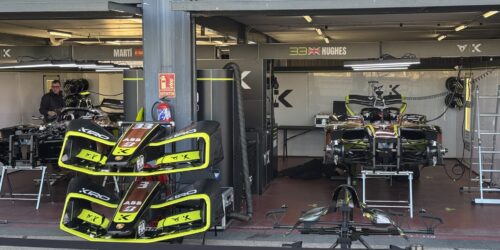
The news had been doing the rounds in the Jarama paddock since Friday, the final day of Formula E pre-season testing. Le Figaro broke the story, and Stellantis confirmed it on Monday 23 November. In a statement issued in Poissy, the group announced the end of its works activities in FIA world championships. Its motorsport resources will be refocused on customer racing and the development of high-performance road cars.
The timetable is set. Its participation in the World Endurance Championship (WEC) will end after the 2026 season. Peugeot, which returned to endurance racing in 2022, will therefore not line up for the 24 Hours of Le Mans in June 2027. Citroën and Opel will still contest Formula E’s Season 13, then withdraw when it ends in summer 2027.
On Friday at Jarama, Jörg Schrott, director of Opel Motorsport and head of the Formula E team, declined to comment on the rumours. “No comment, I’m doing my job,” he told us.
A farewell season for Opel
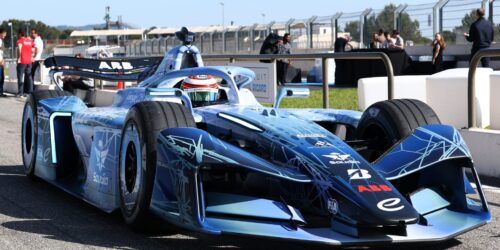
The decision has caught Opel off guard. The German brand announced its Formula E entry, with a four-year commitment, at the same Jarama circuit in March. It had just taken to the track for the first time alongside every team in the championship, with Mitch Evans, the series’ record race winner, and Théo Pourchaire, the 2023 Formula 2 champion. Its debut season, which starts on 16 January in Mexico City, will now be its only one. Citroën, fifth last year, will contest its second and final season. Unless newcomers arrive, the grid will then lose two teams and four cars.
Motorsport will not disappear from the group’s brands altogether. Stellantis Motorsport, based in Satory near Versailles, will keep selling rally cars to privateer teams and helping to develop high-performance models for Alfa Romeo and Maserati, as well as the sporty Veloce, GTi, HF and GSE versions of Alfa Romeo, Peugeot, Lancia and Opel models. Lancias entered by private customers in the World Rally Championship are not affected.
The group says it intends to retain the staff affected by the end of the works programmes and redeploy them internally. According to Reuters, around 200 people are concerned, with no job cuts announced.
A group under pressure
The decision is part of the FaSTLAne 2030 strategic plan, which focuses the group’s resources on new products, quality and broader market coverage. It includes 50 launches and model renewals in Europe within five years, 25 of them all-new. After two years of falling sales and profits, CEO Antonio Filosa has also launched a “Value Creation Programme”, which he expects to deliver €6 billion in savings by 2028.
The latest results point to an improving but still fragile situation. In the third quarter of 2026, revenue rose by 1% to €37.6 billion. Stellantis still posted a net loss of €0.5 billion, compared with €4.5 billion a year earlier, and an adjusted operating margin of 0.7%. Europe, home to Peugeot, Citroën and Opel, is the only region where that margin remains negative. The group does not expect to return to positive cash flow until 2027. On the stock market, its shares are still trading at record lows, at around €3.20.
It is not the first time. In 2012, Peugeot, then part of PSA, pulled out of endurance racing to save money at the height of the financial crisis. More recently, DS Automobiles withdrew from Formula E after eleven seasons, replaced, as it happens, by Opel. Nor is Stellantis the first French manufacturer to scale back. In February, Renault Group announced that it would end its endurance programme with Alpine and its rally-raid programme with Dacia after the 2026 season, just weeks after Dacia’s Dakar victory. It is now concentrating its resources on Formula 1, where Alpine nonetheless runs Mercedes engines.
We translate our articles into German and English. This article is an automated translation of the original French version. It will then be reviewed by a proofreader within a few days. During this time, the automated translation may contain errors or inaccuracies. Only the original French version is authoritative.