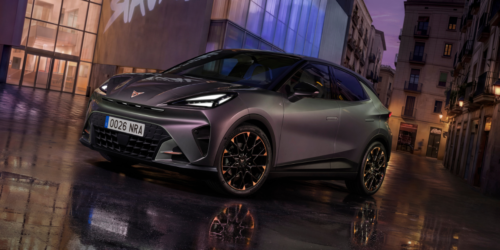
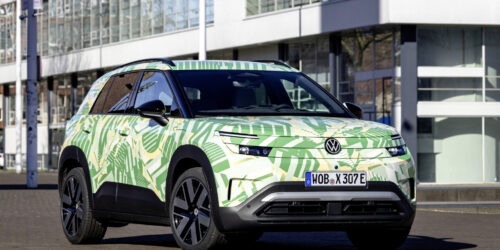
The vast majority of motorists opt for muted colours when buying a car. The reasons vary, yet the shade chosen can nonetheless mirror the driver’s personality.
Let us say it plainly: the colours of our cars are rather drab. According to Axalta, a manufacturer specialising, among other things, in automotive paint and which has published a benchmark industry report since 1953, grey leads in Europe at 26 per cent, ahead of white at 25 per cent and black at 22 per cent. Worldwide, white remains first at 29 per cent, ahead of black at 23 per cent and grey at 22 per cent, with neutral shades accounting for 74 per cent of all vehicles. Blue and red hold at around 6 and 7 per cent, while silver slips to 7 per cent.
In Luxembourg, the trend looks even ‘greyer’ than in Europe. According to the available data (STATEC / SNCA), 34 per cent of the cars on the road are grey. Black follows, at 22.5 per cent of the fleet. White, by contrast, is far less popular here than elsewhere (15 to 17 per cent, against 25 per cent in Europe and 29 per cent worldwide). It is hard to single out one precise factor to explain why the country’s motorists are drawn to grey and black rather than to white or bright colours. Two explanations can nonetheless be put forward. The first lies in the large number of company cars. By its nature, the leasing company seeks to maximise the vehicle’s resale value at the end of a first contract, and therefore steers employees towards a grey or black car. The same goes for private buyers, who also have resale in mind: a black car will sell on more easily than an electric-yellow one. The second explanation concerns the cost of colours, often fairly expensive options ranging between €600 and €1,500.
Among the brighter shades, blue leads in Luxembourg at 12.4 per cent of the fleet, followed by red (7 per cent). Then come green at 2.9 per cent, ahead of brown (1.6 per cent), yellow (1.1 per cent) and orange (0.9 per cent).
The picture is the same for new registrations in 2025. It is worth noting, however, that green makes clear gains among new cars (from 3.3 per cent in 2024 to 4.7 per cent in 2025), the only ‘bright’ colour genuinely on the rise.
What your car’s colour says about you
Here again, no great surprise: drawing correlations between colour and character is not a science. There is, however, a fairly interesting body of writing on the meaning of colours. The most frequently cited reference on the subject appears to be Leatrice Eiseman, director of the Pantone Color Institute and author of The Color Answer Book. A psychology graduate of Antioch University, she has assigned qualities to each shade. She sees black as the ultimate colour of power, that of someone hard to manipulate, attached to elegance and classicism. It is indeed common for heads of state and political figures to travel in black cars. White, she suggests, betrays a certain perfectionism, a taste for the pure, the clean and the direct. Silver corresponds to a personality that enjoys elegance with a touch of sparkle, drawn to the futuristic connotation and perceived value of metallic finishes. Red is associated with sensuality, dynamism and great energy, the profile of an extrovert who likes to be noticed, with deeper tones such as burgundy expressing the same traits more discreetly. Other authors agree that blue suggests a serene personality, reliability and trust, attached to stability; that green today points to a more independent, unconventional choice, made by people who like to stand out; that yellow evokes optimism and energy, orange enthusiasm and creativity, and grey maturity and practicality.
The tricky link between colour and safety
Colour is also regularly linked to accident risk, but on far more slippery ground. The popular Old Farmer’s Almanac, an American annual founded in 1792 and regarded as the oldest continuously published periodical in North America, has looked into the question. Drawing on more than 130,000 insurance claims, the publication holds that drivers of black cars are statistically more exposed to accidents and to episodes of aggression at the wheel. In Europe, there is no truly serious study on the subject.
In 2023, a Lithuanian study of one million used cars suggested that the colour most involved in accidents in Europe is brown, followed by yellow and red, while grey (44.7 per cent) and white (44.5 per cent) emerge as the safest shades, that is, the least often involved in a crash. It should be noted, however, that this study is not regarded as methodologically sound.
Beyond Europe’s borders, an academic study by Monash University (Australia, 2007) established that white is the safest choice and that black cars can be up to 47 per cent more exposed to an accident, with an excess risk of around 12 per cent compared with white in normal conditions. As proof of how fragile the exercise is, these works cannot even agree on the riskiest shade: brown for some, black for others.
Tags