Mazda is not a manufacturer that easily gives in to trends. Where others have rushed their transition to electric, the Japanese brand took its time, staying true to its philosophy: prioritising consistency, masterful engineering and above all, driving emotion. This is not simply a new model, but a genuine manifesto: that of an electric vision that remains deeply rooted in Mazda’s DNA. Developed in partnership with Chinese group Changan and built on the EPA platform, this fully electric saloon marks a strategic turning point.
Exterior design: elegance in motion
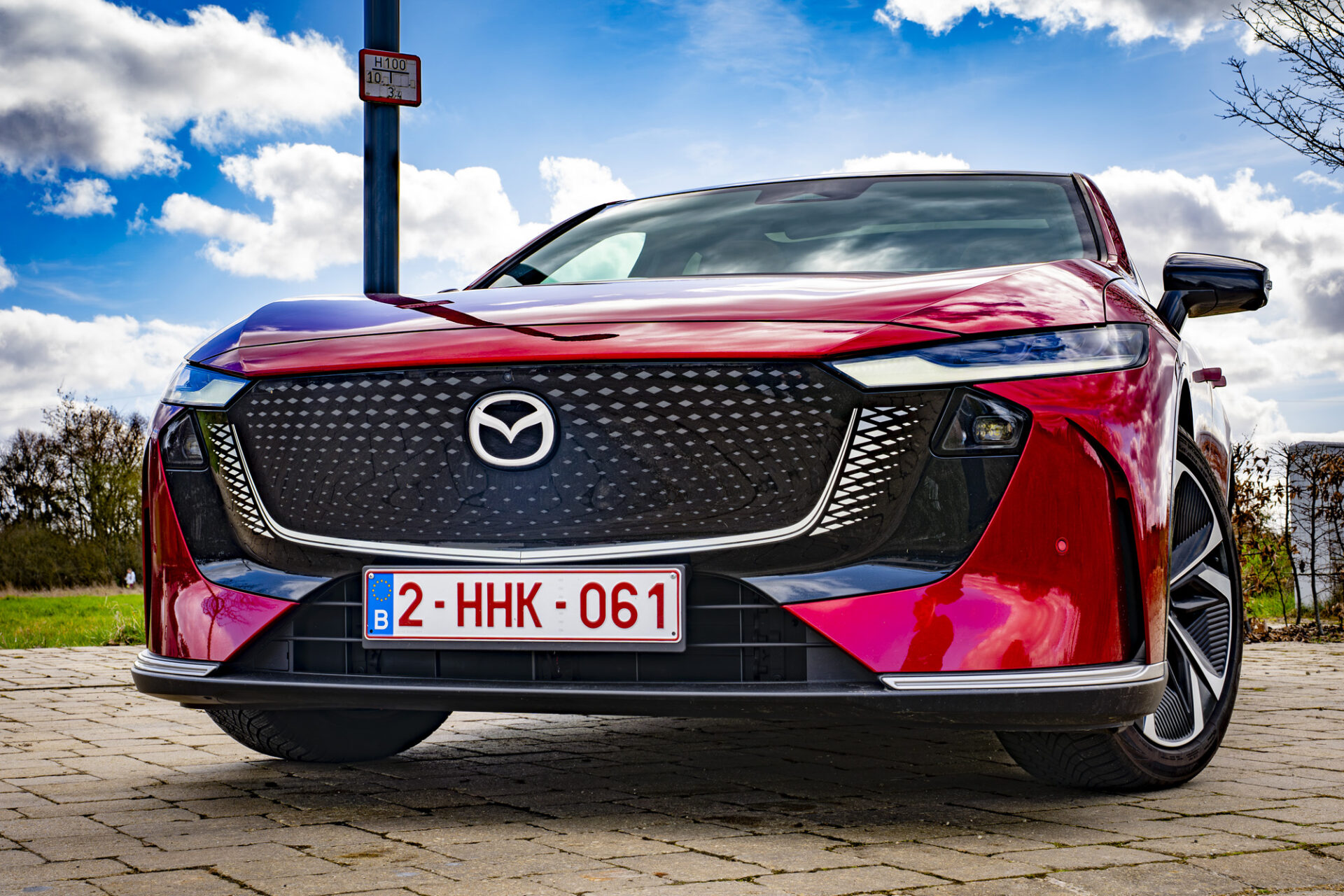
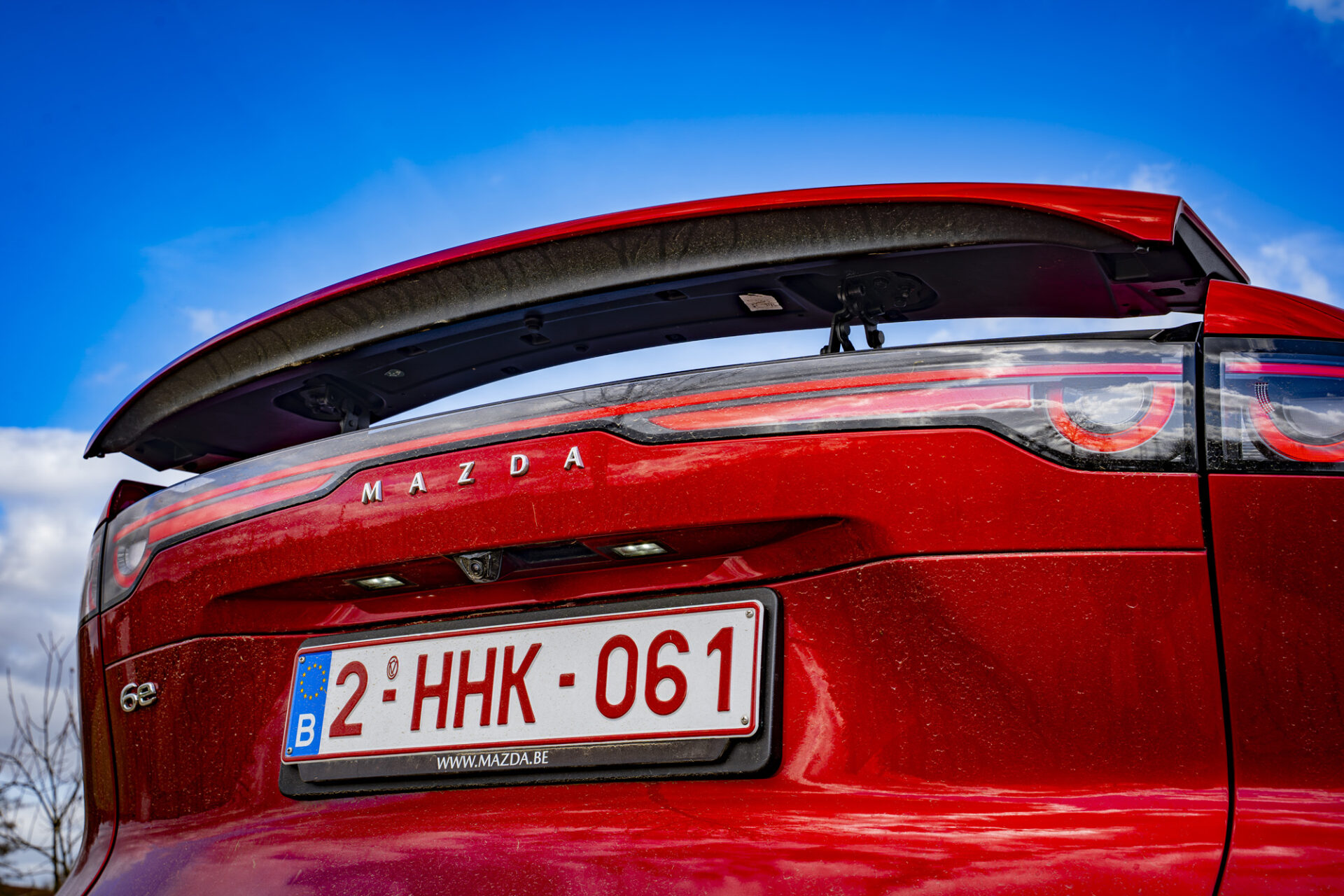
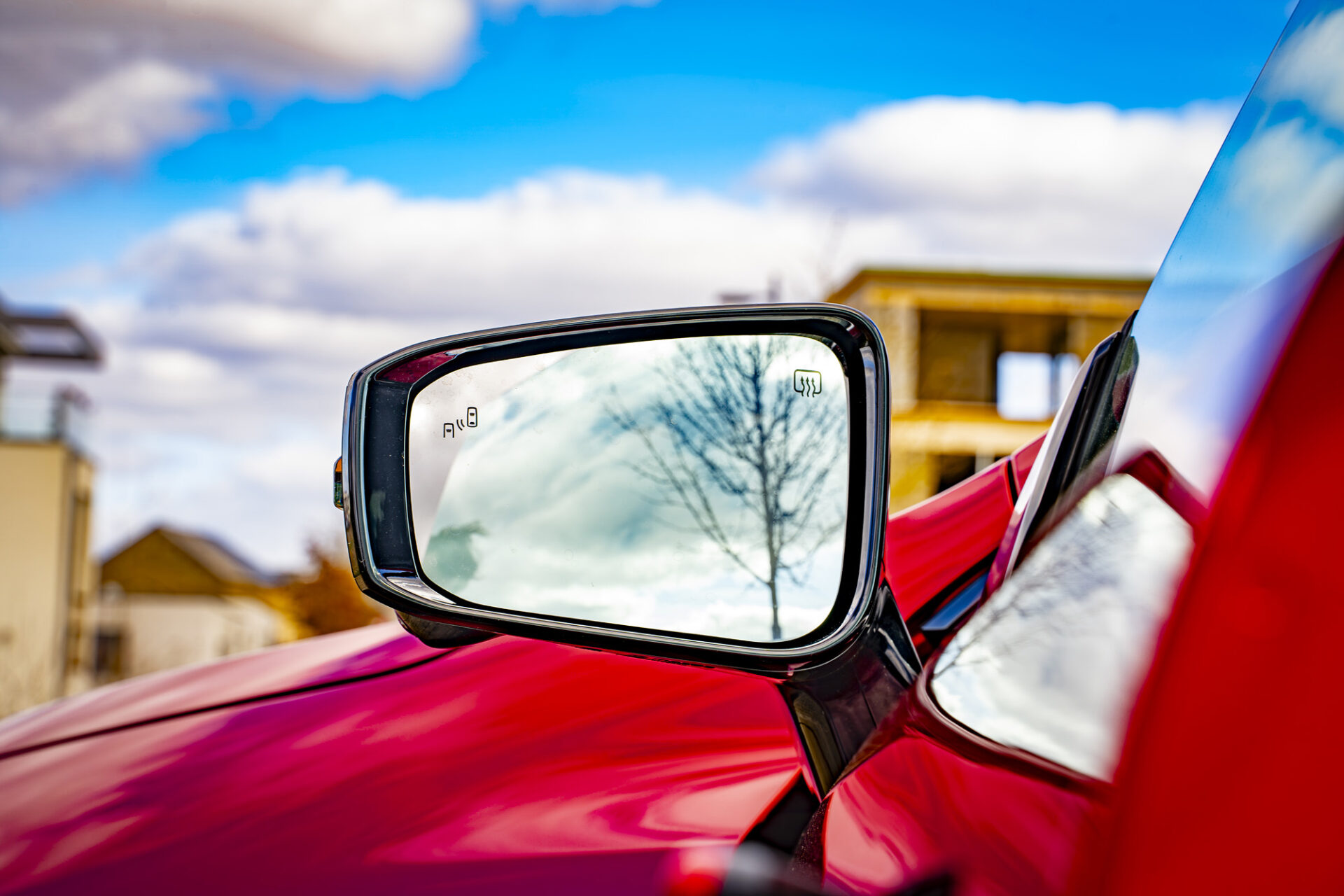
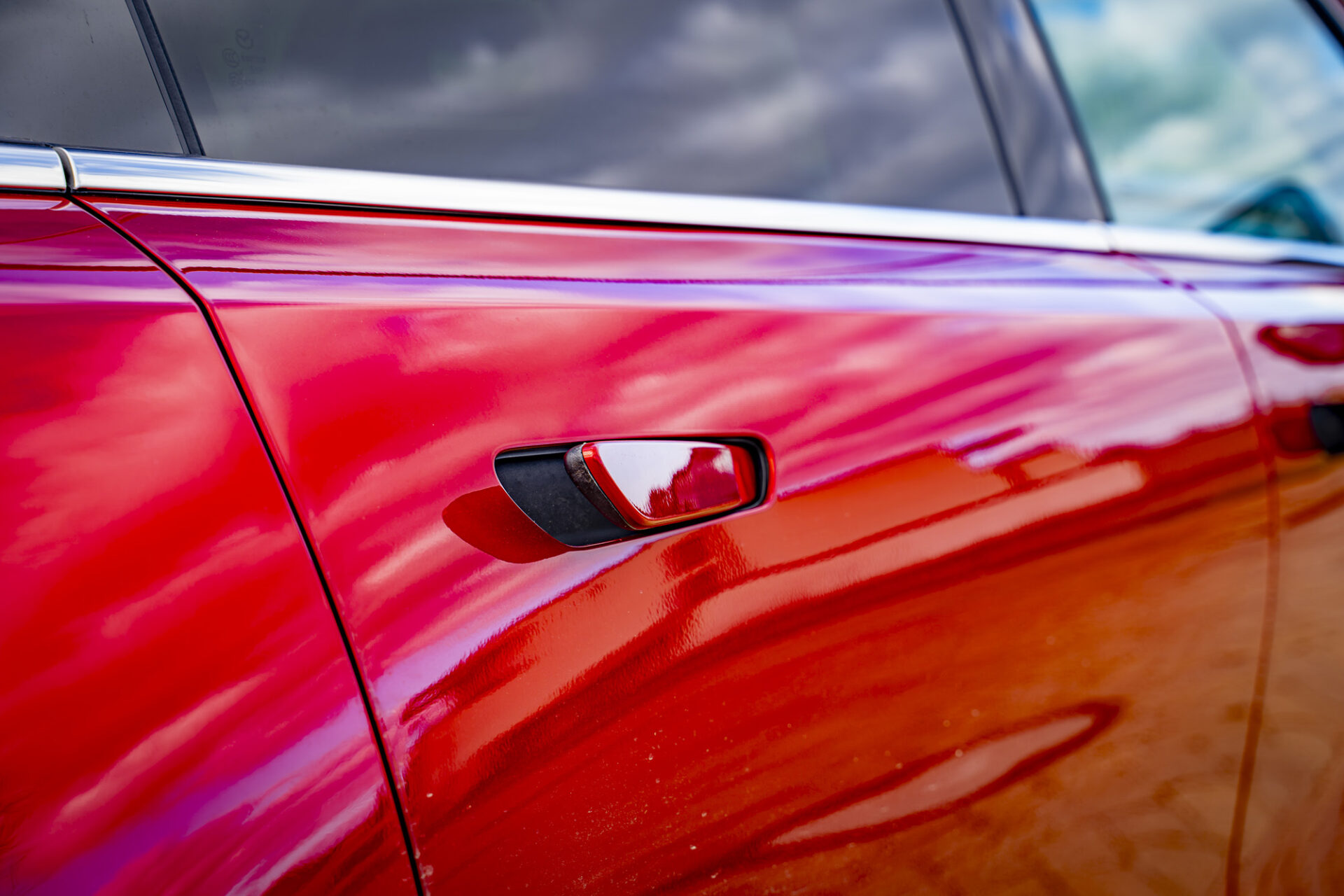
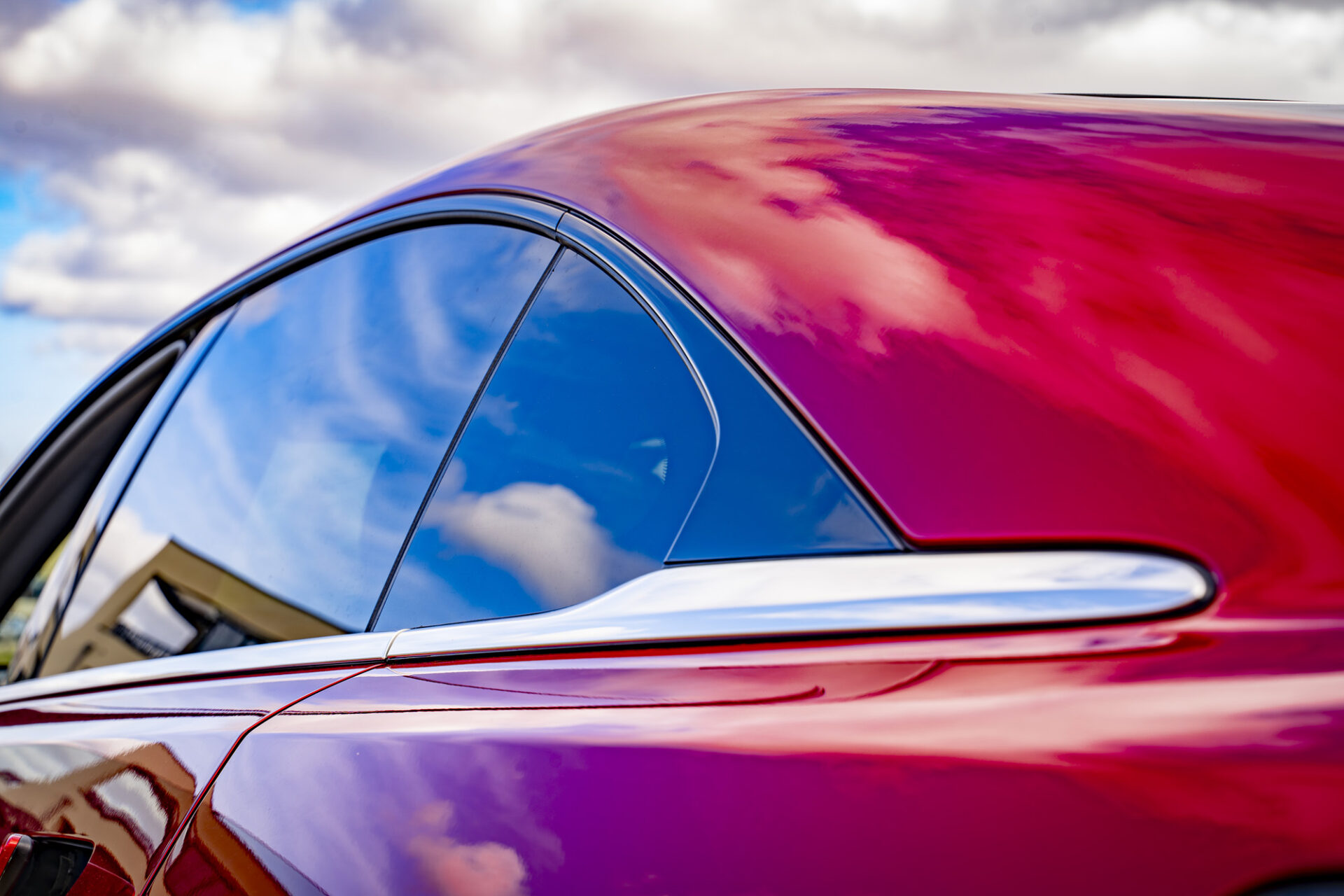
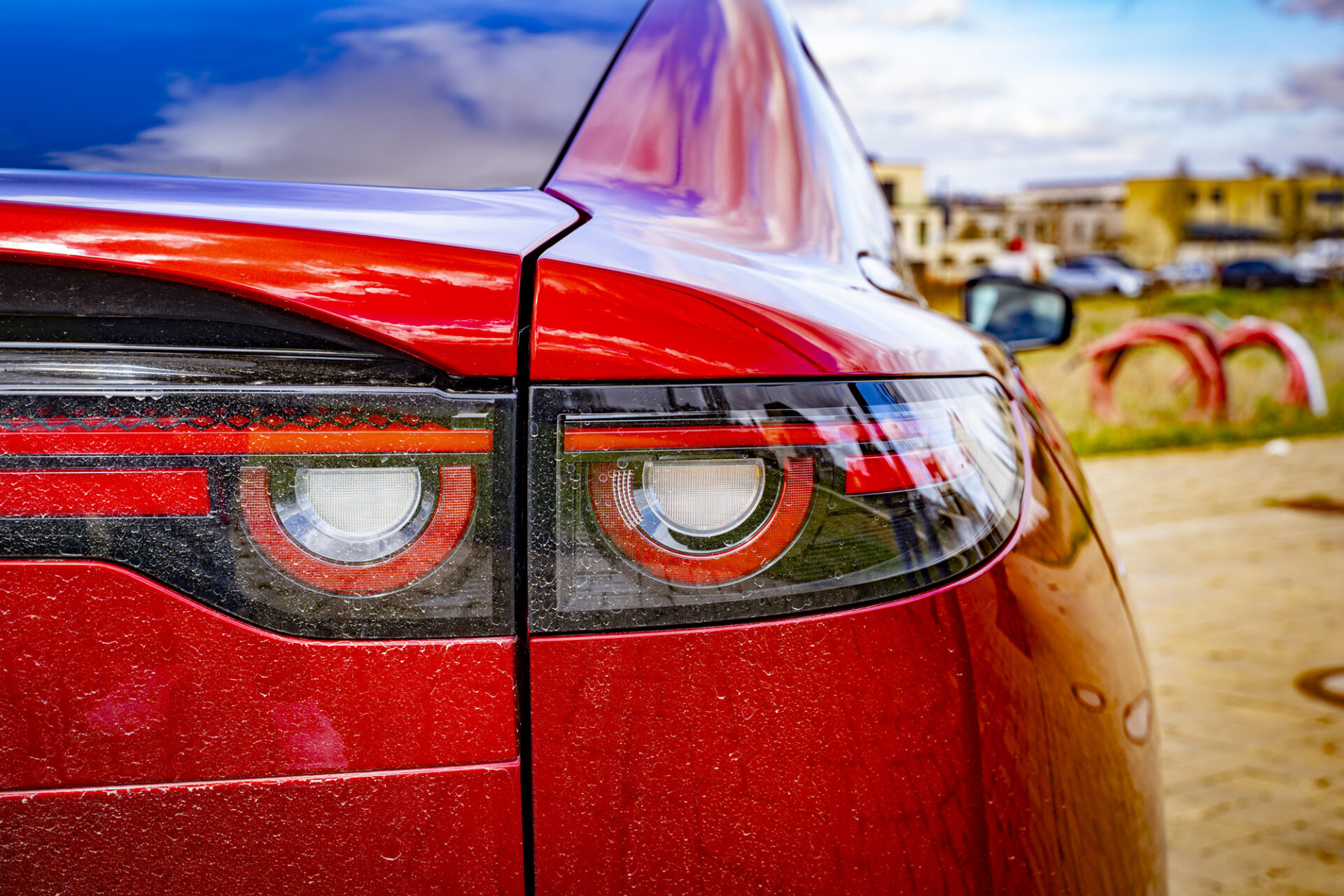
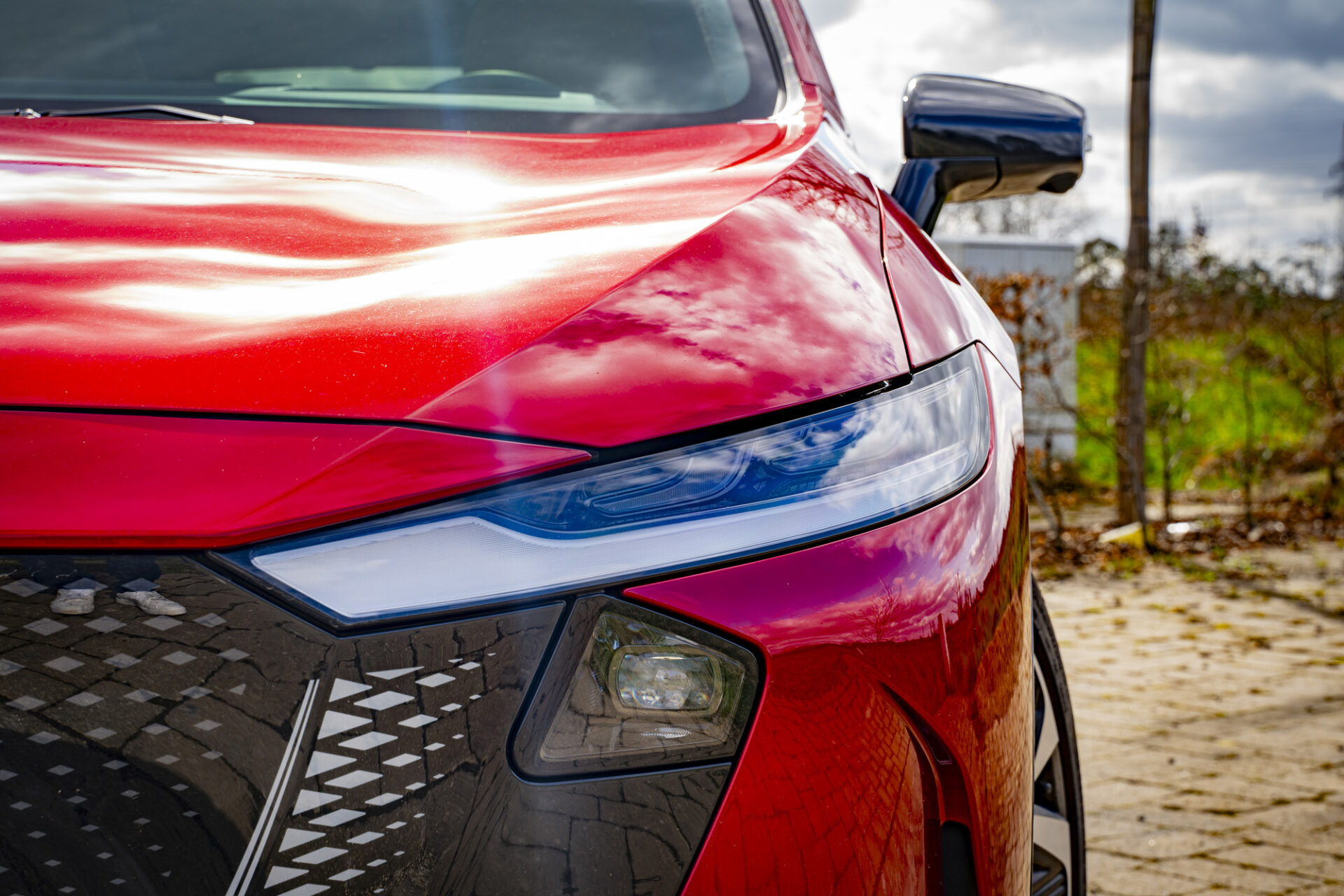
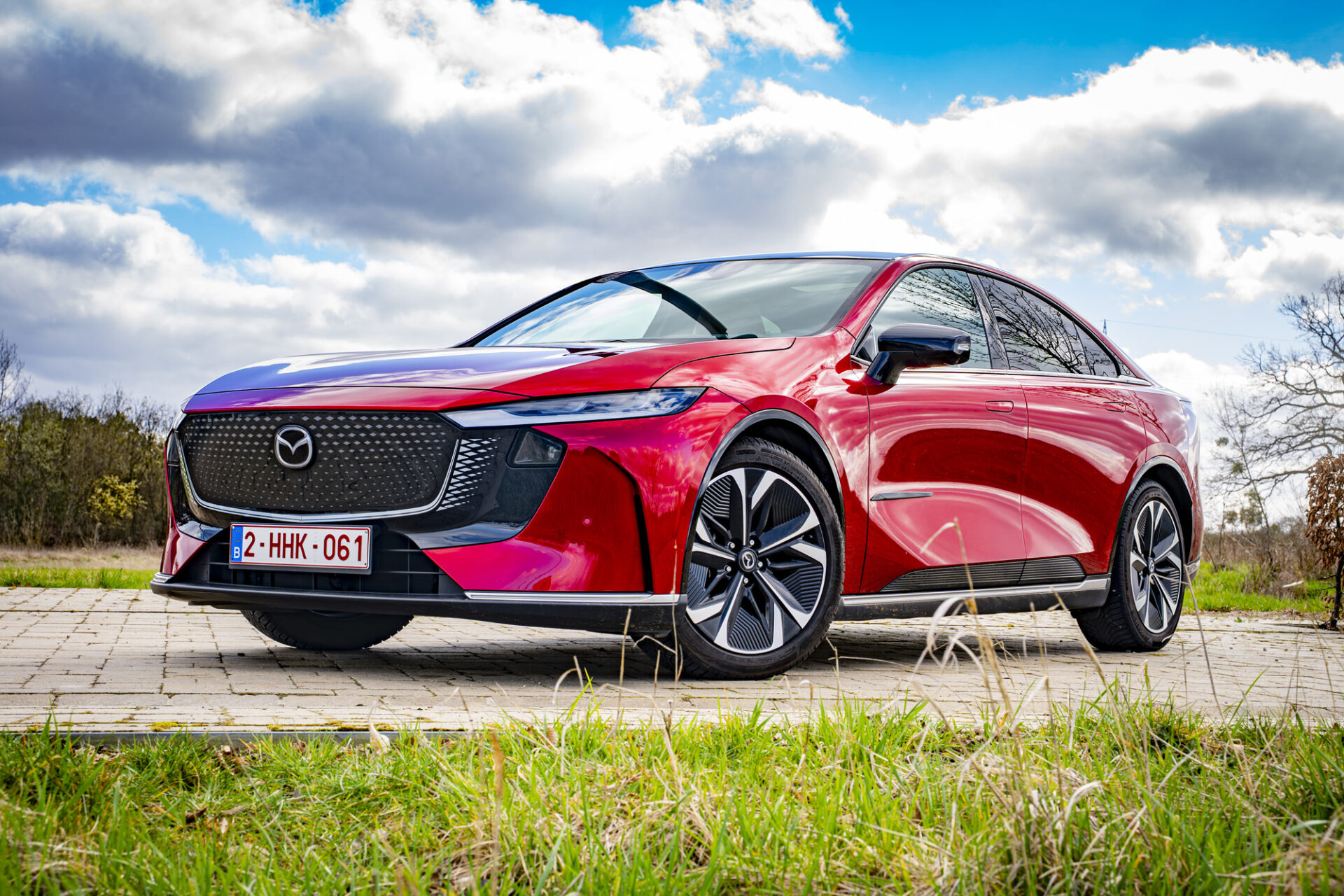
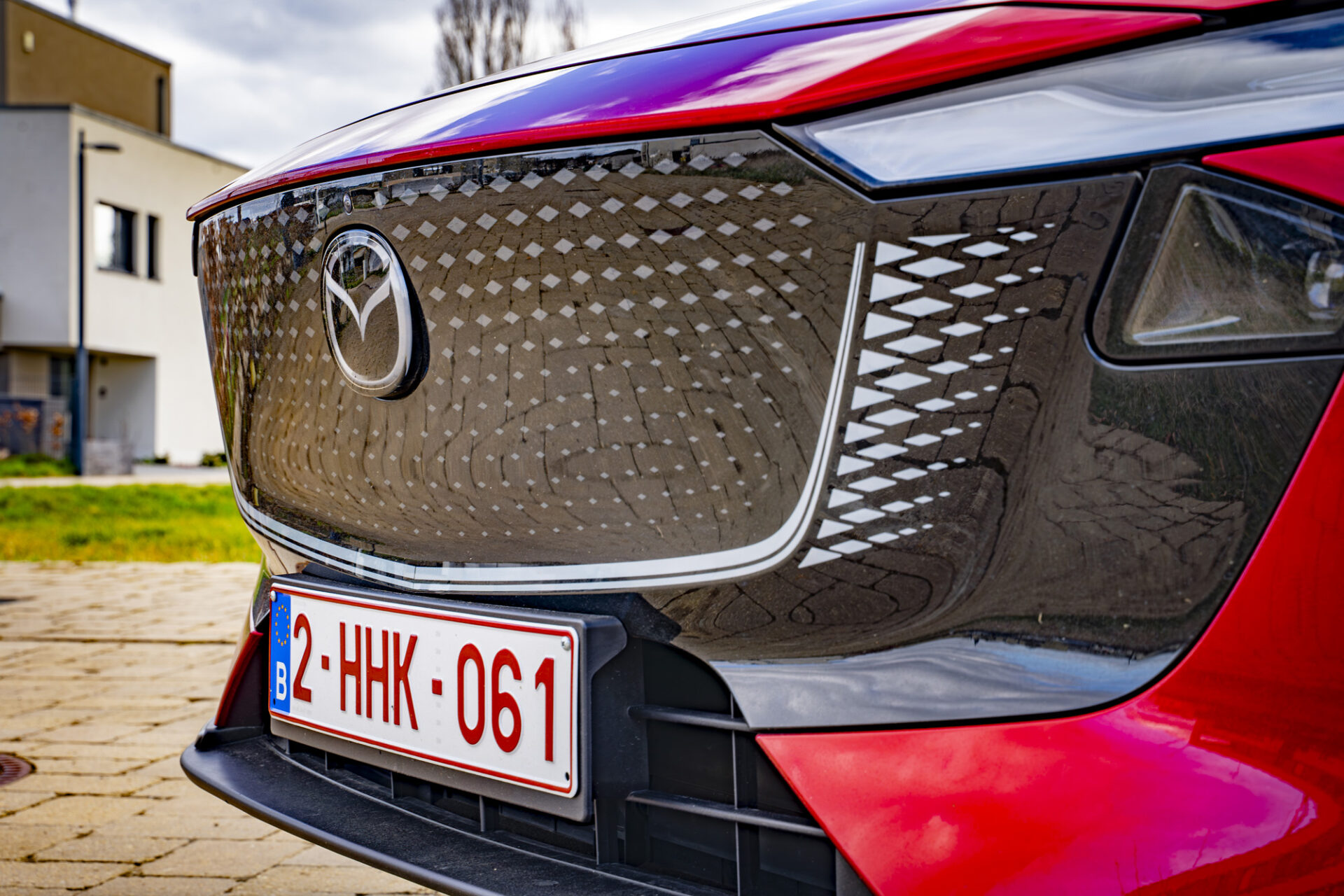
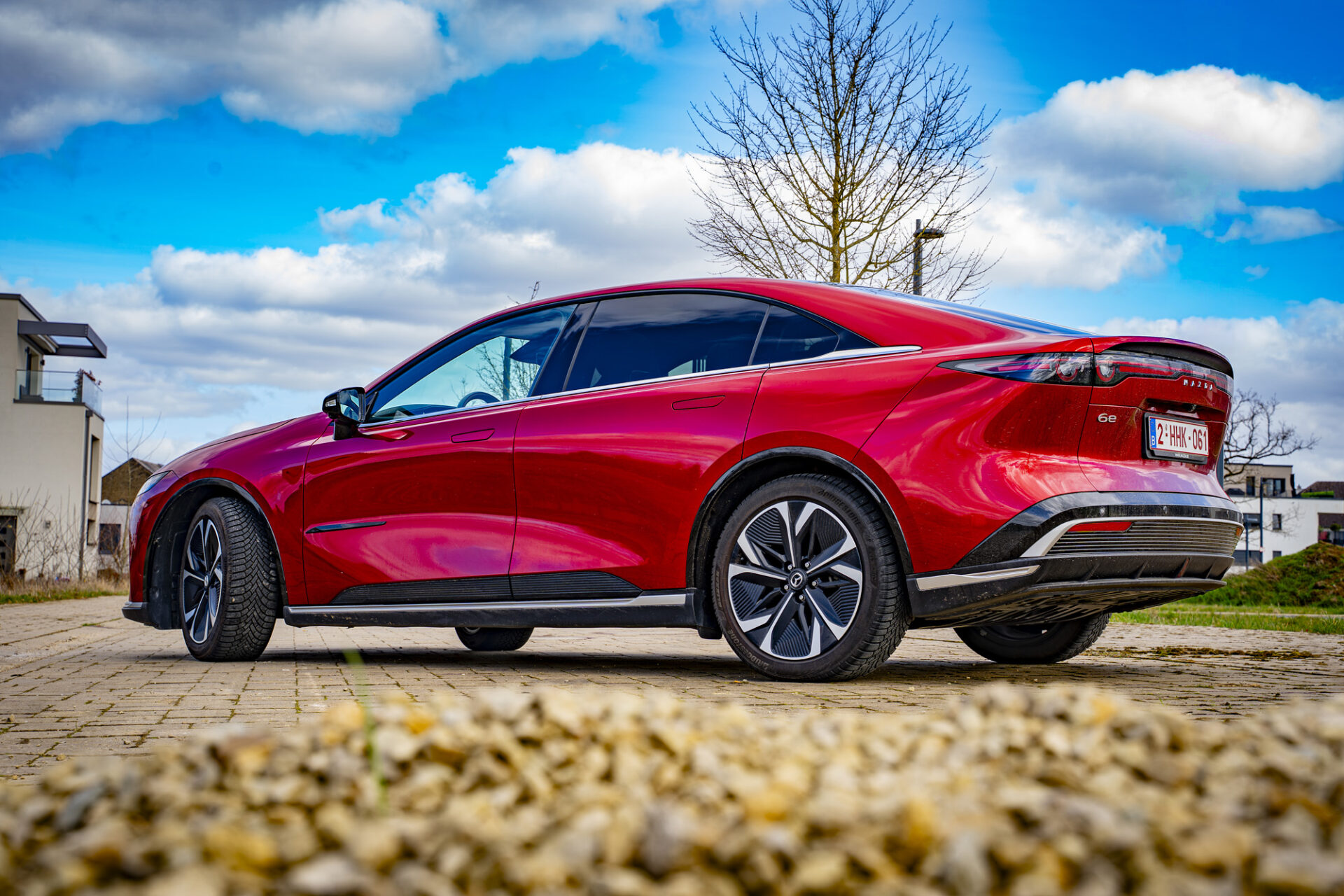
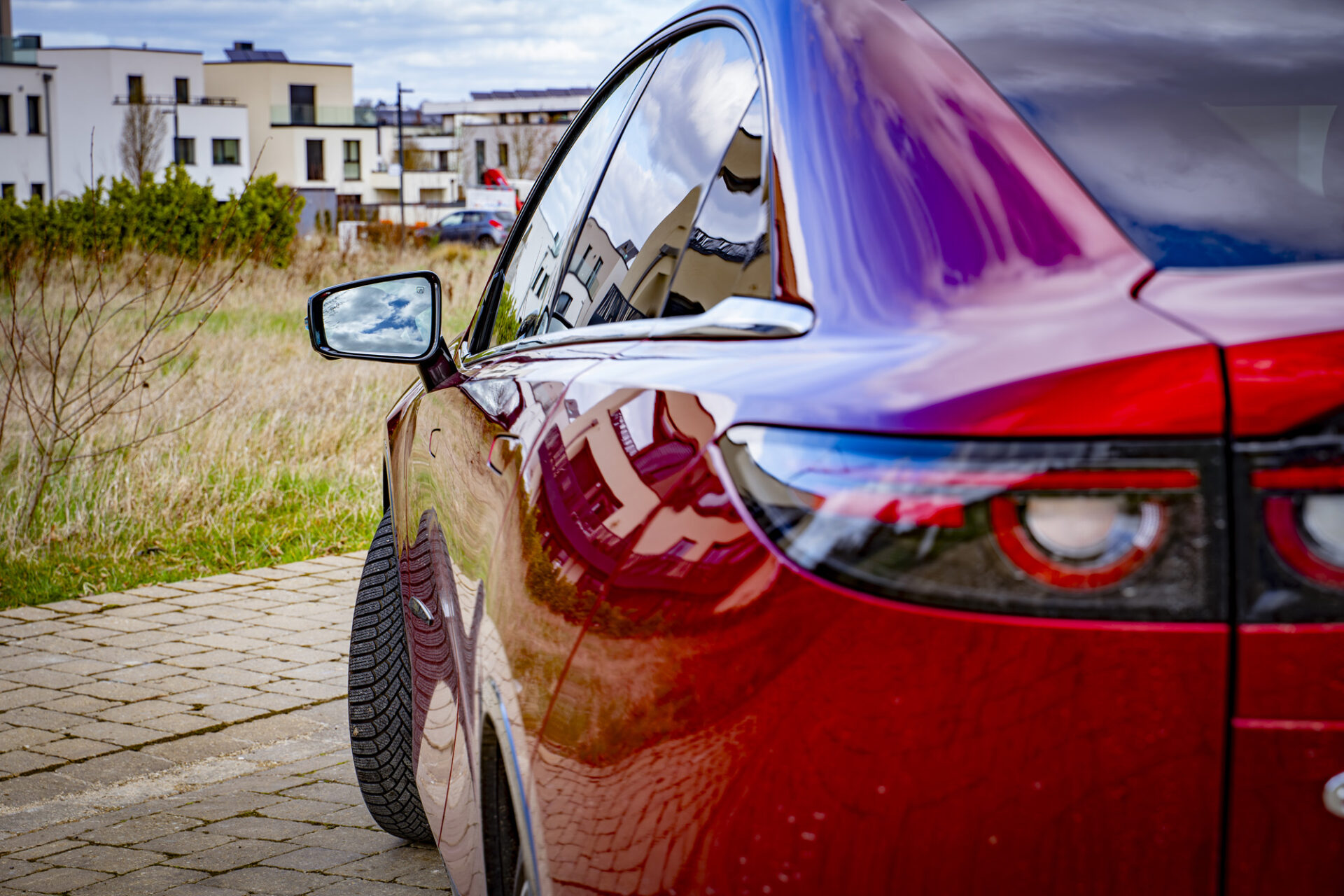
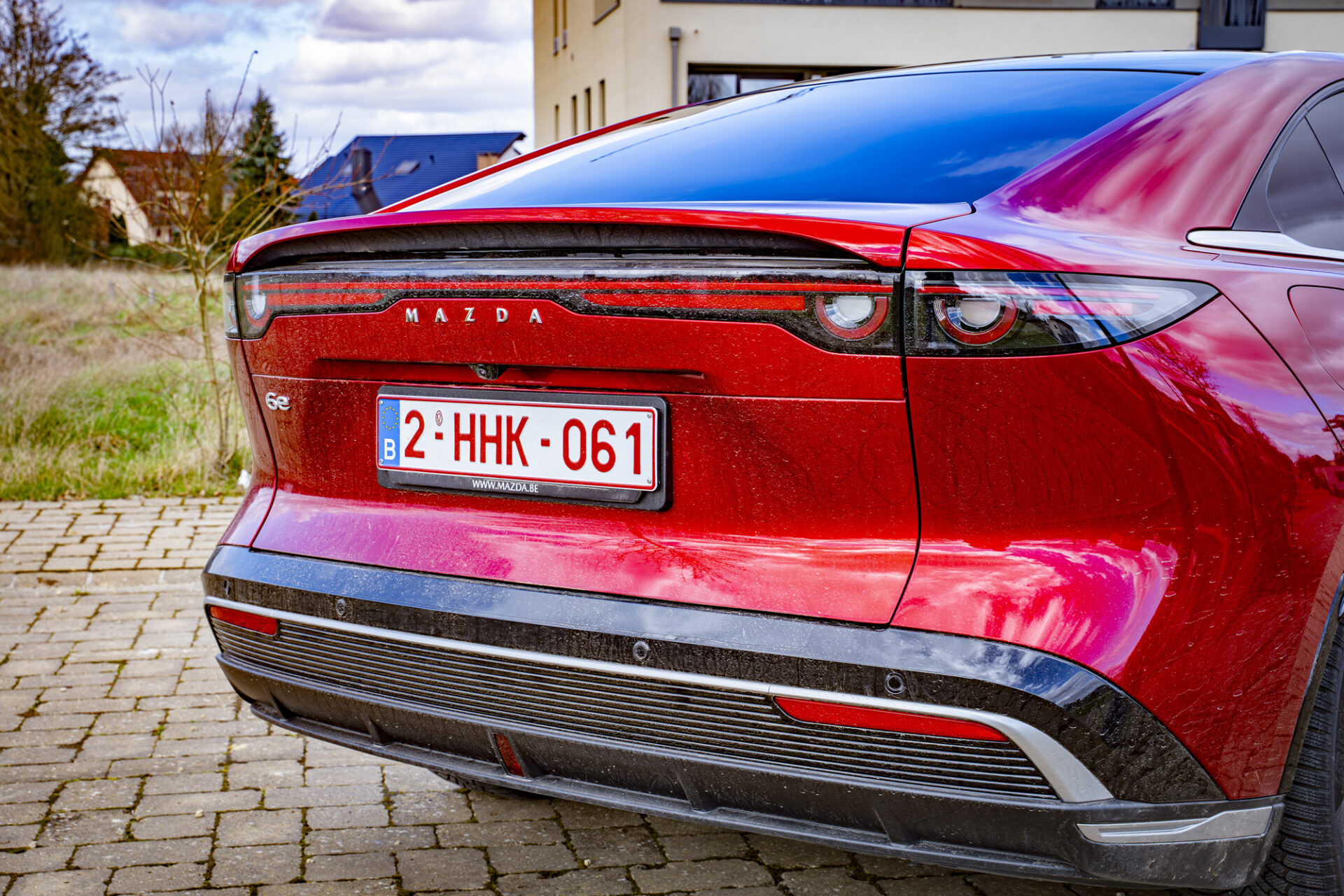
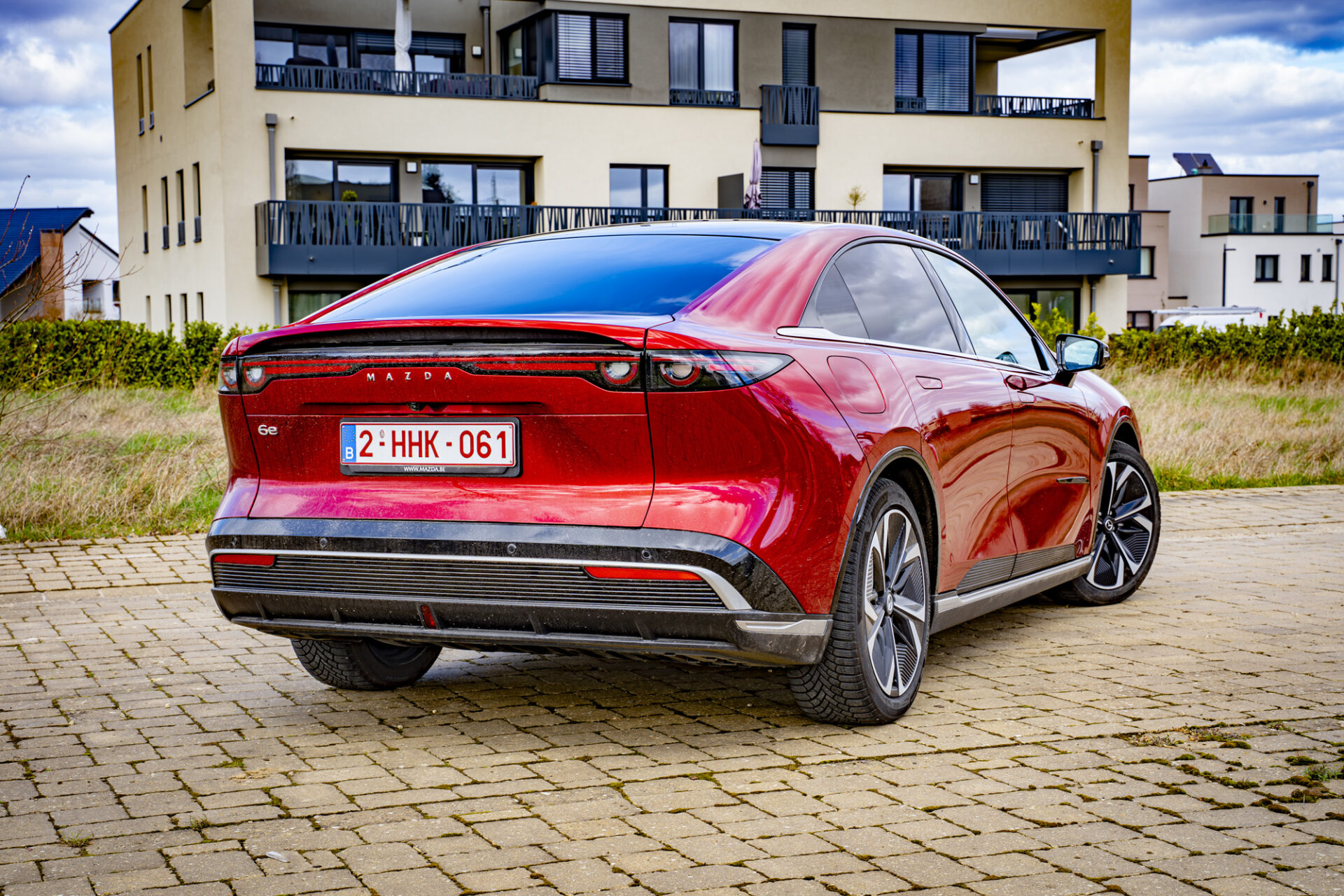
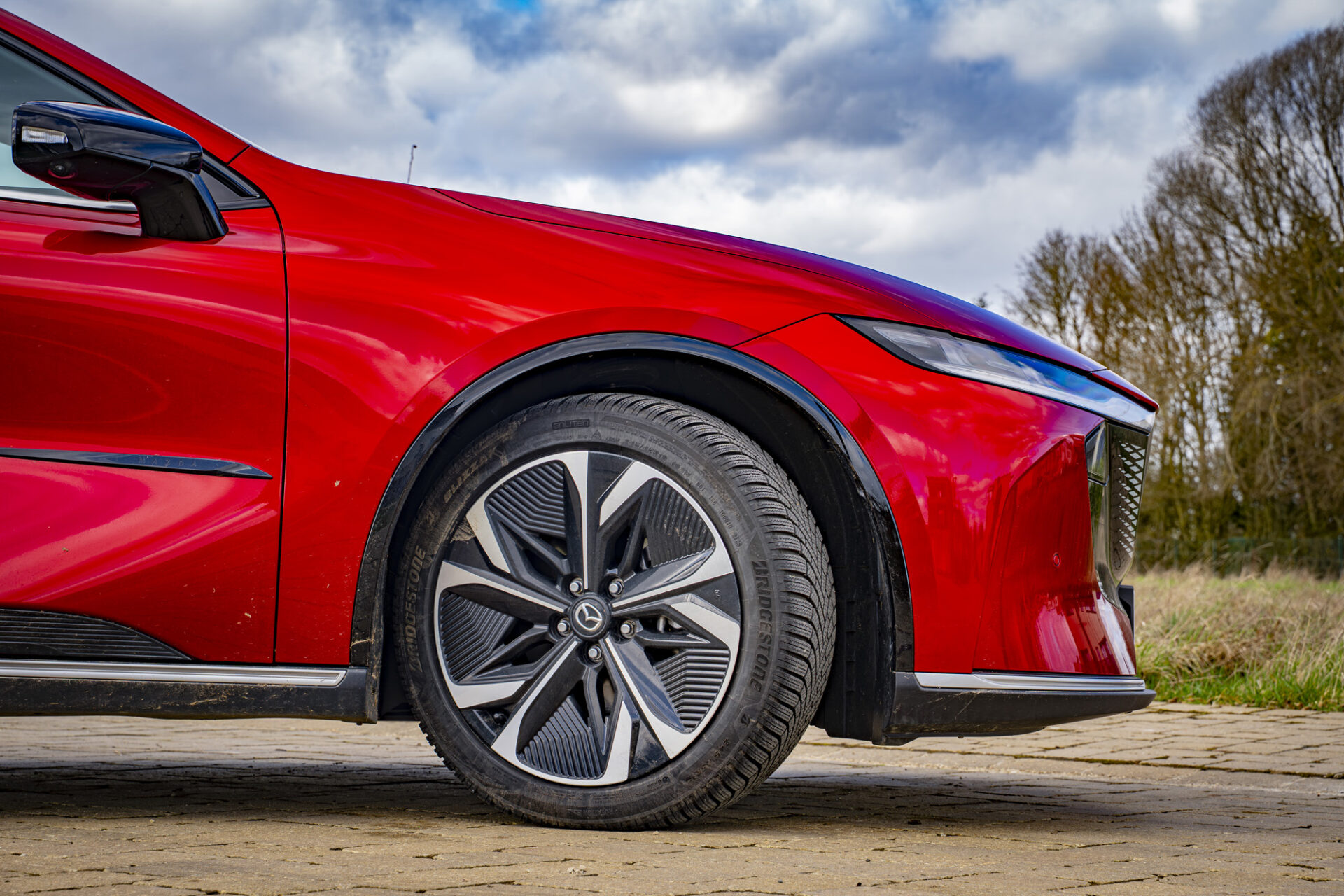
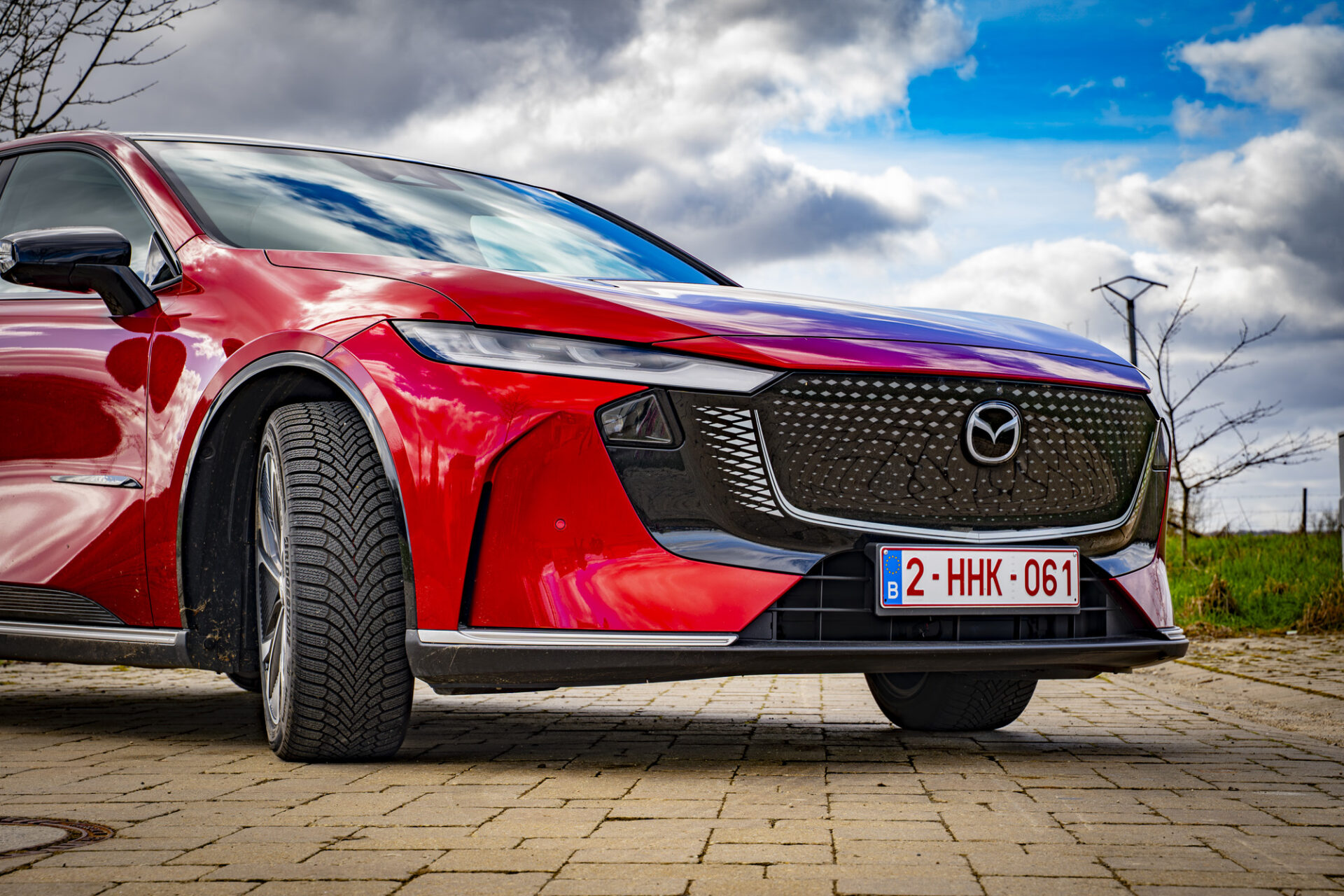
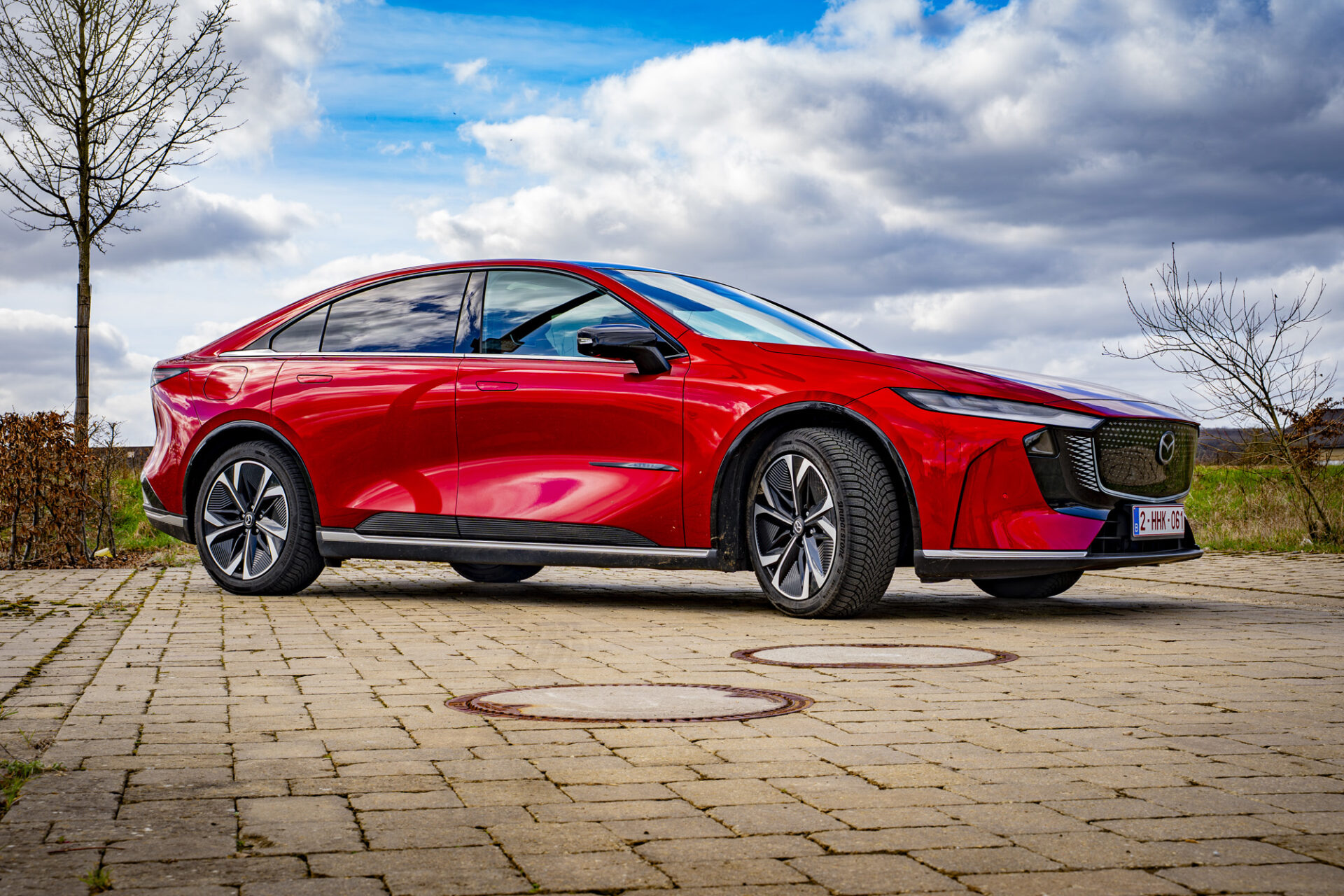
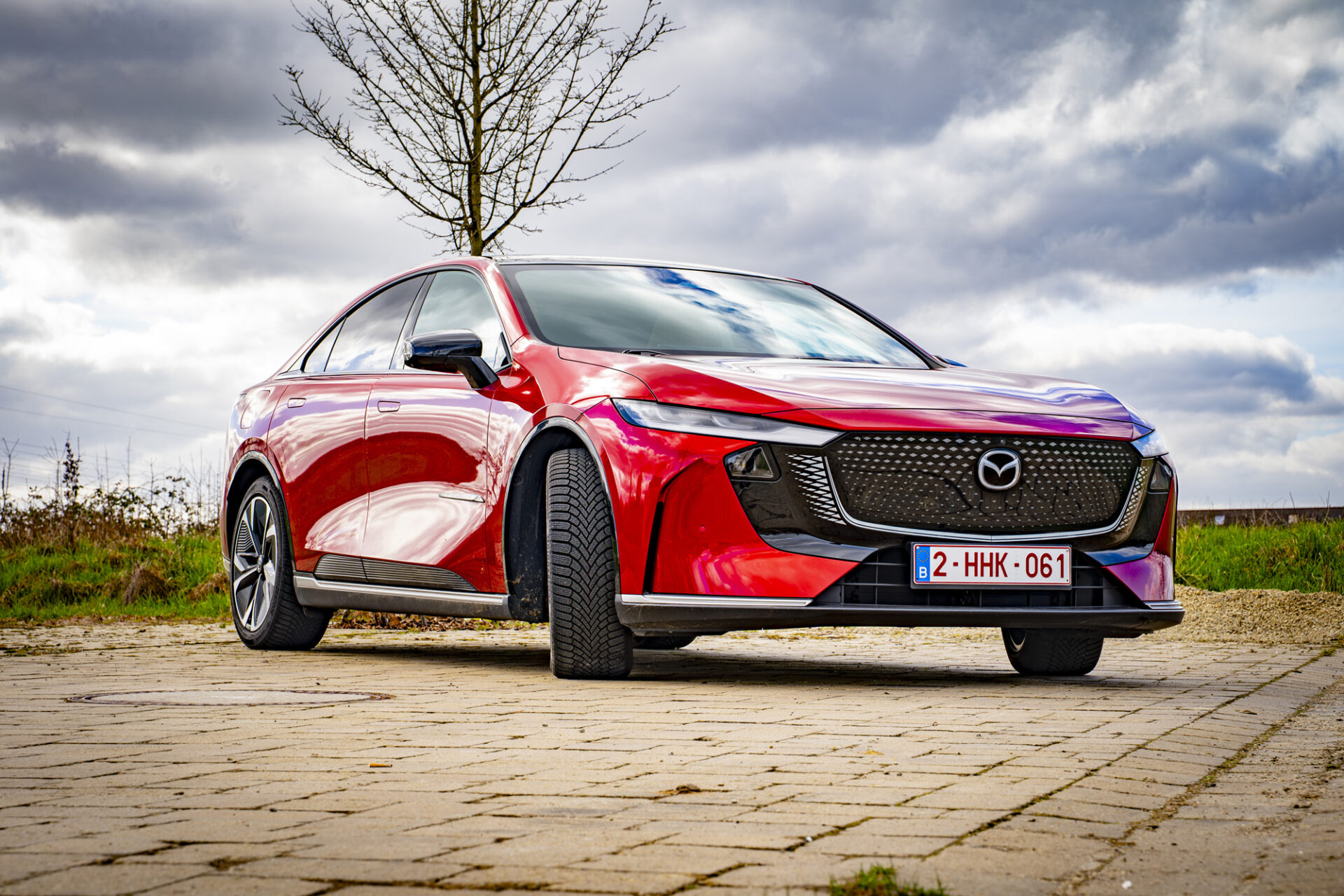
At Mazda, design is never left to chance. It is in fact one of the brand’s fundamental pillars, embodied by the Kodo philosophy – the “soul of motion”. From the very first glance, the saloon commands attention. At 4.92 metres long, with generous proportions and a 2.89-metre wheelbase, it clearly belongs in the grand tourer category. But beyond the figures, it is the balance of volumes that impresses. The sweeping roofline, almost fastback in profile, gives the car a particularly successful four-door coupé stance. The front end marks a notable evolution. The grille, now sealed to suit the electric powertrain, nevertheless retains a strong identity. It integrates seamlessly into a design dominated by a slim and expressive light signature. The now illuminated Mazda logo adds a technological and distinctive touch. In profile, the surface work is remarkable. The sculpted flanks play with light, creating subtle reflections that bring the bodywork to life. This impression of permanent motion, even at a standstill, is one of the most striking hallmarks of Kodo design. The iconic Soul Red Crystal colour takes on an almost artistic dimension here. Thanks to its multi-layered structure, it accentuates the contours and enhances the curves of the body. At the rear, the horizontal light signature reinforces the visual width of the vehicle. The “Mazda” lettering replaces the traditional logo – an aesthetic choice in line with current market trends.
Interior design: minimalism and refinement
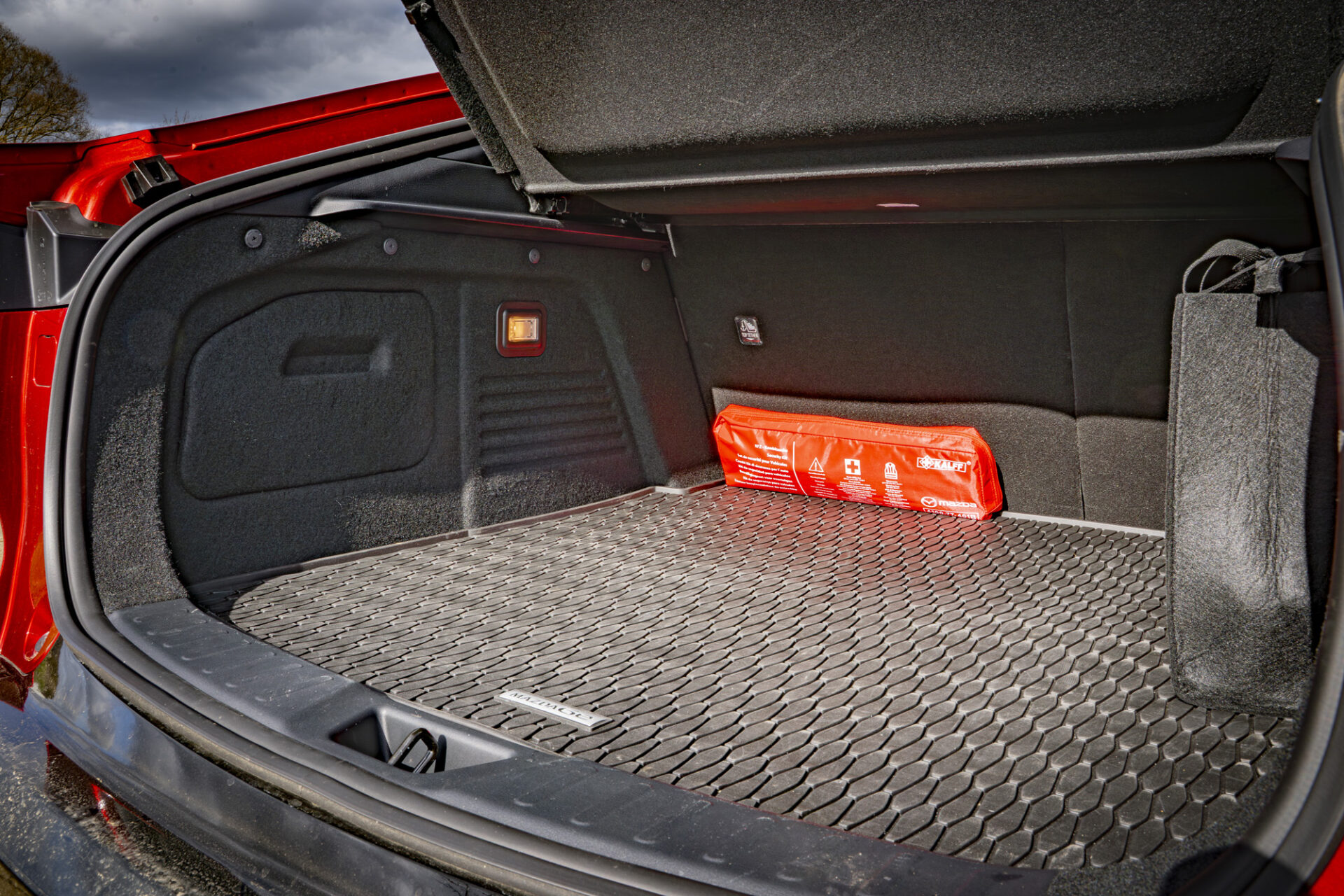
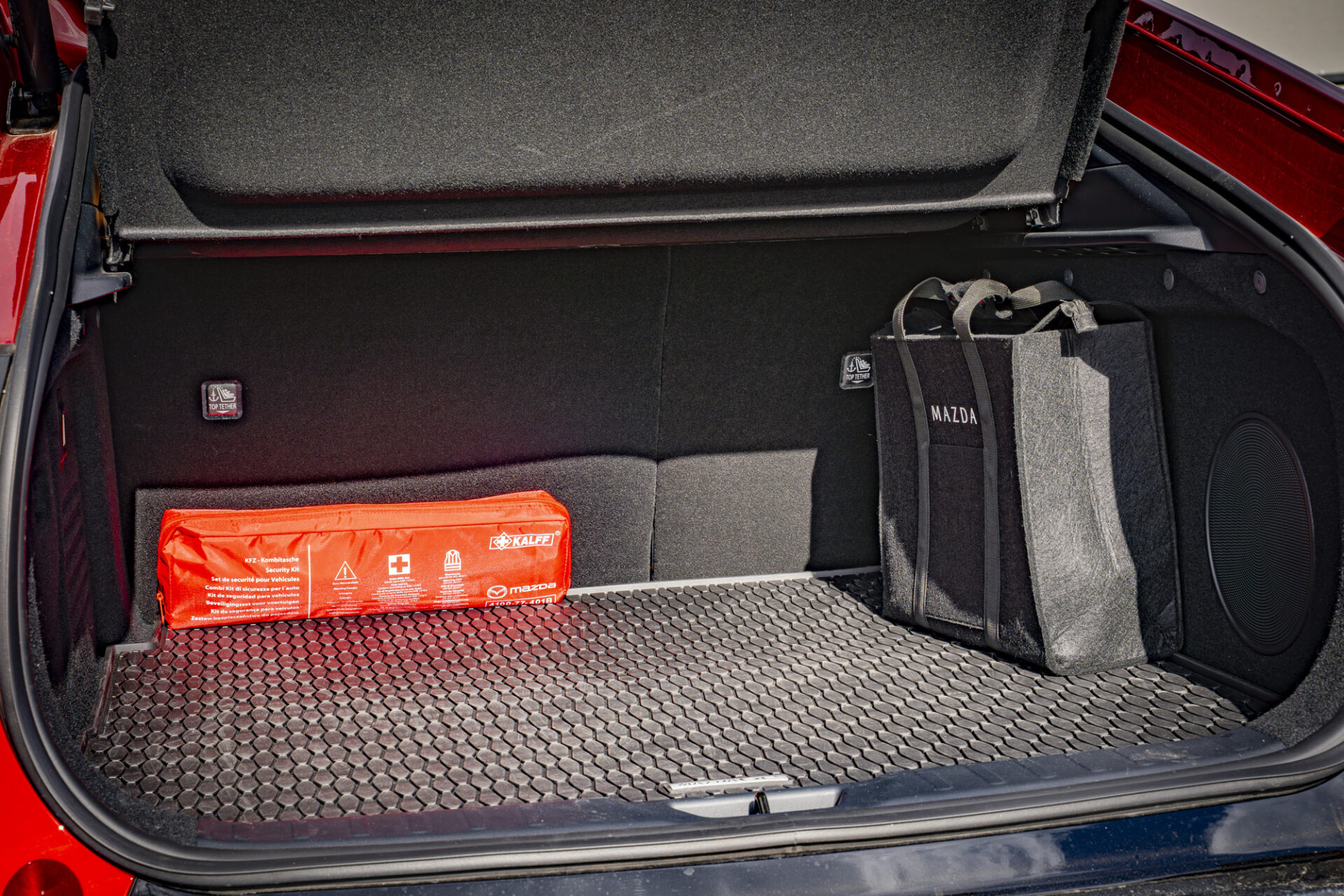
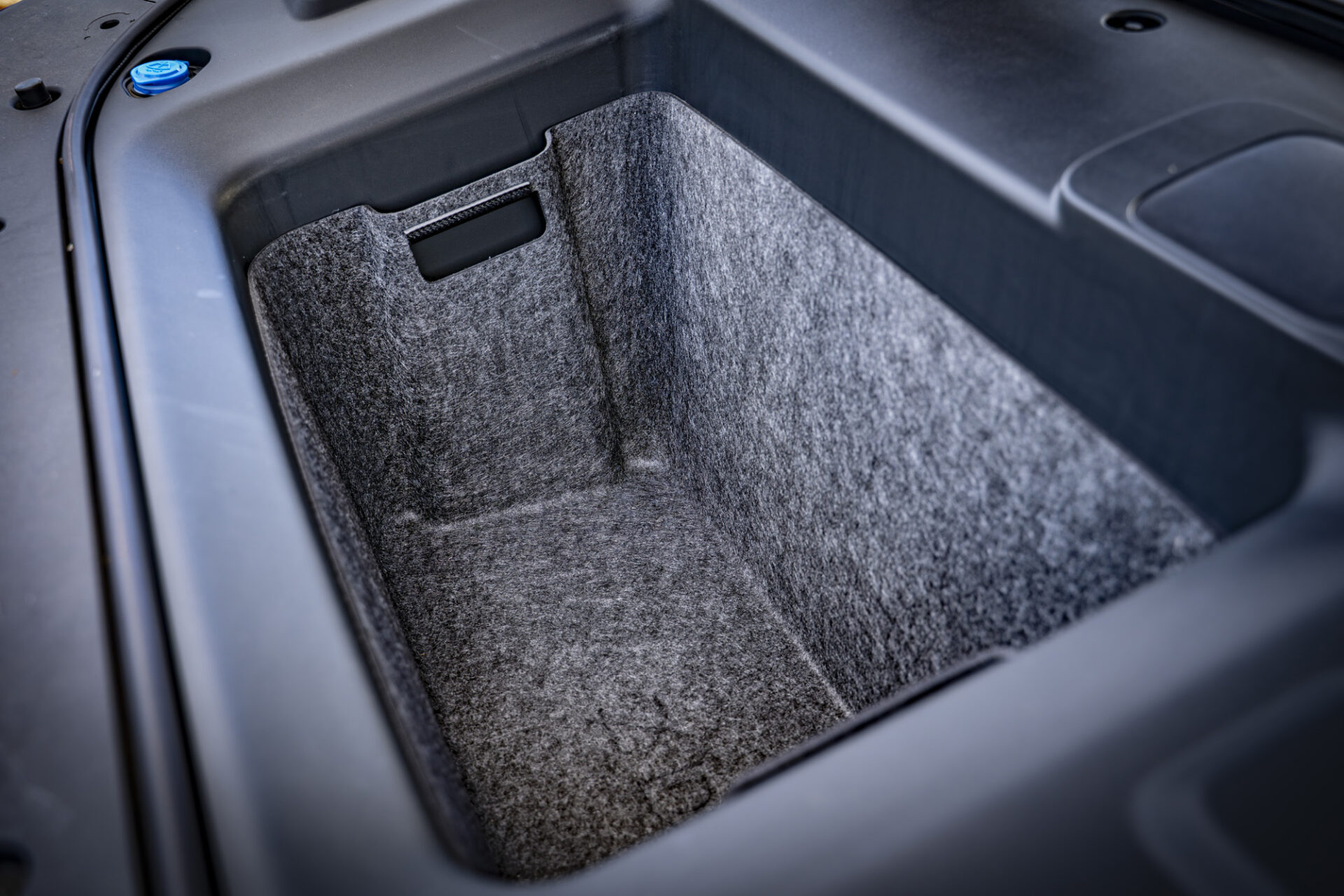
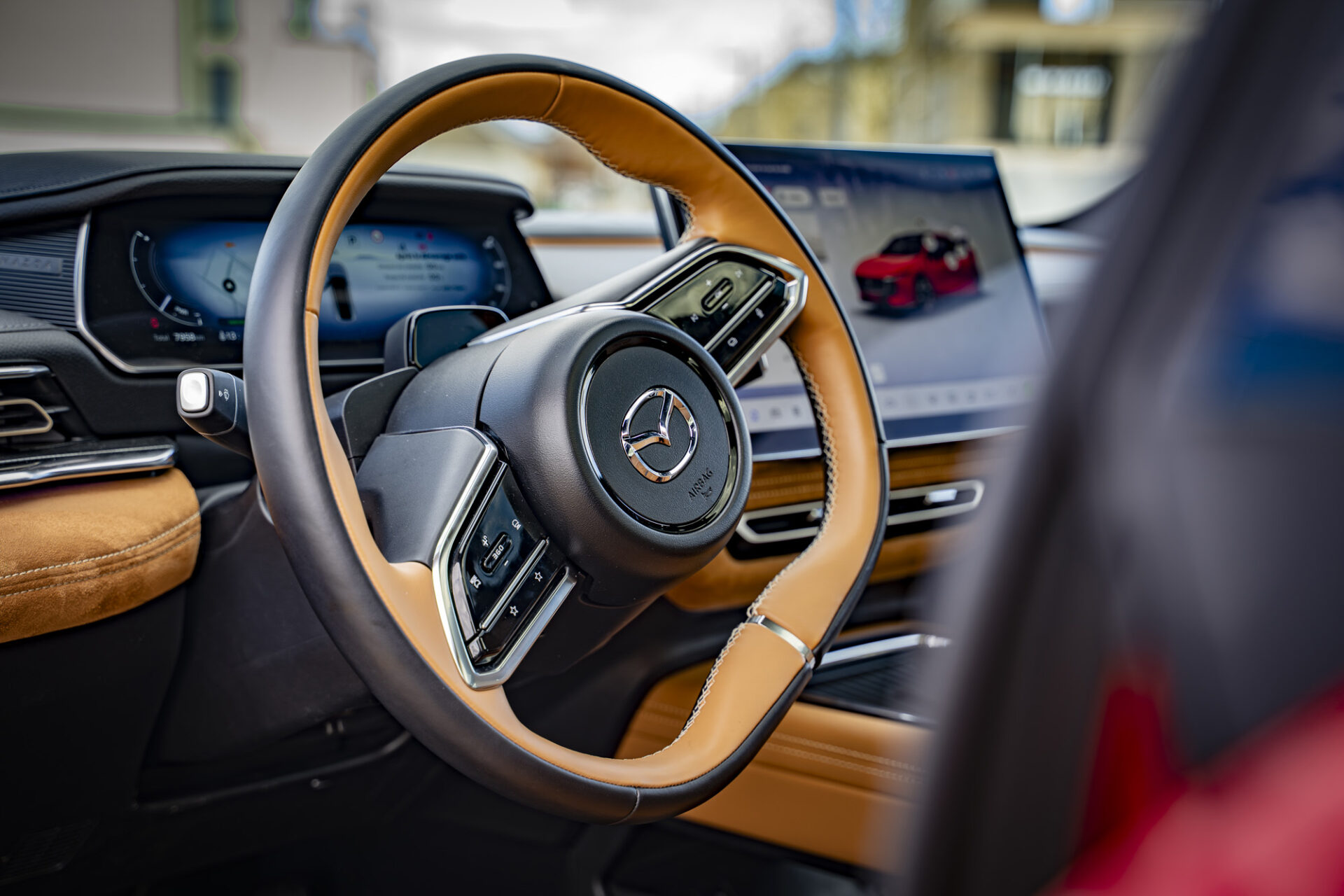
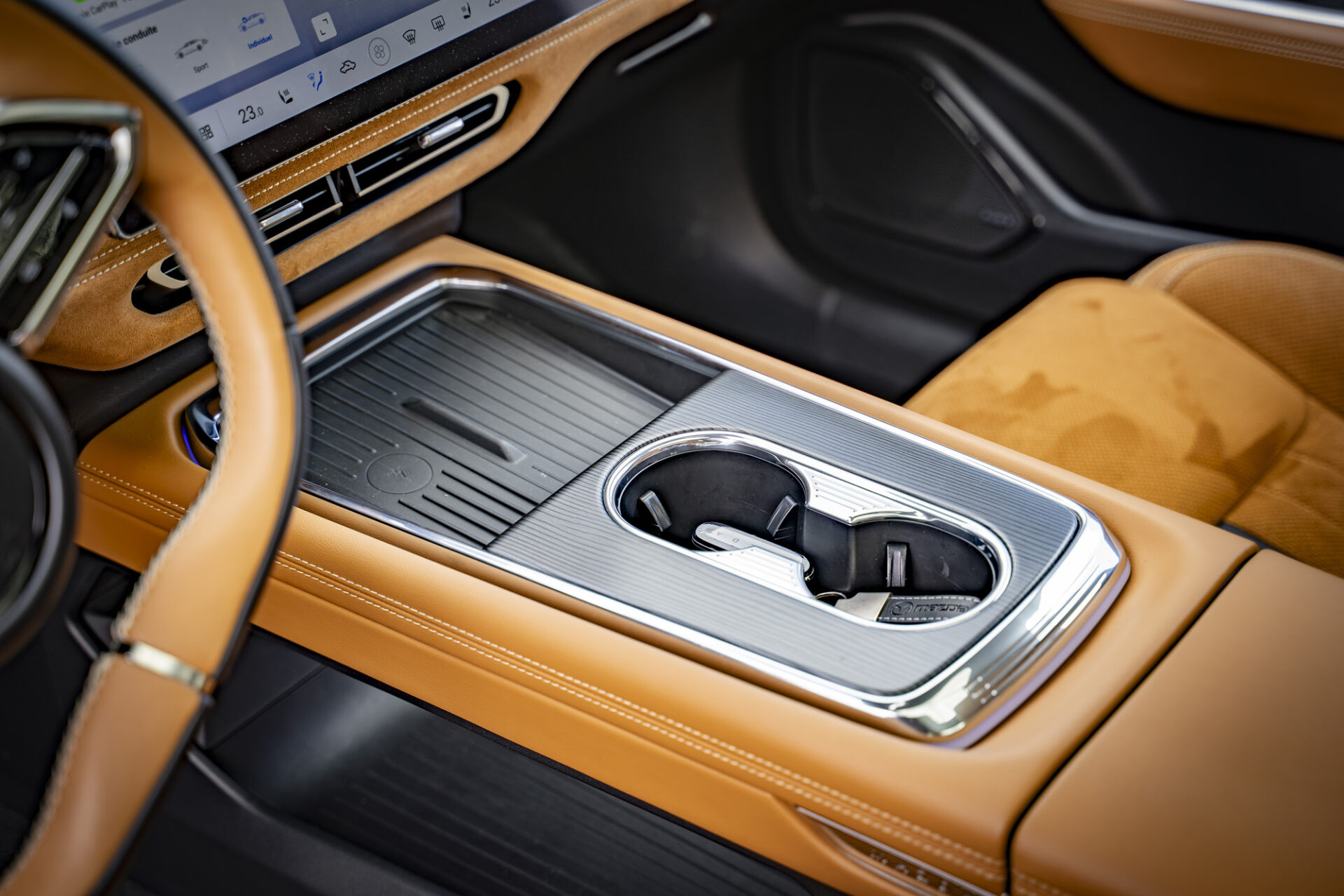
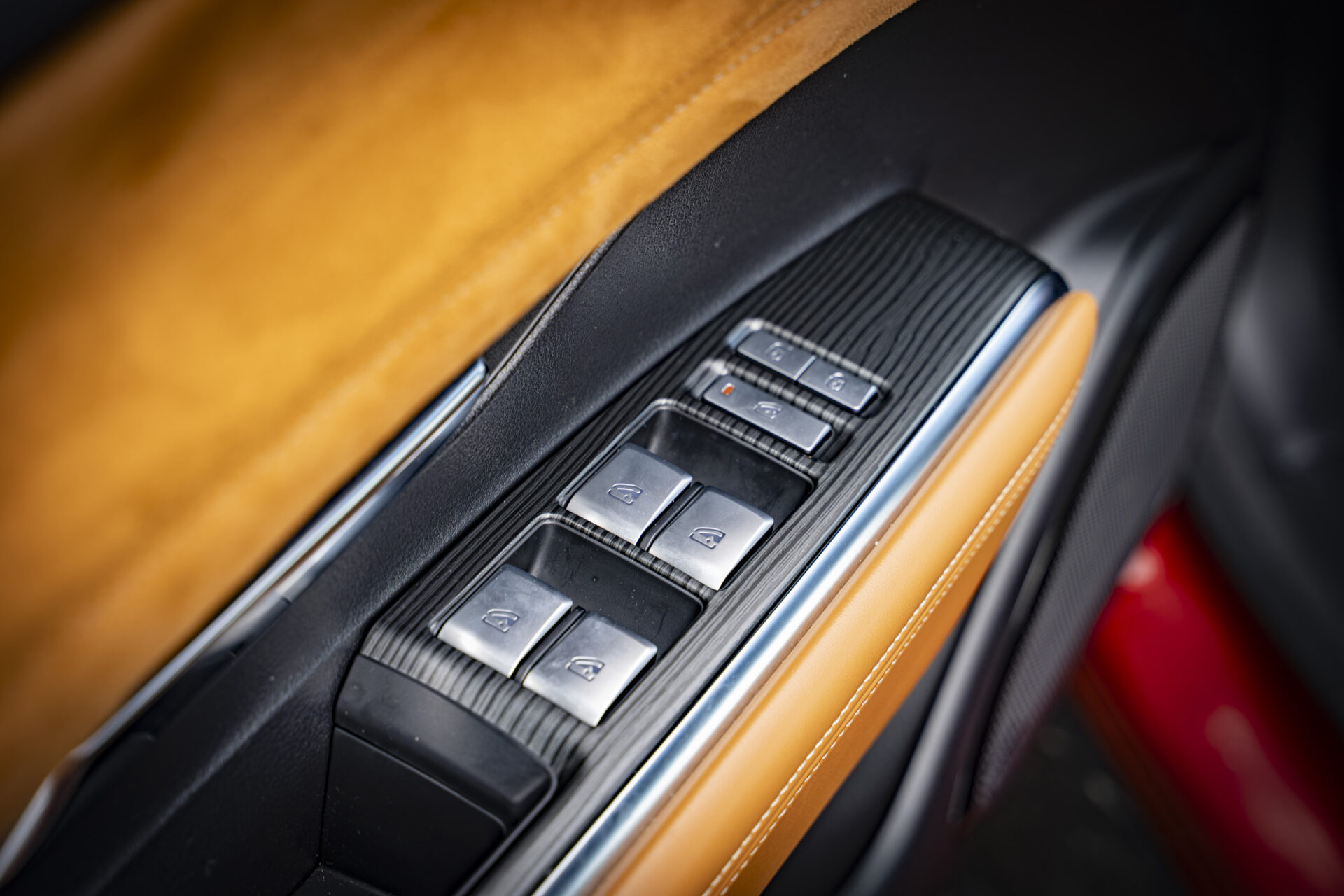
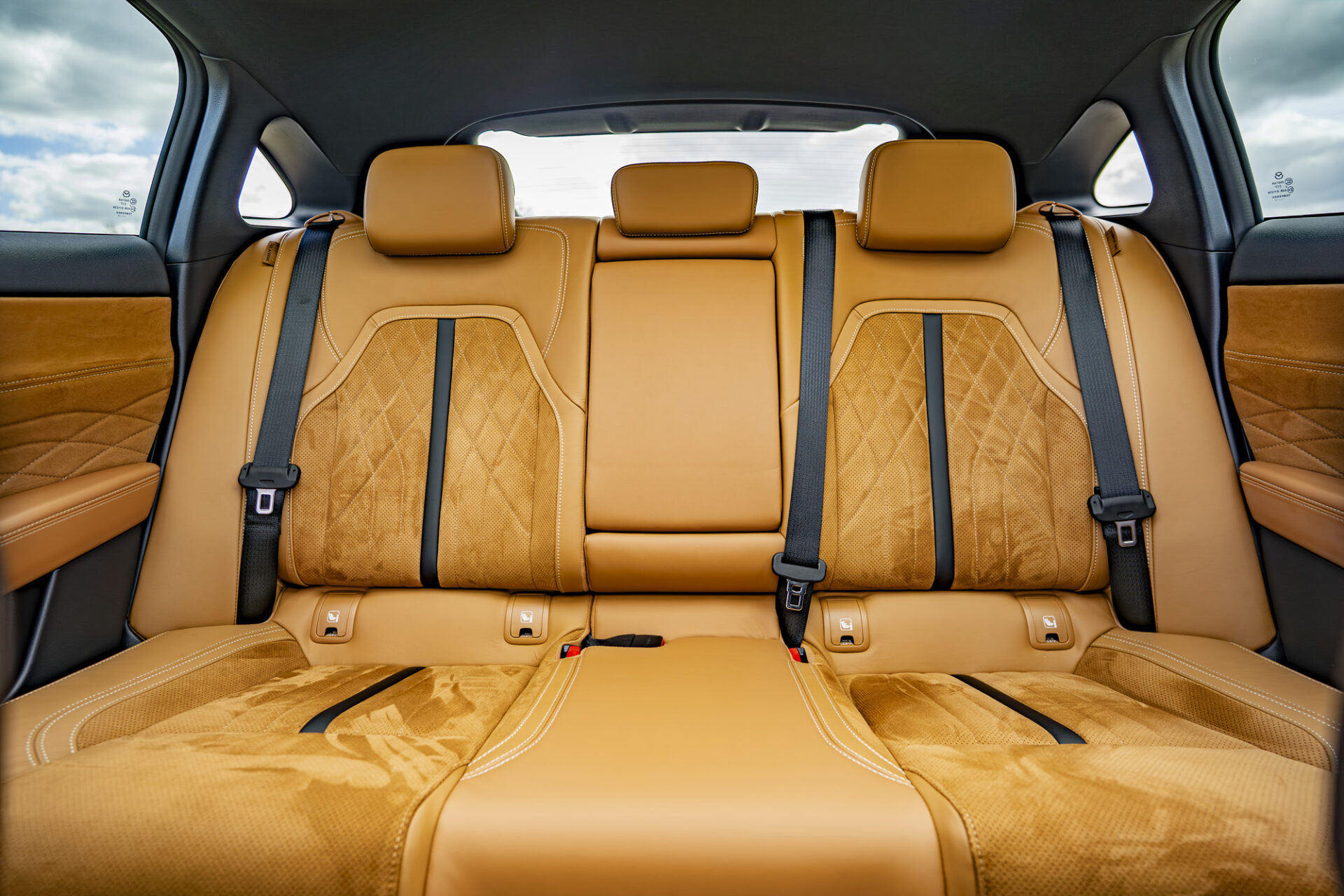
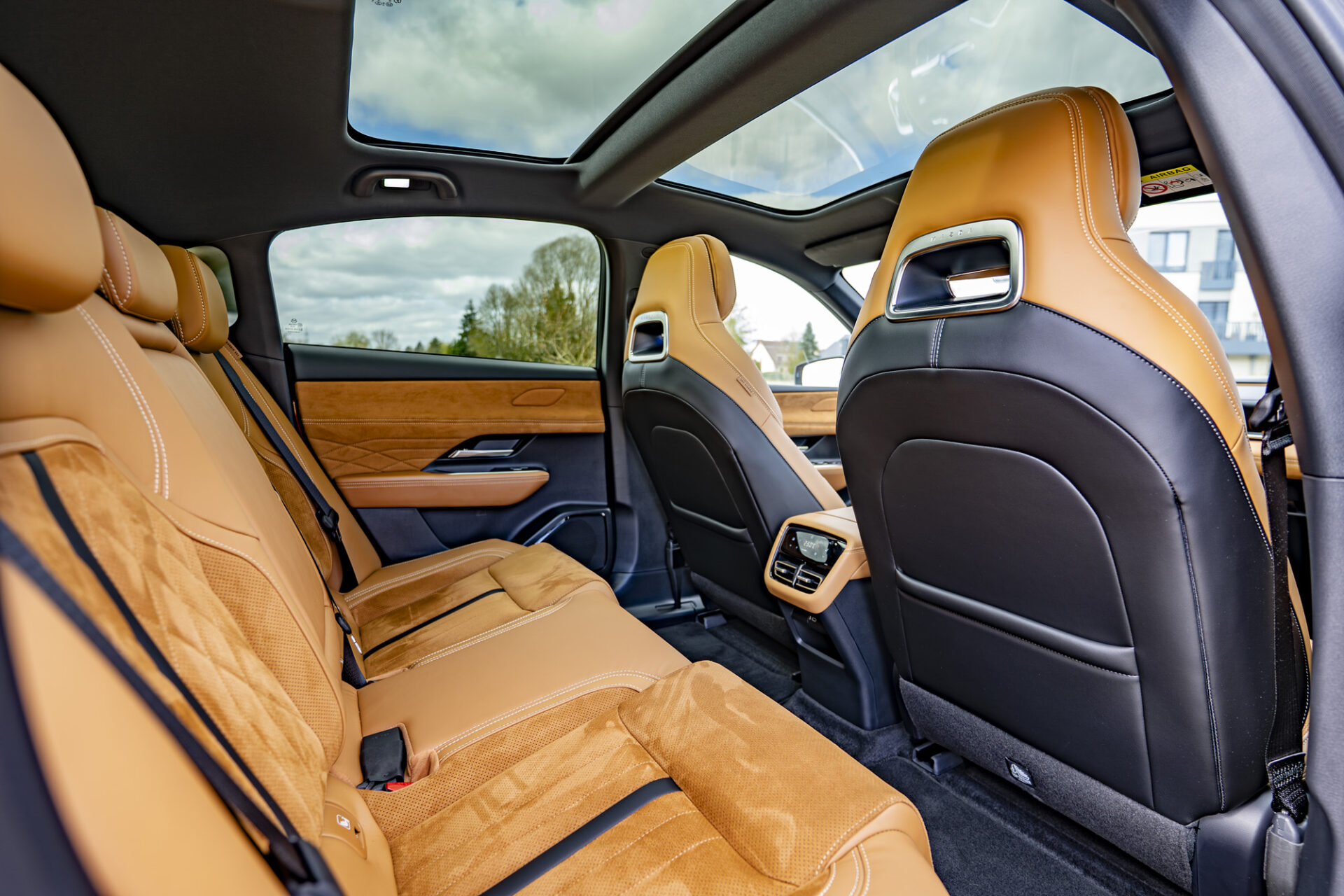
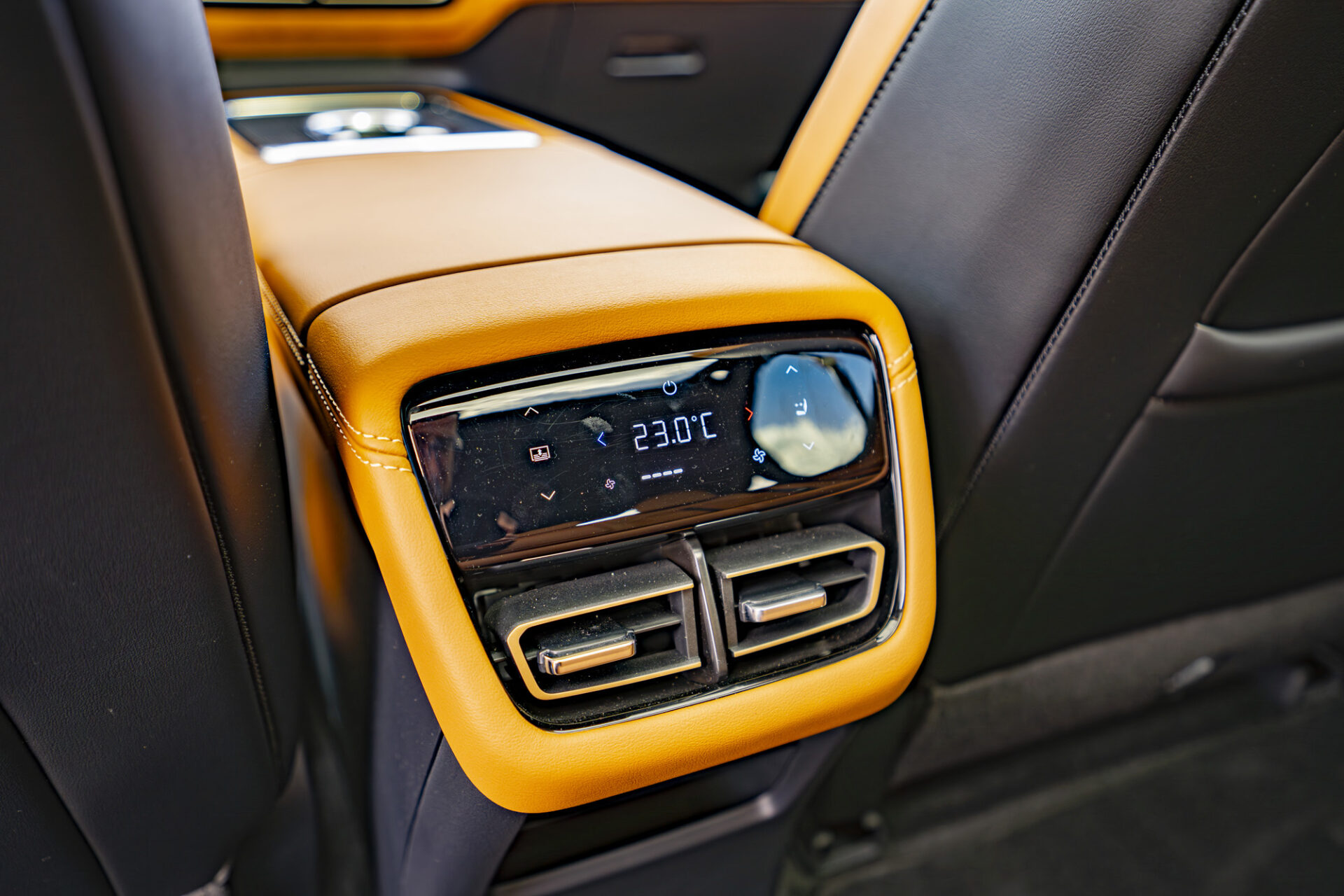
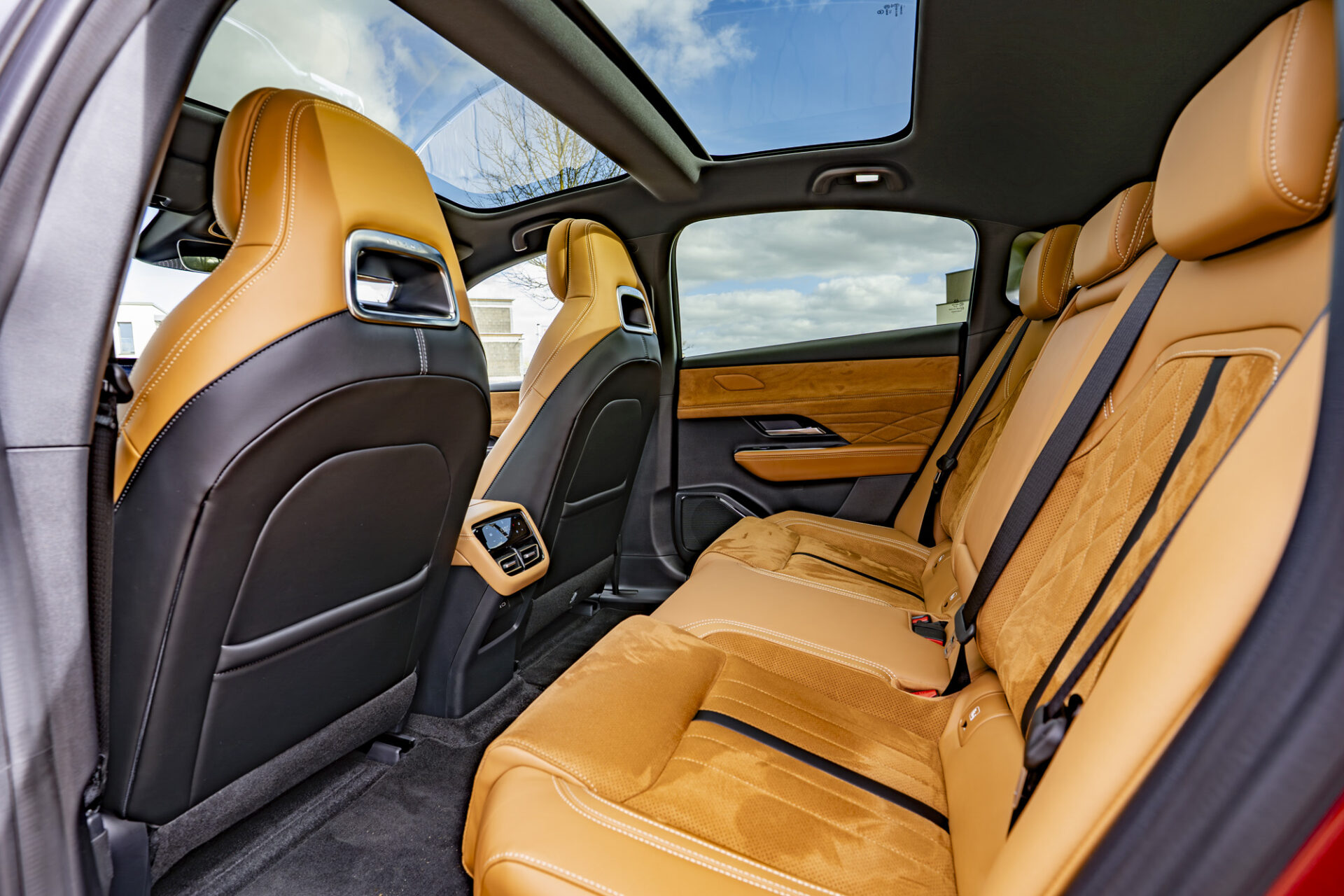
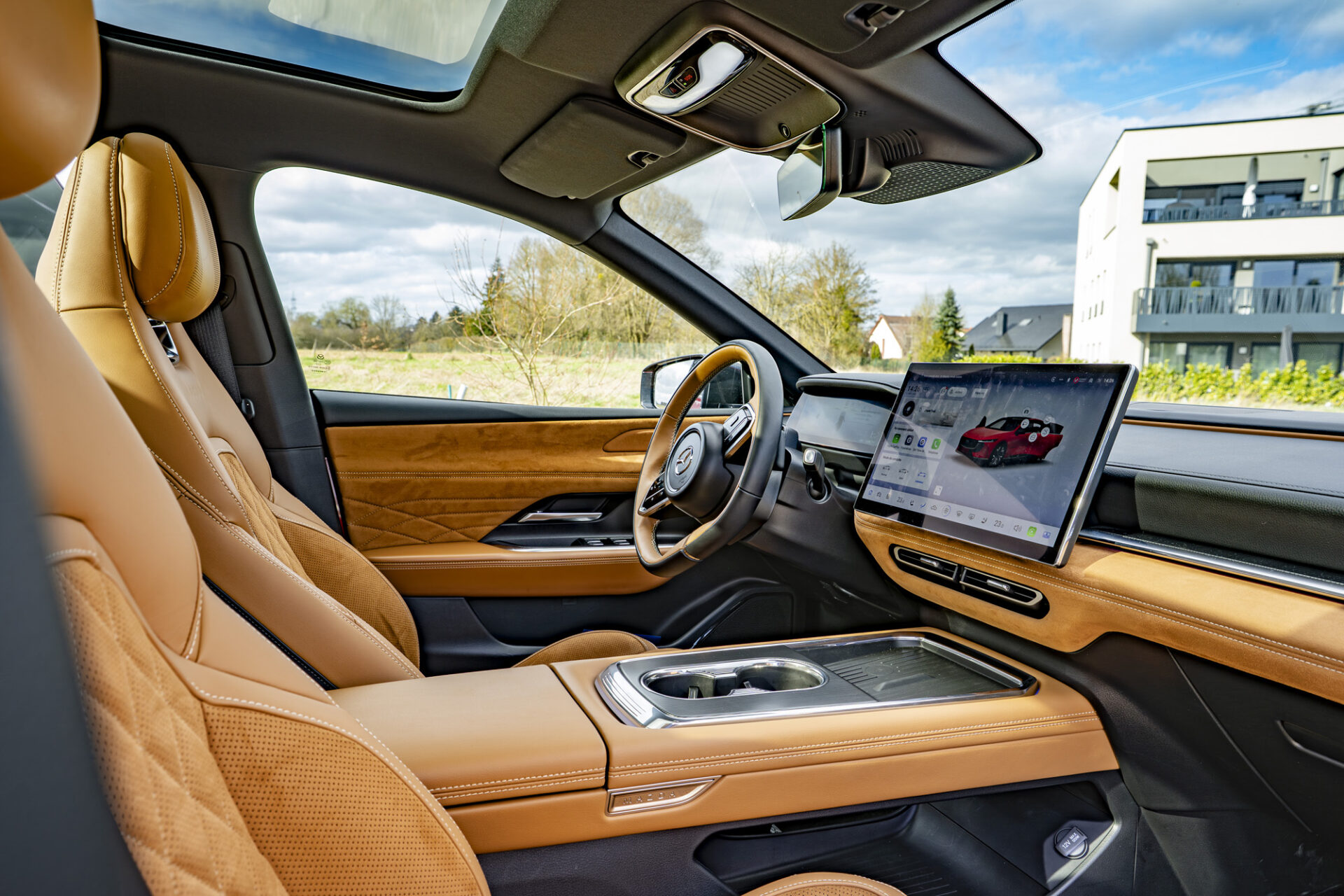
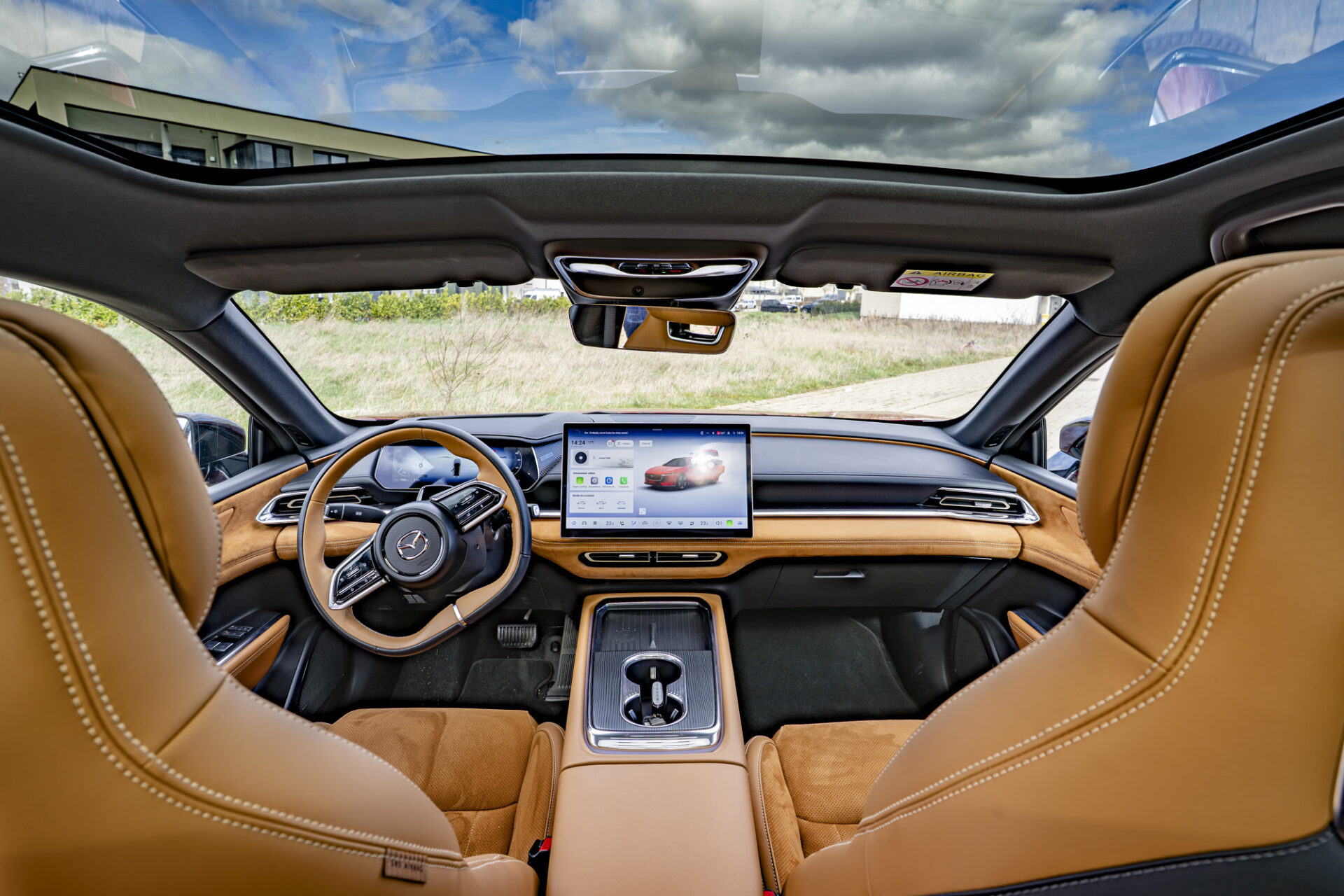
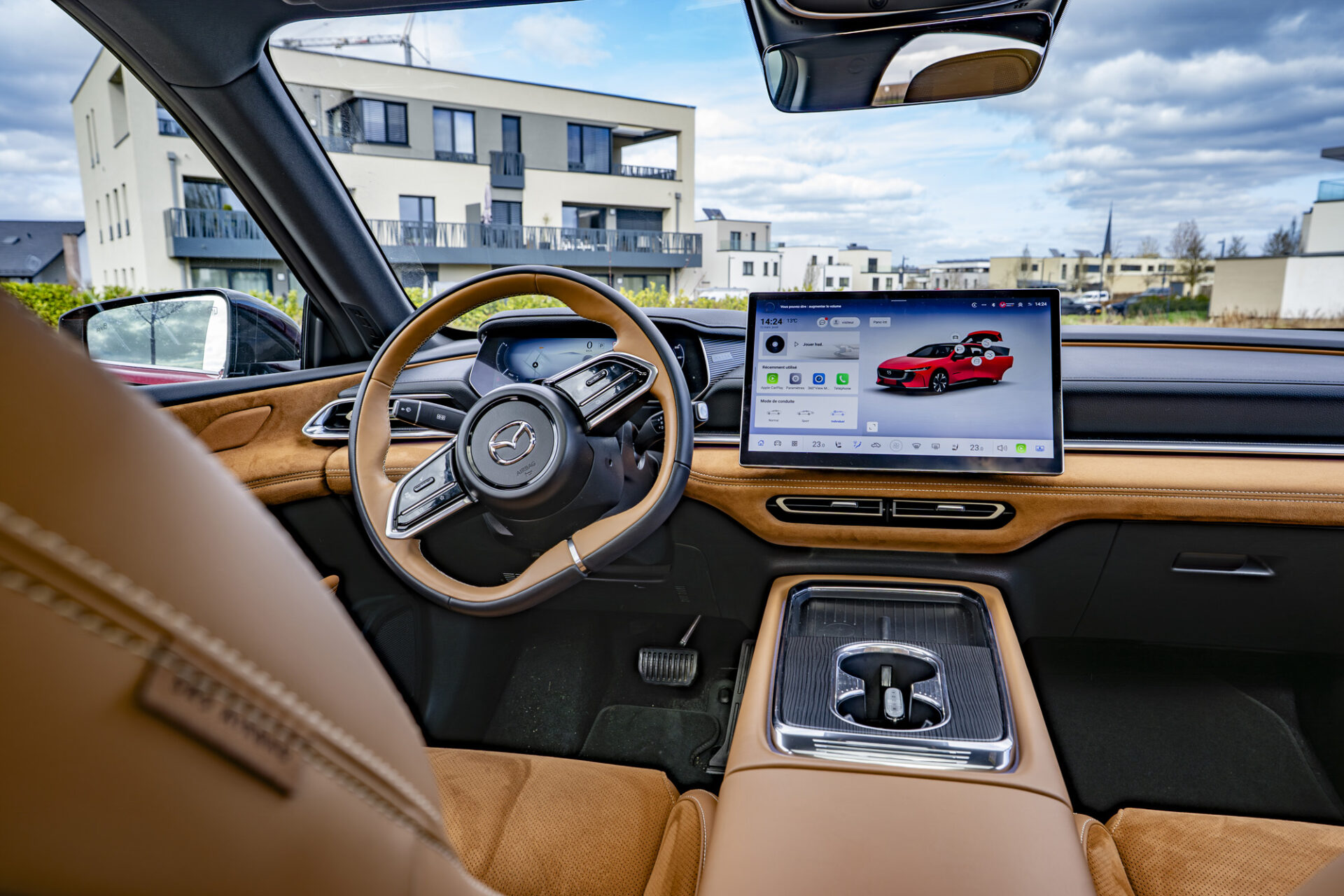
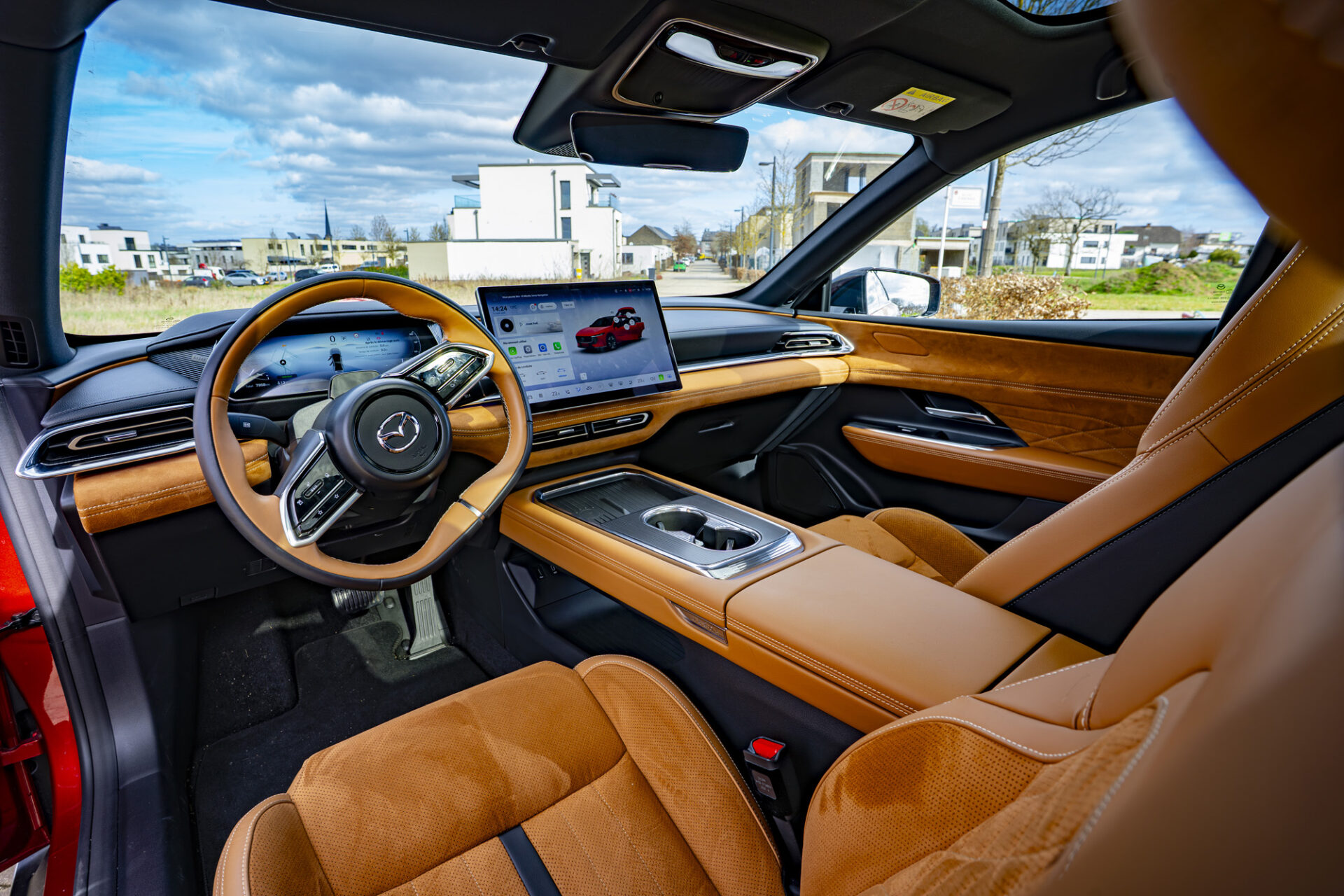
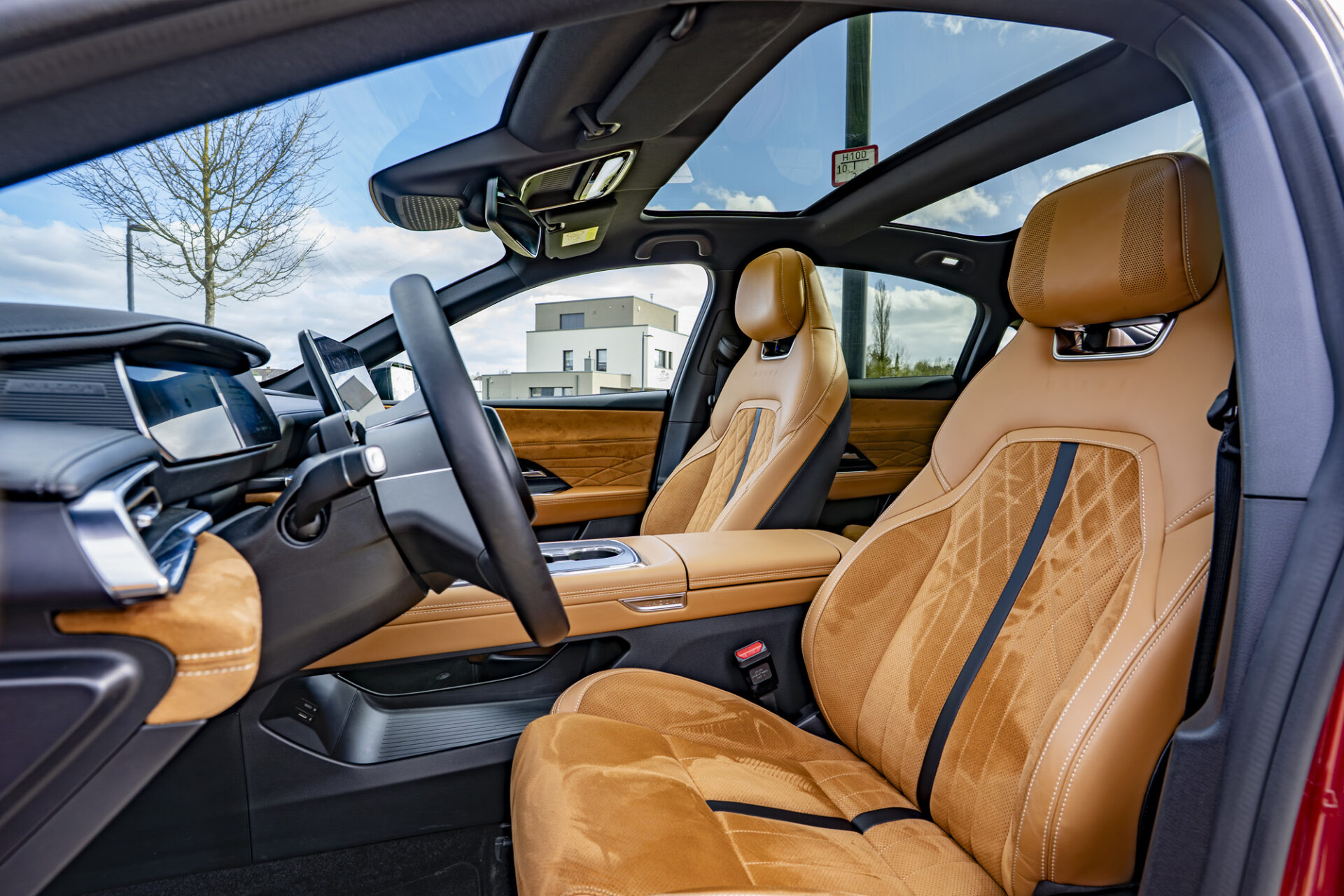
The cabin of the Mazda 6e marks a clear break from the brand’s previous offerings. Here, Mazda adopts a resolutely minimalist approach, inspired by Japanese design and the “less is more” philosophy. As soon as you open the pillarless door, the impression is clear: you are stepping up a class. In Takumi Plus trim, the interior ambiance is warm and sophisticated. The combination of Nappa leather and suede-like material in a tan hue creates an atmosphere that is both premium and welcoming. The materials are carefully selected, the fit and finish precise, and the perceived quality is good. The particularly clean dashboard is clad in a high-quality synthetic leather that underscores the attention paid to perceived quality, as do the upper sections of the door panels. Physical buttons have vanished entirely, giving way to a fully digital interface. A large 14.6-inch central screen brings together all infotainment functions, while a 10.2-inch digital instrument cluster sits behind the steering wheel. While this approach may be disconcerting at first, the system ultimately proves quite intuitive. The ergonomics have been designed to minimise distractions, although some users will miss physical controls for essential functions. On-board space is another strong point. Thanks to its generous wheelbase, the Mazda 6e offers remarkable rear-seat roominess. Passengers benefit from comfortable legroom and good natural light courtesy of the panoramic roof, making this saloon a true family grand tourer. Rear passengers can adjust the temperature directly via a small control screen and slide the front passenger seat forwards or backwards to gain extra space. On the practicality front, the boot offers a volume of 466 litres, supplemented by a 72-litre frunk at the front. The latter proves handy for storing charging cables.
Electric powertrain: efficiency and balance
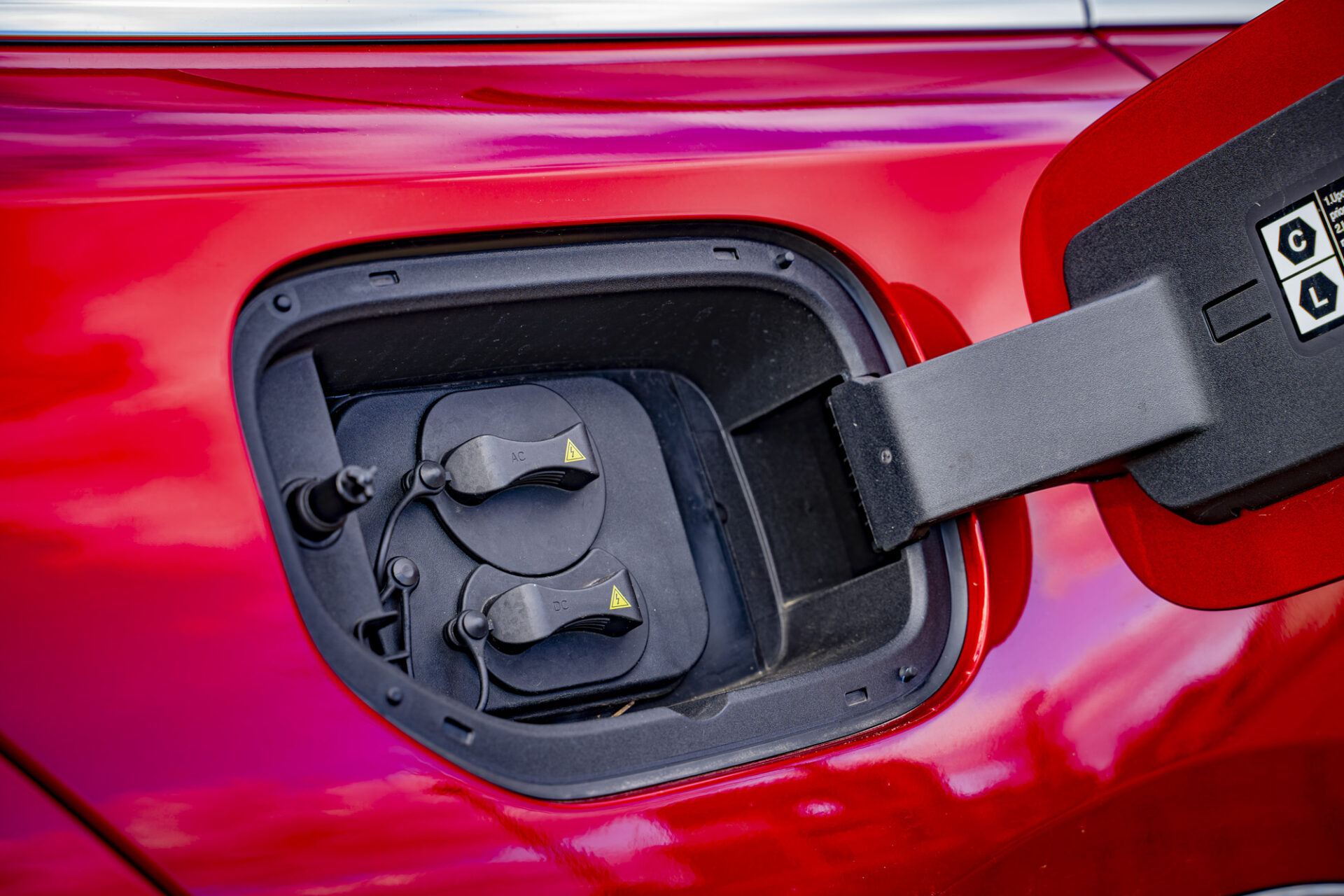
Beneath its elegant silhouette, the Mazda 6e conceals a modern technical architecture. It is powered by an electric motor producing 258 hp and 320 Nm of torque, sent to the rear wheels. A deliberate choice by Mazda, true to its driving philosophy centred on enjoyment and balance. The LFP (lithium iron phosphate) battery has a capacity of 68.8 kWh. This technological choice offers several advantages, particularly in terms of durability and thermal stability, even though energy density remains slightly lower than that of NMC batteries. With a drag coefficient (Cd) of 0.22, the stated range reaches approximately 479 kilometres on the WLTP cycle, with an average consumption of 16.6 kWh/100 km. Under real-world conditions during our test, consumption ranged between 17 and 18 kWh/100 km, which is entirely consistent for a saloon of this size. Real-world range therefore sits at around 380 to 400 kilometres, depending on the type of journey. When it comes to charging, the Mazda 6e proves competitive. It accepts up to 11 kW of alternating current (AC), allowing a full charge in several hours on a home or public charging point. On direct current (DC), maximum power reaches 165 kW. Under optimal conditions, it is possible to go from 10 to 80% battery in approximately 30 minutes. The standard-fit heat pump is an important asset. It helps limit the impact of heating on range – a crucial point for users in winter conditions.
On the road: Mazda’s DNA preserved
A Mazda can never be reduced to a spec sheet. The manufacturer places particular emphasis on the driving feel, and this 6e is no exception. From the very first kilometres, the low and natural driving position is an immediate reminder of the brand’s values. The steering wheel falls perfectly to hand, and the whole package conveys a sense of connection with the road. The weight distribution, close to the ideal balance at 47% front and 53% rear, contributes to sound and predictable handling. The rear-wheel drive reinforces this sense of dynamism while ensuring effective traction even on wet roads. Acceleration is brisk but progressive. Mazda reduces acceleration performance when battery level approaches 25%. This intelligent management helps preserve both battery longevity and remaining range. Furthermore, the vehicle is equipped with a dynamic spoiler, helping to optimise aerodynamics and stability at high speed. Suspension comfort has been the subject of extensive development. The car efficiently absorbs road imperfections while maintaining good control over body movements. Sound insulation is also particularly well executed, reinforcing the sense of serenity on board. Three driving modes are available, allowing the vehicle’s behaviour to be adapted to the driver’s preferences. In addition, four levels of energy regeneration offer a degree of flexibility in driving management. Driver assistance systems are plentiful, as expected in this segment.
Conclusion: a credible and enticing alternative
With the Mazda 6e, the Japanese manufacturer makes a noteworthy entrance into the large electric saloon segment. Mazda offers a coherent vision of electric mobility. Priced from €41,472 in Takumi trim, it positions itself as a serious alternative to electric SUVs. An elegant, comfortable and enjoyable saloon that will appeal to those seeking a different approach to electric motoring.
Our verdict:
Pros:
Efficiency
Interior quality
Boot space
No exorbitant options list
Heat pump as standard
Cons:
No matrix LED headlights
Abrupt driver assistance systems
Slow Apple CarPlay
Too much touchscreen control
Technical specifications:
Power: 258 hp (190 kW)
Torque: 320 Nm
Battery capacity: 68.8 kWh
WLTP consumption: 16.6 kWh/100 km
WLTP electric range: 479 km
Top speed: 175 km/h Weight: 2,037 kg
Max AC charging power: 11 kW
Max DC charging power: 165 kW
Starting price: from €41,472