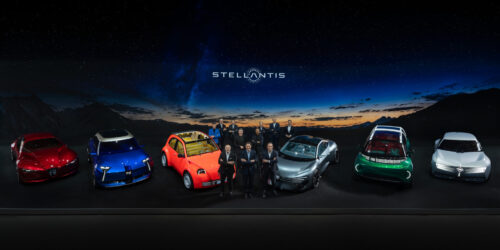
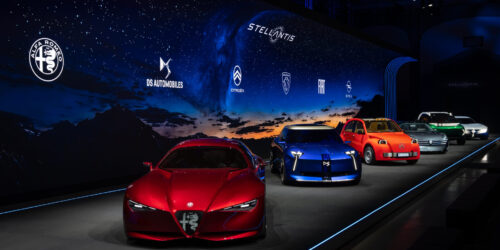
More than a dozen concept cars made their world debut in Paris, and almost no new production models did. The 91st Mondial de l’Auto will be remembered as a show of promises.
Manufacturers played the spectacle card. The stands carried sculpted silhouettes, reinvented cabins and technology billed for the day after tomorrow. It makes a fine display, but it leaves a sense of something unfinished, because the production car that follows usually borrows only one or two styling cues, if it arrives at all.
That is the main regret of this edition. Visitors still hope to find in the showroom the model that made their eyes light up under the spotlights.
What is a concept car for?
A playground for designers to begin with, the concept car has also become a communication tool and a decision-making aid. Three families can be told apart.
The pure styling exercise
A designer uses it to express an intention, a vision, which will not necessarily reach the production range. It remains an exercise in style.
The full-scale test
It gauges the mood of the press and the public. The manufacturer tries out equipment and technology that some will find eccentric or avant-garde, and measures the interest they generate. If the response is good, a very close production model can follow.
The near-production concept
The new 2CV is one such case. Citroën promises that the production version will stay very close to the concept. Showing the car well before it goes on sale also buys time to refine it in line with customer feedback.
Electric, and above all affordable
Beyond the concept car effect, manufacturers showed mostly all-electric models. What is new is the format. Small bodies, small batteries and contained prices now hold centre stage.
The economic climate surely has much to do with it. Purchasing power is falling almost everywhere in Europe, fuel prices are climbing, and range anxiety is fading as the charging network fills out.
The figures bear out the switch
Long criticised for the severity of its path towards 2035, the European Commission is now being proved right by sales. According to the International Energy Agency, more than 20 million electric cars were sold worldwide in 2025, a quarter of the market. Europe posted the strongest growth of the major markets, up 30% to a 28% share.
The trend has held. ACEA, the European carmakers’ association, counted 1.64 million battery-electric registrations in the Union between January and August 2026, 21.7% of the market against 15.8% a year earlier. Over the same period diesel fell to 7.3%.
That leaves price, and it is finally moving. Fewer than 10% of the electric models on sale in Europe came in under €30,000 in 2025, against roughly 5% a year earlier. Transport & Environment counts sixteen below €25,000 by the end of this year, four of them under €20,000. A survey from the same year puts the median price European buyers will accept at around €20,000.
Little wonder, then, that manufacturers are betting on smaller and cheaper models. Some are pushing for an entirely new segment, the “e-car”, more compact than today’s superminis and subject to lighter rules. The European Union is working on it, along the lines of the Japanese “kei car”, capped on size and power. A first step came in December 2025 with the M1E category, covering electric cars under 4.20 metres built in the Union.