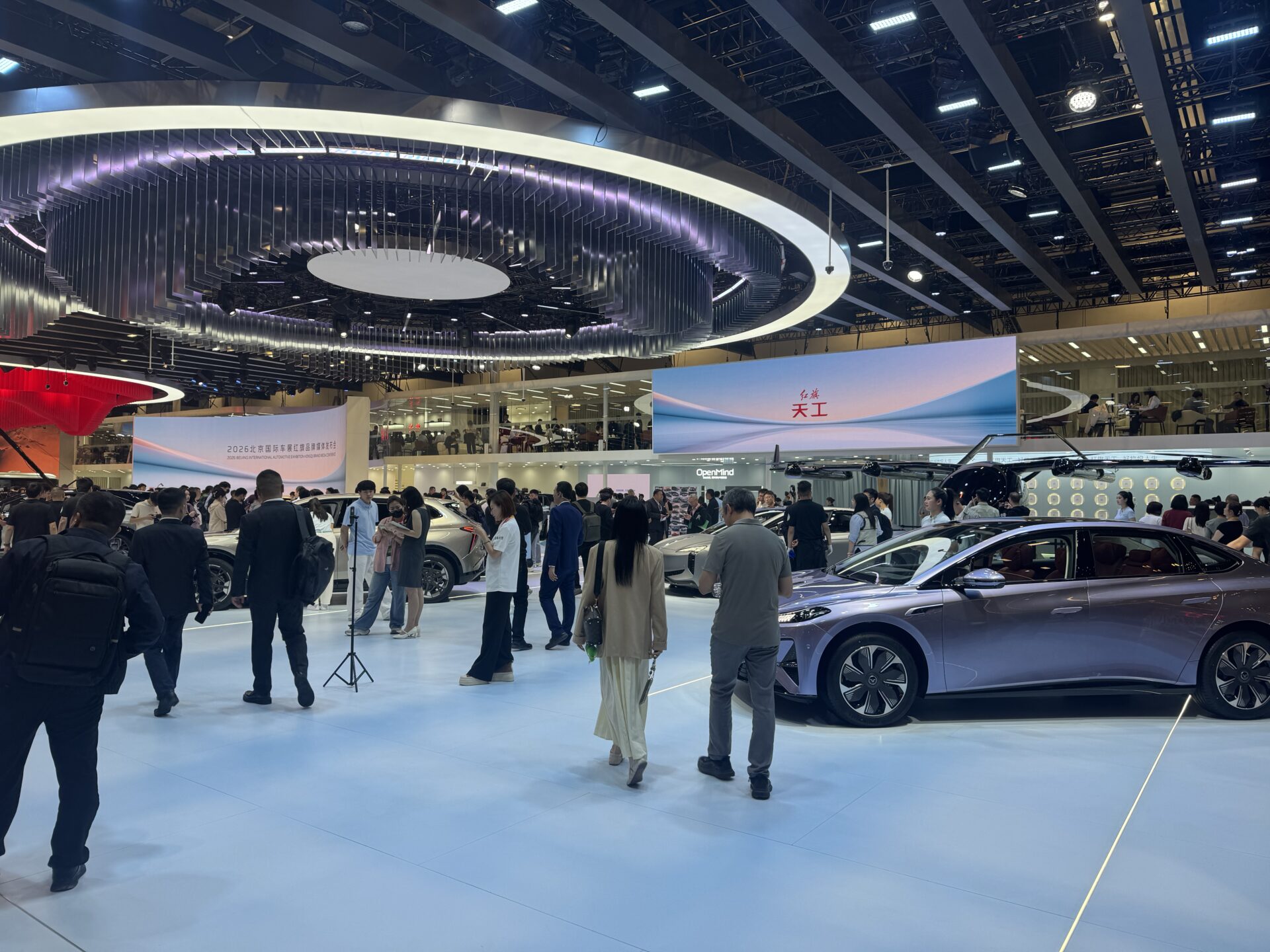
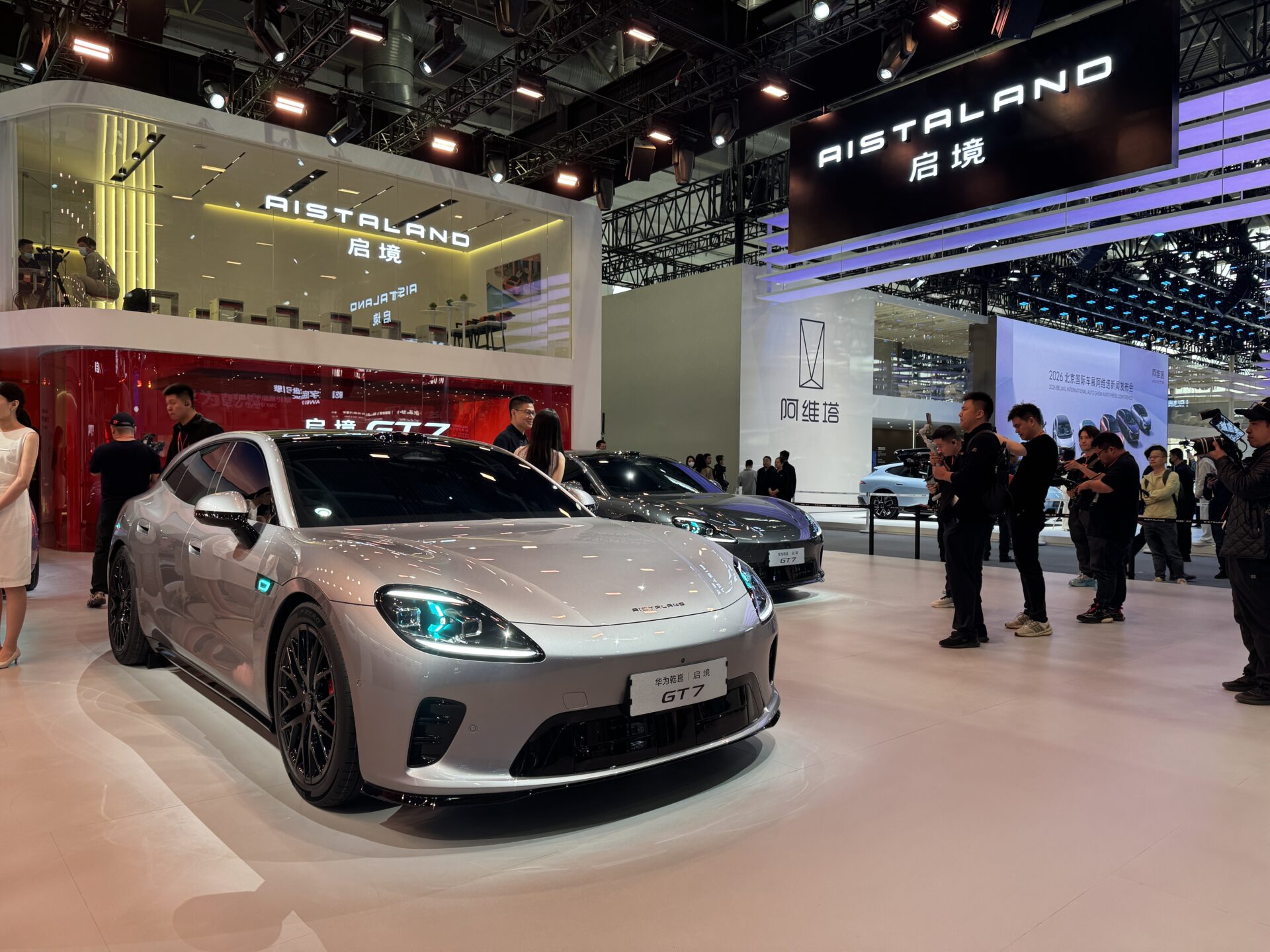
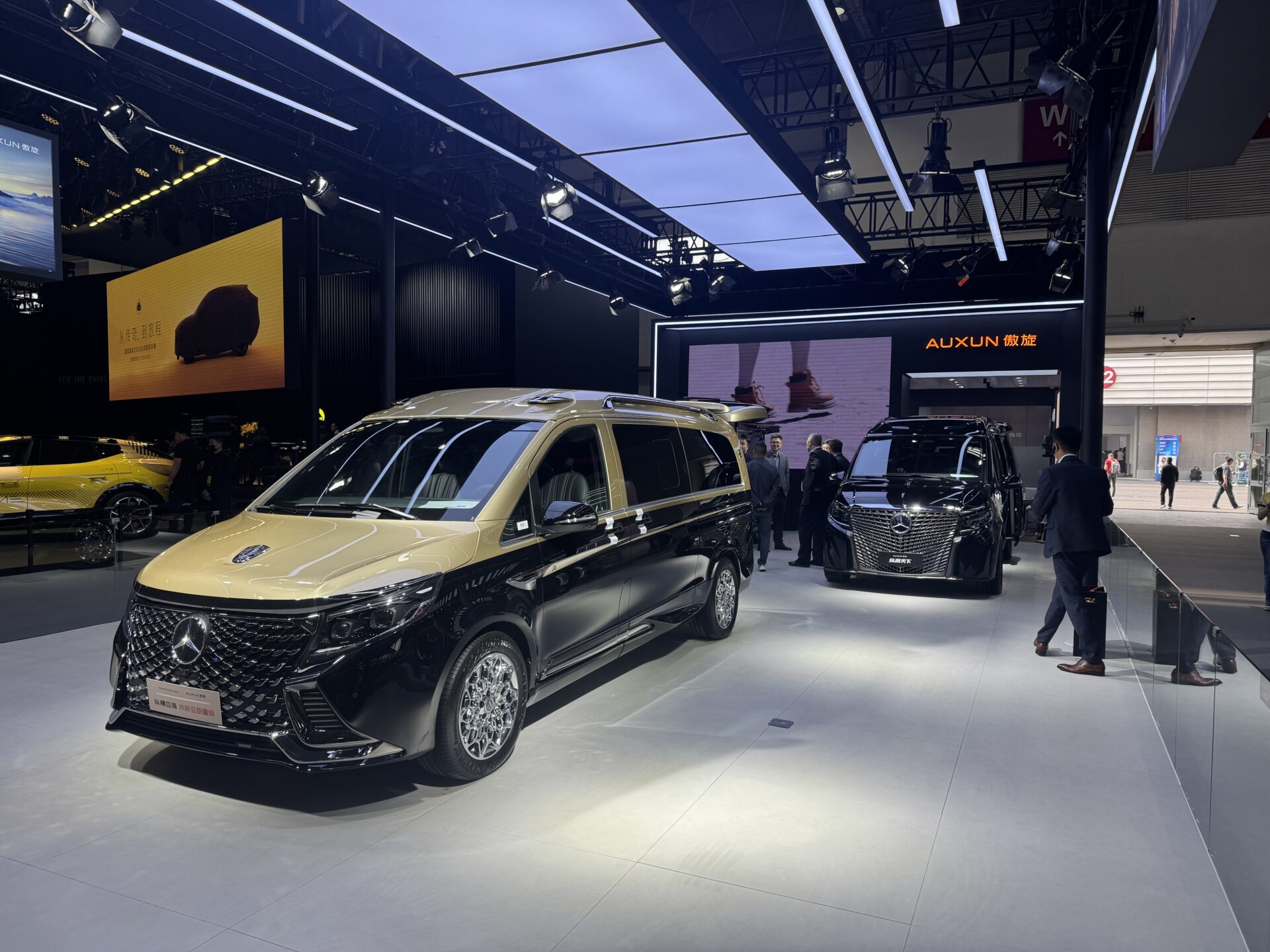
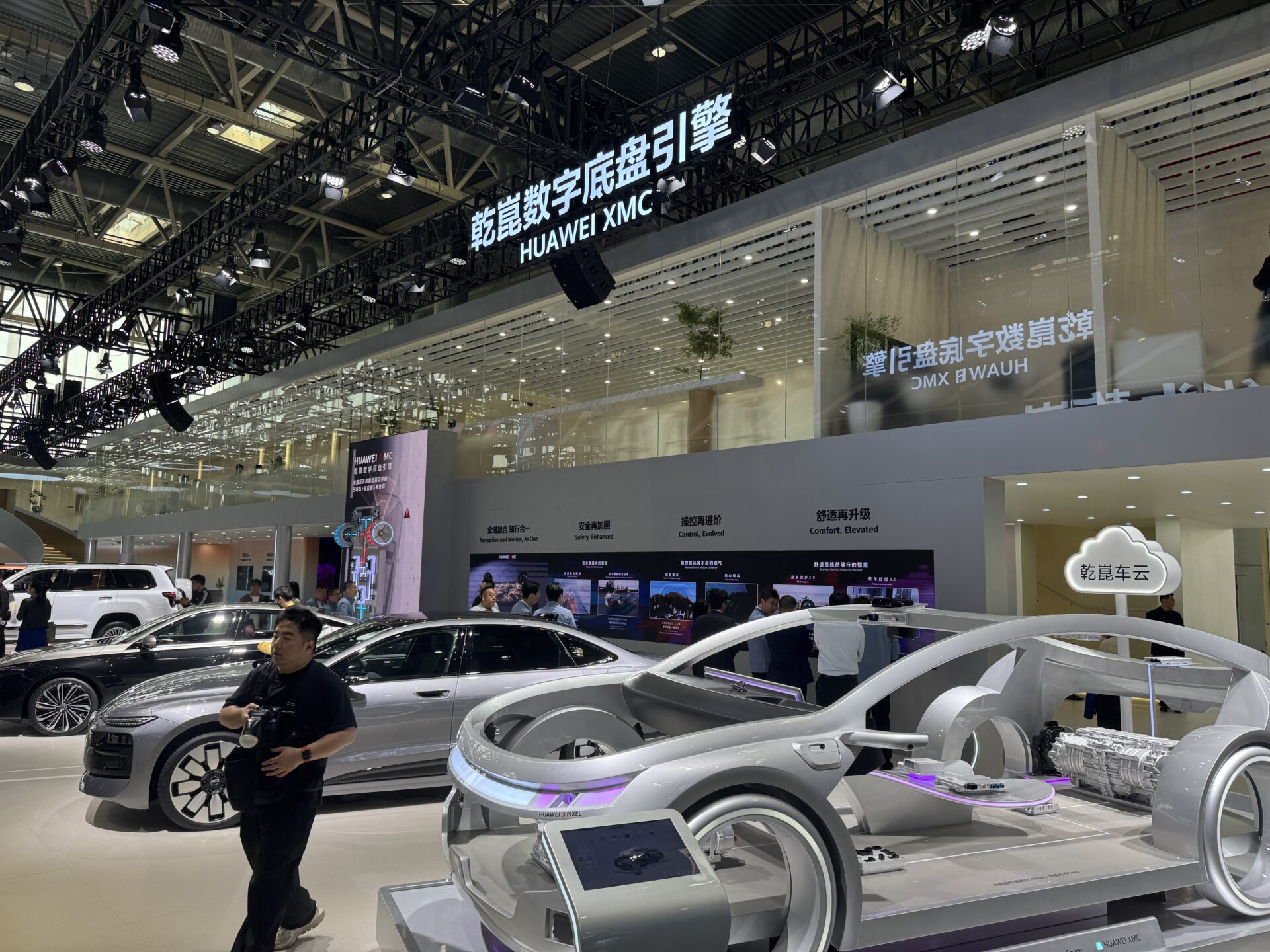
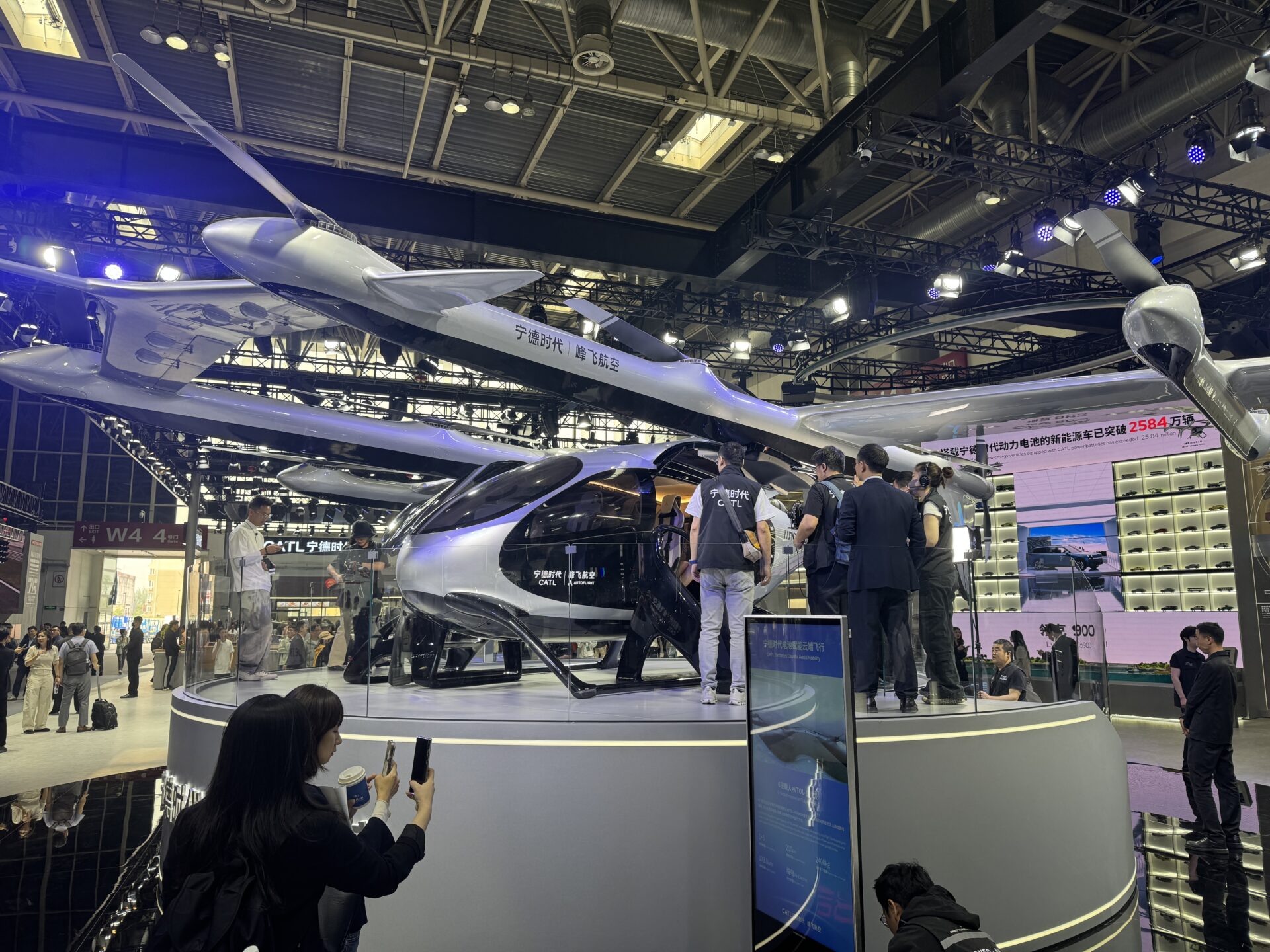
Auto China 2026 opened its doors on 24 April in the Chinese capital. With 380,000 m² of exhibition space and 181 world premieres, the show cements its status as the world’s premier automotive event — in a market that has itself fundamentally changed in nature.
The 19th edition of the Beijing International Automotive Exhibition, officially named Auto China 2026, opened on 24 April in an unprecedented format. For the first time in its history, the show adopted a two-venue layout: the China International Exhibition Center in Shunyi, the event’s historic site near the airport, and the new Capital International Convention and Exhibition Center. Total floor space reaches 380,000 square metres spread across 17 halls — roughly five times the footprint of the Paris Motor Show in its most recent edition. The show attracted more than 2,000 companies from 21 countries and regions, with 1,451 vehicles on display, including 181 world premieres and 71 concept cars — record figures according to the organisers.
A show that mirrors the state of the Chinese market
These dimensions are no mere publicity stunt. They reflect the reality of a market that has become by far the world’s largest. In 2025, production and sales volumes exceeded 34 million vehicles, more than half of them new-energy vehicles. It is the first time in the industry’s history that a single national market has crossed the threshold where electrified vehicles outsell combustion-engine models. Chinese exports have also passed the seven-million-unit mark, confirming the growing internationalisation of domestic manufacturers.
This growth story is not without its tensions. Competition among Chinese manufacturers is fierce, prices are being squeezed, and several brands have posted significant losses despite rising volumes. The combined market share of Audi, BMW and Mercedes-Benz in China has fallen from nearly 20% in 2020 to below 10% at the start of 2026. The retreat of the historic joint ventures that dominated the Chinese market for two decades is now structural.
Show trends: artificial intelligence at the heart of the product
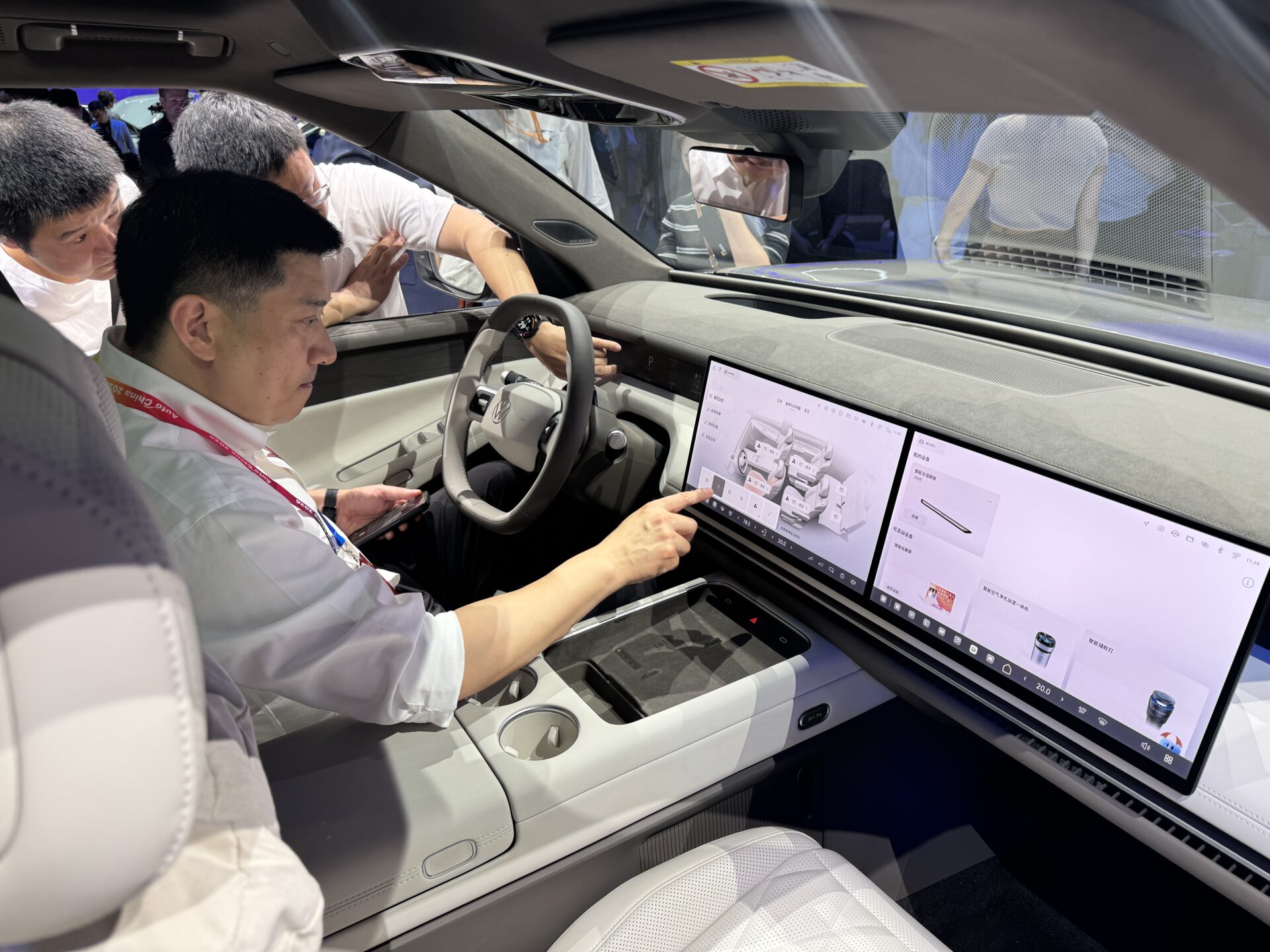
The 2026 edition was themed around “Leading the Era, Intelligent Future”. This positioning mirrors what can be seen on the stands: embedded artificial intelligence has become the main competitive battleground between manufacturers, ahead of outright performance or range figures.
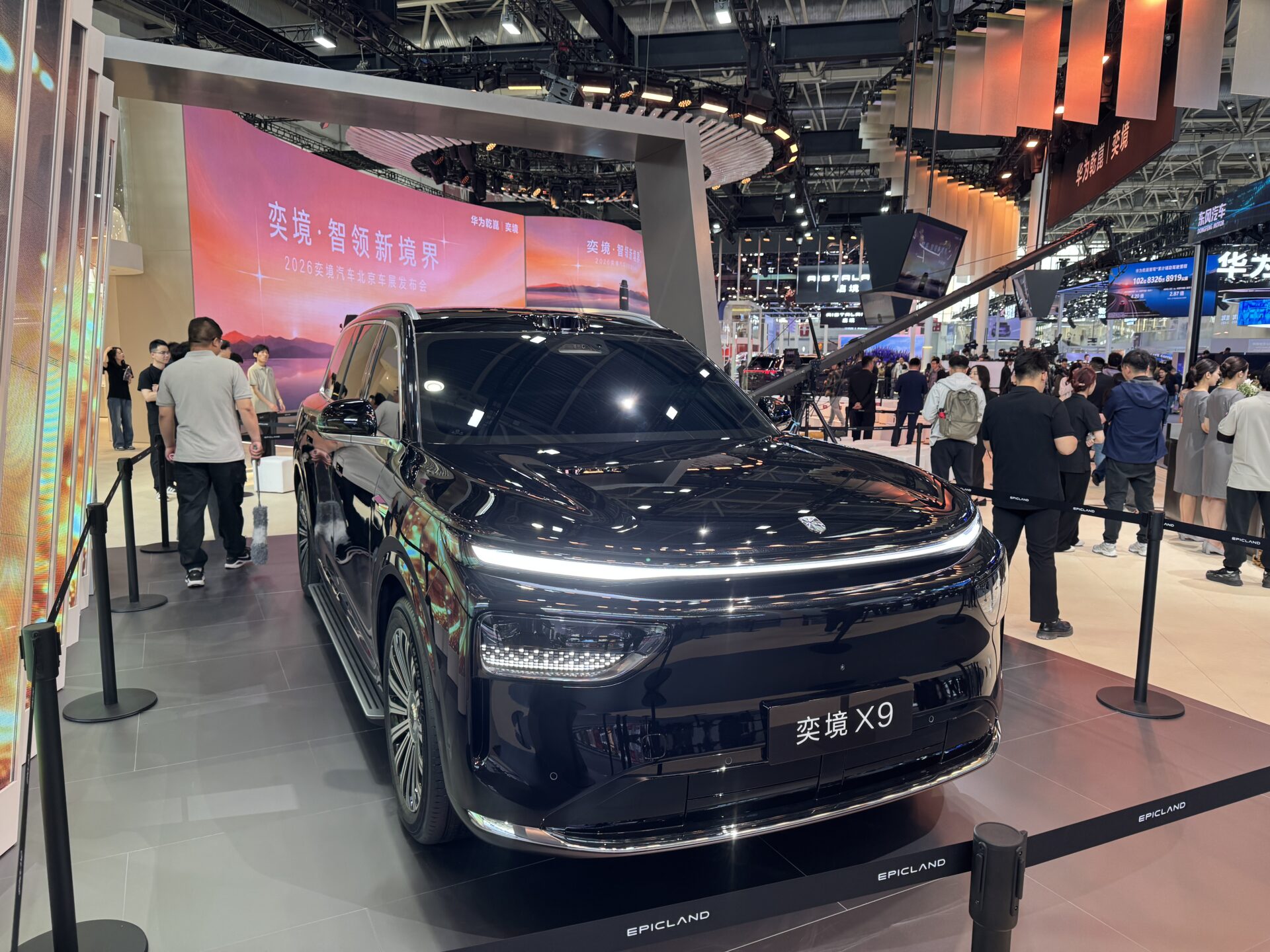
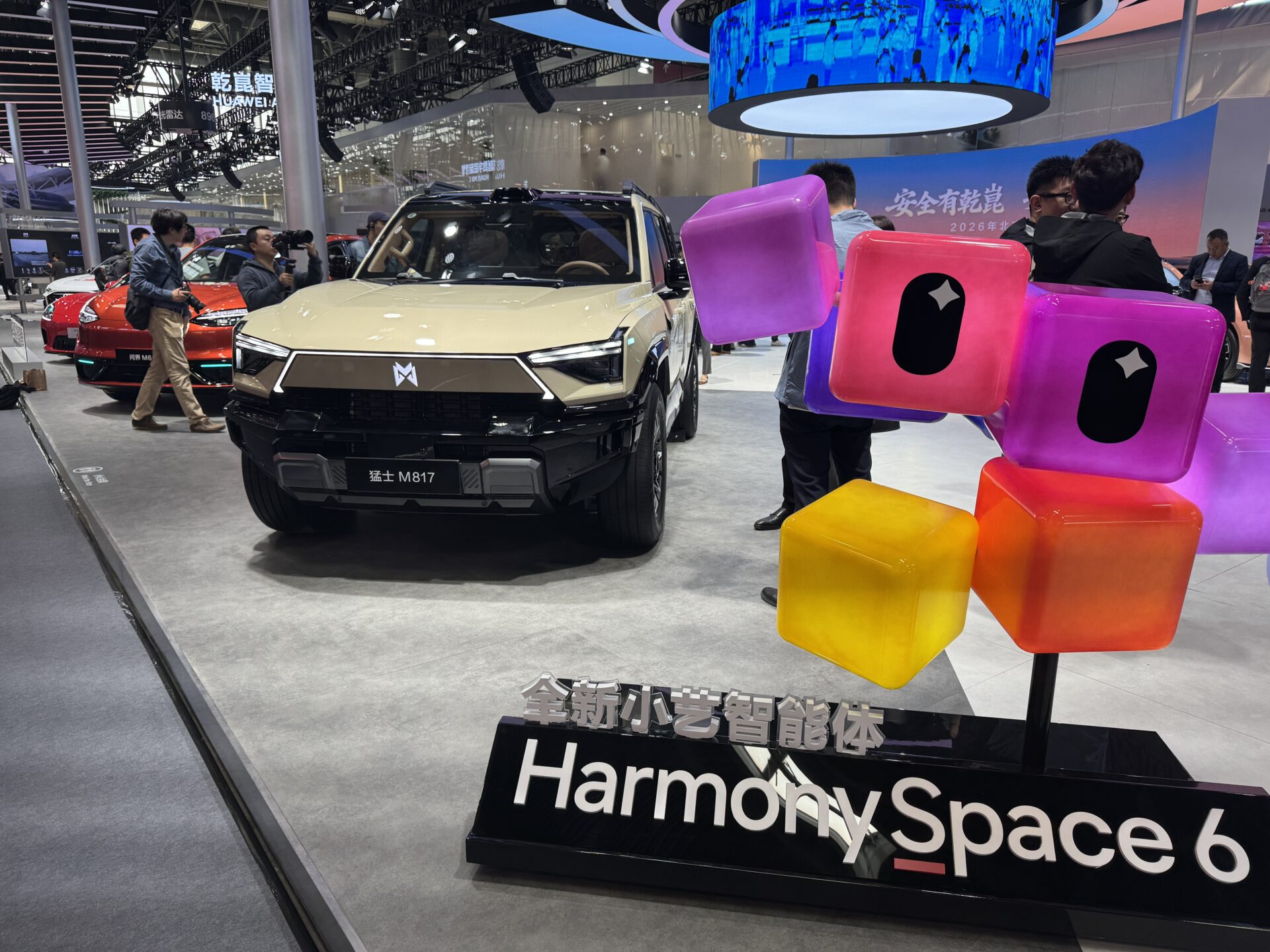
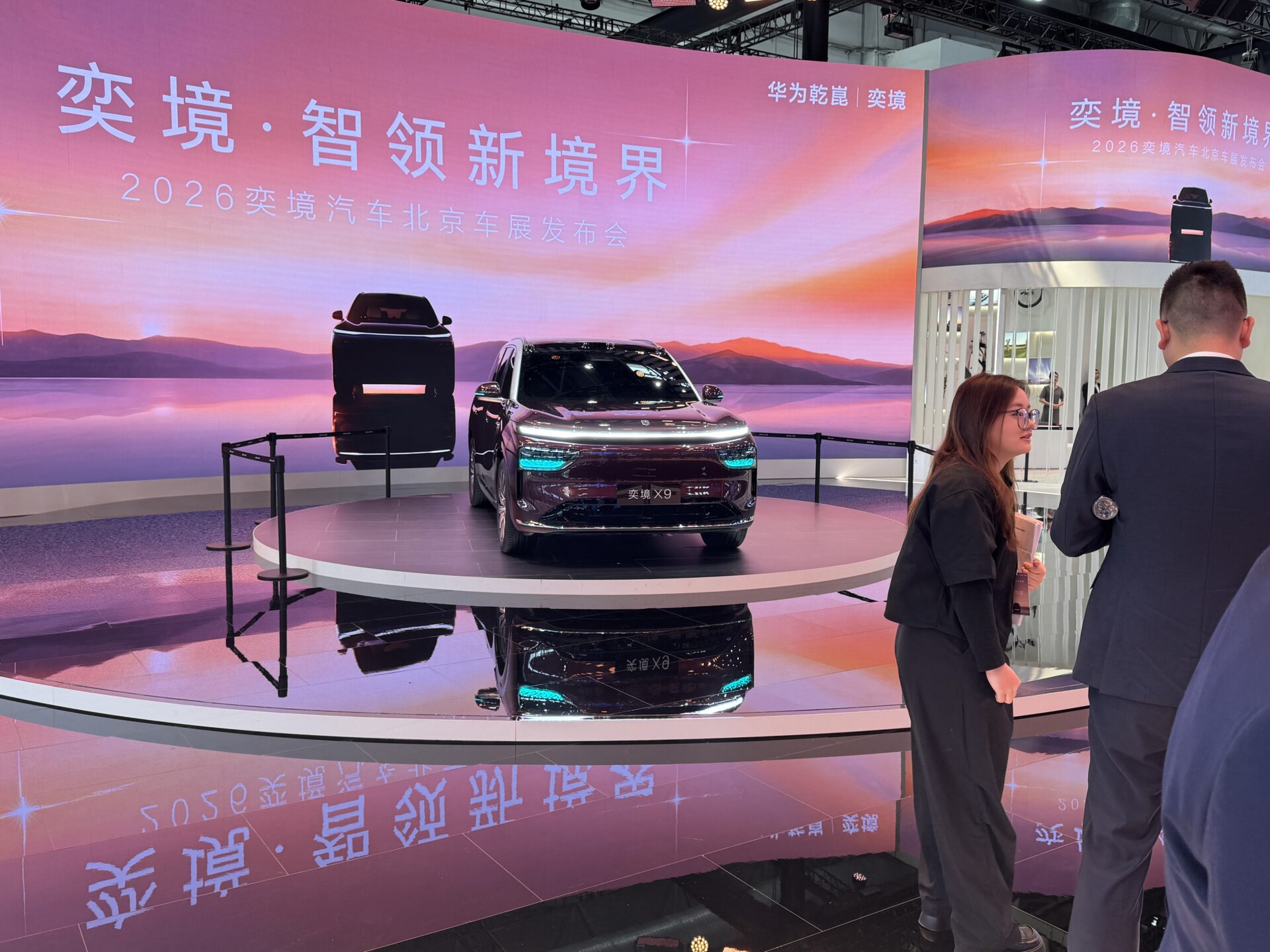
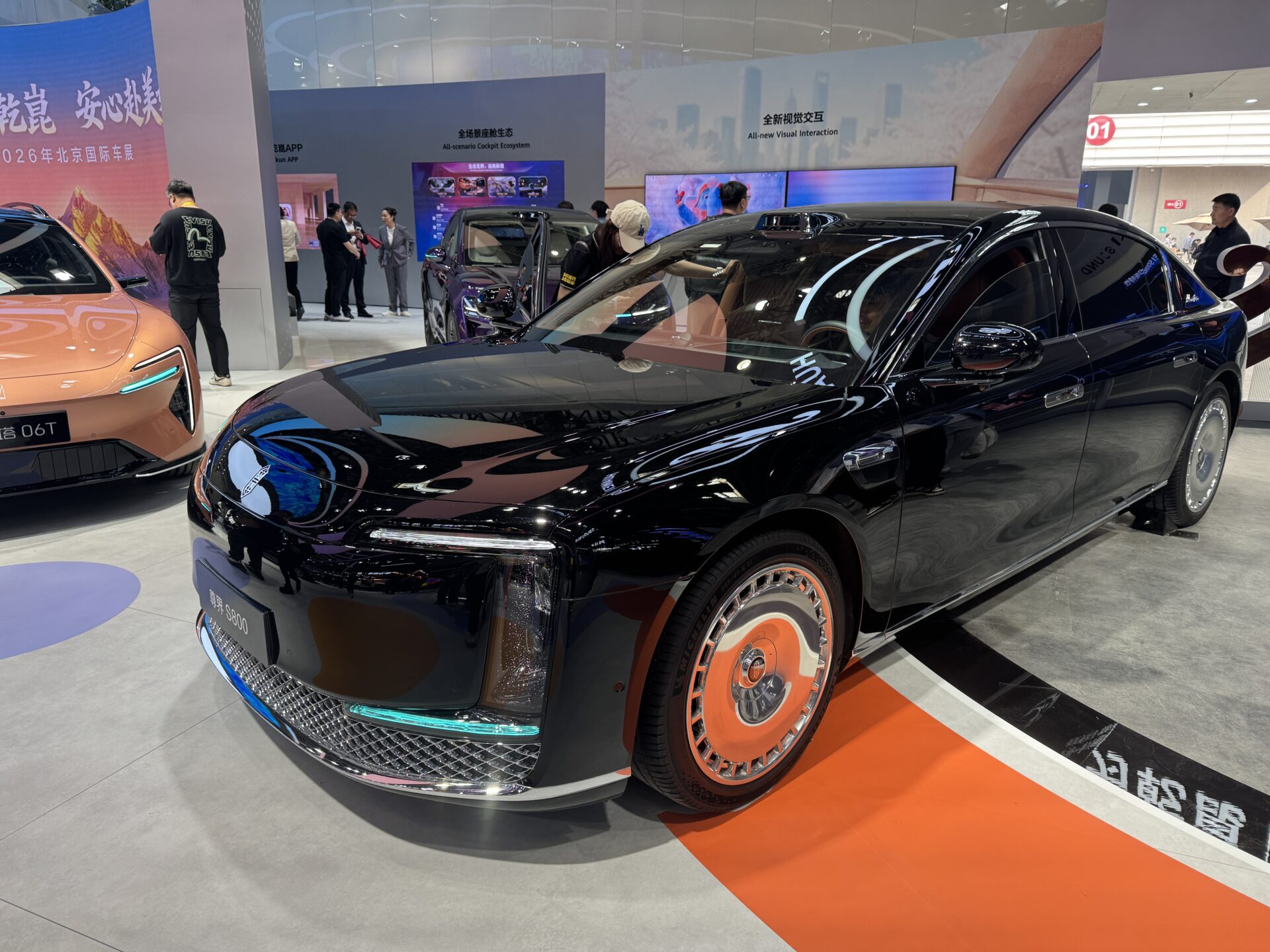
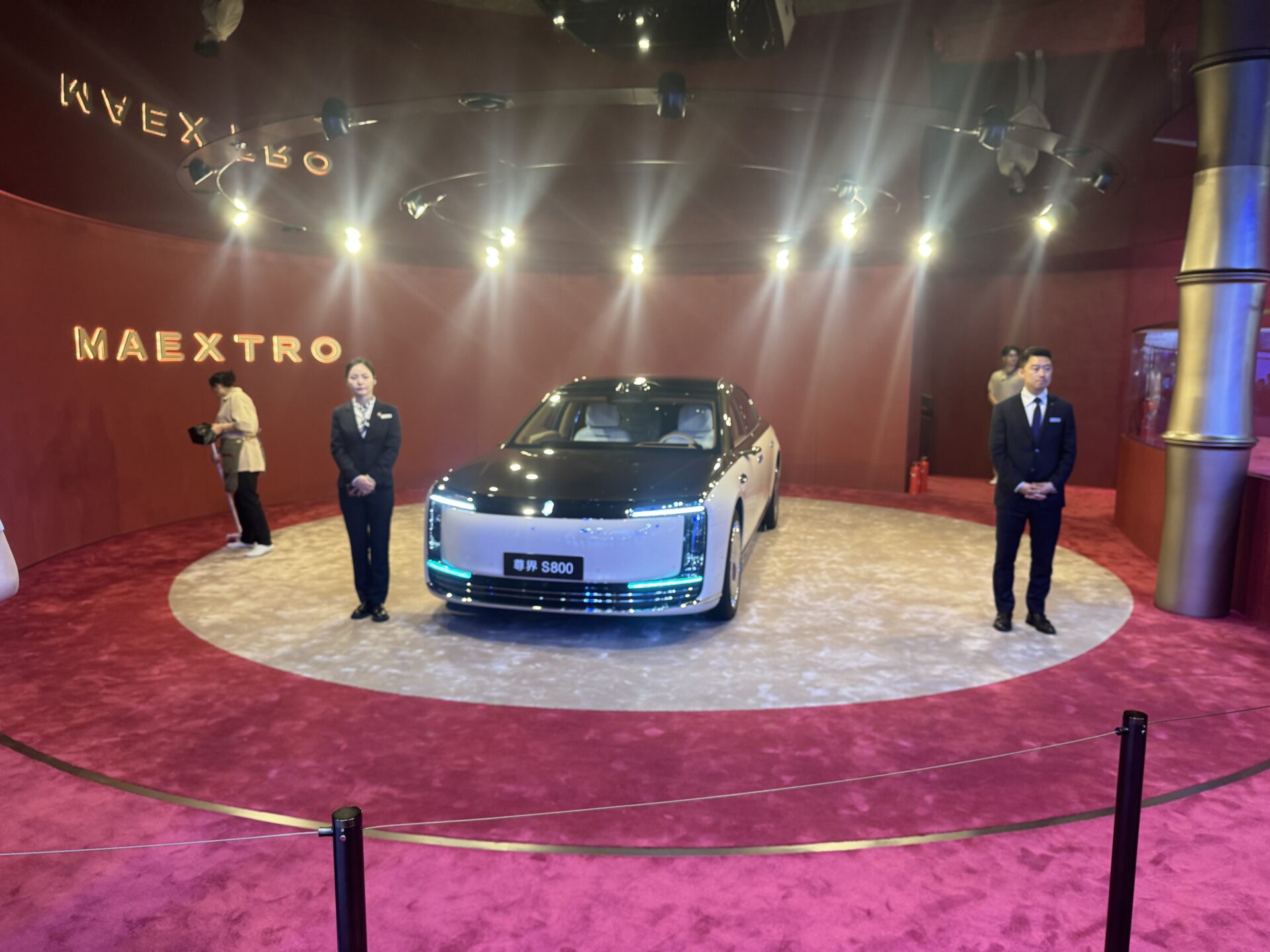
Among the dominant trends, large luxury SUVs occupy centre stage. Numerous manufacturers — Zeekr, Geely, BYD, Arcfox, Aito and Xpeng among them — presented large-format vehicles, often referred to as “Big 8” or “Big 9” in reference to their size and to numbers considered auspicious in Chinese culture. In this segment, Chinese model pricing directly challenges European rivals: the Maextro S800 electric saloon, built by Huawei and JAC at one million yuan (approximately €125,000), now outsells the Porsche Panamera and the BMW 7 Series in China by a factor of two.
The other standout trend is the affordable urban electric car. Virtually every major brand is showing at least one compact model priced below 100,000 yuan (approximately €12,800). Leapmotor, present at the show, unveiled an improved version of its B05, a compact electric car expected to reach Europe as early as summer 2026. The show also introduced for the first time a co-exhibition format bringing manufacturers and suppliers together under the same roof, illustrating the vertical integration trend that characterises the Chinese automotive industry.
European manufacturers in defensive formation
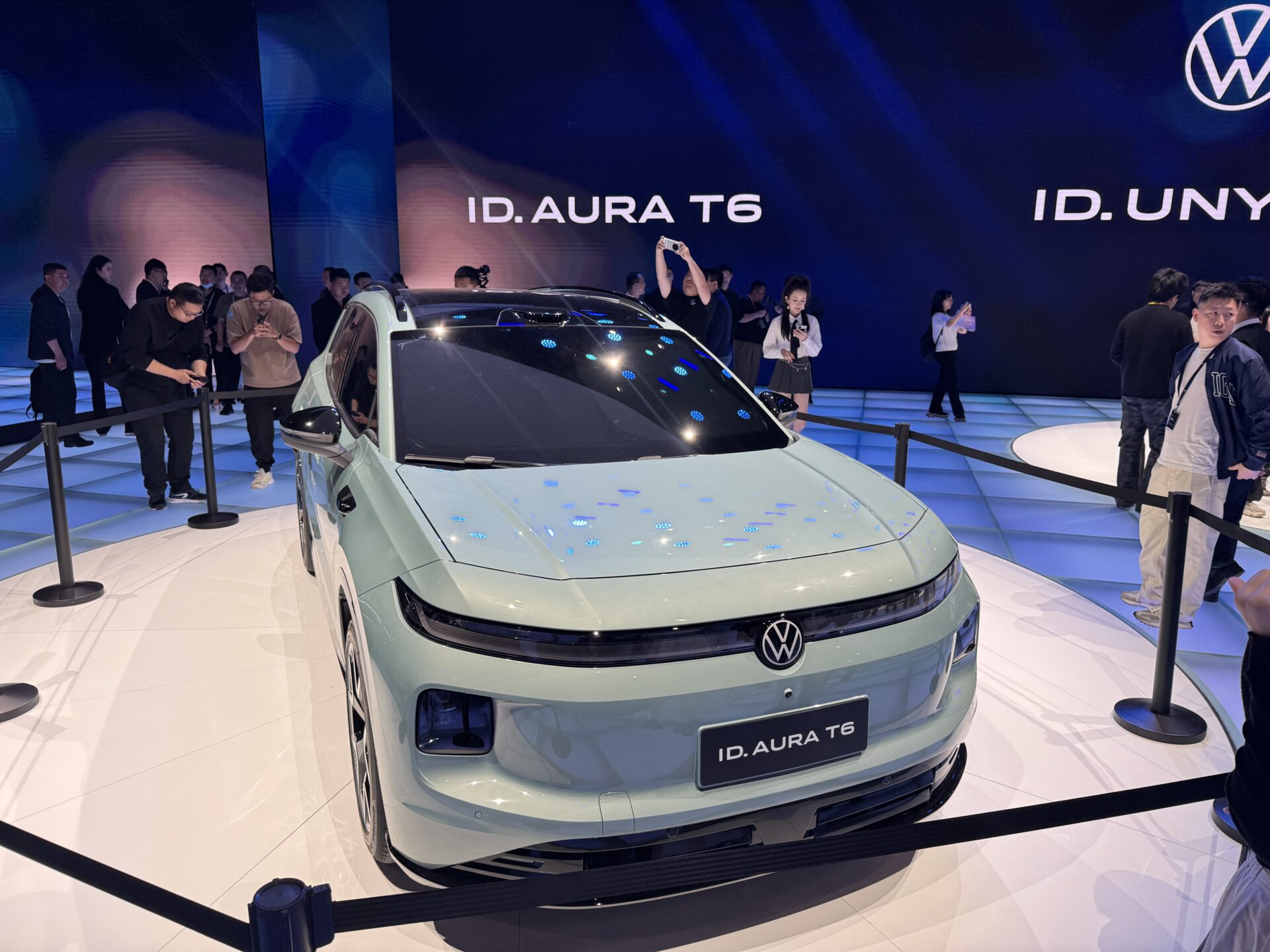
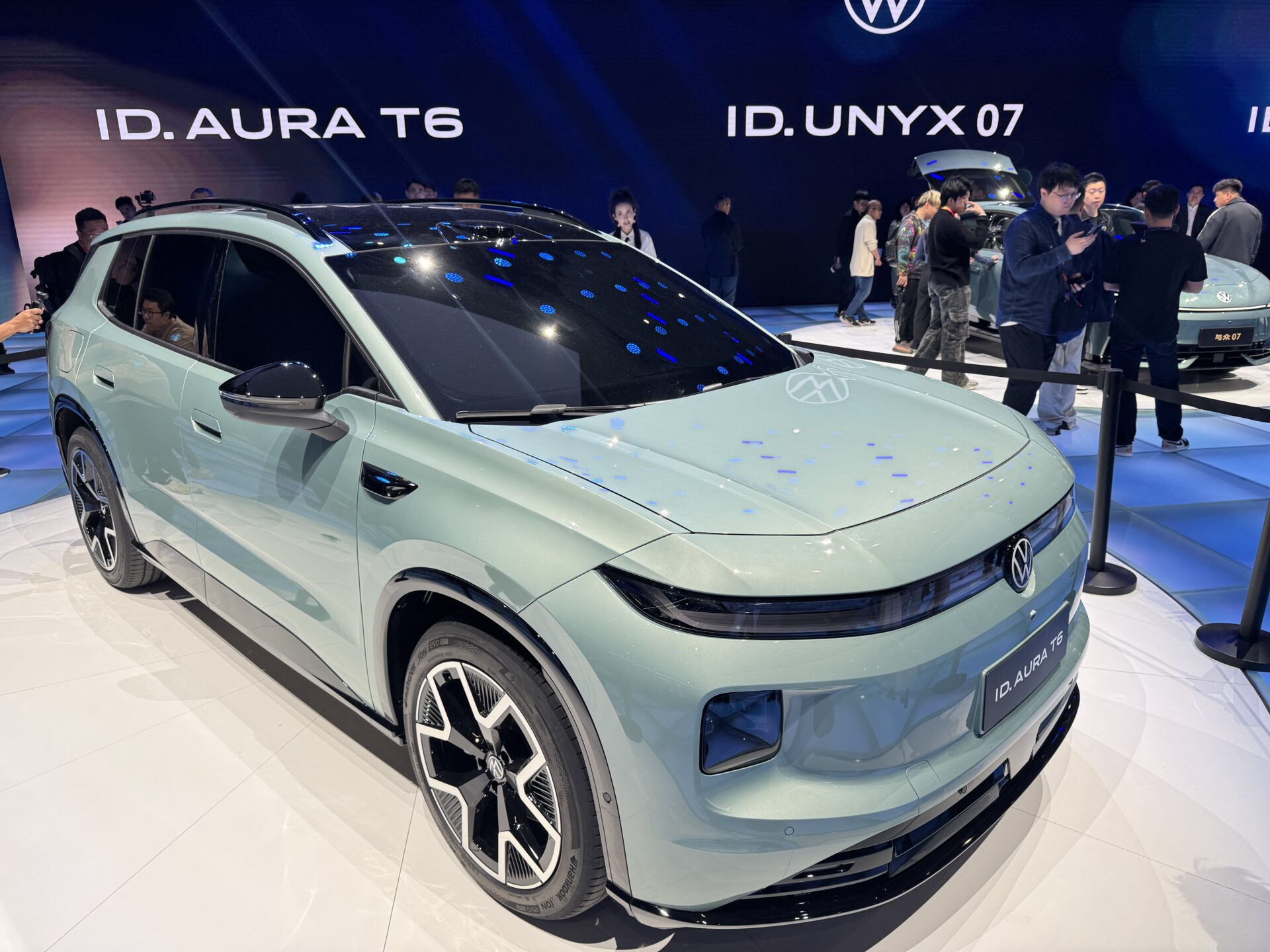
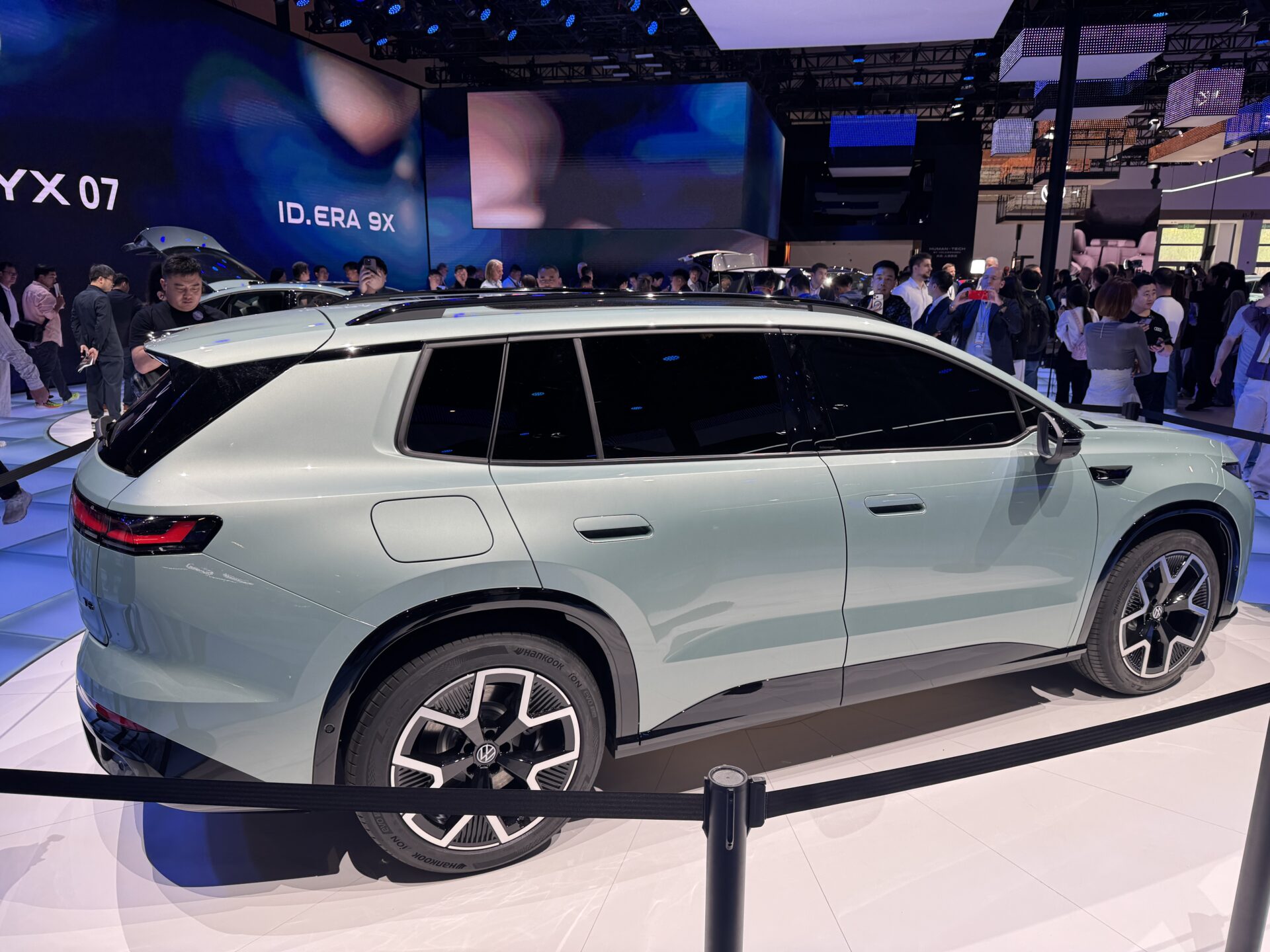
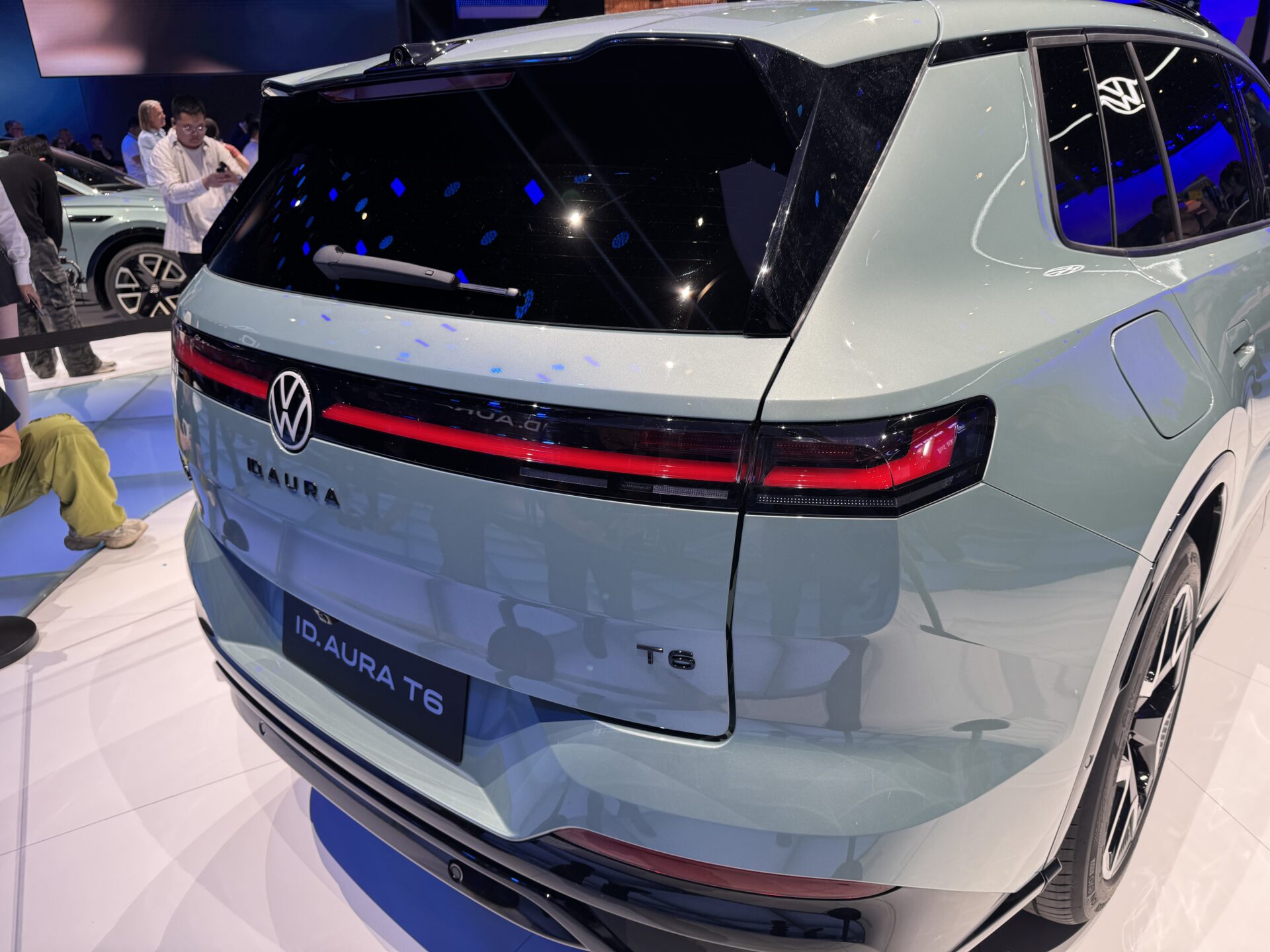
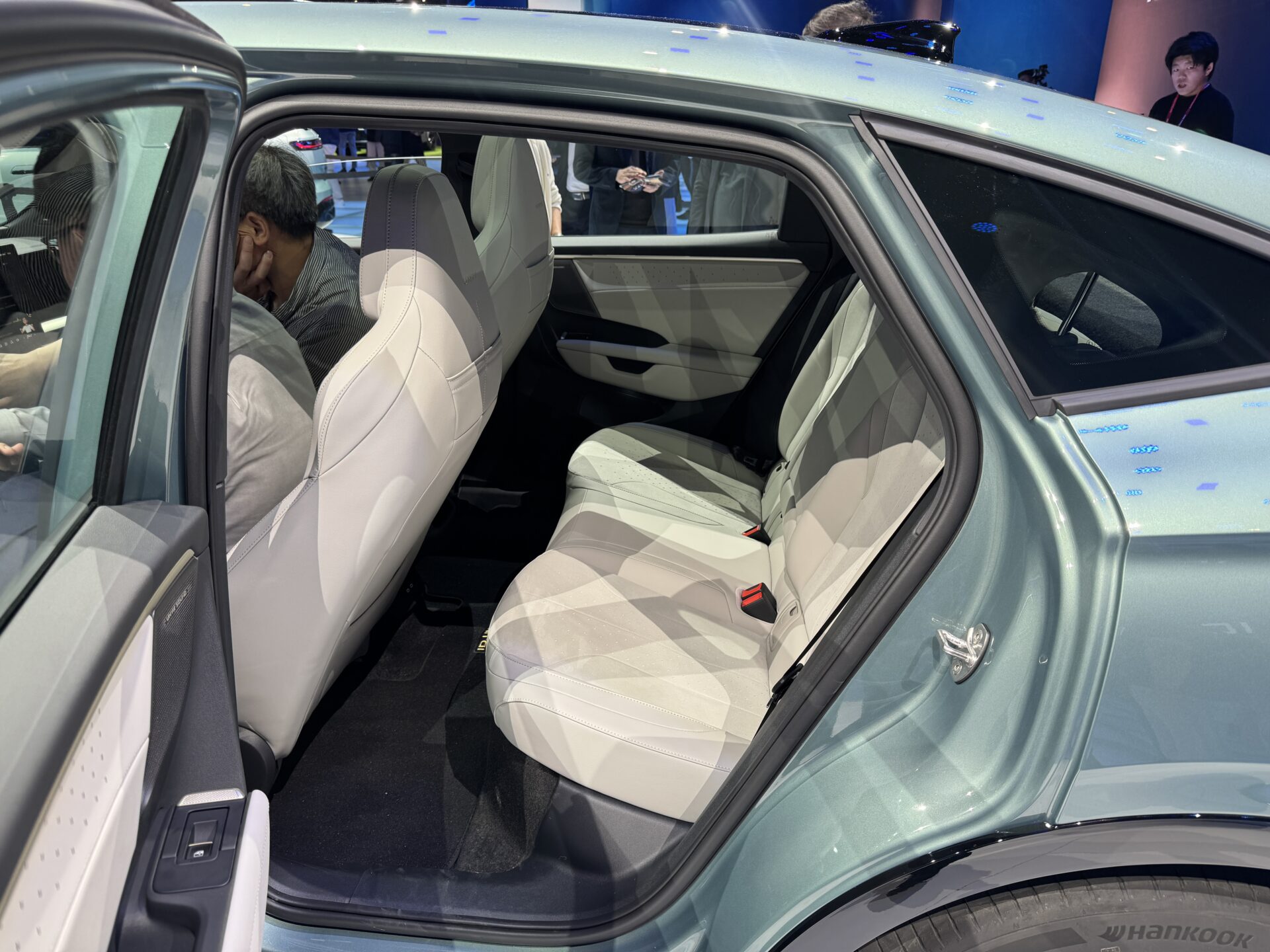
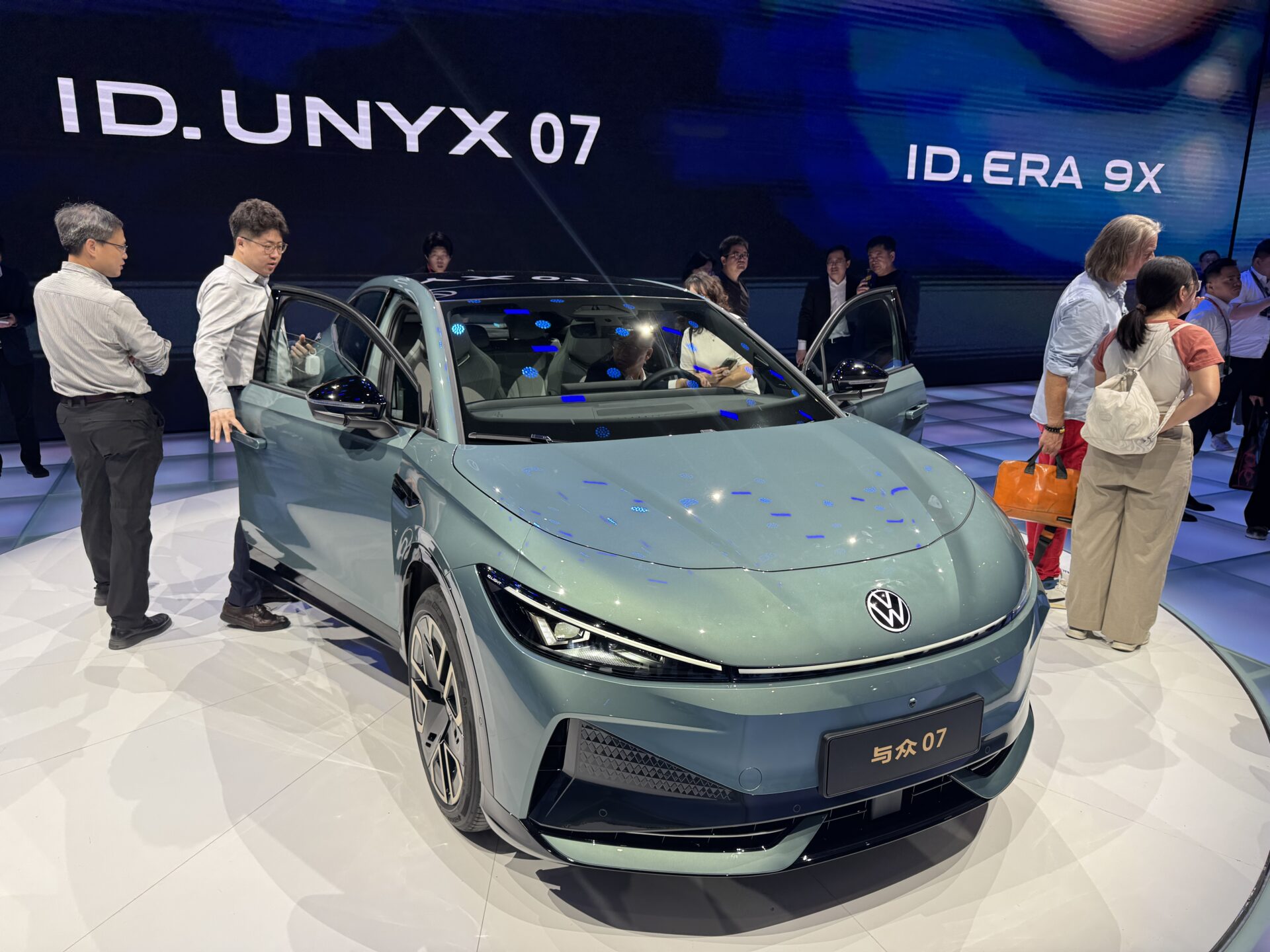
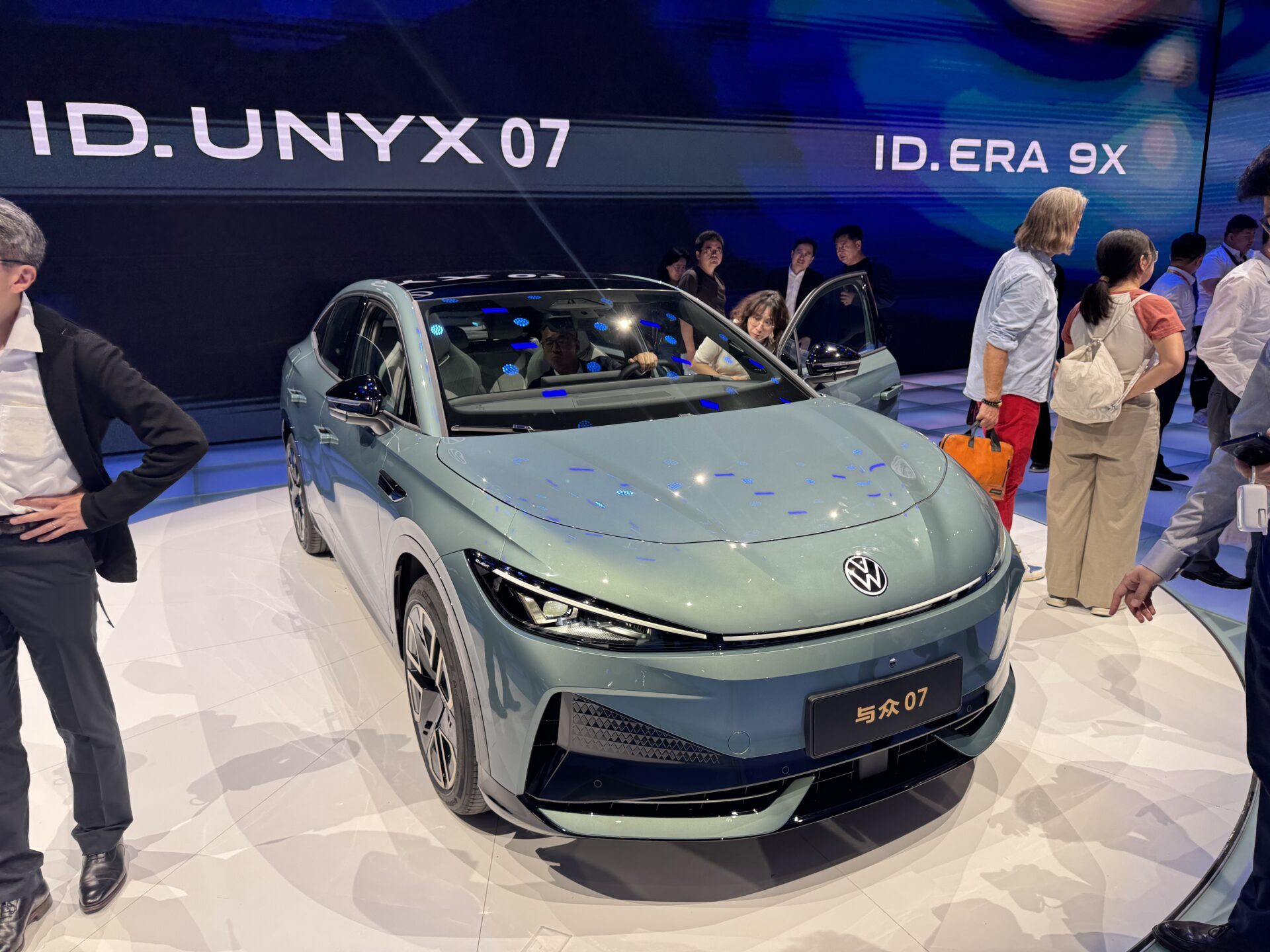
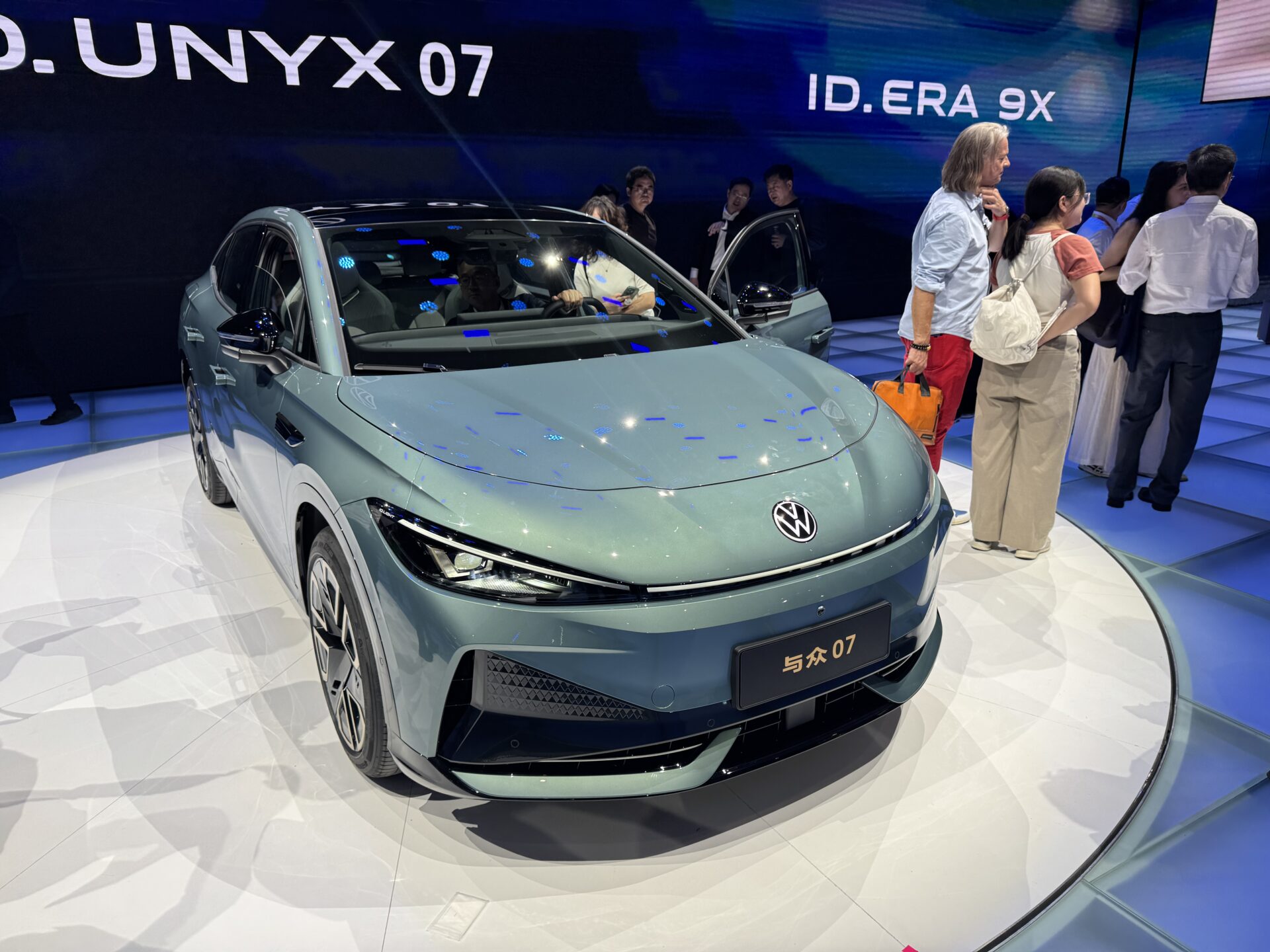
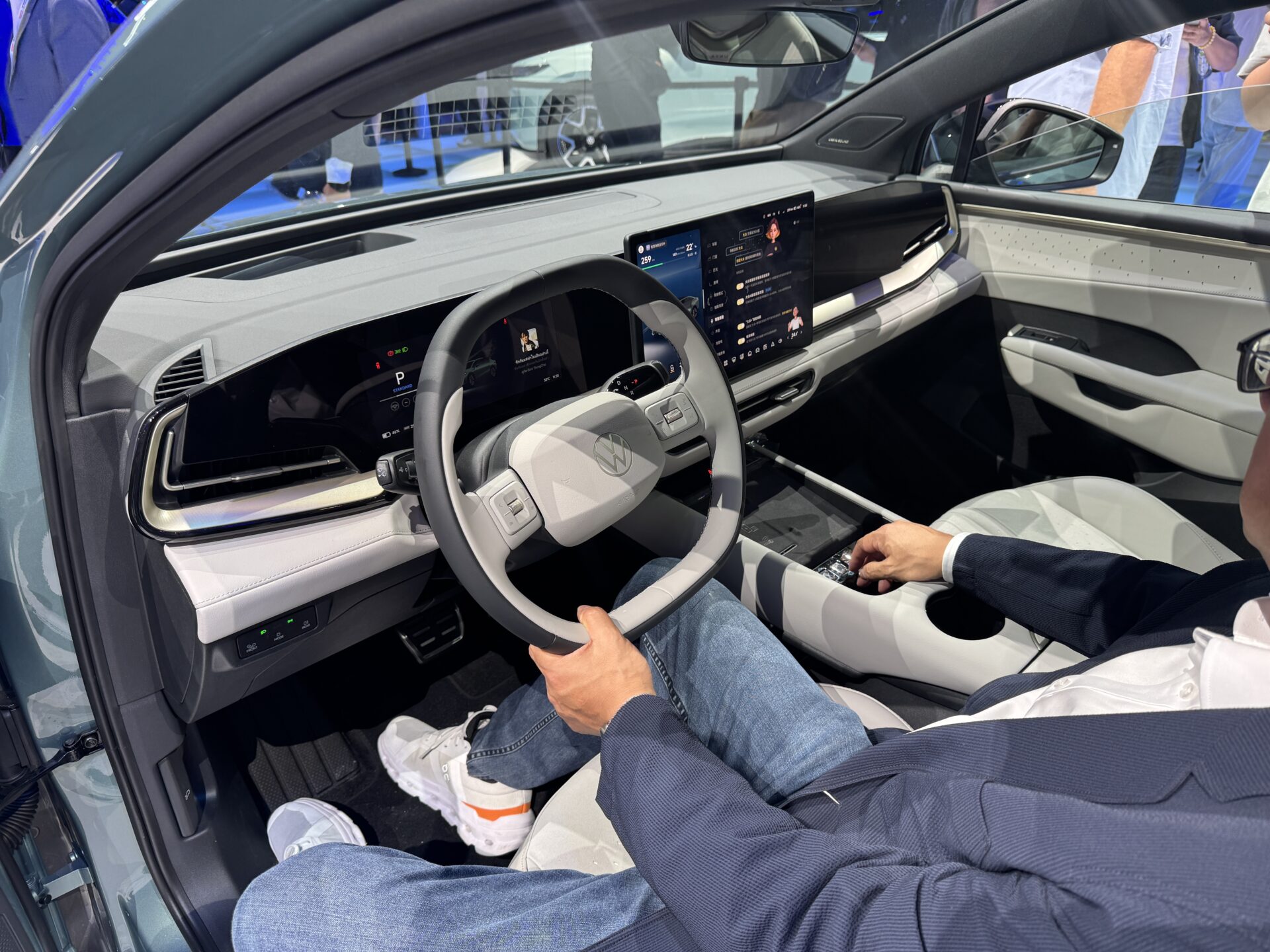
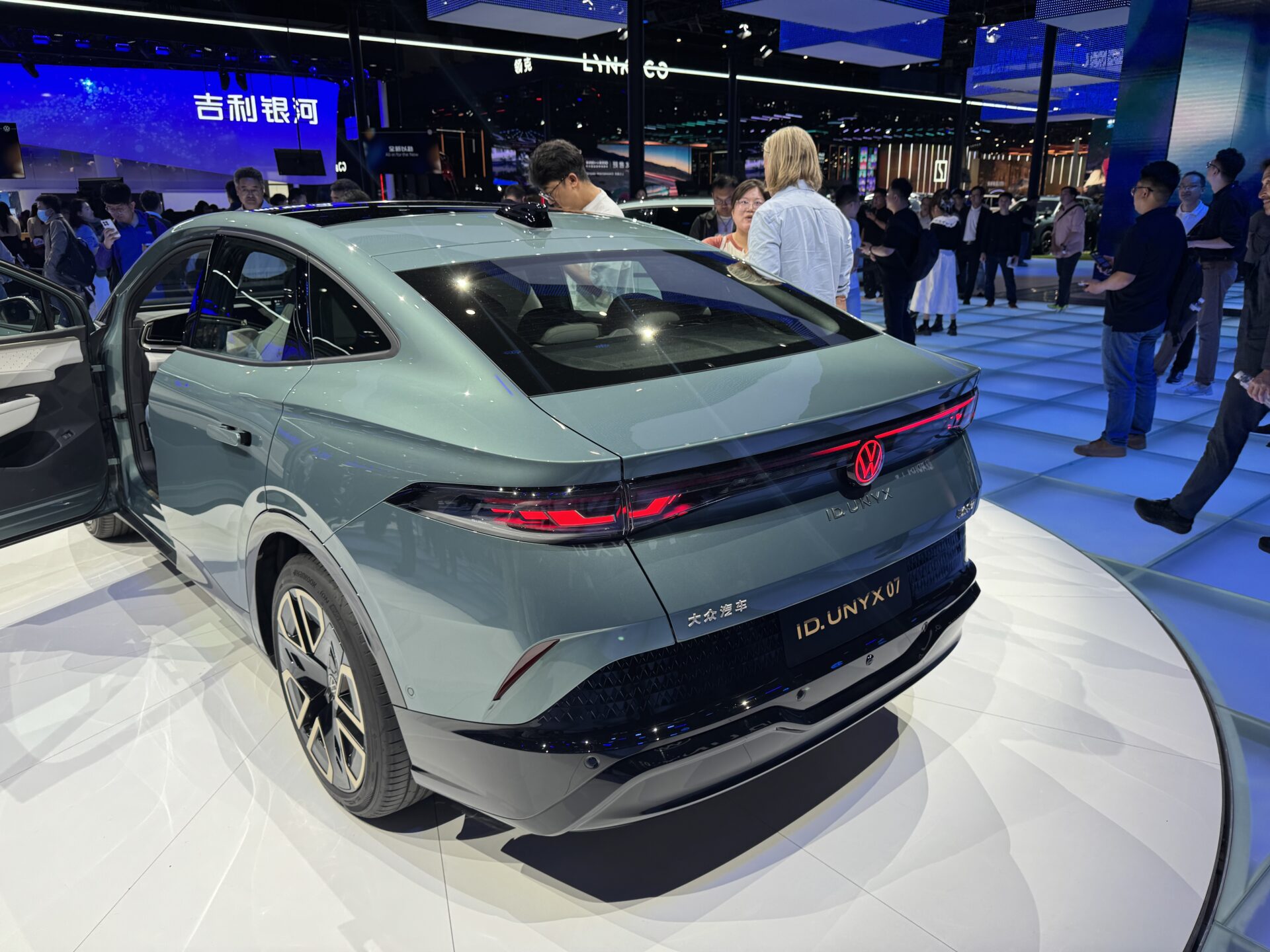
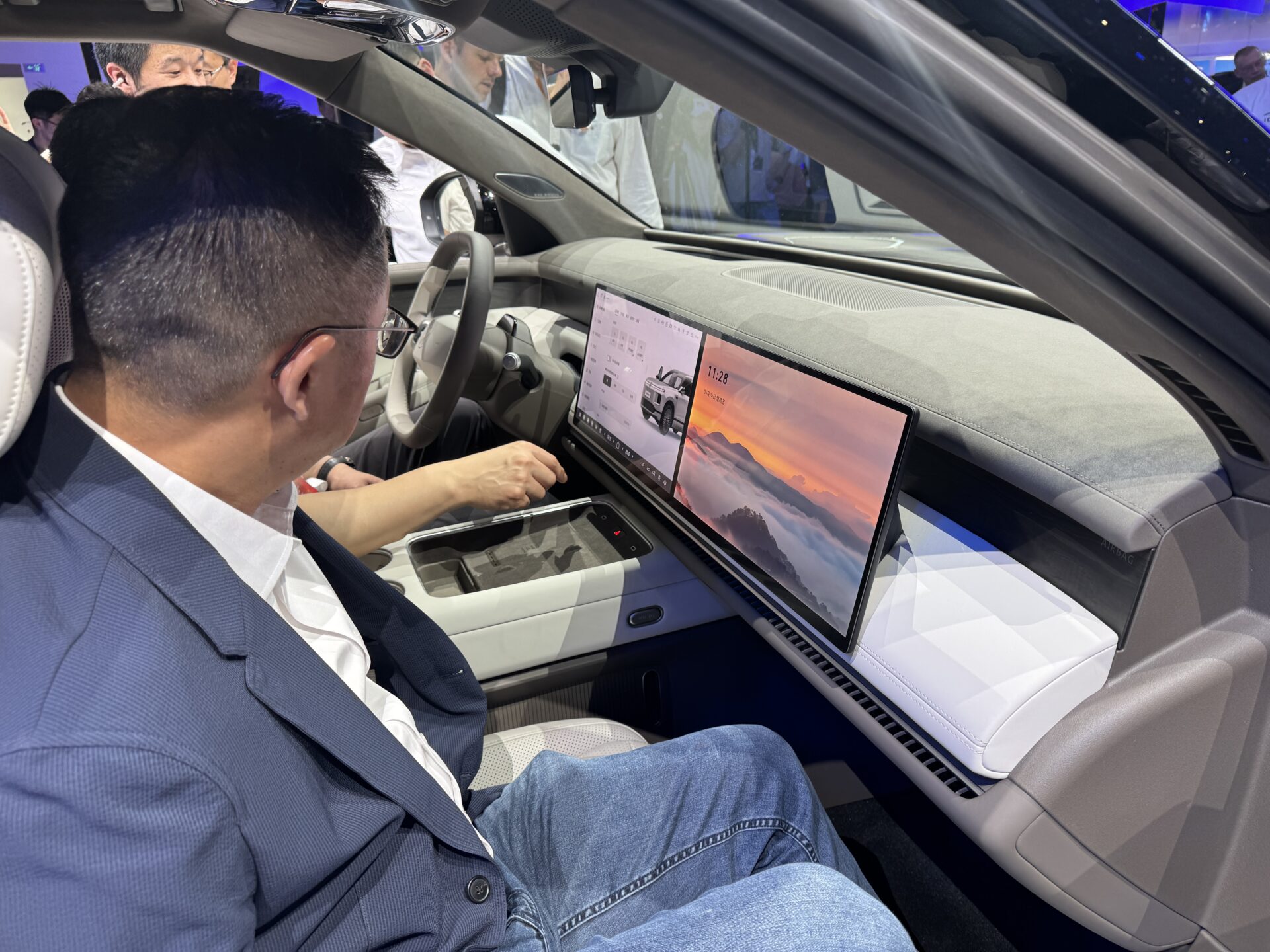
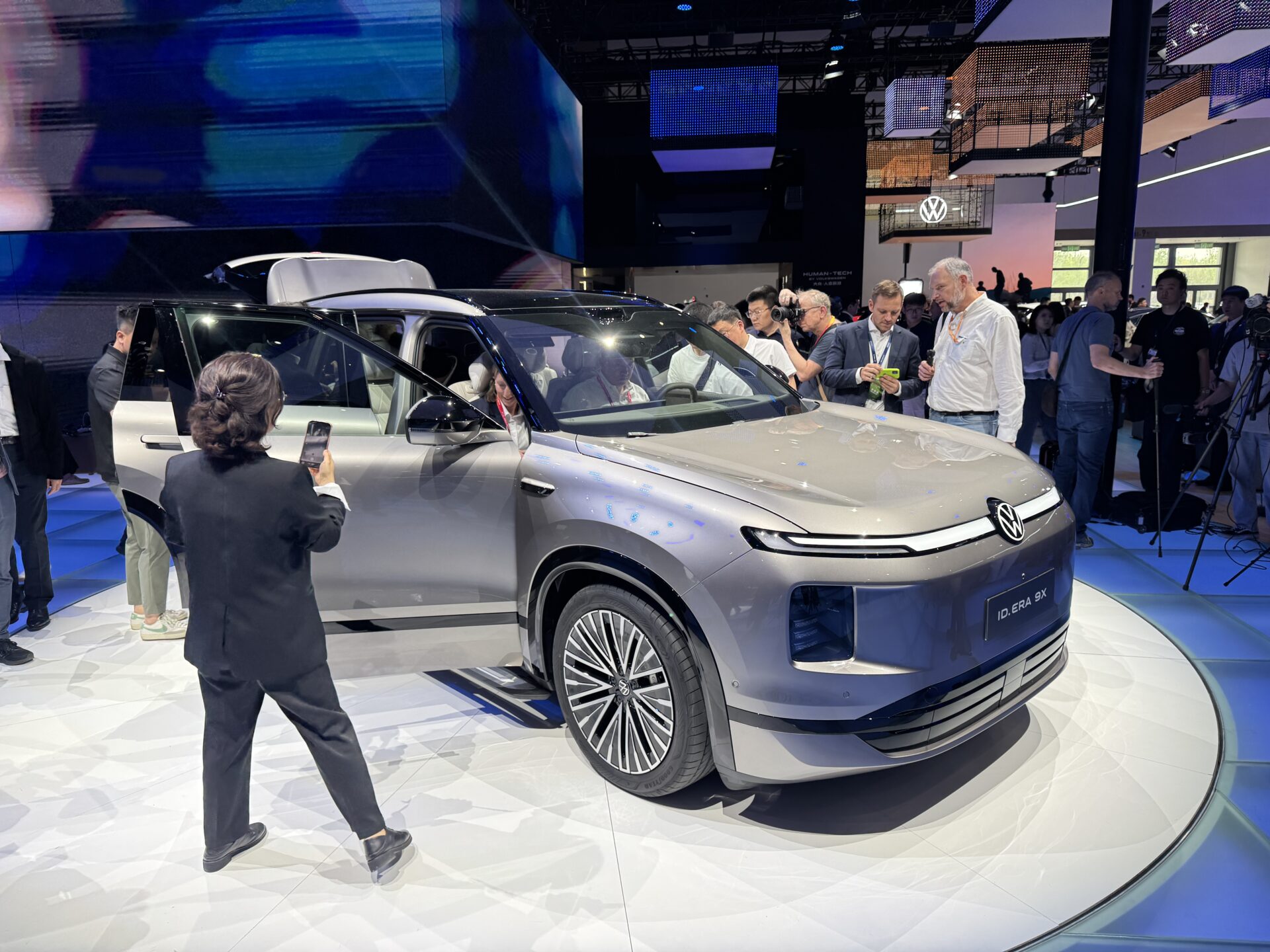
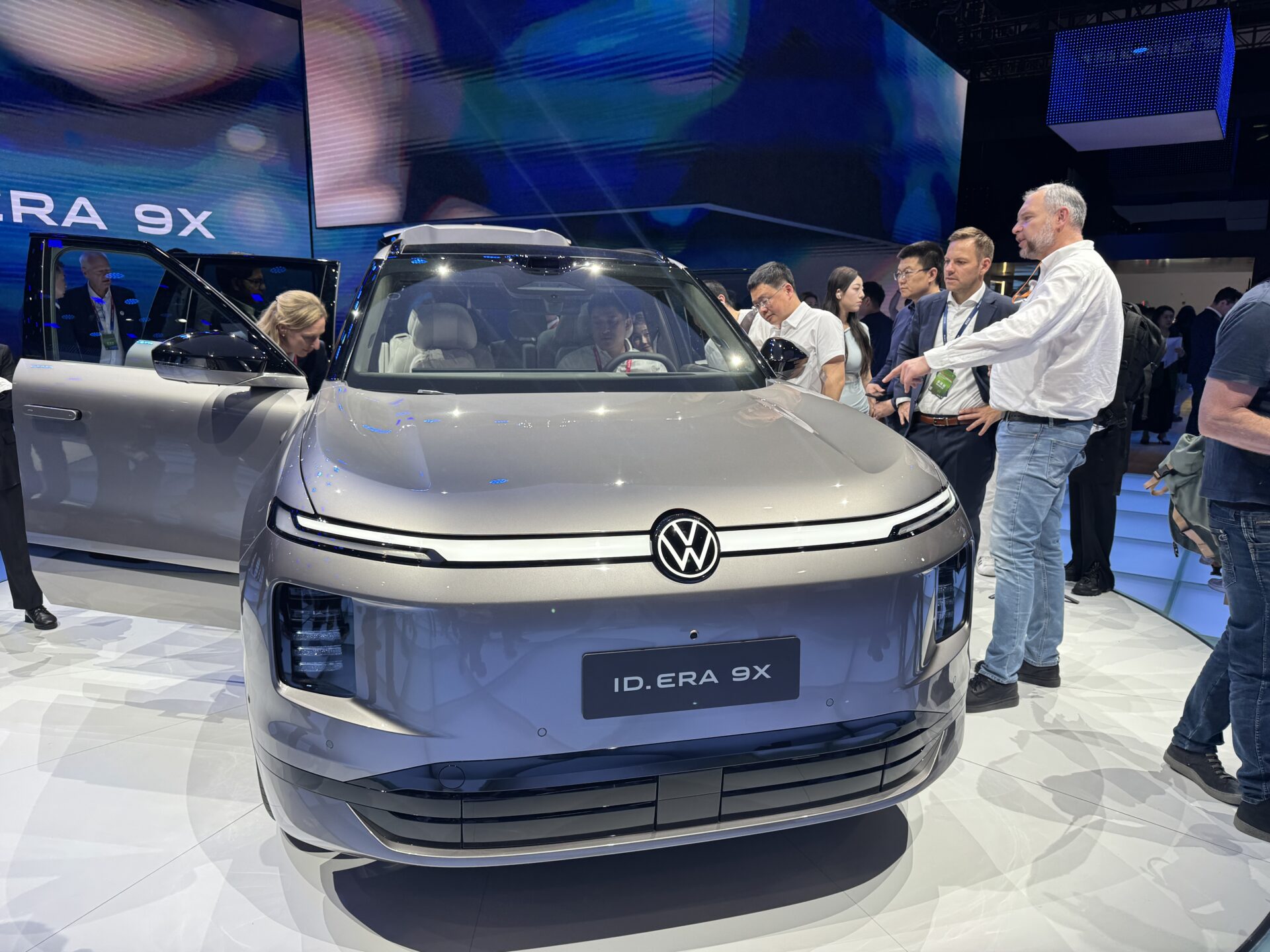
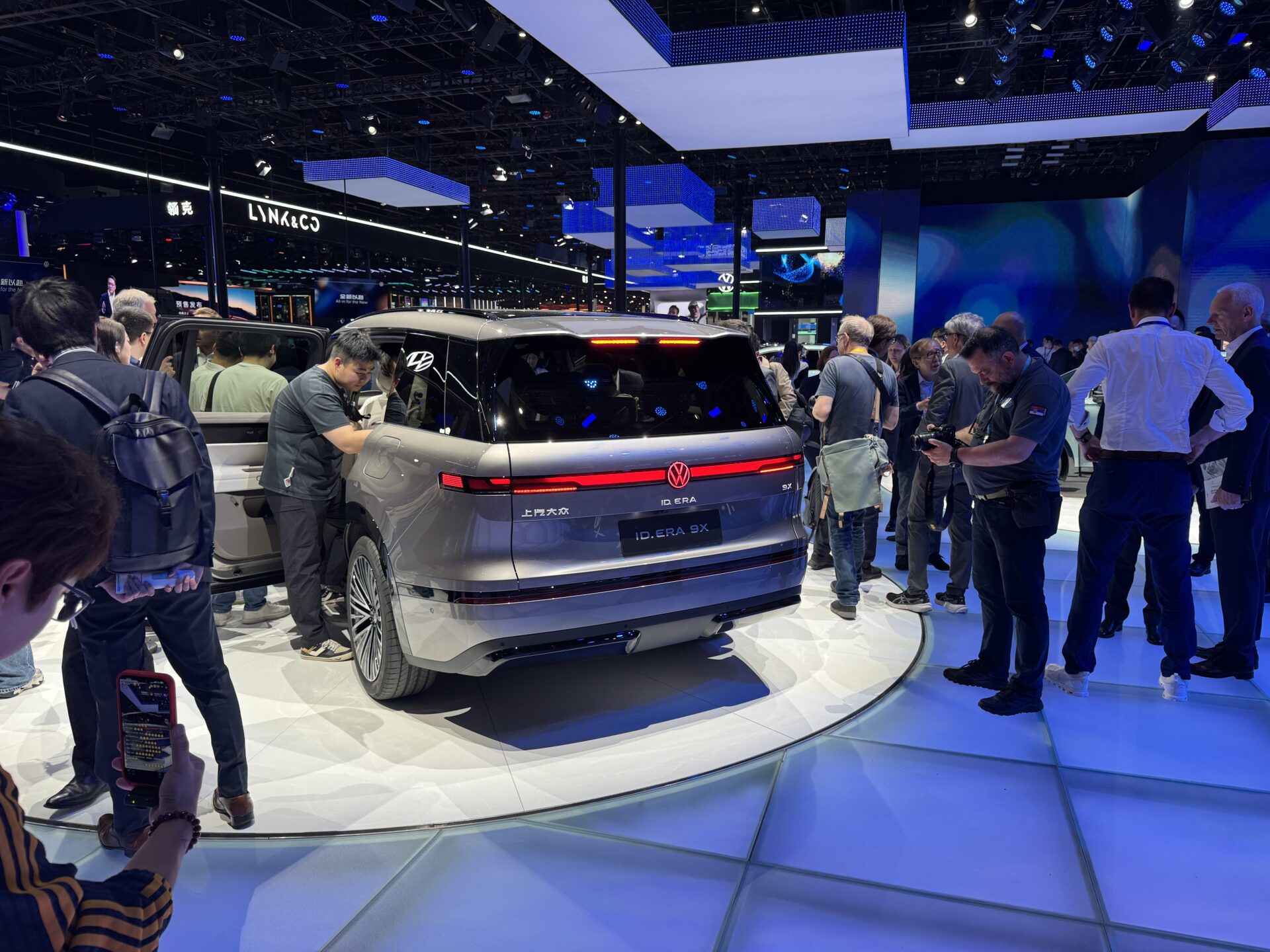
With the exception of a handful of ultra-luxury marques, virtually all foreign manufacturers were present in Beijing, showcasing newly electrified ranges developed specifically for the Chinese market. Volkswagen, whose historic dominance in China is now under serious pressure, displayed the most aggressive posture. The German group reaffirmed its acceleration of the “In China, for China” strategy, with four world premieres presented at the press evening before opening day. For 2026 alone, Volkswagen plans to launch more than 20 new electrified models on the Chinese market, targeting 50 models by 2030.
The centrepiece of Volkswagen’s presentation is the ID. Unyx 09, a five-metre electric saloon developed in just 24 months in cooperation with Chinese manufacturer Xpeng. The saloon combines an advanced Level 2 driver-assistance system, a high-performance computer and intuitive AI assistants. The design features flush door handles, sculpted wings and a Face ID sensor integrated into the B-pillar. In terms of powertrain, the saloon is expected to adopt the same configuration as the ID. Unyx 08, with outputs ranging from 308 to 496 hp depending on the variant, on an 800-volt architecture enabling charging rates above 300 kW. Produced by the Volkswagen Anhui joint venture in Hefei, the ID. Unyx 09 is the second electric vehicle co-developed with Xpeng and will not be sold outside China.
Mercedes-Benz presented 40 models in Beijing, including the world premiere of the new long-wheelbase electric GLC based on the MB.EA platform in 800-volt architecture. Audi covered both combustion and electric ground, with the A6L e-tron on the PPE platform and a new combustion A6L featuring Huawei’s Qiankun intelligent driving system for the first time. Peugeot and Citroën, absent from major motor shows for three years, announced their return to the Chinese market. Tesla, by contrast, held no stand — an absence that, against a backdrop of intense competition in the electric family SUV segment, feels more significant than usual.
Mini: when personalisation becomes strategy
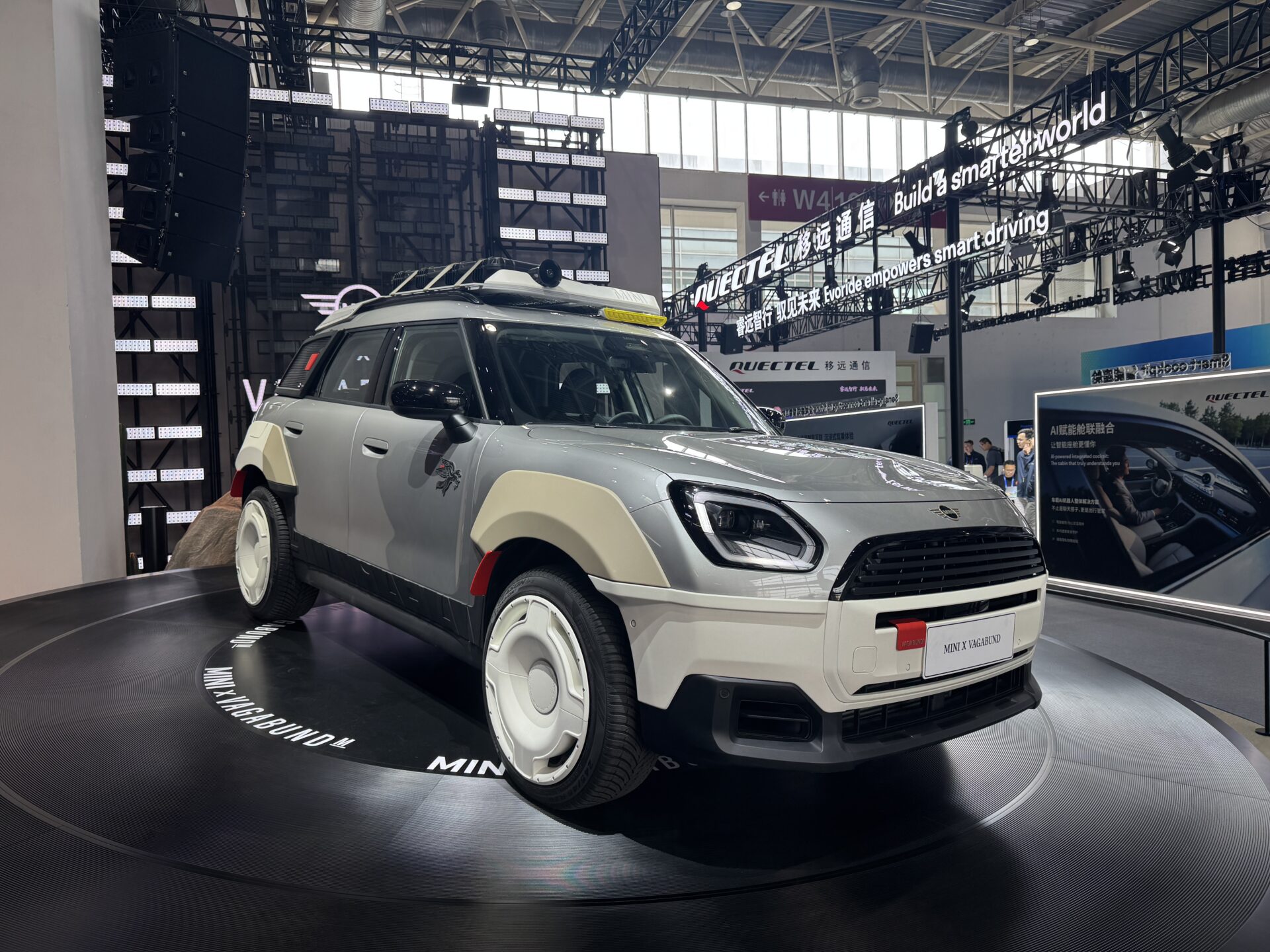
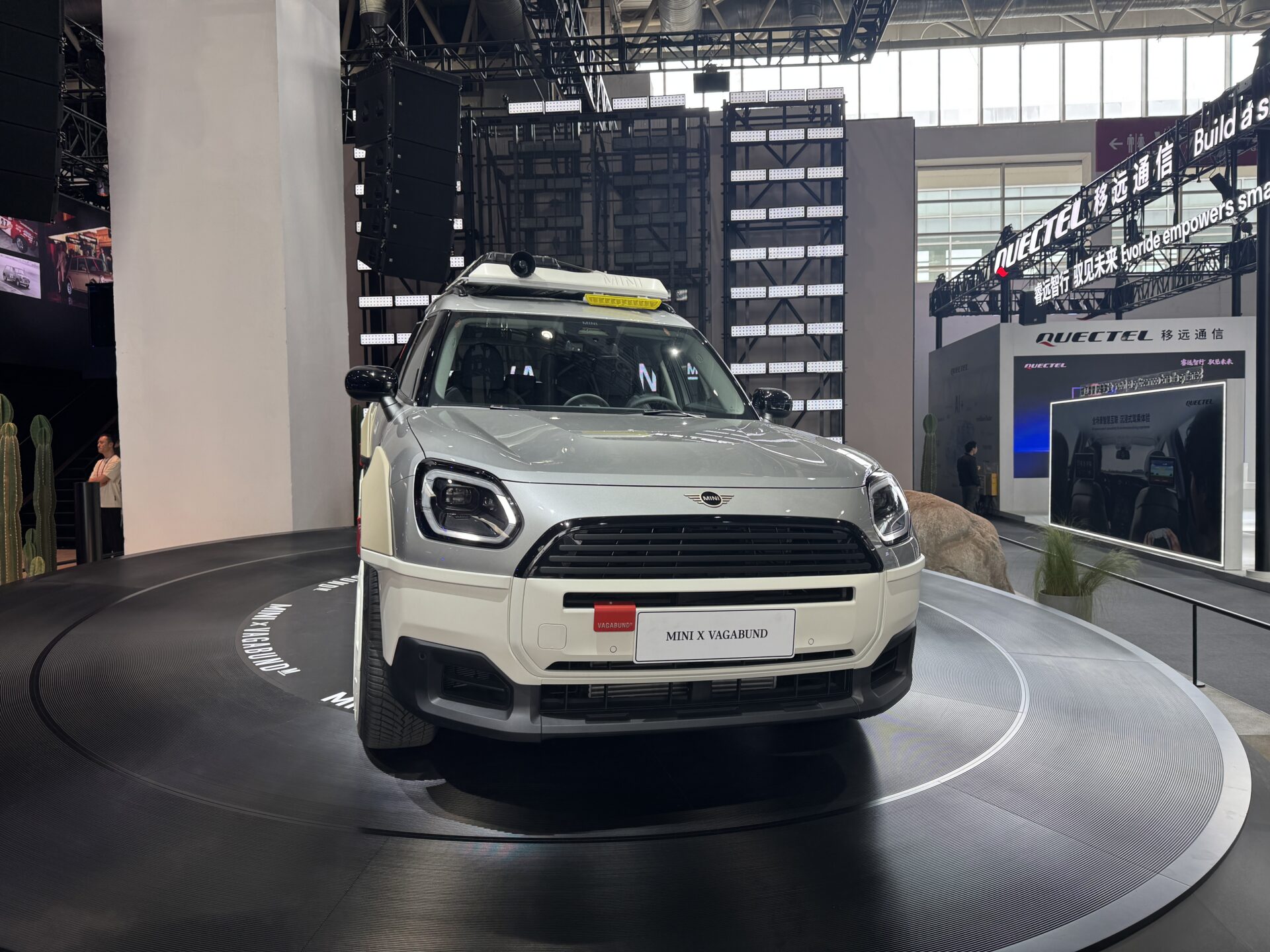
Away from the frenzy of the major Chinese stands, Mini chose a radically different approach. The brand occupied a large stand featuring no fewer than 14 vehicles on display, none of which constitutes a model launch in the conventional sense. The emphasis is on personalisation and creative collaborations, positioning Mini less as a manufacturer than as a platform for self-expression.
The star of the stand is the Mini Countryman x Vagabund, a one-off project born from a collaboration with Austrian design studio Vagabund, built on the Countryman and celebrating the spirit of adventure, community culture and festival lifestyle. The concept stands out with an off-road body kit, bespoke accessories and a confident aesthetic aimed at a young, urban audience. The brand also staged the Chinese premiere of the Mini x Deus “The Skeg”, an electric version with a semi-transparent fibreglass body drawing on surf and freedom references. The Mini Paul Smith Edition made its first appearance in China, combining the brand’s signature design with the style of the British designer.
In the face of the wave of Chinese electrics flooding the show, Mini is betting on design, personalisation and a premium image rather than fighting a specs or price war. The Beijing stand looks less like a conventional motor show presentation than an exhibition of personalities, where each vehicle embodies a different way of interpreting the brand.
A show of growing importance for the global industry
The rise of Auto China is playing out against a backdrop of declining major western shows. Frankfurt and Geneva have scaled back, while Paris is struggling to recapture its pre-pandemic attendance levels. Beijing and Shanghai, alternating each year, are now firmly established as the two unmissable events in the automotive calendar.
Industry professionals on site note that Chinese manufacturers are no longer simply selling vehicles, but integrated digital platforms connecting the car to every aspect of the driver’s connected life. This evolution is reshaping consumer expectations across all markets. According to consultancy firm Horváth, around one in two European consumers says they would consider buying a Chinese car, and the market share of Chinese brands already exceeds 10% in some regions including Norway, the United Kingdom and Italy.
For the global automotive industry, the message from the 2026 Beijing show is unambiguous: China is no longer merely a market to be conquered — it is where the future of the sector is being decided.