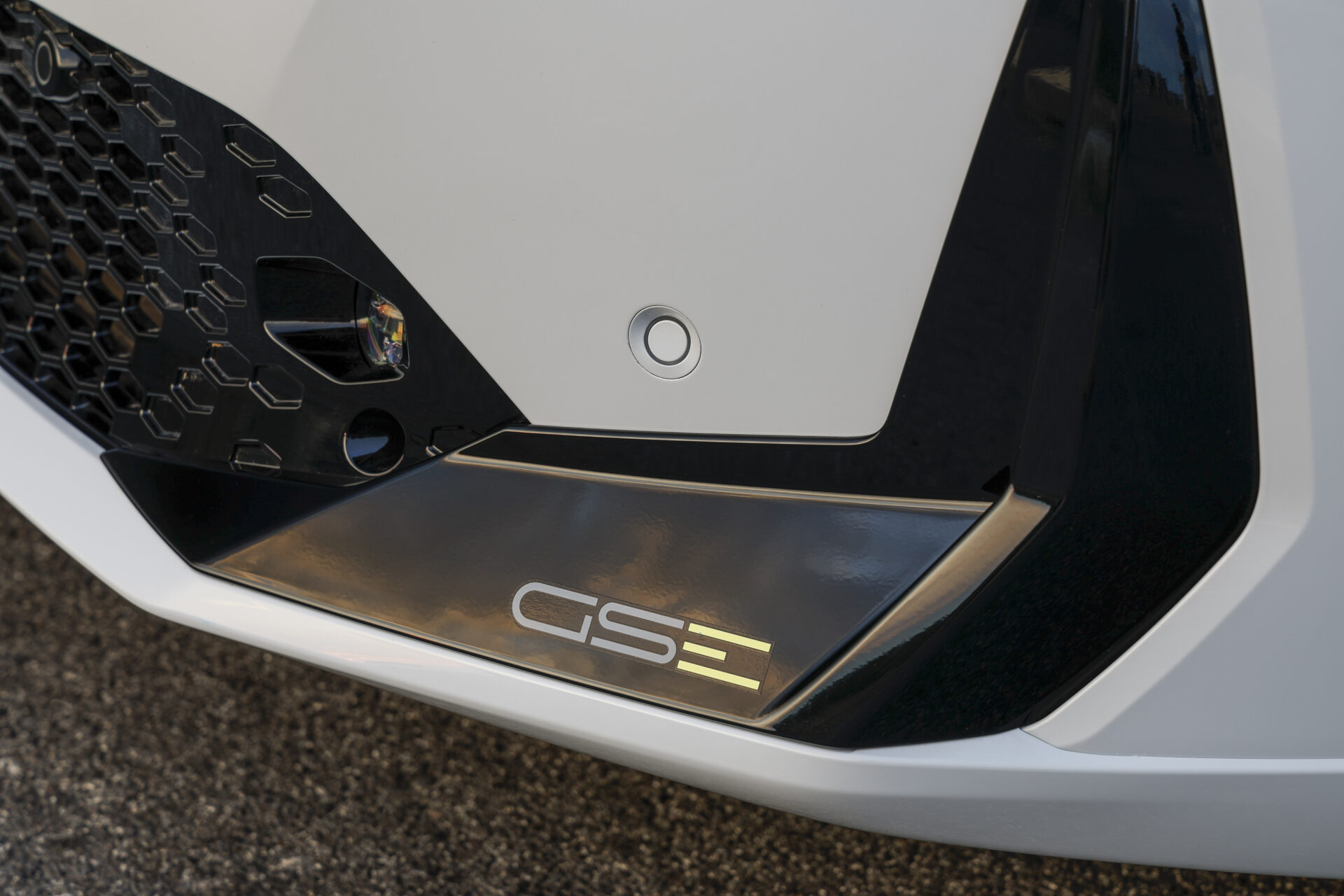
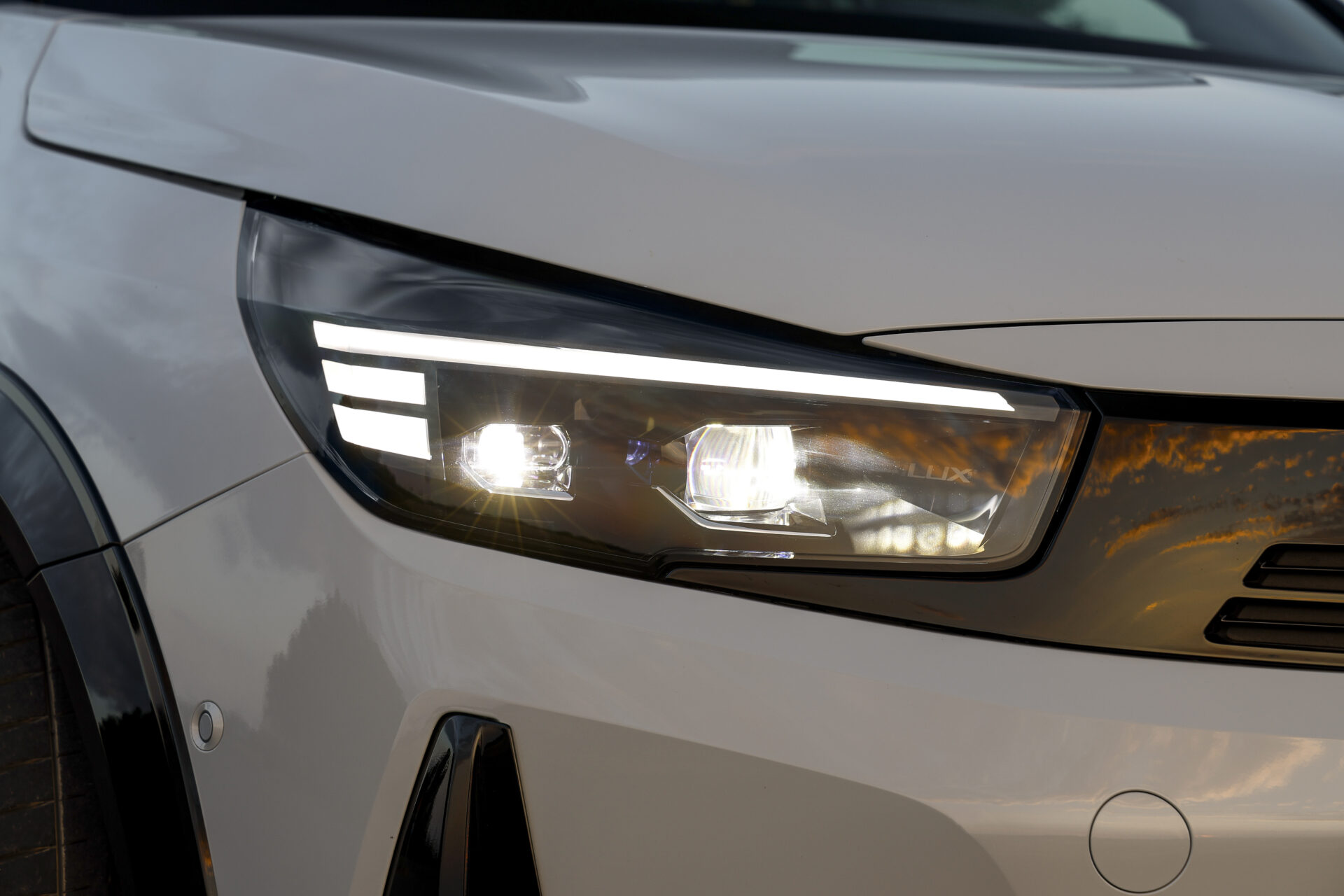
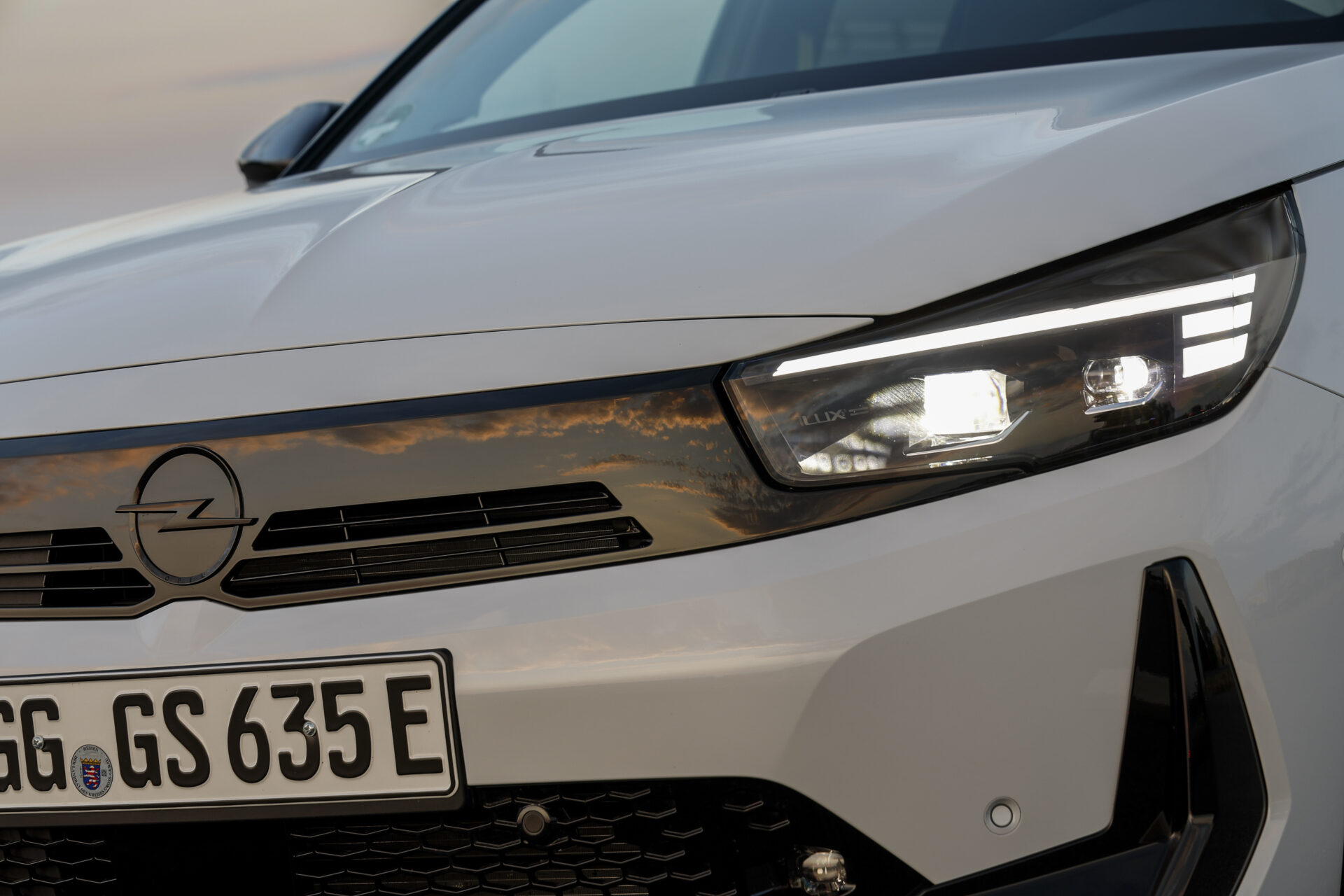
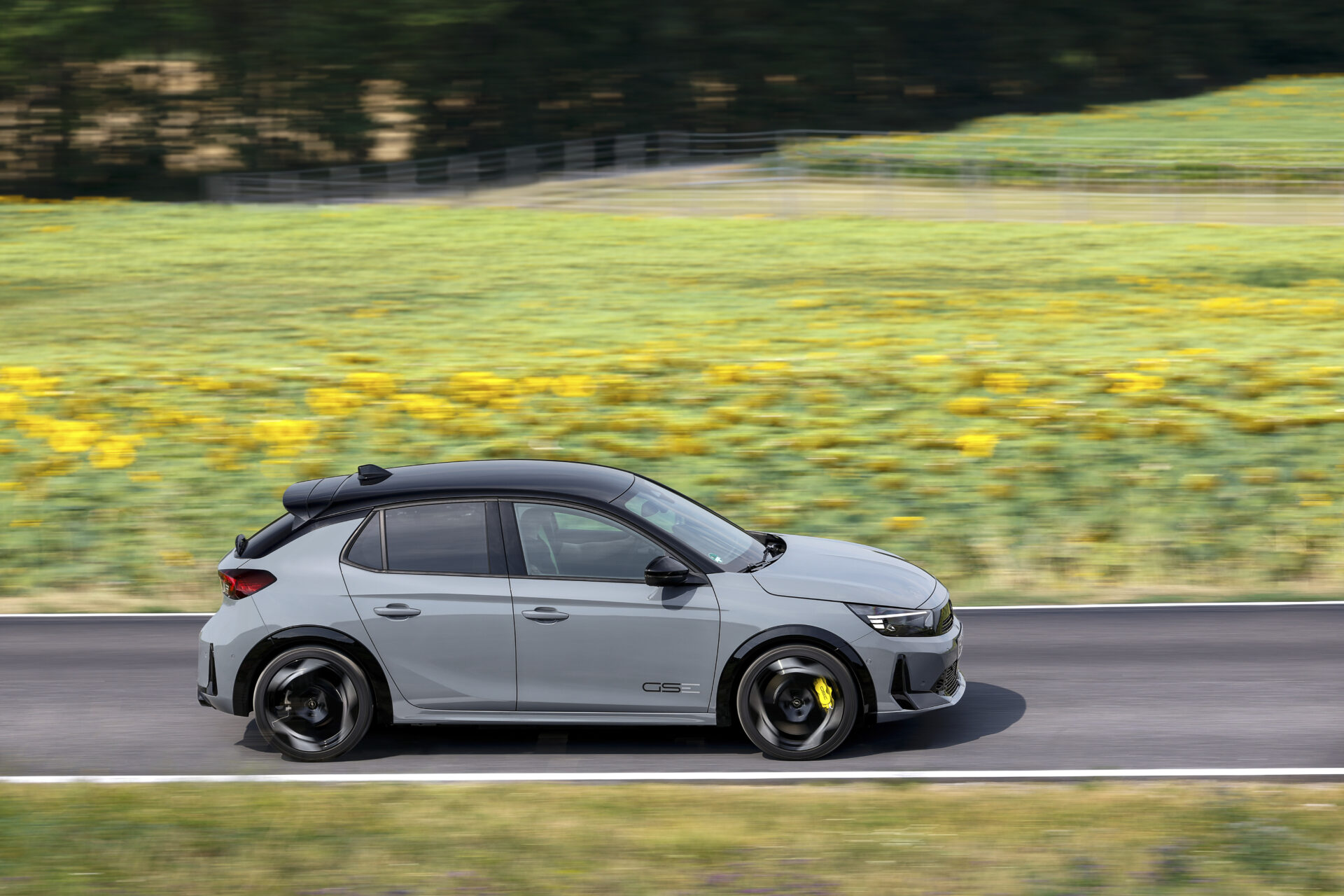
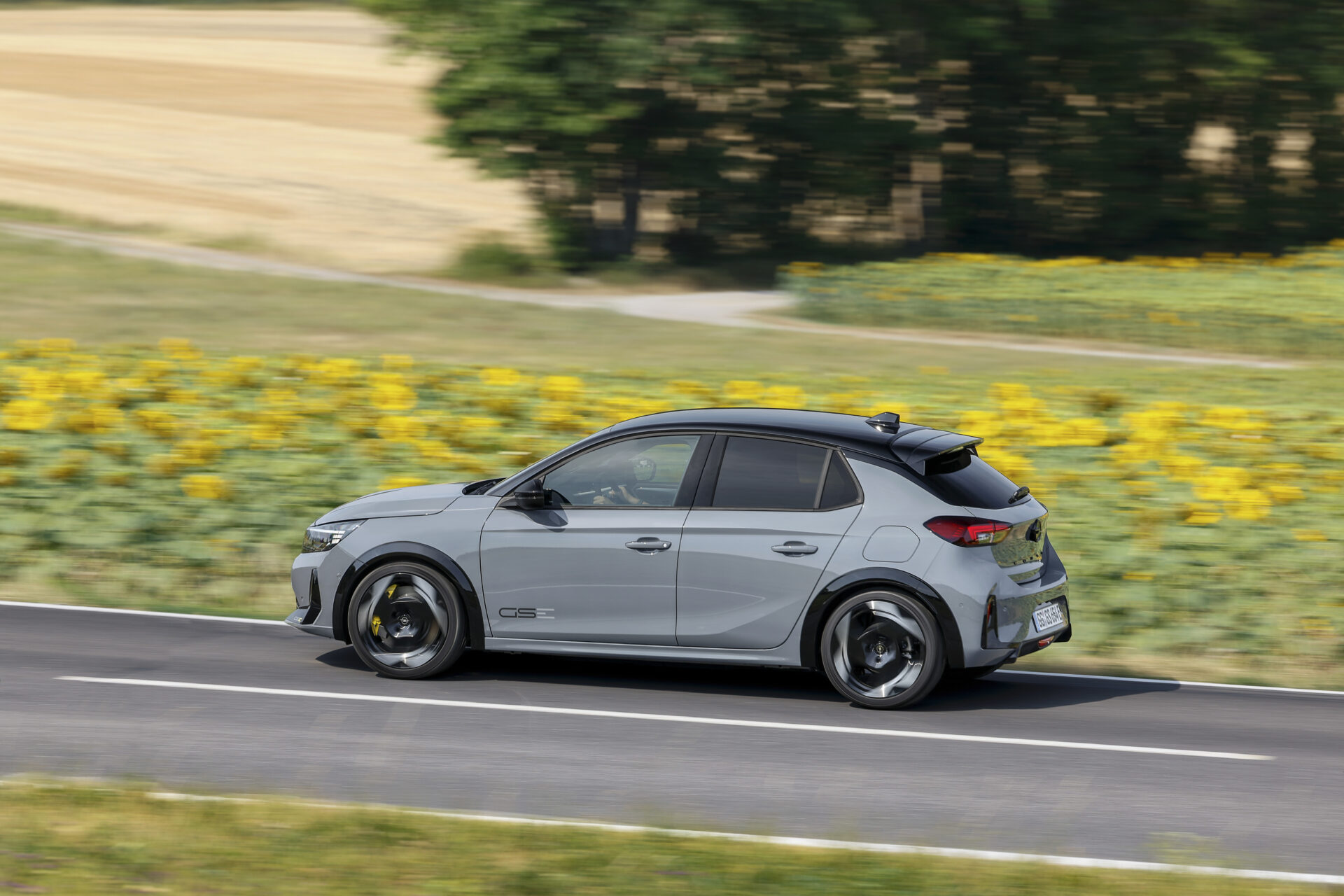
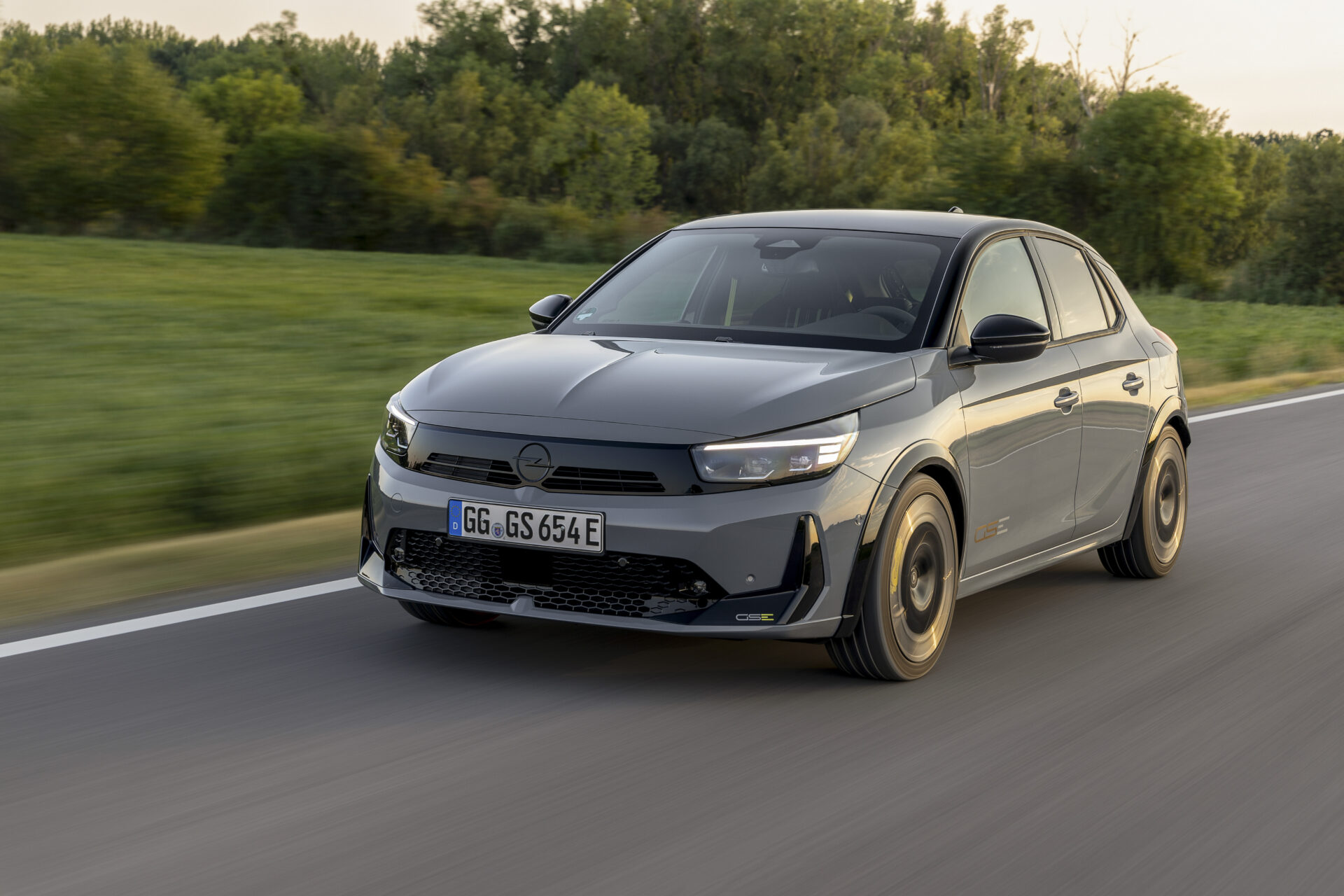
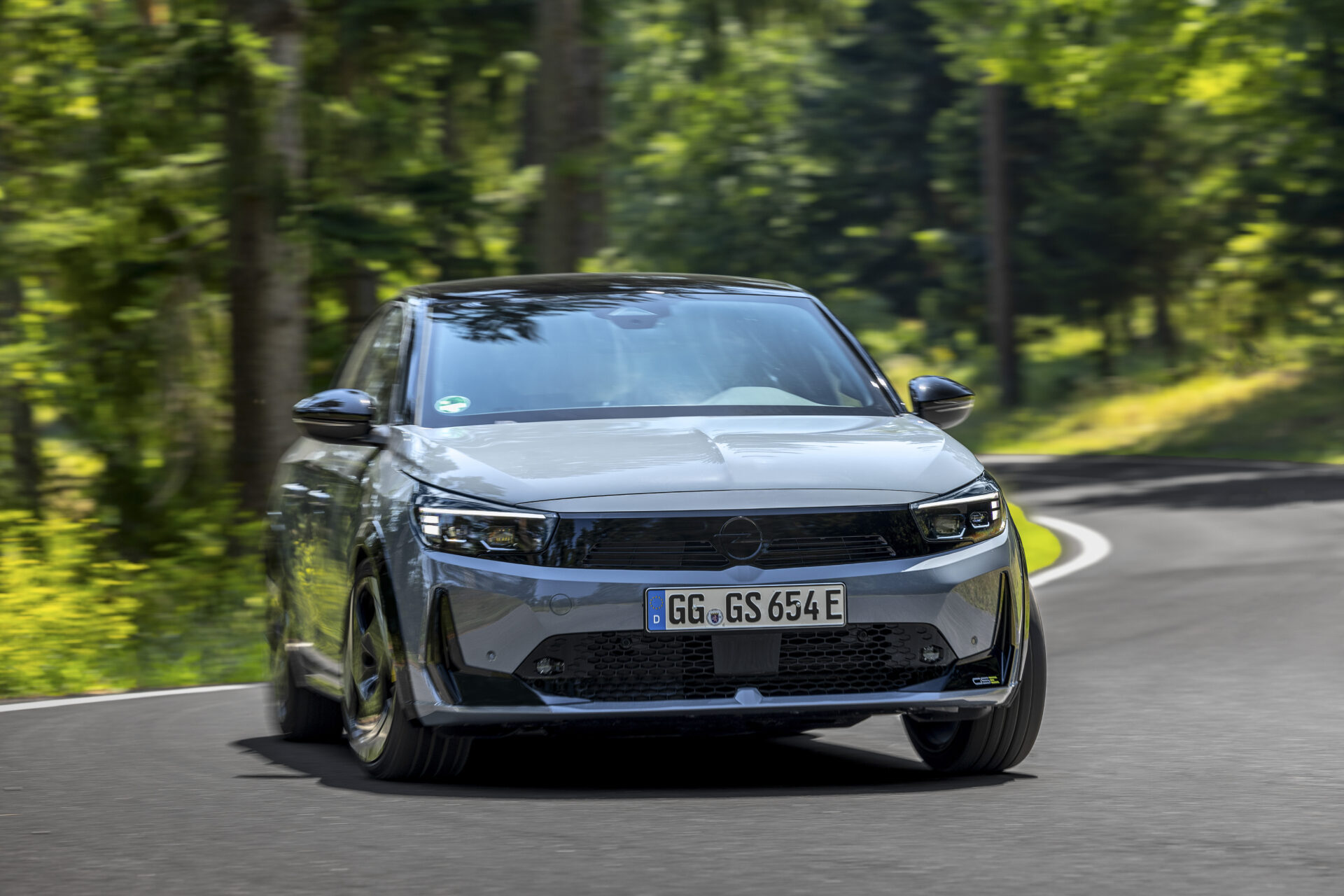
Due for its world premiere at the Paris motor show in October, the Corsa GSE is the most powerful car in the model’s history: 281hp, 0-100km/h in 5.5 seconds and, for the first time, an electric motor.
The hot hatch needs little introduction: a small hatchback with a sports car’s performance, backed by a chassis and brakes to match. The Golf GTI created the genre in the 1970s. It all but died out through the 2010s, squeezed by tightening emissions rules and the shift to SUVs. Opel is now betting on its revival.
Thirty-eight years of quick Corsas
A fast little Opel is nothing new. On sale since 1982 and built in Zaragoza, Spain, from the outset, the Corsa is now in its sixth generation and remains the best-selling small car in both Germany and the UK. “There was no better basis for our GSE,” said Helen Walter, the model’s product manager, at the launch on the Pachfurth circuit in Austria. The sporting line begins in 1988 with the GSi, short for Grand Sport injection: 820kg, 100hp, 188km/h, a car the press of the day compared to a motorbike. Next came the 109hp GSi 16V of 1993 and the Corsa C GSi of 2001, the first production Corsa to break 200km/h. From 2007 the range-toppers wore the OPC badge, for Opel Performance Center: 192hp, then 210hp and 230km/h in the 2010 Nürburgring Edition, and finally 207hp in the Corsa E OPC of 2015. Then ten years of silence. In 2025 Opel rediscovered its sporting DNA, and did so through an unlikely combination of SUV and performance: the Mokka GSE opened the Grand Sport Electric family. The Corsa is its second member, and the first hatchback of the line, which makes it an electrified hot hatch.
Mokka GSE running gear, lighter package
The Corsa GSE takes the SUV’s drivetrain wholesale. Motor, inverter, battery and high-voltage wiring are identical, and derive from the competition Mokka GSE Rally. That means 207kW, or 281hp, and 345Nm, all of it through the front axle. Being lighter than the Mokka, the Corsa covers 0-100km/h in 5.5 seconds rather than 5.9, which works out at 181hp per tonne. No production Opel has gone quicker, not even the Nürburgring Edition and its 6.8 seconds. Top speed, on the other hand, is limited to 180km/h, well short of the 230km/h the OPCs managed. On an electric car that ceiling is an engineering decision, not a mechanical limit. The three driving modes genuinely divide the output: 190hp in Eco, 231hp in Normal, 281hp in Sport.
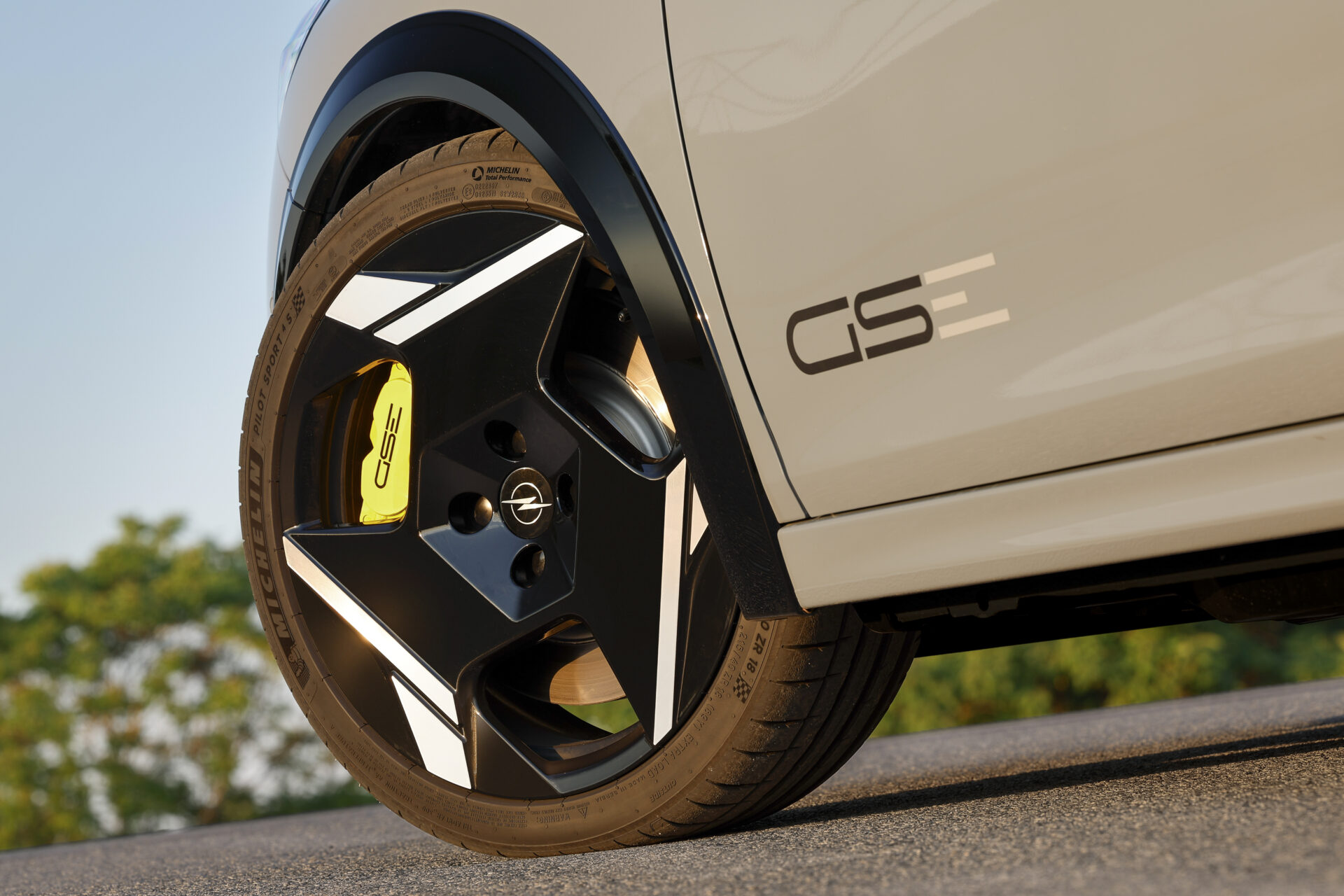
The real technical marker lies elsewhere. The GSE gets a multi-plate Torsen limited-slip differential, a first on a Corsa, and without it this much torque would be unusable through the front wheels. Opel also lowered the body by 25mm, widened the track by 54mm at the front and 20mm at the rear, and fitted bespoke anti-roll bars and hydraulic bump stops. Four-piston Alcon brakes and Michelin Pilot Sport 4S tyres complete the package.
Chassis work pays off
The chassis work shows: traction out of corners and stability under braking bear no relation to the rest of the range. Under hard acceleration the front axle still asks for a measure of attention, yet the car stays far more settled and biddable than its hot-blooded ancestors.
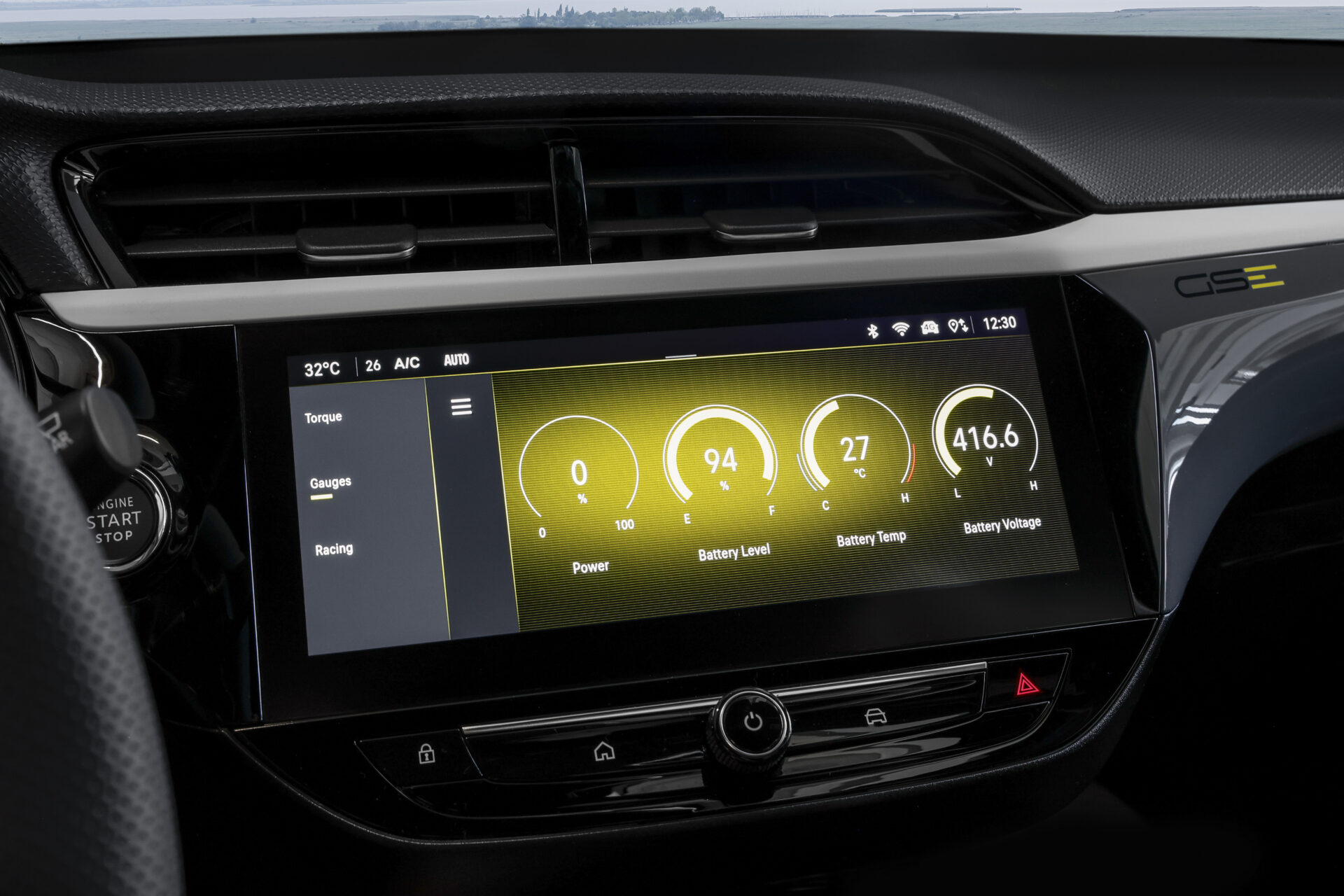
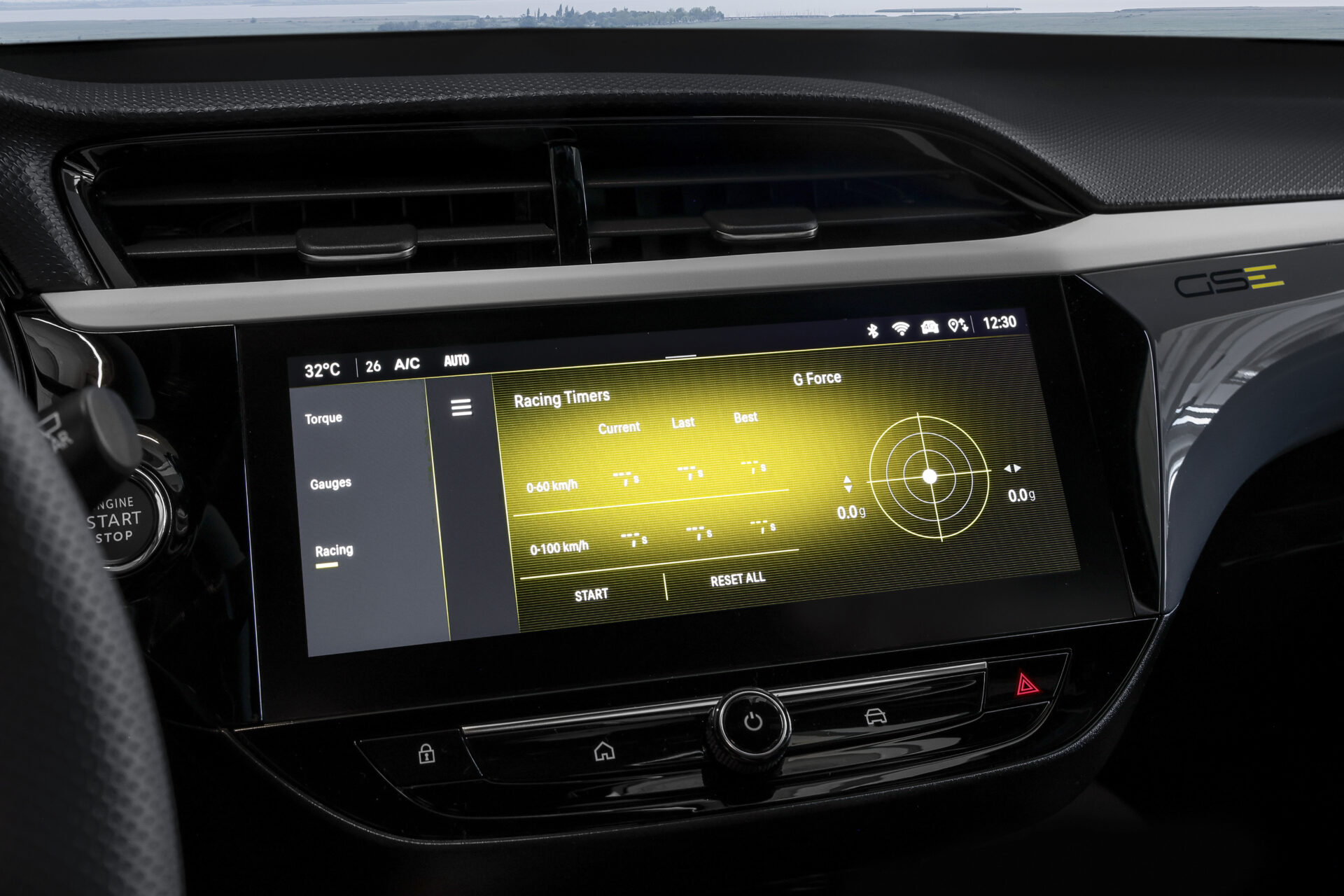
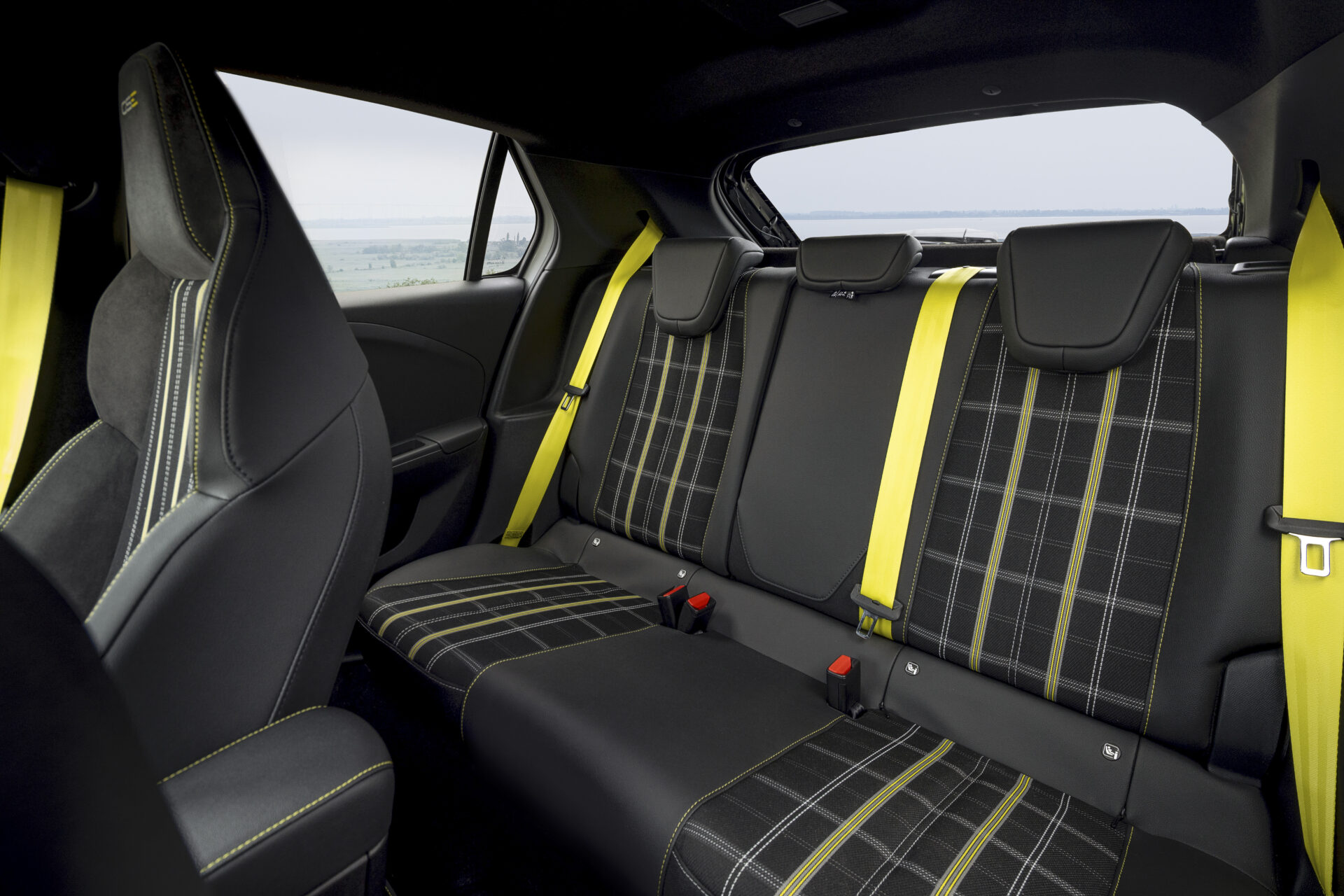
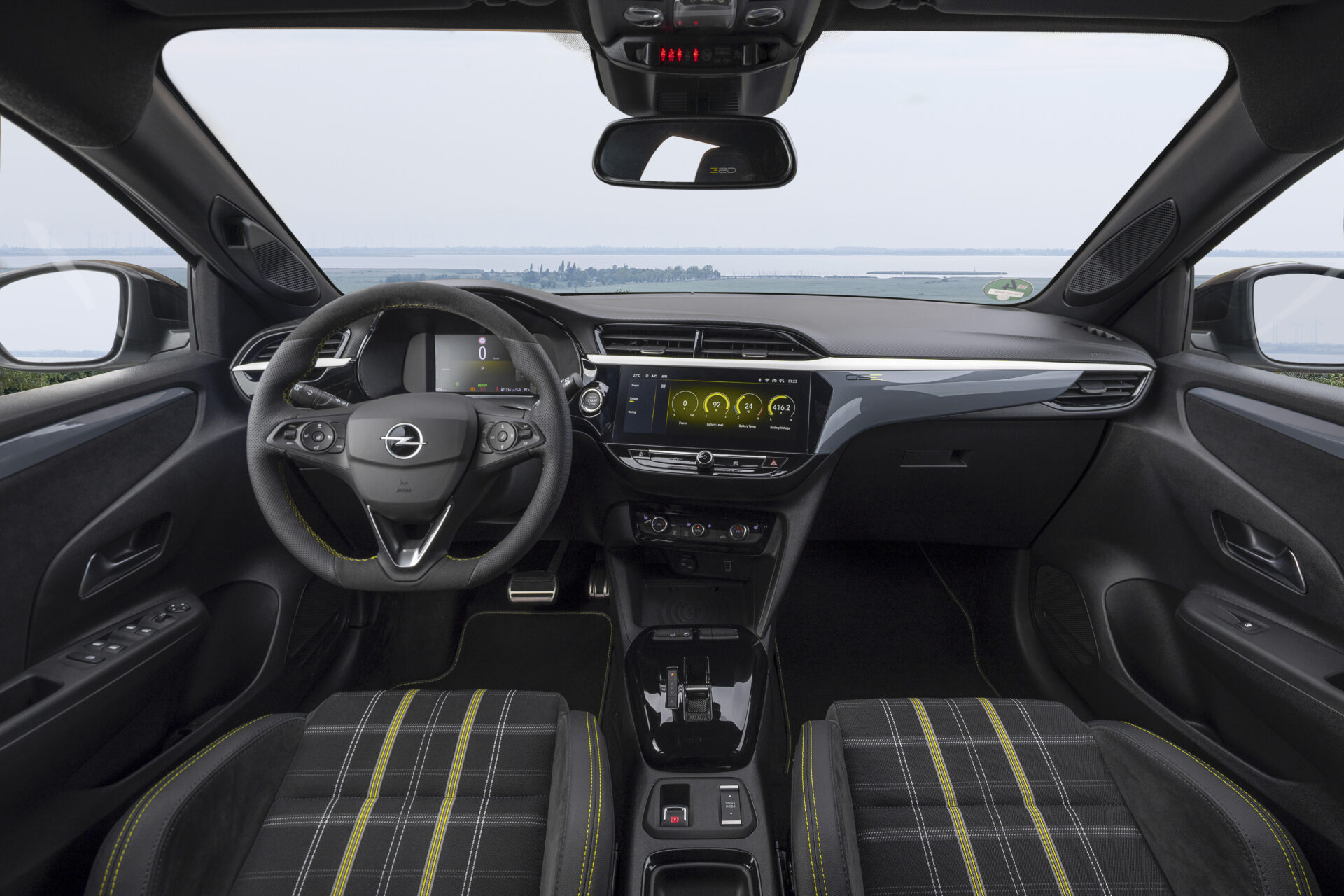
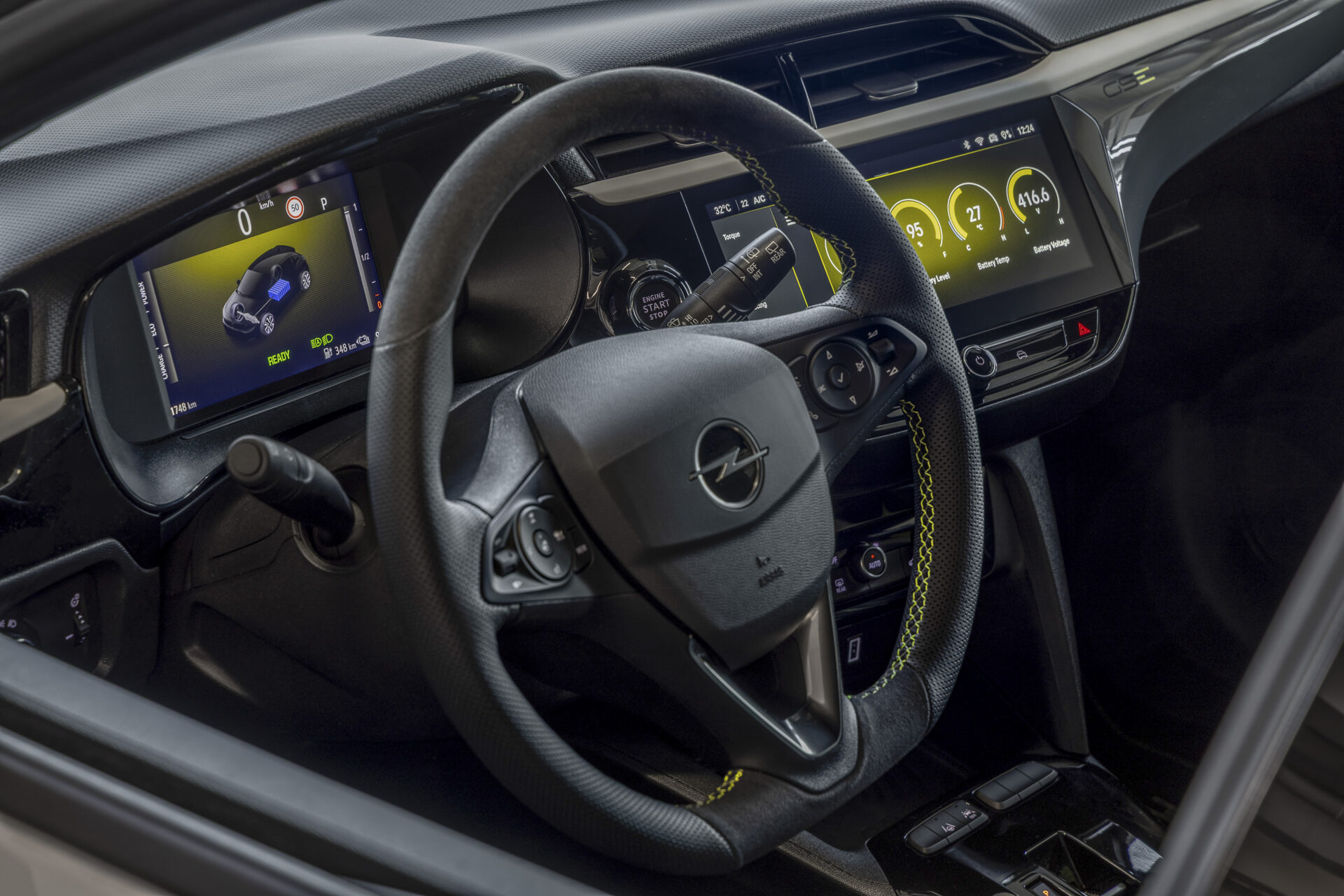
The cabin makes no secret of its 1980s references, with a black, grey and yellow chequered seat pattern inherited from the Corsa A GSi. “We really wanted to bring history into the car,” Helen Walter explains, singling out the bright yellow seatbelts as her favourite detail: “You plug in your seatbelt and you see this is a special car.” The Corsa is no longer new, though, and it shows: the dashboard, the 10-inch screen and the general ergonomics date from 2019. As for the active sport sound developed at Rüsselsheim, opinion will divide, since it is entirely synthetic. It can be switched off.
Das könnte Sie auch interessieren
Charged in 27 minutes
The 54kWh battery, 51kWh of it usable, is the one fitted to the Corsa Long Range, but homologated consumption climbs to between 16.0 and 17.0kWh/100km. WLTP range therefore falls to 374km on the no-cost Hankook ECO tyres, and to 354km on the Michelins. Clearing 300km at any pace would be an achievement. Charging takes three hours ten minutes on an 11kW three-phase wallbox and more than 20 hours on a domestic socket, while rapid charging to 80 per cent takes 27 minutes, with peak intake capped at 100kW. Bidirectional V2L charging is standard, allowing the battery to power external devices.
Buyers still have a choice
The GSE remains a special case within a range that Opel still offers with several powertrains: the 100hp 1.2 Turbo petrol from €22,046, hybrids of 110hp and 145hp, and electric versions of 136hp and 156hp from €32,770, the latter quoting 429km. At €45,437 including VAT, the GSE costs more than twice the entry-level petrol Corsa. In return it arrives fully equipped, with navigation, a 180-degree reversing camera, adaptive cruise control, and heated seats and steering wheel.
PACHFURTH, THE MOKKA GSE RALLY’S TEST TRACK
Opel gathered the international press at the Pachfurth Driving Camp in Lower Austria for the Corsa GSE’s first laps. The venue was no accident: this is the test track where the brand’s motorsport engineers developed the Mokka GSE Rally, and the production Corsa carries over much of its high-voltage hardware, motor and battery included. An Opel spokesperson opened proceedings with a second argument: the region draws almost all of its electricity from renewable sources, with wind turbines visible from the circuit itself. The implication was that electric performance and clean generation can go together. Also on hand were the Mokka GSE Rally, which contests the ADAC Rally Cup this season, and a Formula E car, the series the brand joins next season with New Zealand driver Mitch Evans.
TECHNICAL SPECIFICATION:
Corsa GSE Electric 54kWh
Points forts
- Acceleration and traction
- Limited-slip differential and brakes
- The yellow seatbelts
Points faibles
- Capped top speed
- Ageing cabin
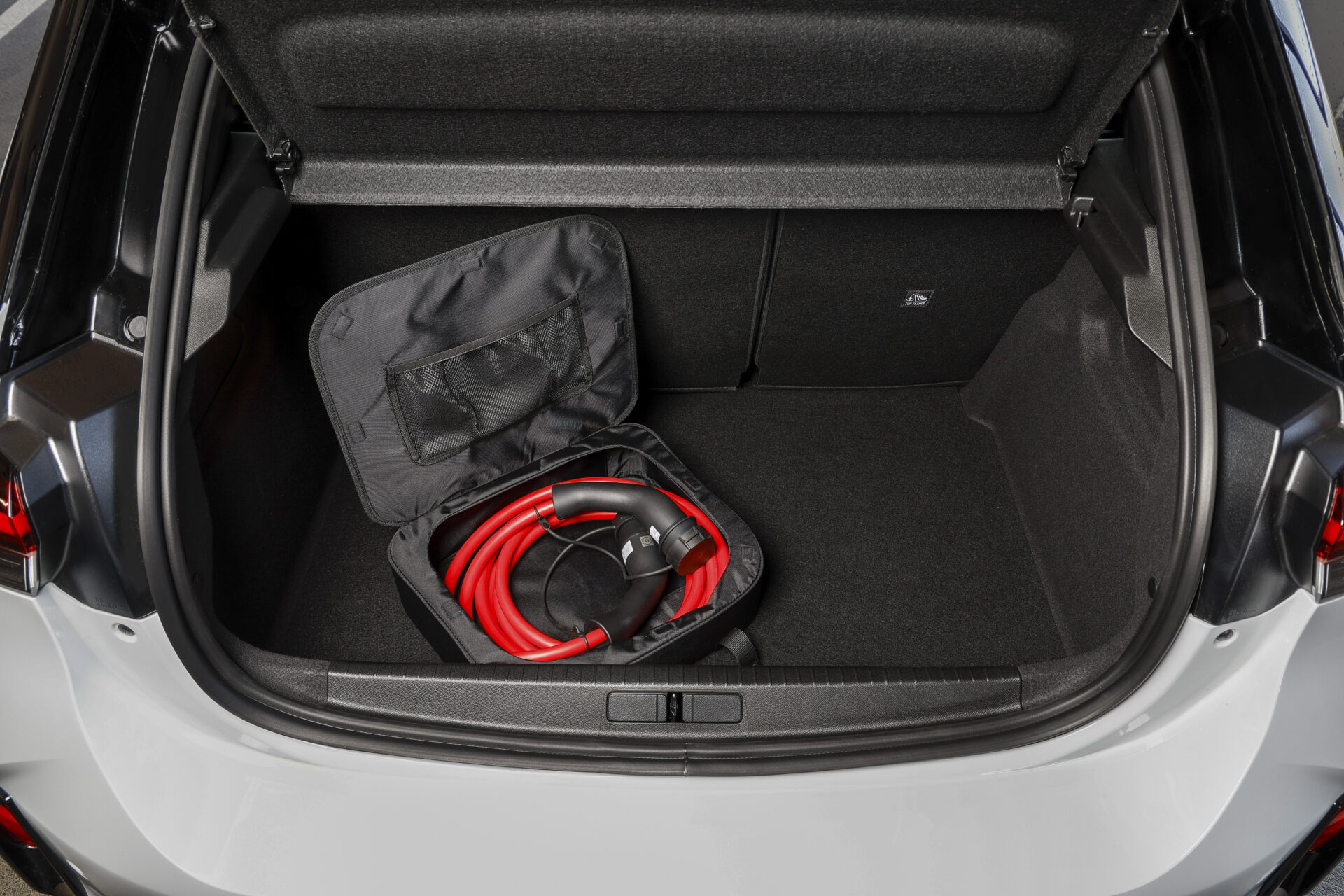
- Small 267-litre boot