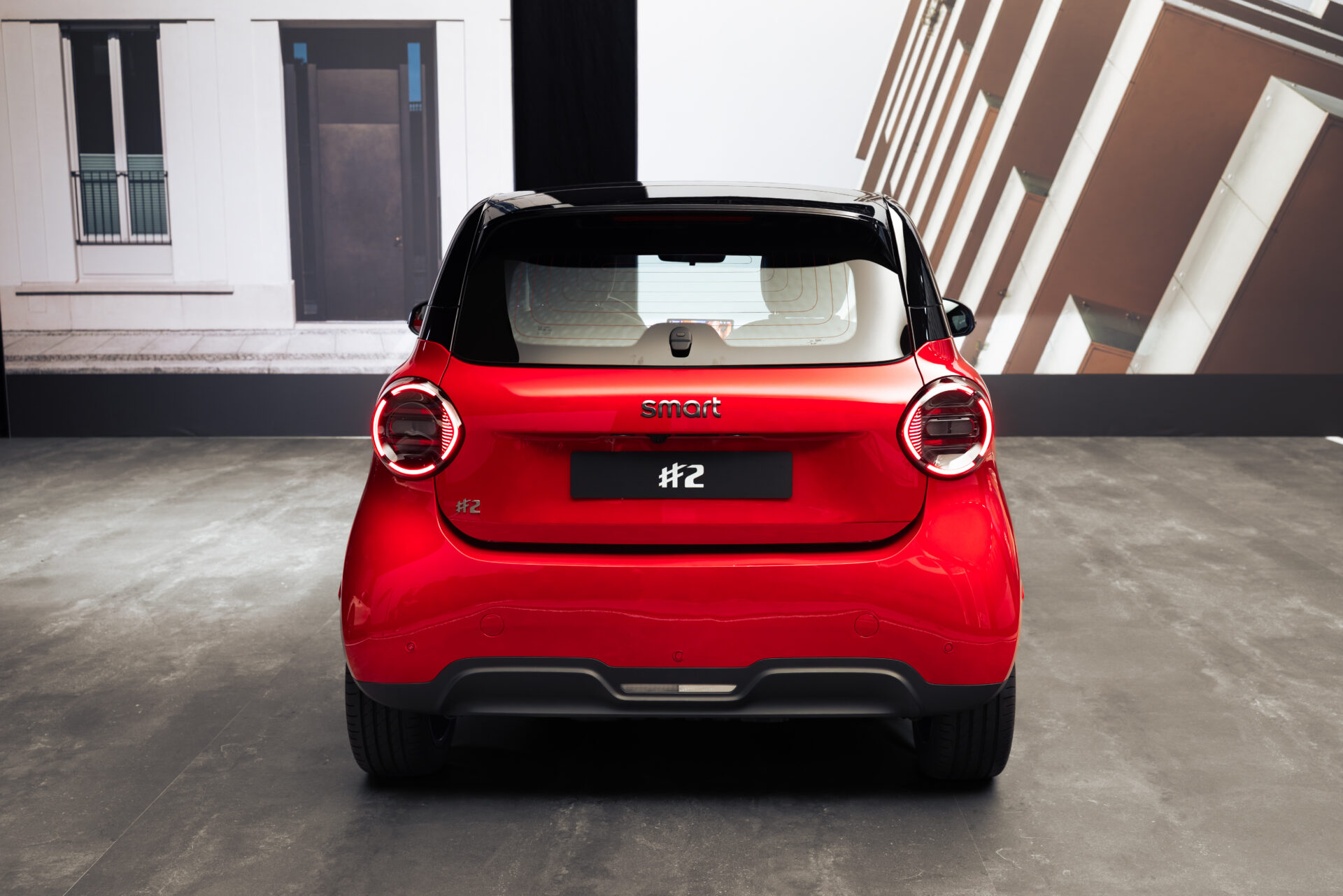
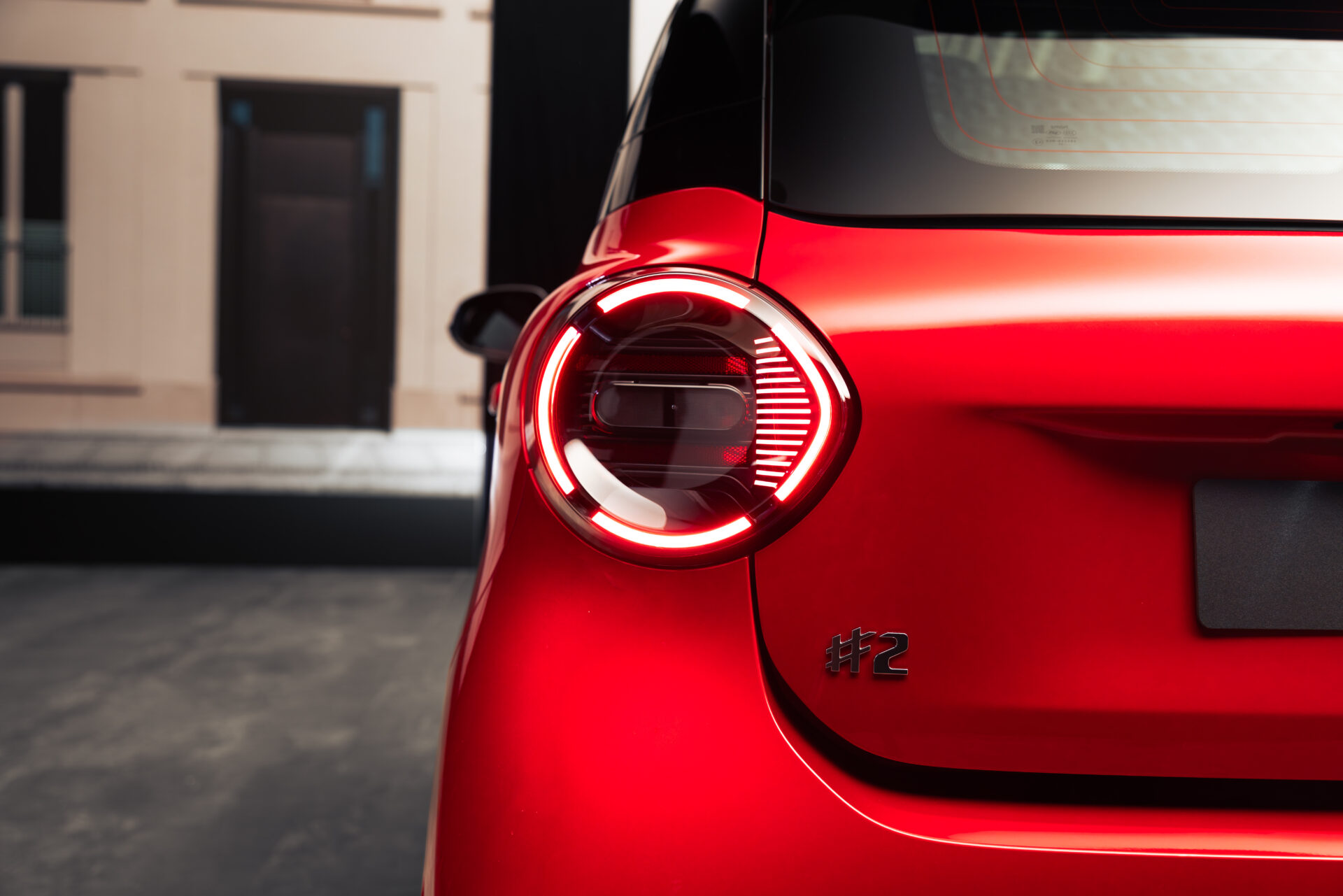
The guiding principle behind the new, all-electric Smart #2? Maximum space for a minimum footprint, says Smart Europe CEO Wolfgang Ufer.
Thirty years after the introduction of the Smart two-seater in Paris, the ultra-compact city car is back – this time, in an all-electric version.
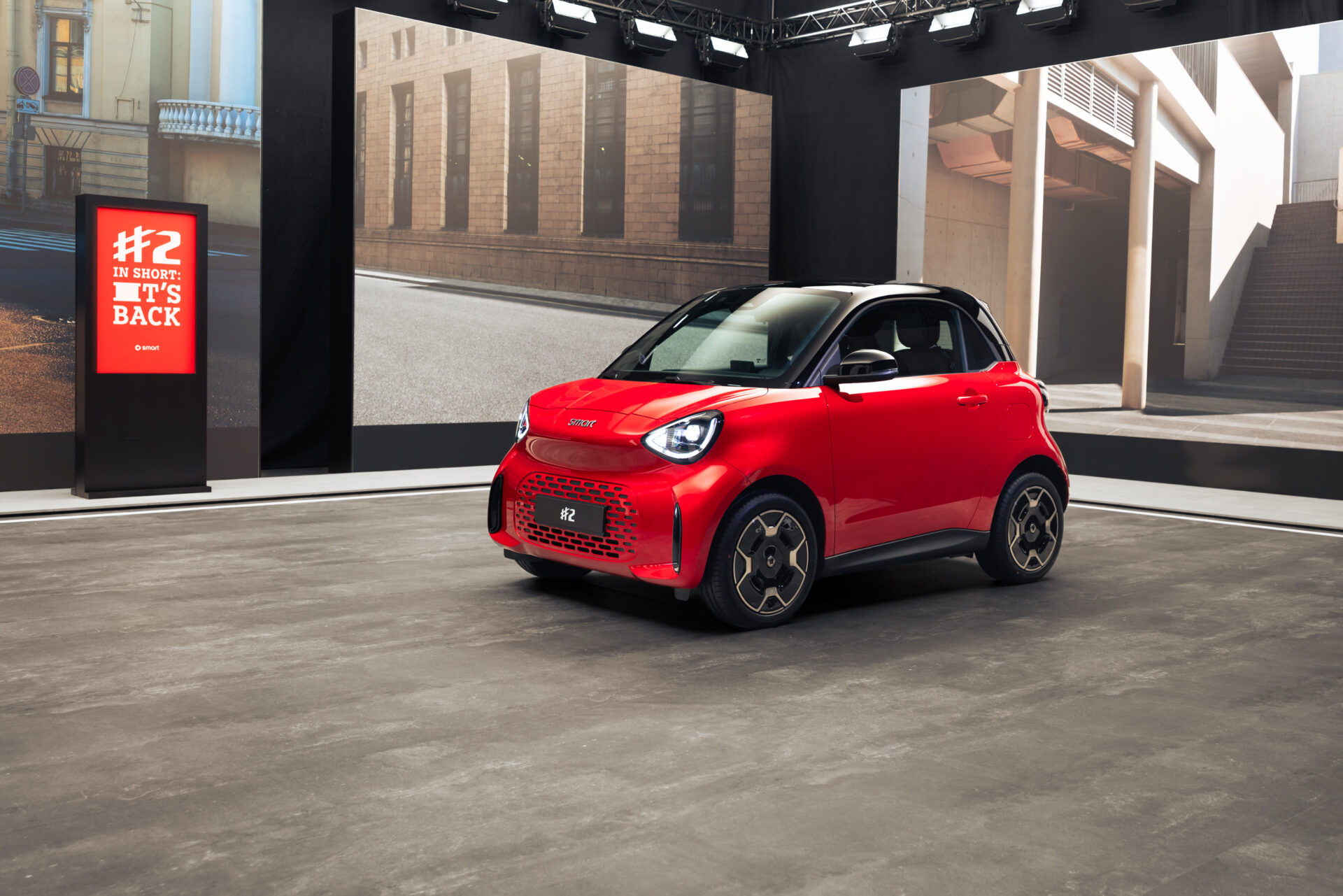
“Clever urban mobility is more relevant than ever,” said Smart Europe CEO Wolfgang Ufer, speaking during the world premiere of the new Smart #2 at the Paris Motor Show on Monday. In today’s dense and modern cities, exactly how much of a car is necessary? “Everything in this car follows one big idea: to generate maximum space in a minimum footprint.”
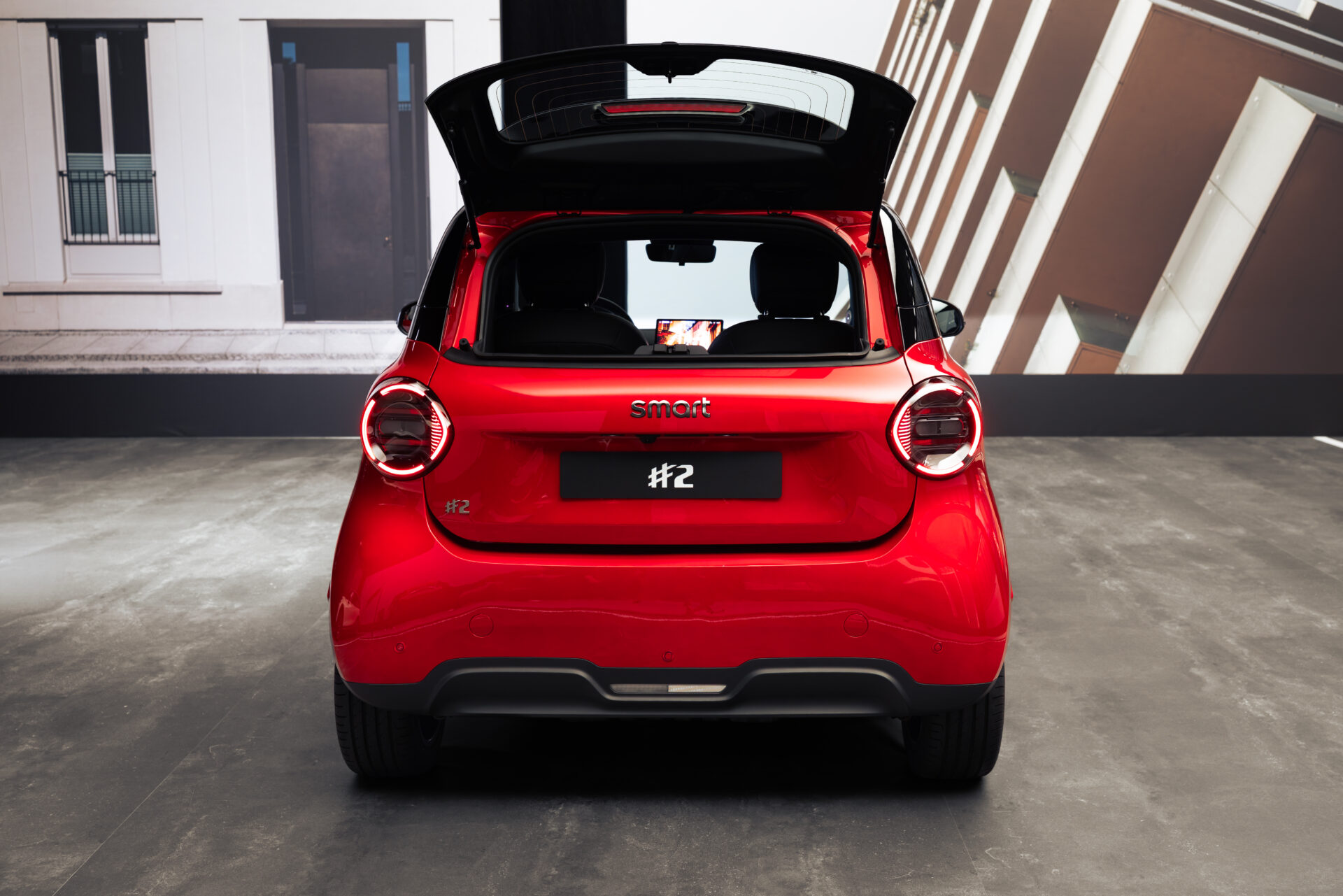
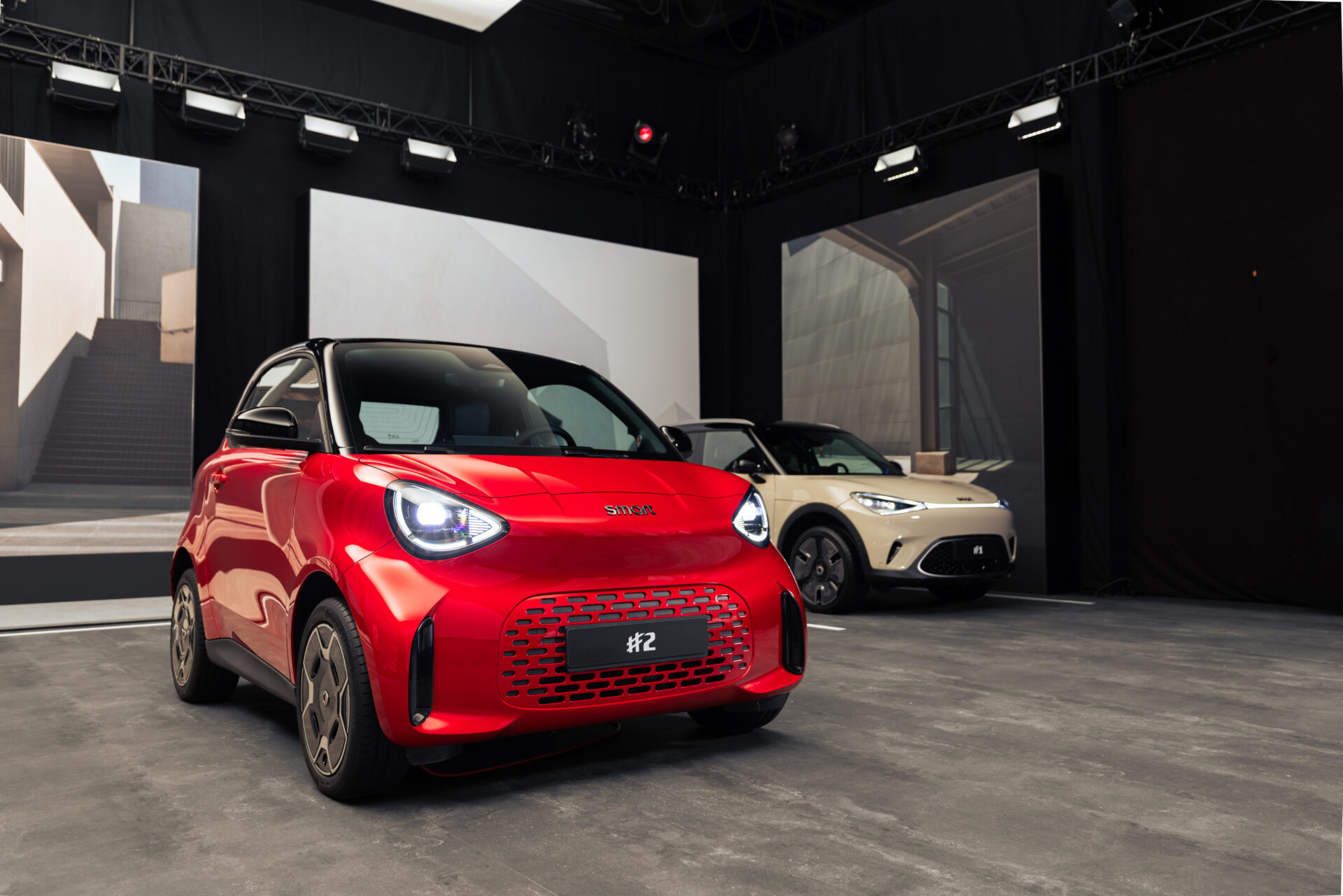
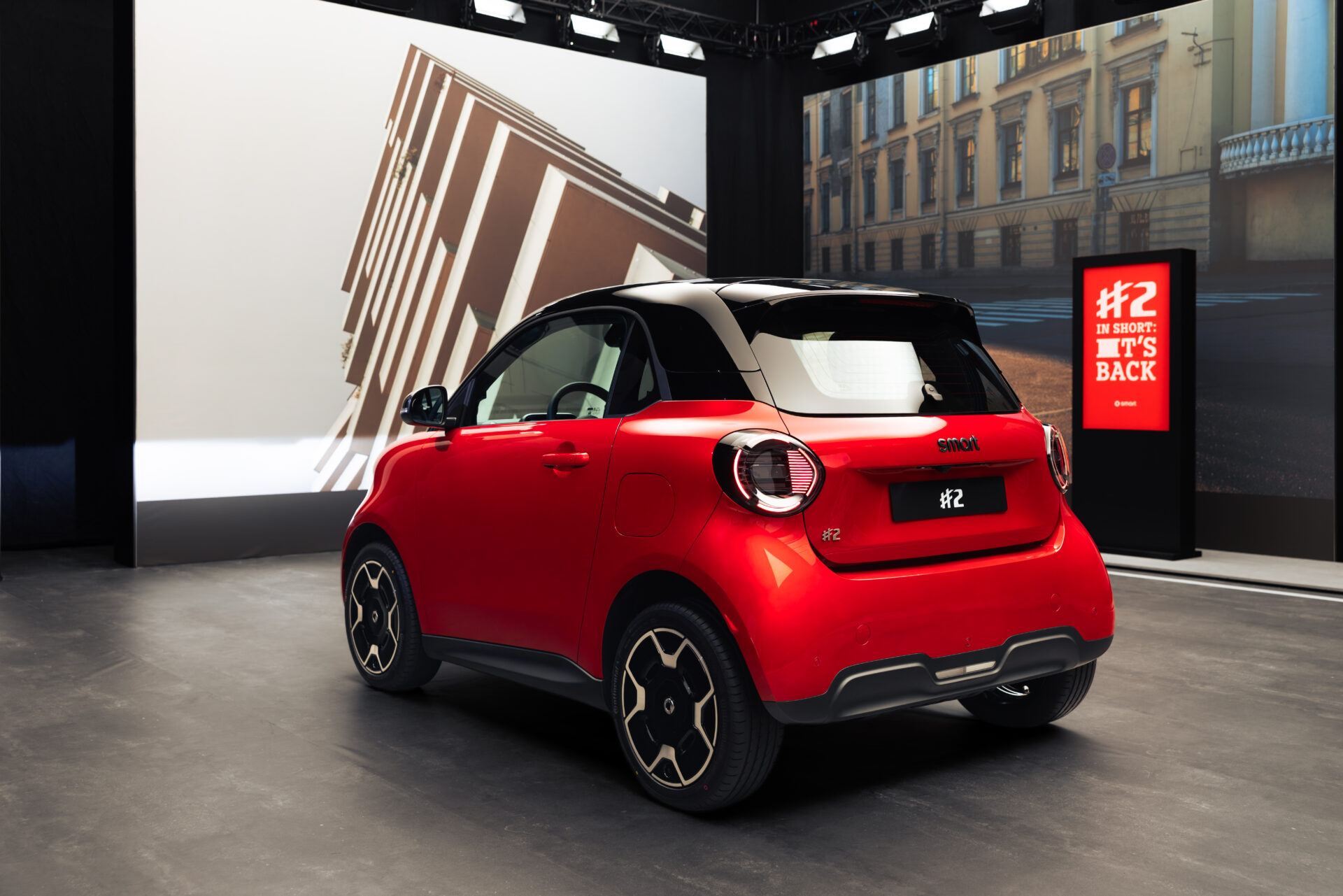
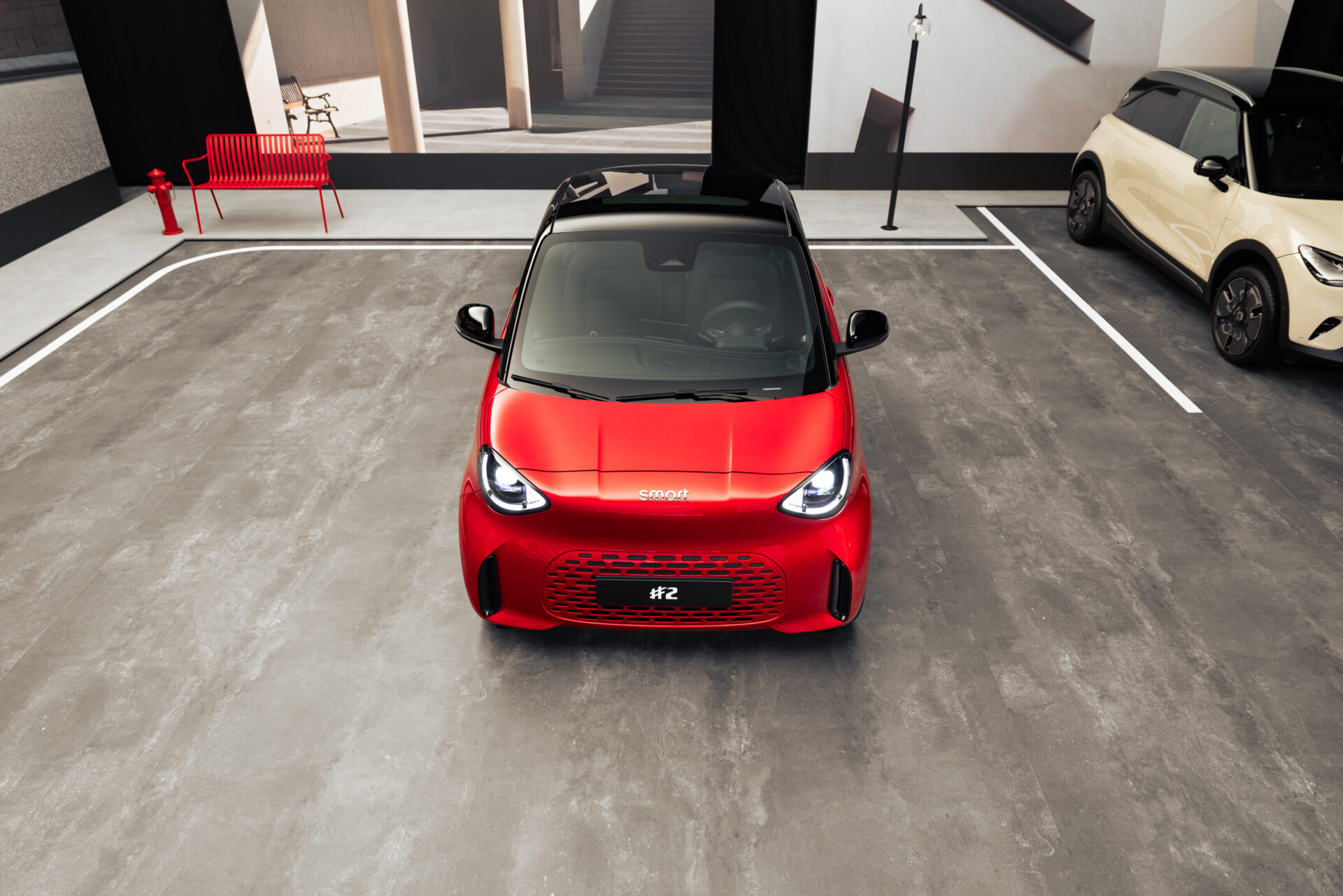
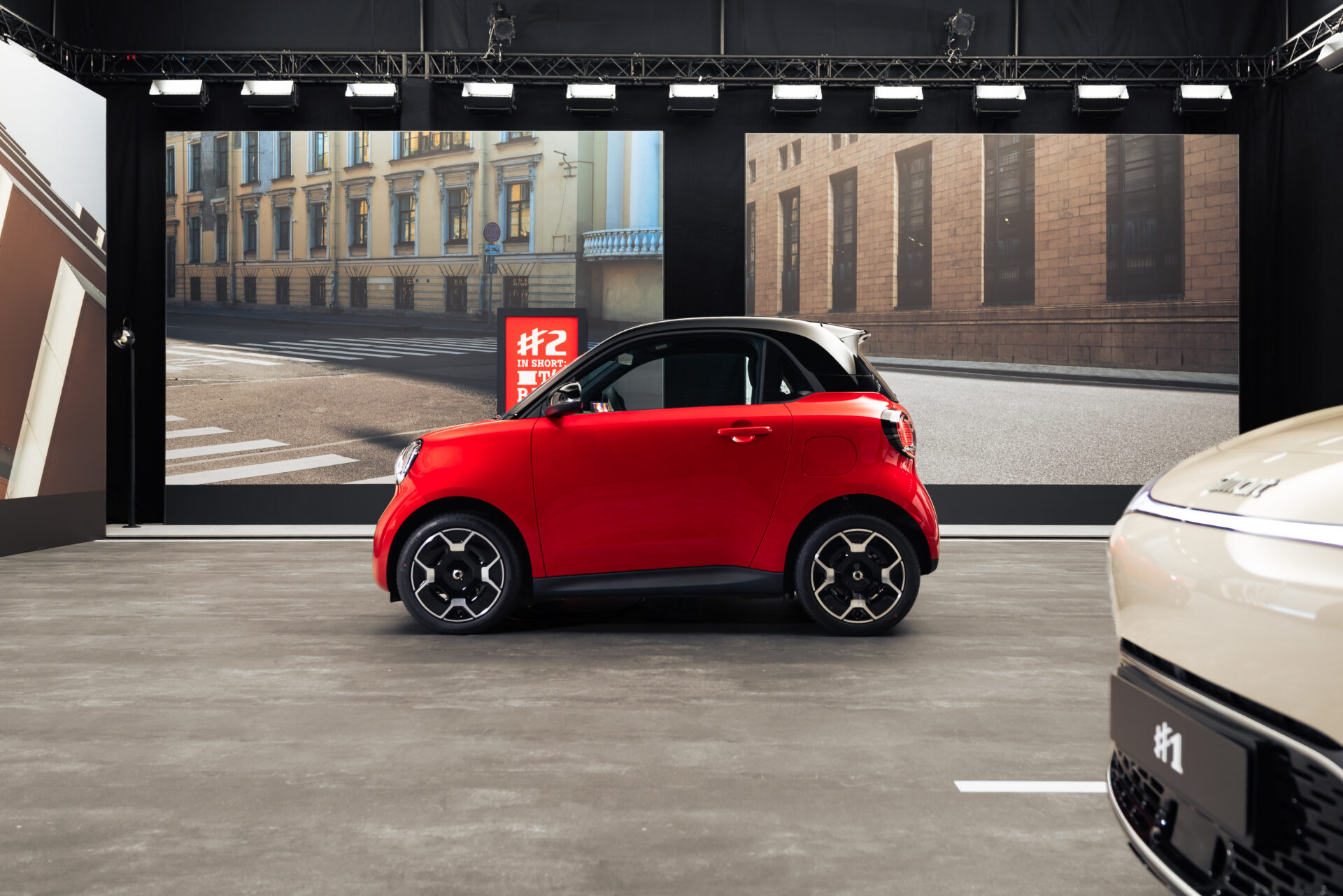
The Smart #2 retains the characteristics that made its predecessor iconic, according to Ufer, bringing “its character, agility, and confidence” to a new generation of cars. “Every detail is designed to make the most of the available space,” he said. Measuring 2.746 metres and with a turning circle of 6.95 metres, its compact footprint makes it “remarkably easy” to park and maneuver throughout the city.
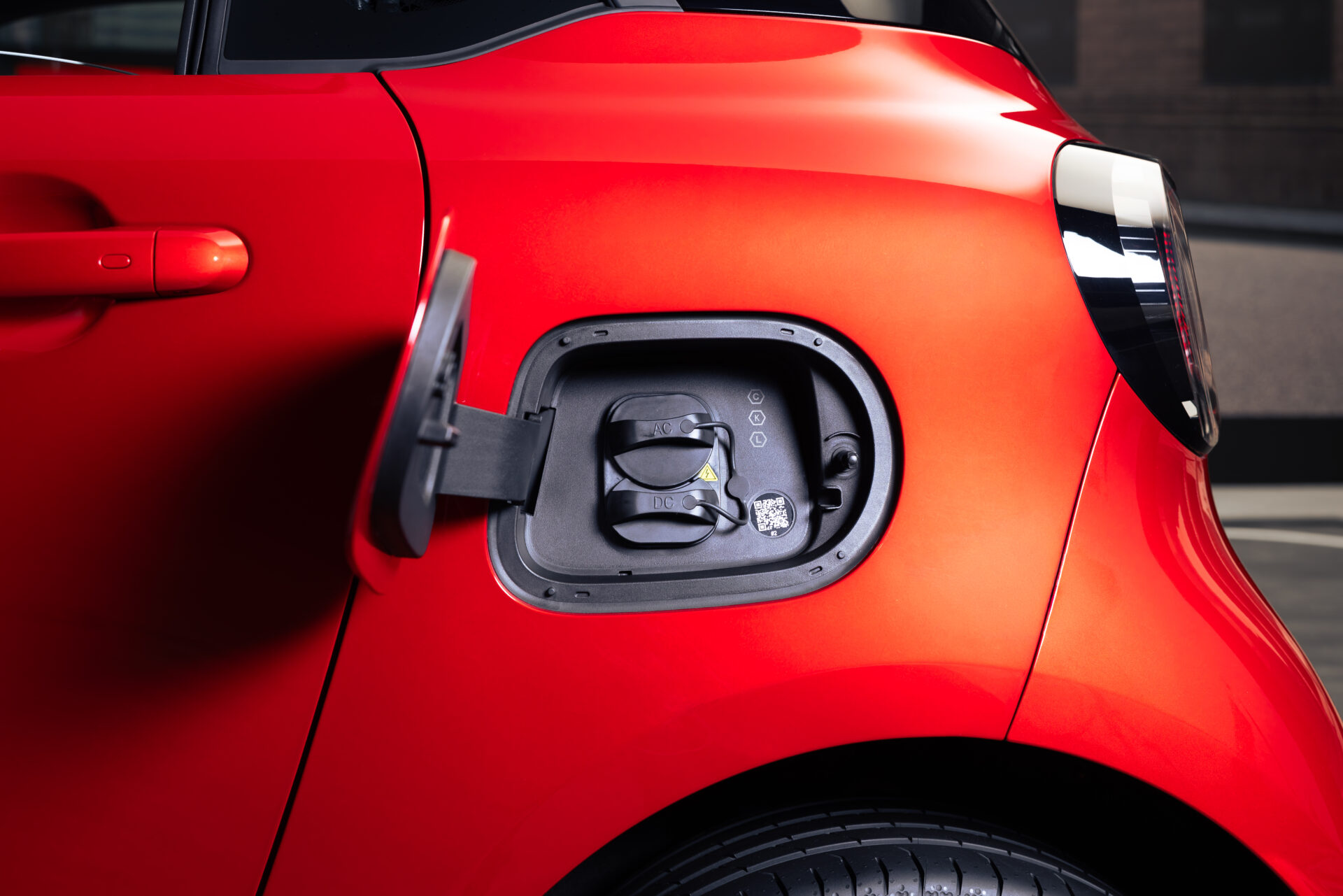
But “being a city car,” added Ufer, “shouldn’t mean being limited to the city.” The newly-introduced Smart #2 has a range of up to 290 km WLTP. Its 35.8-kWh battery supports 65 kW DC fast charging, allowing it to charge from 10% to 80% in 20 minutes.
Surprisingly spacious
Though the car itself is ultra-compact, the interior is surprisingly roomy. The new model, said Kai Sieber, head of Smart Design at Mercedes-Benz Design, has an “unmistakable silhouette.” The four wheels of the car are pressed into the extreme corners of the body, allowing interior space to be maximised whilst keeping the vehicle’s footprint small.
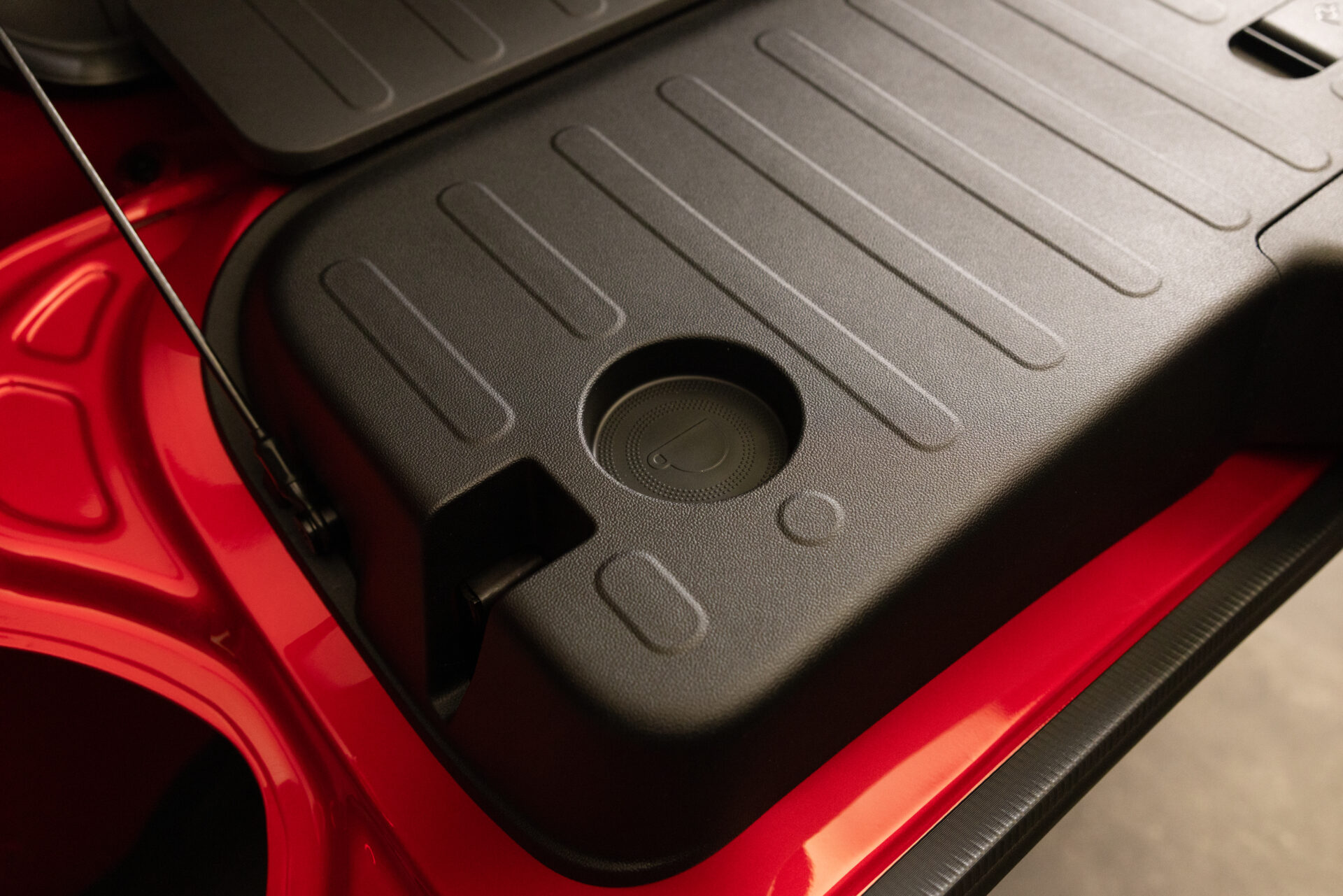
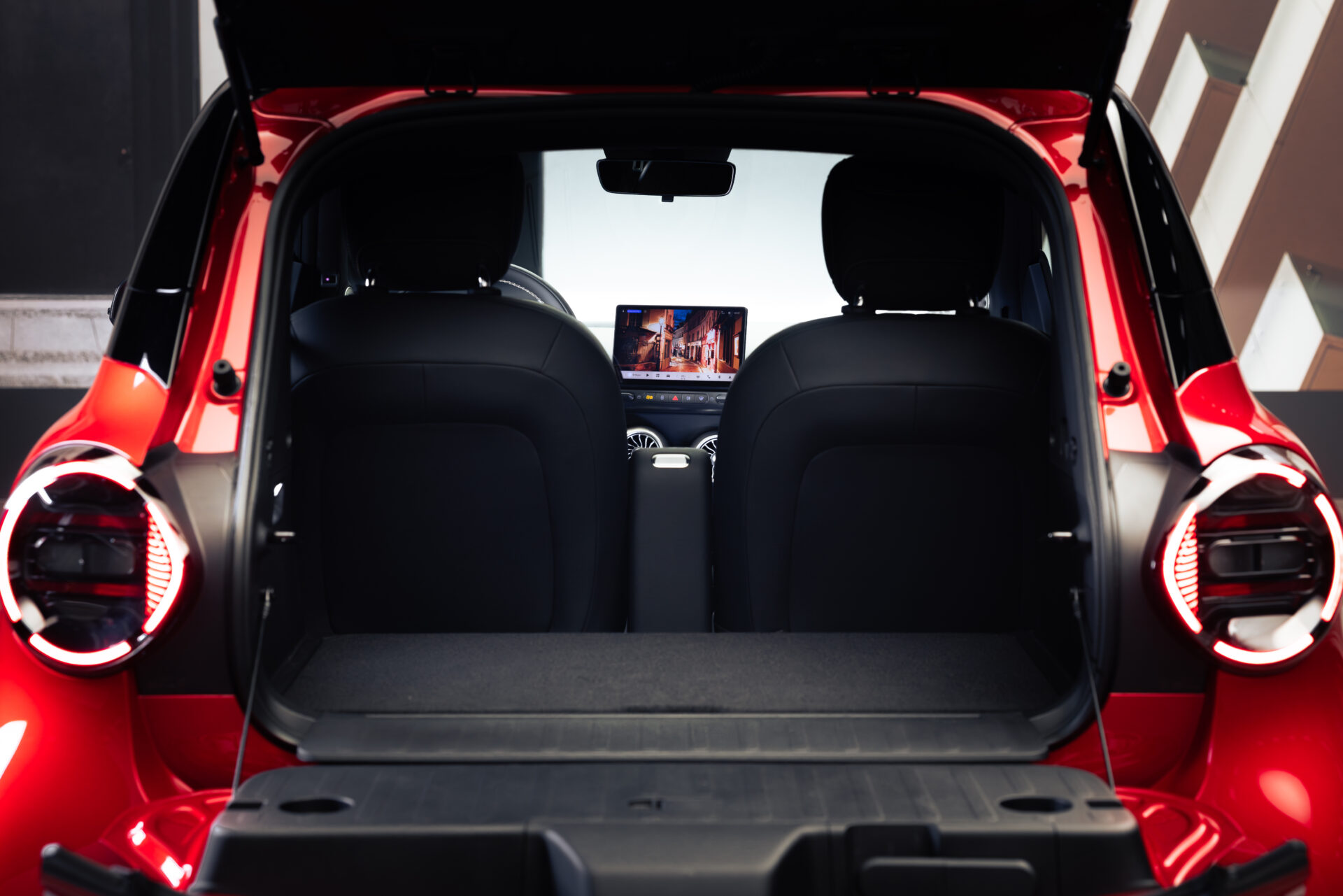
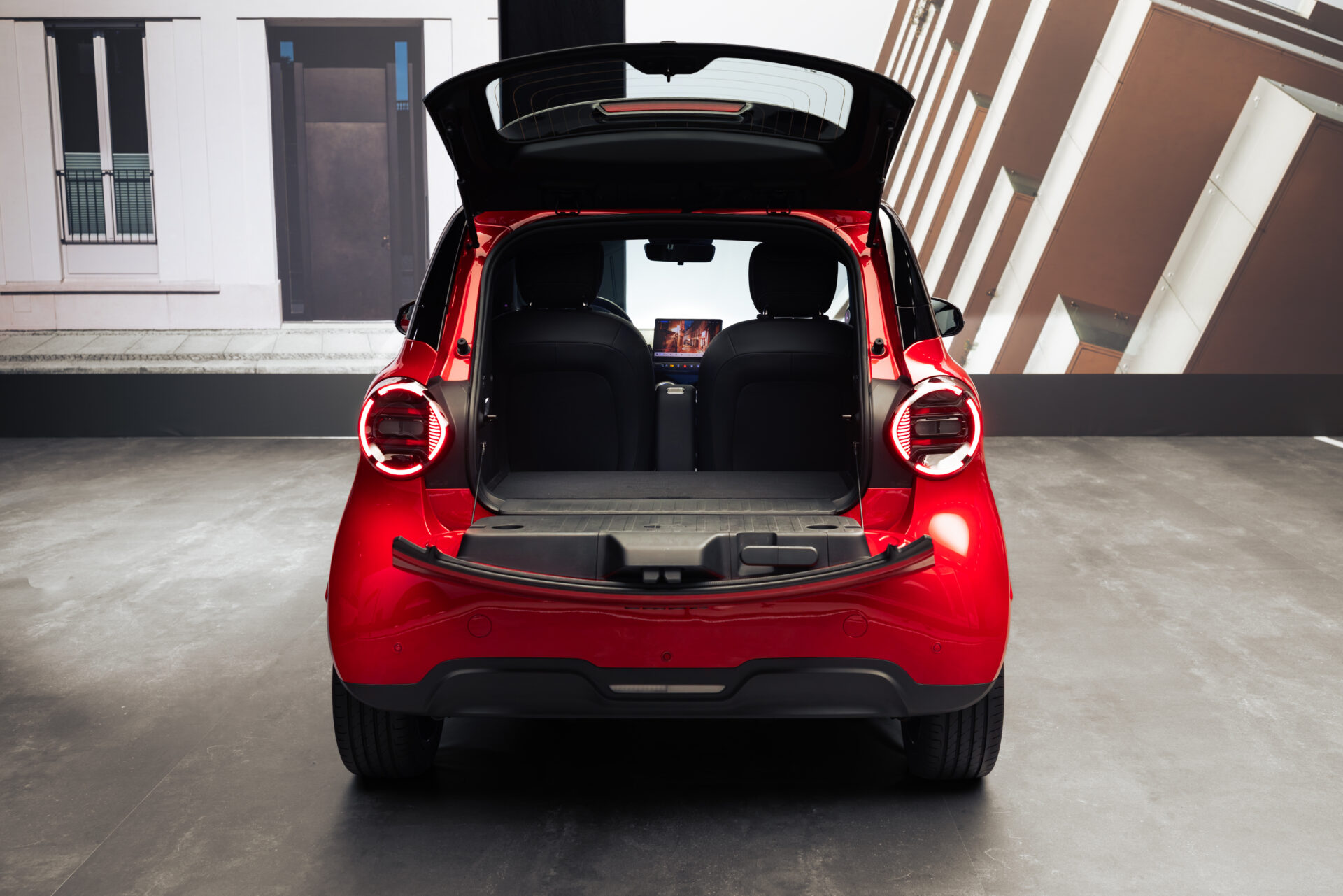
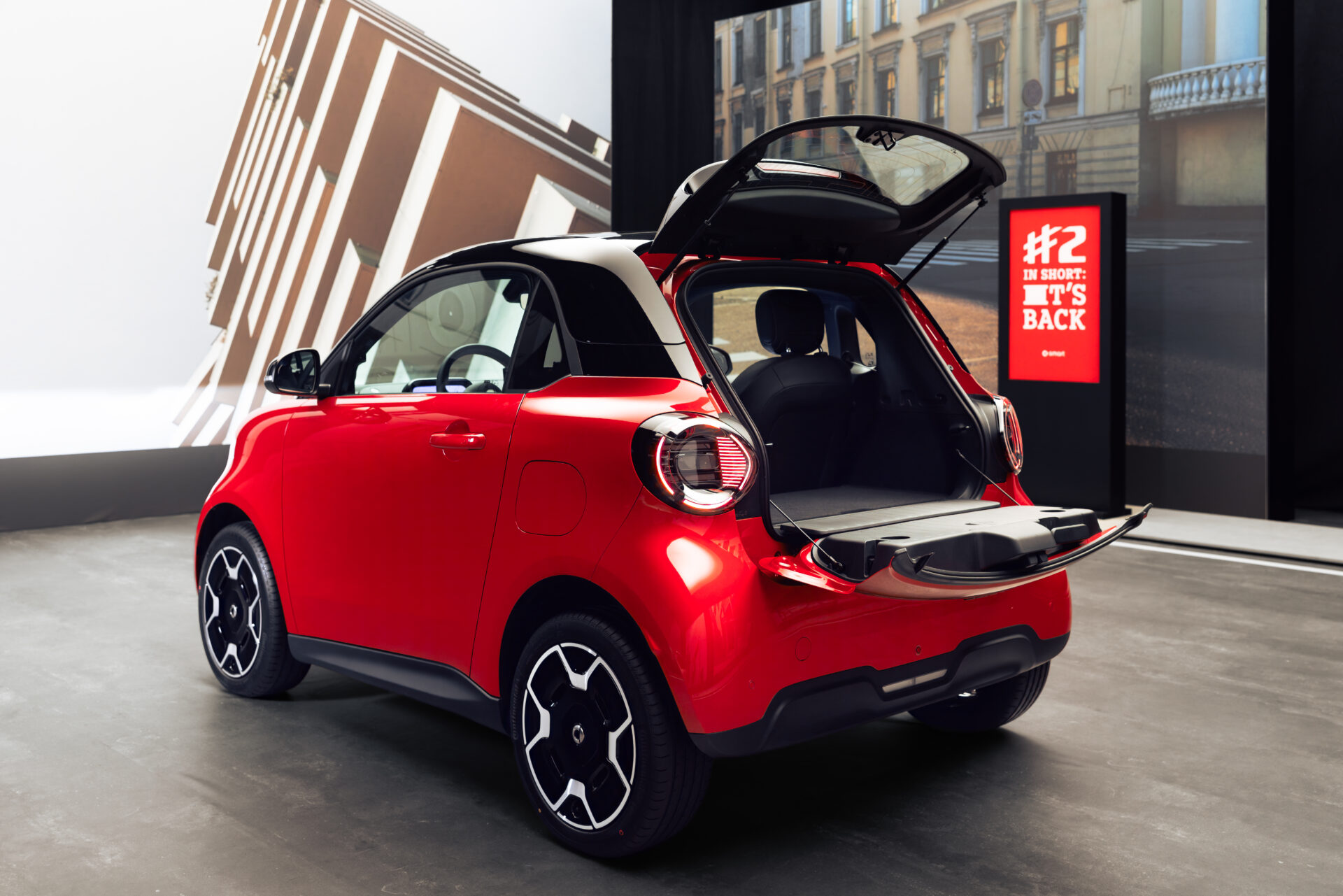
“The result is our legendary space,” he said. “It’s all about making the most of every single centimetre, without compromising on performance.” The boot of the car is unexpectedly large, for instance, offering a minimum of 305 litres of storage space, whilst the tailgate drops into a horizontal position to facilitate loading.
Form follows purpose
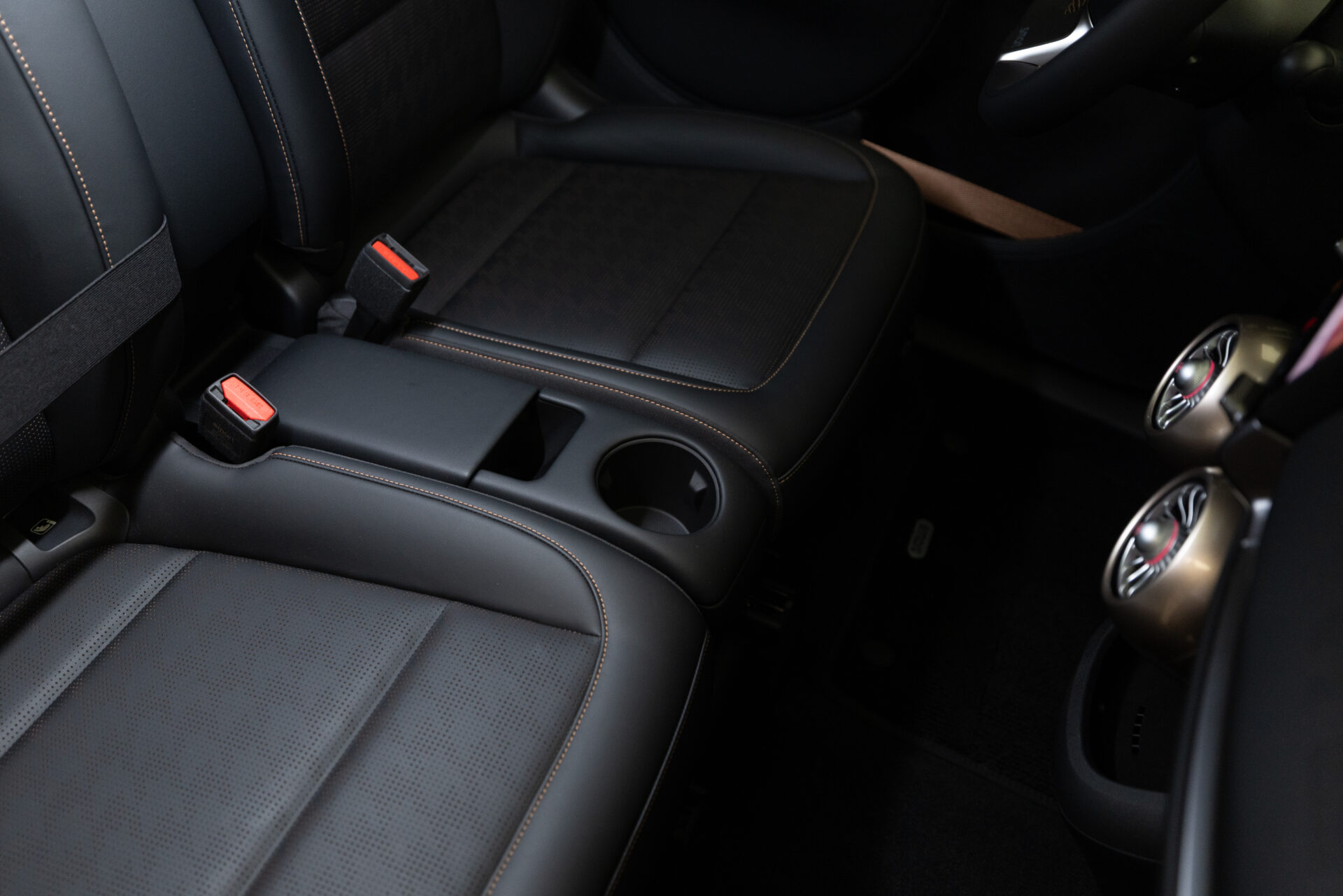
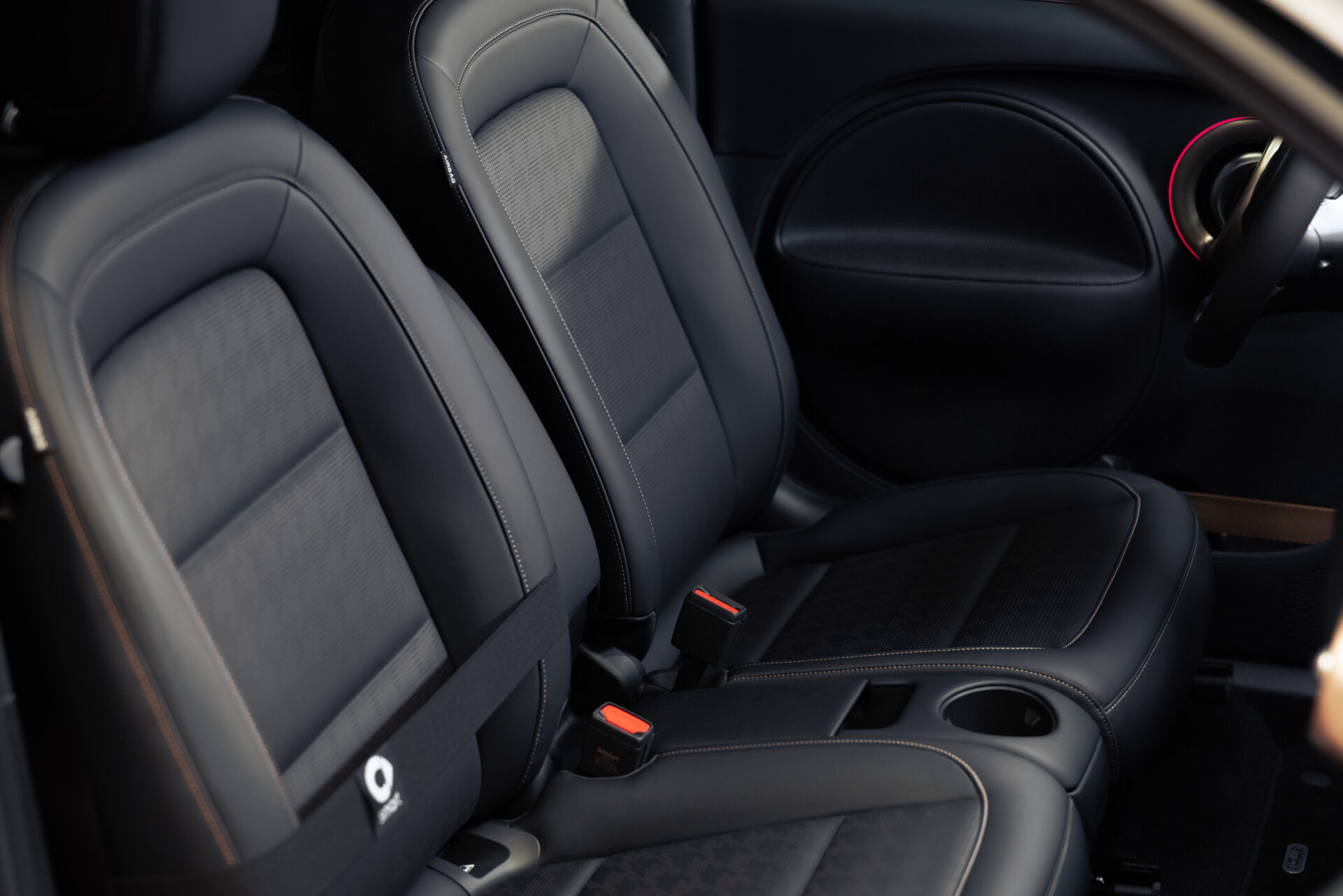
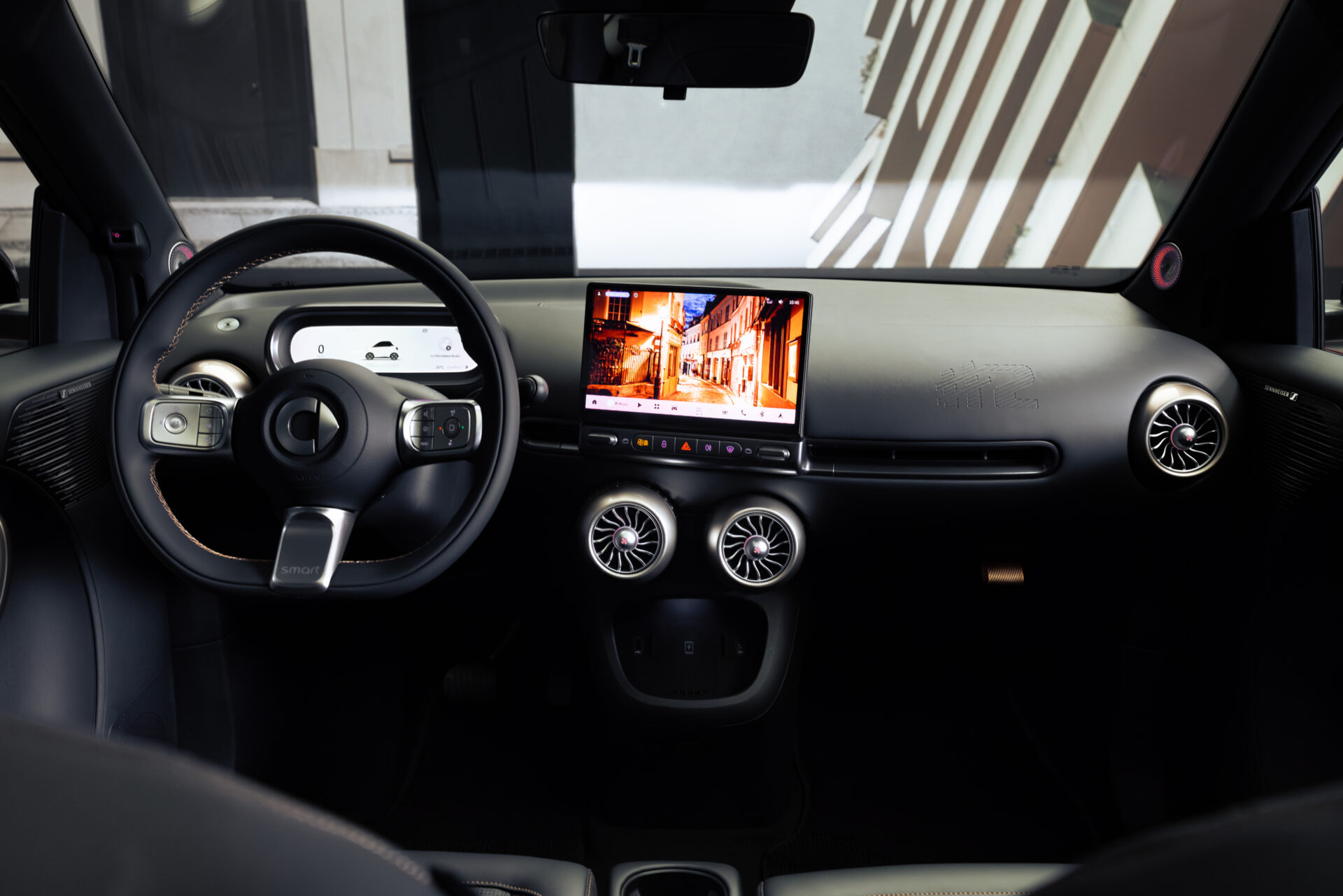
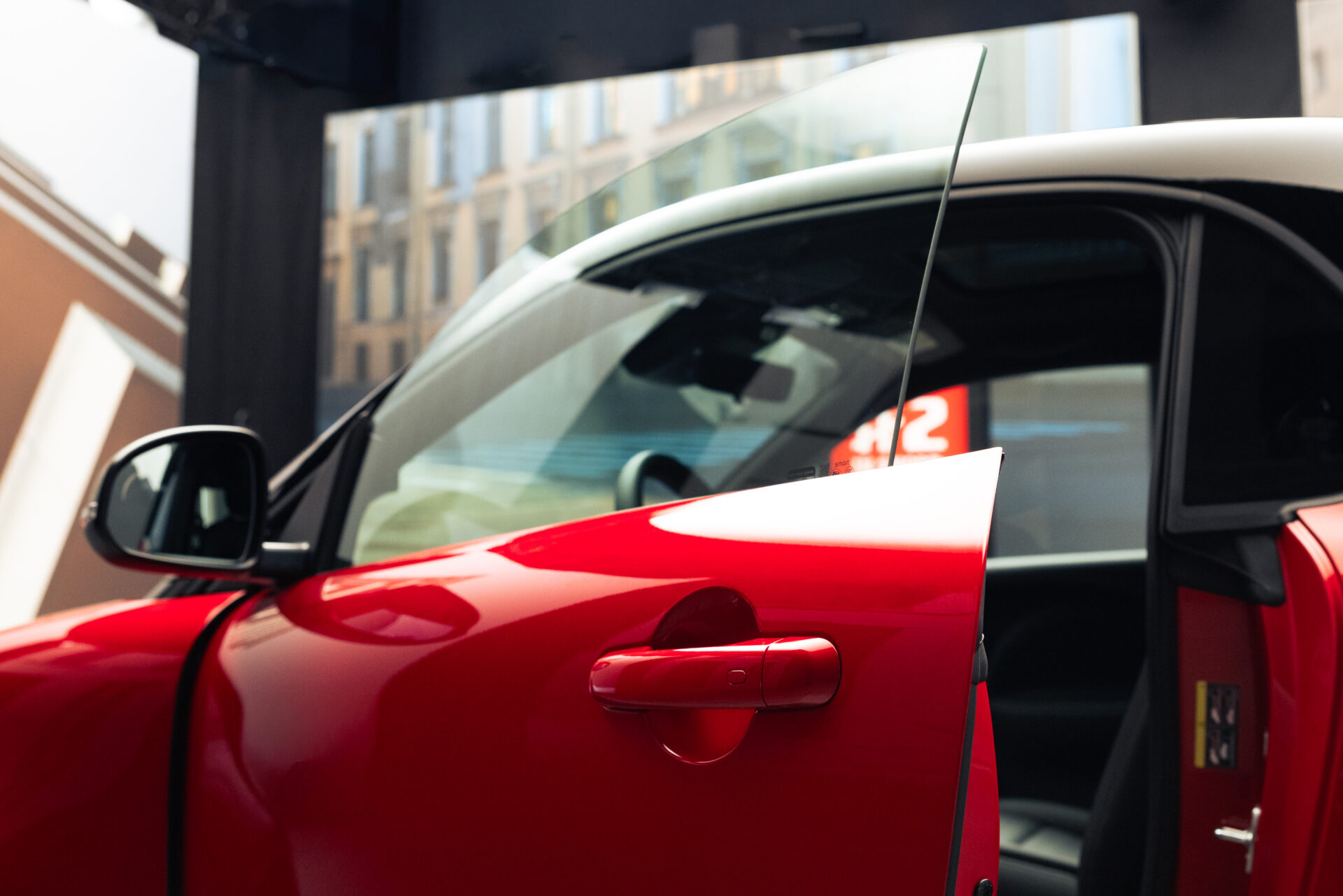
According to Sieber, the feature that brings the brand’s design philosophy together is the Smart #2’s continuous bench seat. Rather than forming an obstacle between the driver and passenger, the storage space and cupholder in the centre console are nestled flat between the two seats, contributing to the bench seat’s smooth, harmonious form. That design element, along with the lack of a transmission tunnel, makes it possible for the driver and passenger to slide through the car and easily enter and exit from either side. “Every feature and every form follows a clear purpose,” said Sieber. “That’s exactly what gives the Smart #2 its unique identity.”
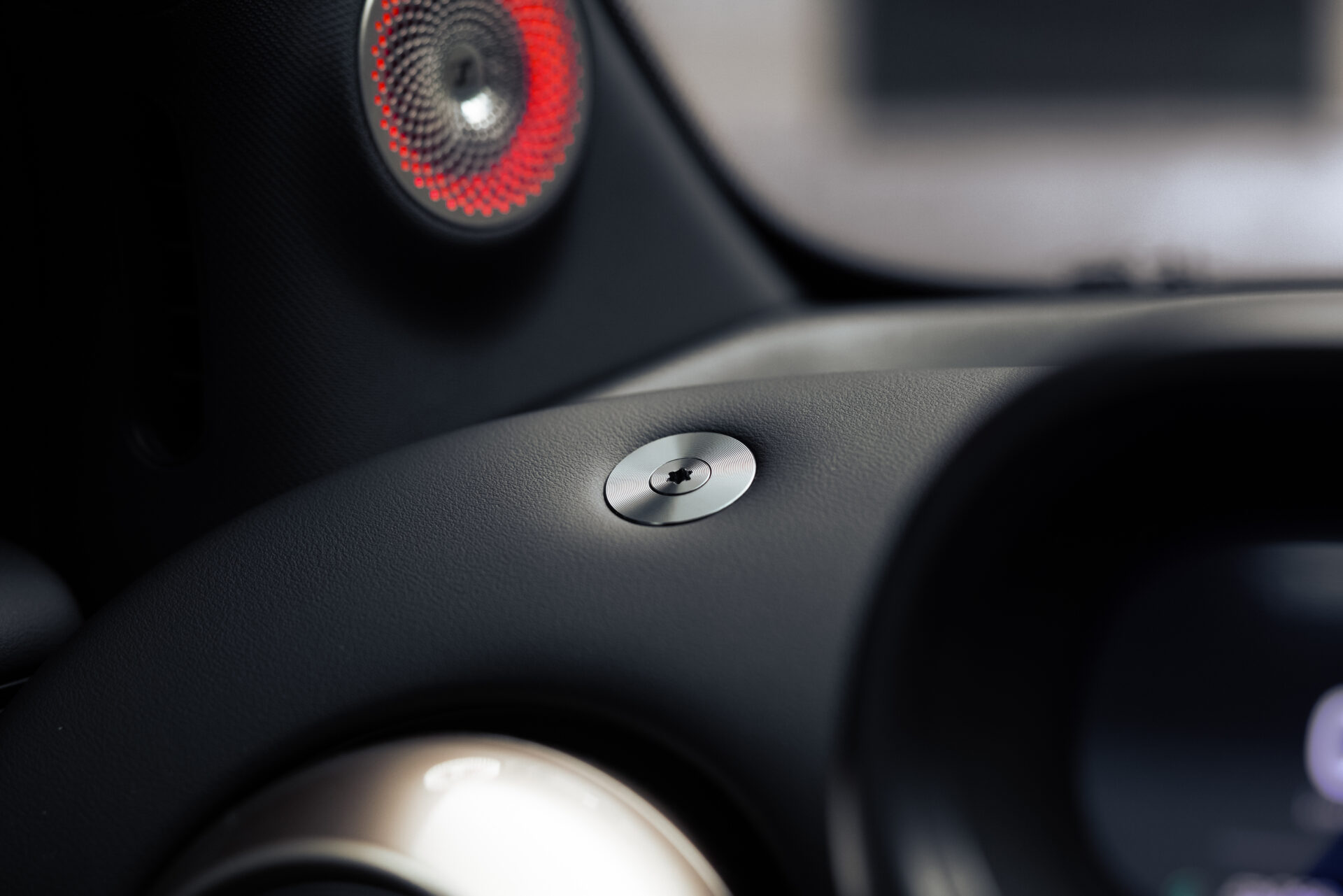
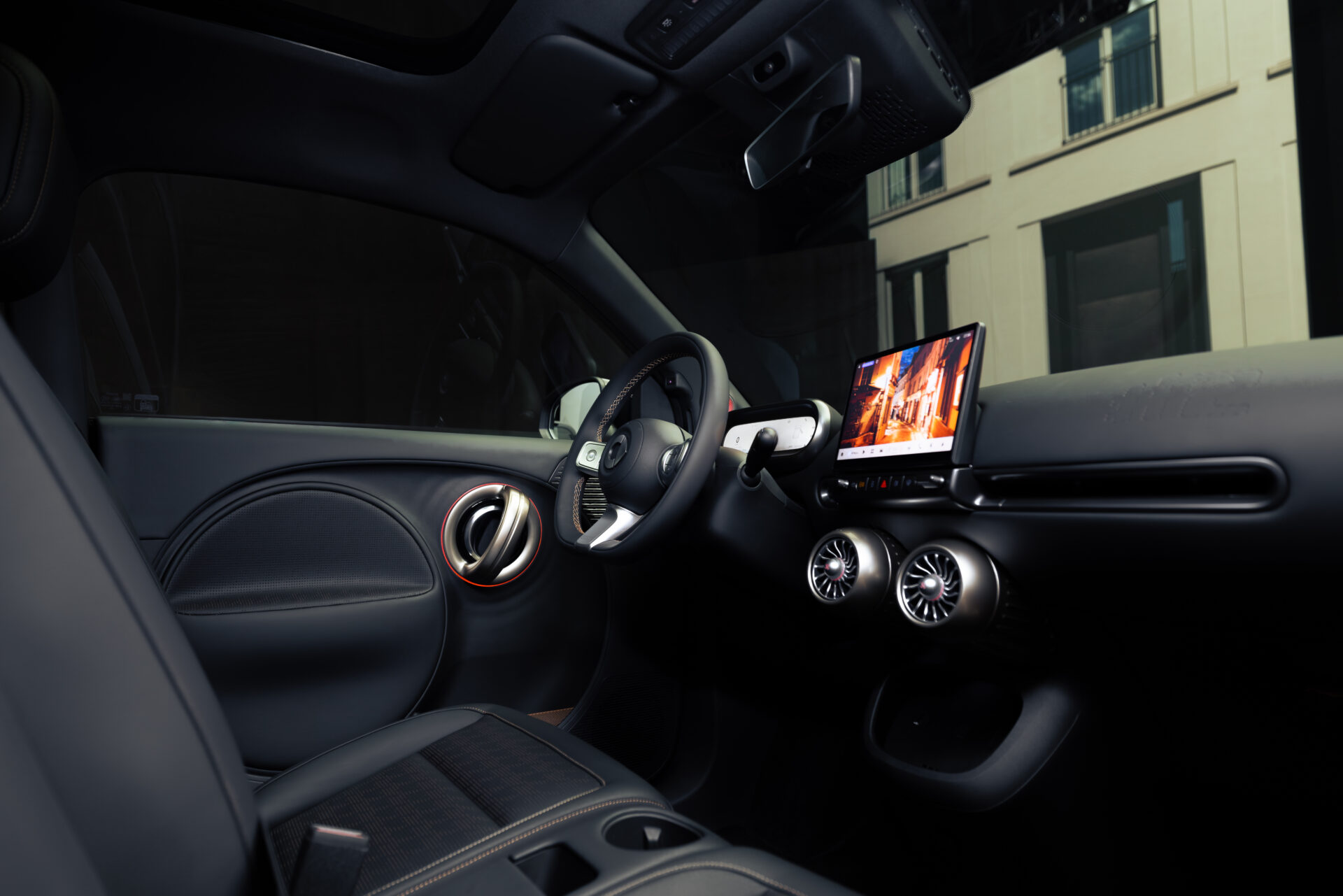
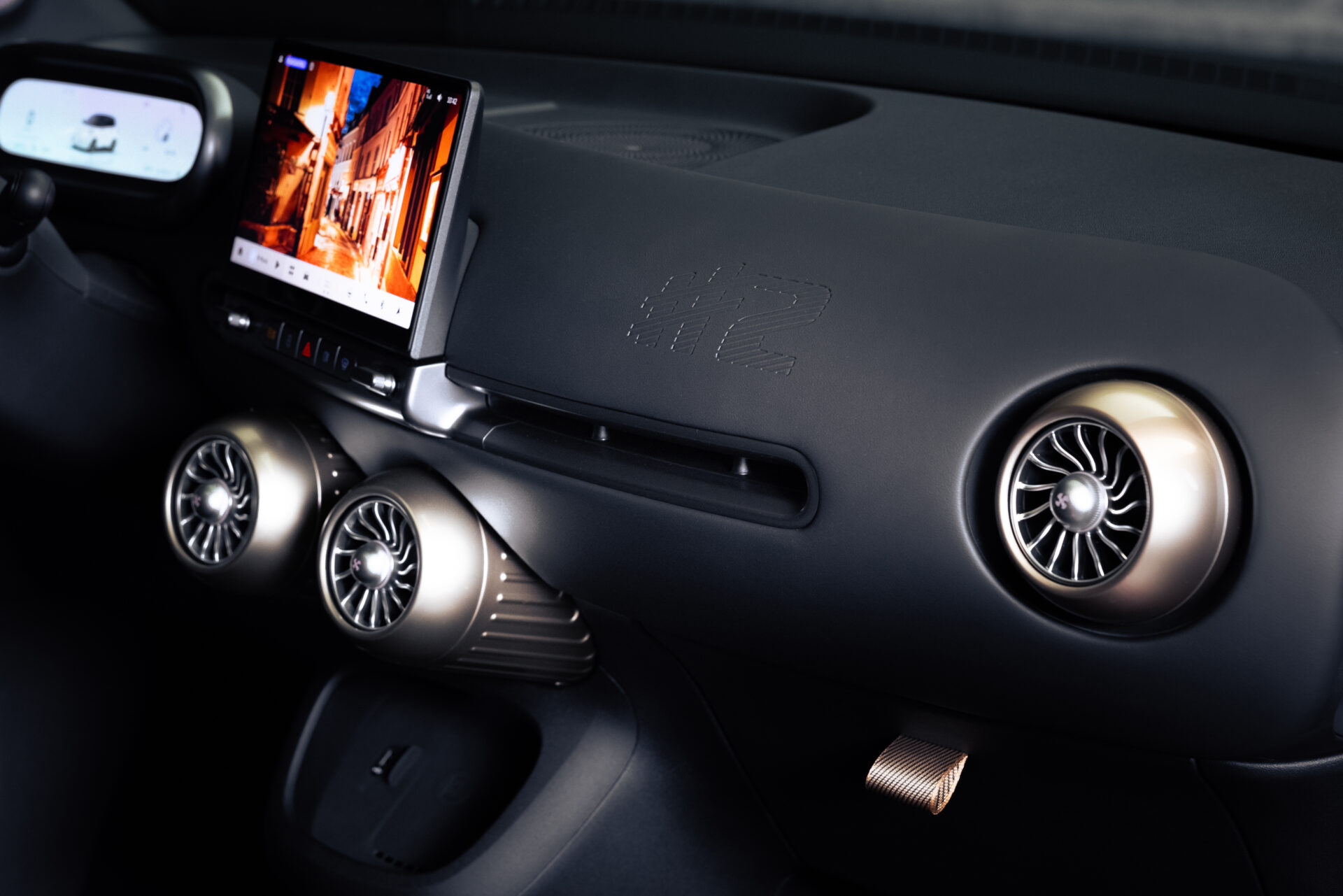
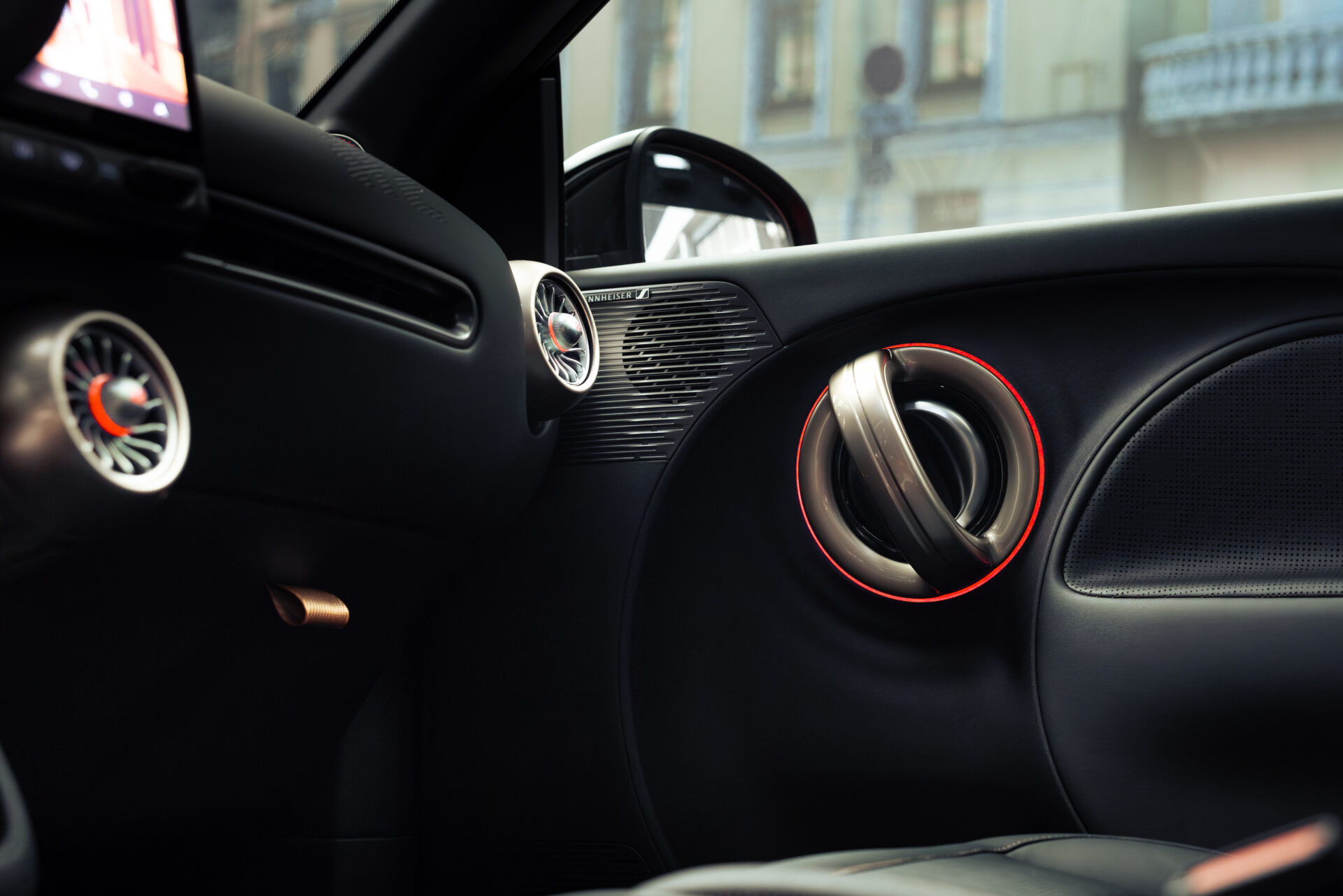
The passenger compartment also features an S-shaped cockpit, round, turbine-style fan vents (similar to those seen in Mercedes-Benz models), a 10.1” central screen, and a 8.8” driver display. One detail, which Ufer referred to as a personal favourite, is the Smart pillar on the dashboard on the passenger side. This can be used to mount little gadgets and to personalise the car.
A reinvention for the future
With orders opening on 13 October, the idea is to put electric mobility into the reach of more people, explained Ufer. Prices start at €19,990. Two thousand units of the limited edition “Couture” model, with gold and platinum-coloured accents, will also be available, whilst a Brabus performance version is in the pipeline and “coming soon.”
The reveal of the Smart #2 is indicative of the brand’s strategy for the future, which aims to leverage on innovations like its Electric Compact Architecture platform and Tridion Cell Evo protective structure, all whilst inviting people to look beyond assumptions.
“Smart has evolved into a contemporary, premium EV brand with a growing family of products,” as Kang Yi, global CMO of Smart, put it. “The Smart #2 is not a recreation of the past. It is the reinvention of our iconic two-seater for a new electric era.”
Range and specifications
Smart #2 - 60 kW
Tags