Detecting a child left alone in a car is still the preserve of the newest vehicles. For all the others, there are devices you can fit yourself, often for a few dozen euros. They are useful, but their limitations are worth knowing before you buy.
The impetus came from Italy, where legislation has required children under four to be protected by a reminder alert device since 2019. That obligation created a market: many manufacturers now offer universal solutions compatible with any model of car, whatever its age.
How these devices work
One important point from the outset: unlike the integrated systems in recent cars, these accessories do not actually detect the child. No radar, no camera, no measurement of breathing or vital signs. They are simple-logic devices that infer a presence from a single clue.
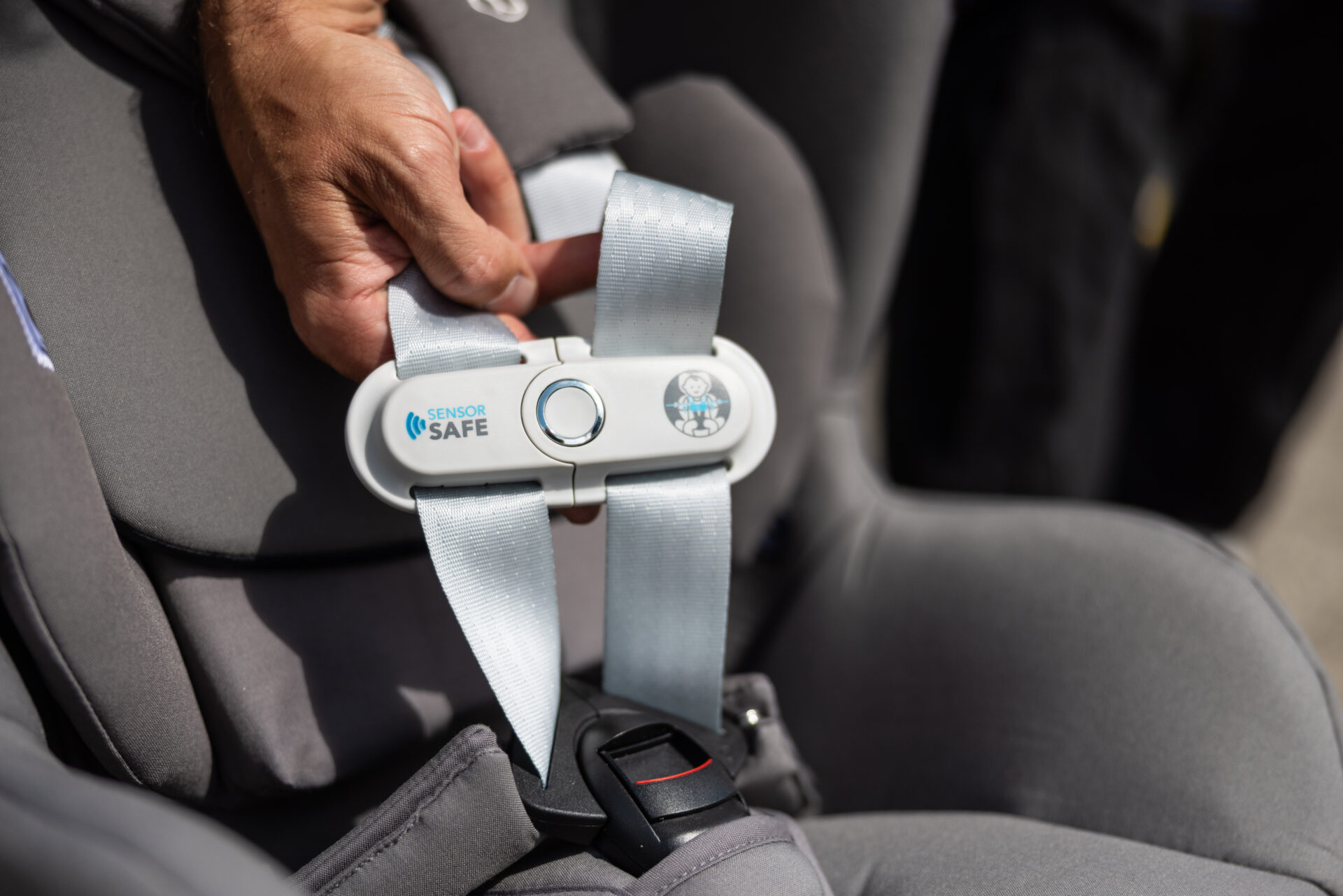
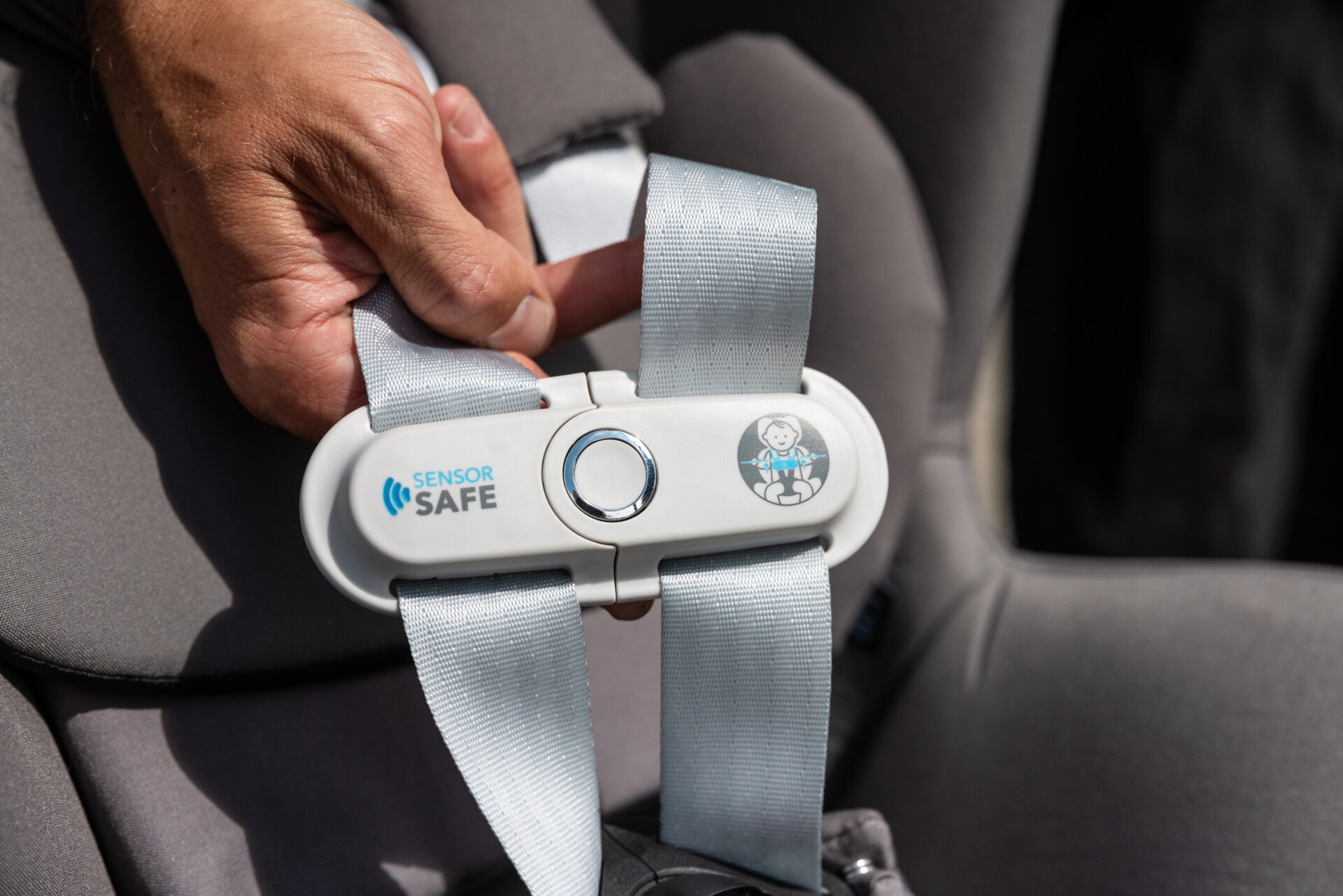
Five main families are available on the market: sensors built into the buckle of the child seat or carrier, occupancy mats to slide under the seat, pressure sensors in the seat base, Bluetooth transmitters housed in the seat, and straightforward reminder apps for smartphones.
The most widespread principle relies on a Bluetooth link between the child seat and the parent’s phone. If the phone moves away from the vehicle while the belt buckle is still fastened, or while a presence is being reported in the seat, the associated app triggers an alert.
What they are really worth
These solutions are inexpensive and work in vehicles without any modern driver assistance. They provide a basic reminder function that may be enough to prevent the worst. For families running a car that is several years old, it is often the only way today to have any technical safety net at all.
Six limitations to bear in mind
| Limitation | Practical consequence |
| The smartphone has to be there | Phone left at home means no alert |
| Stable Bluetooth and a charged battery needed | A flat battery leaves the sensor silent |
| Bluetooth switched off | The alert function may not trigger |
| False alerts possible | Risk of alert fatigue, then deactivation |
| No measurement of breathing or movement | The device assumes, it does not check |
| The car is not part of the system | No alert to the outside world |
This last point carries the heaviest consequences. These accessories cannot operate the hazard lights, nor set off the vehicle’s horn or alarm. They do not communicate with the car and cannot activate any protective measure such as cabin ventilation. In other words: if the alert on the phone goes unseen, no one in the street will know that a child is inside the vehicle.
In summary
There is only one thing better than an imperfect sensor: never leaving a child alone in a car. These devices are worth considering for families running an older vehicle, provided they are seen for what they are, an electronic memory aid rather than a standalone safety system. And provided the battery is checked regularly.