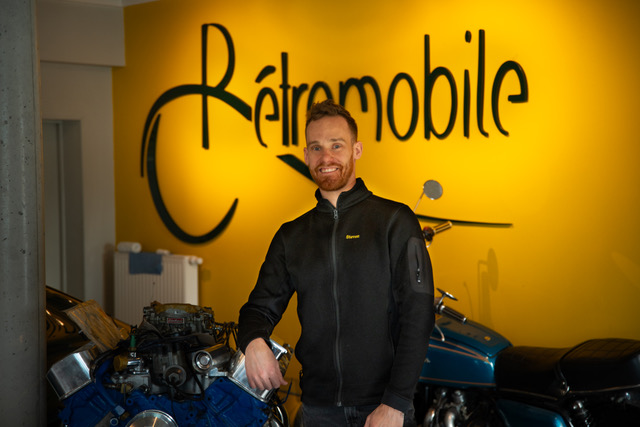
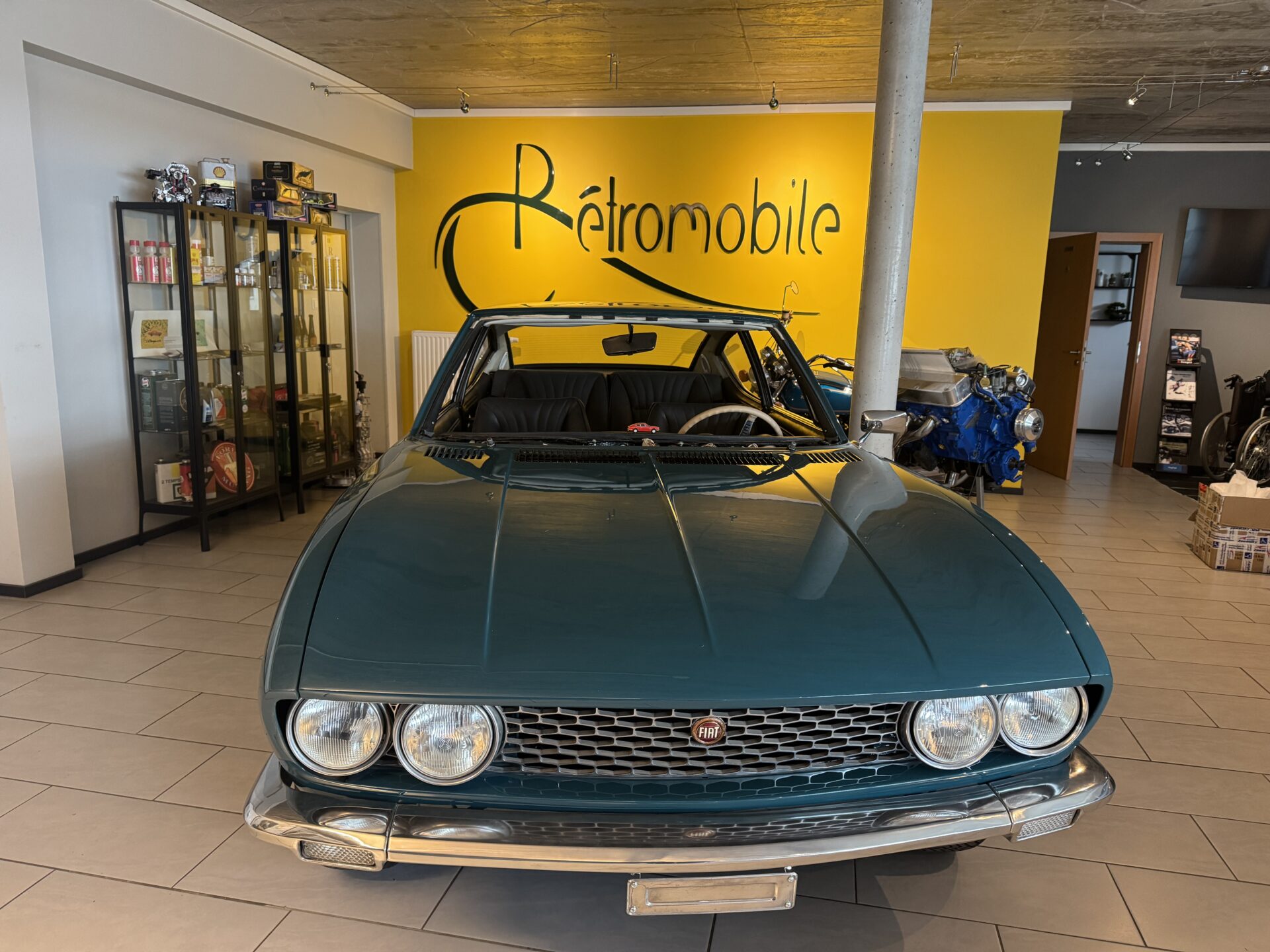
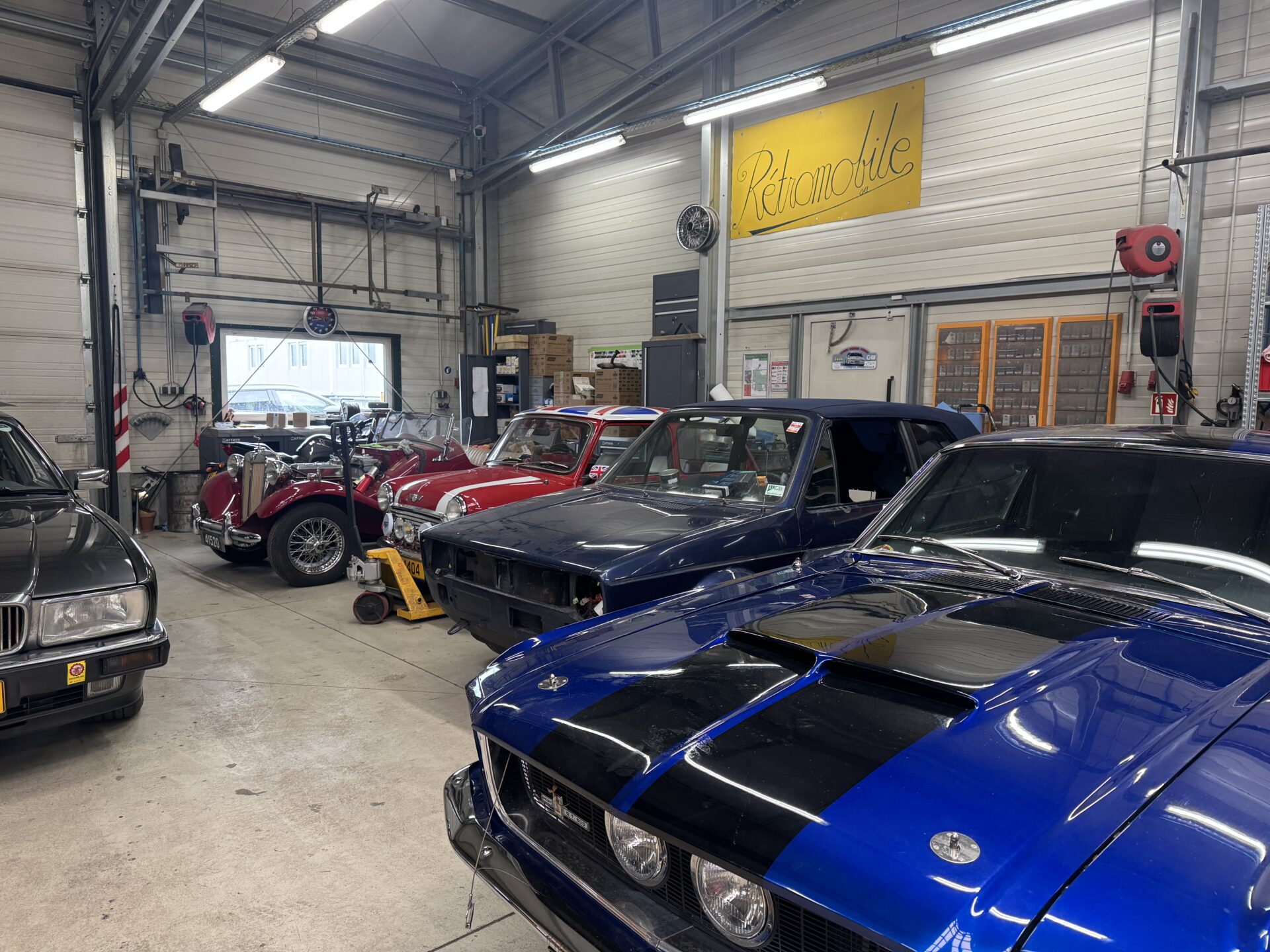
At 33, Steven Boulot runs the Rétromobile workshop in Ellange, where a team of seven restores and maintains classic cars. Between rising costs, the decline of full restorations and an ageing clientele, he takes stock of a passion-driven trade confronting market realities.
Steven Boulot
Steven Boulot: I arrived nearly ten years ago, as a body and paint specialist. There were only four of us at the time; today there are seven in the workshop. Gradually, I moved from the workshop to the office — client management, a bit of everything. Three and a half years ago, the manager was retiring and someone was needed to take over. It happened naturally. Officially, I have been manager for just over a year.
Steven Boulot
We do everything related to the car: bodywork, painting, mechanics, chrome, tyres. The only thing we subcontract is upholstery, with a partner we trust. We are capable of taking a car from start to finish. But today, you have to adapt. We do fewer and fewer complete restoration projects. Between the hourly rate, the time it takes and the space it occupies — in Luxembourg, space is at a premium — it has become very difficult. If we have one or two complete projects per year, that is the maximum.
Steven Boulot
Recommissioning work and partial restorations. These account for 70 to 80% of our projects. We have, for example, a 1992 Jaguar XJ40 — it was a client’s father’s car. It had not been driven for about fifteen years. We restore what is necessary so it can pass the roadworthiness test, without stripping everything down. We do a few cosmetic touches, targeted mechanical work. This type of project is becoming increasingly common. And alongside that, there is regular maintenance: servicing, minor breakdowns, preparation for the season. That is also what keeps the business going day to day.
Steven Boulot
You have to be transparent: when you buy a classic car, you should set aside between 20 and 35% of its value for maintenance in the first few years. On a car worth €20,000, that represents €6,000 to €7,000 to put aside. For a full restoration, the rule today is that the cost almost always exceeds the car’s value at the end. A major French 2CV restorer went bankrupt last year — order book full for two to three years, but not profitable. When you need to spend 150, 200 or 300 hours on a car, multiplied by an hourly rate of at least €100, you quickly reach €30,000 before tax, and that is only logical. On substantial projects, like the 1972 Porsche 911 we have at the moment, we easily exceed €80,000 to €100,000. That is also why some clients take part in the reassembly themselves — it reduces the bill, but you need the time and the know-how.
Steven Boulot
That is the major difficulty. We plan eight hours on a car, and by the end we need to add fifteen or twenty more. The schedule is already tight; we cannot work evenings or weekends. A part ordered in the morning may be delayed because it is not available, and when fitting it, we discover another problem that could not have been anticipated. We have no diagnostic computer, no standardised time charts like modern dealerships. We are craftsmen. Owning a classic car means making compromises. The car is 50, 60, 65 years old — it has been waiting its whole life. Sometimes you have to accept that it takes a little longer.
Steven Boulot
We see a lot of American cars — Mustangs are very popular — and small British ones like MGs or Triumphs. At events, you can clearly see that the majority are American and British cars. And those are precisely the two categories where the most parts are available in Europe today. Standard wear parts — I order them in the morning, they arrive the next day. For French or Italian cars, it is more complicated. For Porsche, you can find a huge amount — virtually 100% of parts. Mercedes too, especially from the 1960s to 1975, but they remain expensive. For high-end German models like the 300 SL, there are dedicated departments, but that is another world entirely.
Steven Boulot
Between 80 and 85% are Luxembourgers, mainly from the south of the country. Forty per cent come from within a 20 to 25 kilometre radius of the workshop. The remaining 12% are French cross-border commuters. Belgians and Germans are rare. Trust is fundamental. When people bring their car in, the first thing they see is the premises, the team, a clean environment. That is already the first step. Then we talk, we share, we try to understand the project. And then there is the estimate — but for a classic car, the estimate remains very approximate. We tell the client: here is what we expect, €2,000, but it could be double. And even after that, there may be something else. It is this grey area that you have to accept. Every specialist garage will tell you the same thing: the hardest part is making the client understand that uncertainty is part of the trade.
Steven Boulot
Very few. Attitudes have changed. A young person with a bit of money thinks first about holidays, family and a house. The classic car is the very last thing on the list. There are a few younger ones, under forty, but they are often accompanied by a father in his fifties or sixties who is passing on the passion and financing part of the work. The majority of our clients are between 45 and 60. After 70, it tails off — driving a classic car becomes difficult. We lose elderly clients every year who stop, but this is not being offset at the same rate by new ones. And the few younger people between 30 and 40 who have bought a car — many find themselves trapped: they do not have the time to look after it, they come here to have it restored… and then sell it.
Steven Boulot
The stories behind the cars. Even if we have a Ferrari or a Lamborghini, if the car has no story, it has no meaning for us. There is the excitement of thinking “we got to work on this car”, but deep down, we know we will do the job, it will leave, and the client may sell it. We were just the people who worked on it. The projects that stay with us are the family cars. The Renault Frégate we have here — it is worth less than €10,000. But the owner, a gentleman between 60 and 70, comes back regularly because his father had the same one. It means everything to him. He could have a different car, but that is the one he wants. And the Jaguar XJ40 bought new by a father who has since passed away, that the son wants to get running again — when we managed to start it up, even for the team, it meant something. That is what keeps us going. In Luxembourg, there is still this attachment to heritage, this bond between generations. For me, it is a point of honour to preserve it.
Tags