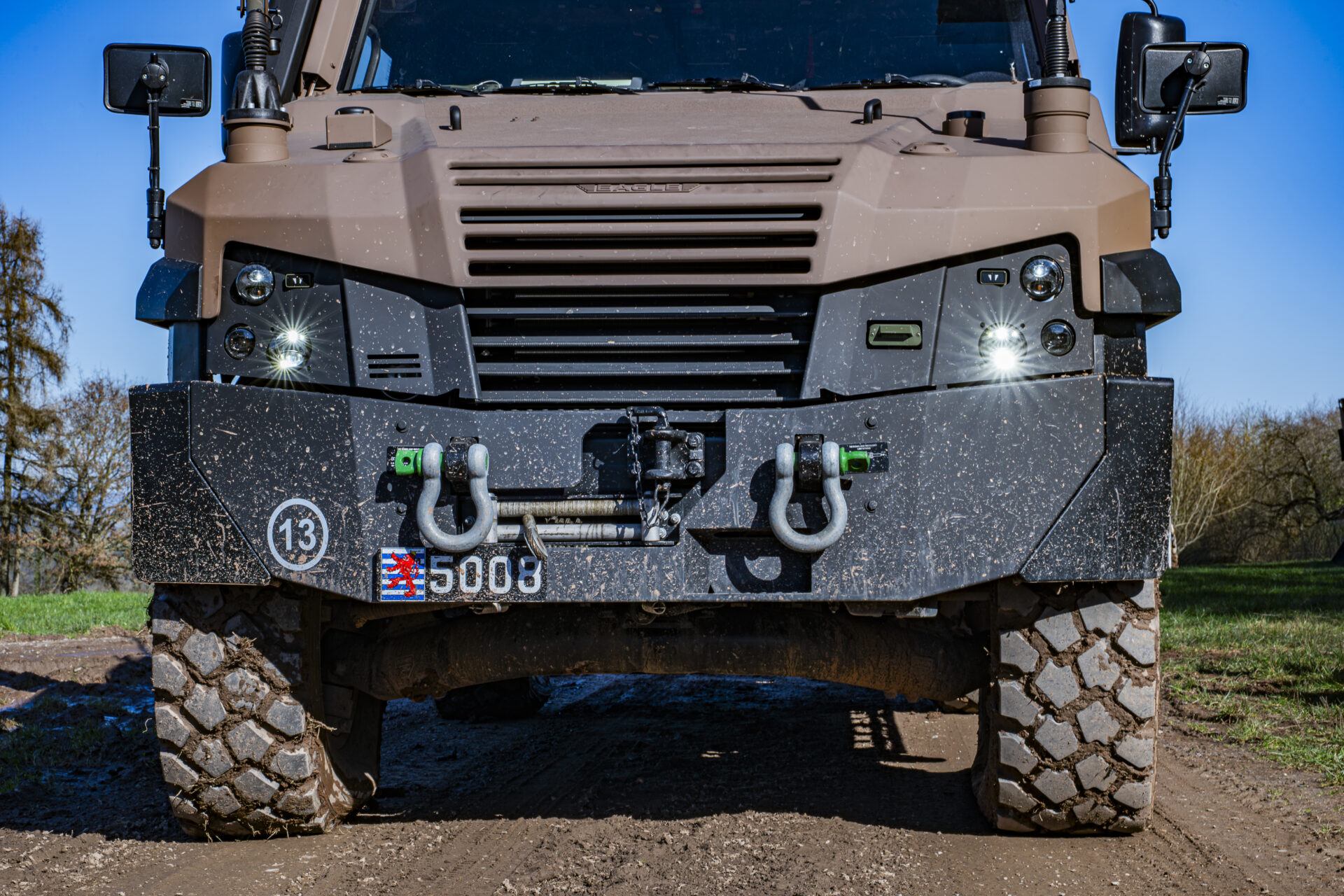
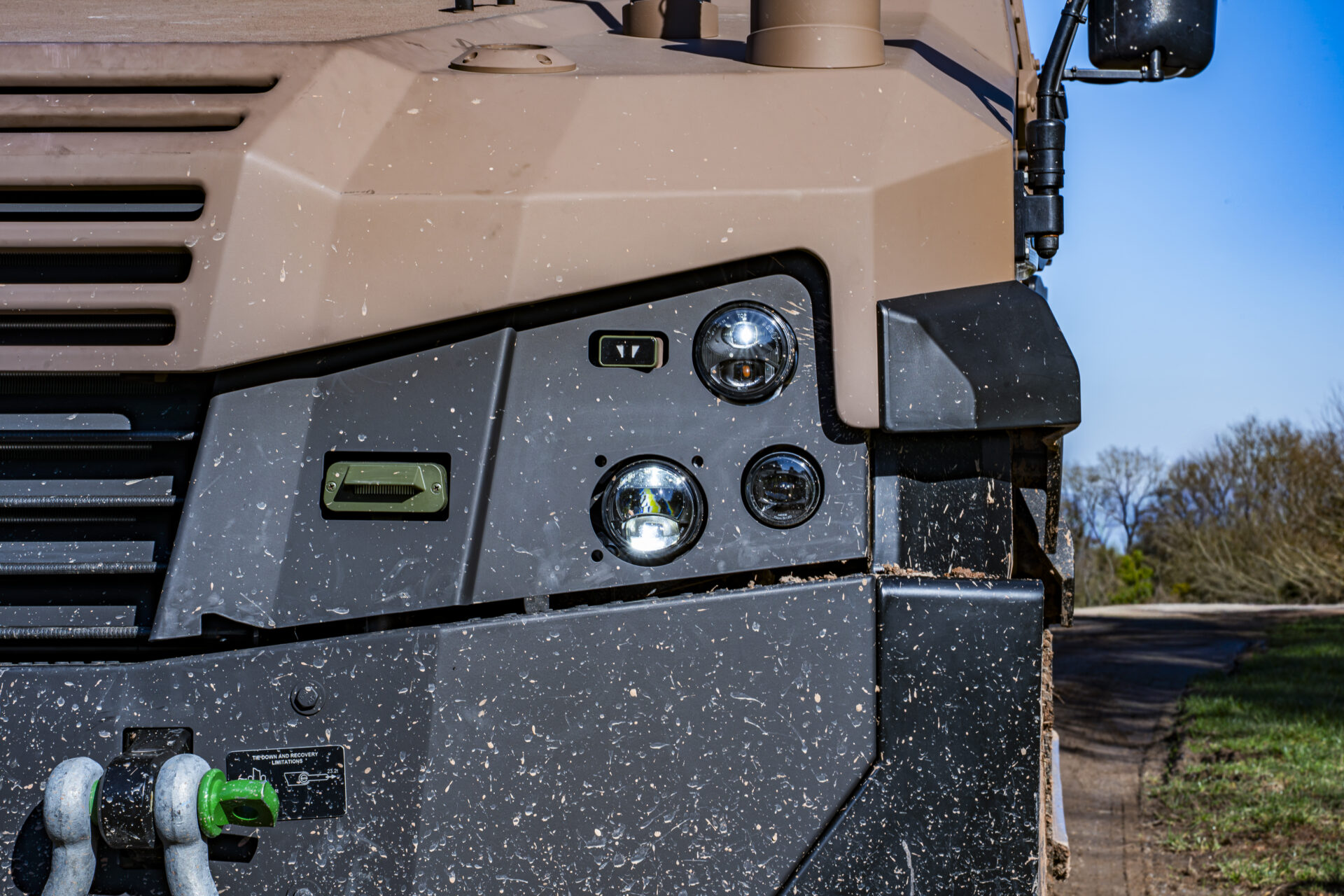
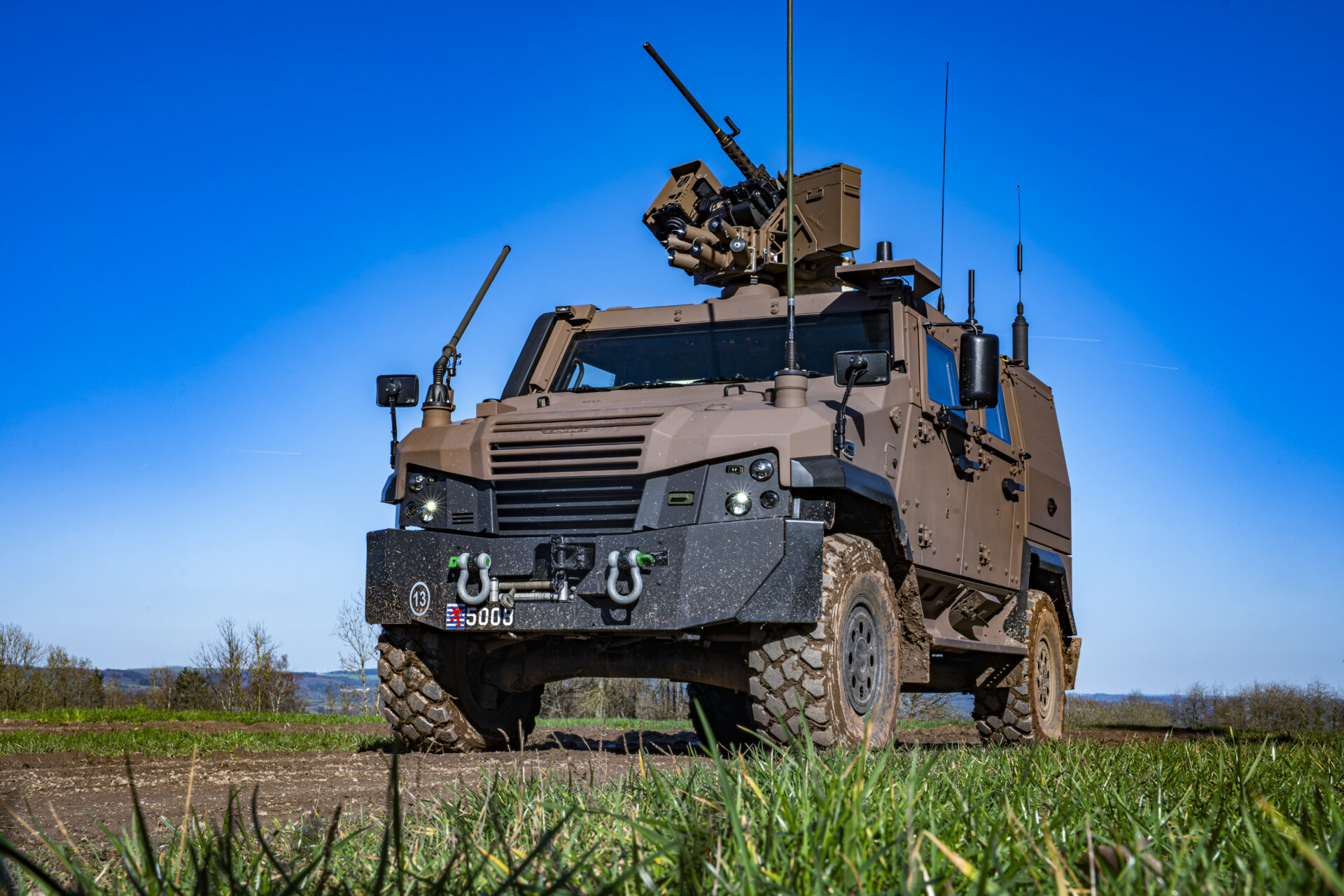
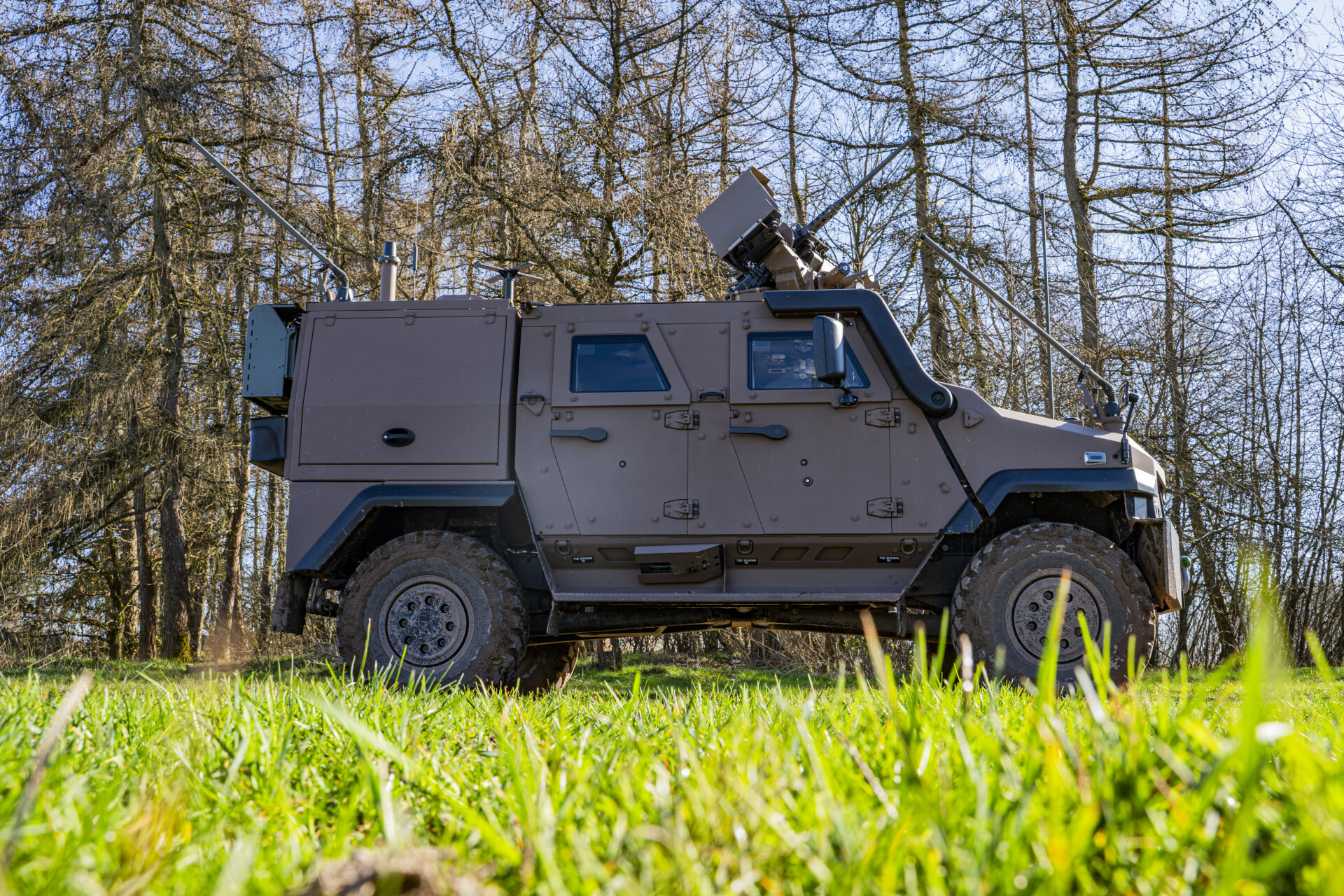
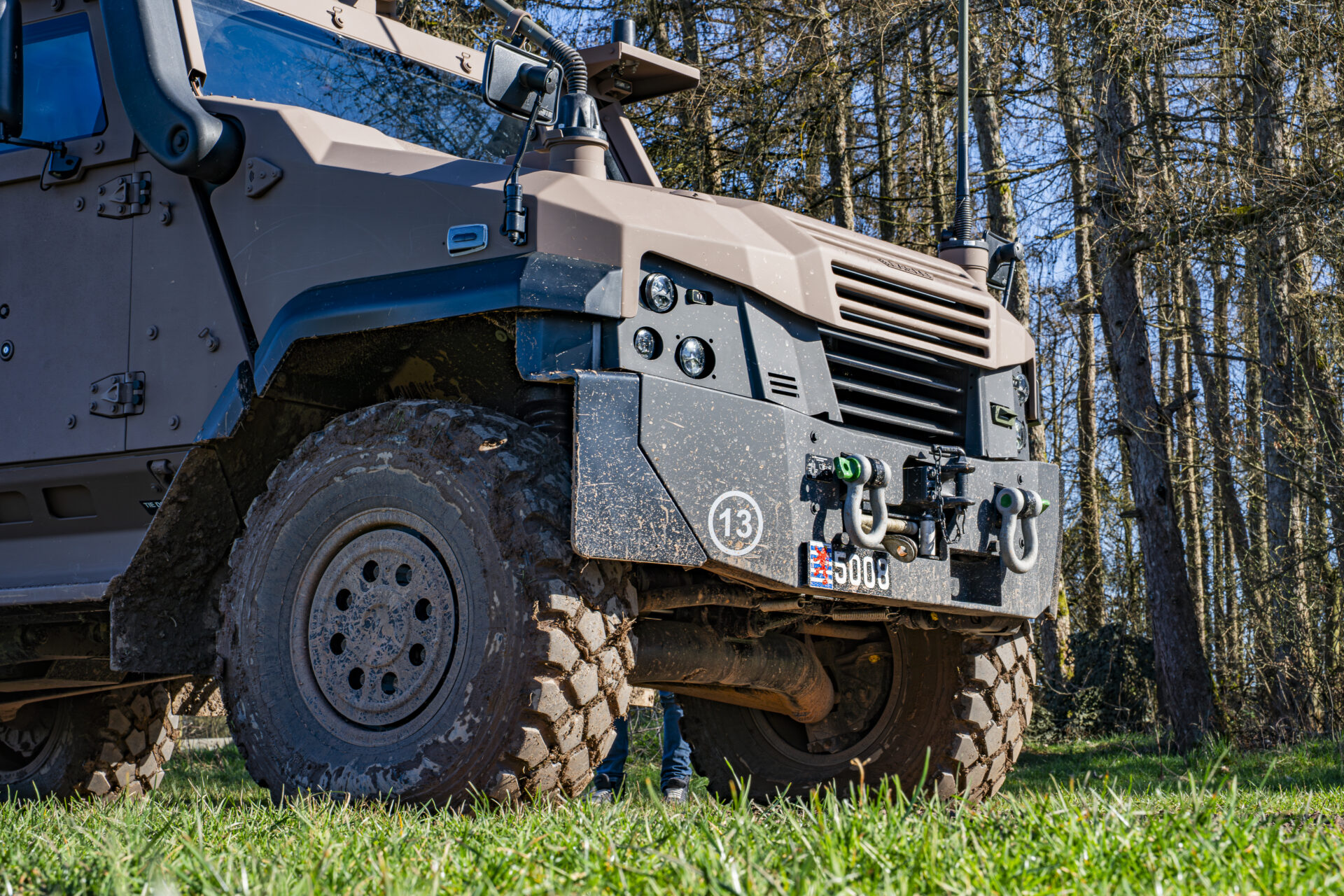
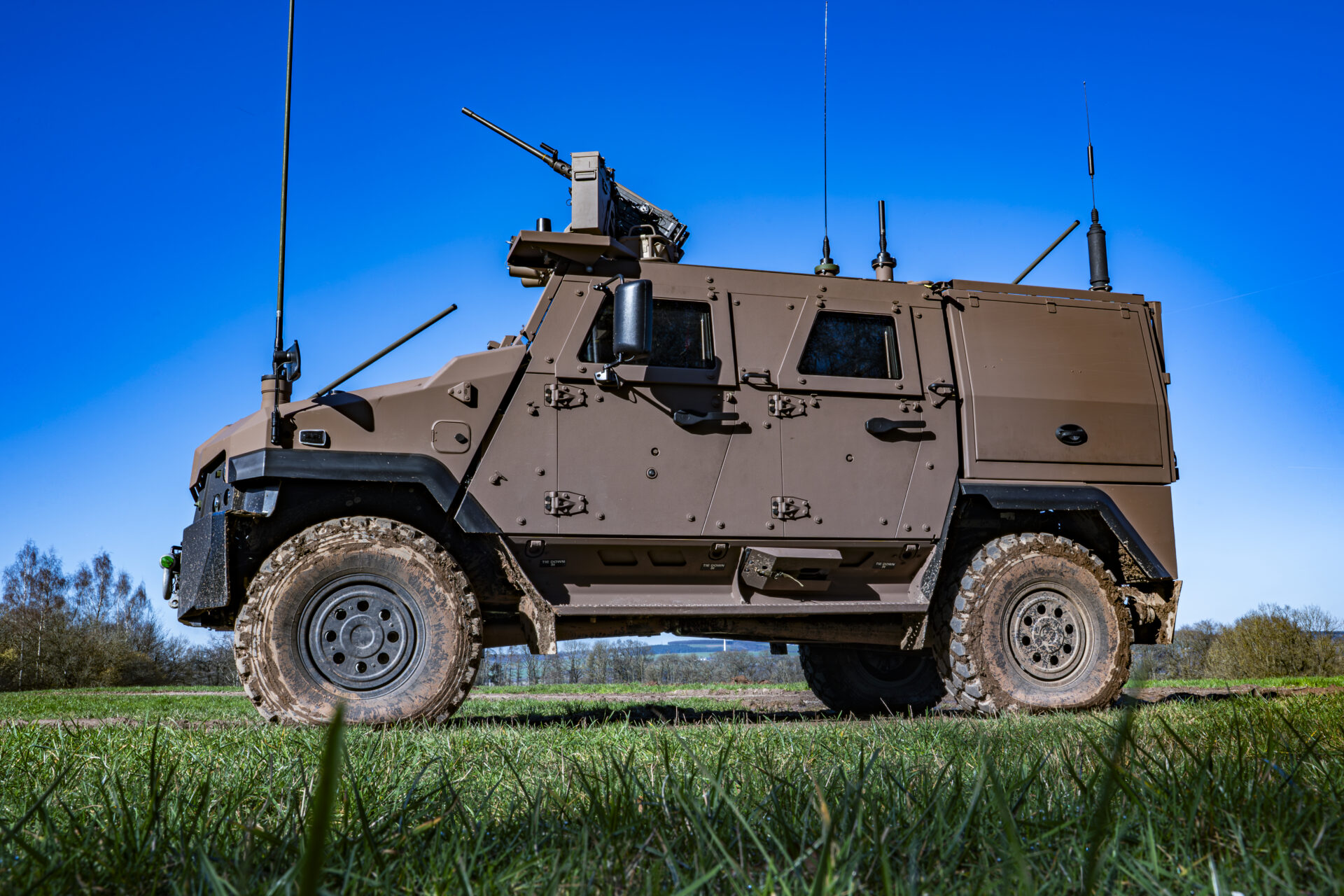
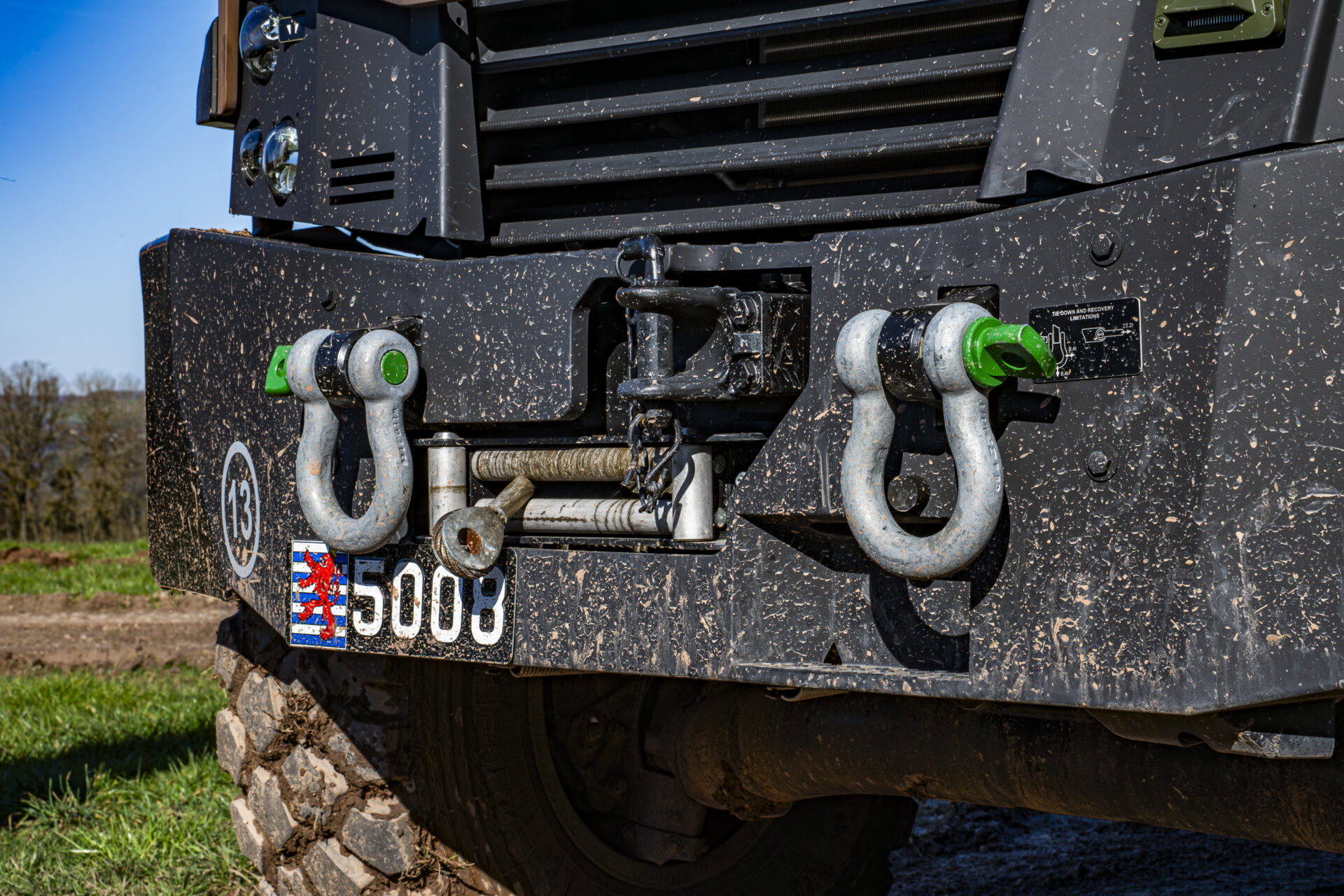
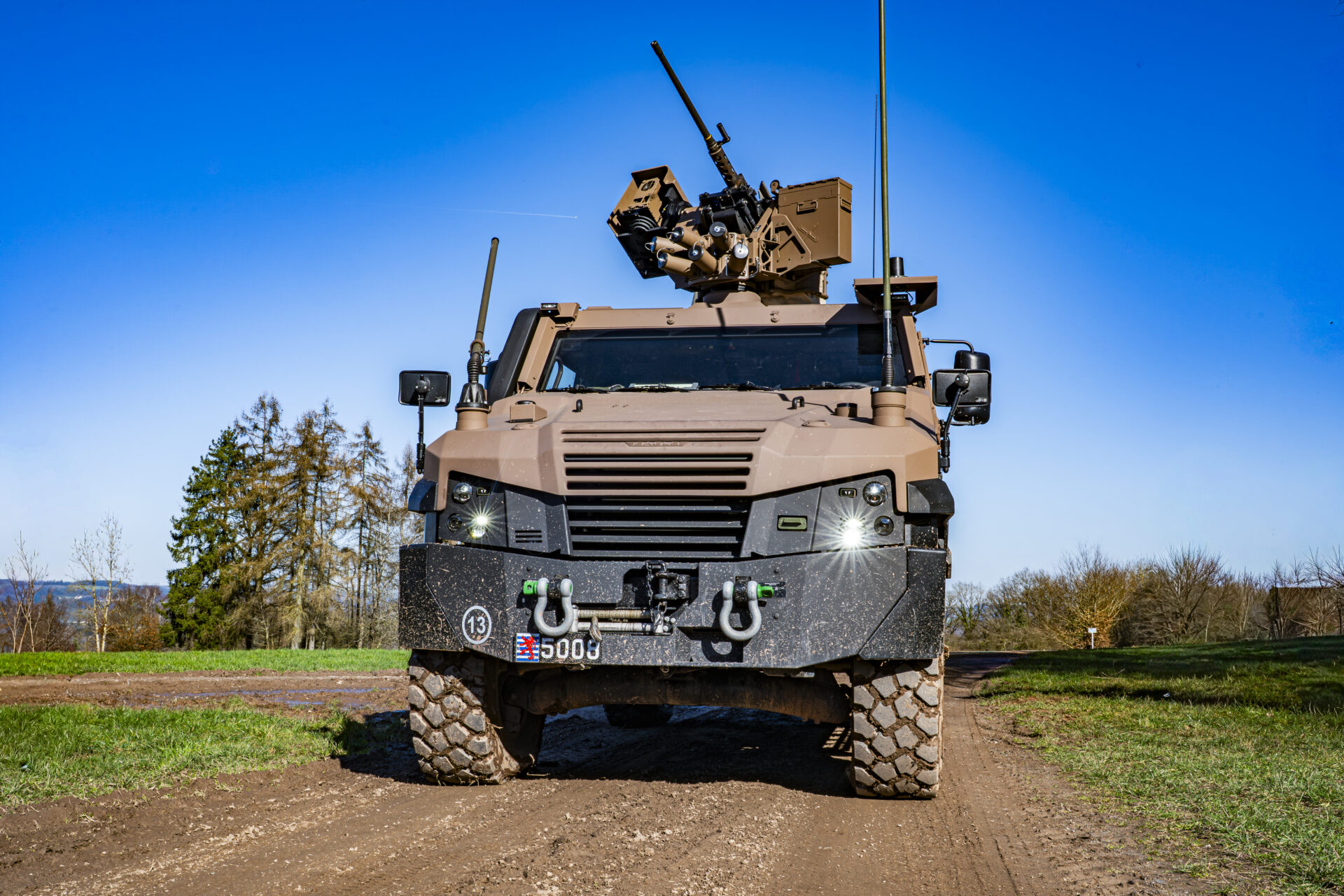
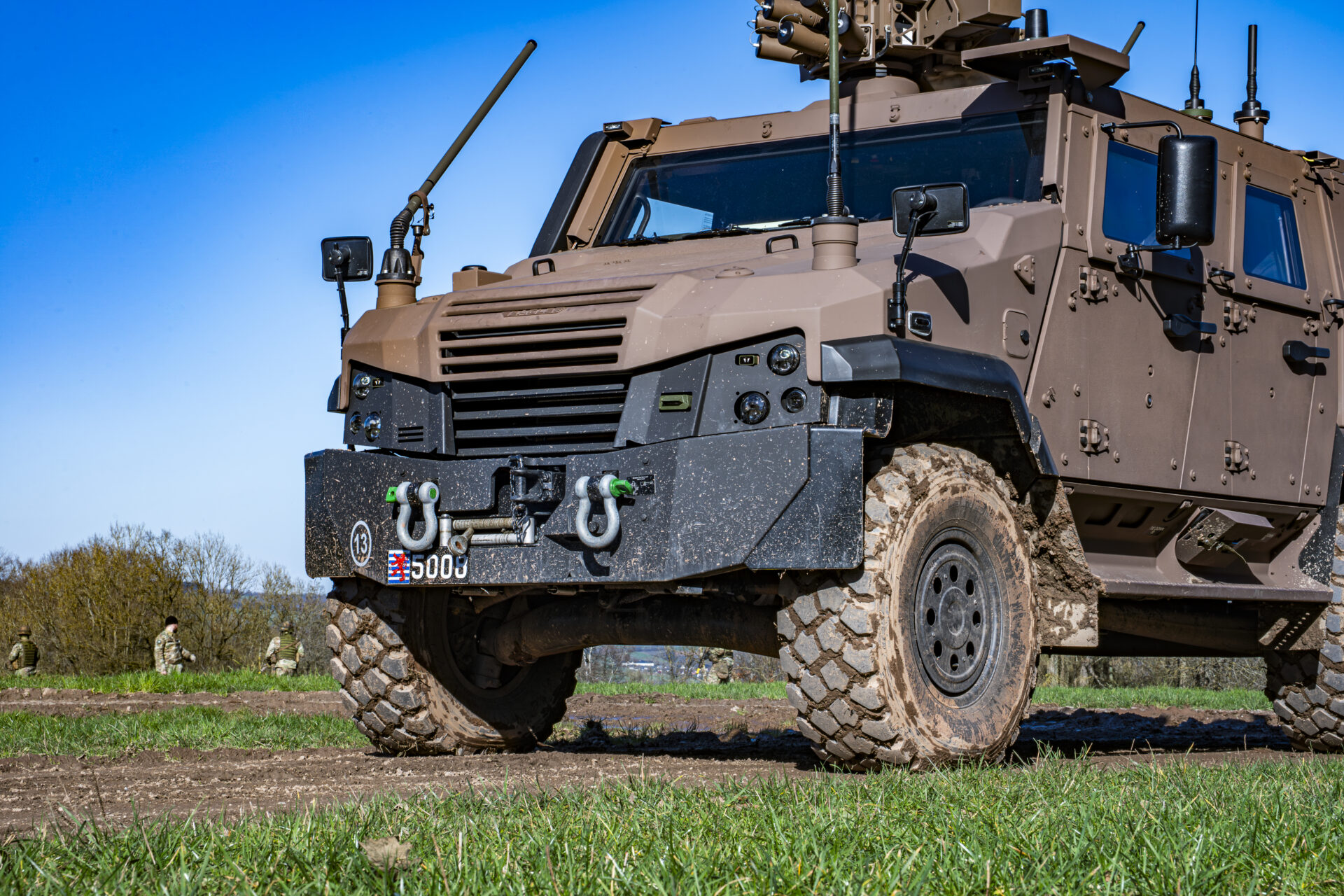
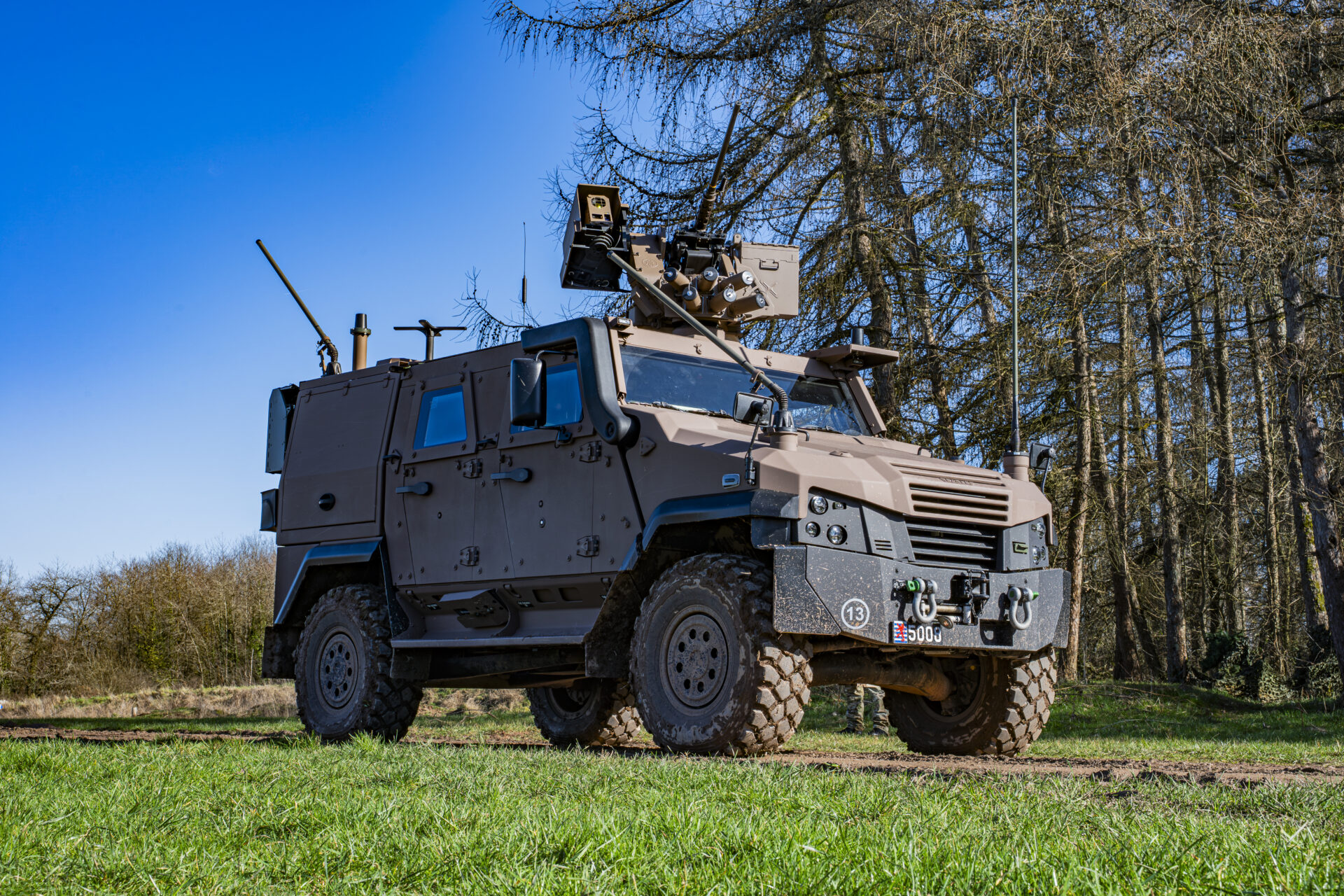
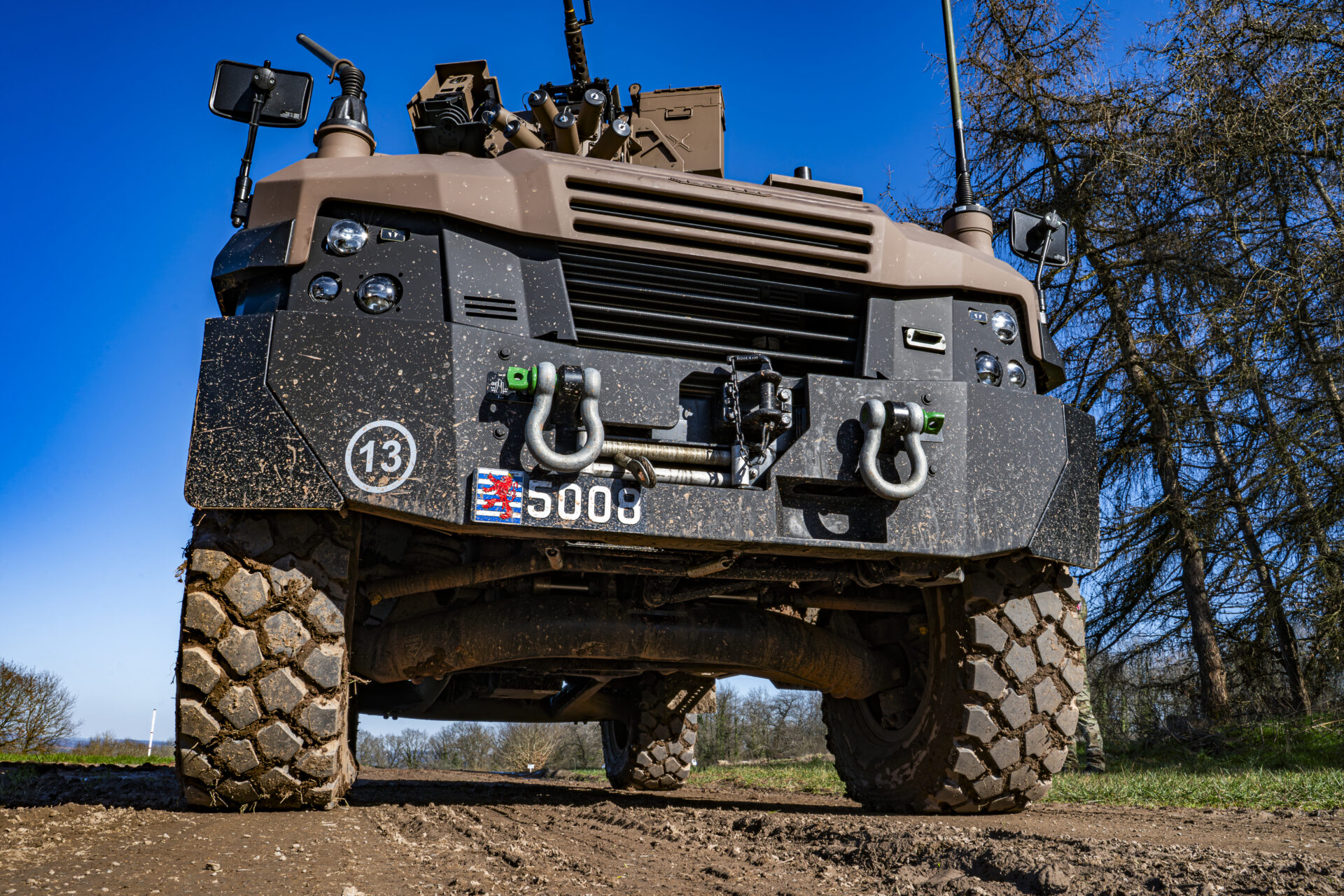
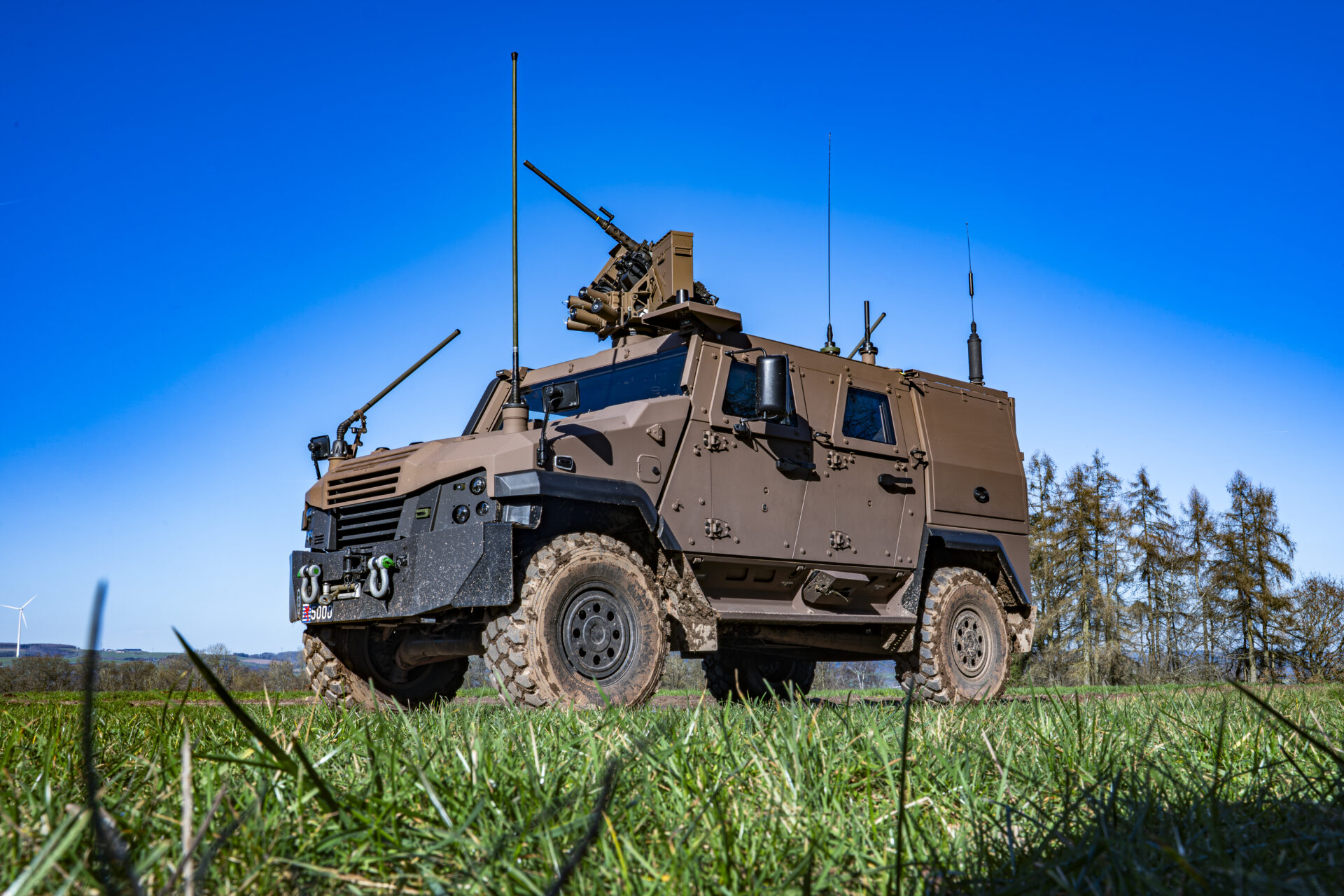
Discreet on the road, formidable in operation. The Command, Liaison and Reconnaissance Vehicle — the CLRV — will be the reconnaissance vehicle of the Luxembourg Army. Derived from the Eagle 5 platform, it packs no fewer than 9.2 tonnes of cutting-edge military technology, designed for mobility, survivability and communication in hostile zones.
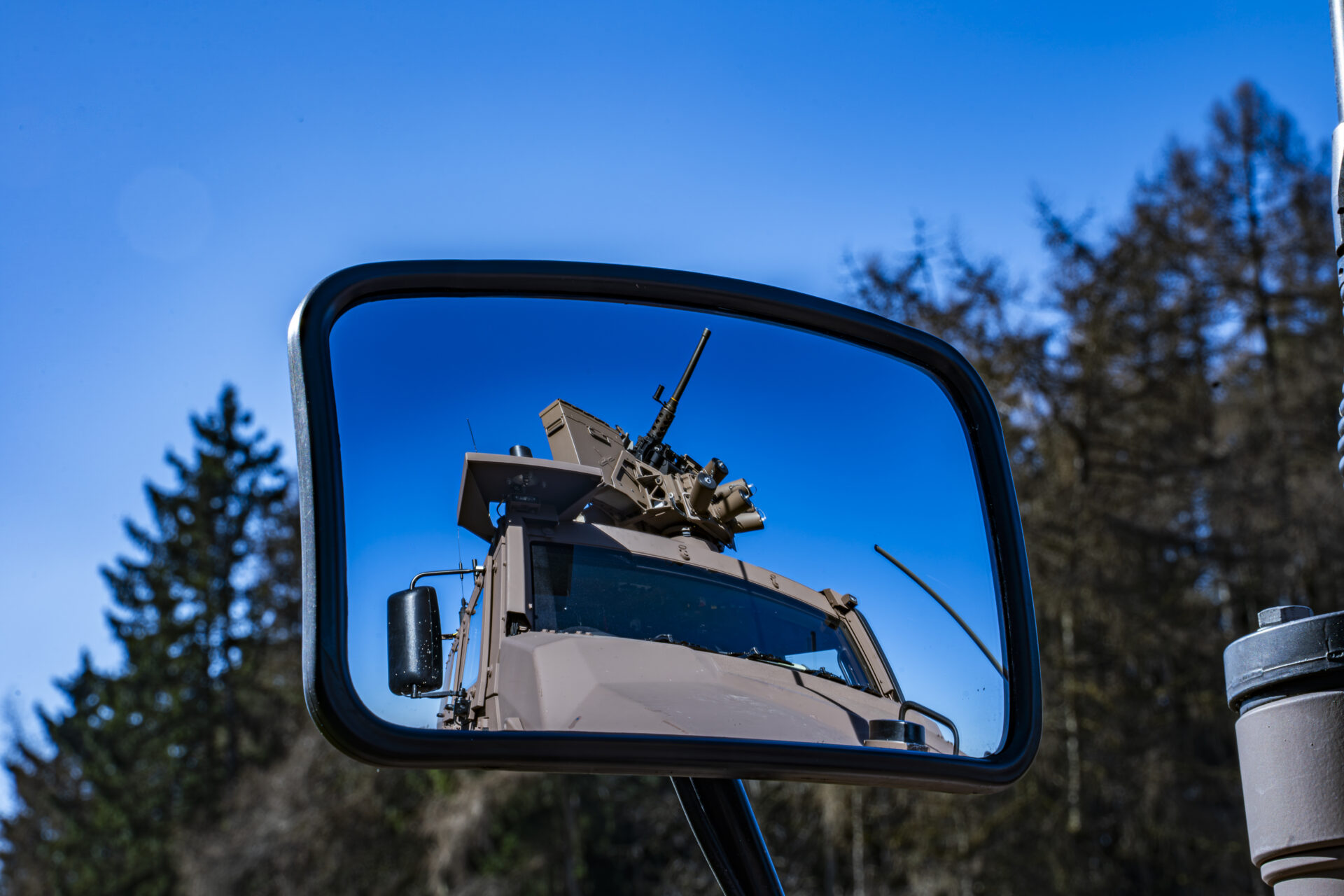
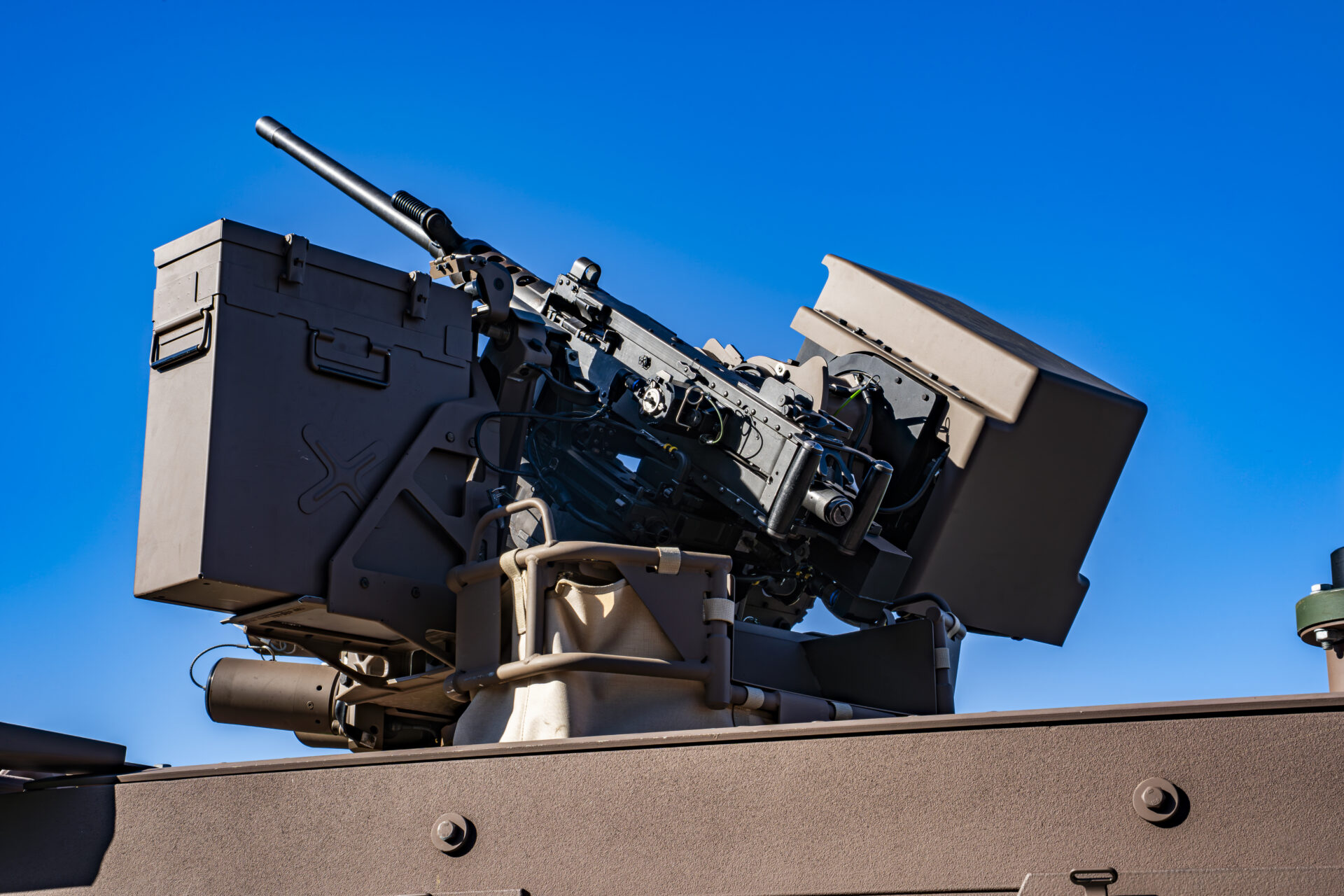
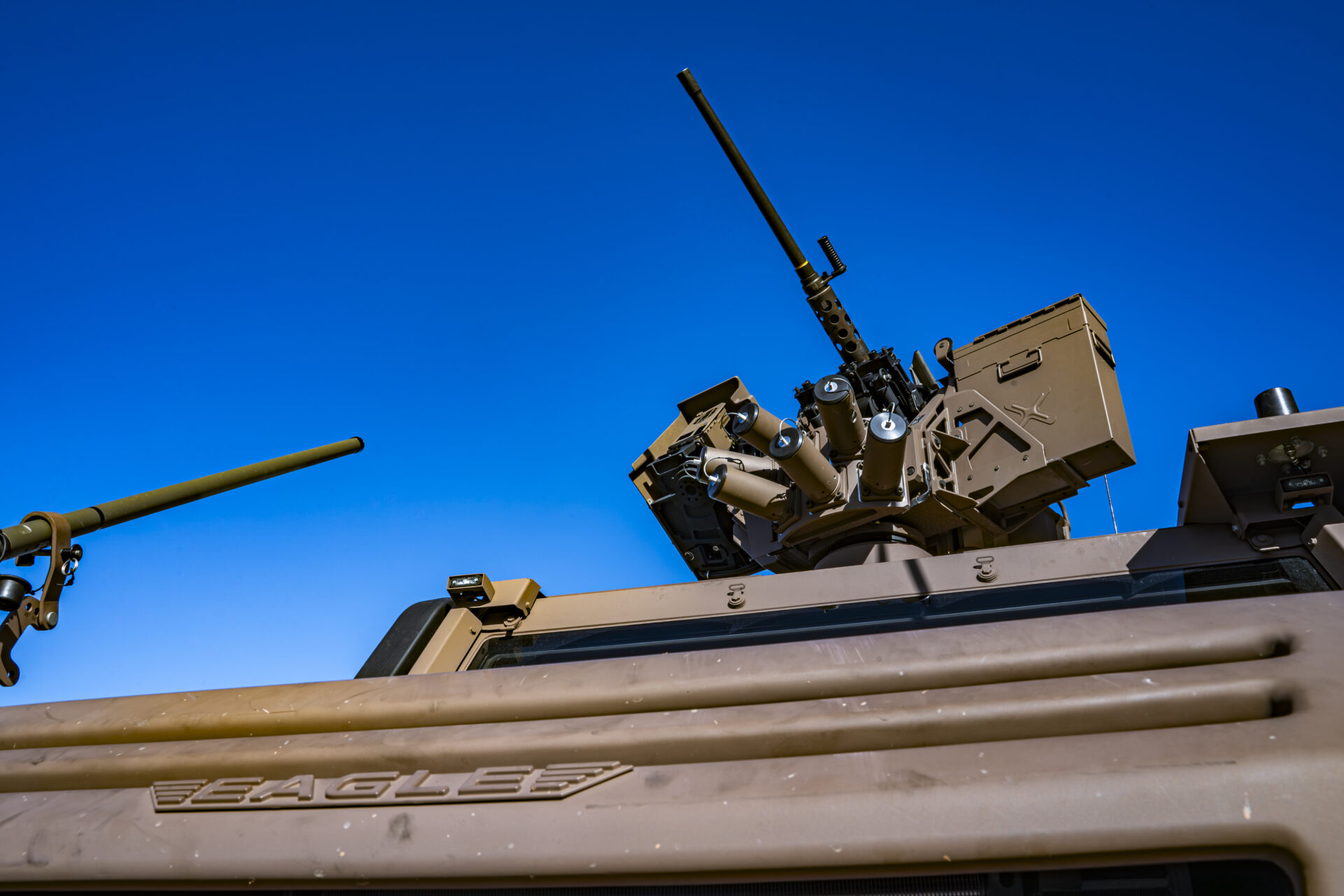
C, L, R, V. Four letters that encapsulate the purpose of this vehicle: Command, Liaison and Reconnaissance Vehicle. A sober designation for a machine designed not to attack, but to observe, communicate and gather intelligence — while remaining capable of reacting if the situation demands it. “It is not an attack or defence vehicle in the strict sense. We have a weapon station, but for a frontal attack, it is not sufficient,” explains Warrant Officer Tom, the technical lead. Its primary role: to move discreetly across a theatre of operations, collect information, maintain the link between units, and remain undetected for as long as possible. “The aim is to stay as long as possible without being detected, and if need be, to be equipped to respond,” adds Warrant Officer Major Lex, also in charge of the CLRV.
To accomplish this mission, the Luxembourg Army has ordered 80 units of this vehicle. The integration contract was won by Thales, which assembled around the Eagle 5 platform all the on-board systems: radios, jammers, weapon station and mission equipment.
Under the bonnet: robustness and versatility
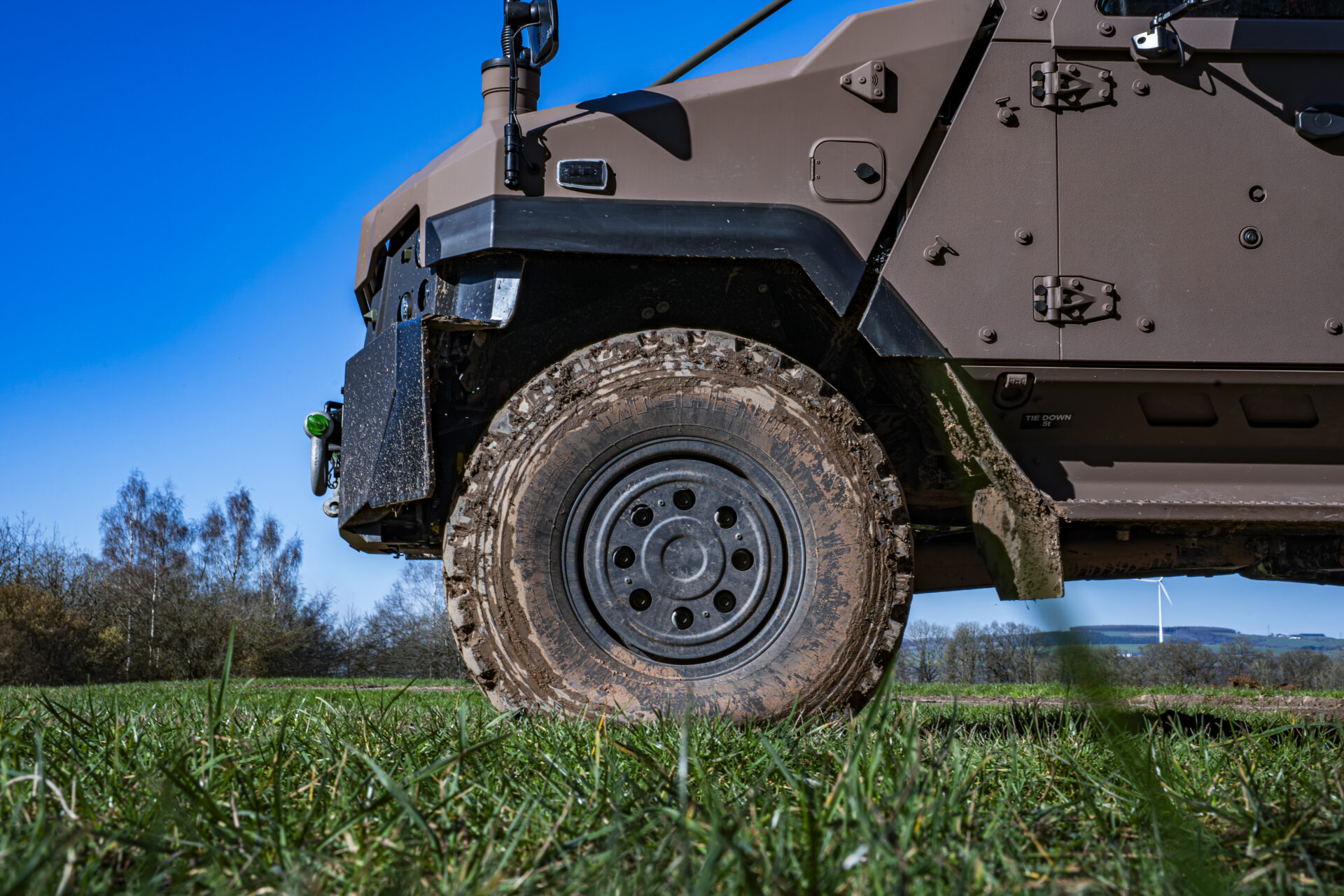
The mechanical heart of the CLRV is a Cummins 6.7-litre six-cylinder diesel engine, developing 285 horsepower and 970 Nm of torque. The transmission is a six-speed automatic with torque converter. But it is the permanent all-wheel drive 4×4 system that commands attention: combined with differential locks and a transfer case, it allows the vehicle to operate on virtually any terrain — mud, sand, snow, steep slopes.
Fuel consumption varies significantly depending on the environment: approximately 20 litres per 100 kilometres on road, it can climb to 40 litres on difficult terrain. The announced range is around 600 kilometres on road. Off-road, the figure is deliberately vague — too many variables come into play. As a reminder, the vehicle weighs 9.2 tonnes empty and up to 11.5 tonnes at maximum authorised load. Nevertheless, the engine’s power and torque give it a surprising agility and an almost disconcerting ease of handling.
A small detail worth noting: this military vehicle complies with NATO standards. It is therefore equipped with a Euro 3 engine — not the more recent civilian standards. The reason lies in NATO’s single fuel policy: allied armies use kerosene, a fuel incompatible with the particulate filters of modern engines. A military constraint little known to the general public.
CTIS: intelligence in the wheels
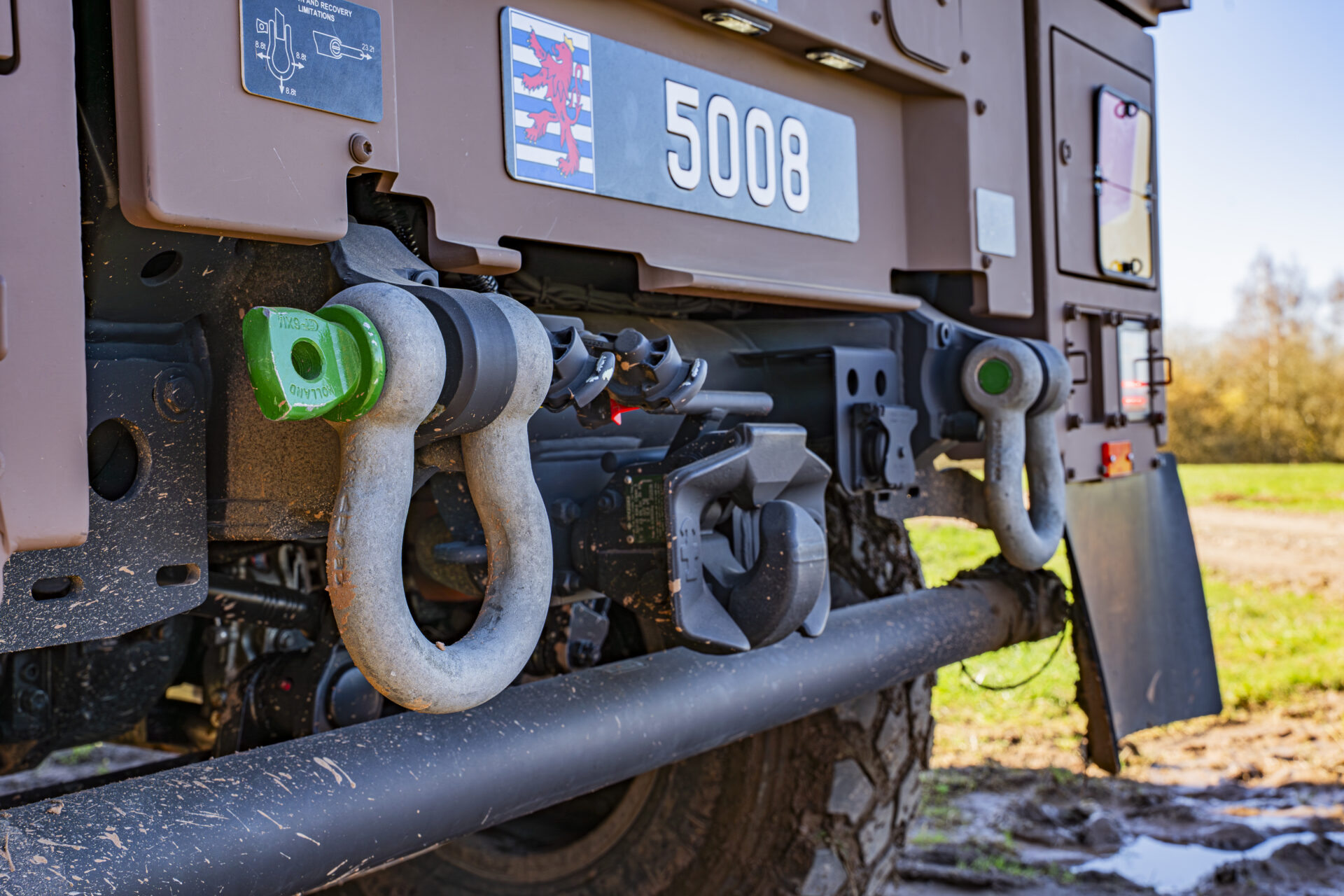
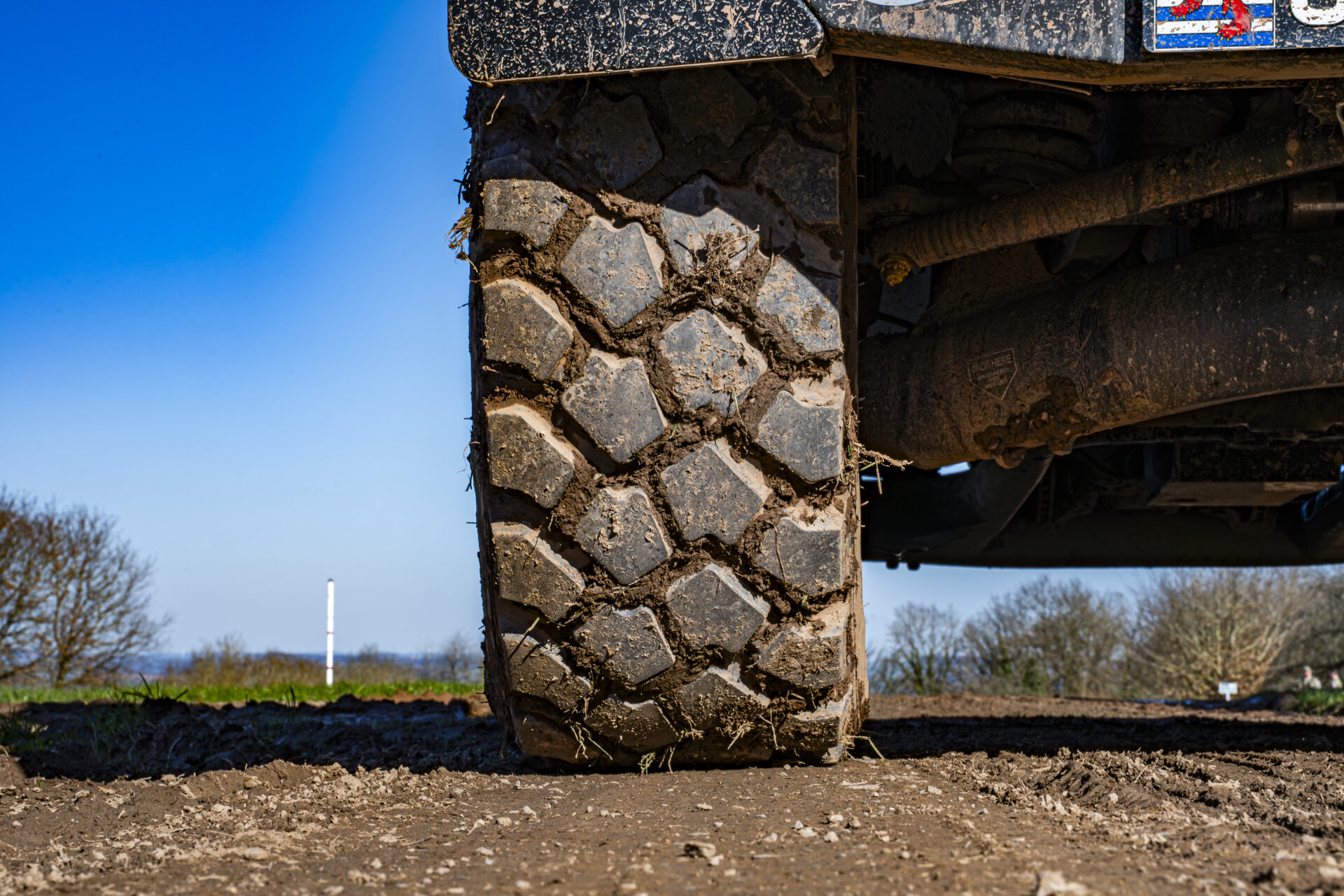
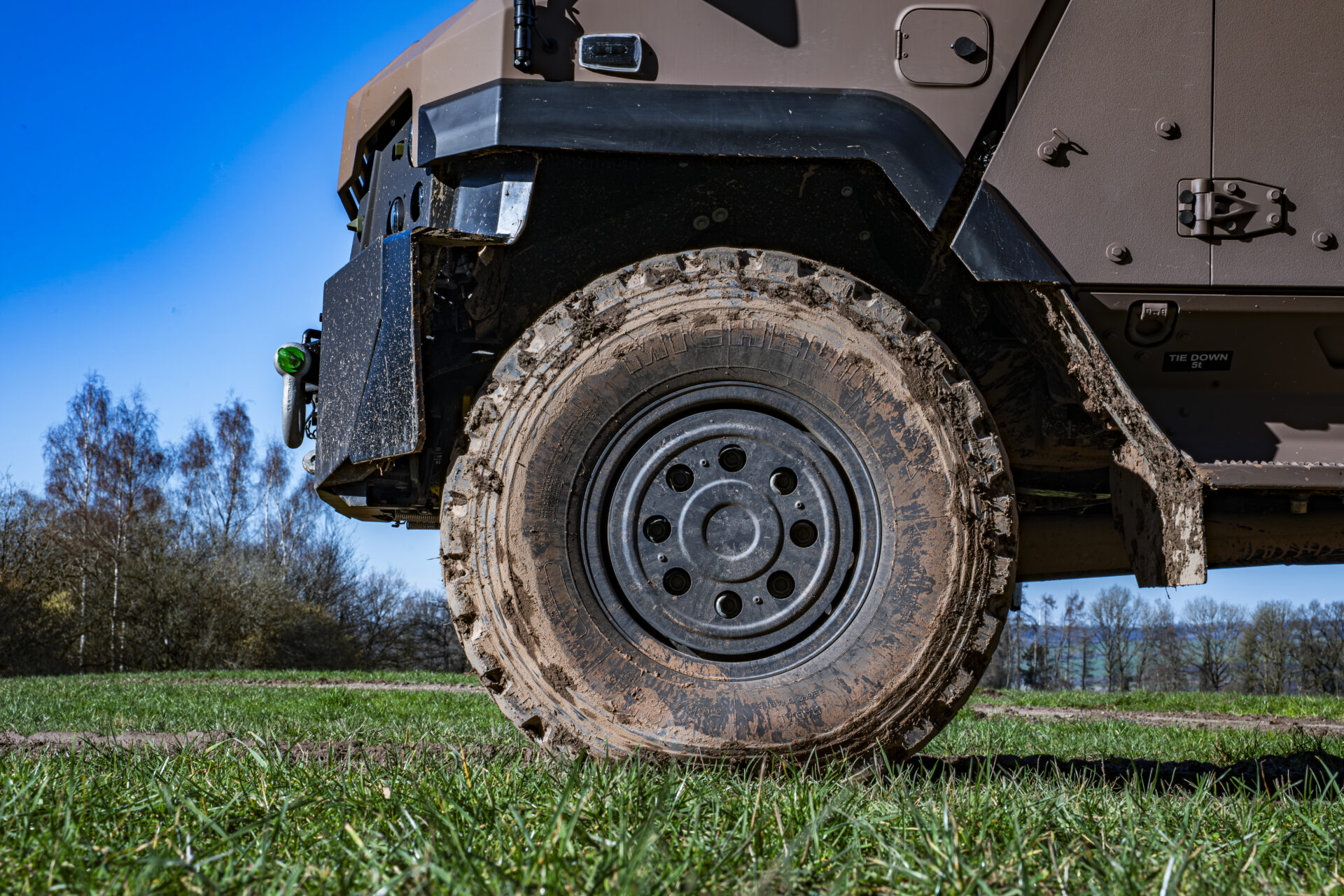
One of the most striking innovations on board is the CTIS — Central Tire Inflation System. This system allows the driver to inflate or deflate the tyres at any time, directly from the driving position. By lowering the pressure, the contact surface with the ground increases, considerably improving traction on soft terrain.
The system uses the vehicle’s air compressor — the same one that supplies the pneumatic brakes — to reinflate the tyres after the difficult passage. “This is a system you will not find on civilian vehicles, even high-end ones,” points out one of the technicians present. The demonstration is striking: the tyres gradually deflate, the vehicle visually flattens onto its supports, then returns to its road height once the obstacle has been cleared.
Armour and safety: a fortress cabin
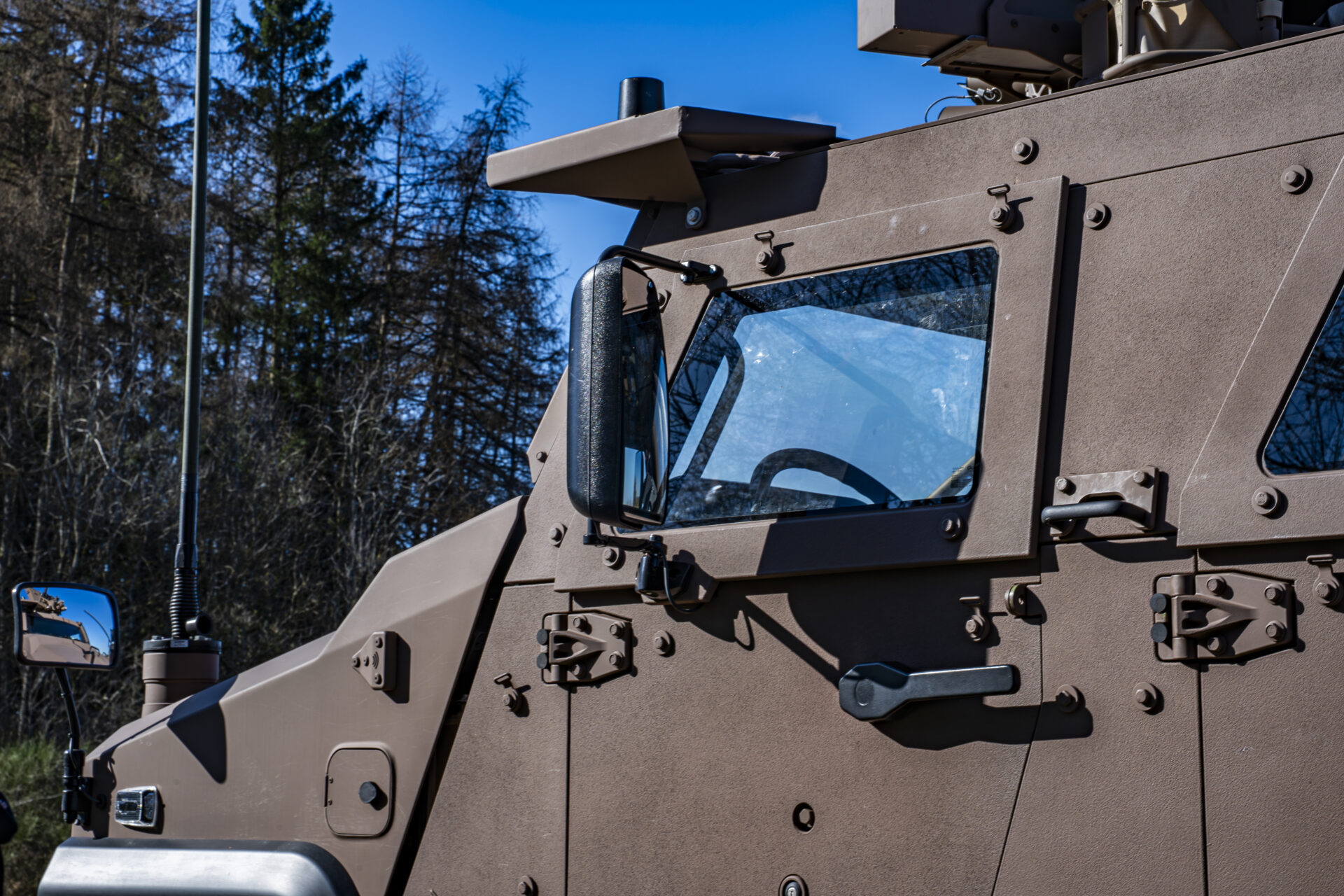
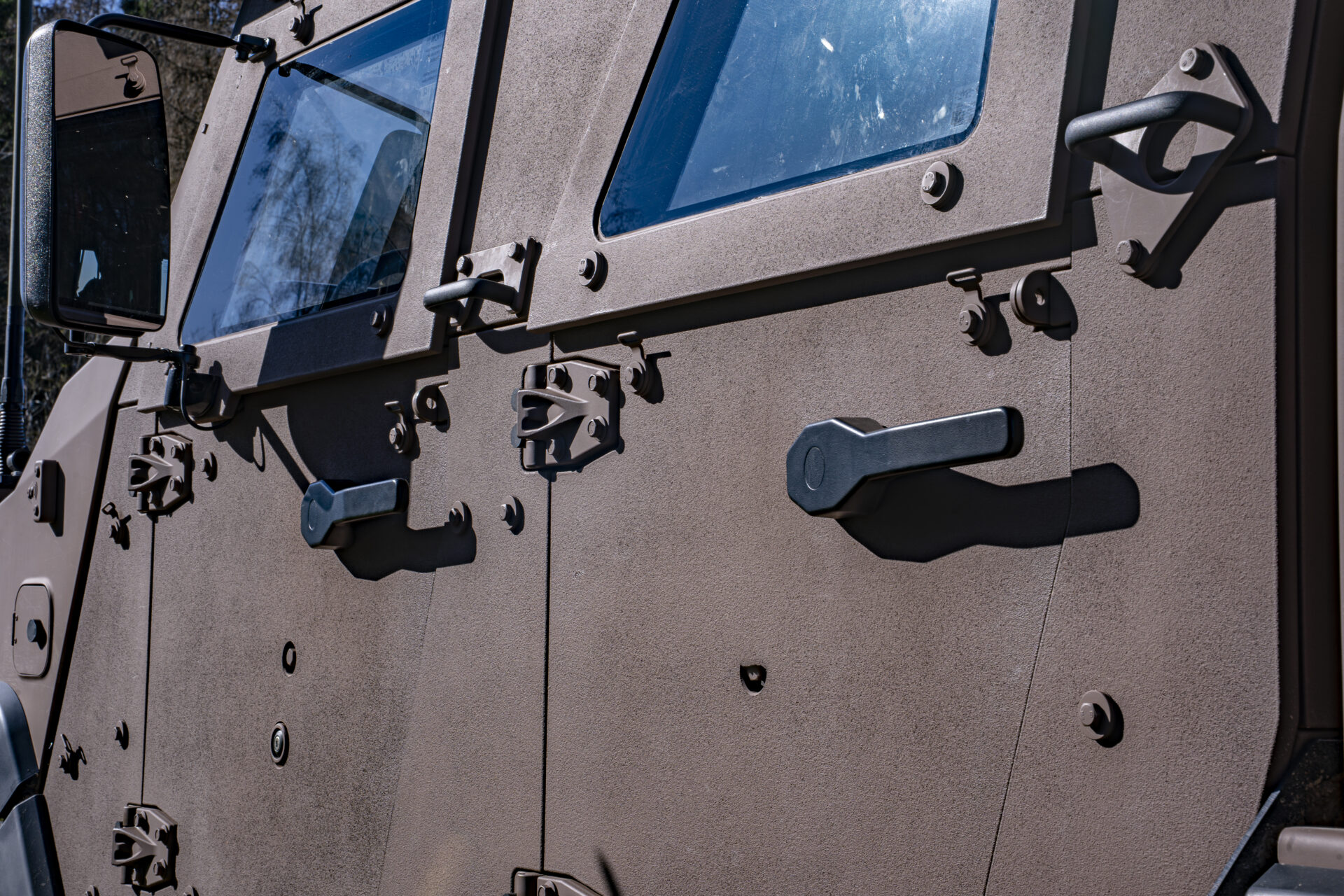
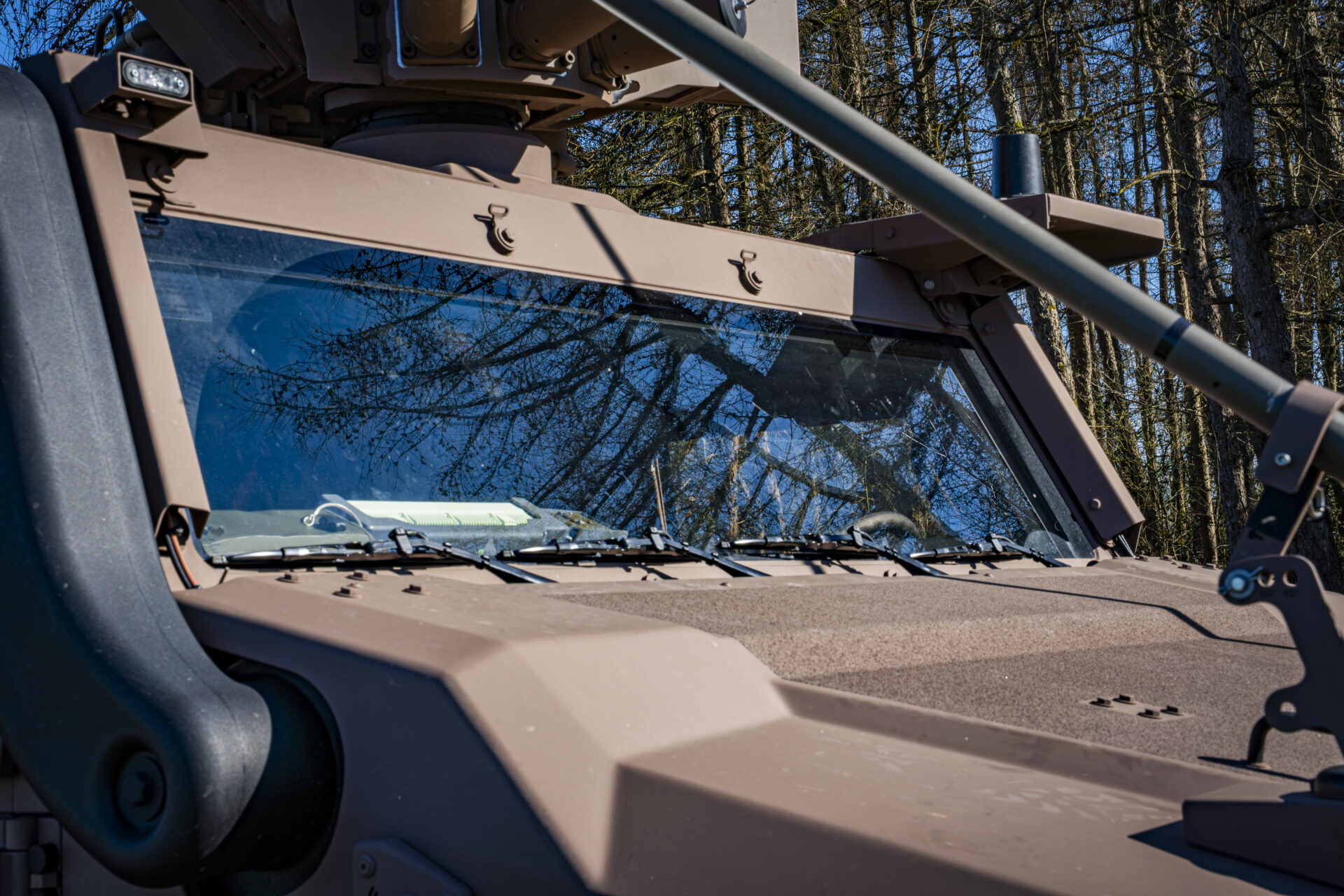
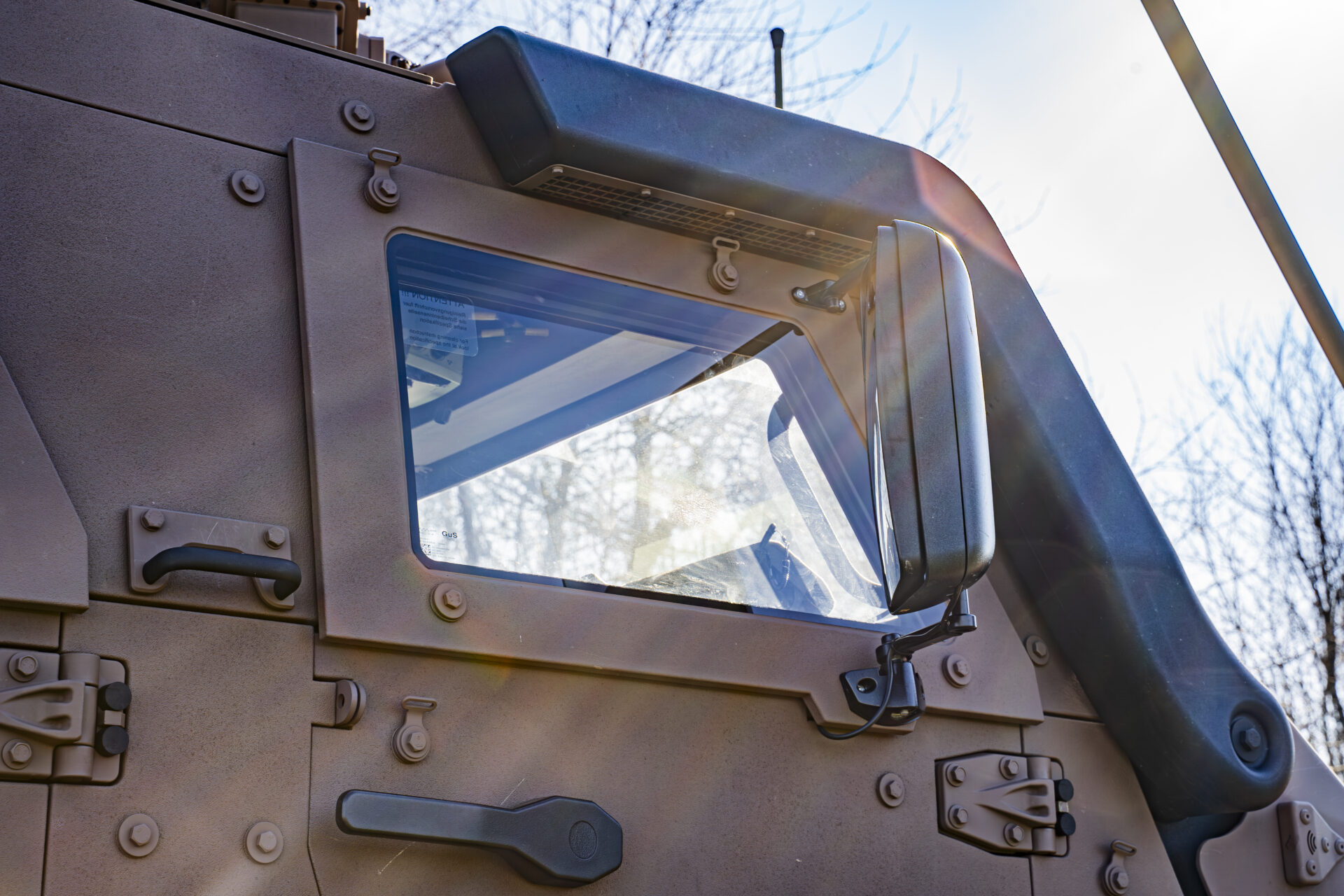
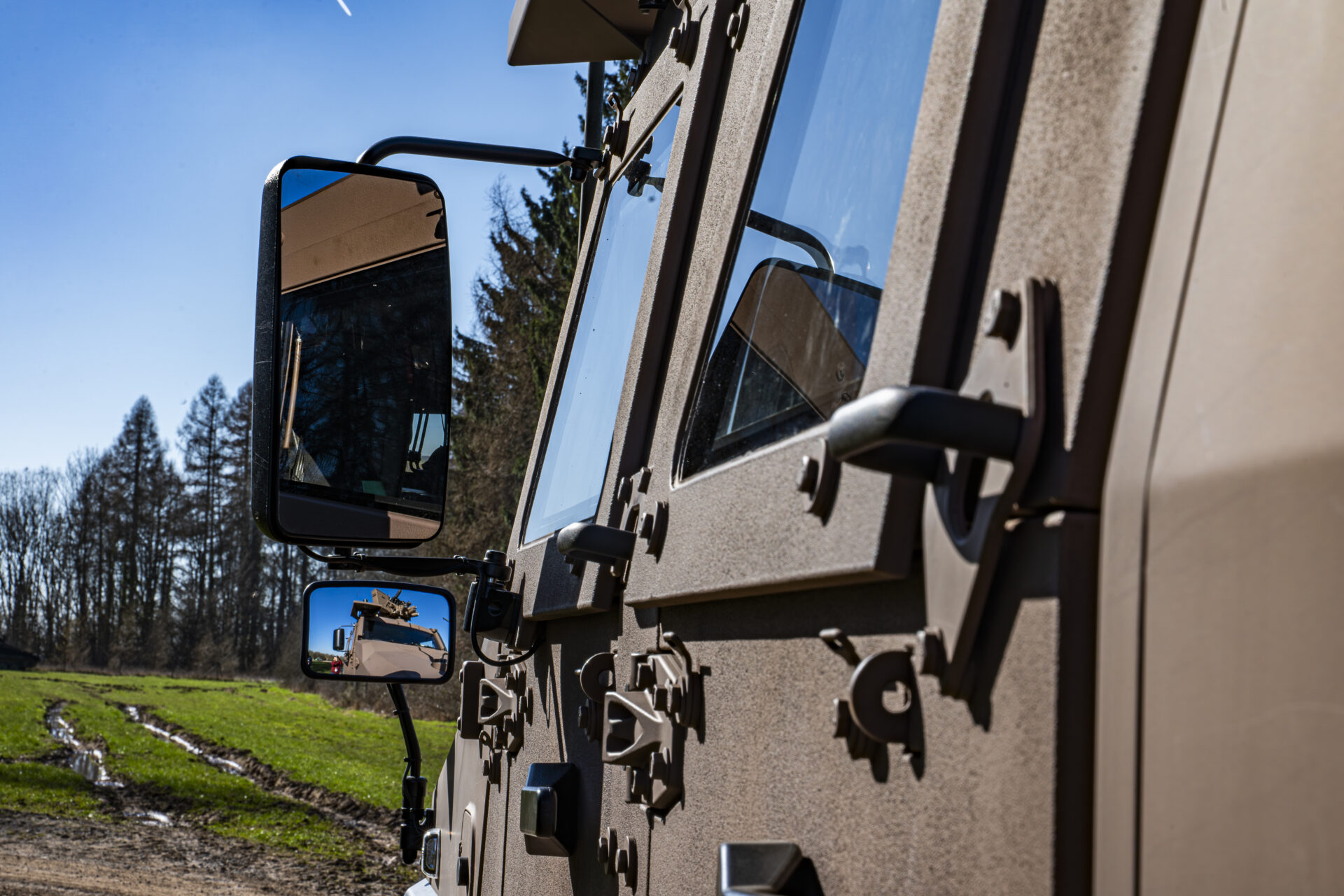
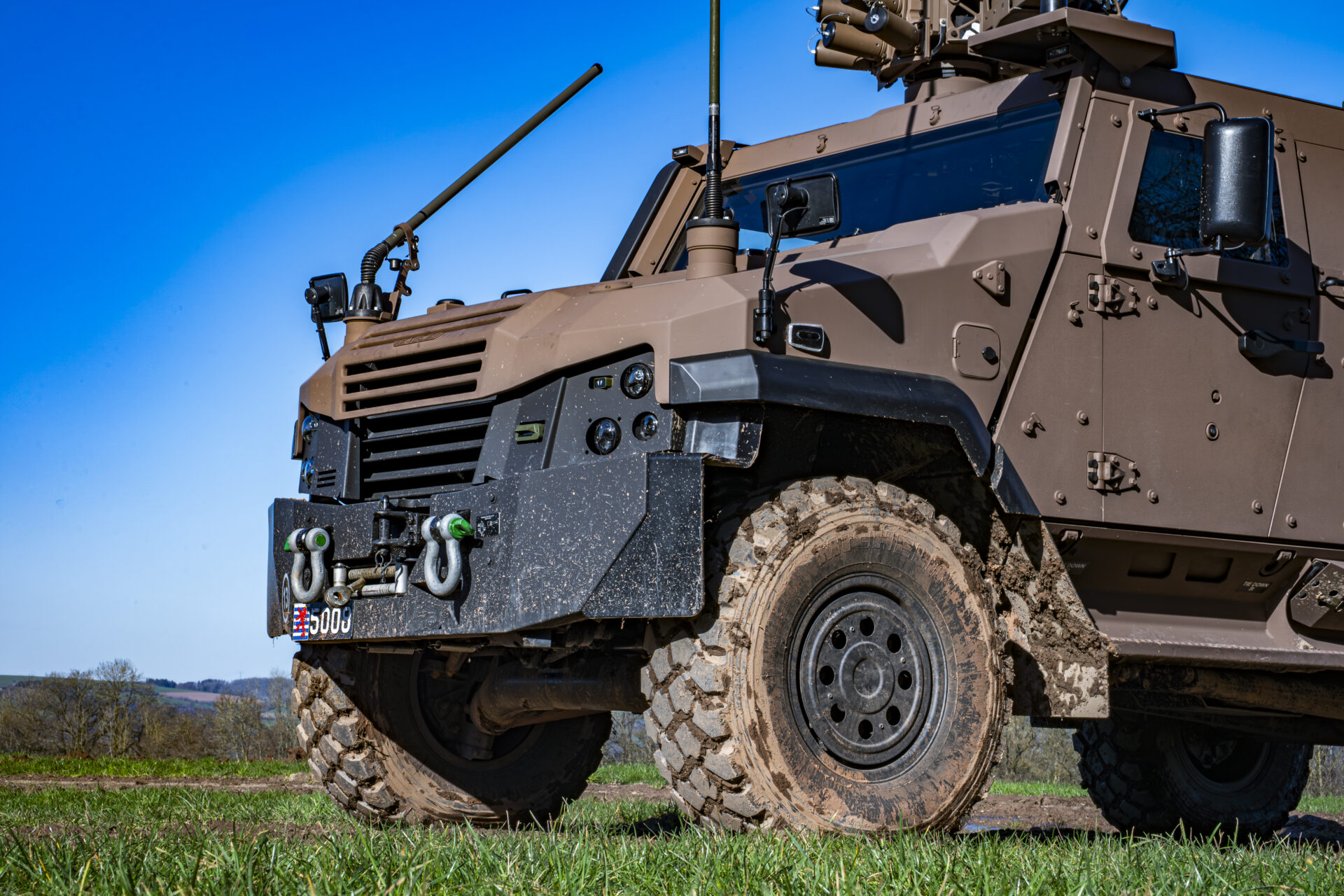
The CLRV’s cabin is fully armoured. The windows — including the front windscreen, estimated at close to €10,000 on its own — are resistant to handgun fire.
The door locking system is also designed for survivability: rather than a conventional lock, the doors are held by a pin system that withstands the shockwave from a mine explosion. A damper prevents the door from closing under its own weight when the vehicle is on a slope. “If we drive over a mine, the energy from the shockwave can blow a normal door off. Here, with this system, our operators are safer,” explains Warrant Officer Major Lex. The V-shaped hull underside is not incidental either: by deflecting the blast of an explosion to the sides rather than absorbing it head-on, it considerably reduces the effects of a mine on the crew.
Among the on-board military options, the NBC (nuclear, biological, chemical) system deserves special mention. By creating overpressure inside the cabin, it prevents any external agent from penetrating — without the crew needing to wear masks. The pressurisation effect is audible when the valve is activated. An intercom also allows communication with the outside without opening the doors — a valuable precaution in high-risk zones.
Radios, jammers, drones: on-board electronic warfare
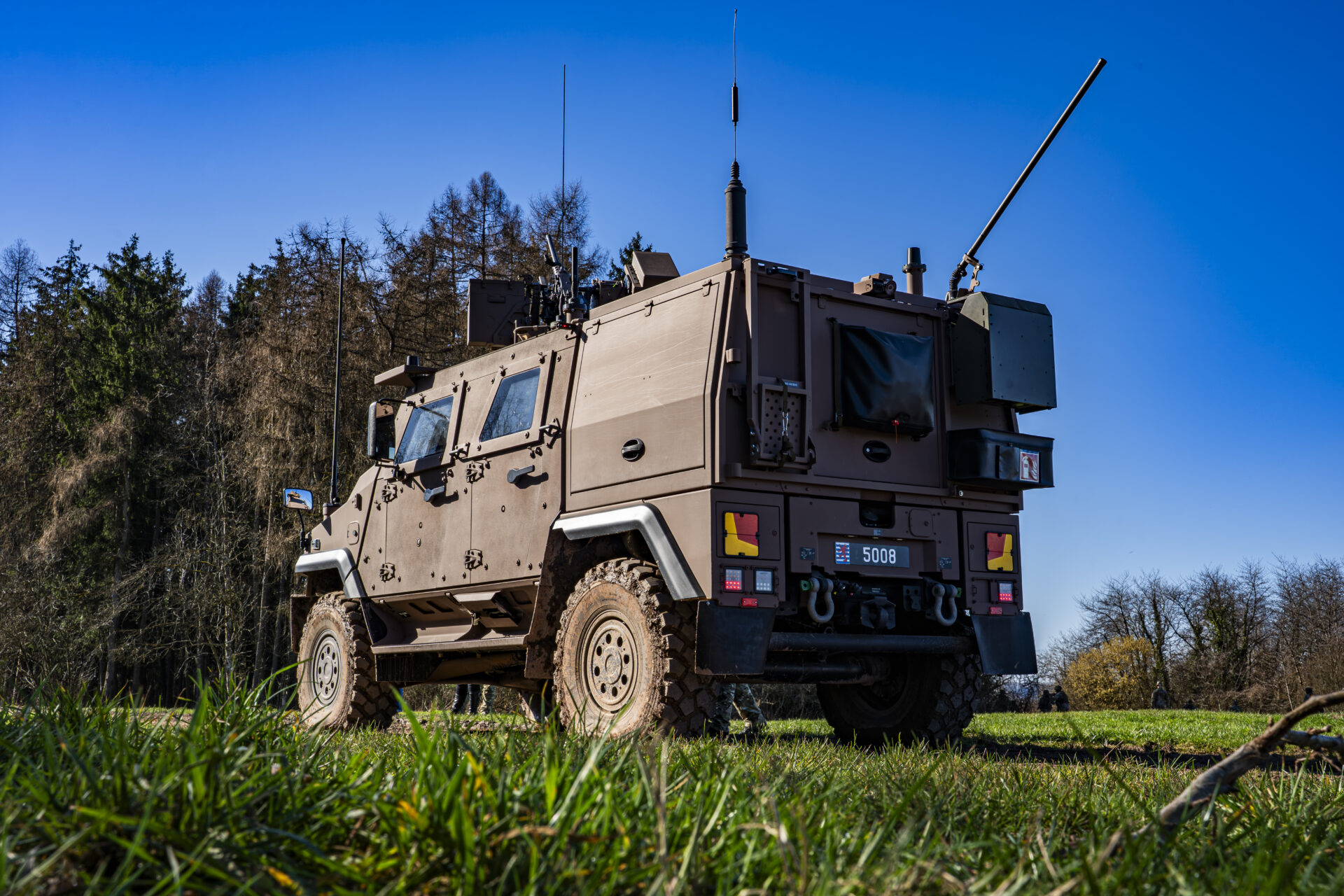
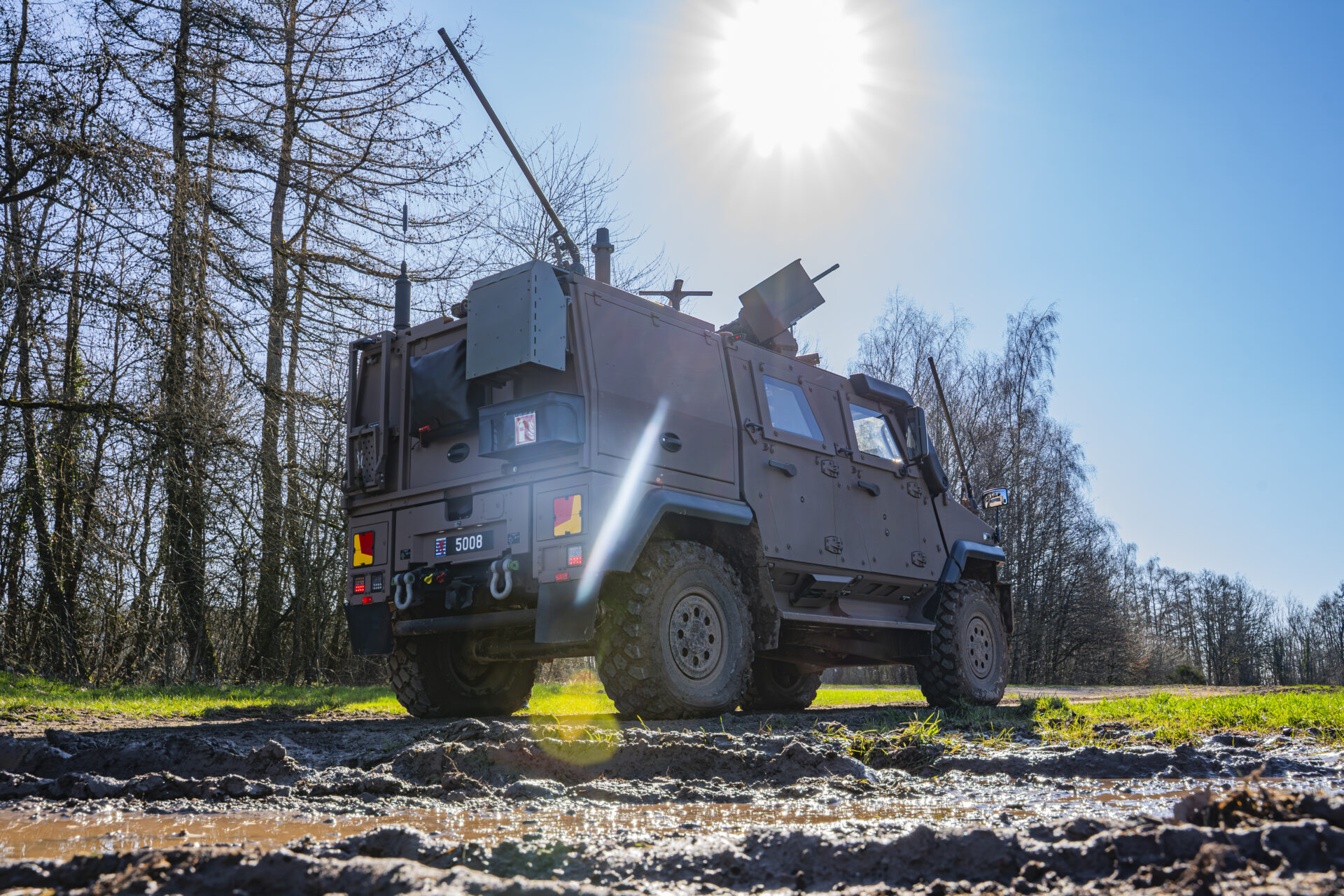
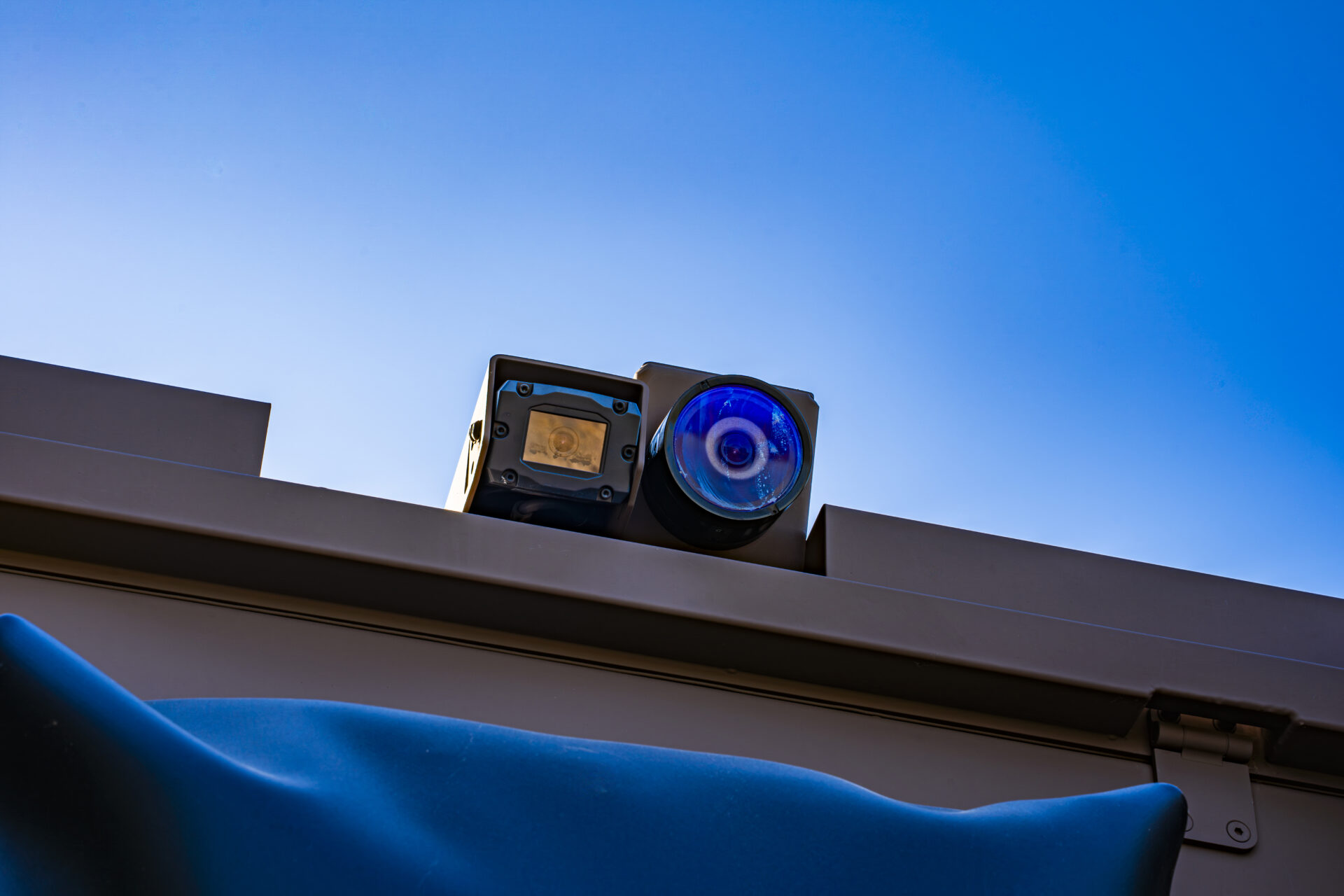
While the CLRV is mechanically impressive, it is its electronic arsenal that makes it a truly formidable tool. The vehicle is equipped with no fewer than eight antennas, visible from the outside. Some are dedicated to radio communications, others to the jamming system.
This jammer, mounted at the rear of the vehicle, is fully programmable. It can neutralise targeted frequencies — those of a radio-controlled device, a remote detonator, or any other adversary system — while preserving the crew’s internal communications. “We can specify that frequency X is to be jammed. If we know that the radio-controlled device operates on frequency Z, we block it and neutralise it without a direct act of war,” explains Warrant Officer Major Lex simply.
The vehicle’s theoretical radio range extends beyond 30 km. In practice, the terrain, weather and soil moisture strongly influence this distance: in a valley, even a few kilometres can prove difficult to reach. Inside, two multifunction screens centralise information: position of allied vehicles, tactical messaging, video feeds — and in the event of GPS jamming, an inertial navigation unit takes over to guide the crew.
A crew of four soldiers
The CLRV accommodates four soldiers: a driver, a vehicle commander, an observer and a gunner. The latter operates the weapon station from the rear of the vehicle. The rule of engagement is clear: you never go out alone. “Alone, you are dead,” sums up Warrant Officer Tom soberly. The vehicle always operates in pairs or as part of a section, with teams covering each other.
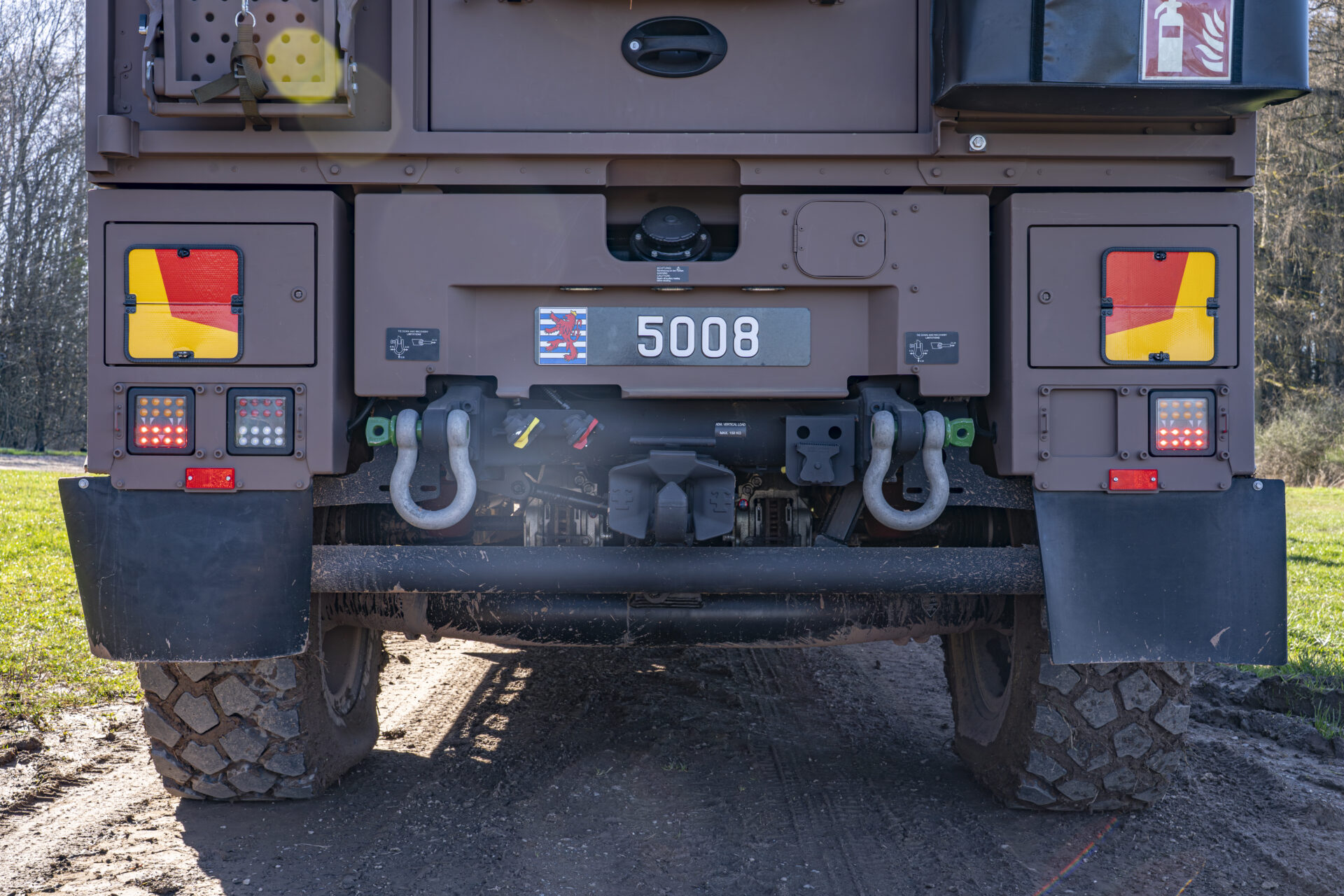
The rear storage area, accessible through three independent openings — a notable improvement over previous generations — can hold equipment, ammunition, water and food for the team. As for the driving licence, a heavy goods vehicle licence is required: the CLRV is registered as a truck. Getting to grips with it, however, is surprisingly quick. “If you are used to driving a truck and someone explains the vehicle’s specifics to you in a few hours, you are operational,” notes the non-commissioned officer.
€1.4 million per unit
The price of the bare CLRV — without the on-board equipment — exceeds €1 million. A figure that may come as a surprise, but which is explained by the very nature of its design: every component has been tested to withstand mines, small arms fire and parasitic electromagnetic waves. Armour studies, blast tests and electronic compatibility analyses represent considerable costs, amortised across a far smaller number of vehicles than in the civilian industry.
Maintenance, for its part, remains relatively straightforward: an inspection every 20,000 kilometres, or once a year. Standard operations — oil changes, shock absorber checks, cleaning of the NBC system — do not require specialised skills. Feedback from partner nations using the same chassis — Germany and Switzerland — is unanimously positive.
“It is not really a vehicle, it is a system,” the two soldiers assure us. That is perhaps the sentence that best sums up the CLRV. Every detail — the V-shaped hull, the jammer programming, the CTIS system, the three storage openings — reflects a precise tactical rationale. Here, nothing is incidental. And it is precisely this overall coherence that makes this vehicle much more than a simple means of transport.