The second model in Alpine’s electric “Dream Garage” after the A290 city car, the A390 aims to carry the spirit of the A110 into a 4.61 m five-seater. Three motors, all-wheel drive and a patented active torque vectoring system: the Dieppe marque claims to offer “a racing car in a suit”. First impressions.
Since 1955, the Alpine name has been associated with mountain roads, lightness and a certain French take on driving pleasure. Having revived the A110 in 2018, the Dieppe marque takes a step further with the A390, a fully electric five-seat sport fastback. The stated aim is to carry the A110’s DNA into a family format. On paper, the programme draws attention, with three electric motors, all-wheel drive and a patented active torque vectoring system. It remains to be seen whether the promise holds up.
A design that embraces the A110 heritage
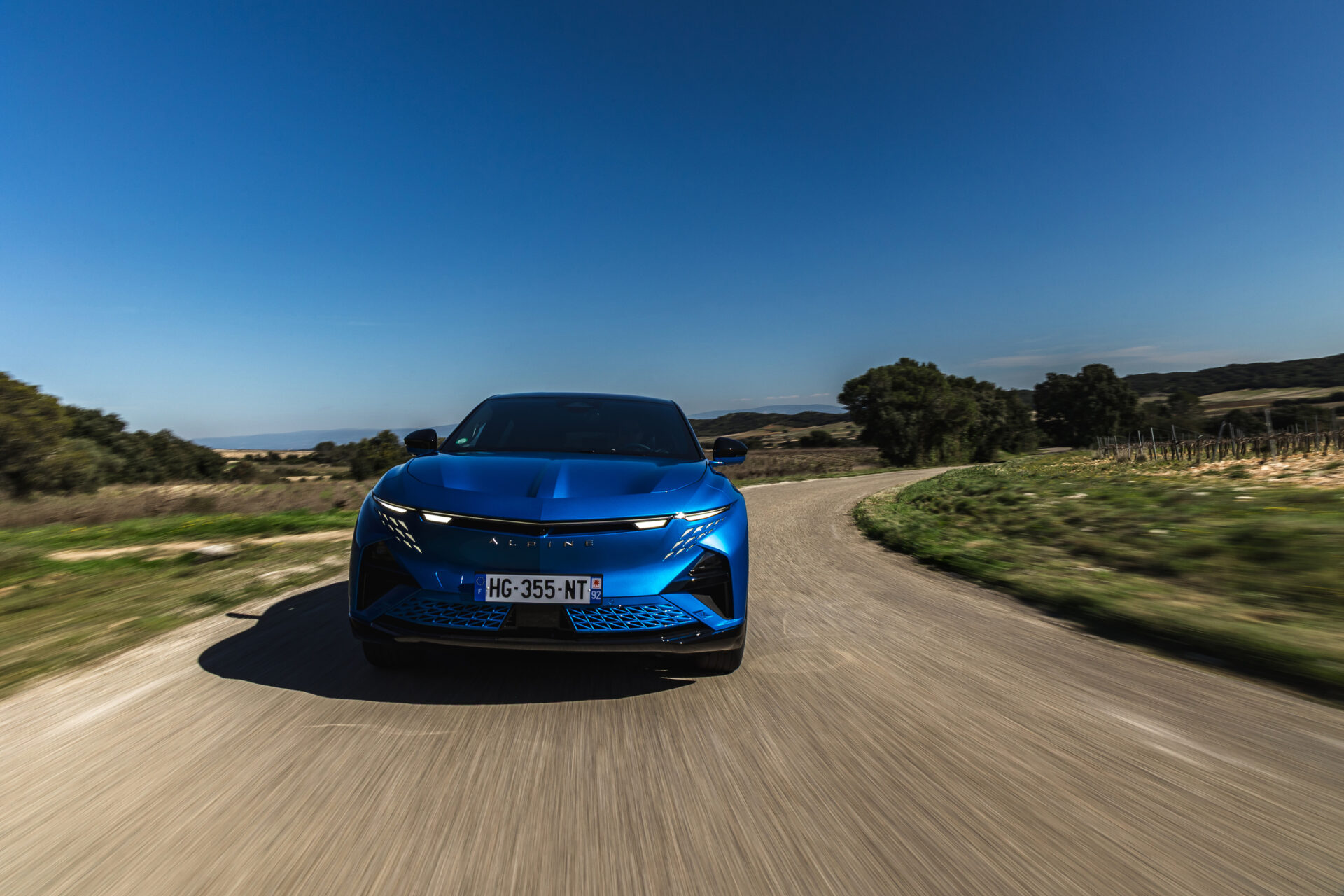
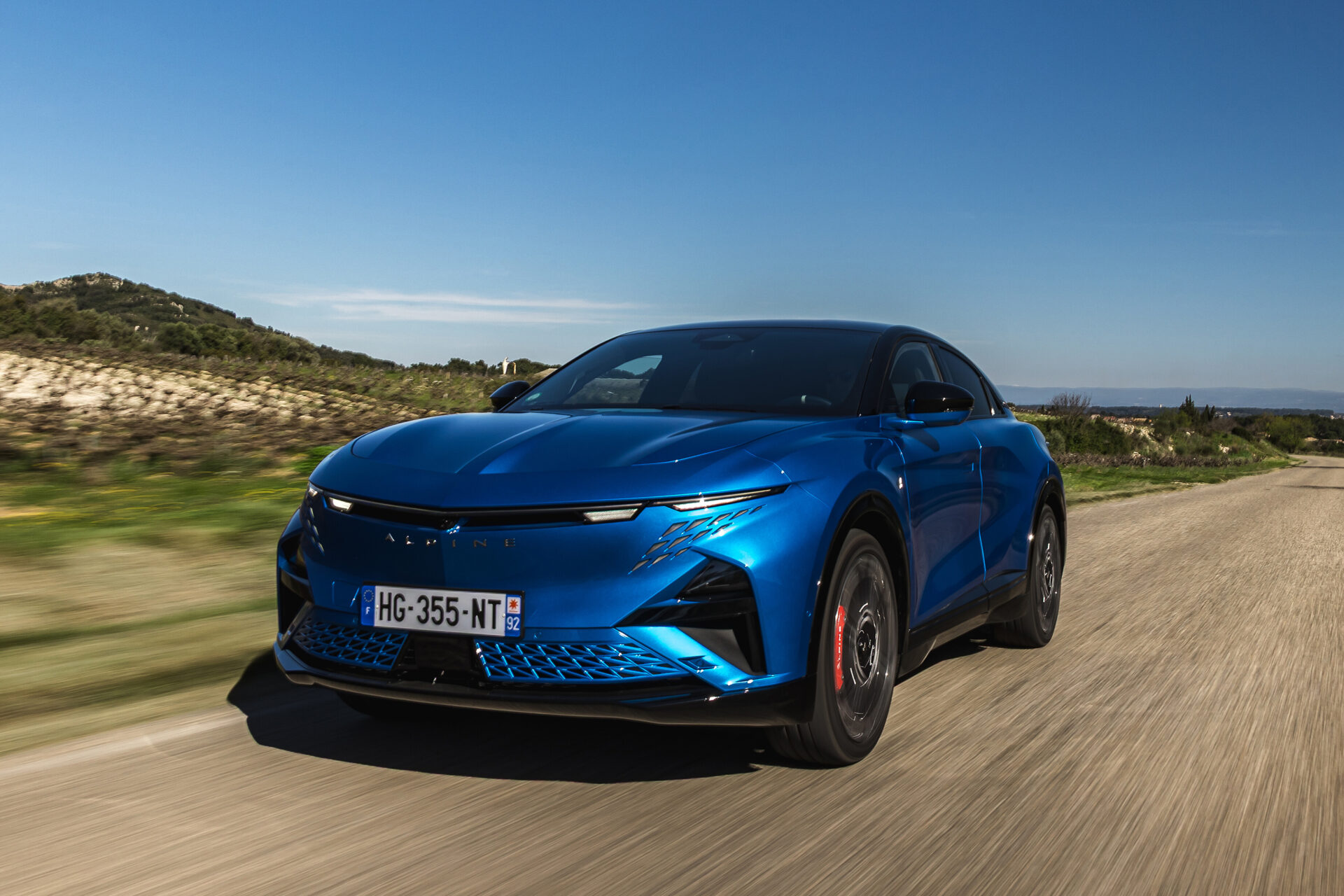
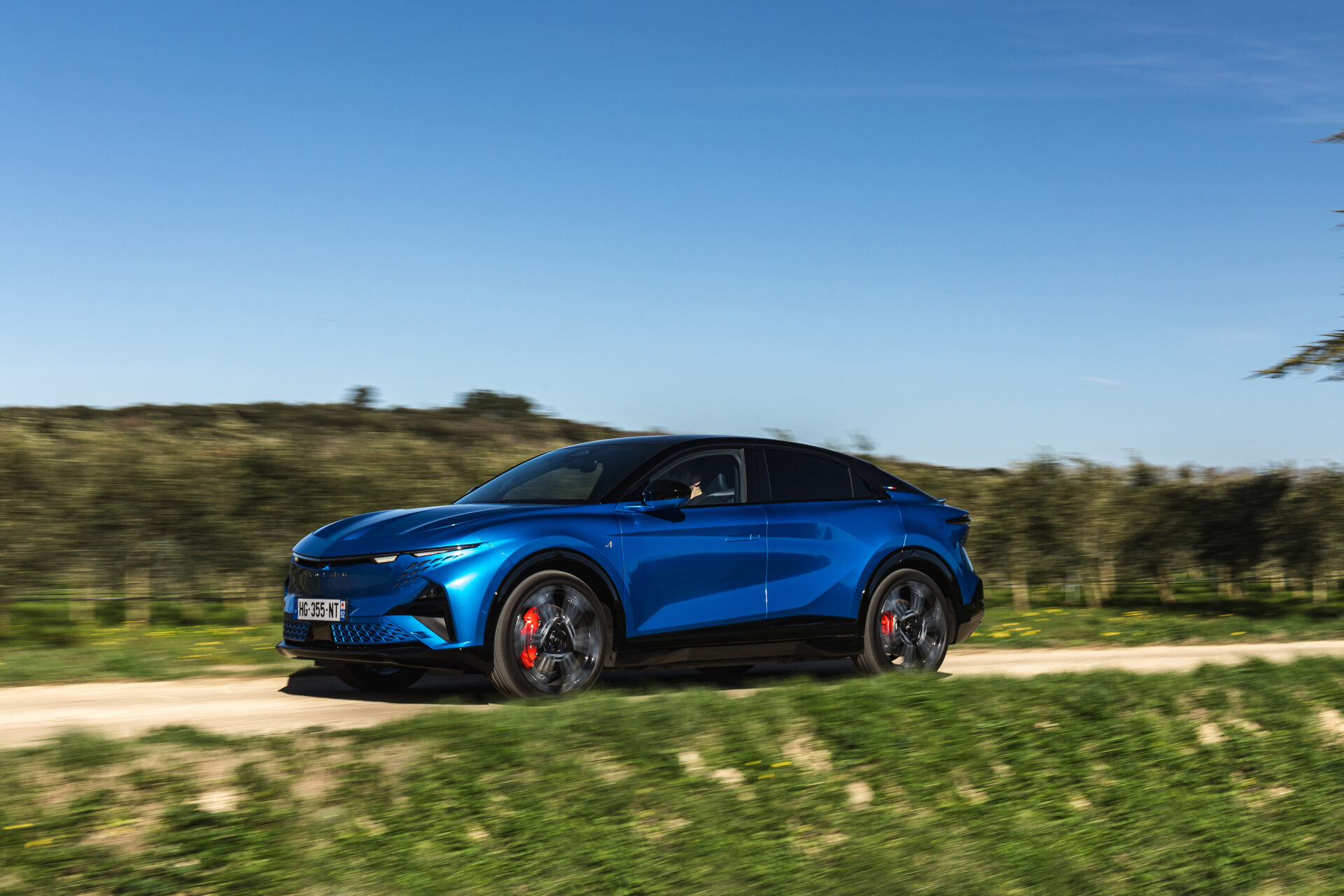
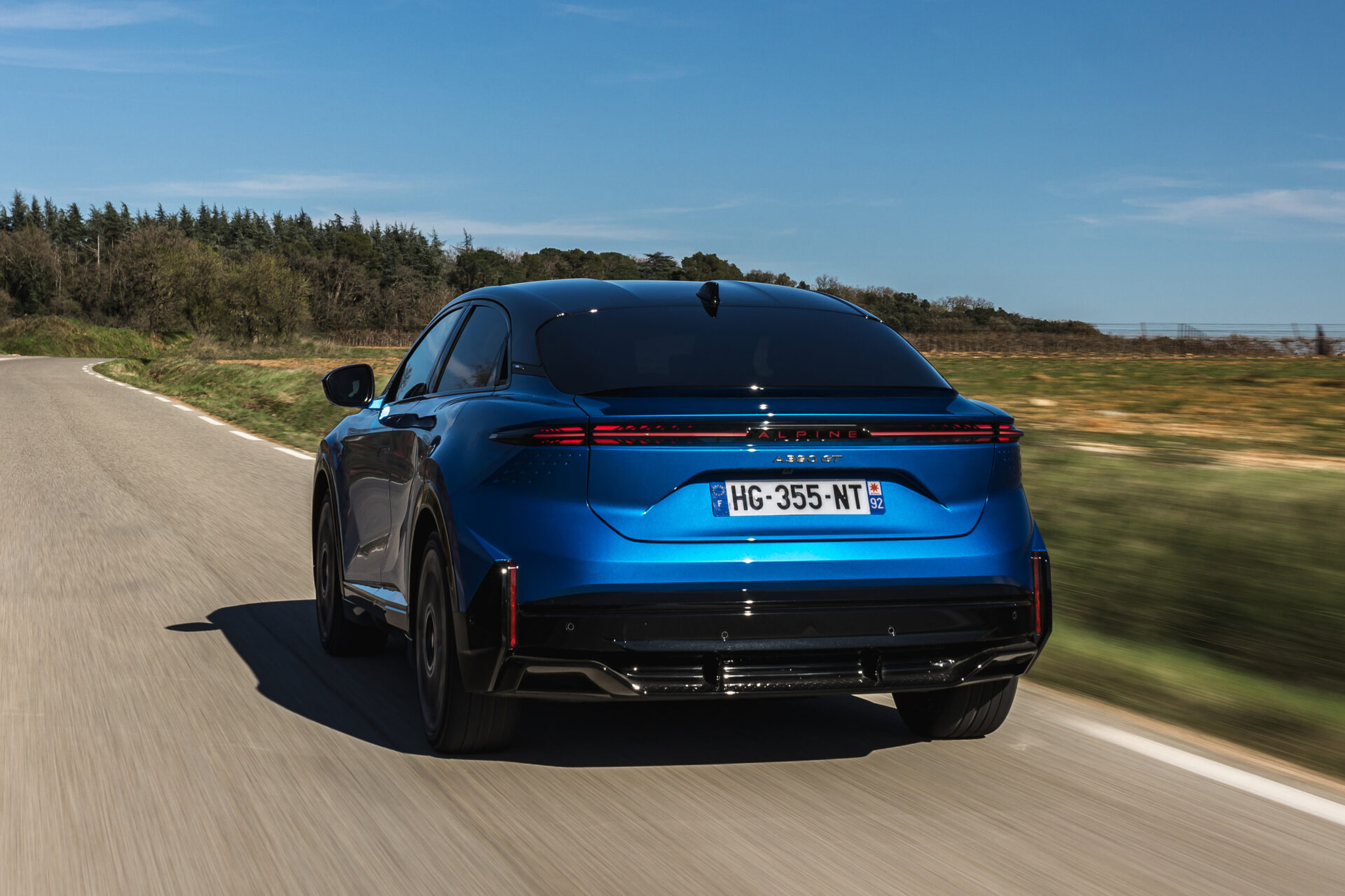
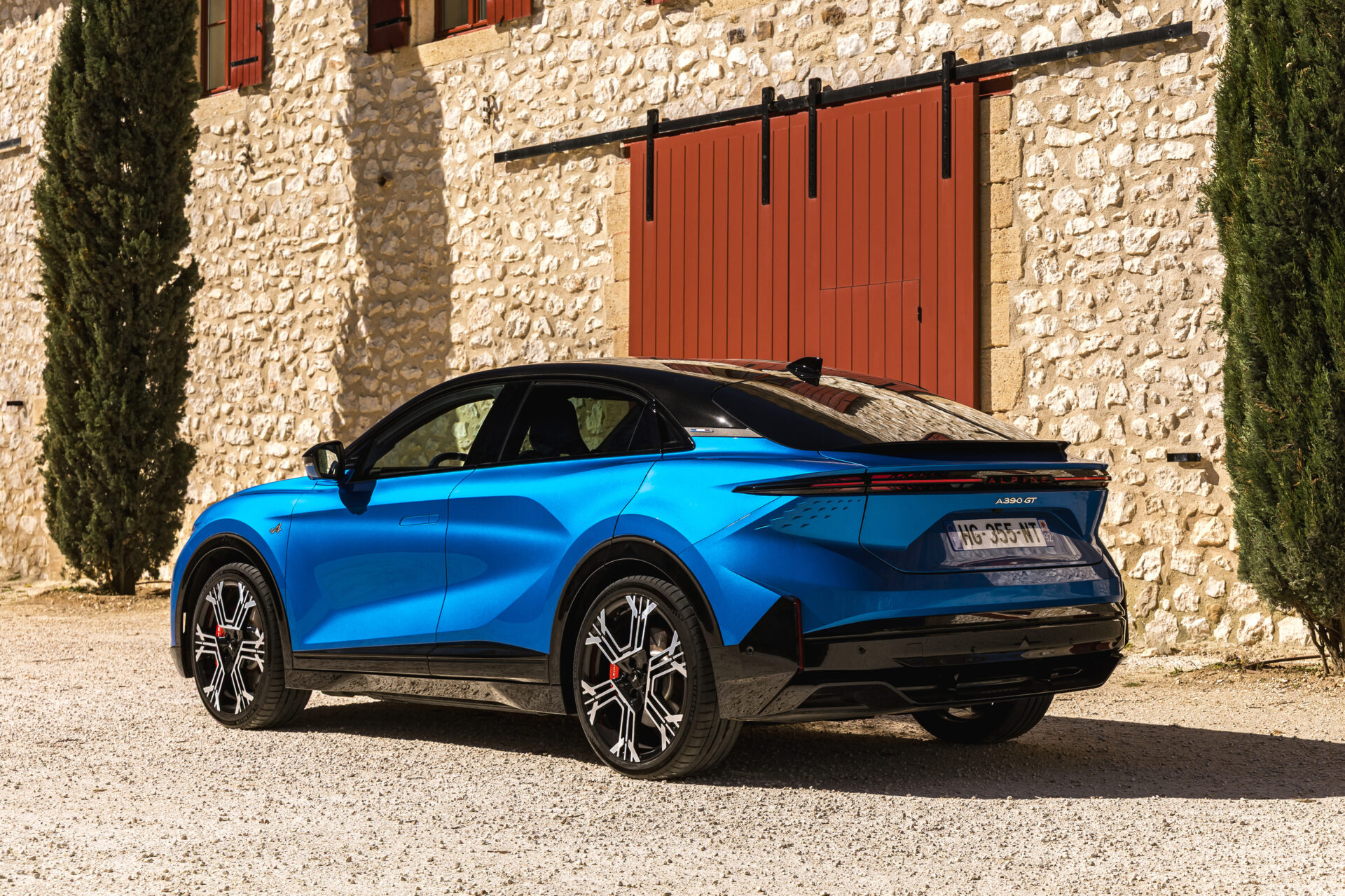
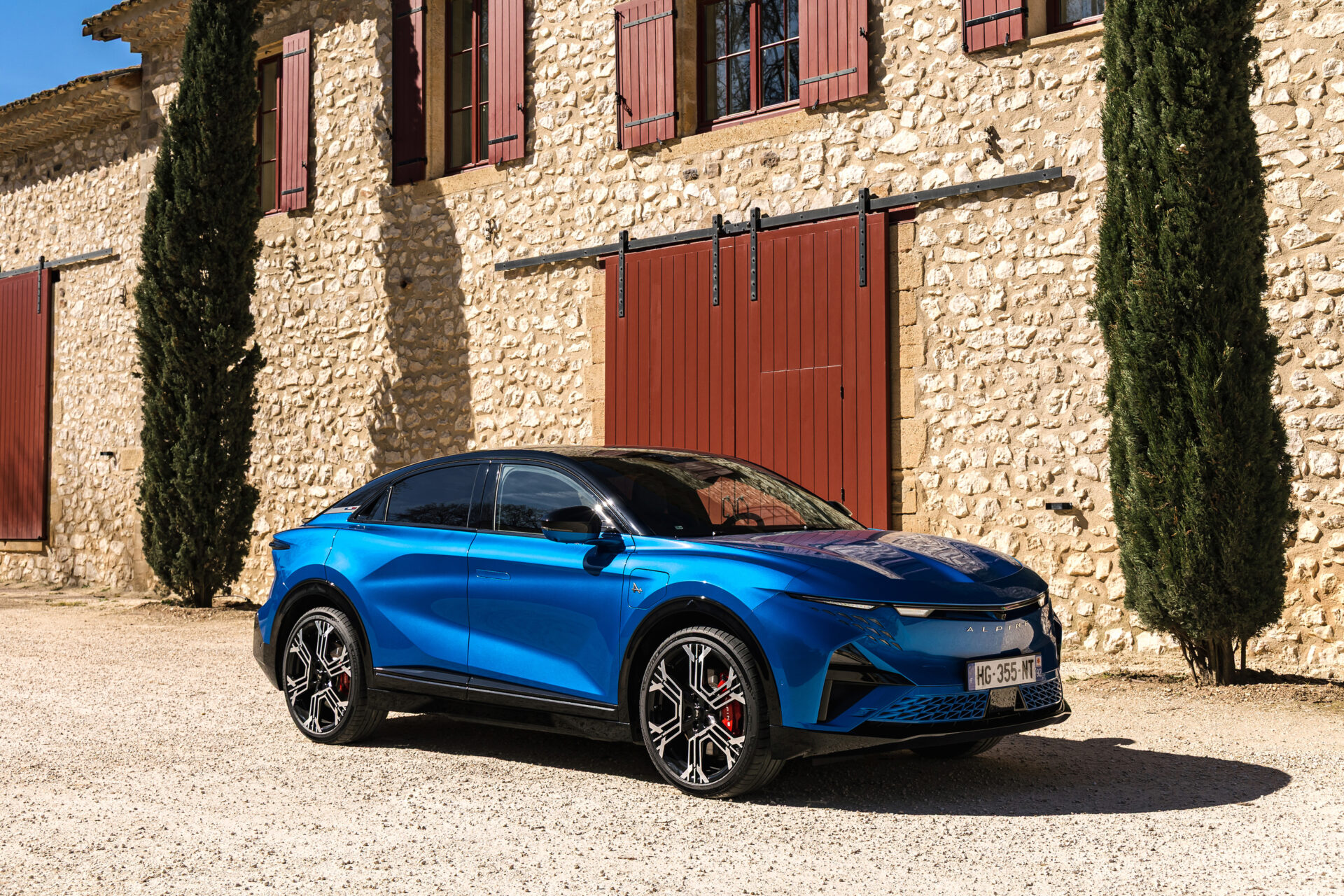
At 4.61 m long, 1.89 m wide and just 1.53 m tall, the A390 adopts a low-slung silhouette, far removed from conventional SUVs. The profile recalls the A110, with a plunging roofline, a “helmet visor” rear window and compact glazed areas.
At the front, the “Cosmic Dust” light signature, made up of clusters of triangles, draws on the Alpenglow concept and the A424 hypercar campaigned in endurance racing. The sculpted bonnet blade helps channel the airflow. At the rear, the backlit Alpine logo spelt out in full is framed by fragmented triangles, and a spoiler integrated into the base of the rear window completes the aerodynamic work, supplemented by a diffuser angled at 8°. Enthusiasts will spot the silhouette of the original A110 hidden in a corner of the windscreen. Six paint colours are listed, including Bleu Alpine Vision and a matt Gris Tonnerre reserved for the Atelier trim. The wheels measure 20 or 21 inches depending on the version, with the “Cristal” and “Snowflake” designs.
A driver-oriented cabin
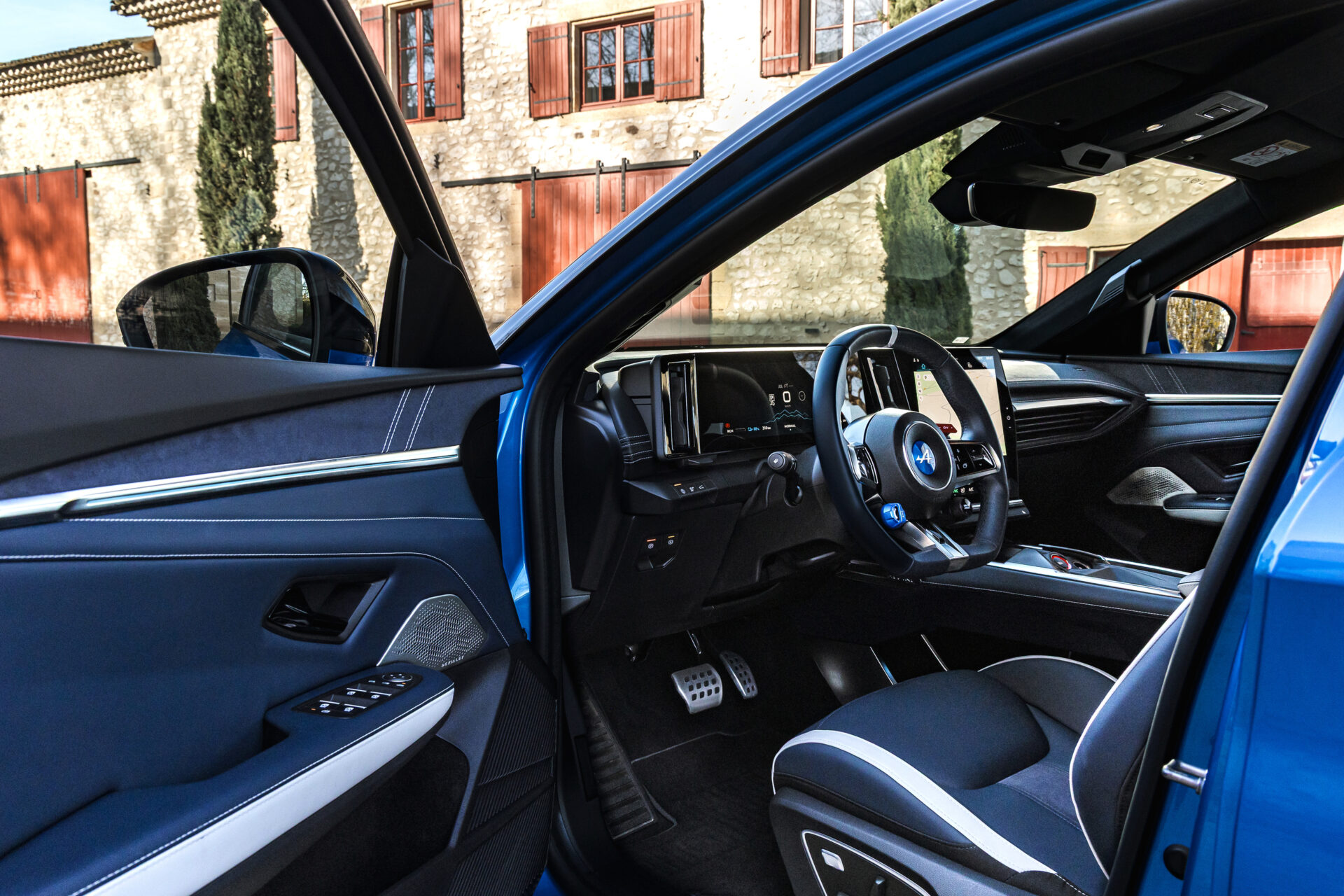
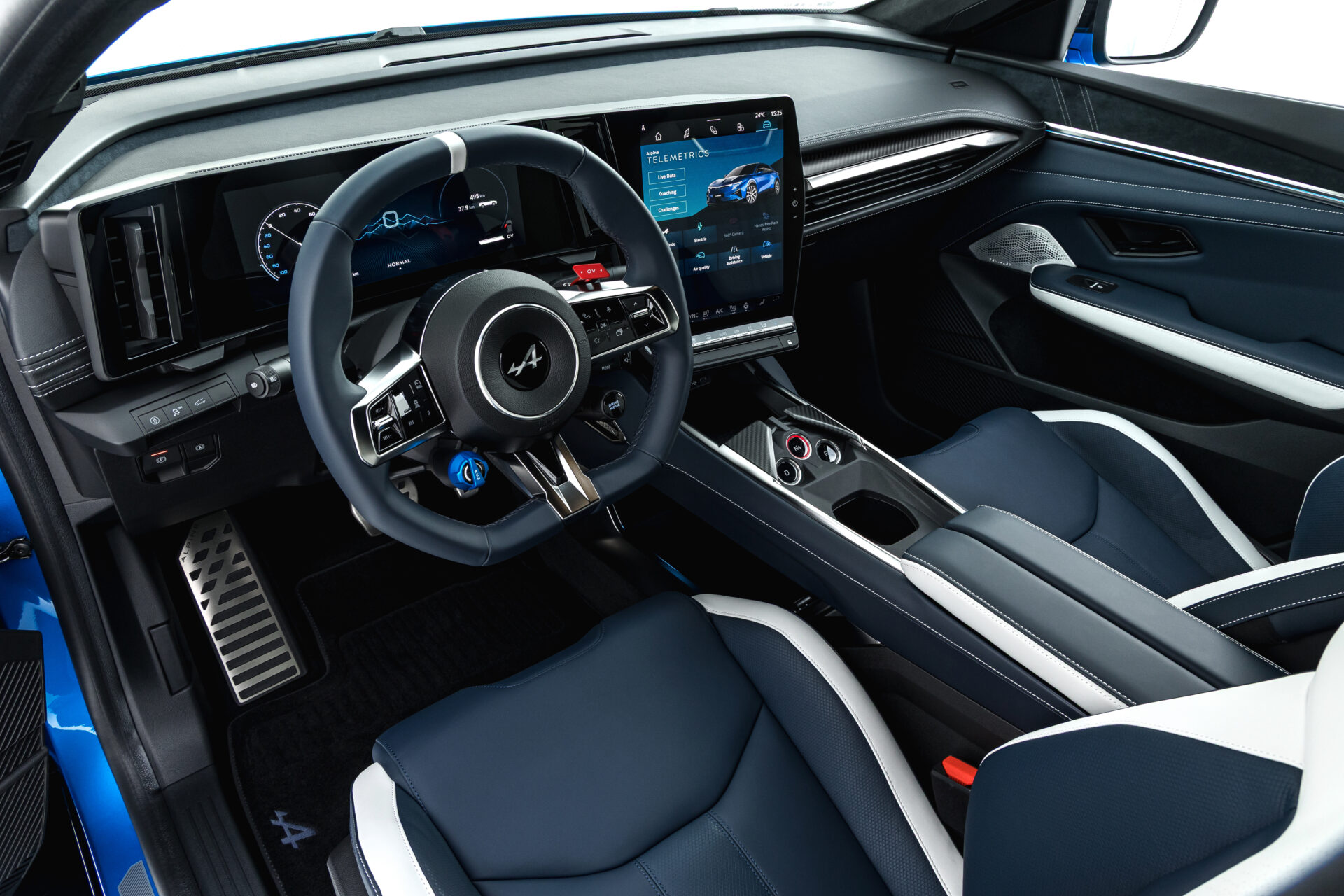
On board, the presentation is sporting and carefully finished. The driving position is angled towards the driver, with two high-definition screens, a 12.3-inch instrument cluster and a 12-inch vertical central screen, running on Android Automotive with integrated Google services.
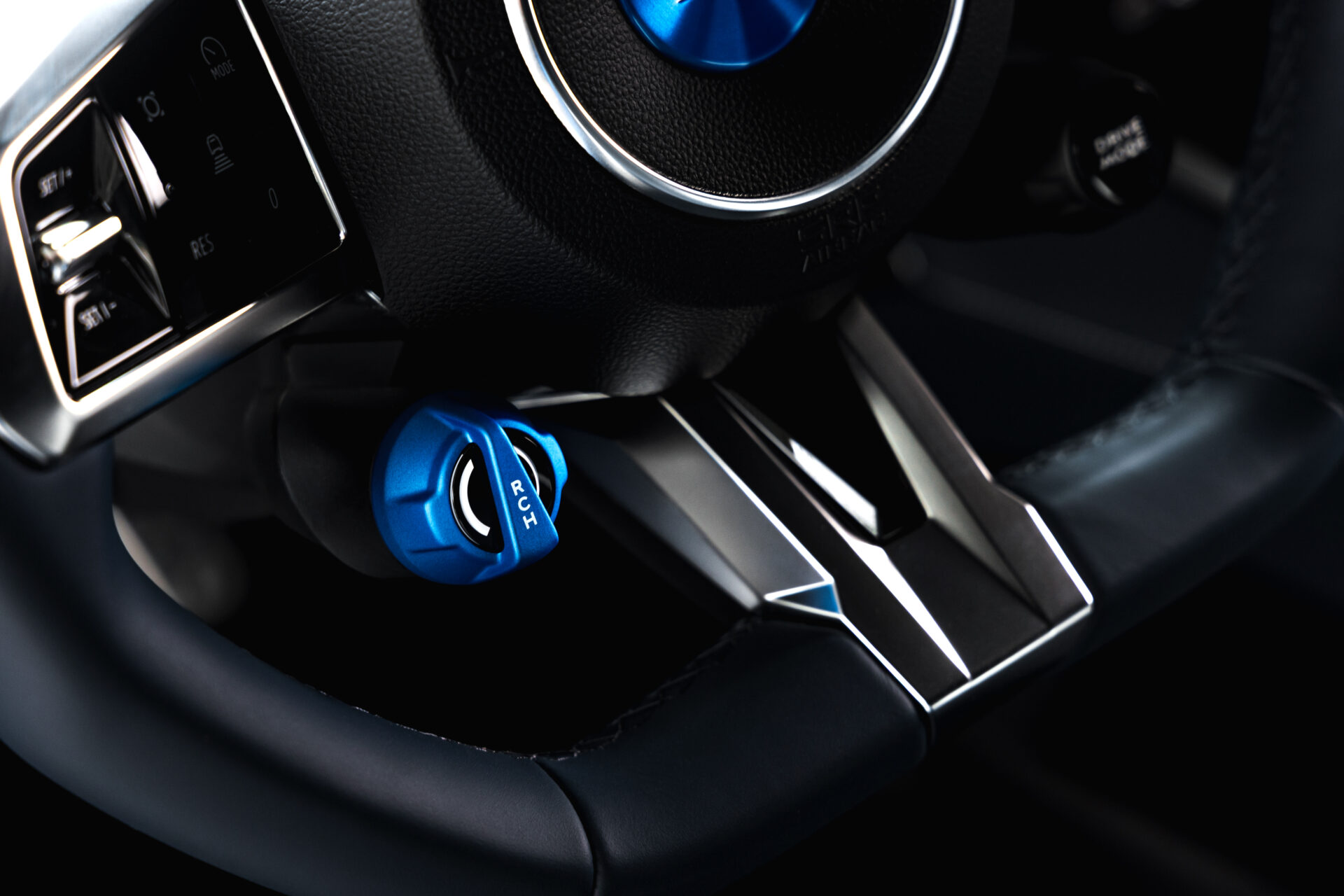
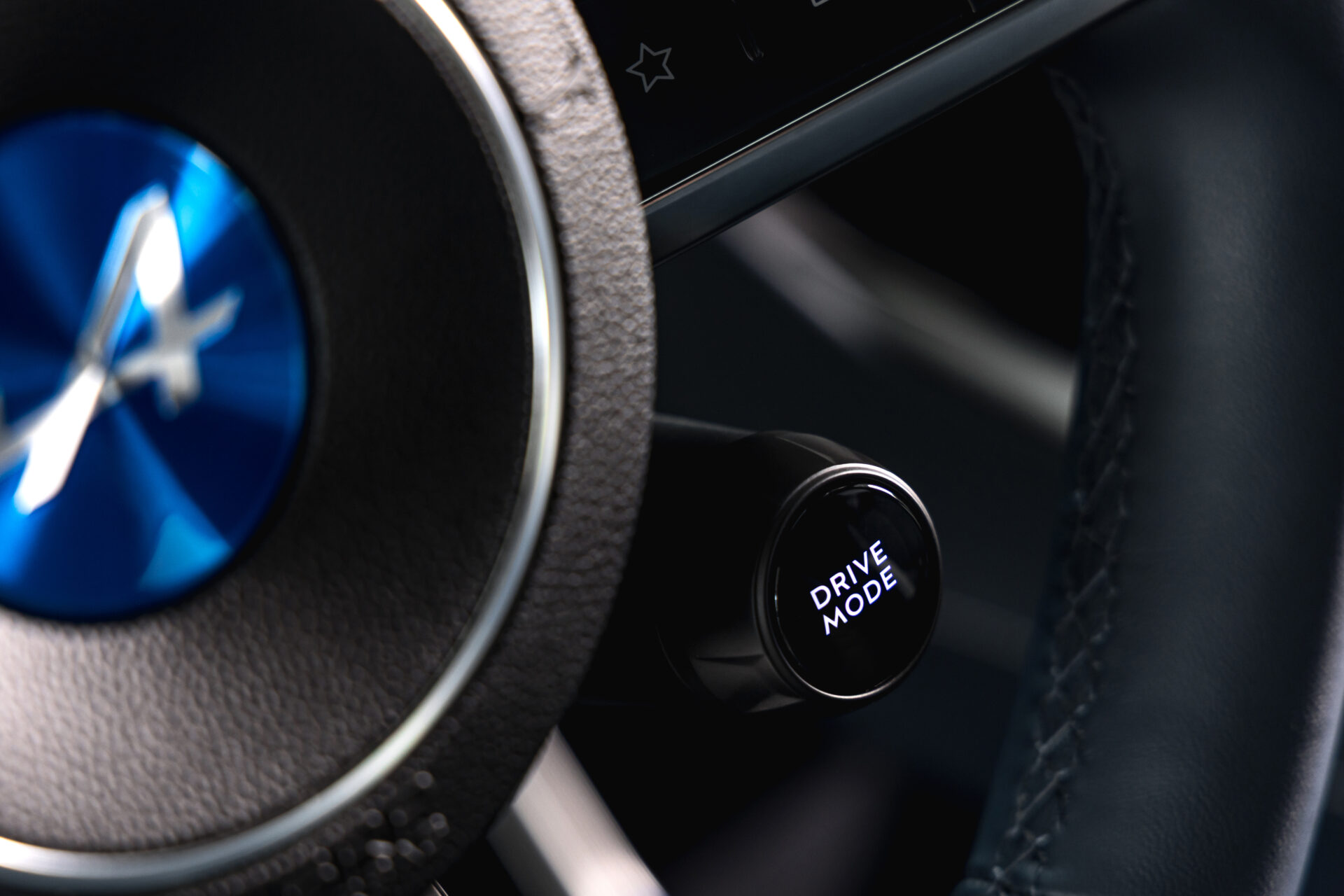
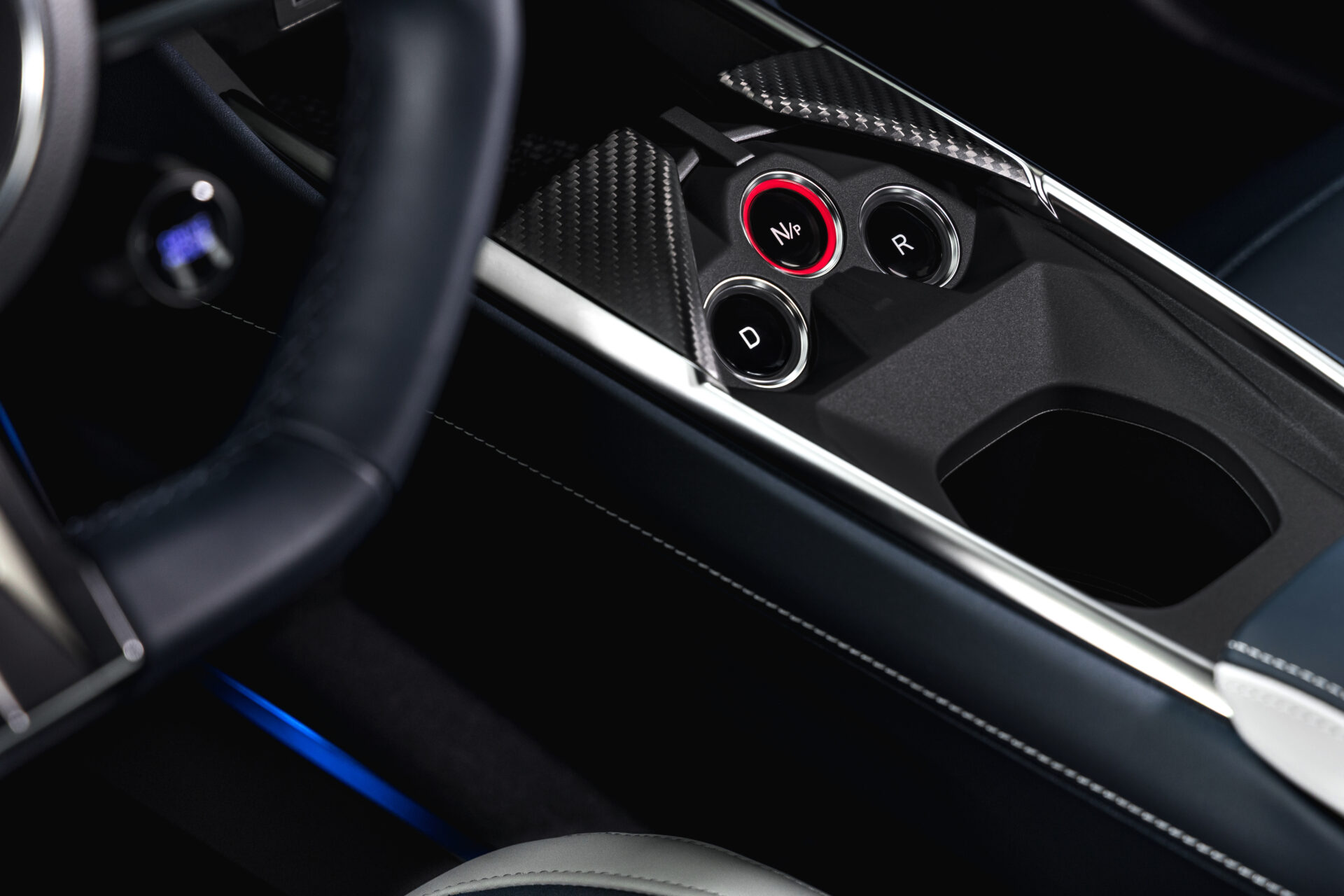
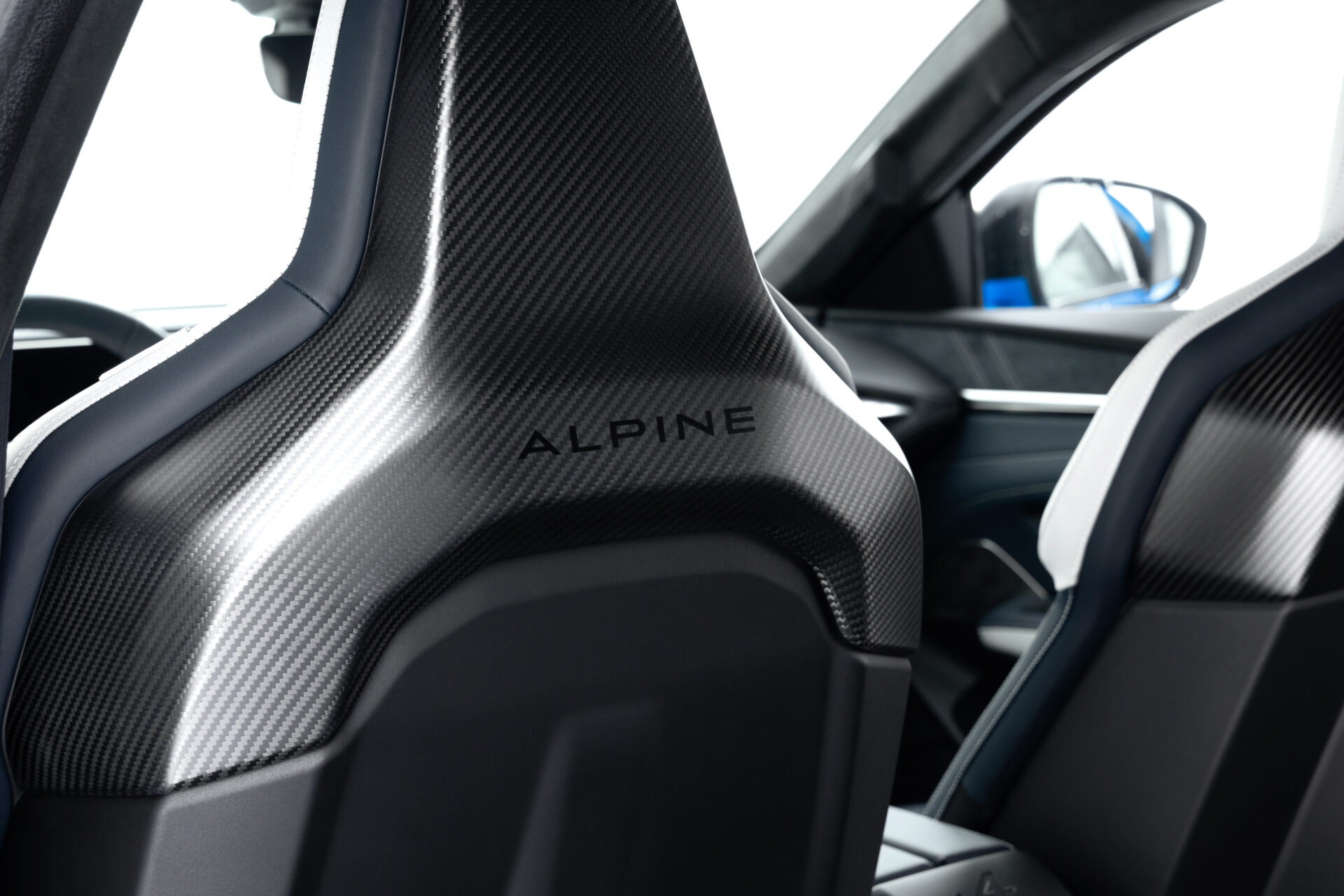
The flat-bottomed steering wheel in blue Nappa leather borrows codes from Formula 1, with a red “OV” button for the Overtake function, a temporary power boost, and a blue “RCH” dial to adjust the level of regeneration up to one-pedal mode. The high centre console recalls that of the A110 and carries the marque’s signature RND transmission controls. The Alpine sports seats are electrically adjustable and heated; the GTS version receives Sabelt bucket seats in Nappa leather with a massage function and offers optional forged carbon shells. The cabin combines Alcantara, leather and aluminium, with a 13-speaker Devialet sound system as standard.
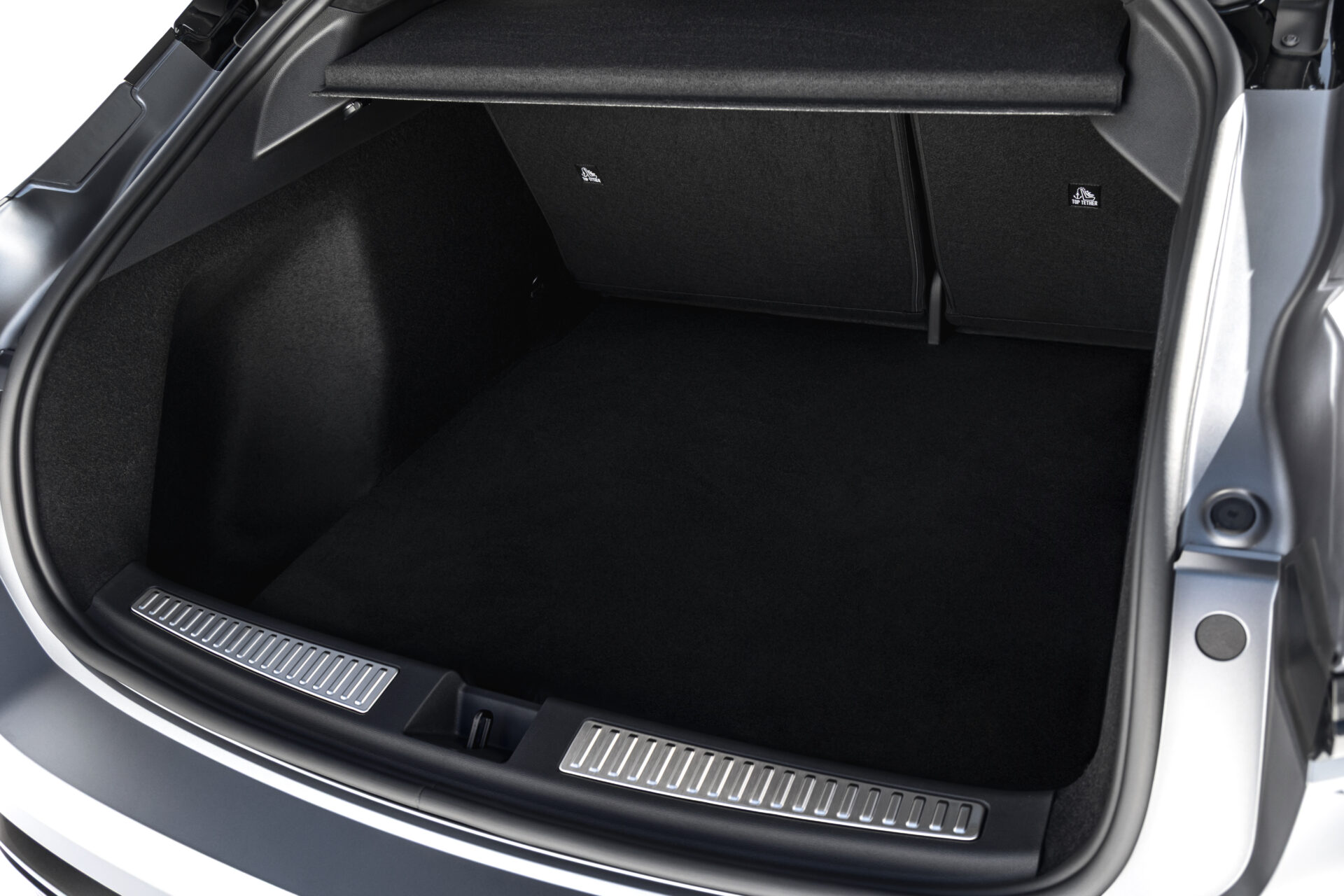
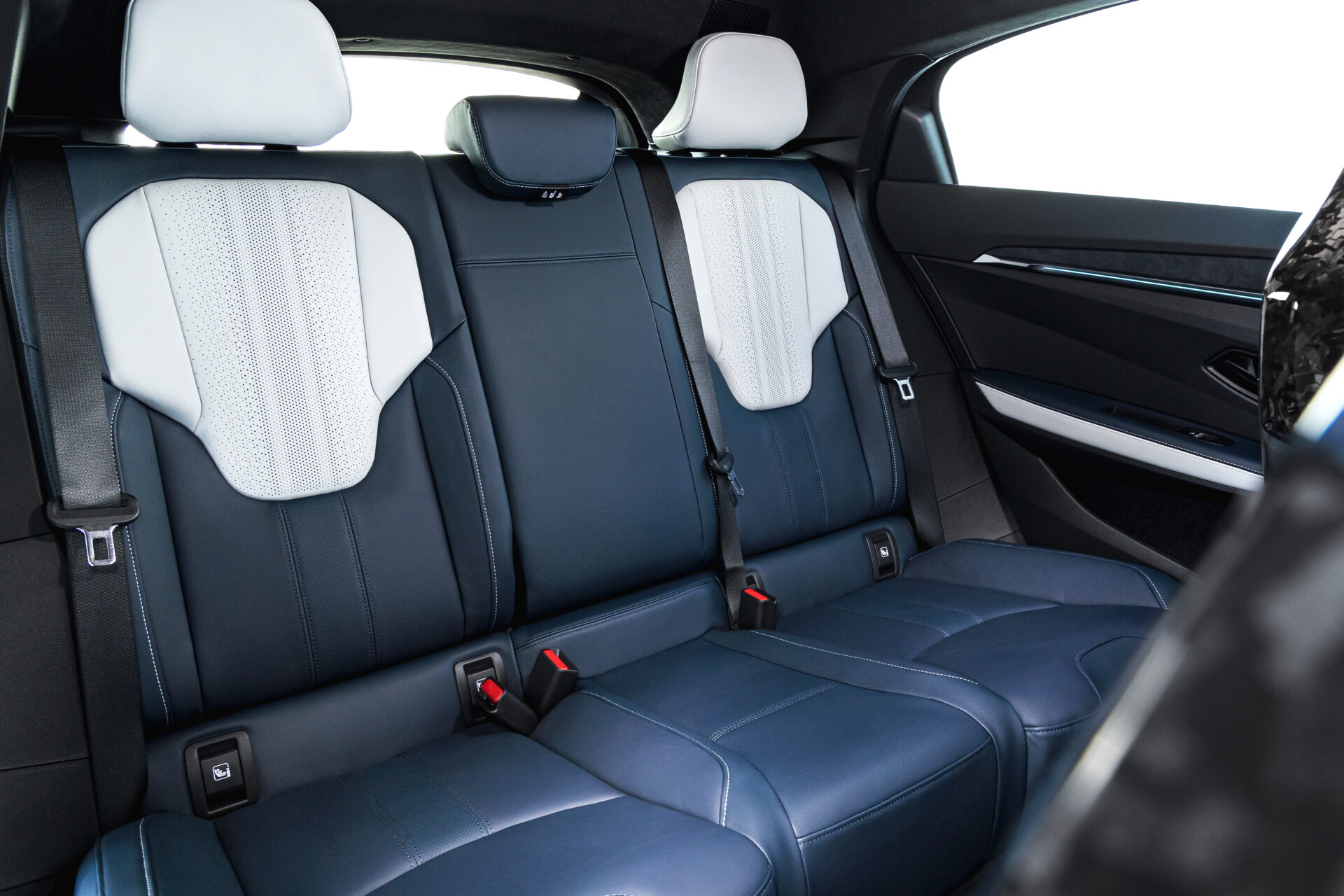
In terms of interior space, the A390 offers five seats and a 532-litre boot, supplemented by an optional double boot floor. The five doors ease access, even if rear-seat space remains modest.
Three motors and a French battery
Beneath the floor sits an 89 kWh usable battery with NMC chemistry, made in France by Verkor. WLTP range reaches up to 555 km on 20-inch wheels and around 520 km on 21-inch wheels. DC charging peaks at 150 kW on the GT and 190 kW on the GTS, the latter going from 15 to 80% in under 25 minutes. A heat pump is standard across the range.
The marque has opted for an architecture with three electric motors, one at the front and two at the rear, each dedicated to a wheel, resulting in permanent all-wheel drive, a first for Alpine. The GT version develops 400 hp (295 kW) and completes 0 to 100 km/h in 4.8 seconds. The GTS raises power to 470 hp (345 kW) and 824 Nm, for 0 to 100 km/h in 3.9 seconds, matching the A110 R’s time. Top speed is limited to 200 km/h on the GT and 220 km/h on the GTS. Weight reaches 2,121 kg, a high figure that the marque says it offsets through its torque vectoring technology.
On the road: torque vectoring in action
The central element is Alpine Active Torque Vectoring. This patented system distributes torque between the two rear wheels within a few milliseconds. In a corner, the outer wheel receives more torque, which encourages turn-in and gives the car agility that is unexpected given its size. According to the marque’s test drivers, the behaviour remains very natural, with the ability to bring the car into a slide without counter-steering.
The steering is direct, and the braking, entrusted to 365 mm discs and six-piston calipers, allows precise modulation. Five driving modes are available: Save, Normal, Sport, Perso and a Track mode. In the absence of mechanical noise, Alpine pipes two sound profiles into the cabin through the Devialet system, “Sport” and “Daily”, linked to the torque delivered by each motor, without seeking to imitate a combustion engine. The running gear uses hydraulic bump stops to reconcile roadholding and everyday ride comfort.
A serious alternative
The A390 displays a strong visual identity and carefully developed road behaviour, underpinned by an active torque vectoring system that genuinely changes the driving experience. Its pricing places it below the German competition. In return, the weight of more than 2.1 tonnes makes itself felt in certain situations, boot volume remains adequate but no more for this format, and range under hard use has yet to be confirmed. Charging capability, on a 400-volt architecture, also lags behind the segment’s recent benchmarks.
The A390 is aimed at drivers seeking a sports car usable every day, without giving up the rear seats or comfort, and represents a French alternative to the electric Porsche Macan. The GT starts at €67,500 and the GTS at €78,000, against around €83,000 for an entry-level Macan.
What we like
- Strong exterior design and preserved Alpine identity
- Effective active torque vectoring that transforms the drive
- Value for money against the German competition
What we don’t like
- Weight above 2.1 tonnes
- Boot volume modest for the size
- Real-world range yet to be confirmed under hard use
Technical specifications
Power: 400 hp (295 kW) on the GT, 470 hp (345 kW) on the GTS
Torque: 661 Nm on the GT, 824 Nm on the GTS
Battery capacity: 89 kWh usable (94 kWh gross)
Energy consumption (WLTP): 18.7 kWh/100 km on the GT, 21.1 kWh/100 km on the GTS
Electric range (WLTP): up to 555 km on the GT (20″), up to 520 km on the GTS (21″)
Acceleration: 0-100 km/h = 4.8 s on the GT, 3.9 s on the GTS
Top speed: 200 km/h on the GT, 220 km/h on the GTS
Weight: 2,121 kg
Base price: from €67,500 (GT), from €78,000 (GTS)