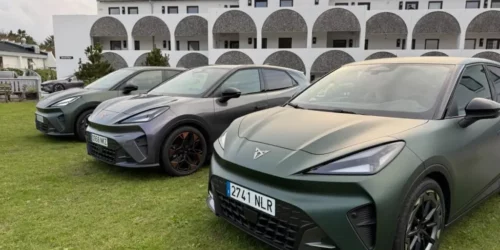
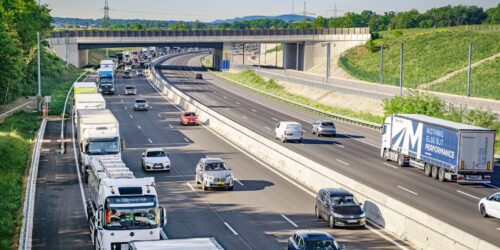
The grant scheme for the purchase of zero-CO2-emission vehicles expired on 30 June 2026. The bill renewing it for a further four years was passed by the Chamber of Deputies on 29 October 2026. It keeps the amounts unchanged, introduces a clear rule for leasing and, from 2027, will allow buyers to receive the grant directly at the dealership.
Good news for anyone thinking of switching to electric: the grants are not going away. The “Klimabonus Mobilitéit” scheme has been extended until 30 June 2030. The Chamber of Deputies passed Bill No. 8725 on 29 October 2026, with 55 votes in favour and 5 abstentions (ADR). It applies retroactively and covers vehicles whose sale, hire or leasing contract is signed between 1 July 2026 and 30 June 2030.
Why extend it? Because the electric car is losing momentum. In 2025 it accounted for around 27 per cent of new registrations, exactly as in 2024. The trend has improved in 2026, however. In the first nine months of the year, more than 30 per cent of new cars registered were fully electric, with a record 36.5 per cent in September. Yet transport represents about 60 per cent of the greenhouse gas emissions attributed to Luxembourg, and the country has committed to cutting its emissions by 55 per cent by 2030 compared with 2005. Without financial support, that will be hard to achieve.
Still €6,000 for fully electric cars
The amounts in force since October 2024 are renewed unchanged. The €6,000 grant remains reserved for the most economical fully electric cars, those consuming no more than 16 kWh/100 km. These are mostly compact models. Regardless of consumption, it is also granted for electric cars with at least seven seats, provided the applicant belongs to a household of at least five people, an exception designed for large families. Electric vans and hydrogen cars are also eligible.
A €3,000 grant is available for cars consuming between 16.1 and 18 kWh/100 km. This ceiling rises to 20 kWh/100 km if the vehicle’s power does not exceed 150 kW, or about 204 bhp. Above these thresholds, there is no grant: large cars and sports models, which account for less than 10 per cent of the electric market, remain excluded from the scheme.
The rest does not change either. The €1,500 grant for used electric cars at least three years old is renewed, as are the grants for electric quadricycles, motorcycles and mopeds (50 per cent of the price excluding VAT, capped at €1,000). Grants for bicycles and electric bicycles (up to €600) remain reserved for households receiving the cost-of-living allowance or the energy grant. The grant for cargo bikes, capped at €1,000, is also maintained.
From 2027, the grant deducted straight from the invoice
The main innovation goes straight to the wallet. From 1 January 2027, there will be no need to pay the grant up front. On the model of what already exists for solar panels, participating dealers will be able to deduct the amount of the grant directly from the final invoice, then claim reimbursement from the State. Gone is the wait between buying the vehicle and receiving the grant. This option will be reserved for private individuals buying a new car or van. It will run alongside the standard procedure via myGuichet, with the amount of the grant identical in both cases. Interested dealers have been able to sign up to a register kept by the AEV since 1 October 2026. For the bill’s rapporteur, Paul Galles (CSV), the procedure “aims to reduce the cash outlay, particularly for households with limited financial means”.
Following the opinion of the Council of State, a government amendment of 24 June 2026 also made two useful adjustments. The vehicle’s first registration may take place up to 30 June 2031, which allows some leeway in the event of delivery delays. And the period during which the administration may check the information provided is reduced from ten to five years.
Leasing: the grant must go to the driver, in black and white
Leasing is the subject of another important change. A quick reminder: under a leasing contract, the owner of the vehicle is not the driver but the leasing company. The grant may be claimed by either party, provided the other waives it. Until now, there was no guarantee in writing that a grant received by the leasing company would actually benefit the customer. That has now changed. The new text provides that “in the case of leasing or hire, where the grant is claimed by the owner of the vehicle, it is passed on in full to the lessee or hirer by means of a reduction in the hire or leasing price. This full transfer of the grant is set out unambiguously in the hire or leasing contract”.
In practical terms, if the leasing company receives the grant, it must pass it on in full to the customer as a reduction in the monthly instalment, and the contract must clearly state the amount of the grant and its transfer. According to the Environment Agency (AEV), this obligation applies to all leasing contracts concluded since 1 July 2026, including for used vehicles. A practical tip follows: before signing, check that the grant appears on your contract.
The duration conditions, for their part, do not change. The leasing or hire contract must run for at least 36 months for a new vehicle and 24 months for a used one, otherwise the grant is not payable. If the contract ends before these terms, the grant must be repaid, unless the driver buys the vehicle by exercising the purchase option.
How much does it cost?
The cost of the scheme, funded by the climate and energy fund, is estimated at €32 million for the second half of 2026 (out of an overall budget of €64 million for the year), then €74 million in 2027, €84 million in 2028, €94 million in 2029 and €52 million for the first half of 2030, based on an electric market share rising from 30 per cent in 2026 to 50 per cent in 2030.
Tags