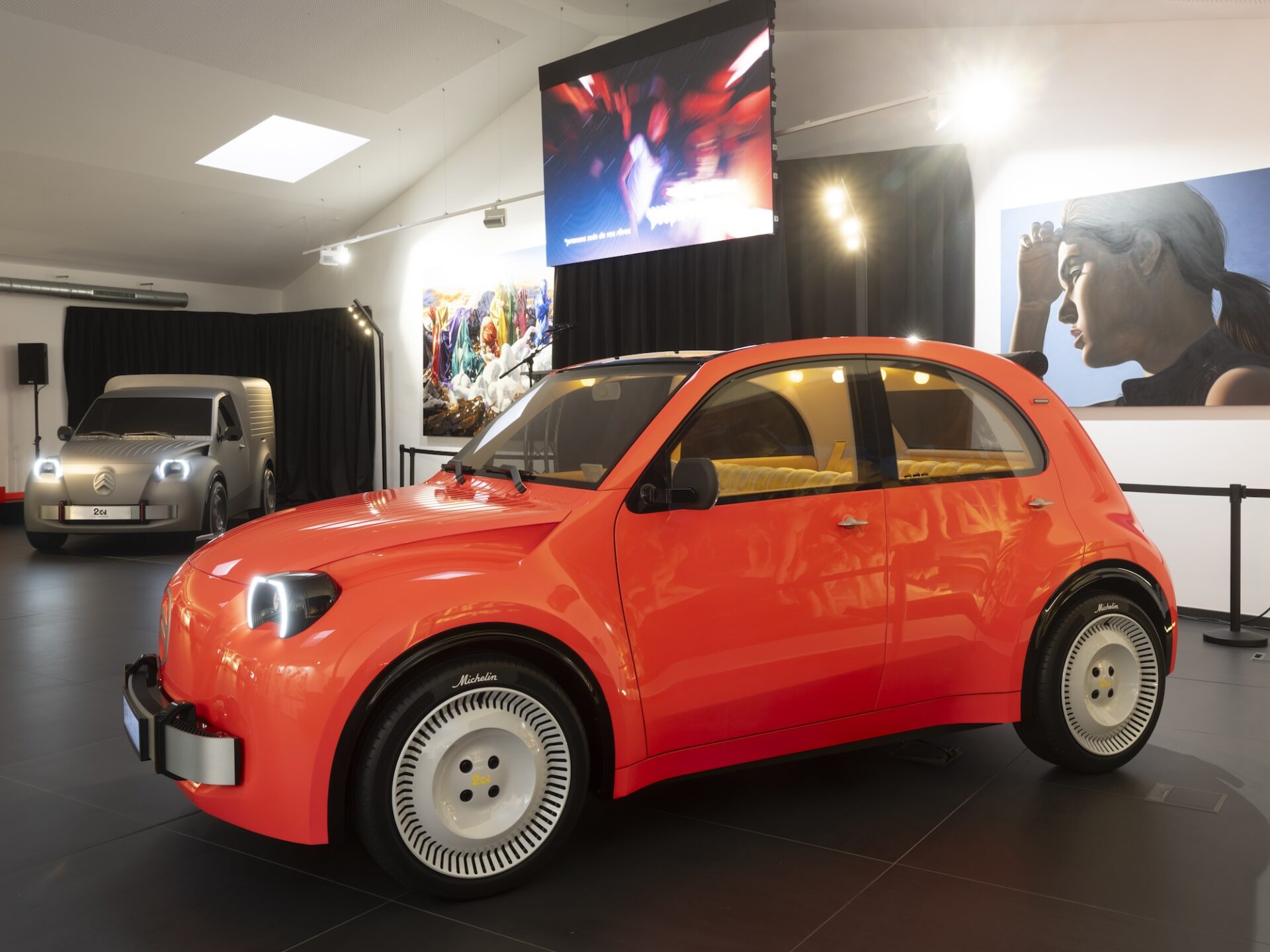
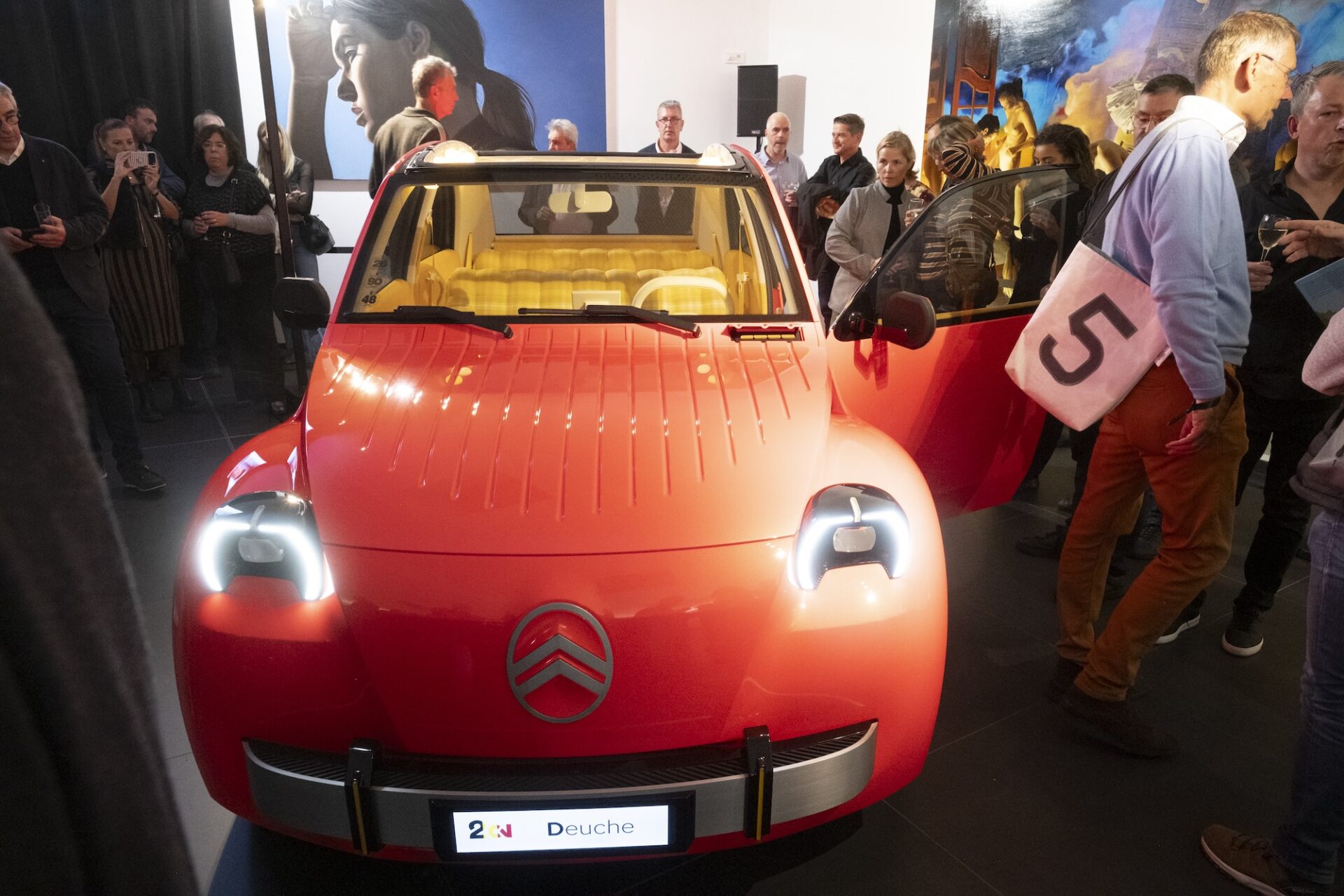
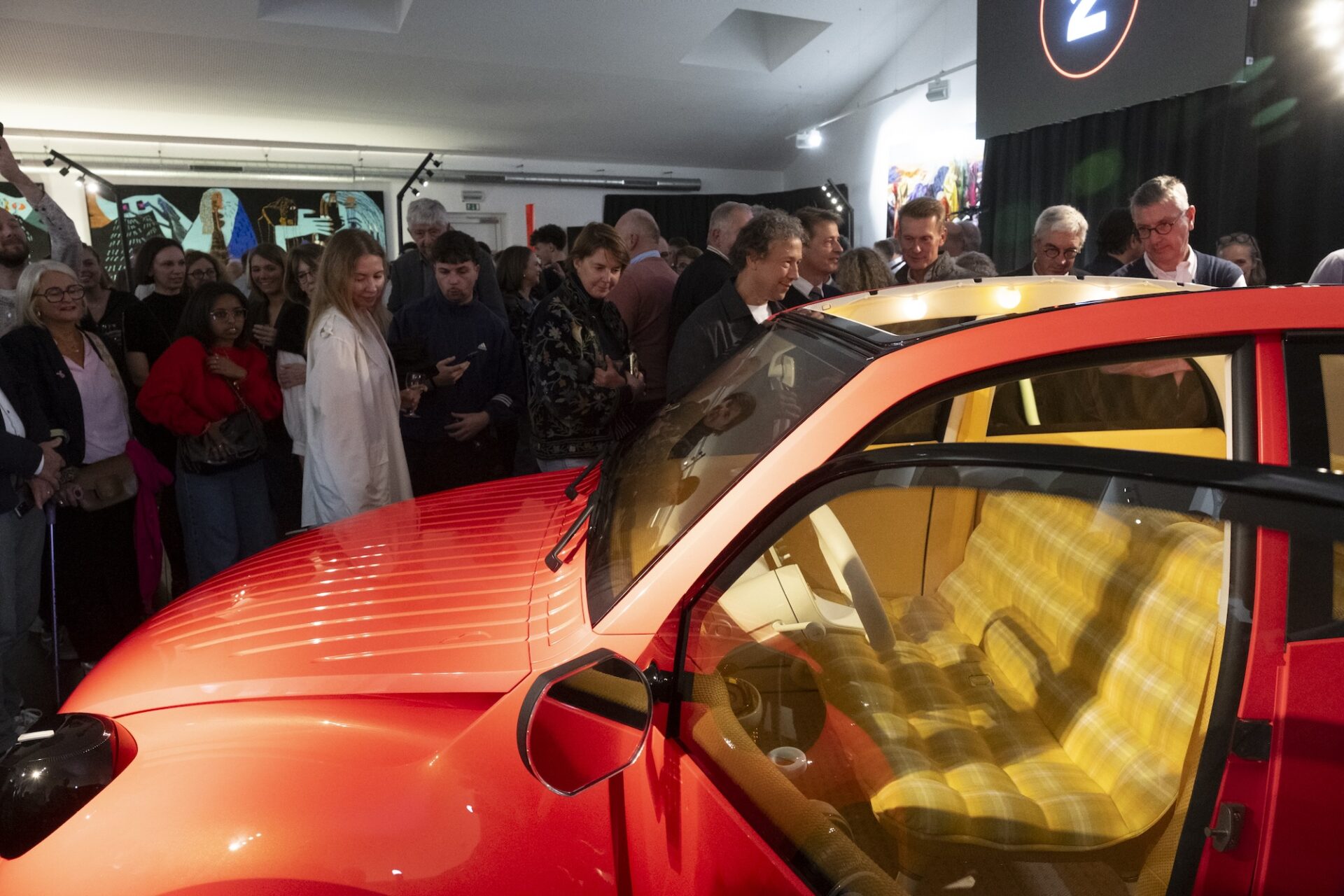
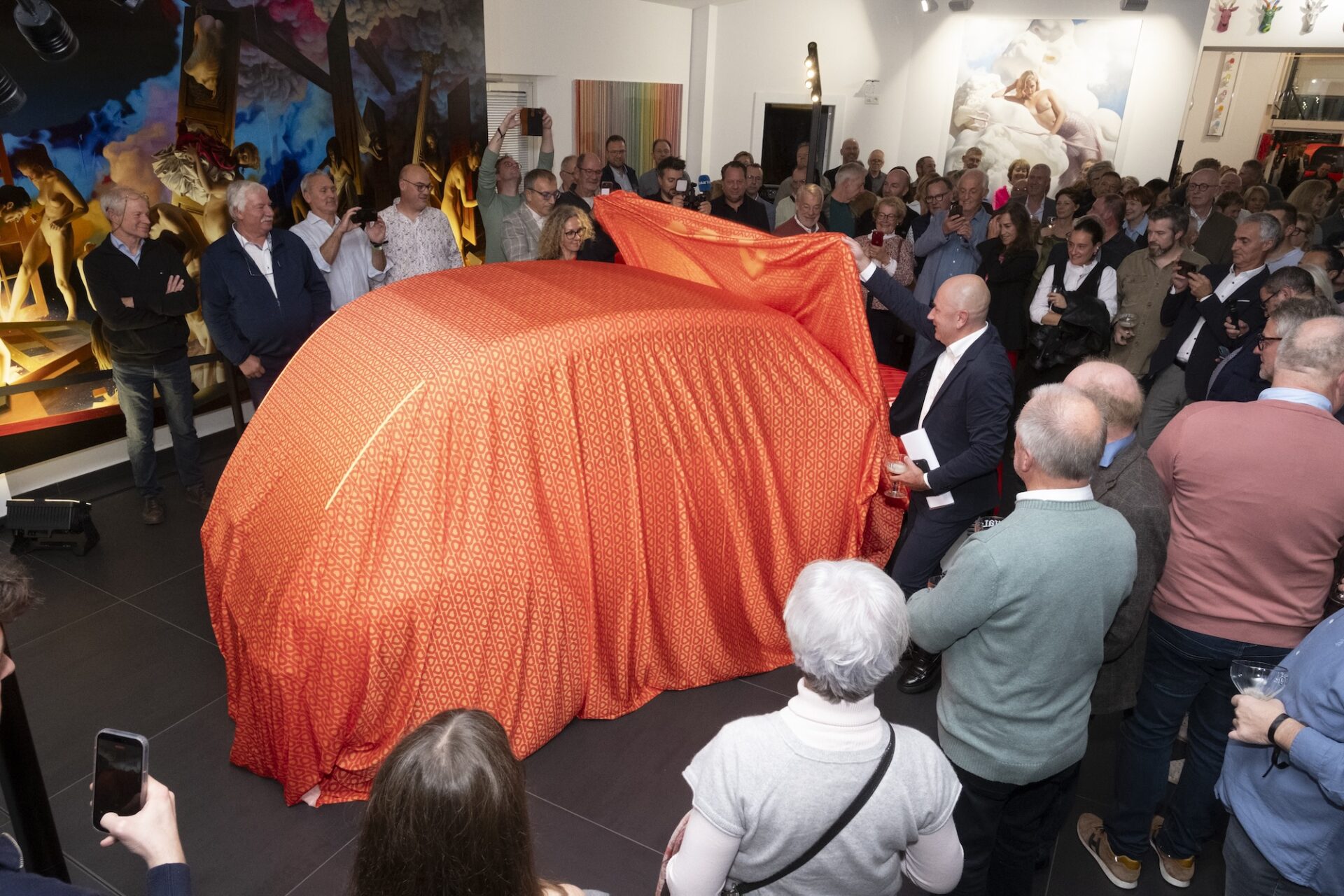
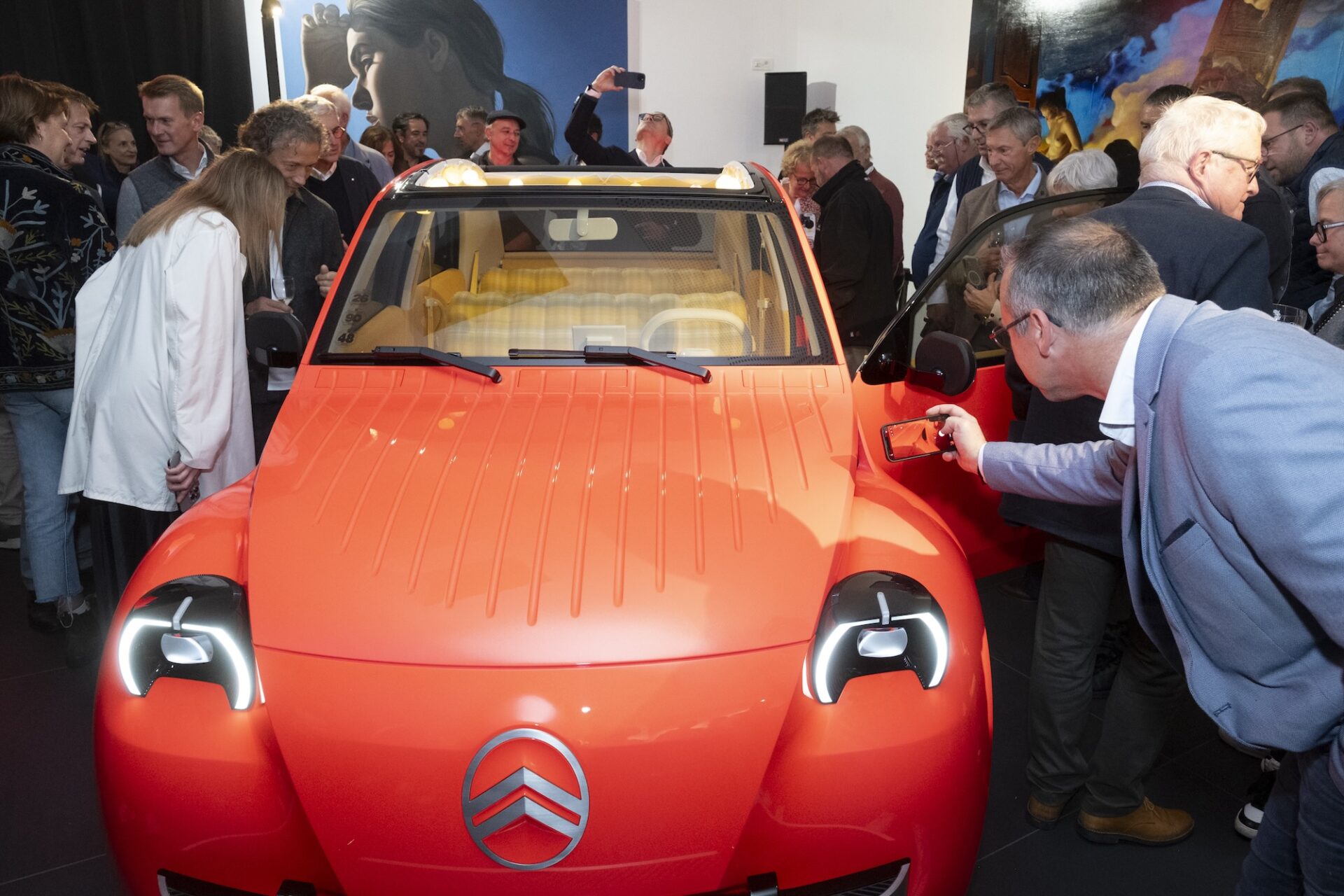
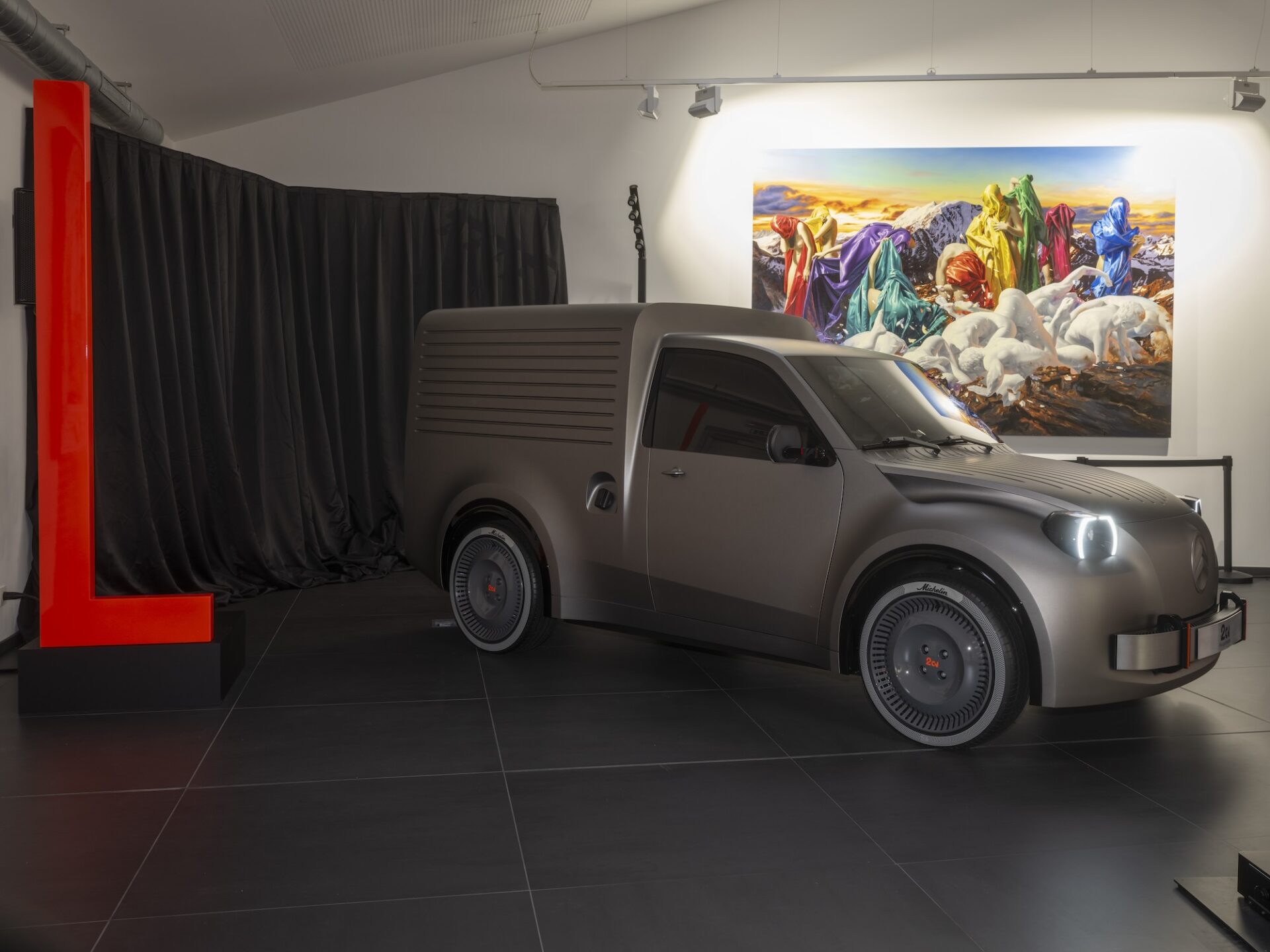
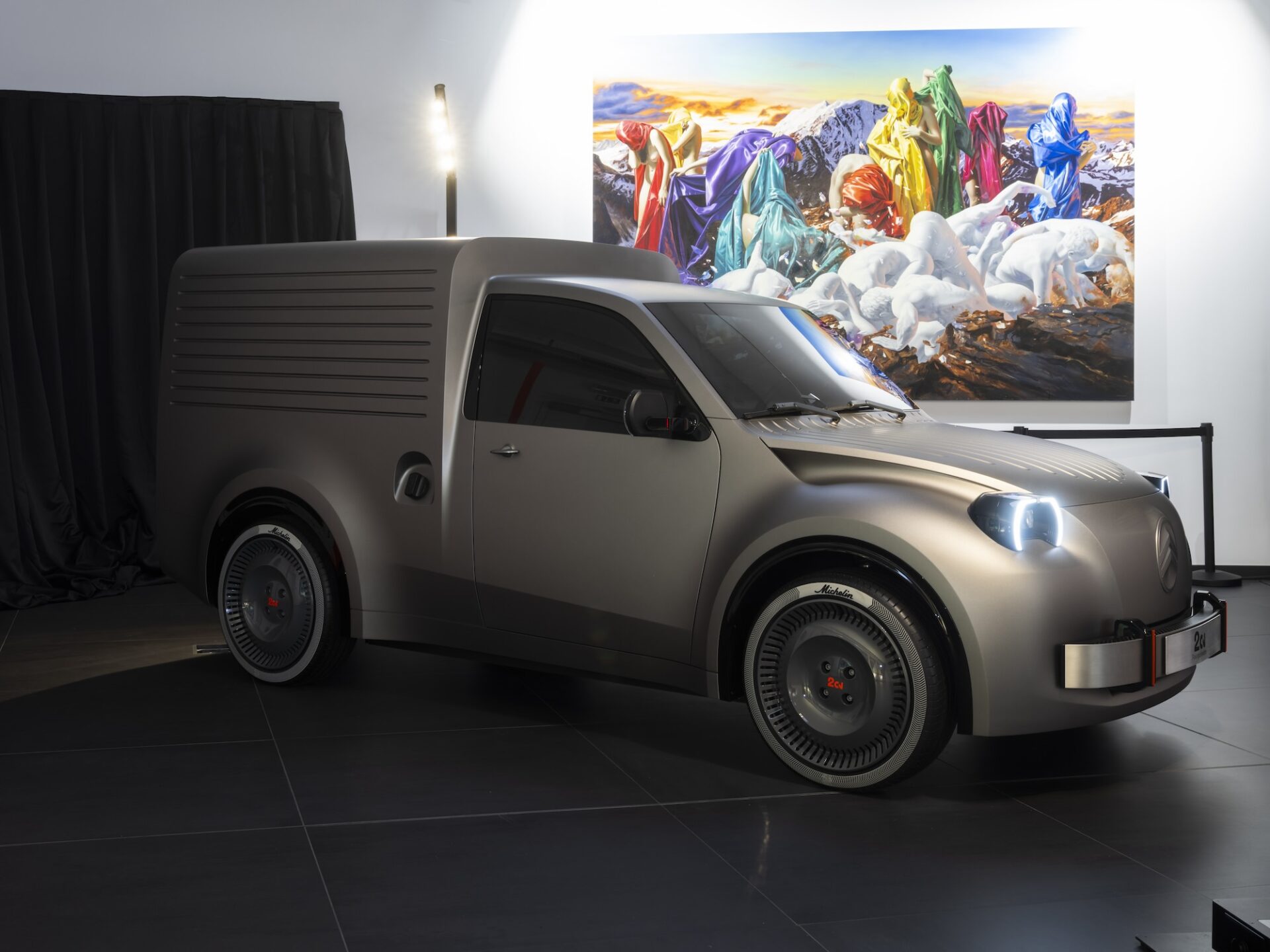
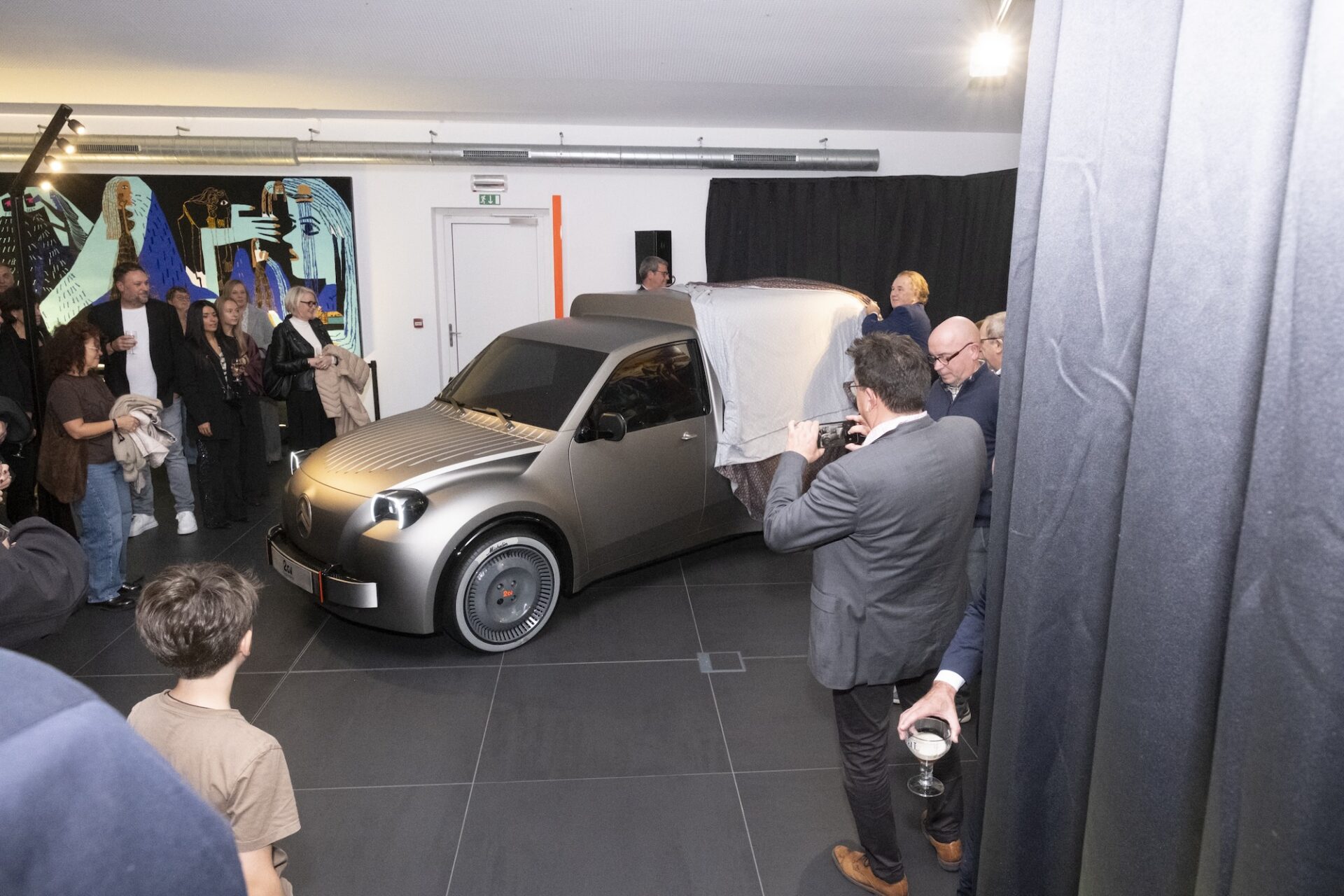
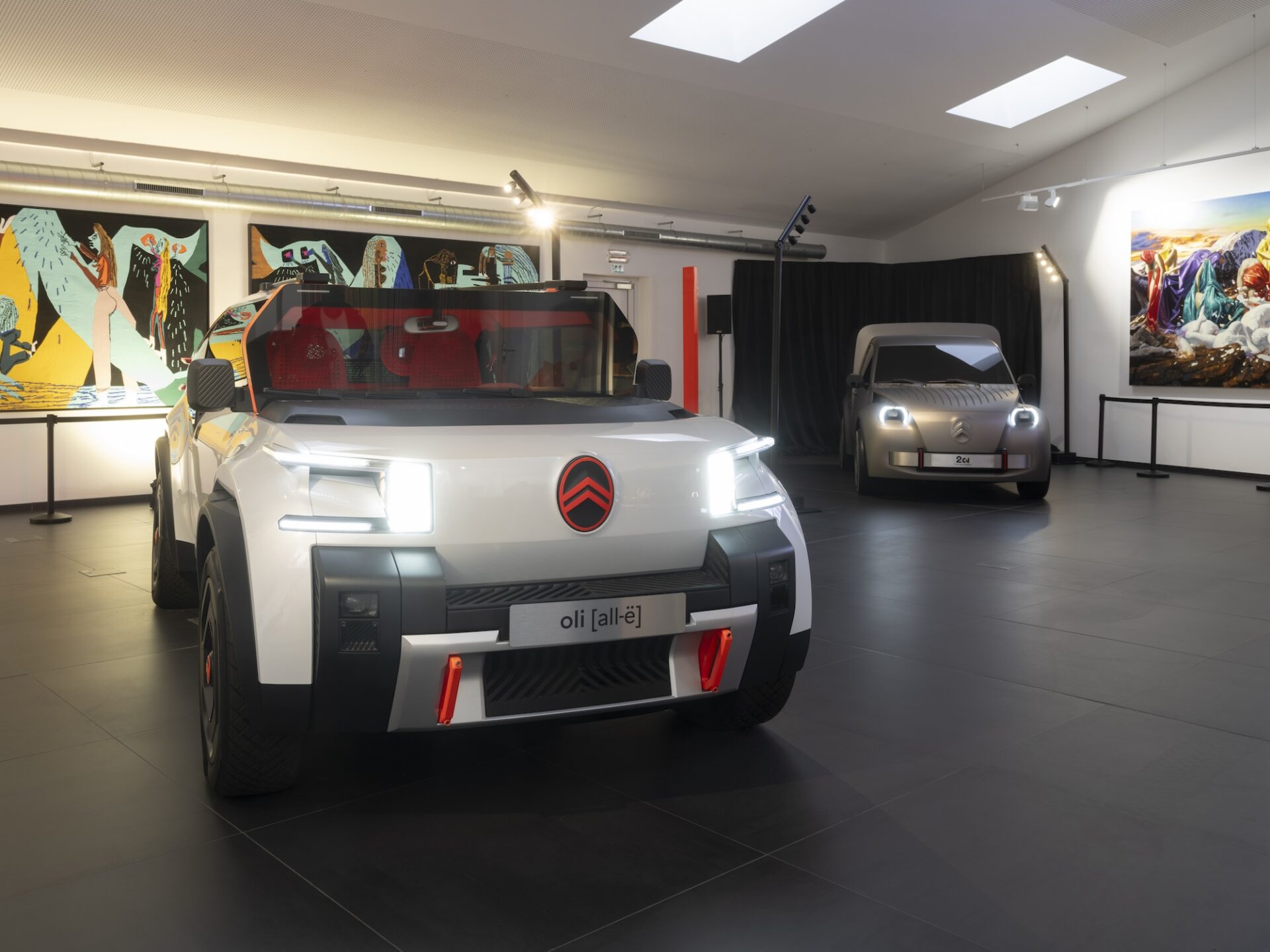
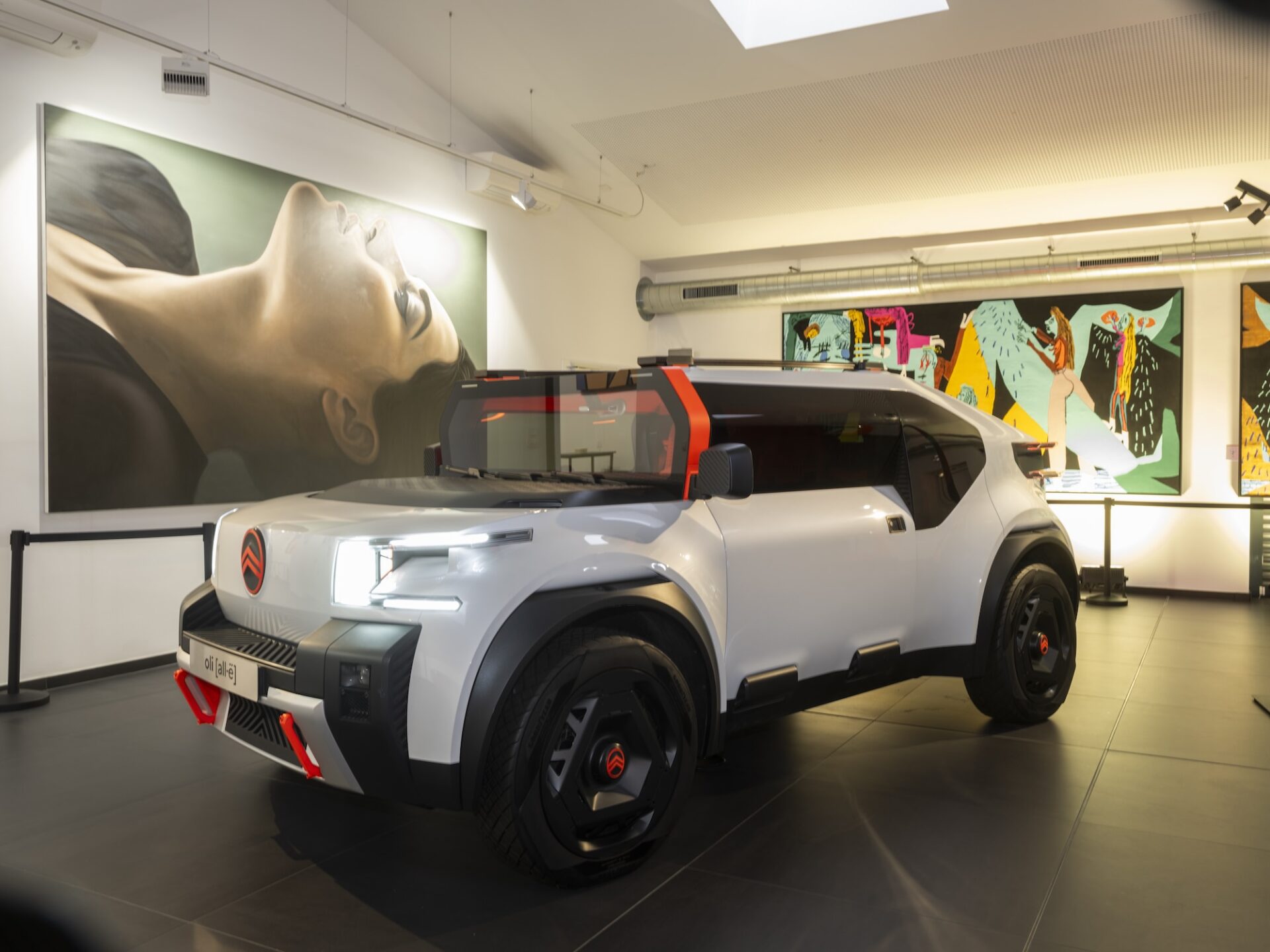
A few days after its debut at the Paris Motor Show, the new Citroën 2CV spent a weekend at Ice-Watch in Bastogne. As a saloon and as a van, the brightly coloured electric Deux Chevaux caused quite a stir.
‘You see, it makes you feel like a kid!’ says a beaming Pierre Leclercq, working the little air vent beneath the windscreen of the car that he and his Citroën design teams created, a 2CV for the 21st century. Unveiled at the Paris Motor Show on 11 October 2026, the new 2CV then travelled from the Porte de Versailles exhibition centre to McAuliffe Square in Bastogne, where it was on show over the weekend of 23 to 25 October.
Never before has a concept car made it so quickly from its Paris debut to the heart of the Ardennes. That is largely because Pierre Leclercq, design director at the double-chevron brand, was born and raised here.
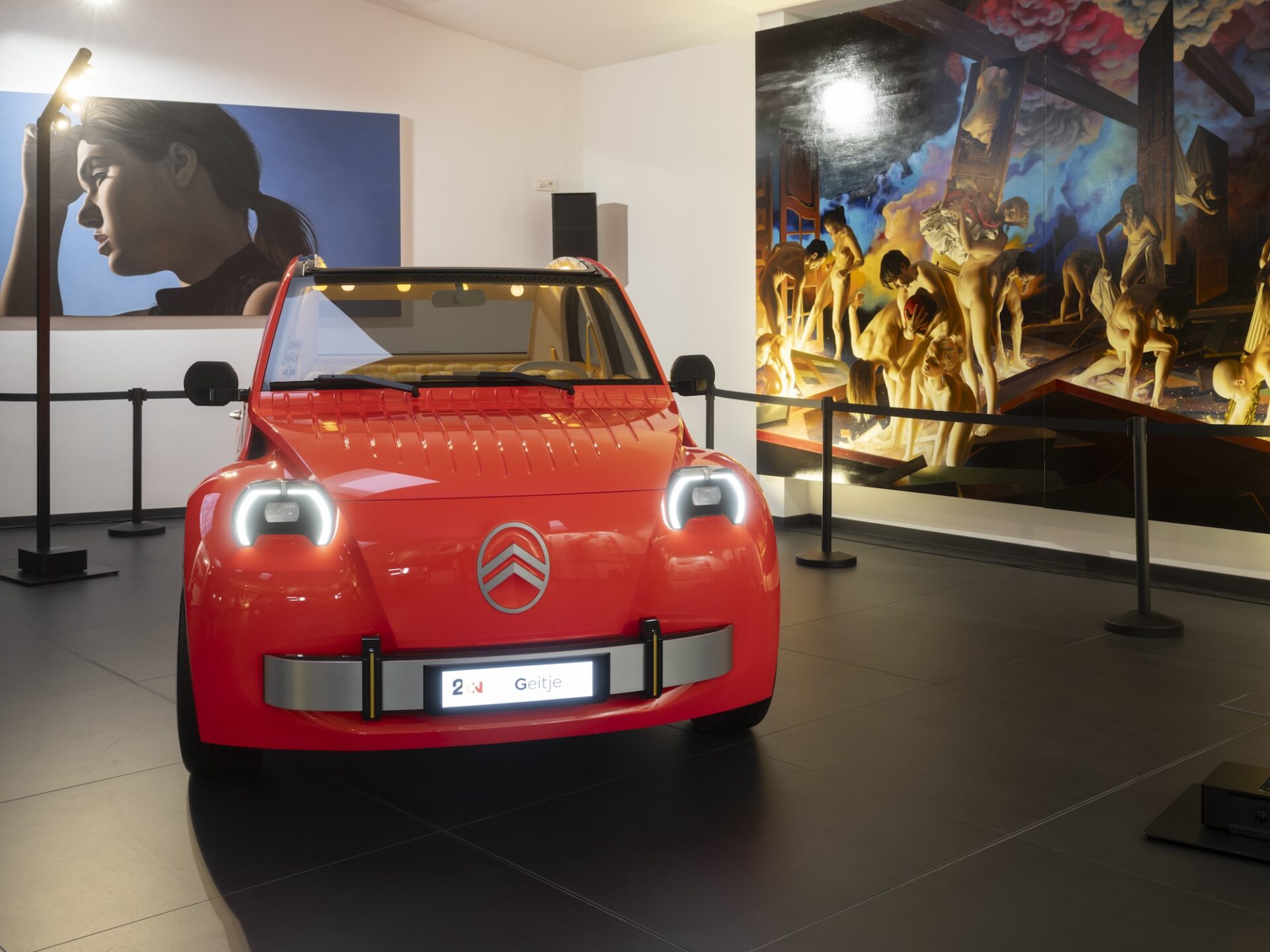
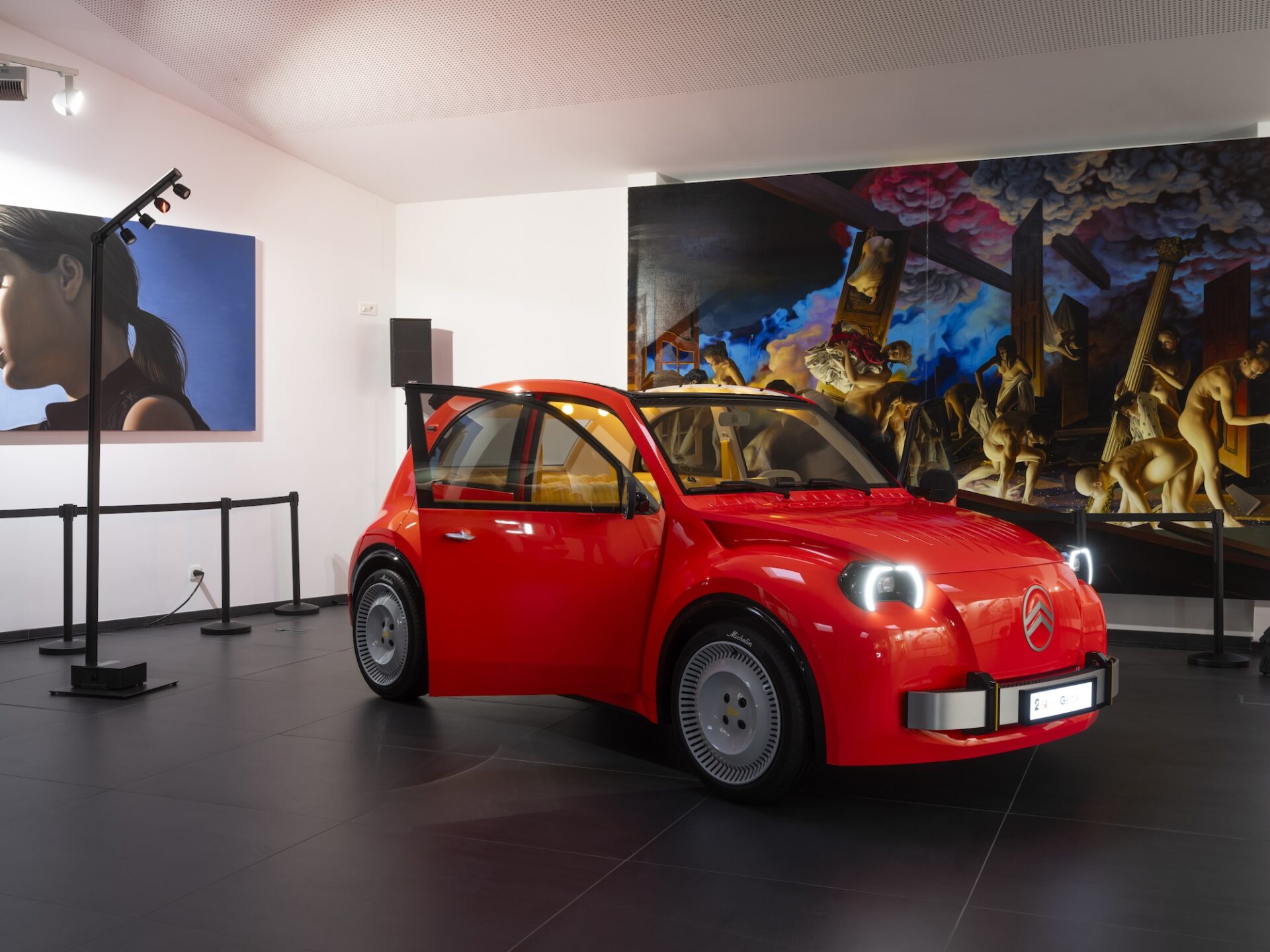
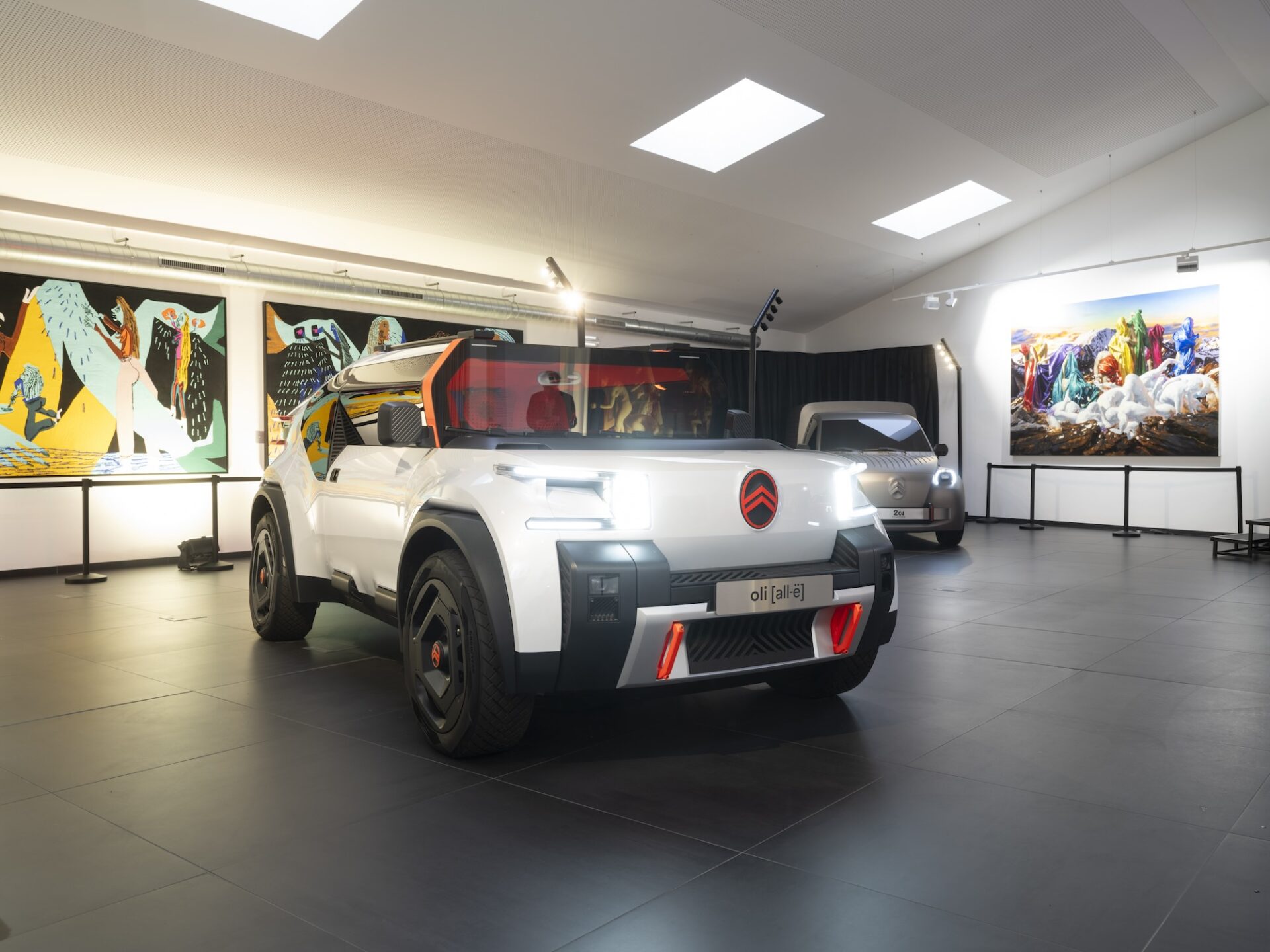
Together with another Bastogne native, Jean-Pierre Lutgen, managing director of watchmaker Ice-Watch, he staged a superb presentation, with the cars displayed among large-scale works of contemporary art. Cars and paintings engaged in an unusual and striking visual dialogue, each showing the other off to advantage.
A tiny little car
‘A year and a half ago, we had a bit of spare time in the studio, so I floated the idea of making this car and putting it into production,’ explains Pierre Leclercq. The Deux Chevaux’s roots go back to before the Second World War, when the TPV project, short for ‘toute petite voiture’ or ‘tiny little car’, was launched in 1936. ‘We started from a TPV model to design a compact car, 10cm shorter than the original 2CV.’
On the polished concrete, against white walls covered in vibrant, colourful artworks, the new 2CV certainly looked the part. In its Infra Red livery, an orange-red with a hint of pink, it really stood out. Opposite stood a sculpture of a wild boar in the same shades, as if in reply. ‘I’d like this to be the launch colour,’ says Pierre Leclercq, who is keen for his creation not to go unnoticed in today’s rather drab automotive landscape.
The original belongs to a very different era, yet ‘the silhouette had to be recognisable: the long, sloping bonnet, the floating roof whose canvas runs down to the rear bumper’. It is all there in the little newcomer. The concept car came together quickly, thanks in particular to the constant support of Citroën CEO Xavier Chardon and Stellantis group management.
Sloping and ribbed
Even so, ‘people know the 2CV’, and that source of inspiration could not be betrayed, even while looking ahead. Looking ahead, quite literally, was the hard part. ‘The front end gave us a real headache,’ admits the Bastogne native. ‘As on the original, the V-shaped bonnet goes right down and is split into two parts. We set the round headlights into the wings, which are cut away at the top.’ The lights now use LED technology. The bonnet itself has ribs, also inspired by the original TPV.
The mechanicals are, of course, a far cry from the small air-cooled two-cylinder petrol engine of old. For this small battery-electric car, the designers experimented with the platforms of the electric Citroën C3 and Fiat 600. To cope with the power, and above all the torque, of today’s electric drivetrain, the tyres have grown to a respectable 18 inches.
Pierre Leclercq points to the whitewall tyres, decorated with chevrons and the Michelin name in a retro style. ‘For this car, we reached an agreement with the supplier so we could use the old logo.’ The free-standing bumpers are retro too, whereas these days they are built into the front and rear of the bodywork. ‘We’ve forgotten that they were there to protect the car,’ the designer points out. ‘Today, at the slightest knock, it’s straight to the paint shop or the body shop. With our proper bumpers, Parisians will love us, and so will the insurance companies!’
Less is more
Getting inside is easy once the canvas roof is rolled back, and ‘apart from the metal structure, there’s nothing there’, says Pierre Leclercq. ‘That’s exactly what we wanted. The less you put in, the better! That way, you can have fun with colour.’ Hence the yellow and white tartan of the removable bench seats, and the single-spoke steering wheel and gear selector (here forward and reverse only), finished in beige like the Bakelite of old.
The little car is full of playful details, such as a tortoise symbol on the brake pedal and a hare on the accelerator. On a small screen, the infotainment system comes to life with comic-strip images by Liège artist Jean-Luc Delvaux, ‘something I’d like to see in production’. Like the bench seat, the Radioën sound unit and the small basket are removable. All that’s missing is a chequered tablecloth for a déjeuner sur l’herbe…
It almost went without saying that where there is a 2CV, there is a van. It was the surprise of the day on the morning of Monday 11 October at the Paris show, where the commercial version had not been announced. ‘We keep the car up to the door and put a box on the back, with the largest possible opening,’ sums up Pierre Leclercq. At the packed launch evening in Bastogne on Friday 23 October, ‘if I’d had order forms, I’d have sold hundreds!’
A very small price
The 2CV is one of the most collected classic cars, and one of the most widely used day to day. It may not be a universal yardstick, but in Bastogne a large collectors’ club gave its blessing to this update of a model that became legendary almost in spite of itself. At 3.76 metres long, and therefore within the EU’s E-Car rules, the 2026 2CV should weigh no more than a tonne (a featherweight for a battery-electric car) and offer a range of 150km, enough for everyday local driving.
As for customers, ‘we’re going after people who are nostalgic for the 2CV, the toughest audience of all,’ says Pierre Leclercq, ‘and also young people aged 18 to 20.’ Urban use seems a given, but the Bastogne native has ‘every ambition, in the countryside, for second homes and so on’. Due on sale in 2028, the 21st-century 2CV has more than charm on its side. It also has price. ‘We’ll start at €15,000.’ That makes it a car true to its founding principles, a car for the people that is ingenious, light and cheerful.
Pierre Leclercq, a Bastogne native
Born in Bastogne in 1972, just a stone’s throw from the Grand Duchy, Pierre Leclercq graduated from the ArtCenter College of Design in Pasadena, California, in 1998. He began his career at Ghia, Ford’s design studio in Italy, before joining BMW Group in 2000. There he worked for BMW, MINI and Rolls-Royce, then in 2011 took charge of design at BMW M, the brand’s high-performance division. His career then took an international turn, with Great Wall Motors in China from 2013 and Kia in South Korea from 2017. On 1 November 2018, he became head of design at Citroën. Under his leadership came the new C3, C3 Aircross and Basalt, the new Ami, the C4 and C4 X, the new C5 Aircross, the OLI and ELO concepts and, finally, the 2CV saloon and van concepts unveiled at the 2026 Paris Motor Show. A few weeks later, on 2 November 2026, he left Citroën to lead design at Opel and Vauxhall, two other Stellantis brands.