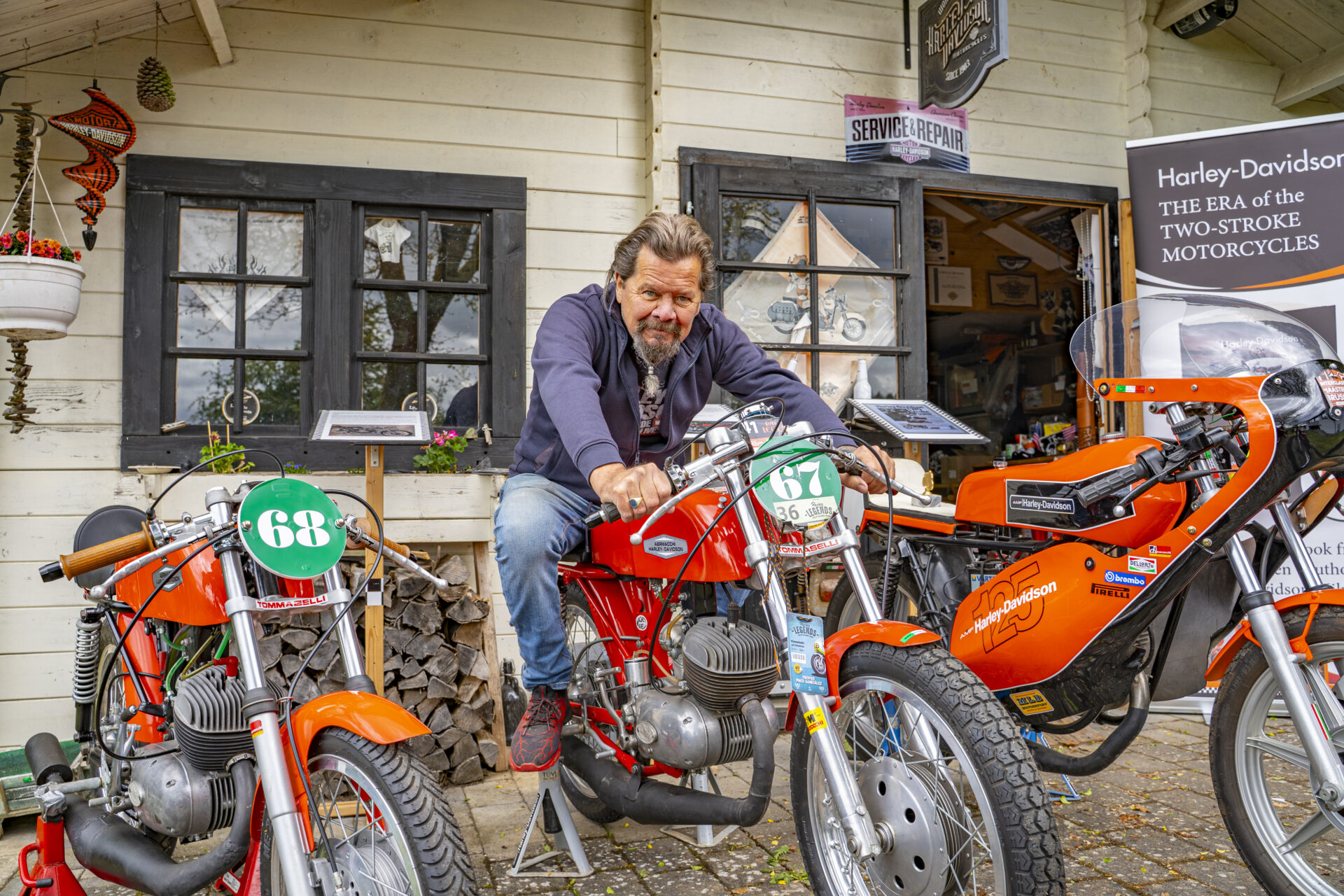
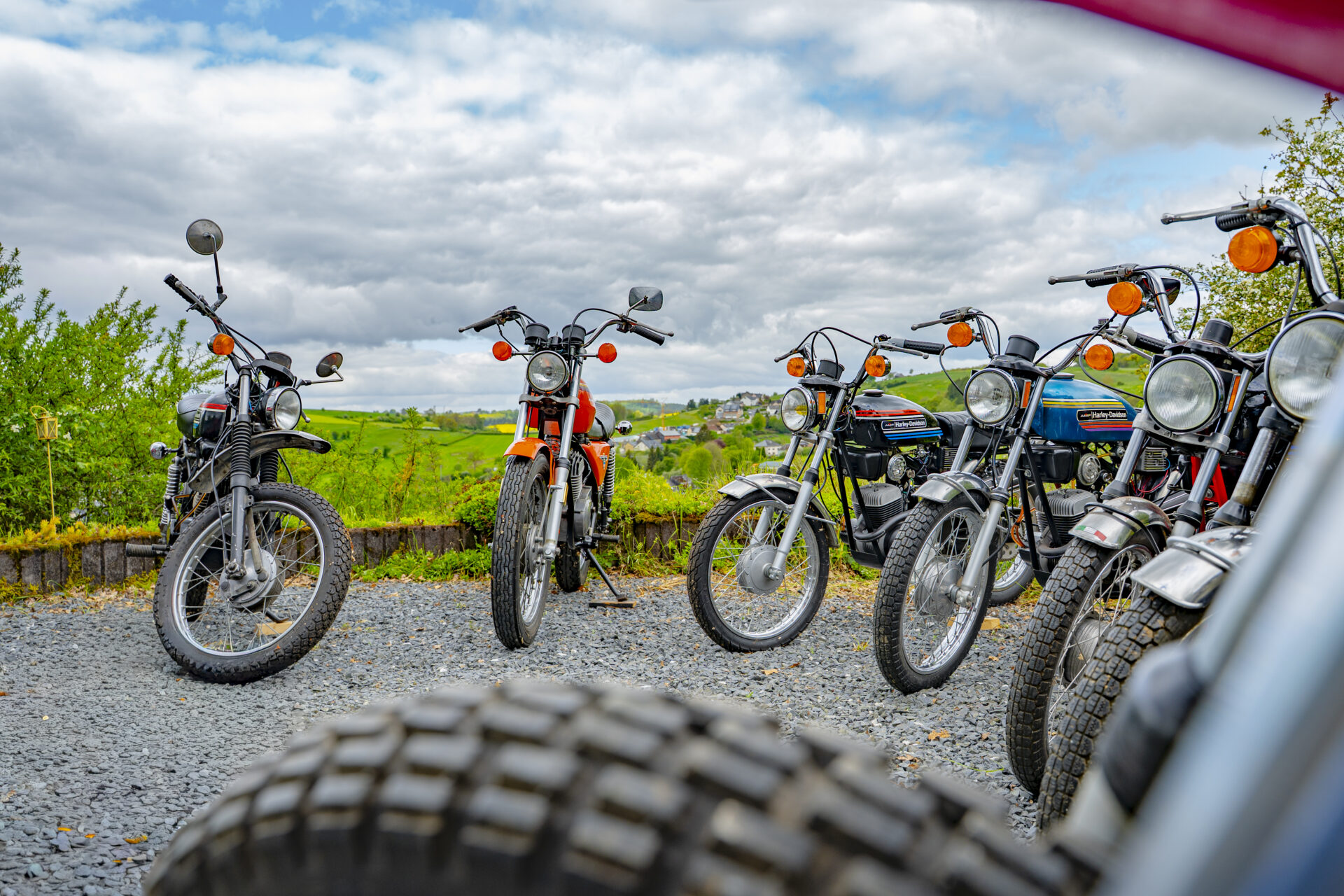
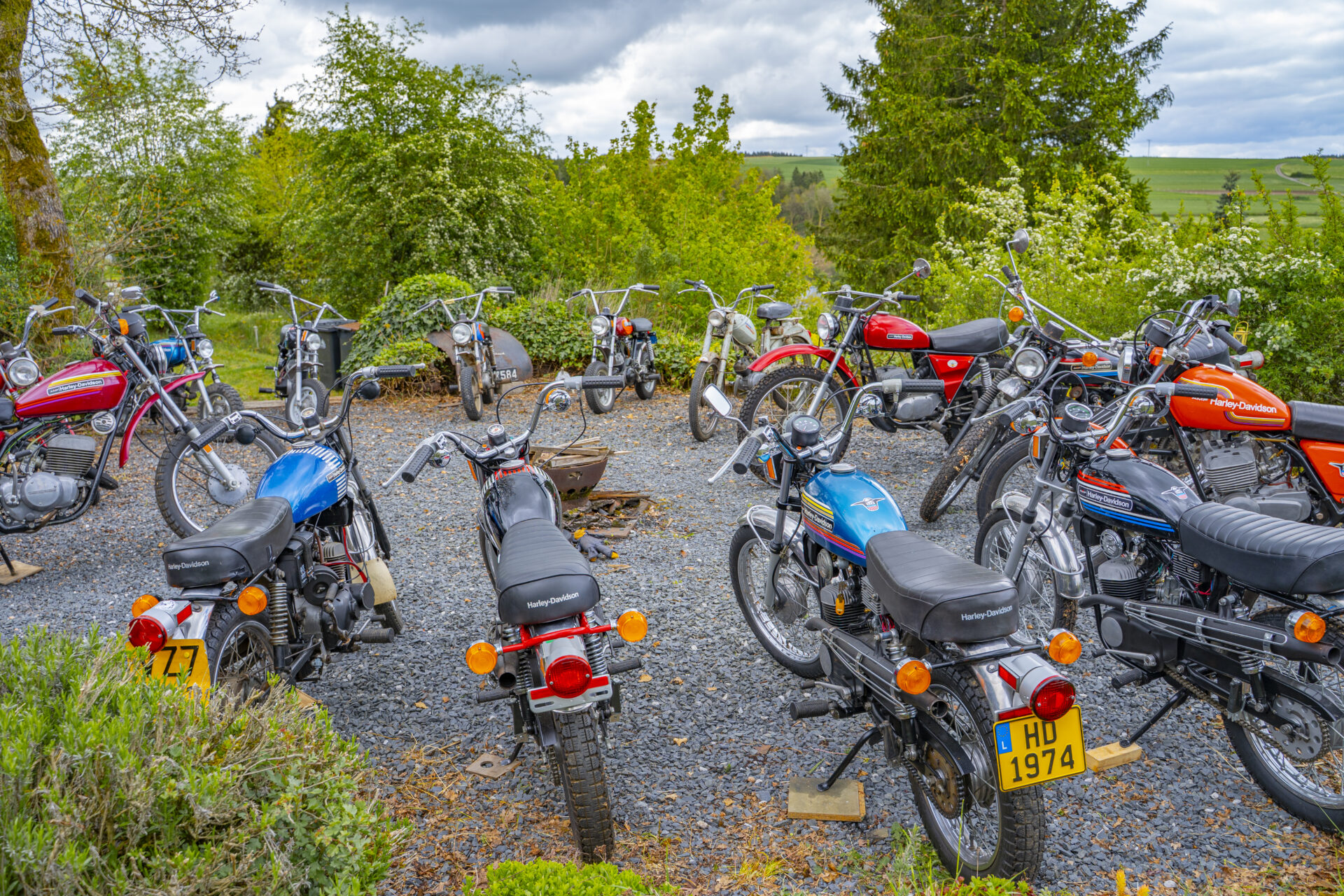
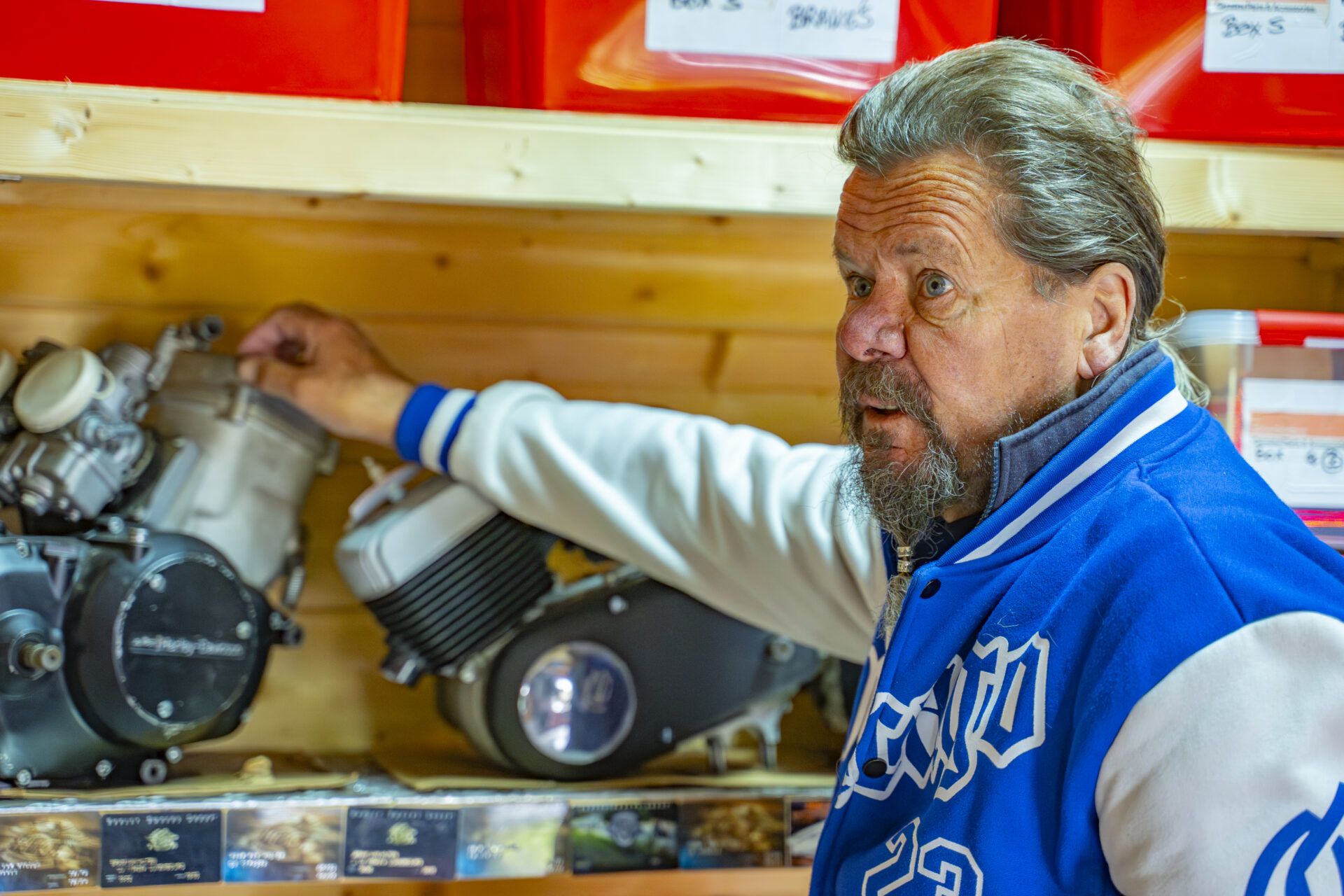
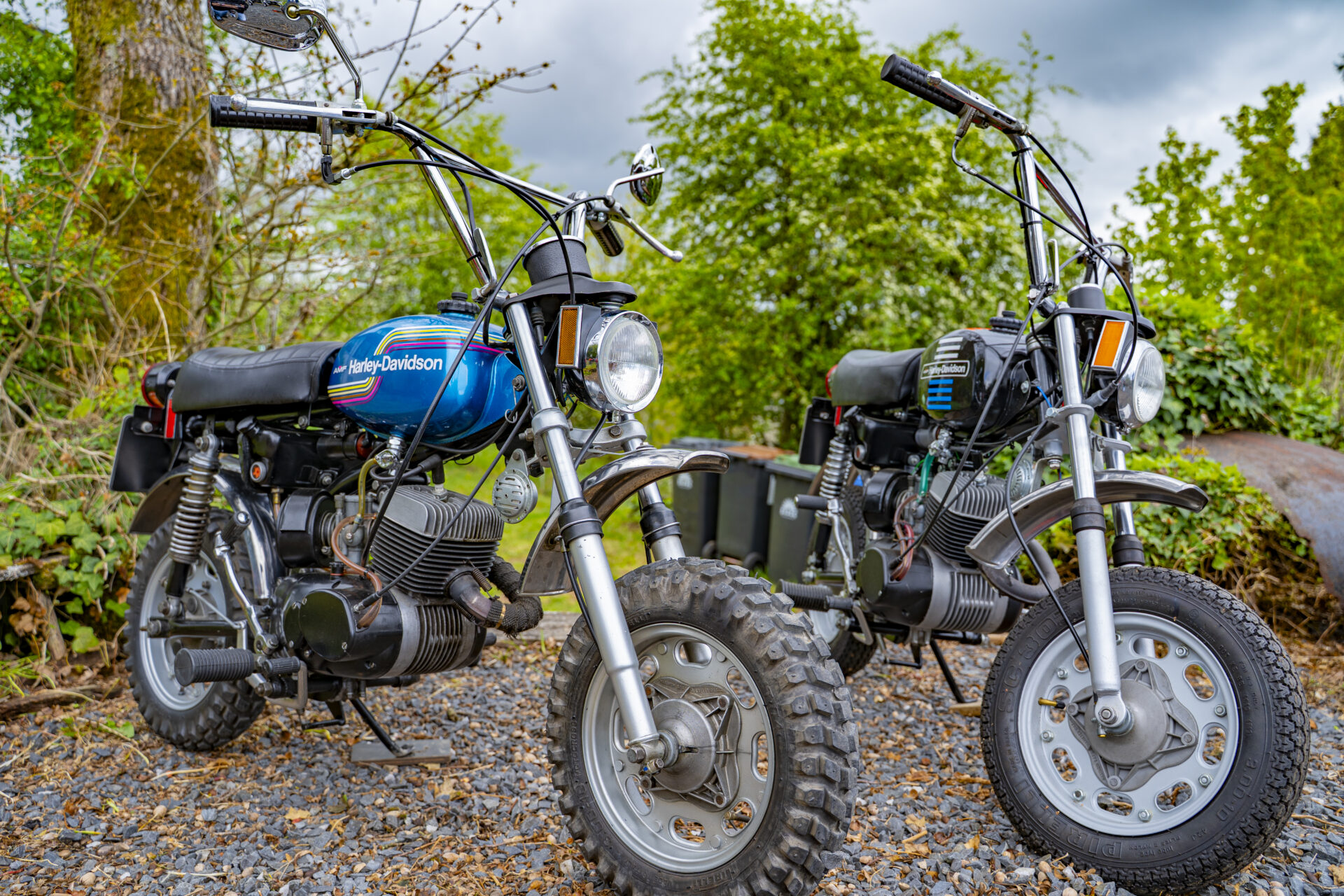
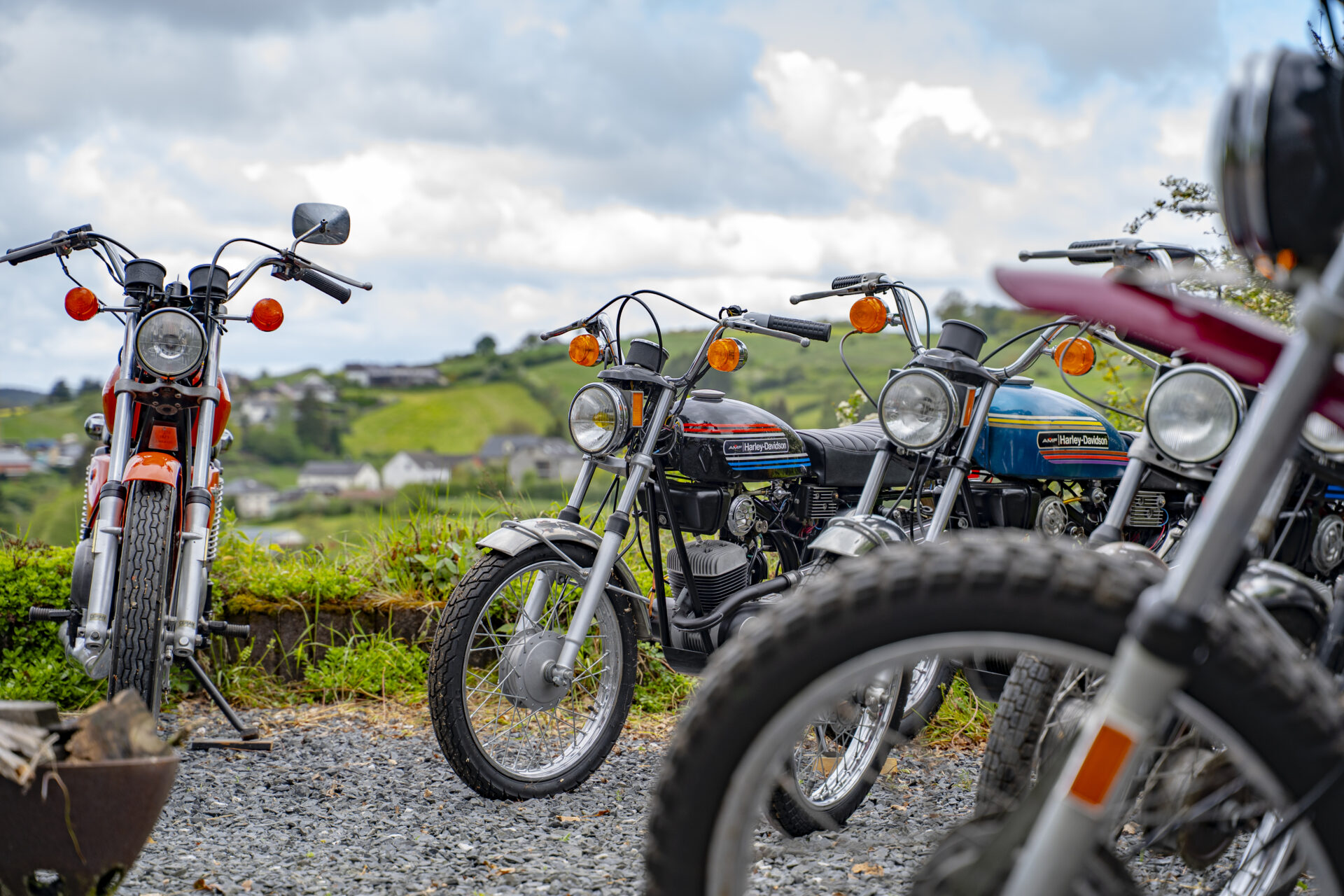
In Luxembourg, Bram van Hilten has put together a rare collection of two-stroke Harley-Davidsons, the little-known models produced between 1948 and 1978. A passion that took him all the way to Milwaukee and to writing a book published with the brand’s official approval.
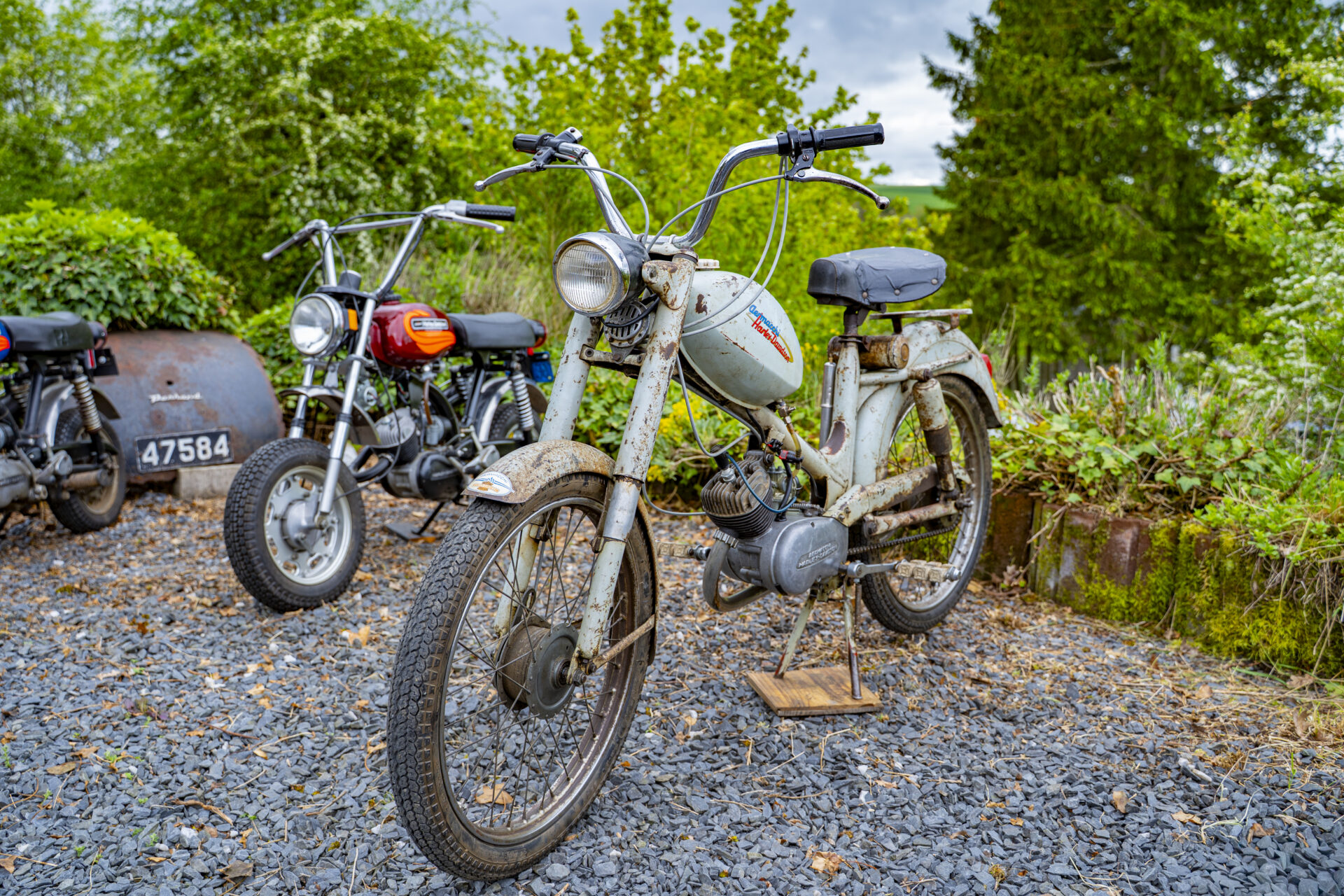
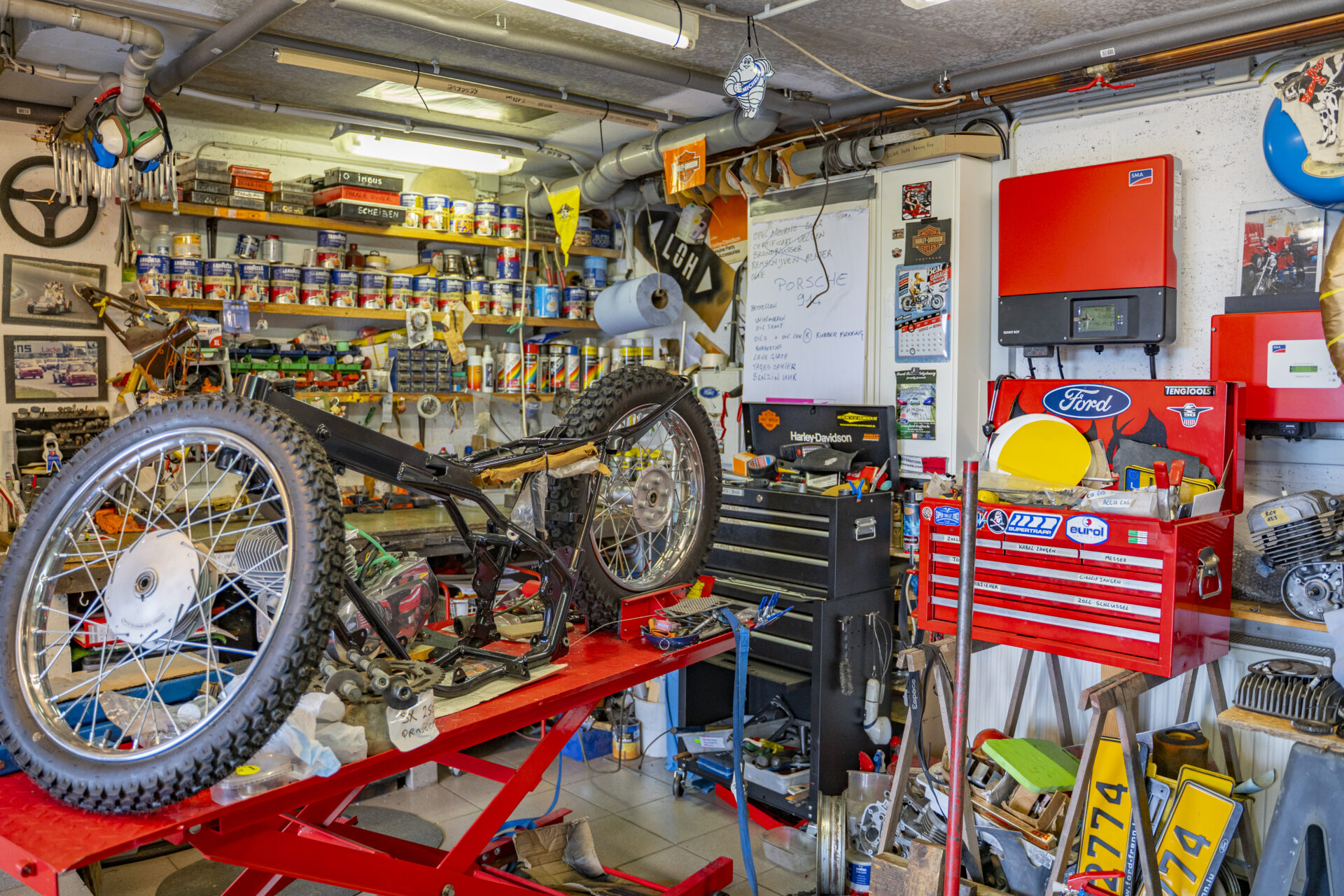
The story begins in late 1998, during a ride around the Moselle. Bram van Hilten recognises the motorcycle he had ridden as a teenager: a Harley-Davidson 90 cc two-stroke, given to him by his father as a gift for passing his baccalaureate. “Quite by chance, I went for a little ride around the Moselle. What do I see? My old motorcycle, right there. So I bought it, and that is how it all started,” he recalls. The collection now numbers twenty-eight machines, not counting those currently being assembled: road models, motocross, racing, prototypes and near-confidential series. Almost all of them are in running order. “I take them out regularly to avoid mechanical problems,” he stresses. Why this brand rather than another? “Harley-Davidson has a special character and a particular smell. There is an atmosphere between the people in the Harley community that you don’t find with other brands.”
A forgotten branch of the brand
It all goes back to 1960. Harley-Davidson then acquired 50% of the motorcycle division of Italian manufacturer Aermacchi, based near Varese, before taking over the rest of the capital in 1969. The Milwaukee-based company would produce there for nearly twenty years a range of small two-stroke engines: 125 cc models for France, where they did not require a licence, alongside 50, 65, 90, 100, 175, 250 and up to 500 cc competition machines. In 1978, the factory was handed over to the Castiglioni brothers, who would turn it into the foundation of their own brand, Cagiva.
In contrast to the heavy cruiser image associated with Harley-Davidson today, these little Italian machines were above all sports bikes. They earned the brand its only road racing world titles. With Italian rider Walter Villa, Harley-Davidson Aermacchi won the 250 cc world championship in 1974, 1975 and 1976, and the 350 cc title in 1976. Four crowns in three seasons. Frenchman Michel Rougerie raced under the same colours, while Italian Renzo Pasolini, ambassador for the brand until his death at Monza in 1973, never saw this achievement. “I was afraid this part of the history would disappear. I felt it was important to make a book about it,” explains Bram van Hilten, before adding: “This side of Harley-Davidson is little known, and in my view the brand hasn’t communicated enough about it.”
A book approved by Milwaukee
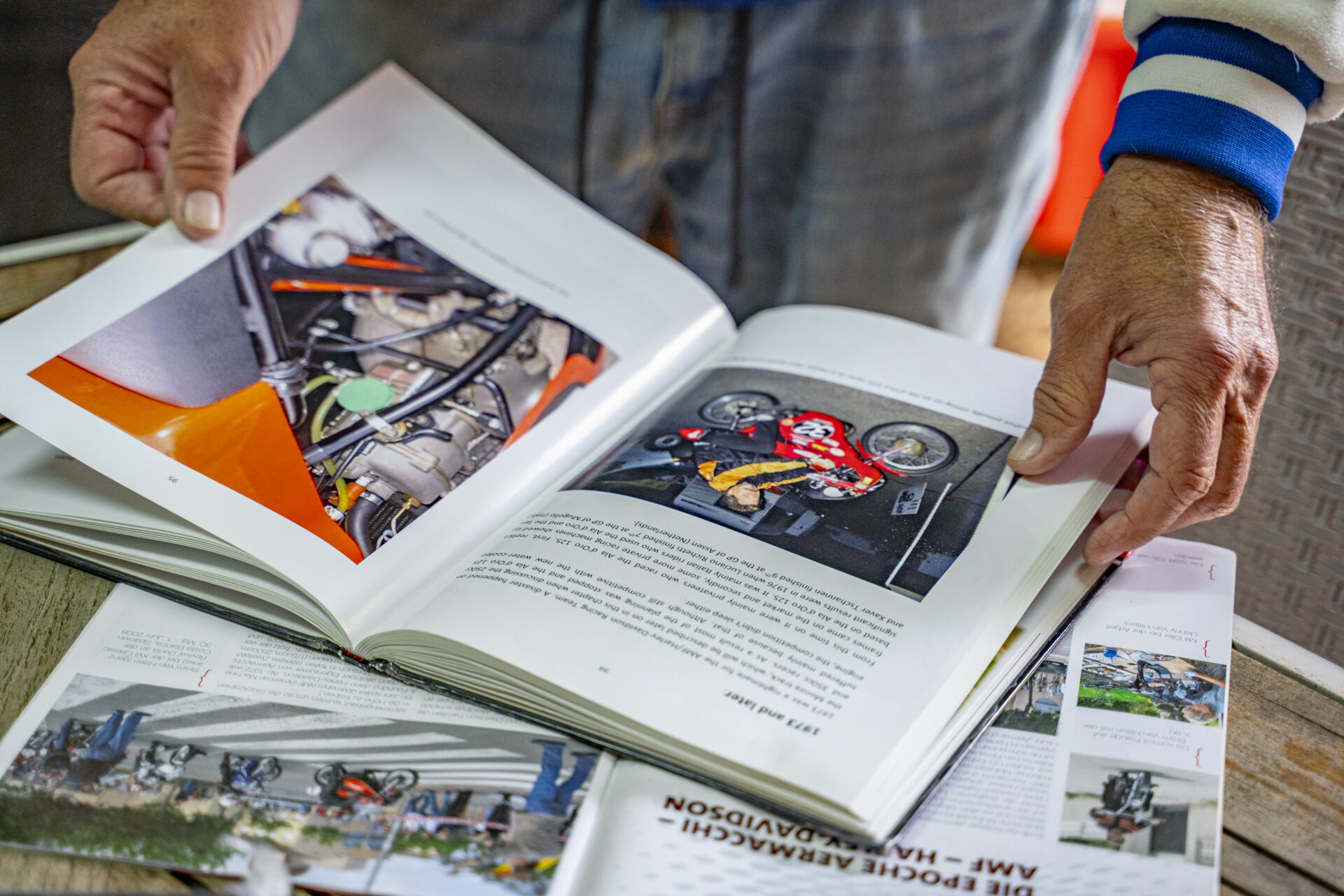
The book published by Bram van Hilten, Harley-Davidson, The Era of the Two-Stroke Motorcycles, retraces these thirty years of production. One hundred and forty-five pages in A4 format, hardcover, one thousand copies. The undertaking required eight years of research. “I had to telephone many people in Italy, former engineers. They gave me details no one else had. I telephoned the Netherlands, Germany, England. I telephoned everywhere,” he says. Swiss manufacturer Fritz Egli also passed on information and parts.
An unusual step: the author sought the official authorisation of Harley-Davidson Milwaukee before publication. “If you use the Harley-Davidson name without permission, it becomes very, very expensive. They have lawyers all over the world,” he explains. The agreement was obtained, accompanied by numerous exchanges with the brand’s museum teams. In the process, the collector discovered that some models on display in Milwaukee contained identification errors, or corresponded to prototypes forgotten in the American archives. “They didn’t even know they had produced them. And conversely, Milwaukee took an interest in models I owned that they themselves did not have,” notes Bram van Hilten.
Sometimes confidential production runs
The collection illustrates the diversity of this parallel production. A 50 cc model from 1965, designed for female customers, was produced in only six units. “Milwaukee asked Italy to make a 50 cc for women. They did, but they didn’t really want to: in Italy, there was no interest. They thought they would export it to America; that didn’t work, so they dropped it,” he reports. An SX350, forty-eight units. A European MX 250 from 1977, twenty-two units. An Aermacchi 175 prototype from 1974. Rarer still: a twin-carburettor cylinder mounted on an MX 250 bottom end, of which only two examples reportedly exist. “At low revs there’s nothing, and suddenly, at 8,000 revs, it takes off. I think it was built for drag racing,” the collector says.
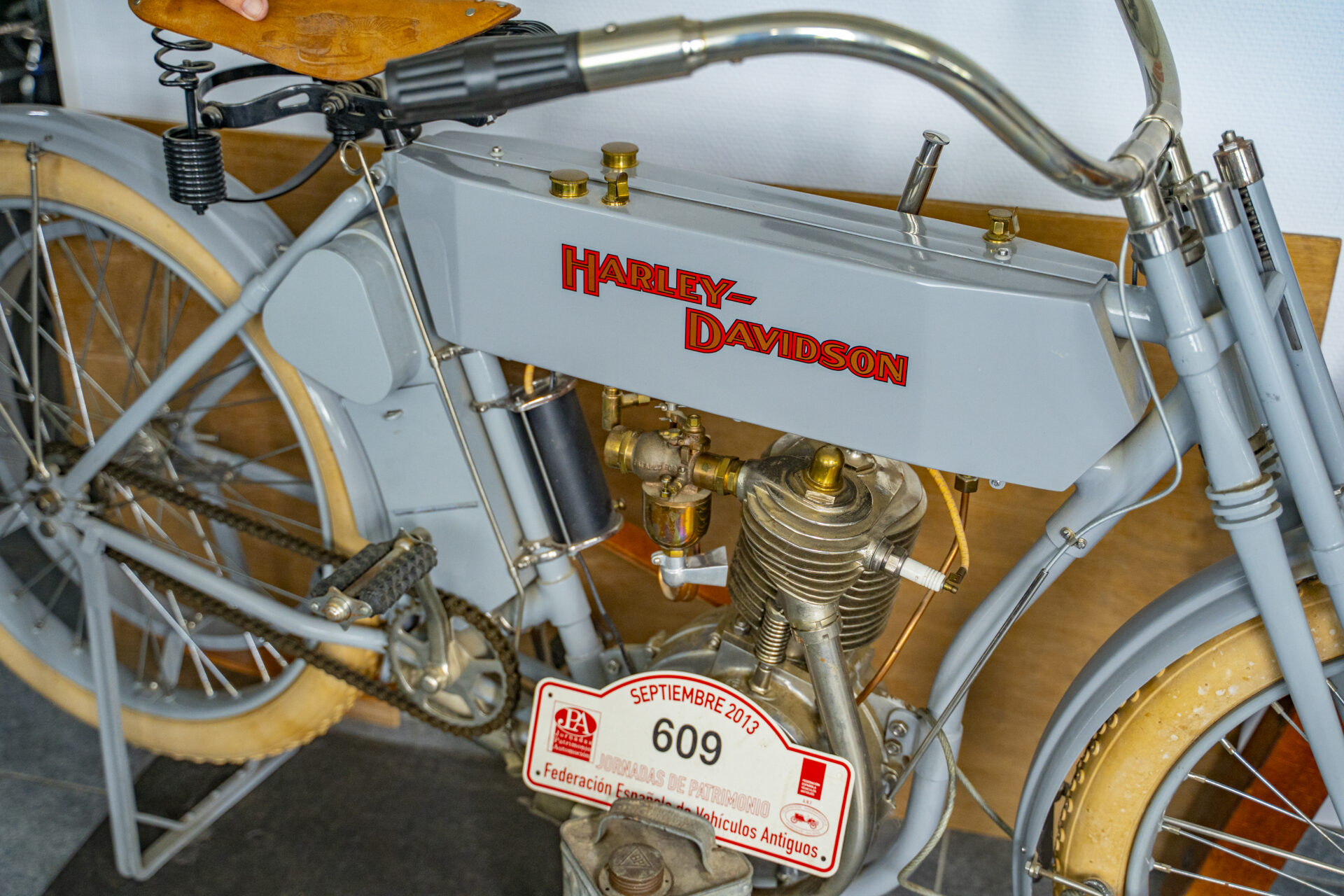
Added to this is a 1910 Harley-Davidson, the Silent Gray Fellow, with a four-stroke engine: the name refers to the system that allowed the exhaust to be closed off so as not to frighten horses. Another notable piece, an Italian scooter with Aermacchi origins, 150 cc in red and white, is currently being restored. The previous owner, a Dutch woman, had stopped riding in 1972. “The children opened the garage and said: what’s this? They called a friend of mine, who phoned me straight away,” Bram van Hilten smiles.
The market and the budgets
For anyone wishing to get into it, the entry ticket for a road model is “around four to five thousand euros,” Bram van Hilten indicates. A fully restored example, with a rebuilt engine, can reach ten thousand euros, more for rare parts. “I’m lucky to speak many European languages, so I can do research pretty much everywhere,” he points out. With most two-stroke models having been sold in Italy and France, it is in these two countries that the largest number of examples is still to be found. Harley-Davidson no longer manufactures parts for these models; nor does Cagiva. The collector has therefore built up a sizeable stock over the years. “When I’m in Italy or France, I go and see former dealers and ask whether they have any stock. If they say yes, I buy.”
His quest: a Harley-Davidson 50 cc Sport
Beyond the collector, this is also a former bank financial director speaking. Bram van Hilten has been following the Harley-Davidson share price since the 1990s. After the brand’s hundredth anniversary, celebrated in 2003, the stock began a sustained decline from 2006 onwards. “There was no new customer base. They spent too long trying to please riders who were already of a certain age, without thinking about a new generation,” he analyses. The plan to produce 350 and 500 cc models in India for export to Europe is in his view a step in the right direction, but comes late.
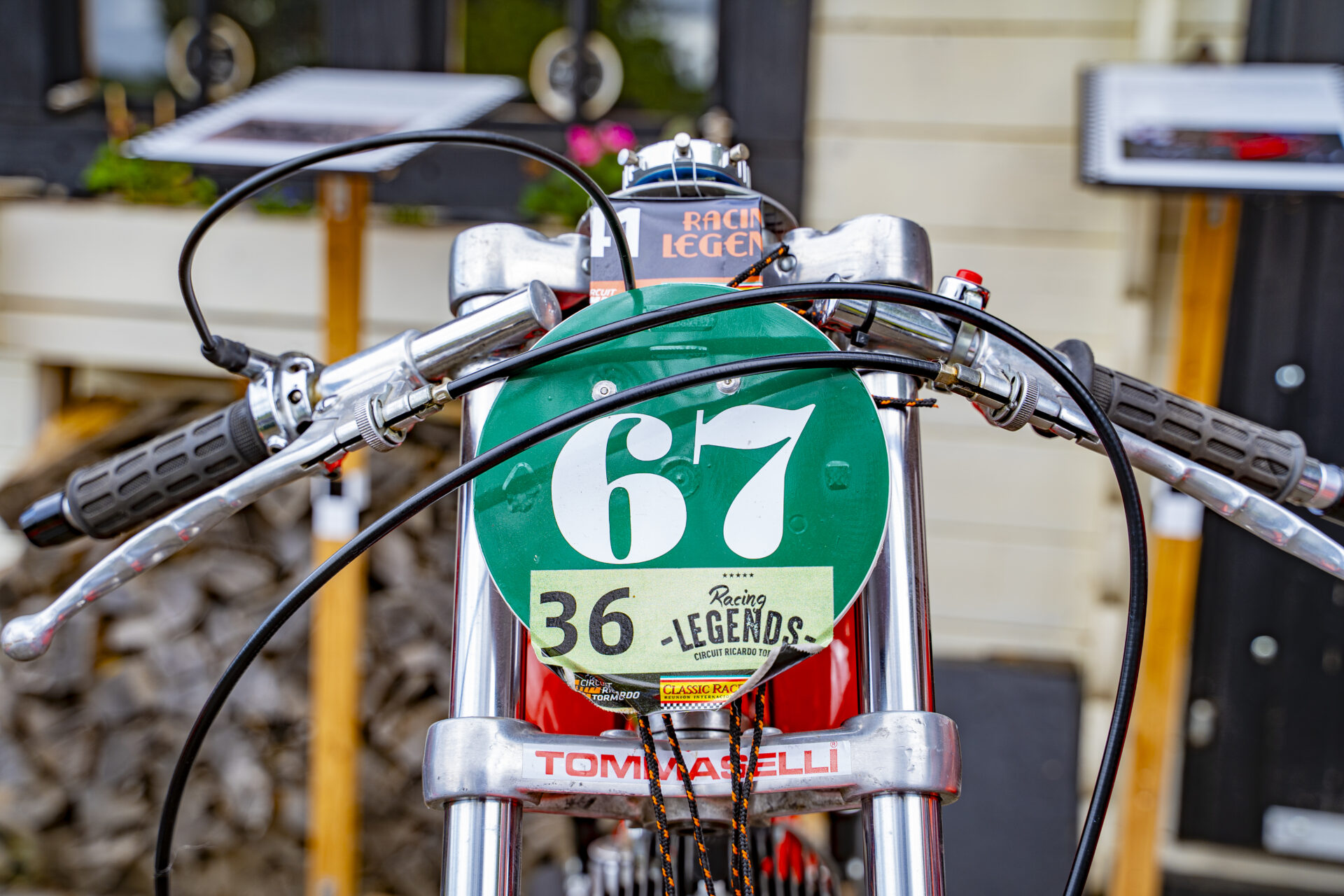
Today, Bram van Hilten divides his time between Harley-Davidson community gatherings, rides, restoring older models, and tracking down machines forgotten by time. He also continues to ride on the track, on the Ricardo Tormo circuit in Valencia. His quest: a Harley-Davidson 50 cc Sport, European model. “I’ve been searching for years. But I will find one. It’s just a question of time,” he concludes.