With no uprating, a fine now weighs far less than it did in the early 2000s. Drivers gain, while deterrence loses out.
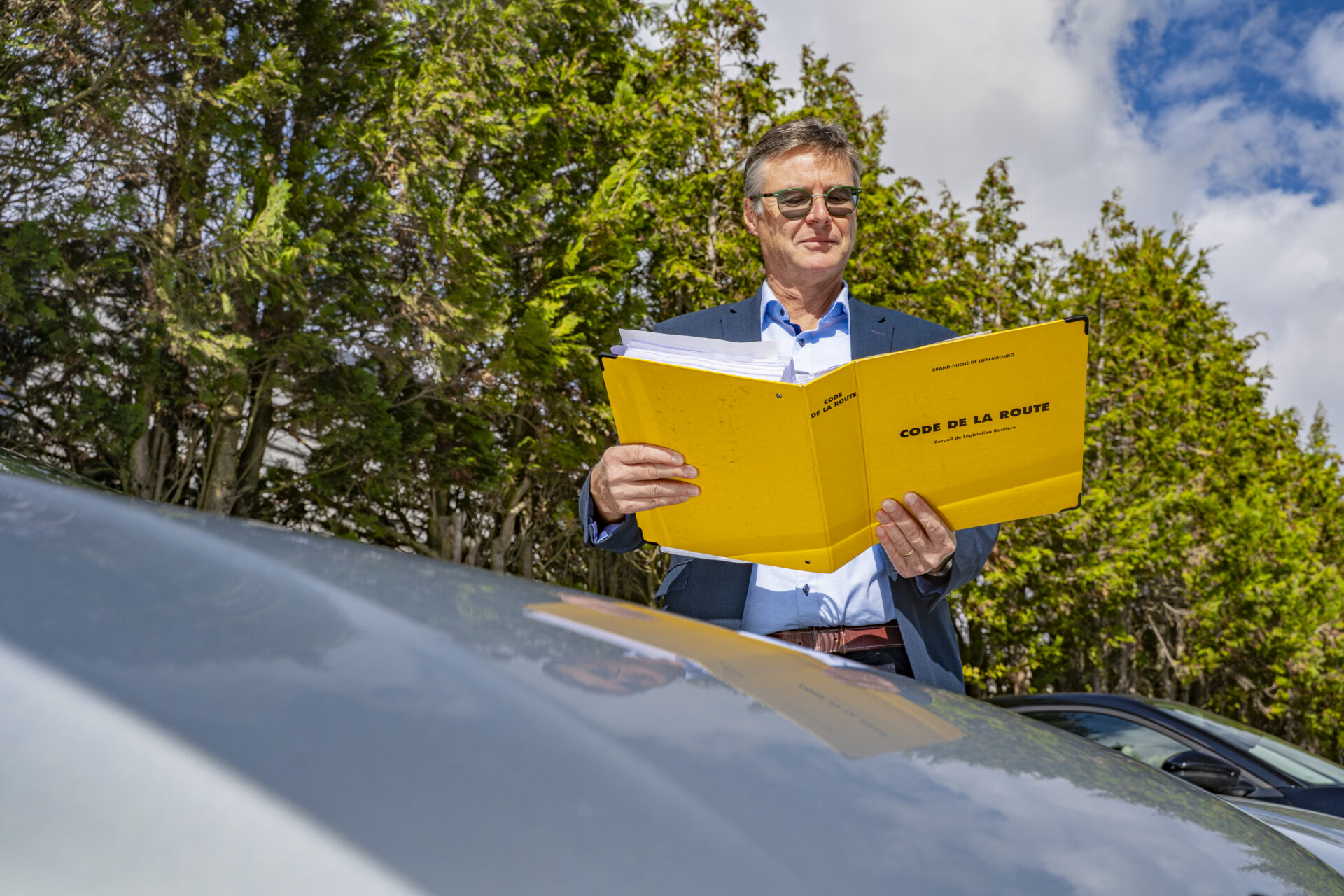
The Highway Code does not set the amount of fines. That falls to a separate text, the Grand-Ducal Regulation of 26 August 1993, whose annex forms the “catalogue of fixed-penalty notices”. Each offence is placed in a pricing band ranging from €24 to €250.
These bands show their age. At the official euro conversion rate for the Luxembourg franc, 1,000 francs were worth €24.79, 2,000 francs €49.58 and 3,000 francs €74.37. The first three tiers of the catalogue (€24, €49 and €74) are therefore simply those amounts, rounded down when the euro was introduced. The ministry says as much: when it presented the National Road Safety Plan 2024-2028, it described the amounts as “unchanged for almost 30 years”.
The paradox is all the sharper in the Grand Duchy, where wages are automatically adjusted to the cost of living through indexation. On one side, an income protected by law; on the other, a penalty frozen in nominal terms. The maths is telling: since the switch to the euro, inflation has exceeded 65%. To keep its original weight, a €49 fine would now have to cost close to €80. Its deterrent effect erodes year after year, without anyone ever having decided it should.
The government has taken note. Among the twenty measures in the plan presented on 30 January 2025 by Mobility Minister Yuriko Backes (DP) is a review of the catalogue, particularly for serious offences. To date, however, no revised amounts have been published.
The budgetary stakes are not trivial. Since 2019, the police have issued between 650,000 and 886,000 fixed-penalty notices a year, worth €27.6 million to €37.3 million, of which €23.5 million to €31.5 million is actually collected. Nearly one notice in five is never paid, which is why the plan also provides for doubling the amount due in case of non-payment
“It should also be noted that the police asked for the general introduction of the flat-rate fine for all road traffic offences. The Grand-Ducal Police want this principle because it would simplify the procedure considerably and free up more time for officers to work in the field. Unfortunately, it has not yet been put in place,” says André Schack, retired Chief Commissioner and former head of the National Traffic and Road Safety Service (SNCSR) within the Police’s Directorate General.
Tags