The Twingo is back, and it’s fully electric. With this new generation dubbed E-Tech Electric, Renault aims to make electric mobility accessible to as many people as possible. In Luxembourg, the city car starts at €18,855 for the Evolution trim and €20,596 for the Techno version. The French manufacturer had promised to break through the €20,000 barrier — and on paper, mission accomplished. The Twingo is aimed at city dwellers, young drivers and families looking for an affordable second electric vehicle. We took it for a spin to see whether the promise holds up on the road.
A legacy dating back to 1992
The Twingo story began over thirty years ago. Across three generations, the model has sold more than 4.1 million units in 25 countries, establishing from the outset a bold vision of the city car: cheerful, colourful and versatile. Since then, the A-segment has shrunk considerably — it now accounts for just 5% of the European market — as most manufacturers have given up trying to reconcile low prices, environmental regulations and modern customer expectations.
Renault chose to see this as an opportunity. This new generation was developed in just one hundred weeks, a record for the group, thanks to an unprecedented setup combining the French Technocentre, the ACDC R&D centre in Shanghai and the Novo Mesto plant in Slovenia. The manufacturer claims to have halved the investment compared with a conventional development cycle, with targeted reductions of 16% on upstream activities, 41% on development and 26% on industrialisation. Whether this fast-tracked approach holds up over time in terms of finished product quality remains to be seen.
A design that embraces its heritage
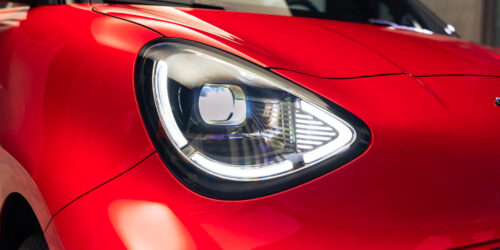
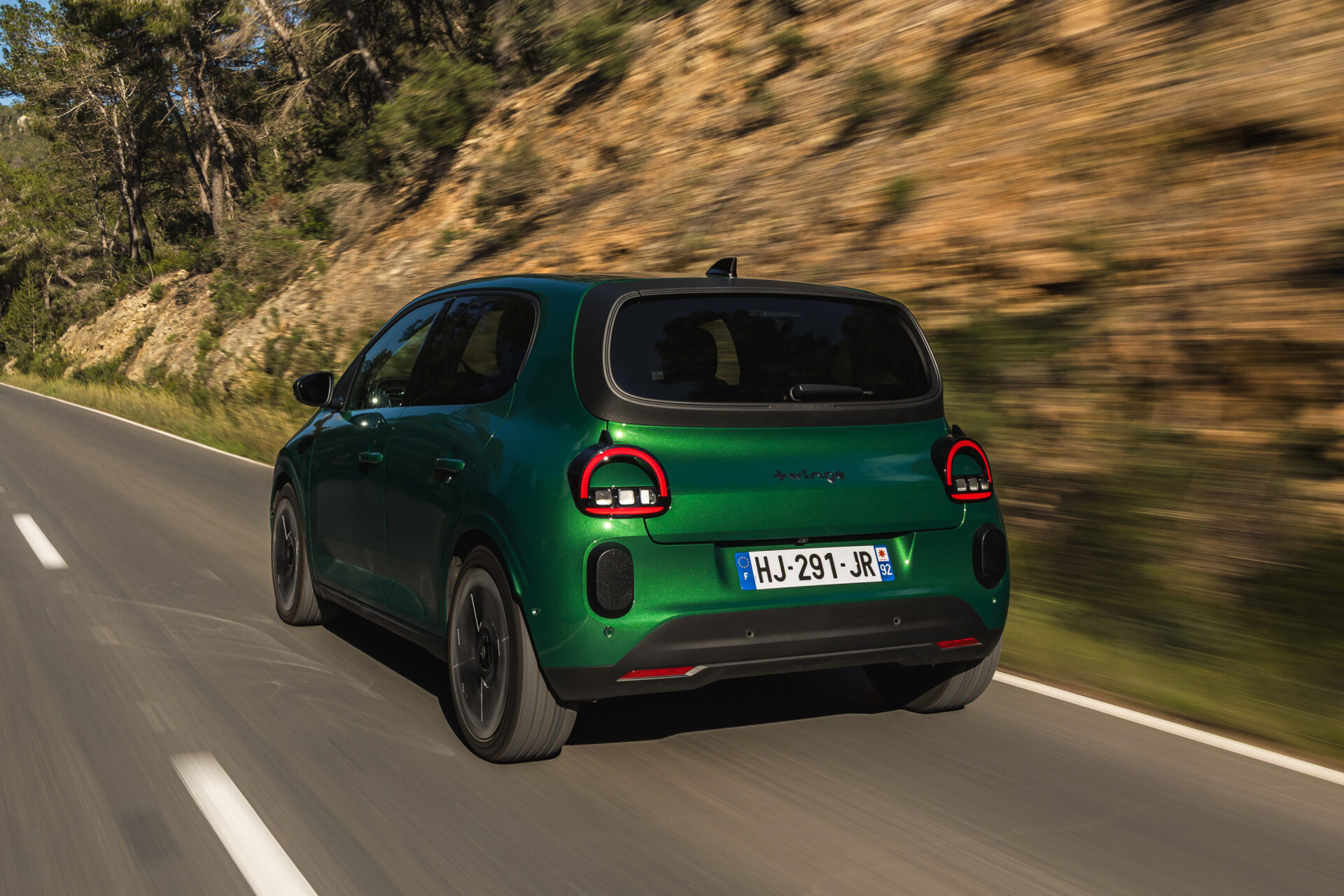
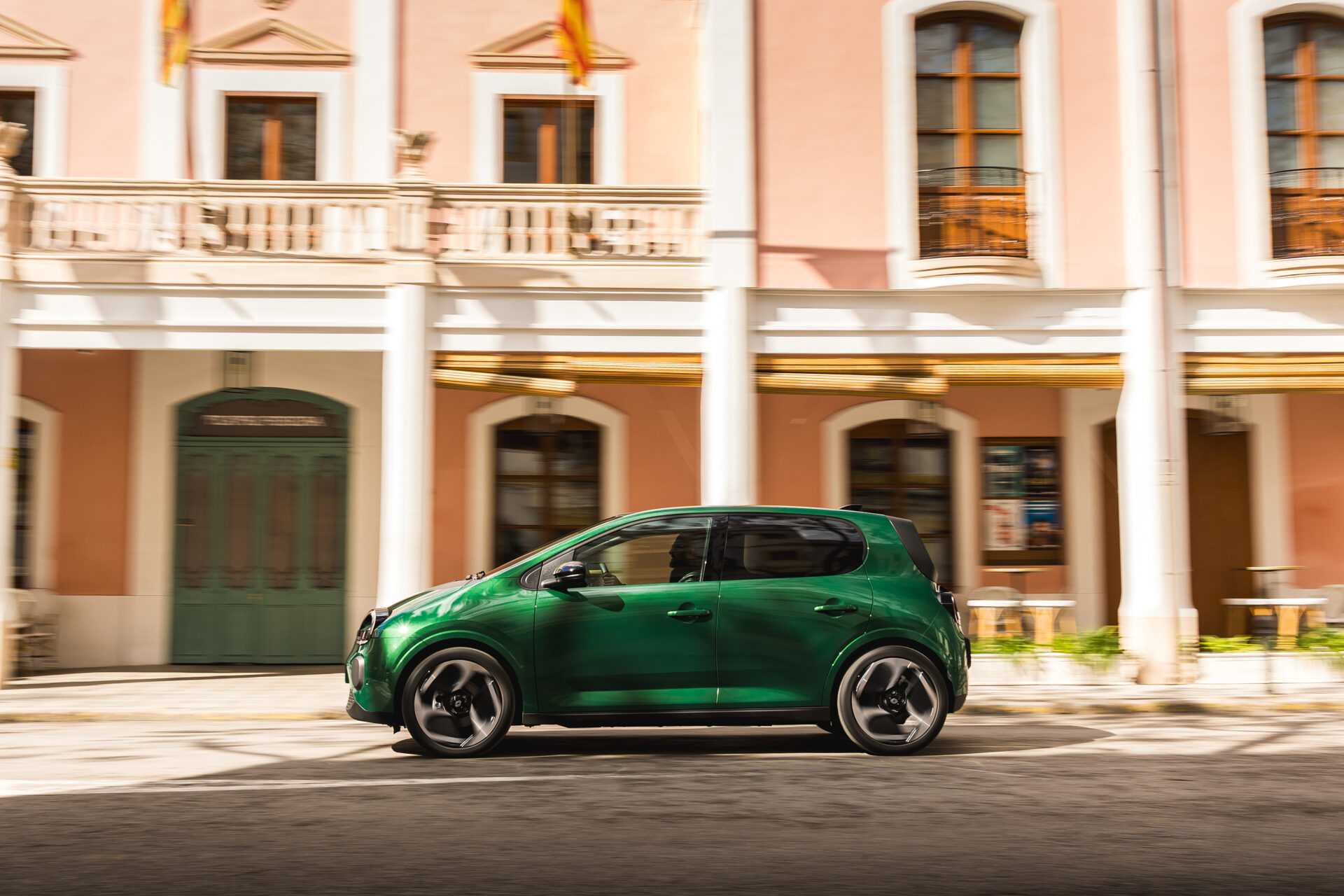
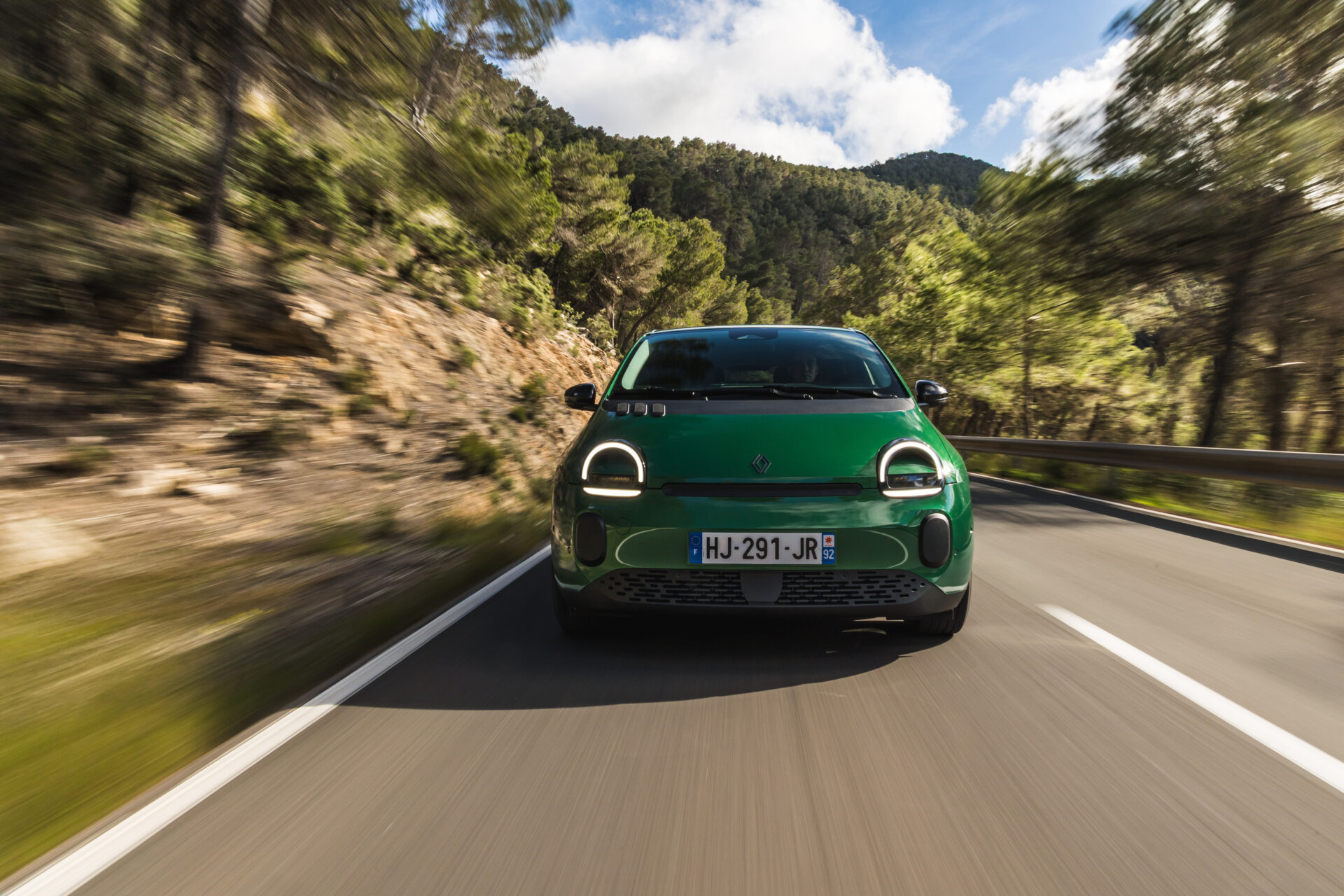
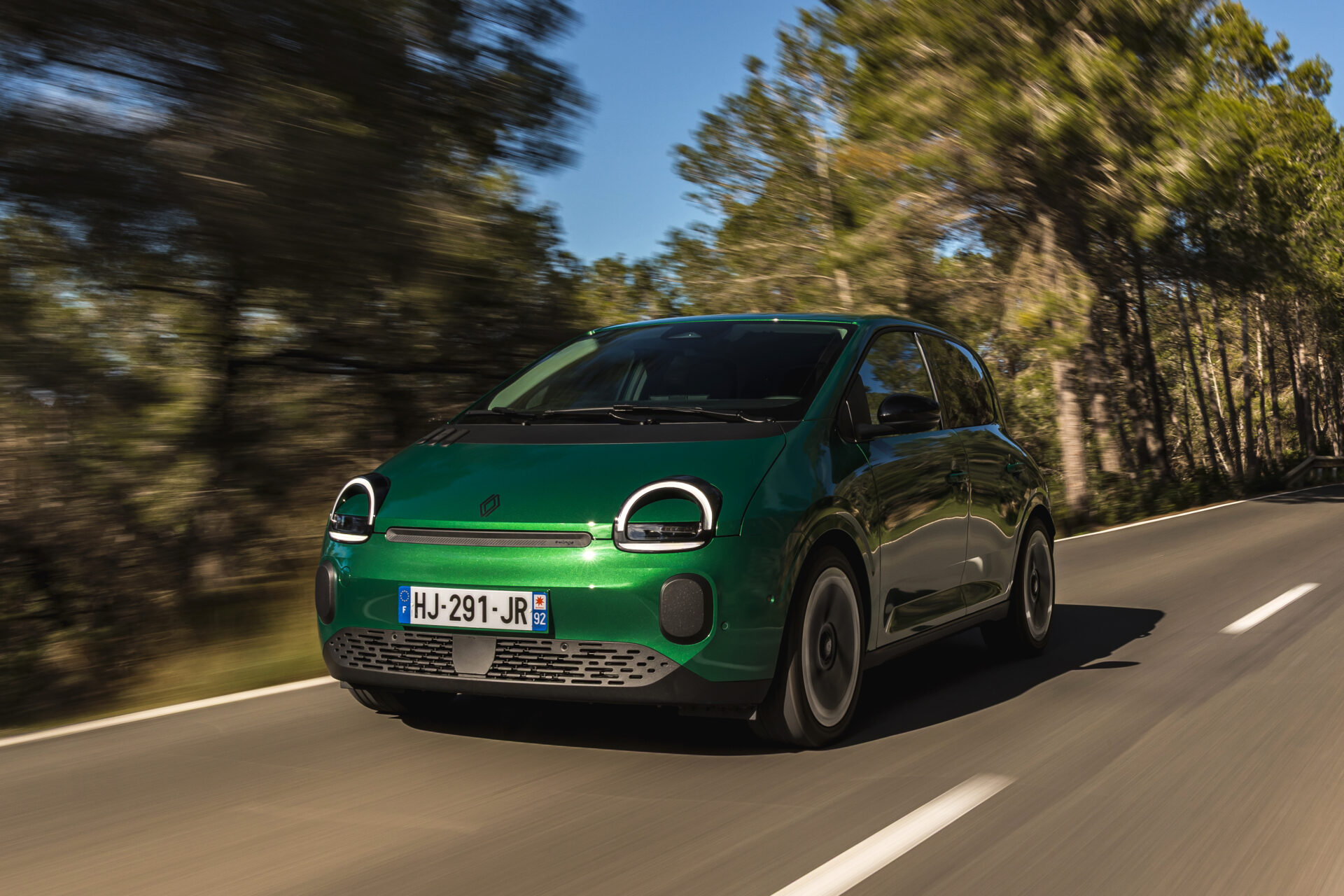
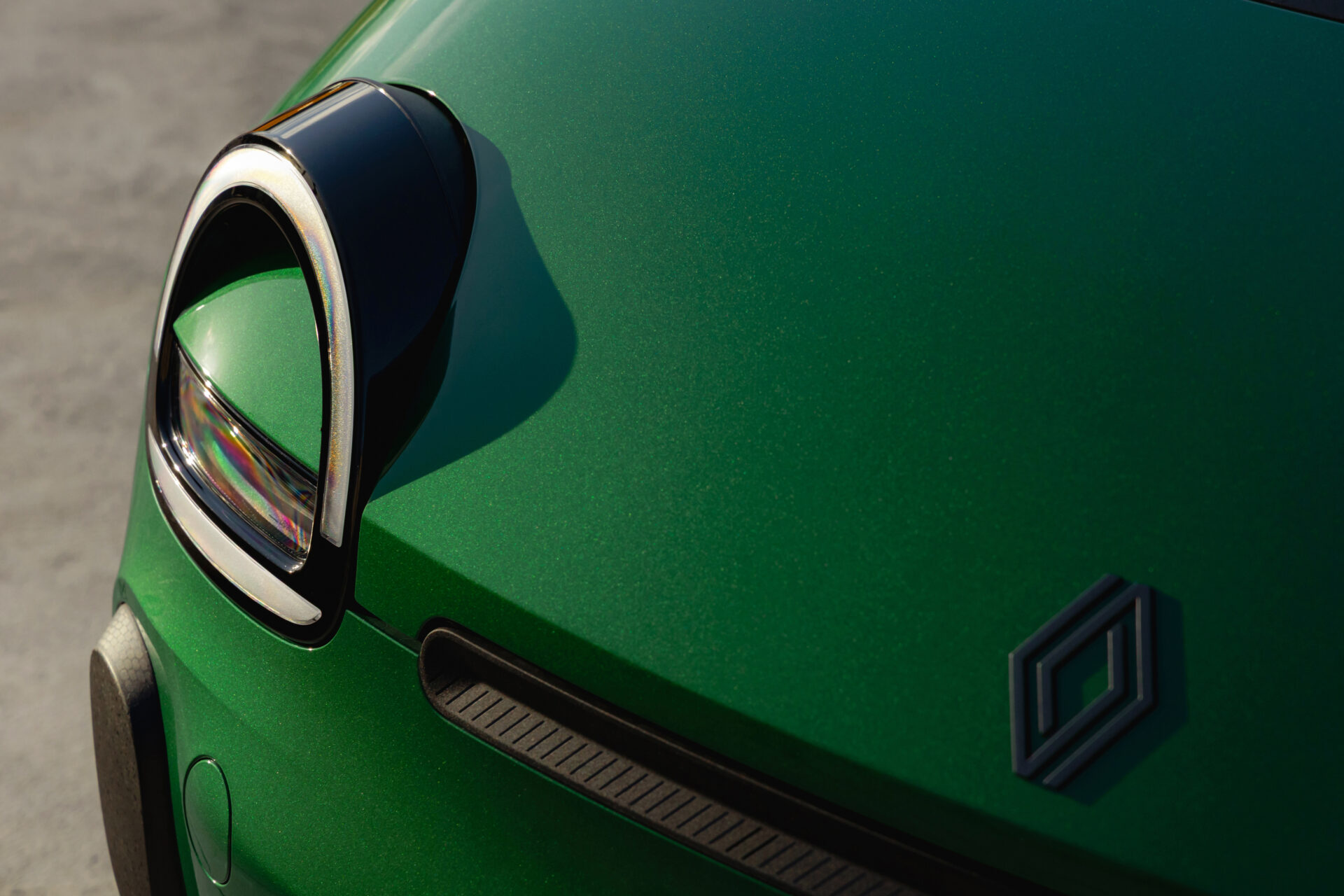
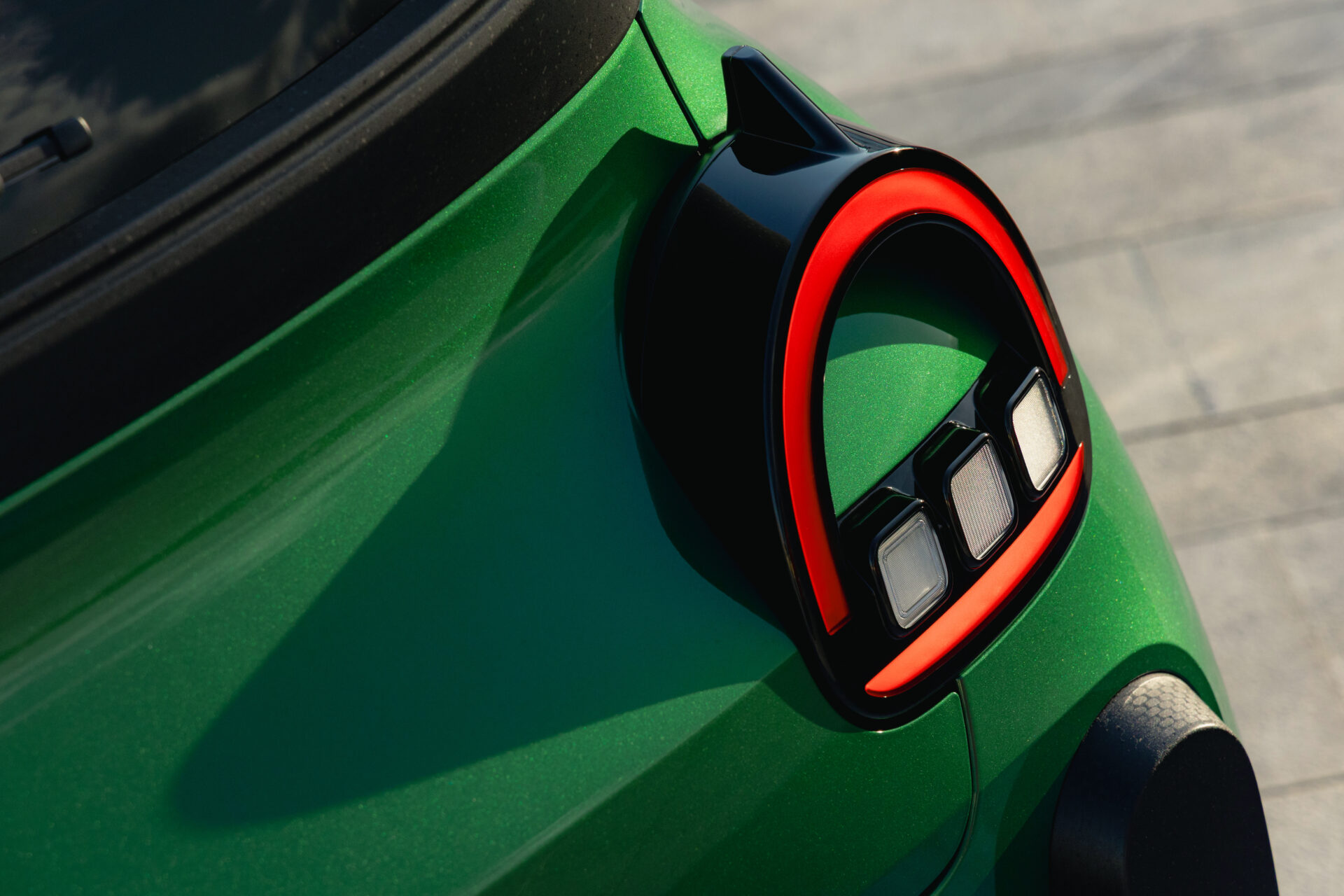
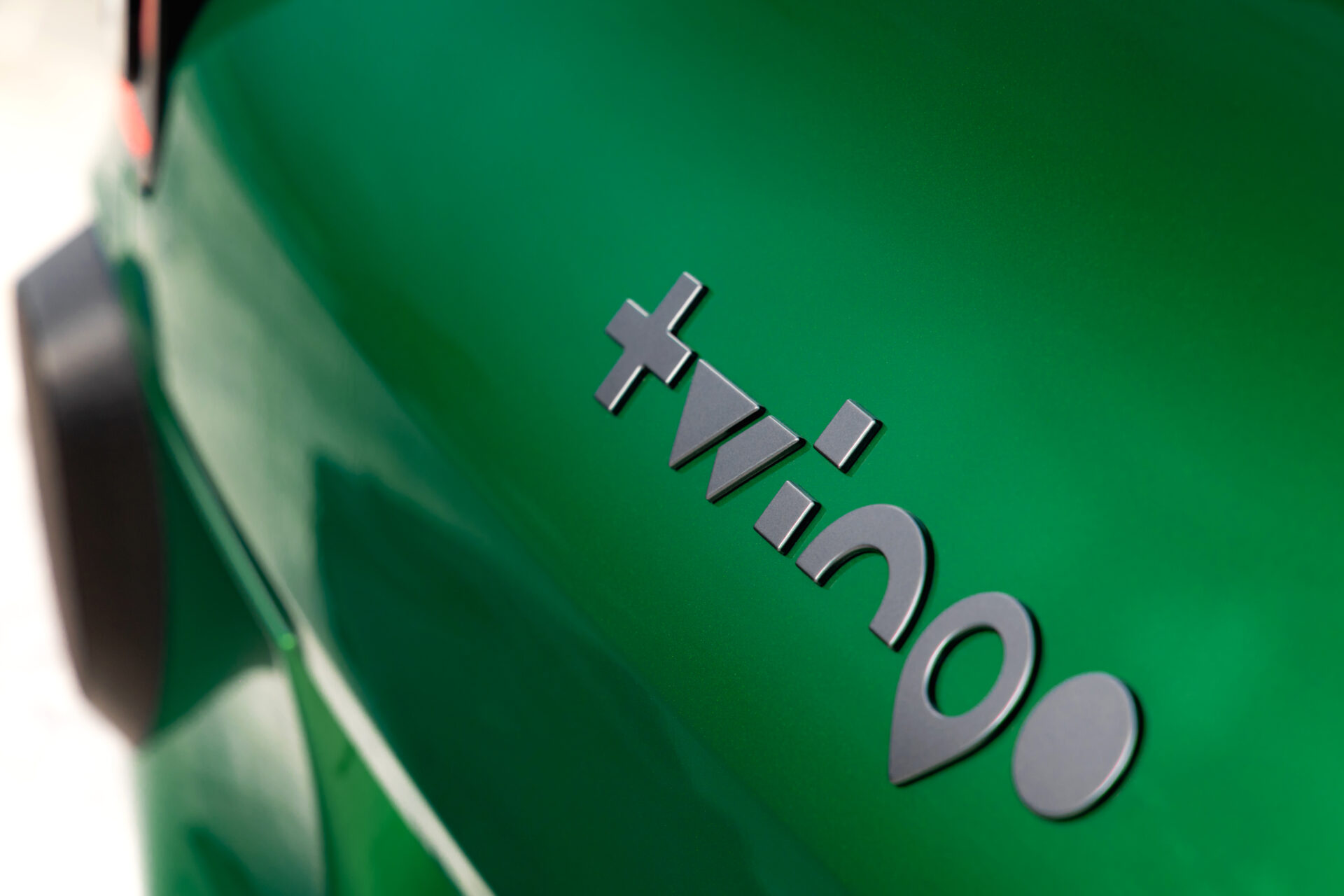
Visually, the family resemblance to the original Twingo is unmistakable: rounded shapes, a monovolume silhouette, and a cheeky face defined by arch-shaped daytime running lights and a subtly smiling grille. You either love or hate the deliberately cute styling, but it has the merit of looking like nothing else on the road. Six colours are available: Absolu Red, Absolu Green, Mango Yellow and Étoile Black, plus Glacier White and Schiste Grey, both available since orders opened for the Evolution version.
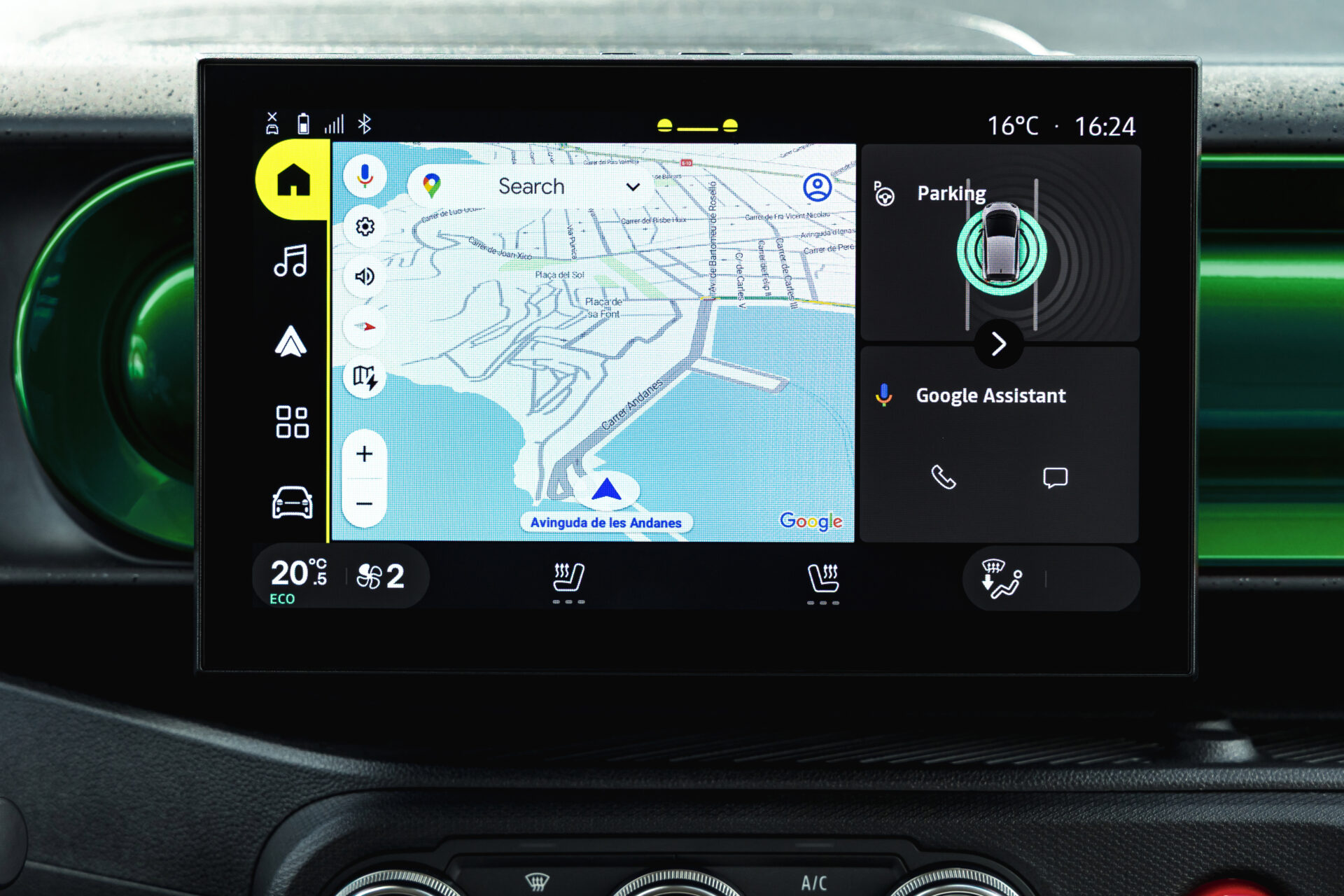
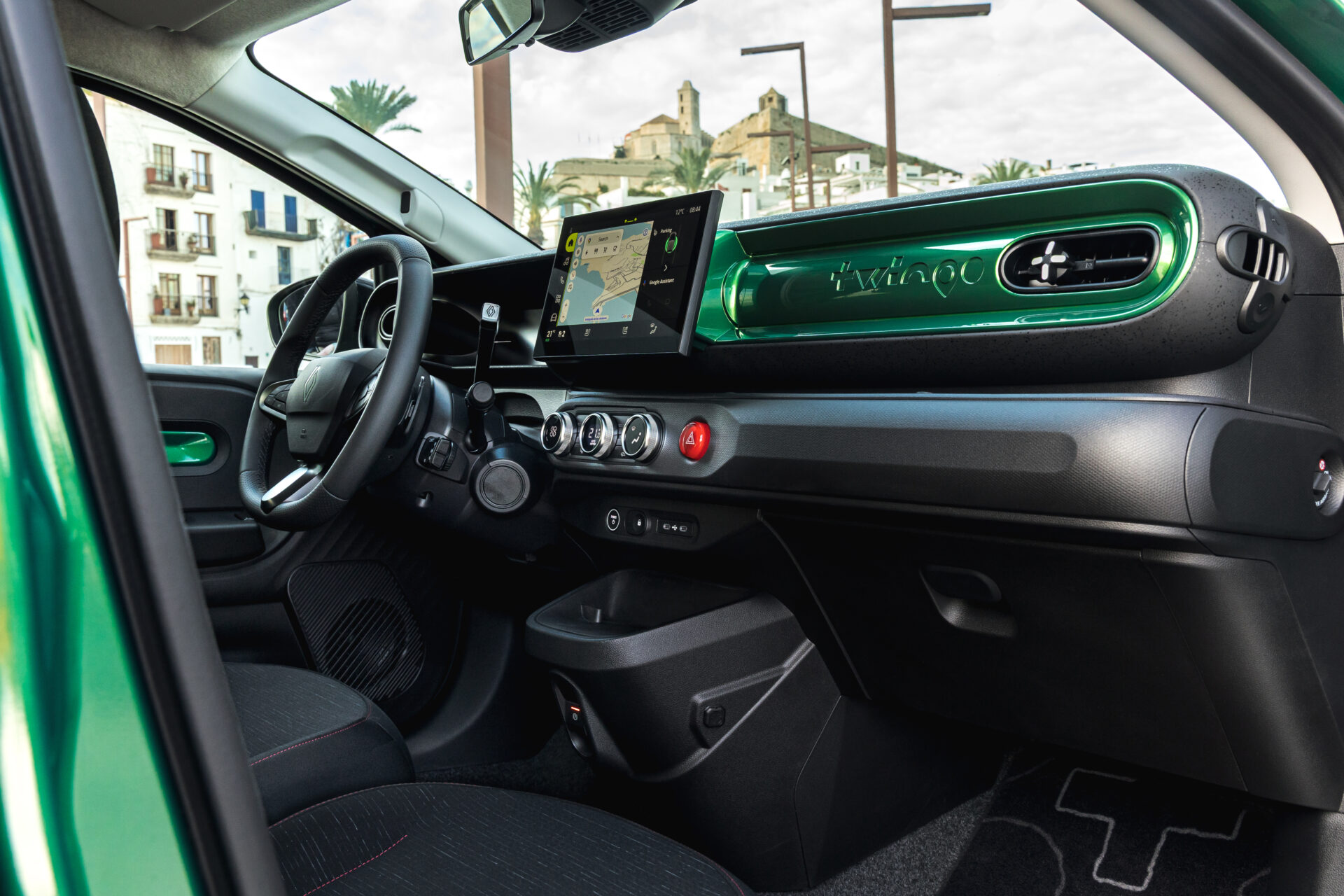
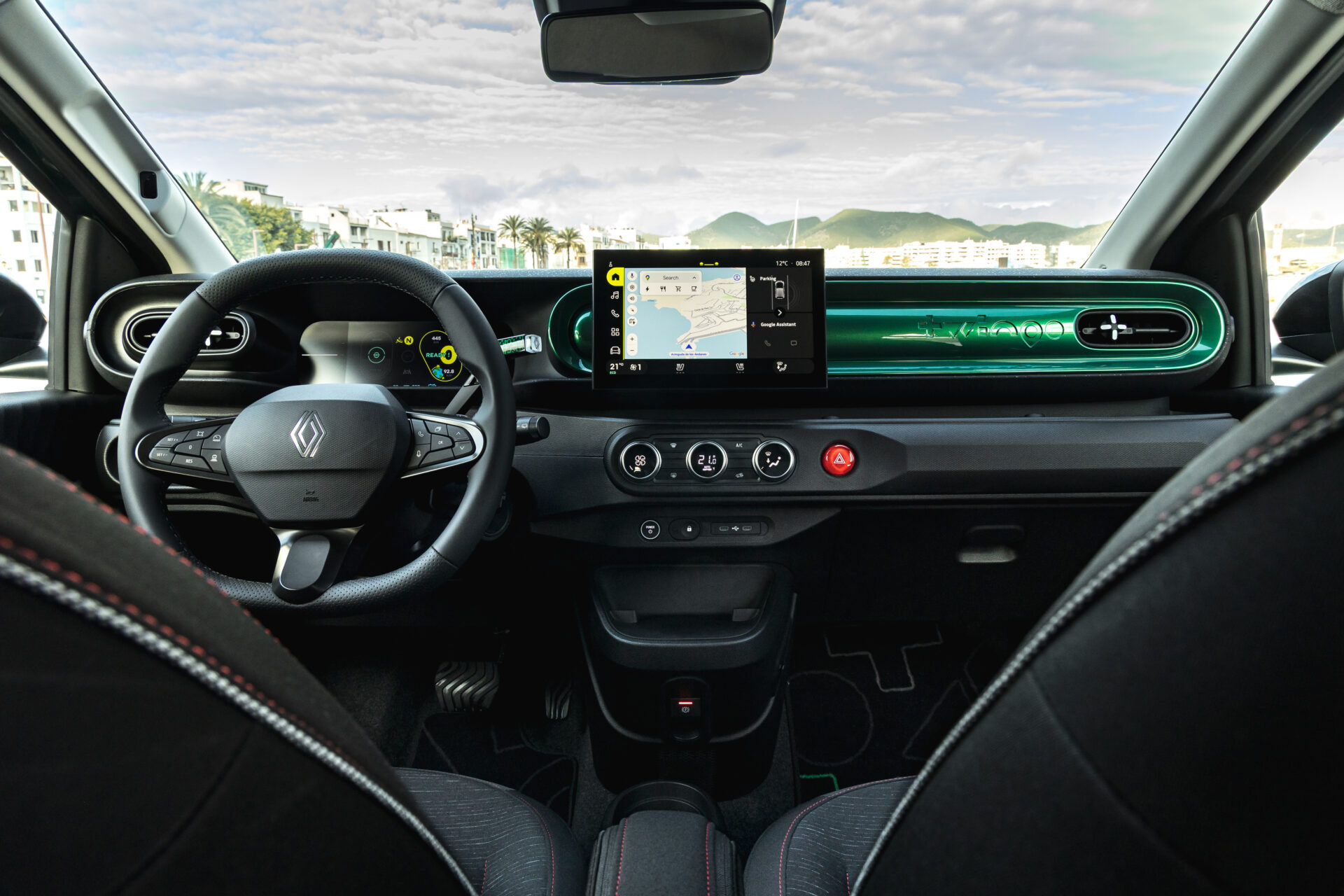
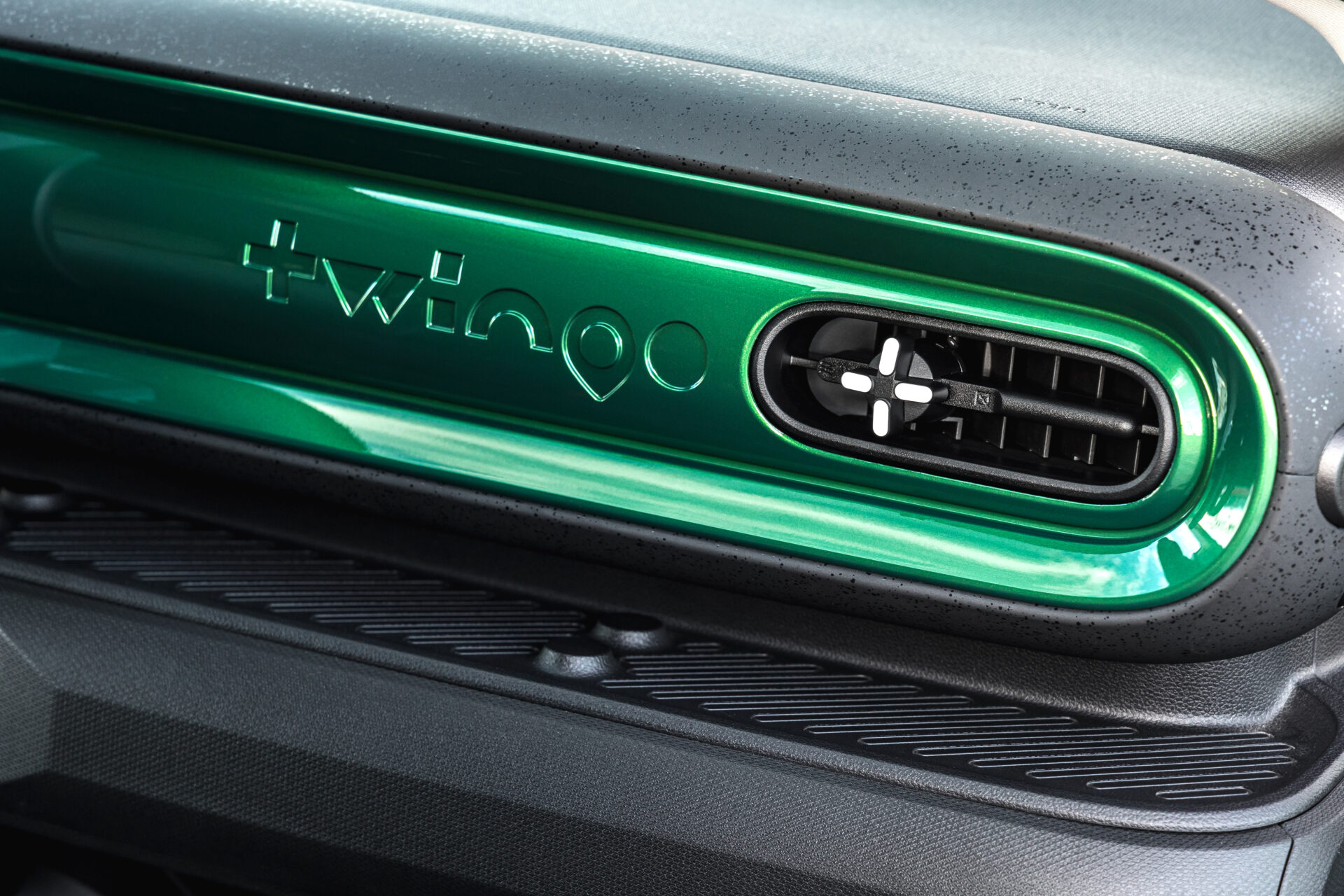
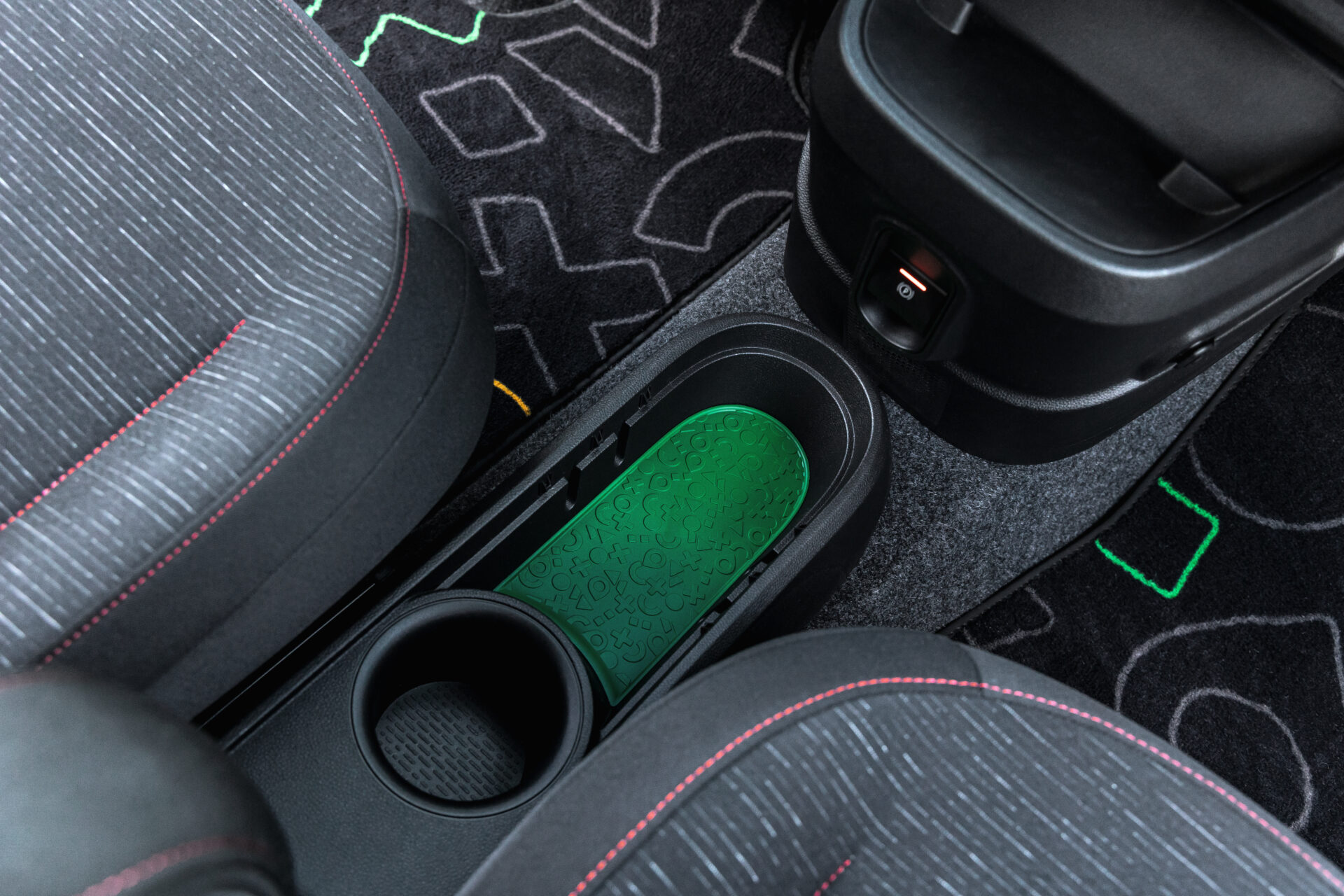
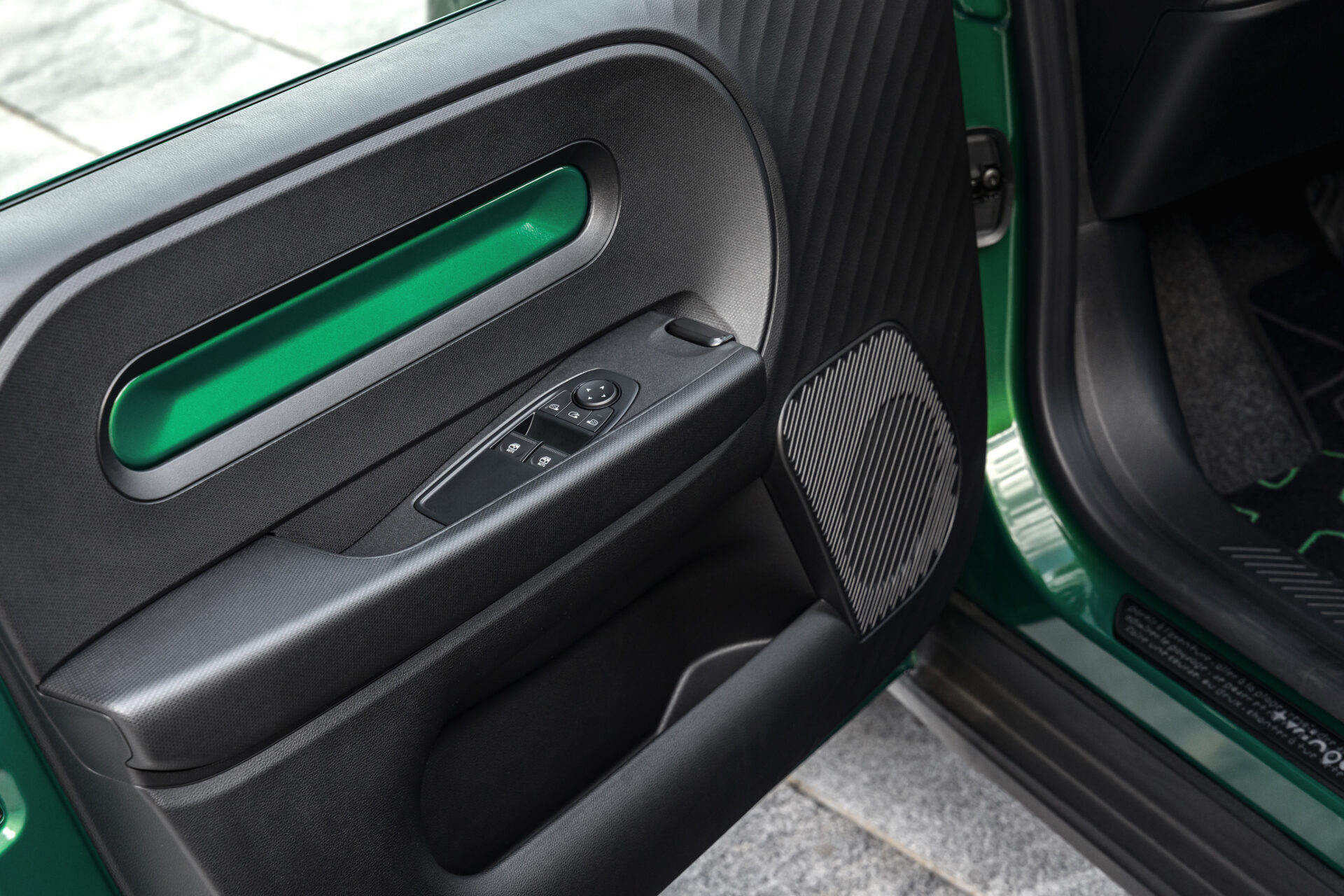
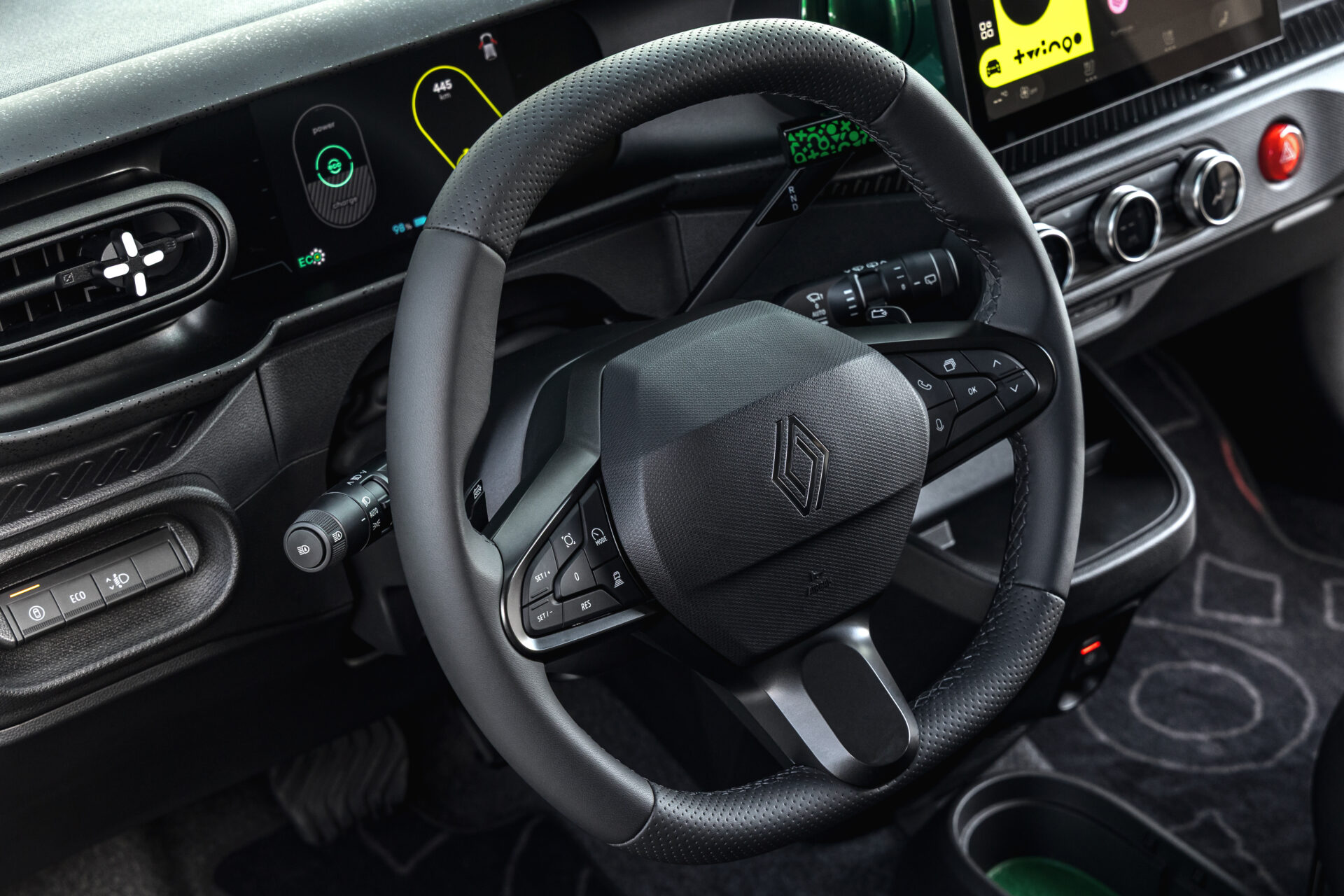
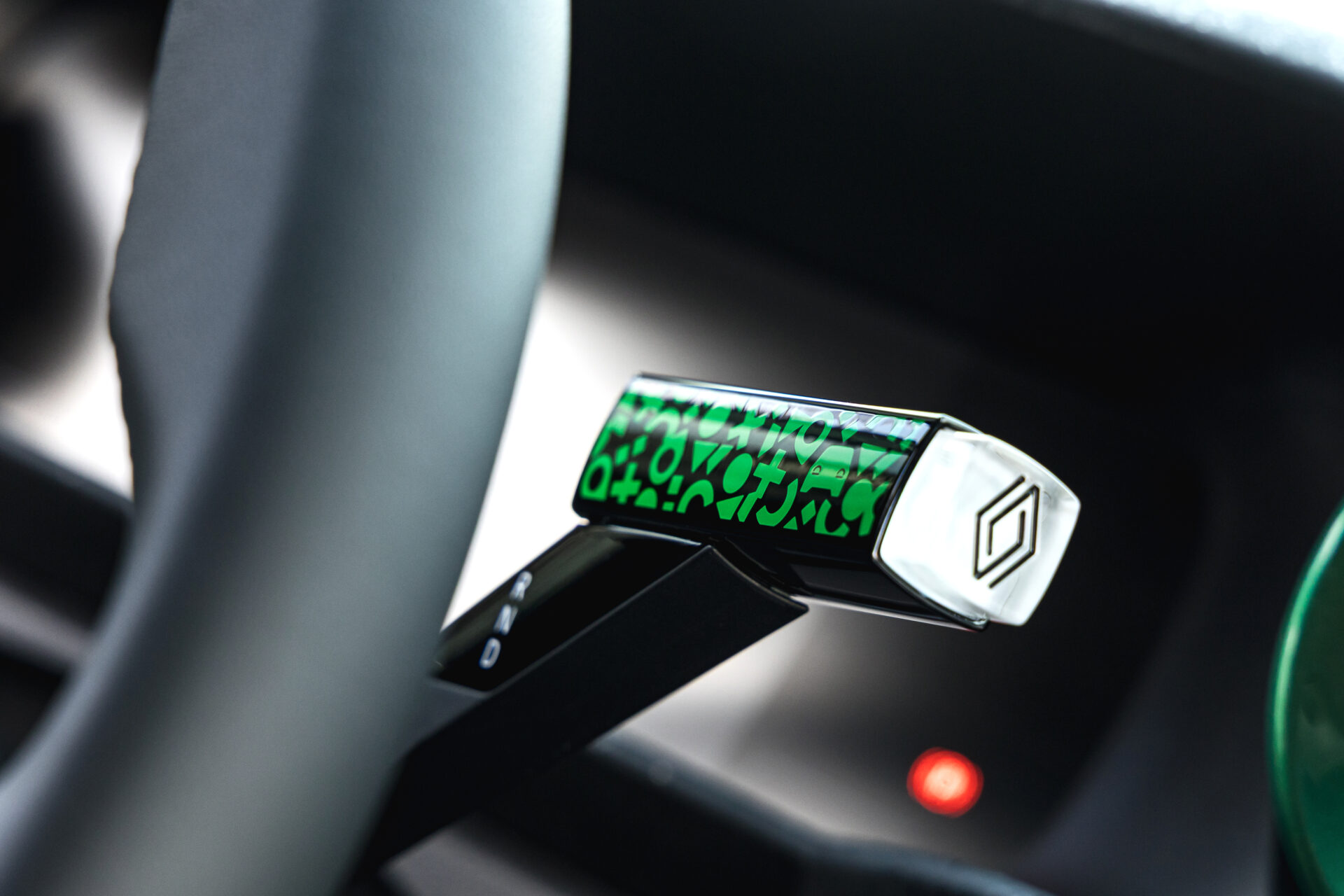
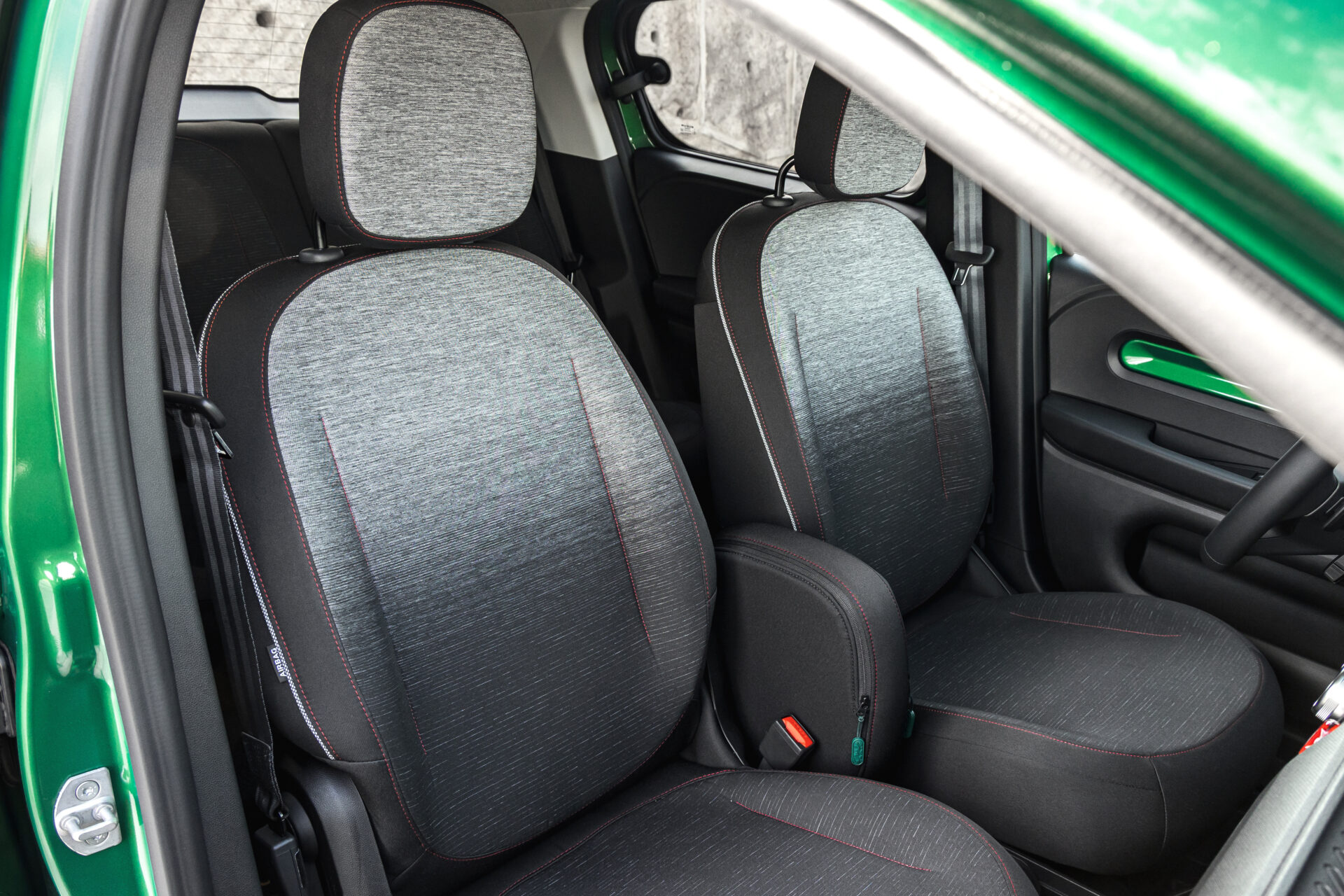
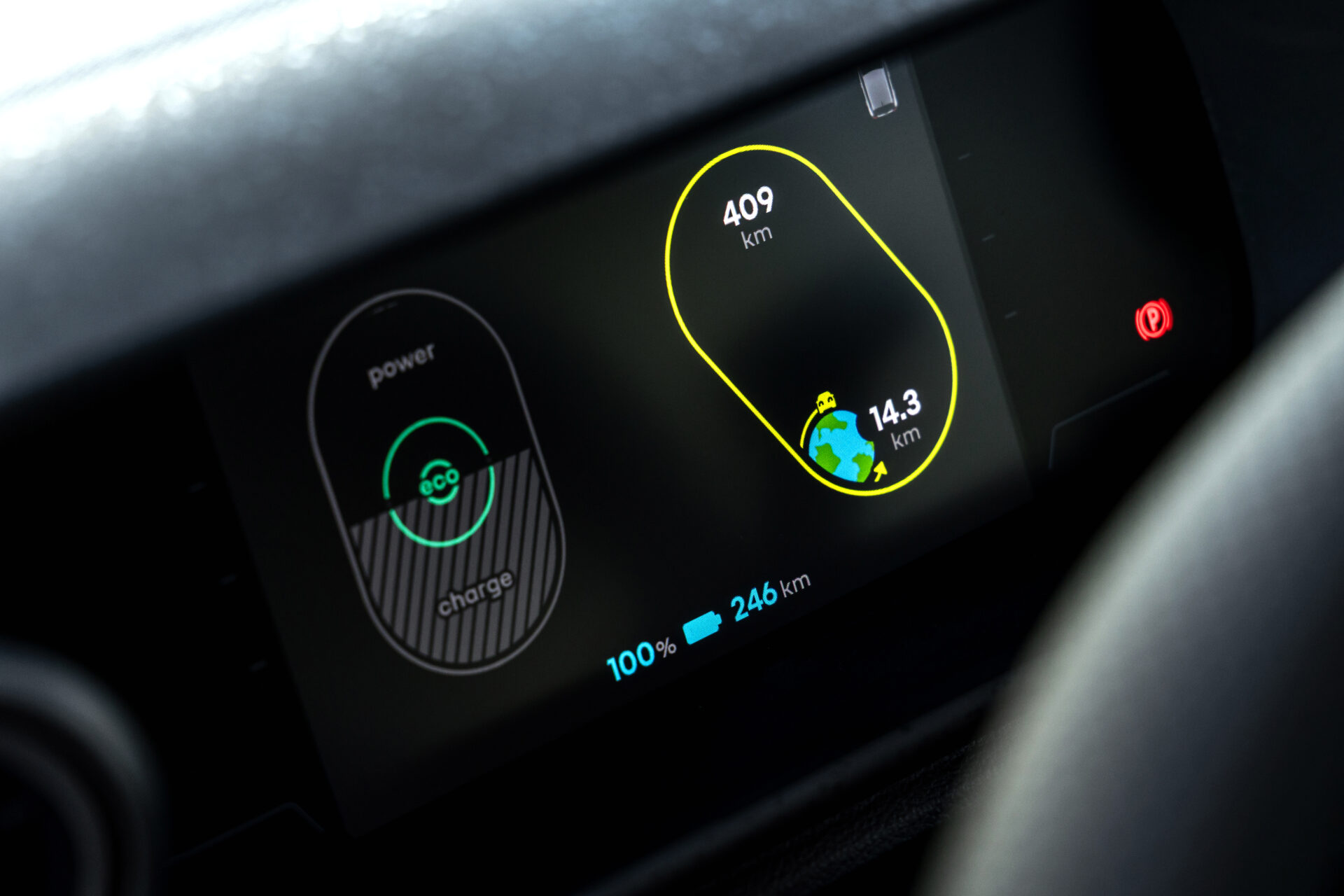
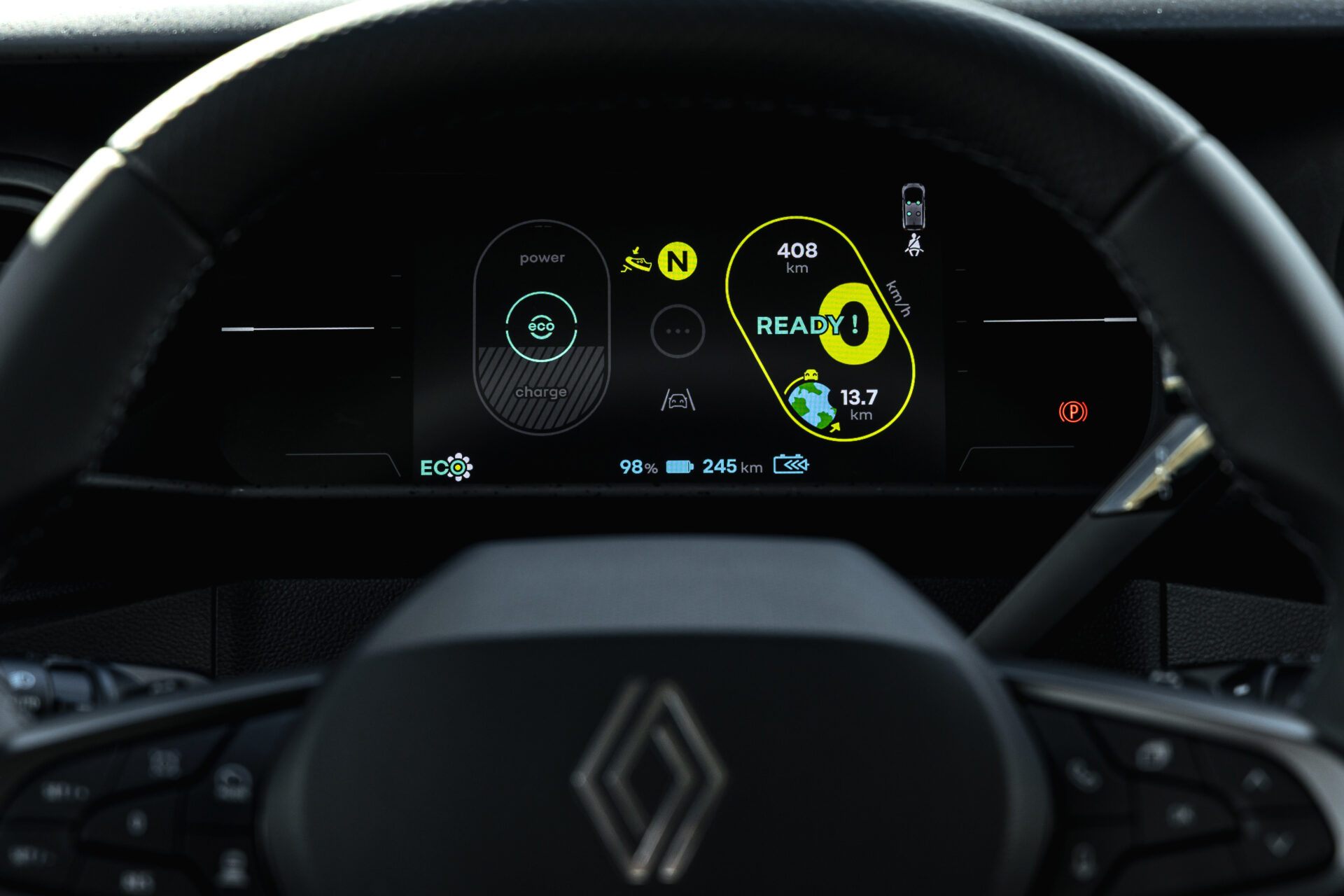
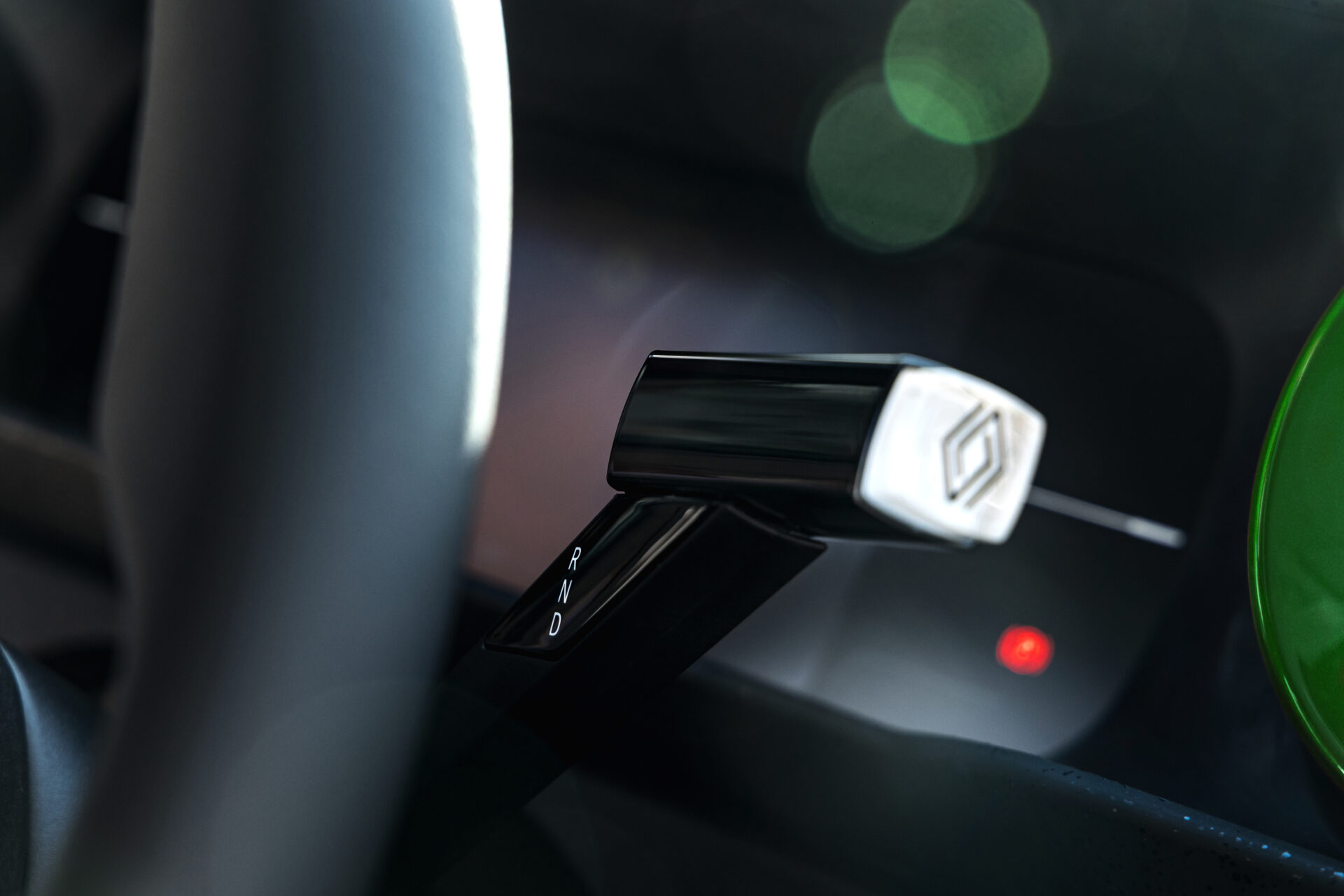
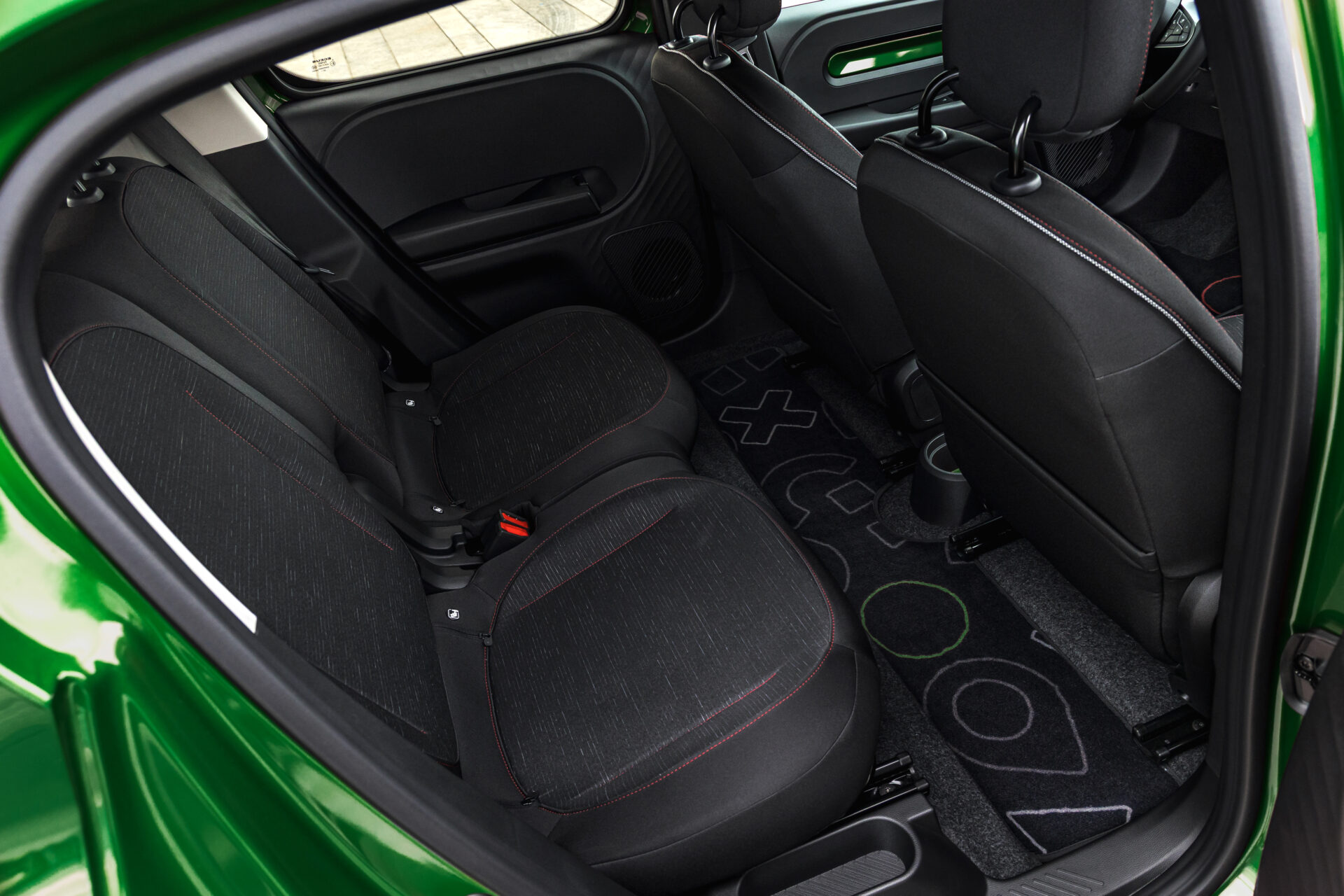
Inside, the cylindrical dashboard and dual horizontal screens — 7 inches for the instrument cluster, 10 inches for the infotainment system — create a surprisingly modern ambience for the segment. Nods to the first generation are scattered throughout, right down to the original slogan embossed on the rear seat straps. Body-colour accents in the cabin add a welcome touch of personality. The materials are those of an affordable city car — let’s be clear about that — but the build quality is decent and the overall look is rather pleasing. As for storage, the cabin offers more than ten open compartments totalling up to 19 litres — simple and practical, exactly what you’d expect from a car designed for everyday use.
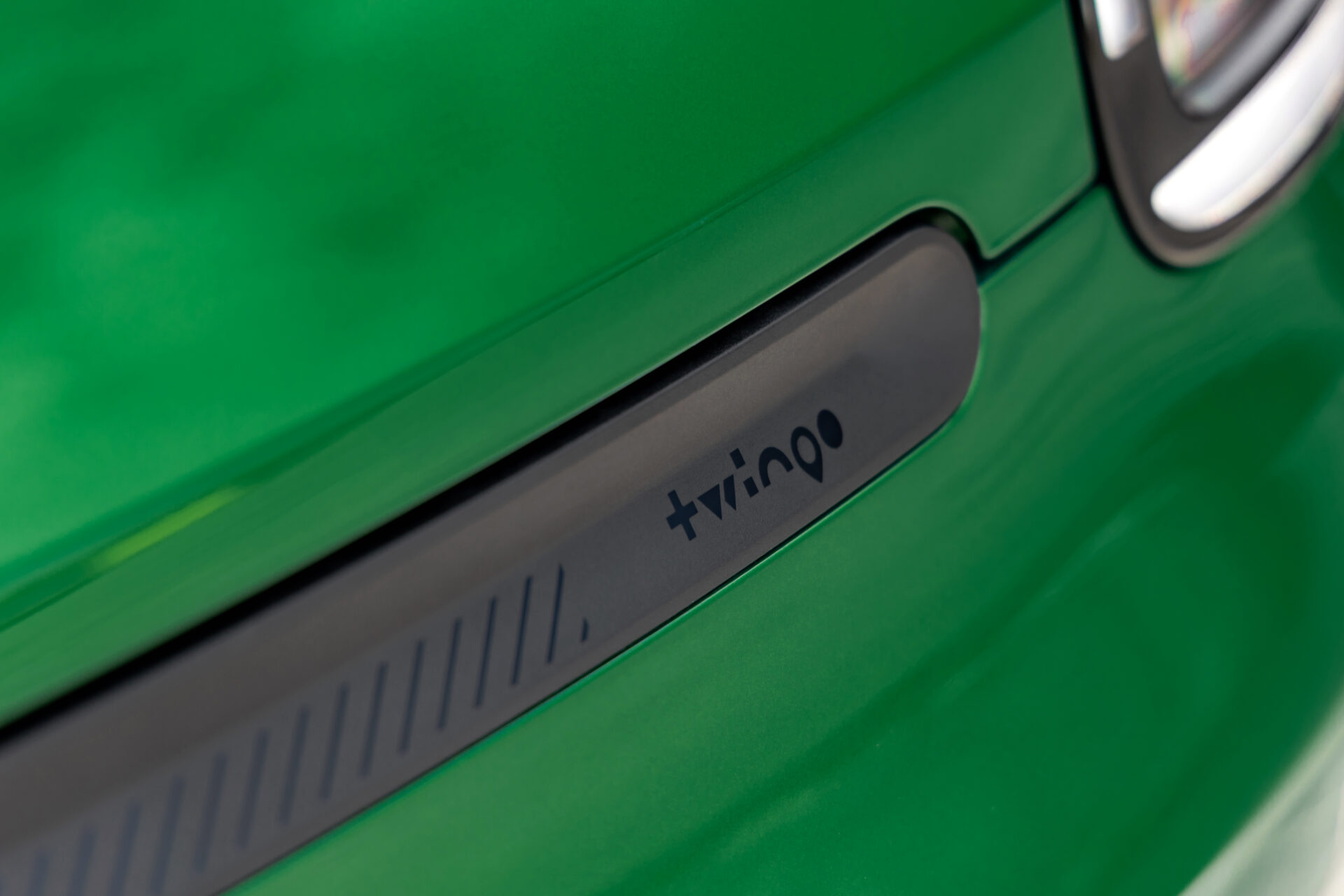
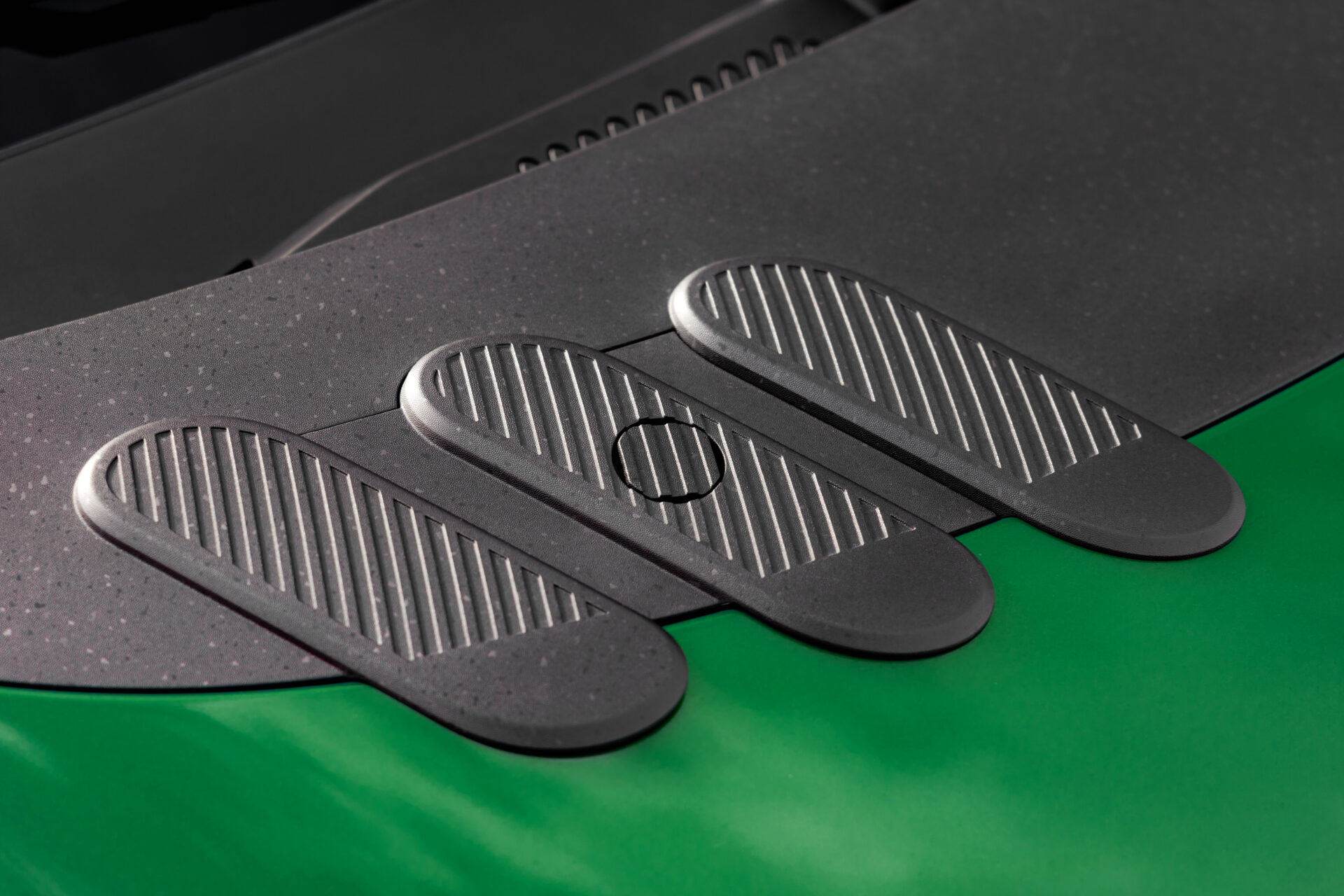
One surprising detail: the Twingo’s bonnet doesn’t open — at least not for the user. Renault made the radical decision to seal off the engine bay entirely. The logic is hard to argue with: with an electric powertrain, there’s simply nothing left to tinker with under the bonnet. Routine maintenance is carried out by the dealer network, and for the only task the driver can perform themselves — topping up the windscreen washer fluid — a dedicated flap has been fitted at the front of the vehicle, hidden beneath one of the three dummy air intakes on the bonnet.
What lies beneath the floor
The powertrain consists of a 60 kW (roughly 82 bhp) synchronous electric motor producing 175 Nm, fed by a 27.5 kWh LFP (lithium iron phosphate) battery. It’s a first for Renault Group, which has opted for a chemistry based on abundant materials such as iron and phosphate. The claimed range is 263 km on the WLTP cycle — expect closer to 180–220 km in real-world conditions. Top speed is limited to 130 km/h, the 0–100 km/h sprint takes 12.1 seconds and kerb weight starts at 1,200 kg for the Evolution version.
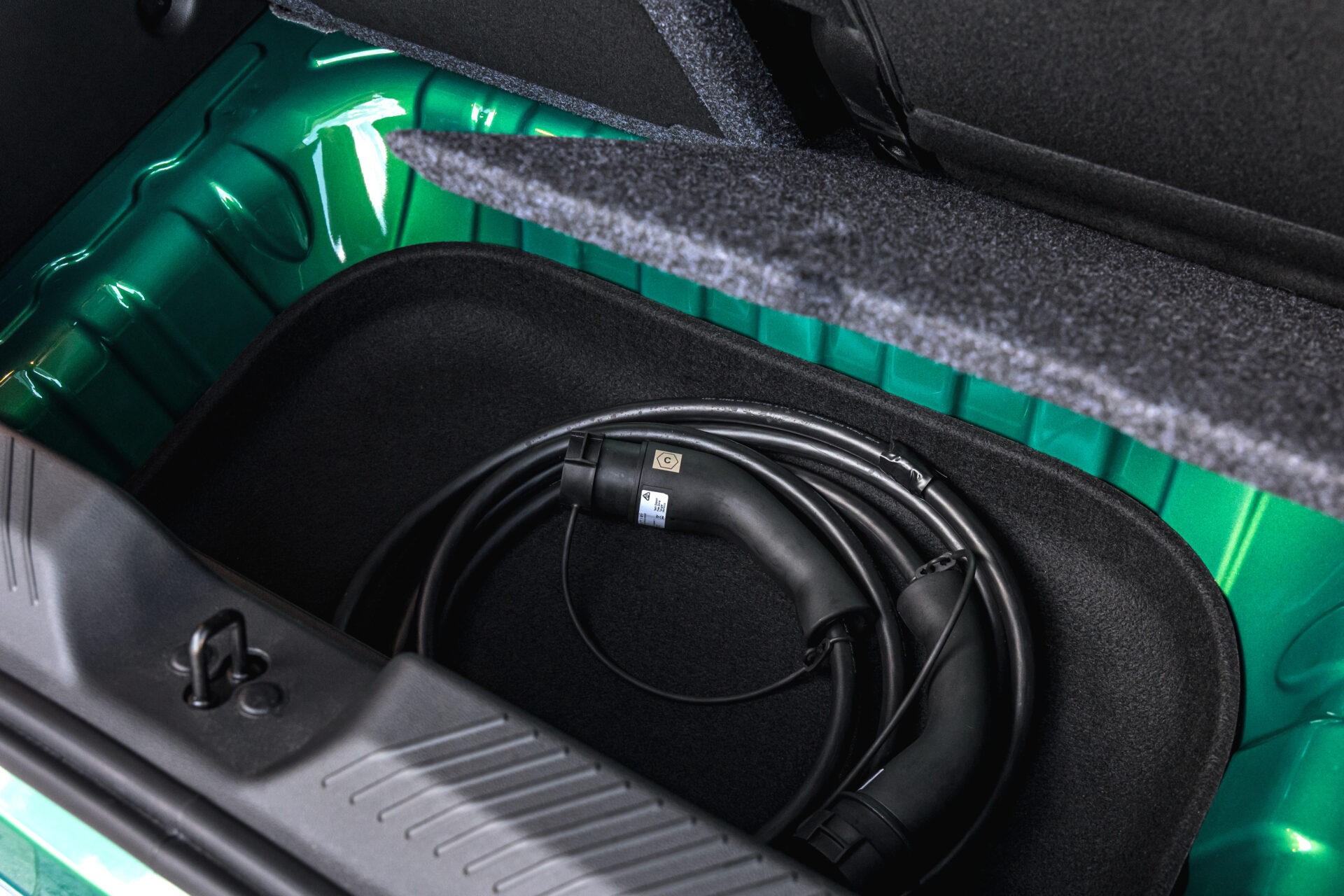
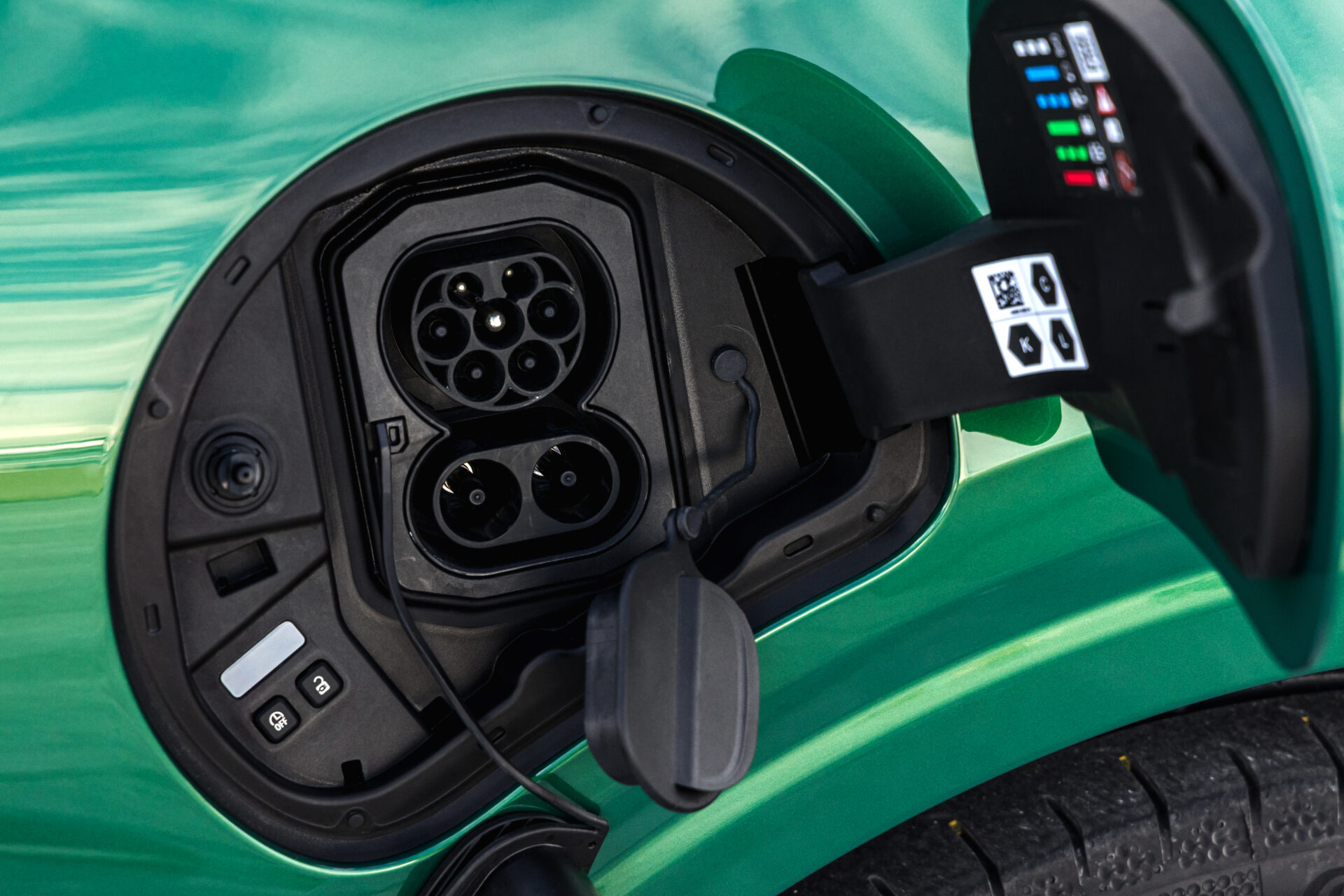
As standard, charging is via 6.6 kW AC, allowing a 10–100% charge in just over four hours. The optional “Advanced Charge” pack, priced at €474 in Luxembourg, adds an 11 kW bidirectional AC charger that brings this down to 2 hours 35 minutes, along with a 50 kW DC charger for a 10–80% top-up in 30 minutes at a fast-charging station. The pack also unlocks V2L (vehicle-to-load) capability, allowing the car’s battery to power a 220 V appliance drawing up to 3,700 W.
Two trim levels make up the range. The Evolution version already comes with the 10-inch infotainment screen with smartphone mirroring, automatic emergency braking, driver monitoring, sliding rear seats and manual air conditioning. The Techno adds the OpenR Link system with built-in Google — a first for the A-segment — automatic climate control, adaptive cruise control with Stop & Go, One Pedal driving, a reversing camera, hands-free keycard entry and an Arkamys six-speaker audio system. In Techno trim, Google Maps includes an electric trip planner that optimises charging stops, while the Mobilize Charge Pass solution provides access to over one million charging points across Europe.
On the road: lively in the city
Behind the wheel, the first impression is clear: this is a good little city car, and it makes sense. The 0–50 km/h time of 3.85 seconds is more than enough for urban traffic, and the 9.87-metre turning circle makes manoeuvring particularly easy. Agility is clearly one of its greatest strengths. The front axle, shared with the Renault 5 and 4 E-Tech Electric, inspires confidence. The semi-rigid rear axle, derived from the Captur, does the job without any sporting pretensions; ride filtering is acceptable but nothing more. The silence inherent to electric propulsion adds a welcome layer of everyday comfort. The One Pedal function, available on the Techno version, proves especially pleasant in stop-and-go traffic and when approaching roundabouts, allowing you to decelerate to a complete stop without touching the brake pedal.
That said, the 82 bhp make themselves felt as soon as you leave the city. This is clearly an urban car, not a tourer, and you shouldn’t ask it to be anything more.
Limitations to be aware of
The Twingo E-Tech Electric is not designed for long journeys. It can handle the motorway, but range will drop quickly at sustained speed. The fact that DC fast charging is offered as an option rather than as standard is disappointing for a vehicle that sets out to be the ambassador of affordable electric mobility. The simplified rear axle and modest power output confine driving enjoyment firmly to the urban register. The absence of automatic climate control and hands-free keycard entry on the Evolution version is a reminder of the compromises that come with the entry-level price. Finally, taller passengers (from around 1.85 m) will find that rear headroom reaches its limits — a concrete reminder that the Twingo remains a compact city car measuring just 3.79 m.
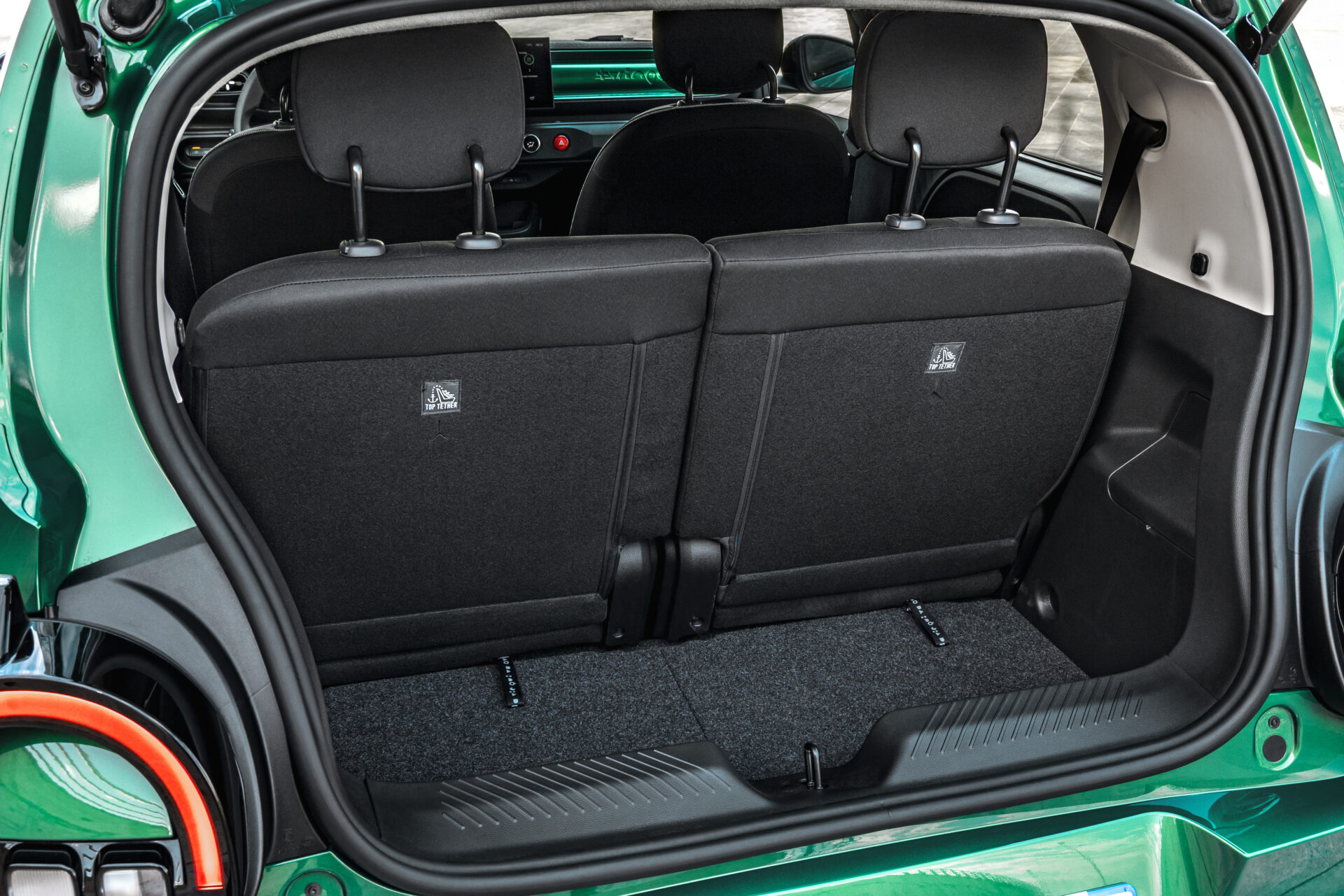
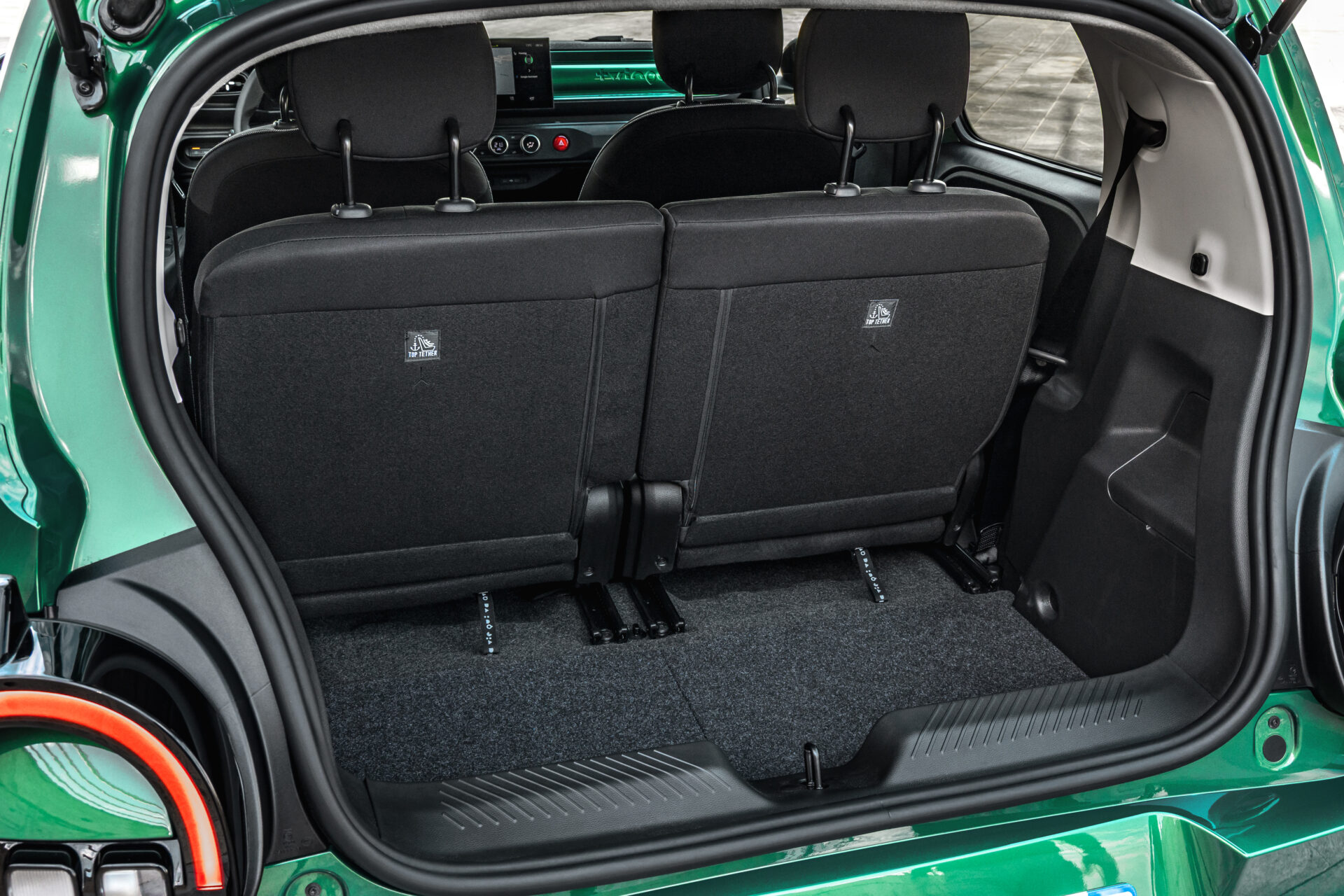
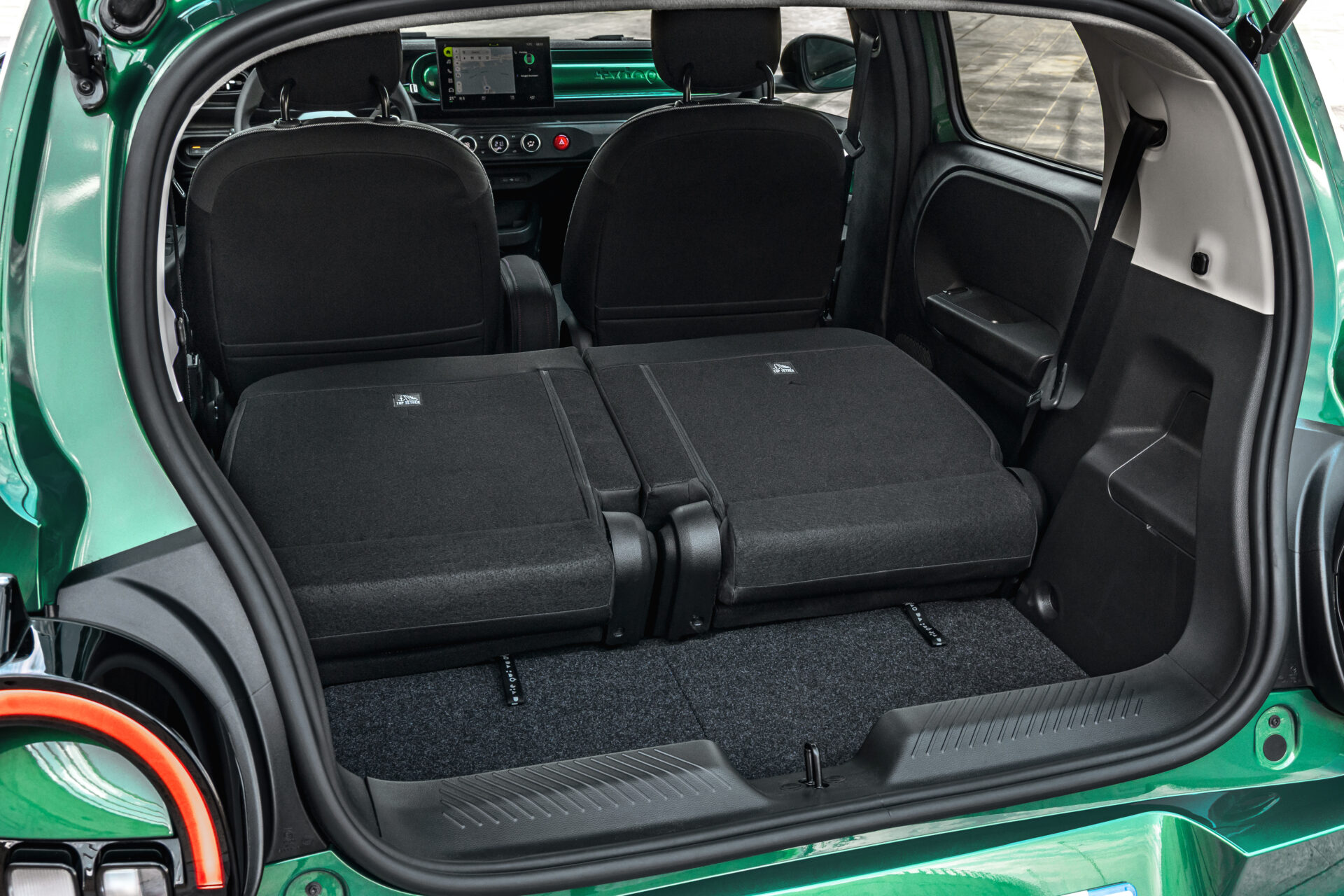
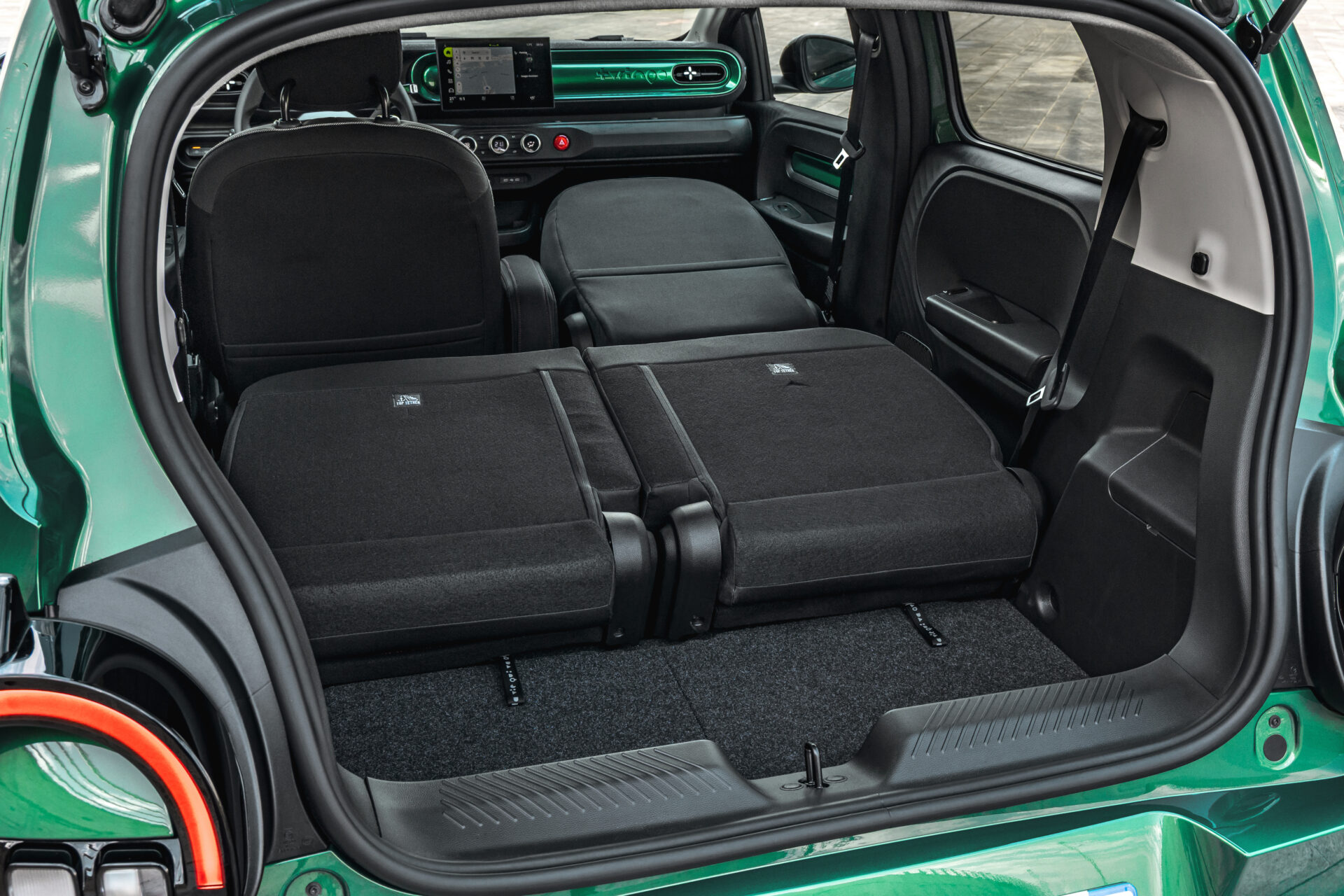
The sub-€20,000 price tag combined with standard equipment that sits above the segment average is the main selling point, and it’s a strong one. Then there’s the modularity, which is cleverly done: the individually sliding rear seats offer 17 cm of travel, letting you choose between more legroom or a larger boot depending on the moment’s needs. On the Techno version, the front passenger seatback folds flat to provide a 2-metre loading length, while folding the rear seatbacks frees up over 1,000 litres of cargo space. All within a footprint of just 3.79 m — simple and practical in the best sense. The technology package, too, impresses at this price point: the OpenR Link system with built-in Google, up to 24 driver-assistance features on the options list and bidirectional charging.
A well-rounded package
The Twingo E-Tech Electric won’t do everything, and it doesn’t claim to. Its limitations are clear: modest range, restrained power, a few concessions at entry level. But within its domain — daily urban and suburban use — it offers a well-rounded, well-thought-out package that is hard to fault at this price. Up against thin and often pricier competition in the electric A-segment, Renault is well positioned. If the manufacturer delivers on schedule and in volume, this Twingo has what it takes to convince.
What we like / What we don't
What we like:
- Its design
- Its price
- A well-rounded package
What we don’t:
- The park assist — unnecessary for a car this size
- We would have liked a “boost” mode for a little extra power
Technical specifications:
- Power: 60 kW / 80 bhp
- Torque: 175 Nm
- Battery capacity: 27.5 kWh (LFP)
- WLTP consumption: 12.2 kWh/100 km (homologation pending)
- WLTP range: up to 263 km
- Acceleration 0–50 km/h: 3.85 s
- Top speed: 130 km/h
- Weight: from 1,200 kg
- Starting price in Luxembourg: €18,855 (Evolution version)