Where the Berlinette becomes a little bombshell
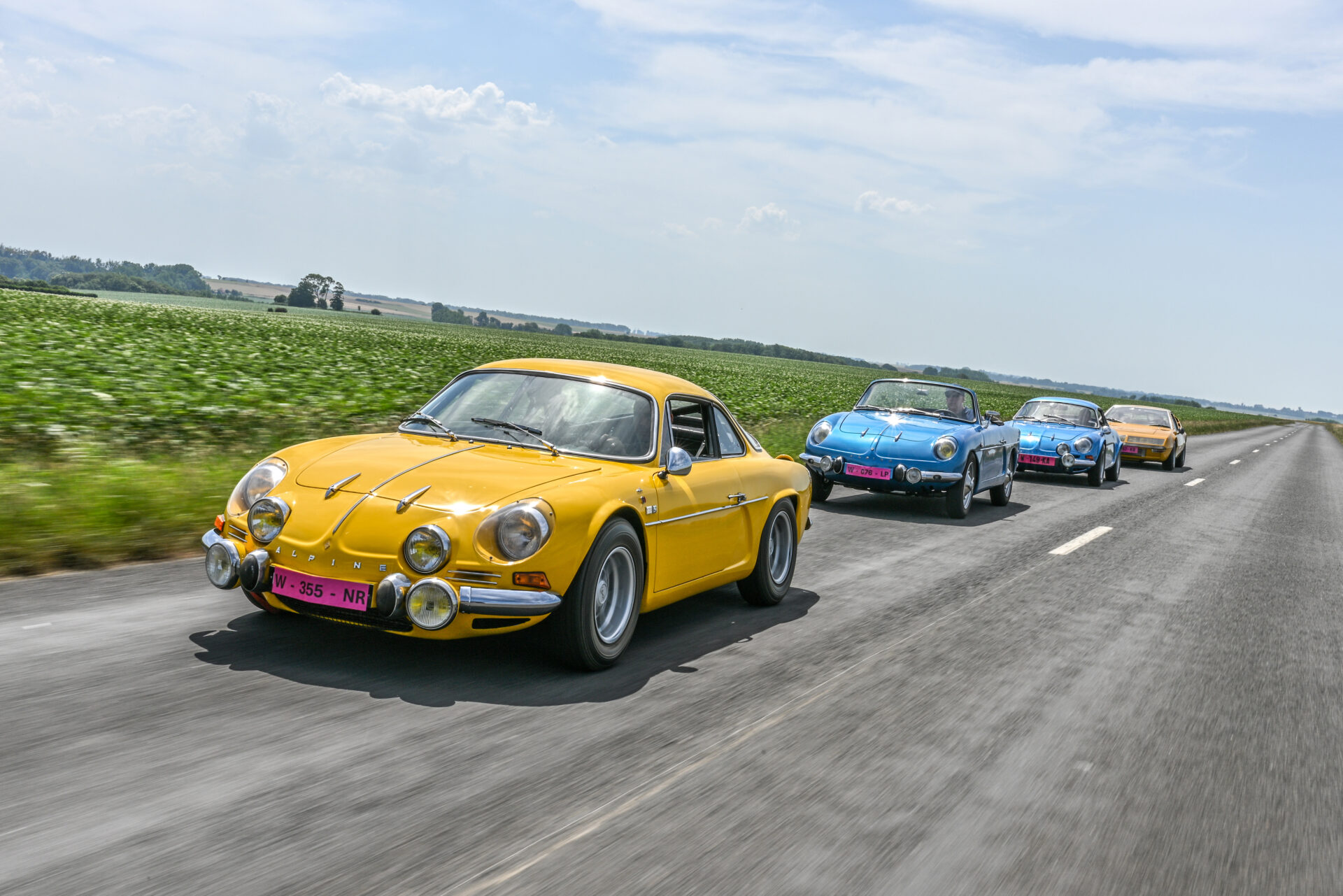
Is there a better way to travel through Alpine’s fabulous history than to get behind the wheel? From the A106, the Dieppe-based manufacturer’s first production car, to the latest second-generation A110, the anniversary edition named R70, what a ride!
Starting from Dieppe’s fishing harbour, the small coastal and country roads of the hinterland are the ideal playground for these cars, designed to combine lightness with agility: just 550 kg for an A106! Given the little beast’s dimensions, climbing behind the wheel is already something of a gymnastic exercise. But inside this red cabin from the late 1950s, 1959 to be precise, and despite the tight quarters, you feel at home straight away.
Where things get complicated, and we had been warned, is the gear lever. The five-speed Pons gearbox, patented Claude, was hand-built to the specific requirements of competition. At the front, from left to right, sit reverse, third and fifth gear, with first, second and fourth behind.
Finding neutral
Staying both focused and relaxed, so as not to abuse the beautiful mechanicals, you quickly understand that once you’ve found neutral, arm outstretched, the rest more or less follows, while still using double-declutching to change down and spare the brakes: being drums, they could overheat quickly and lose efficiency.
Overall, this 66-year-old machine really does deliver on efficiency: steering, brakes and suspension all respond in period-appropriate fashion, and the general behaviour is thoroughly satisfying. Designed on the mechanical base of the Renault 4 CV and assembled by coachbuilder Chappe et Gessalin, this A106, of which 251 examples were built, allowed Alpine founder Jean Rédélé to achieve a number of sporting feats, including at the Mille Miglia.
Automotive modernism
According to Jean-Pascal Dauce, an engineer and, until recently, head of development at Alpine, “there’s a cheeky side to these little cars, which, in the aftermath of the war, outclassed the big, powerful and heavy pre-war cars. To me, Alpine’s lightness is the modernism of the 1950s.”
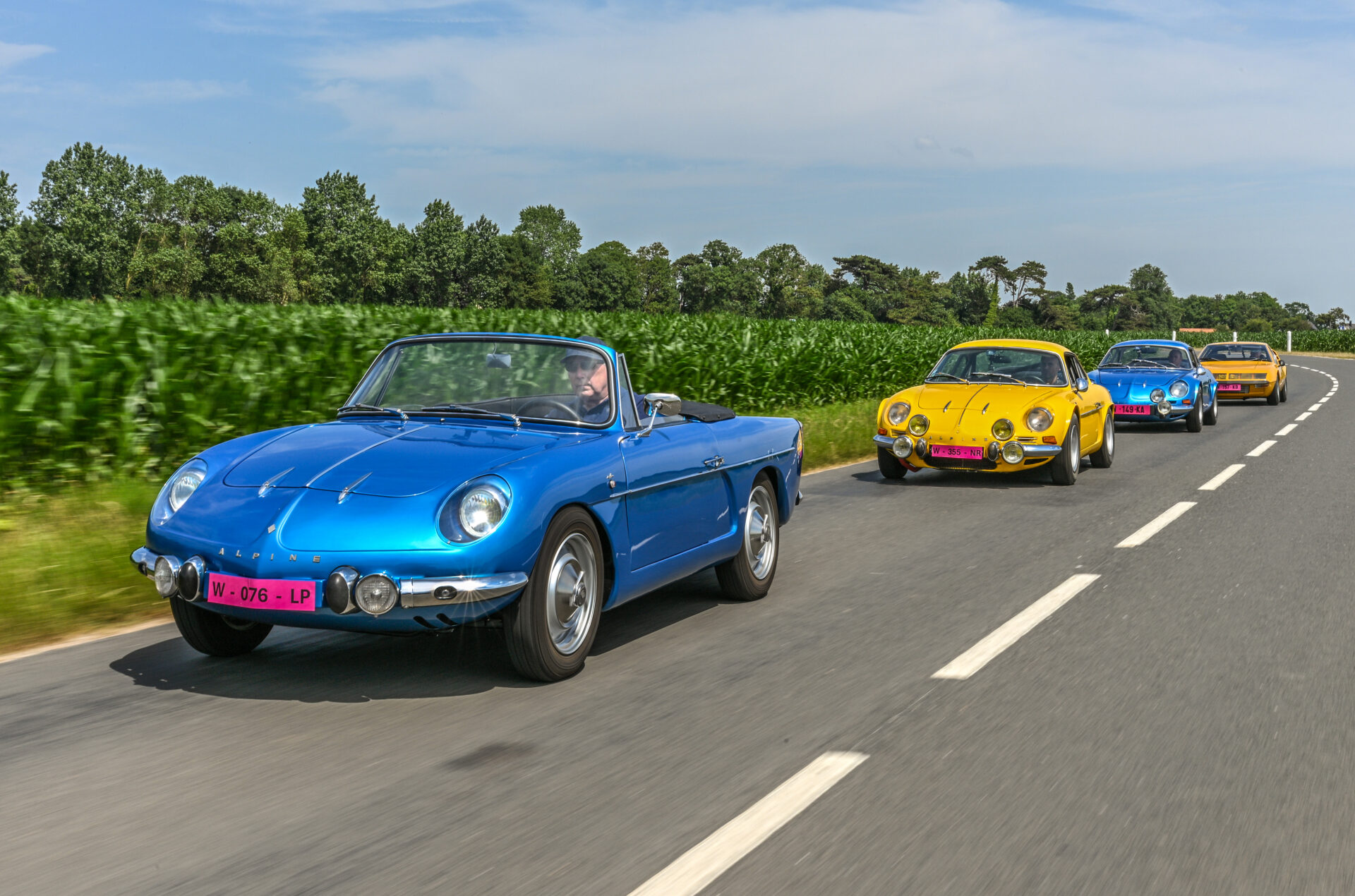
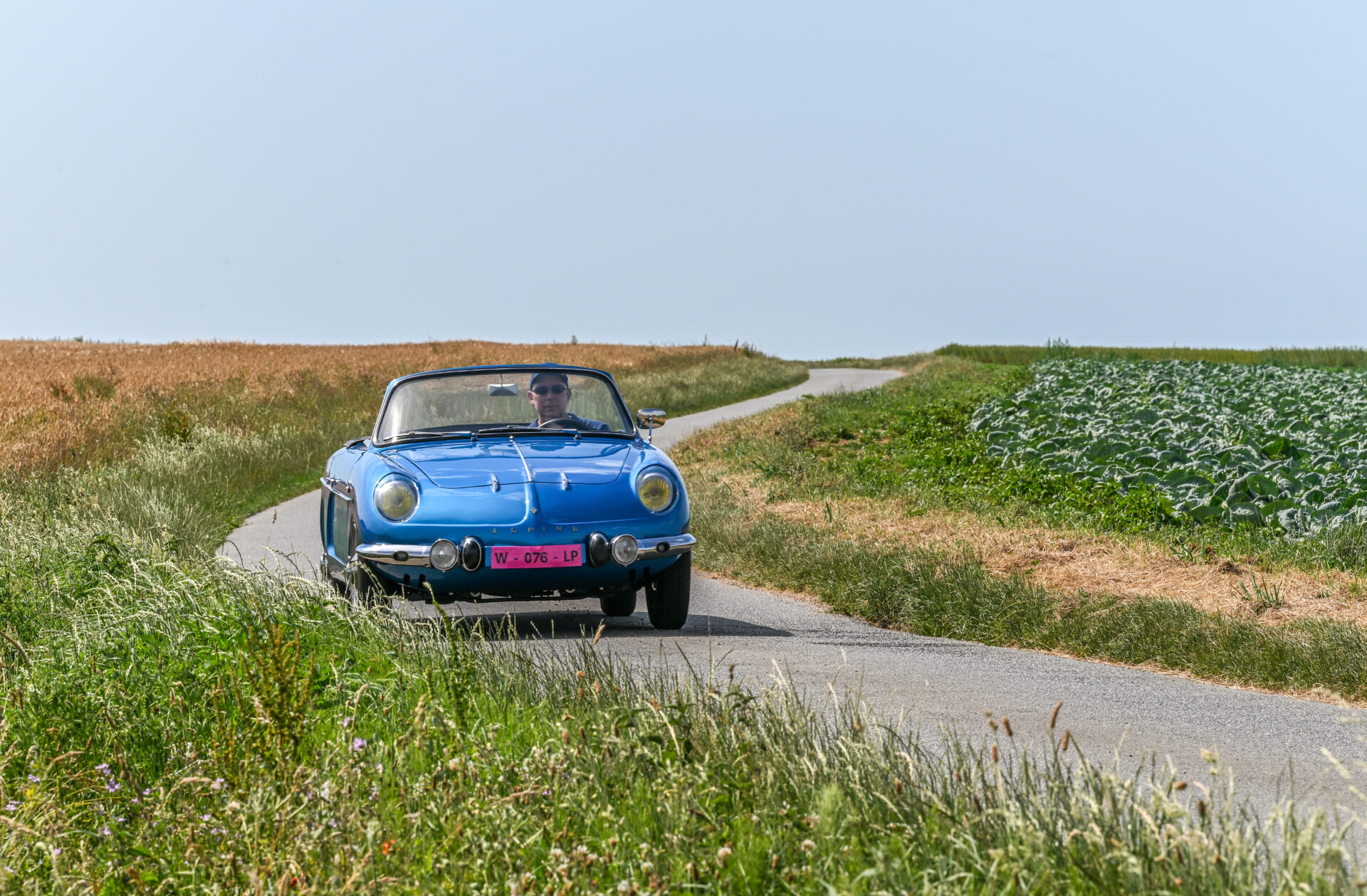
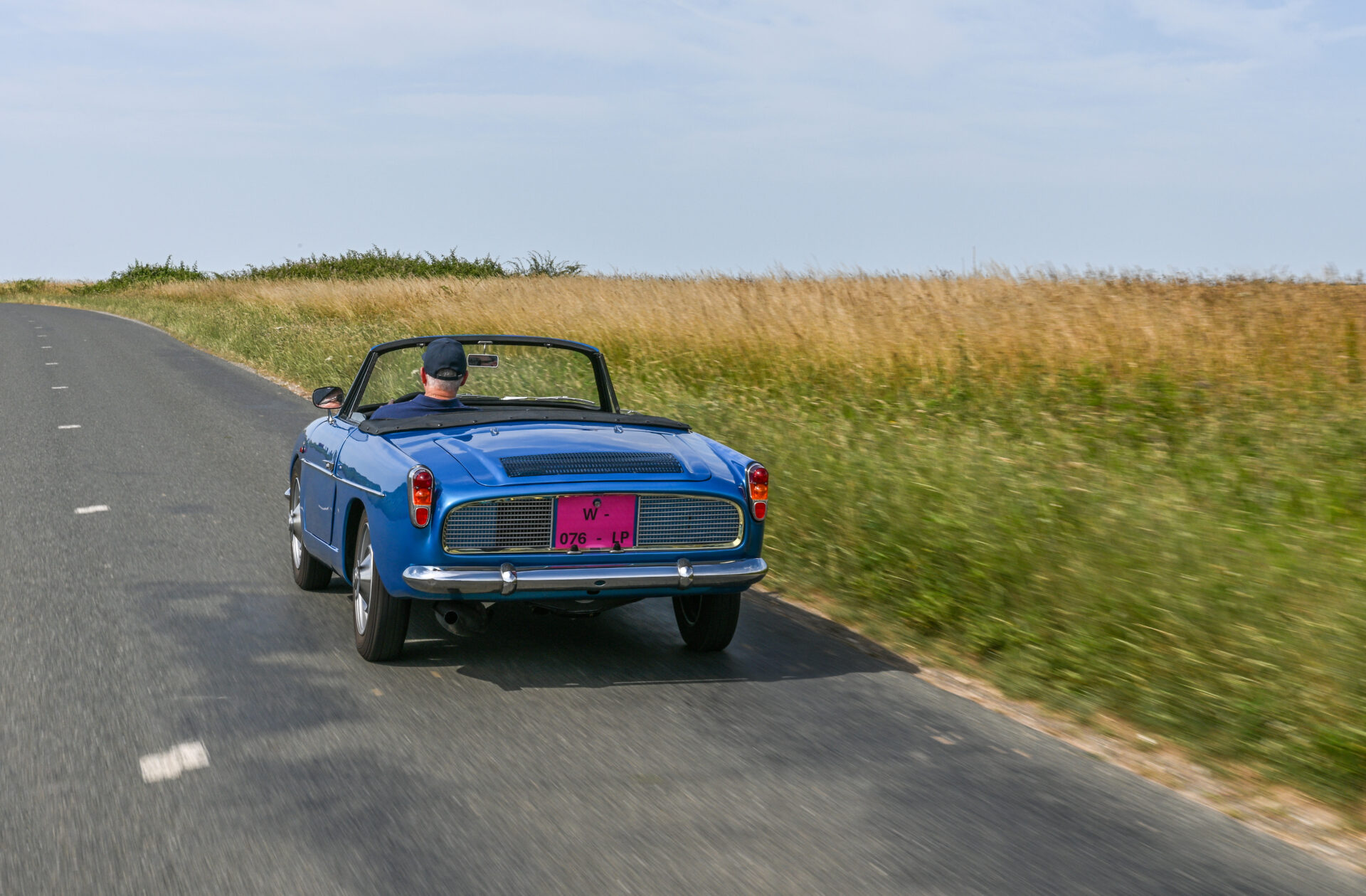
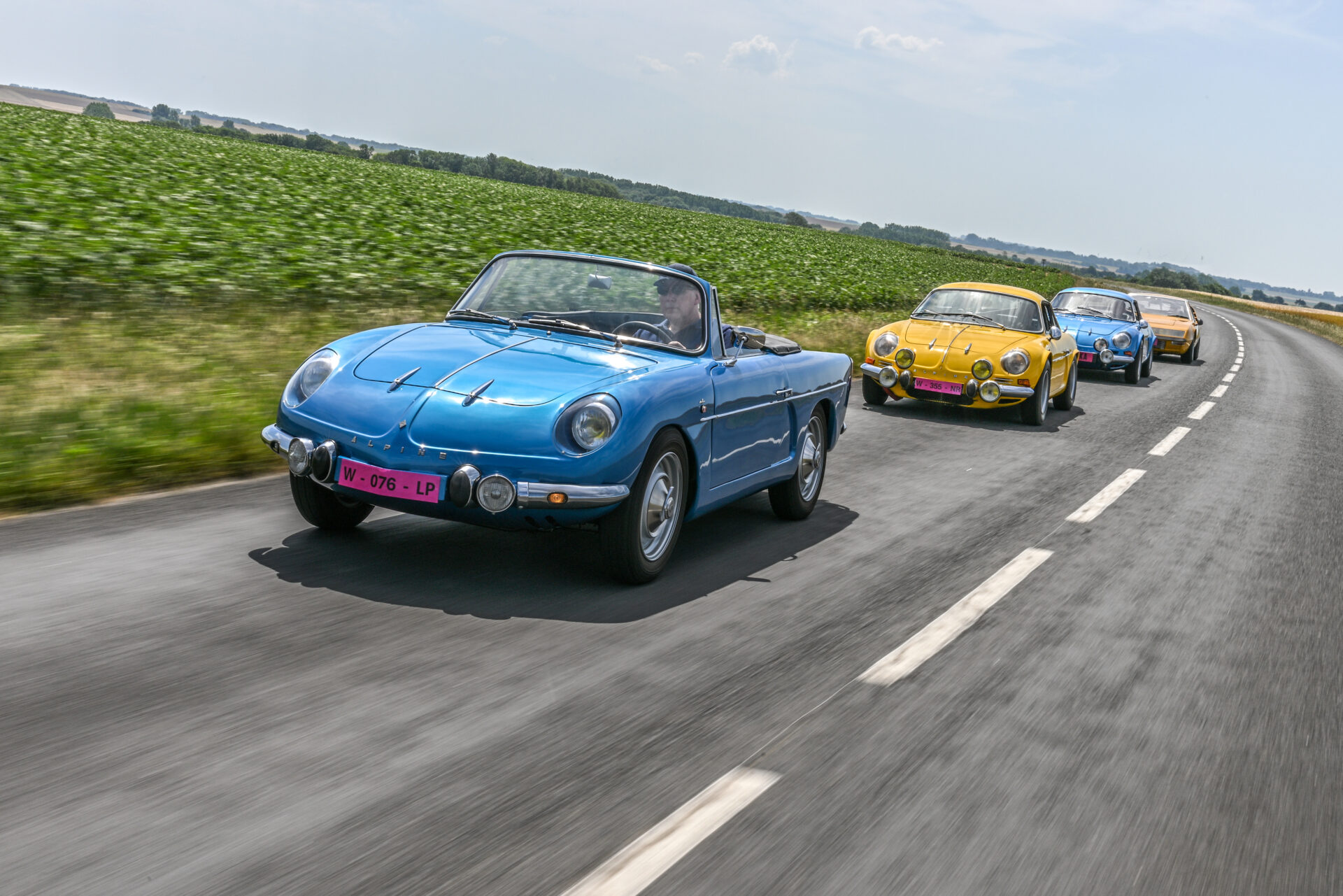
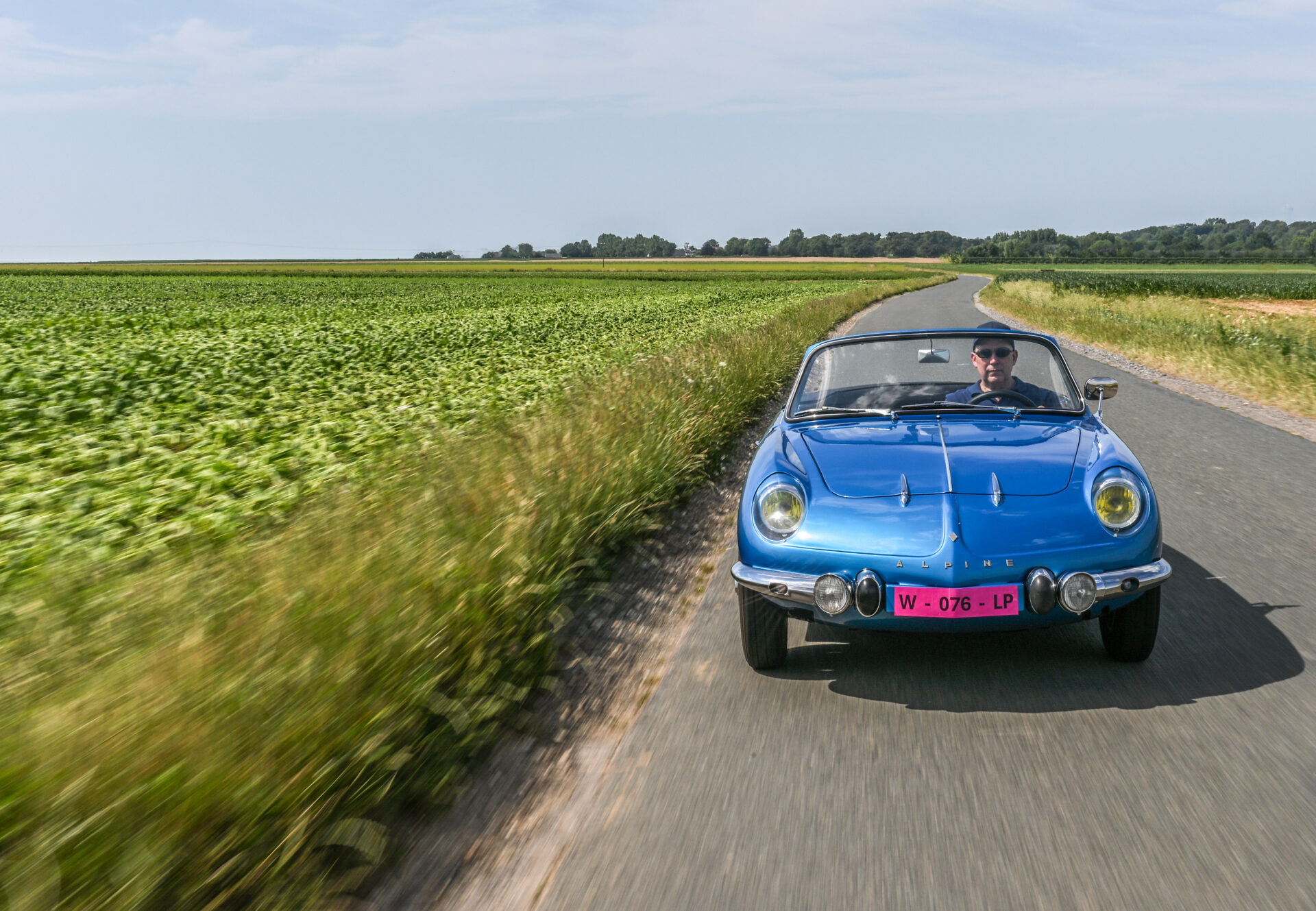
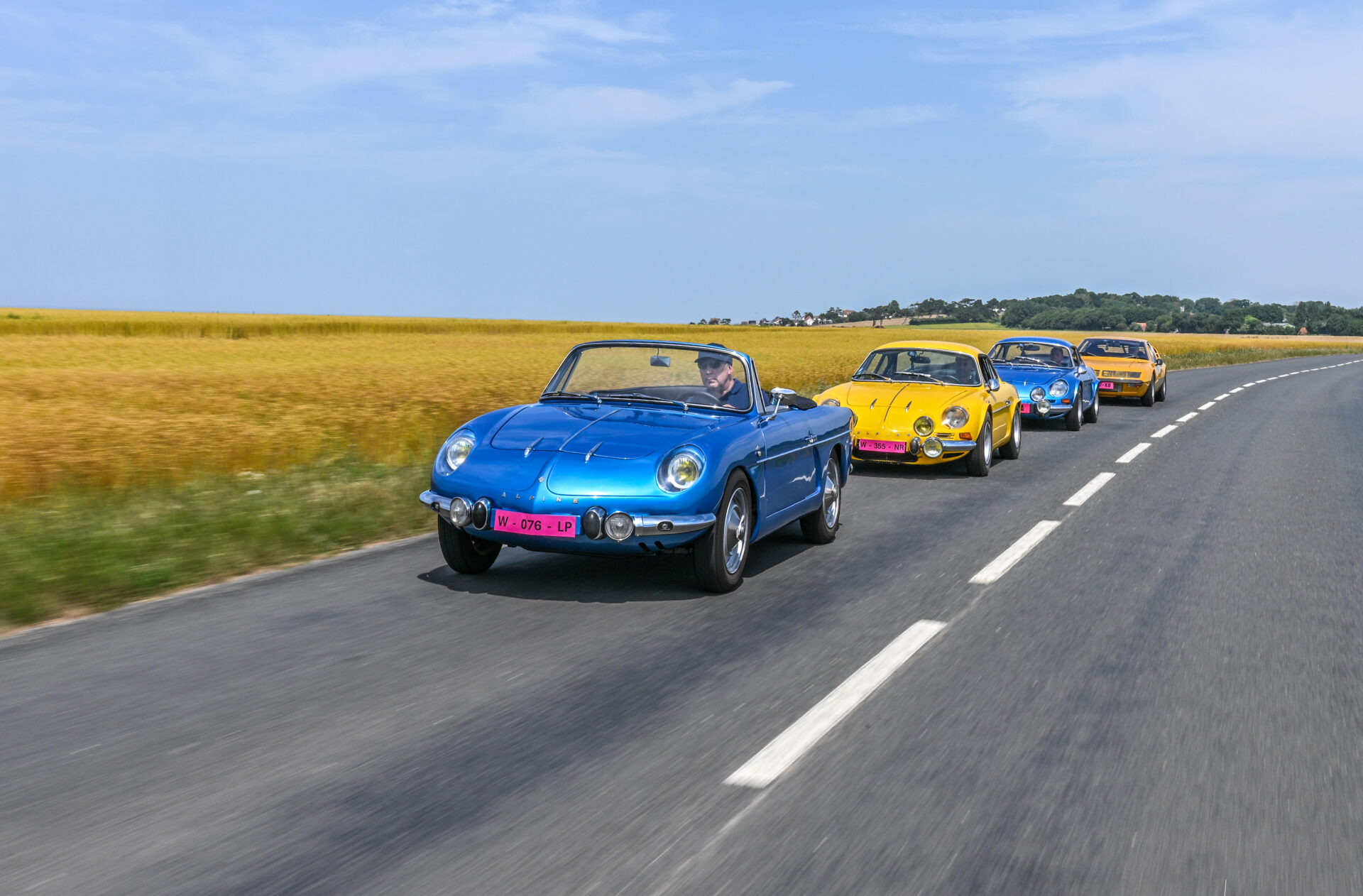
To begin the A110 adventure, we hop into the cabriolet version, appropriately blue, dating from 1965. The weather is fine over the Dieppe region, and we make the most of its low, forward-set windscreen, which affords a panoramic view. 585 kg of pure pleasure, with this little 1100 engine perfectly suited to relaxed cruising.
Behind the three-spoke, drilled Momo competition wheel, the car is a delight to handle, with mechanicals that respond eagerly and plenty of good feeling. The only slightly puzzling thing is the car’s design: the rounded front end is typically A110, but it stretches back into straight lines towards a rear styled after the Renault Floride or Caravelle, with American-style vertical fins. A slight stylistic mismatch that takes nothing away from the driving pleasure.
Alpine and the sombrero
Unlike the blue cabriolet built in France, fed by two twin-choke Solex carburettors, the Mexican Dinalpin version is fitted with an 1100 cc unit with conventional carburettors. Less powerful, then, at 60 hp against 80, this gleaming car from Central America is also a little heavier, 65 kg more at 650 kg: frankly, out on the road, even on the rugged coastal routes atop the chalk cliffs, these differences are barely noticeable.
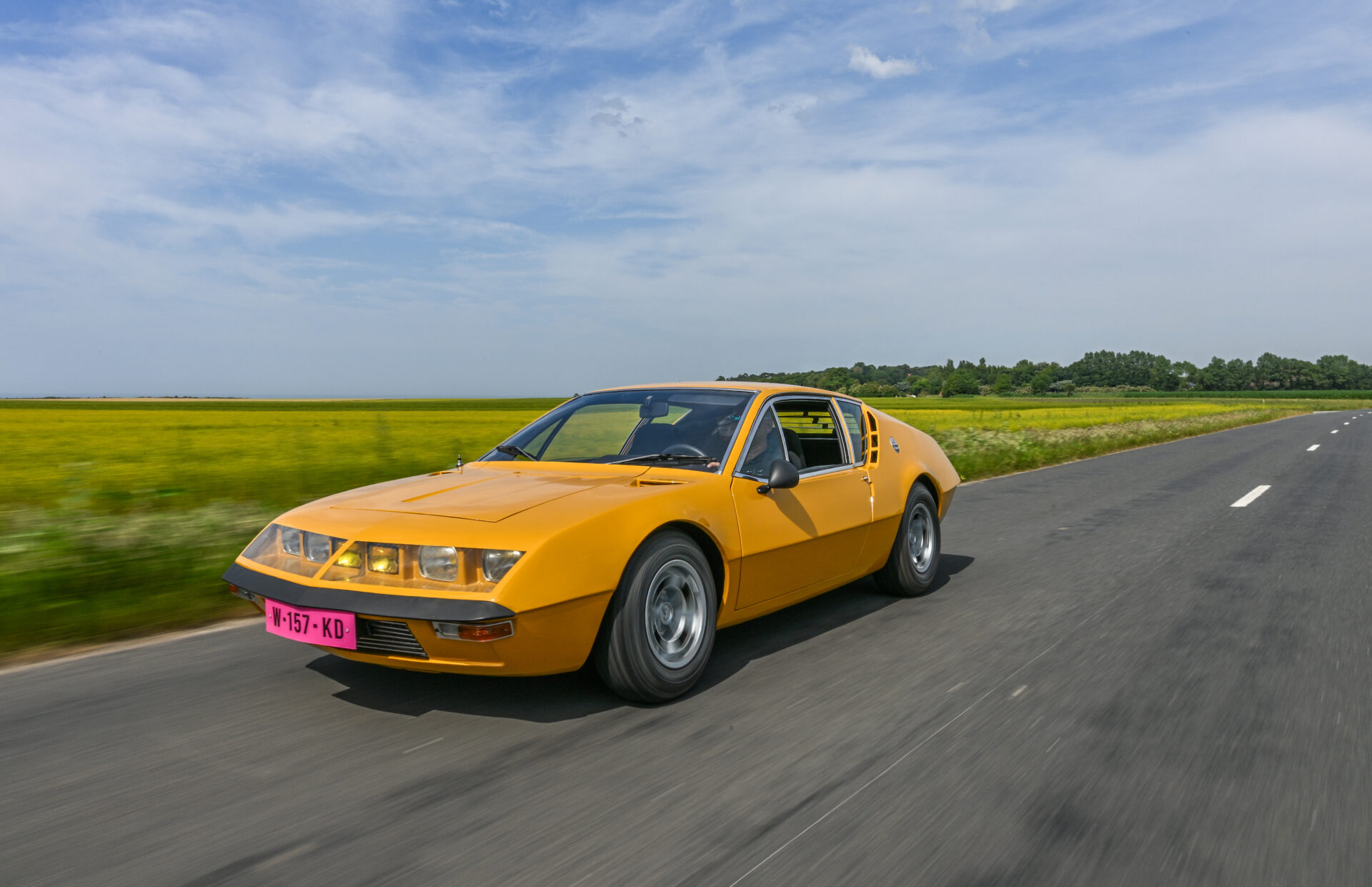
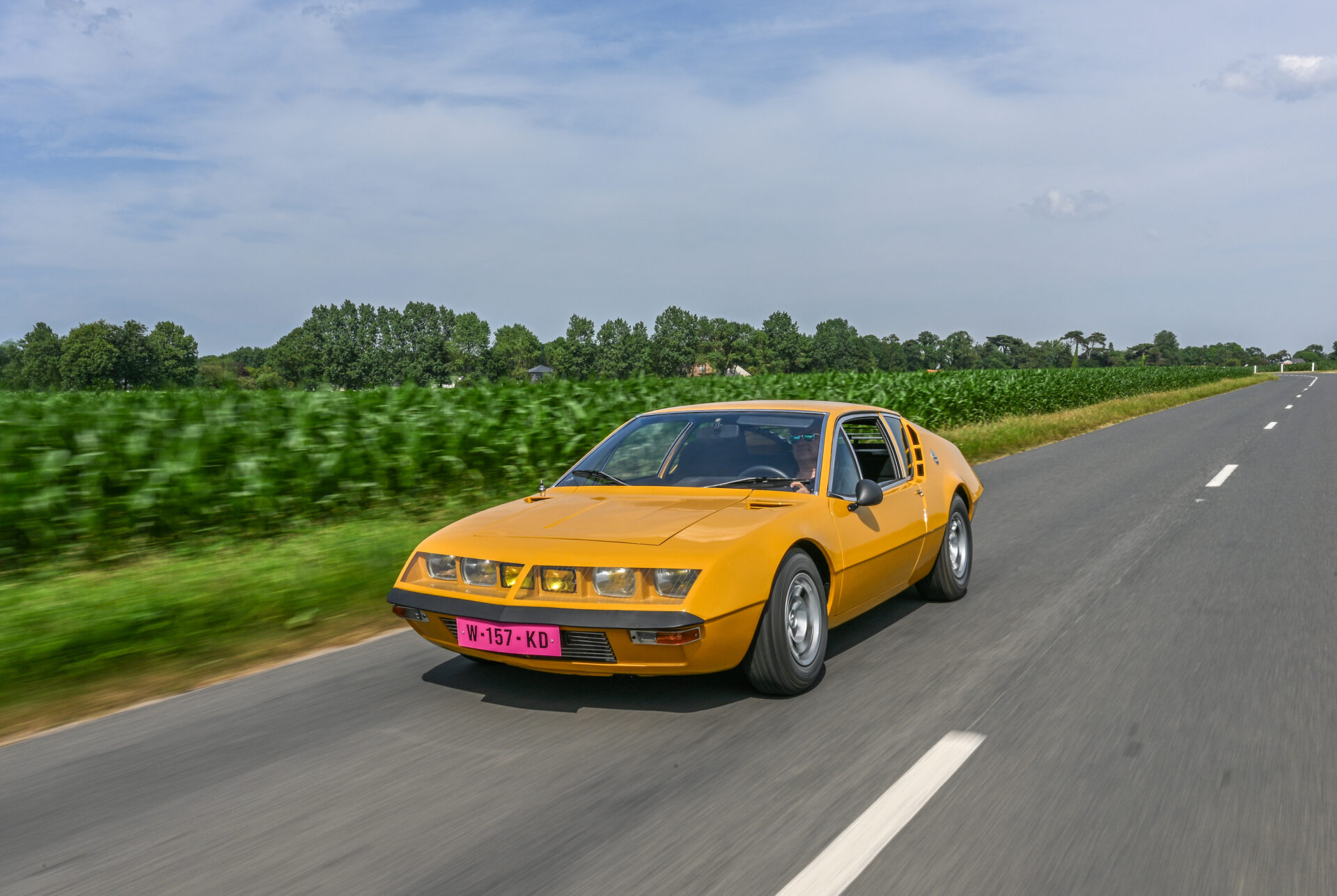
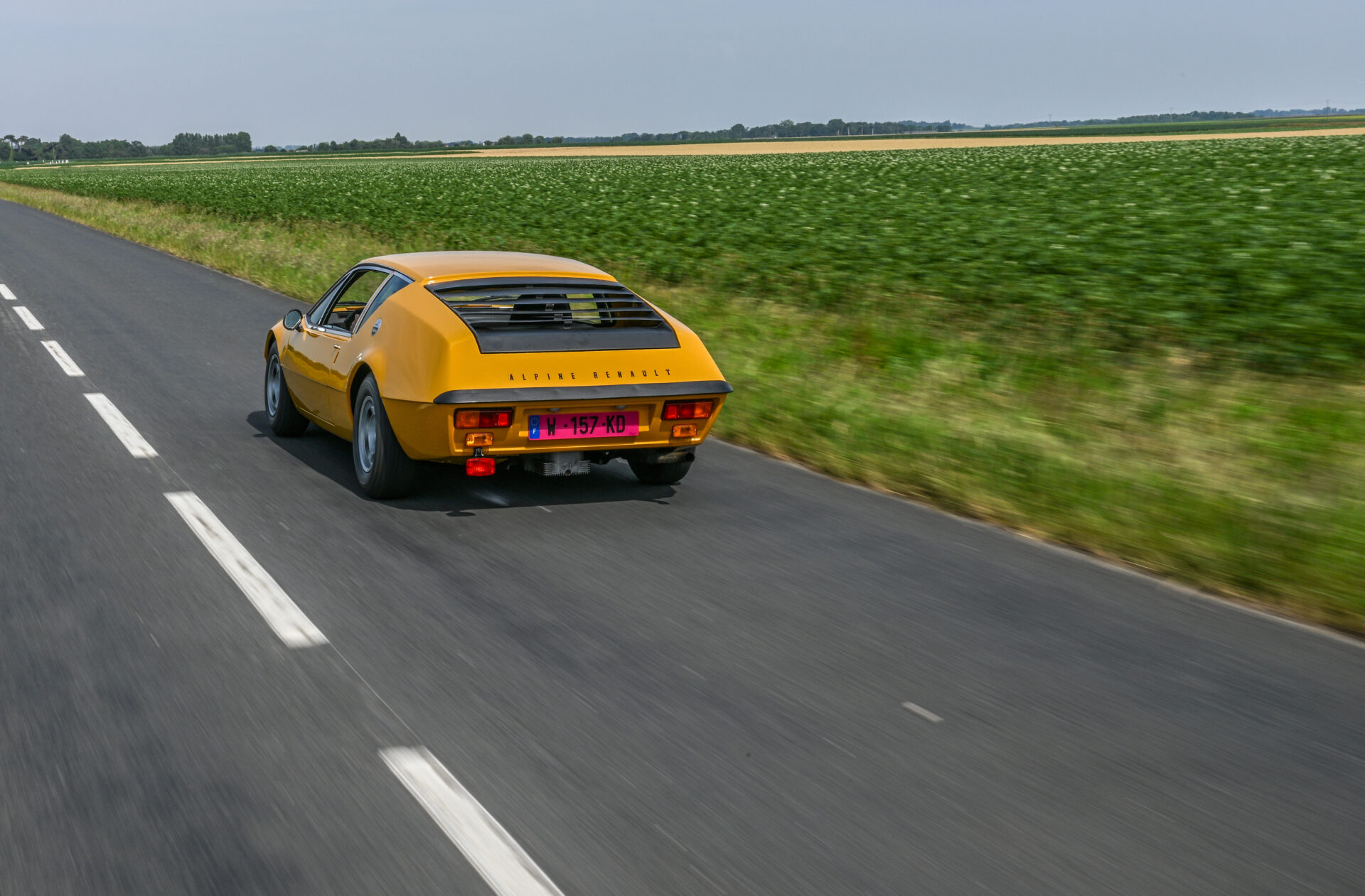
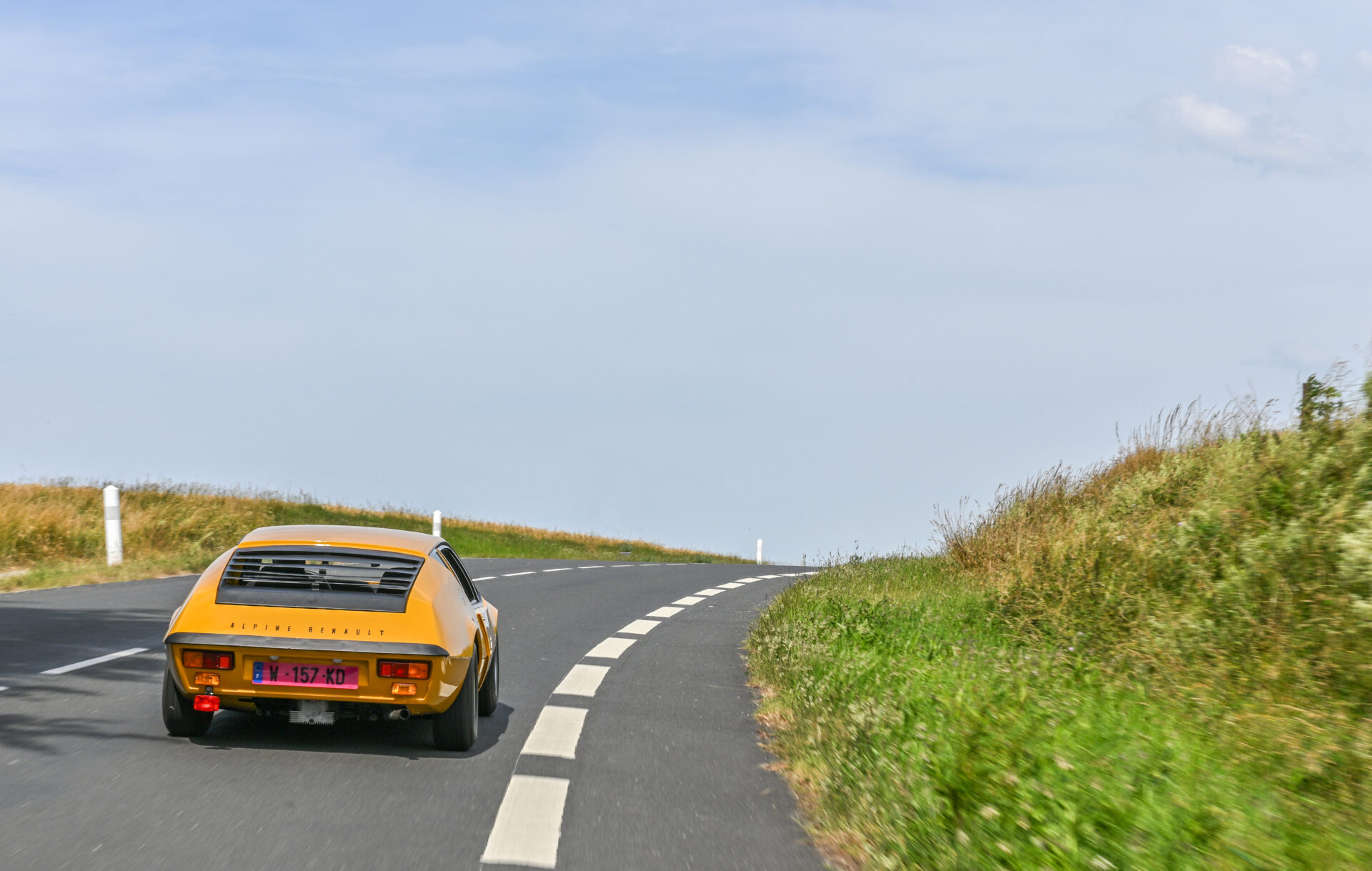
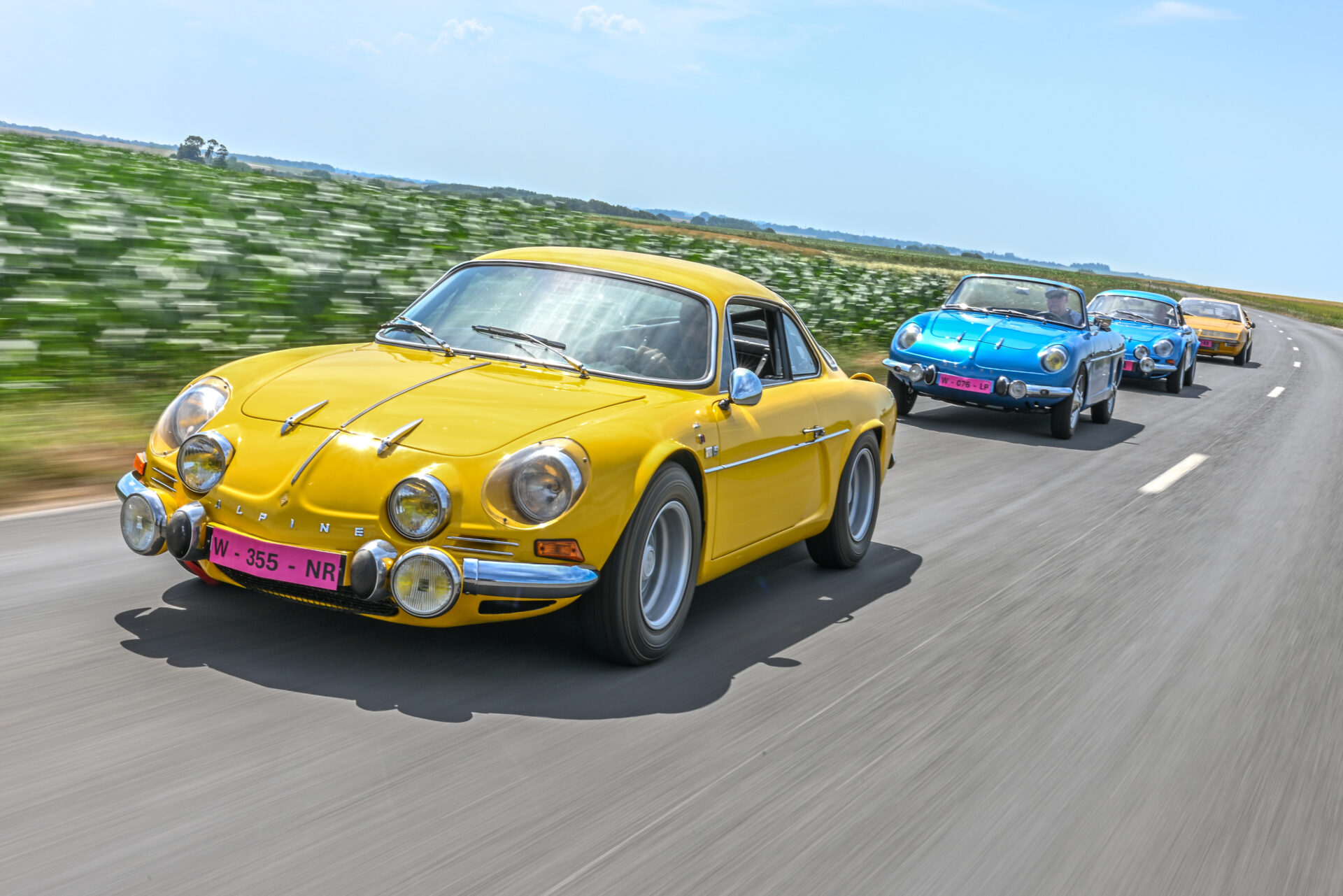
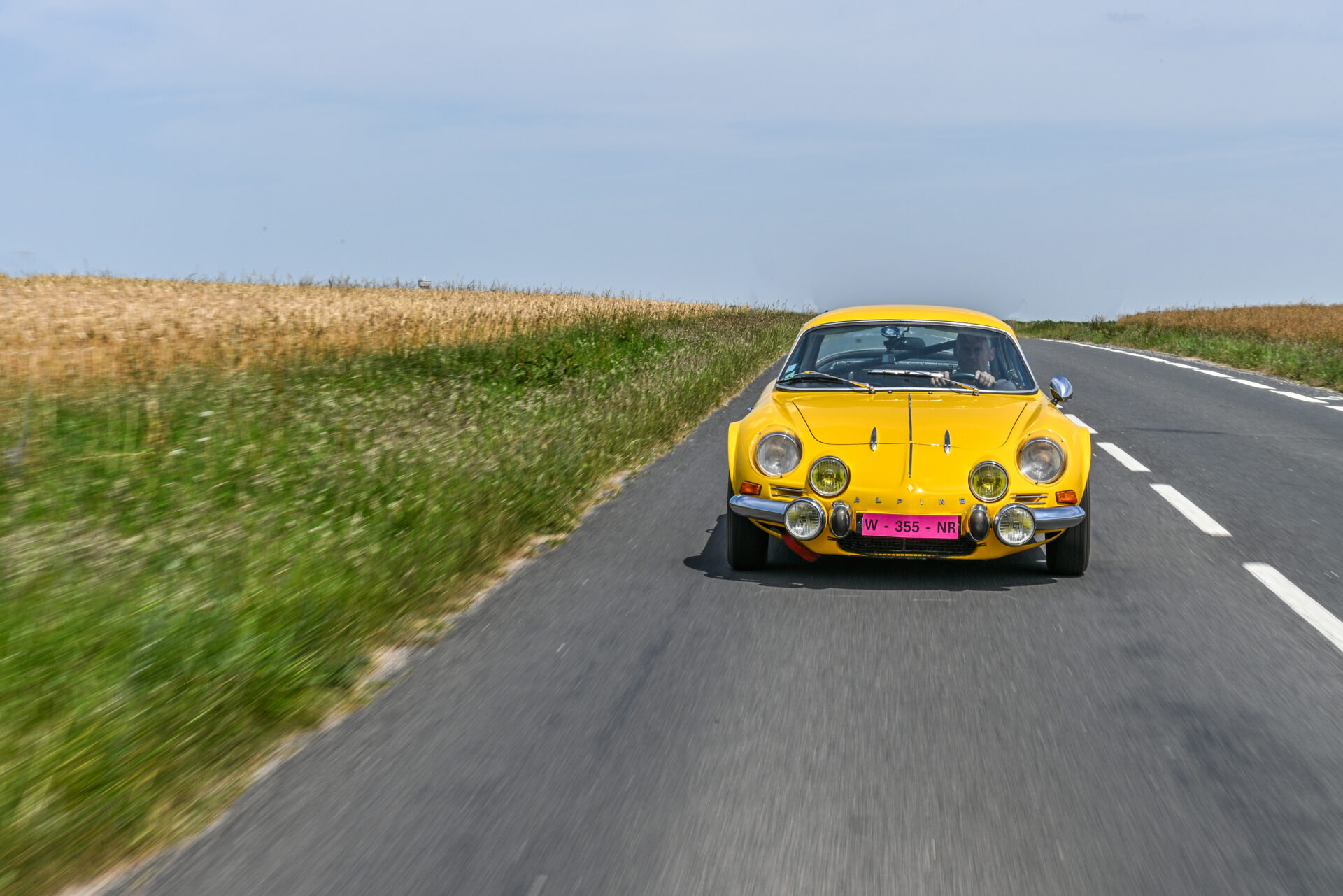
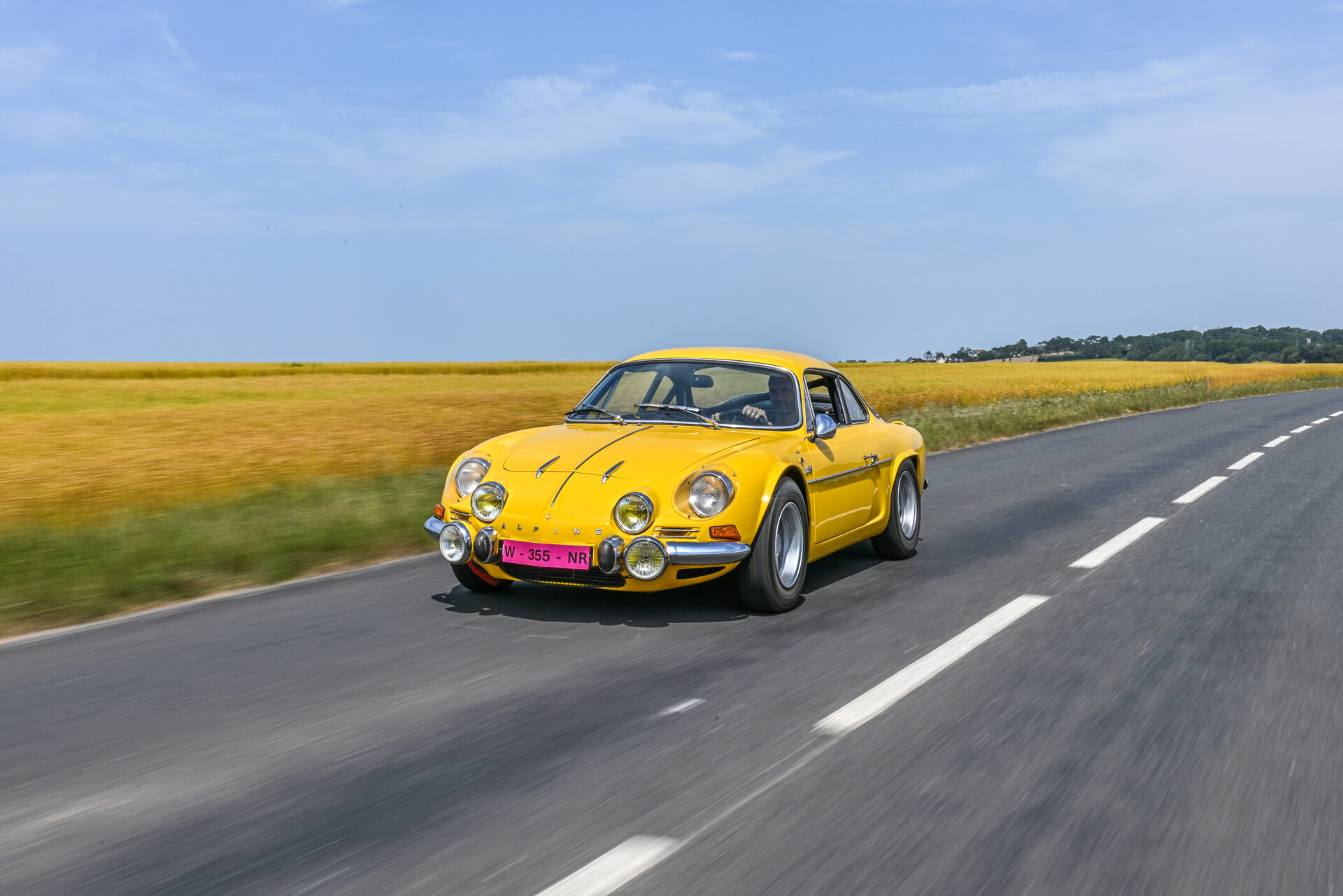
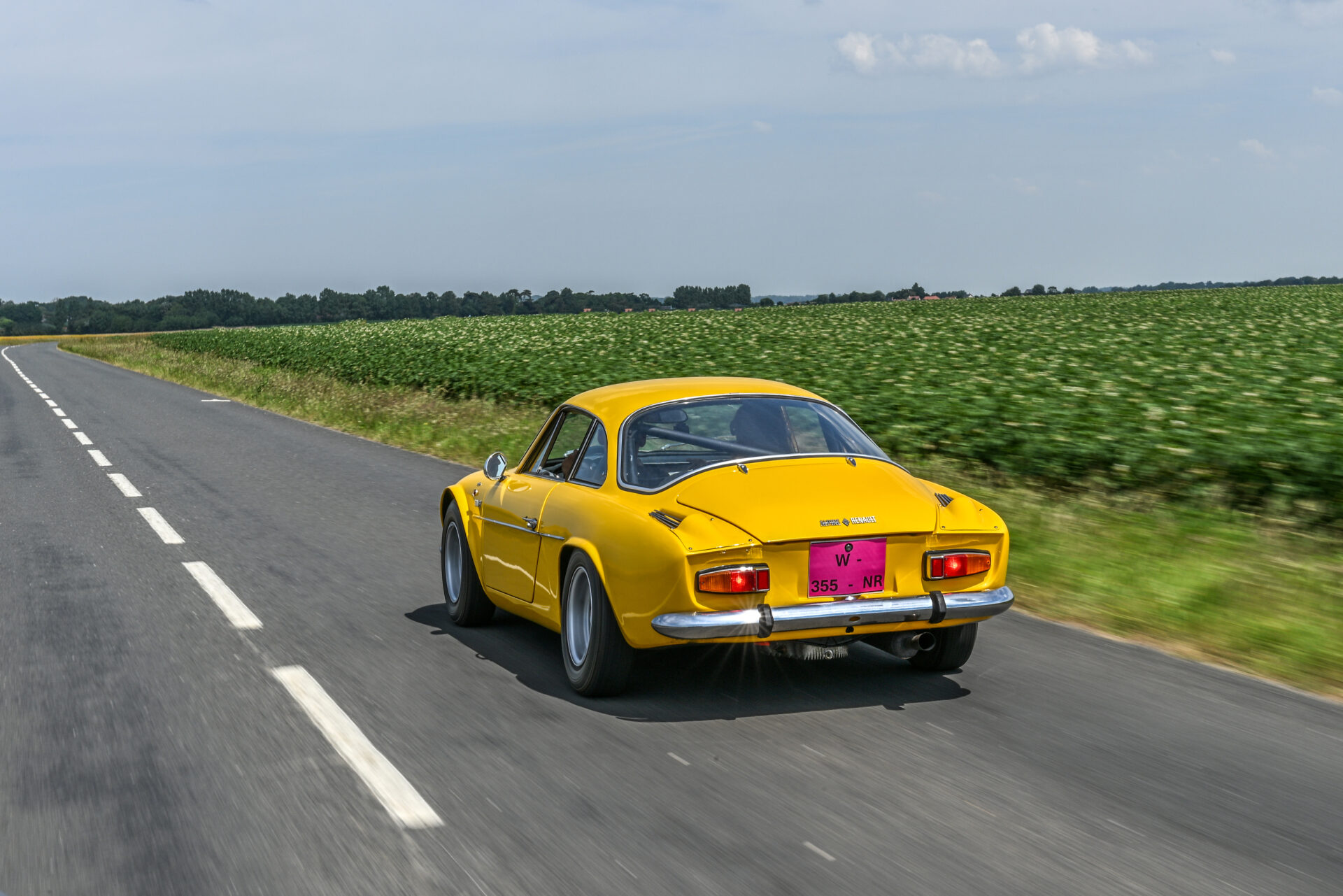
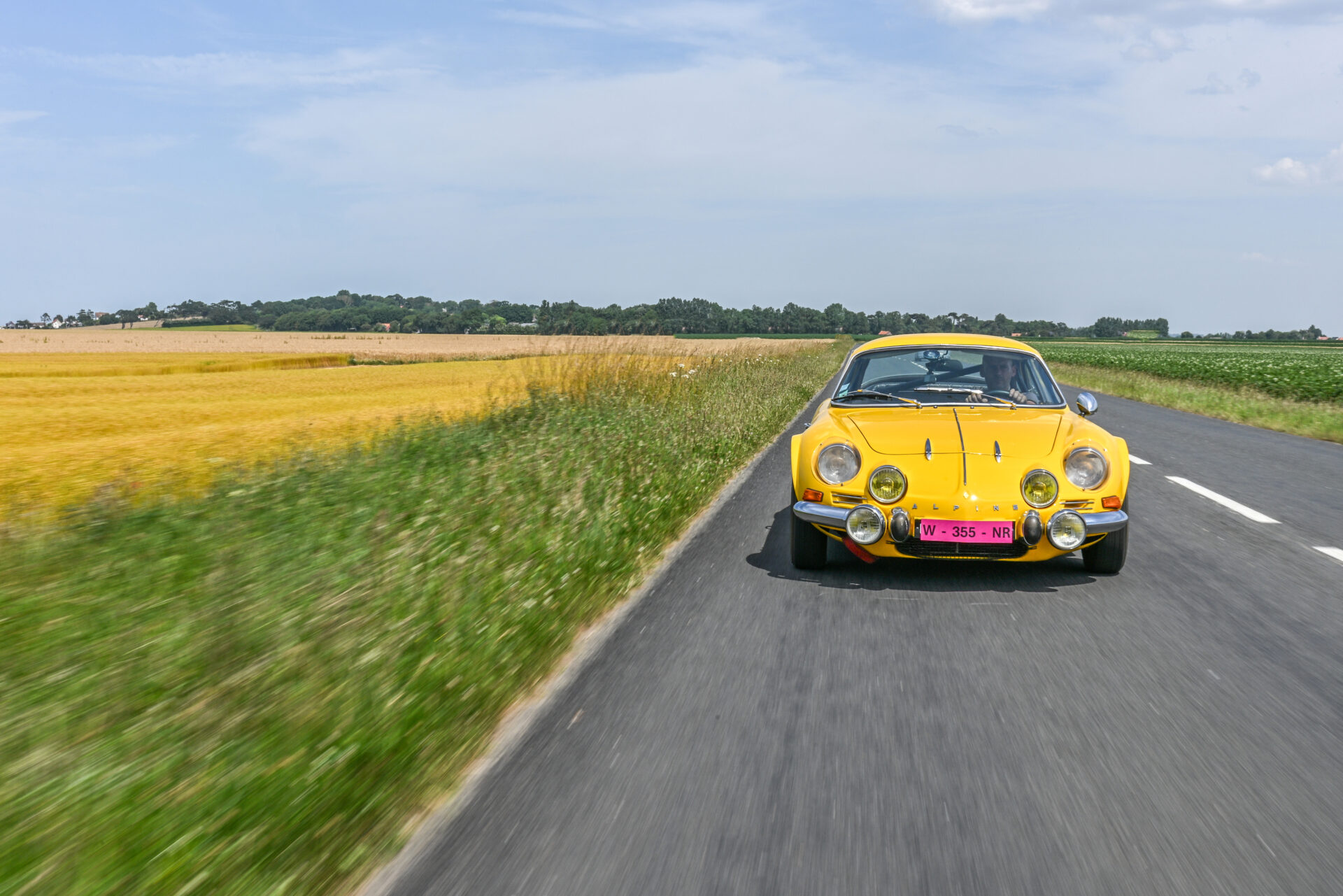
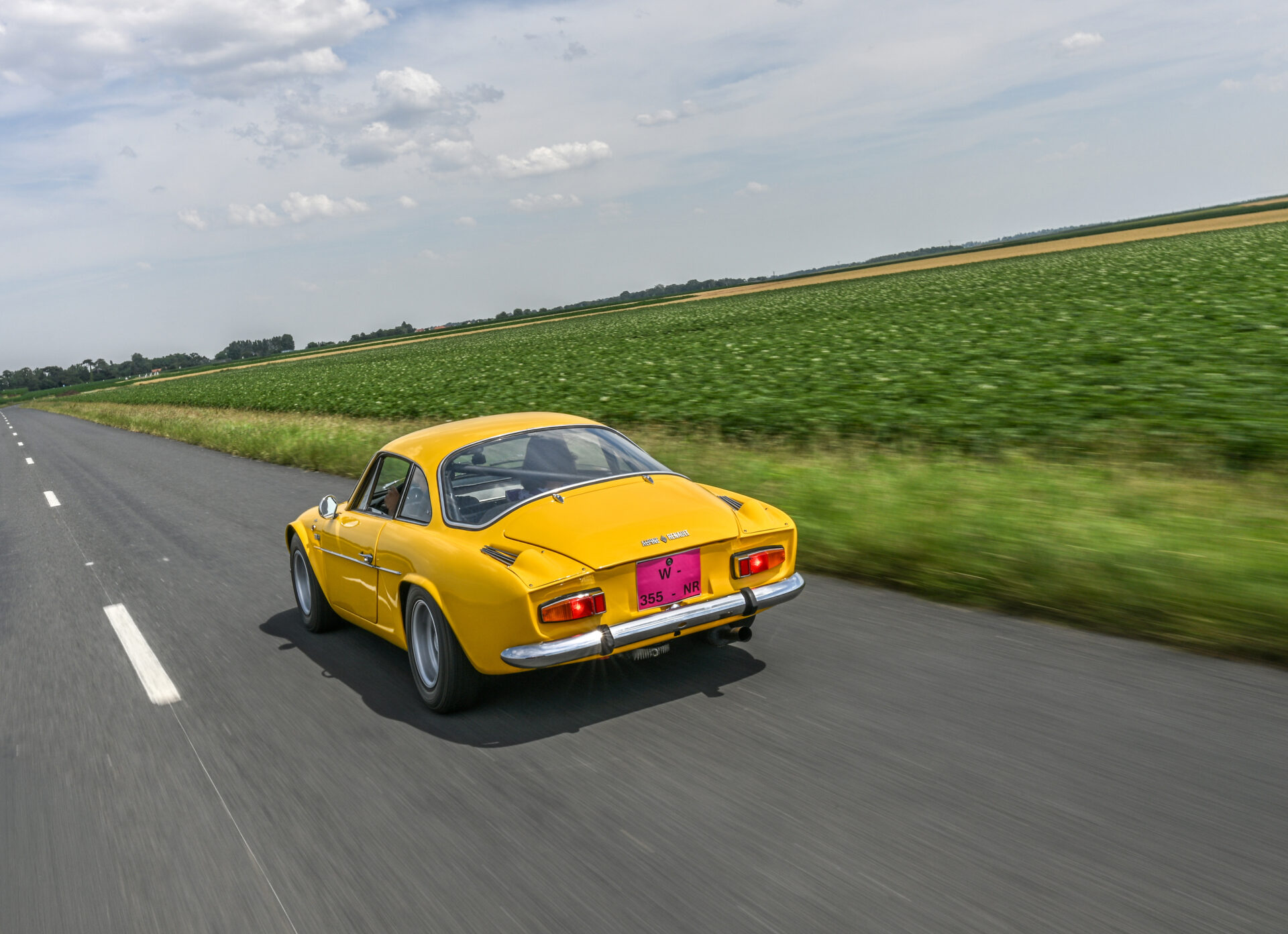
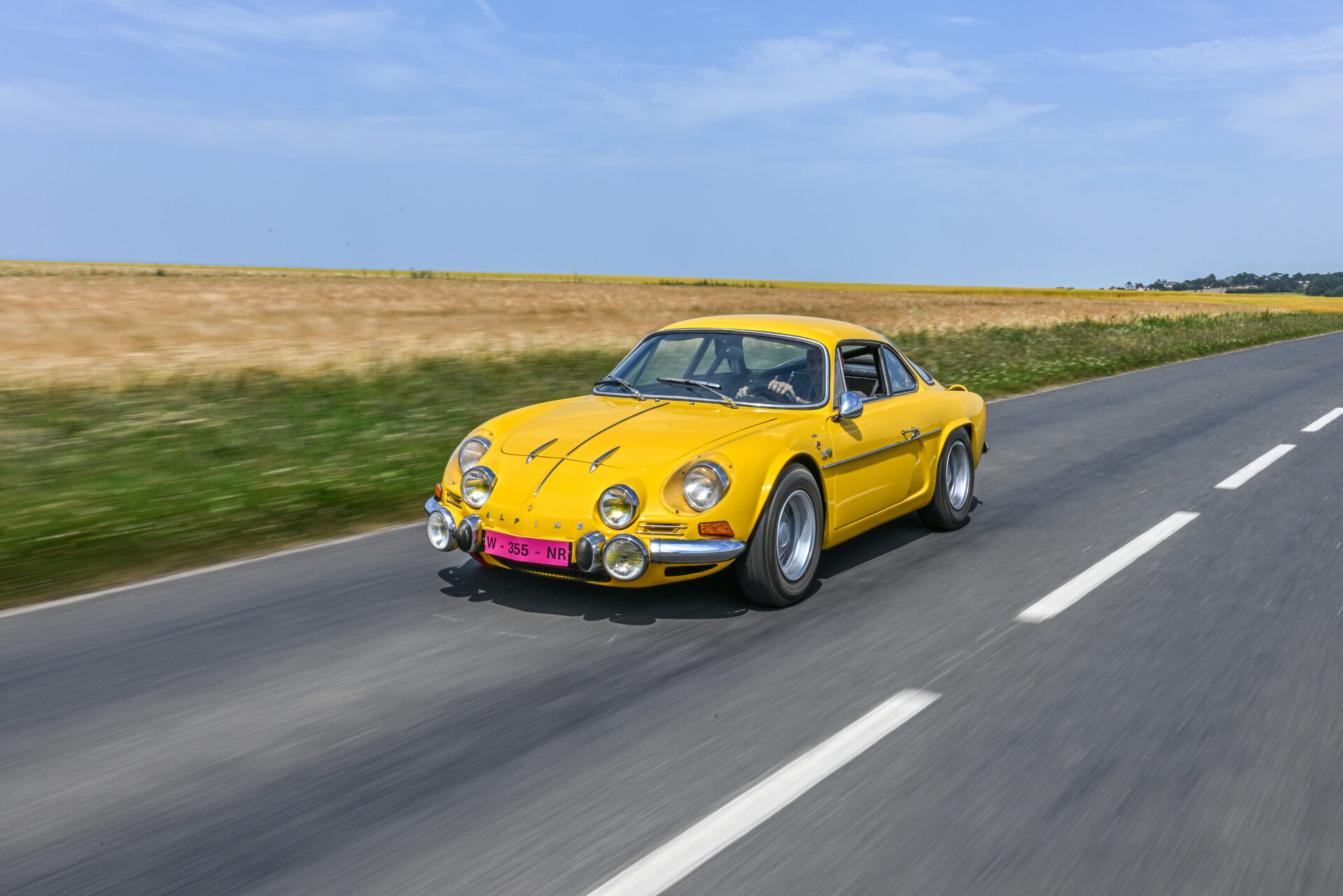
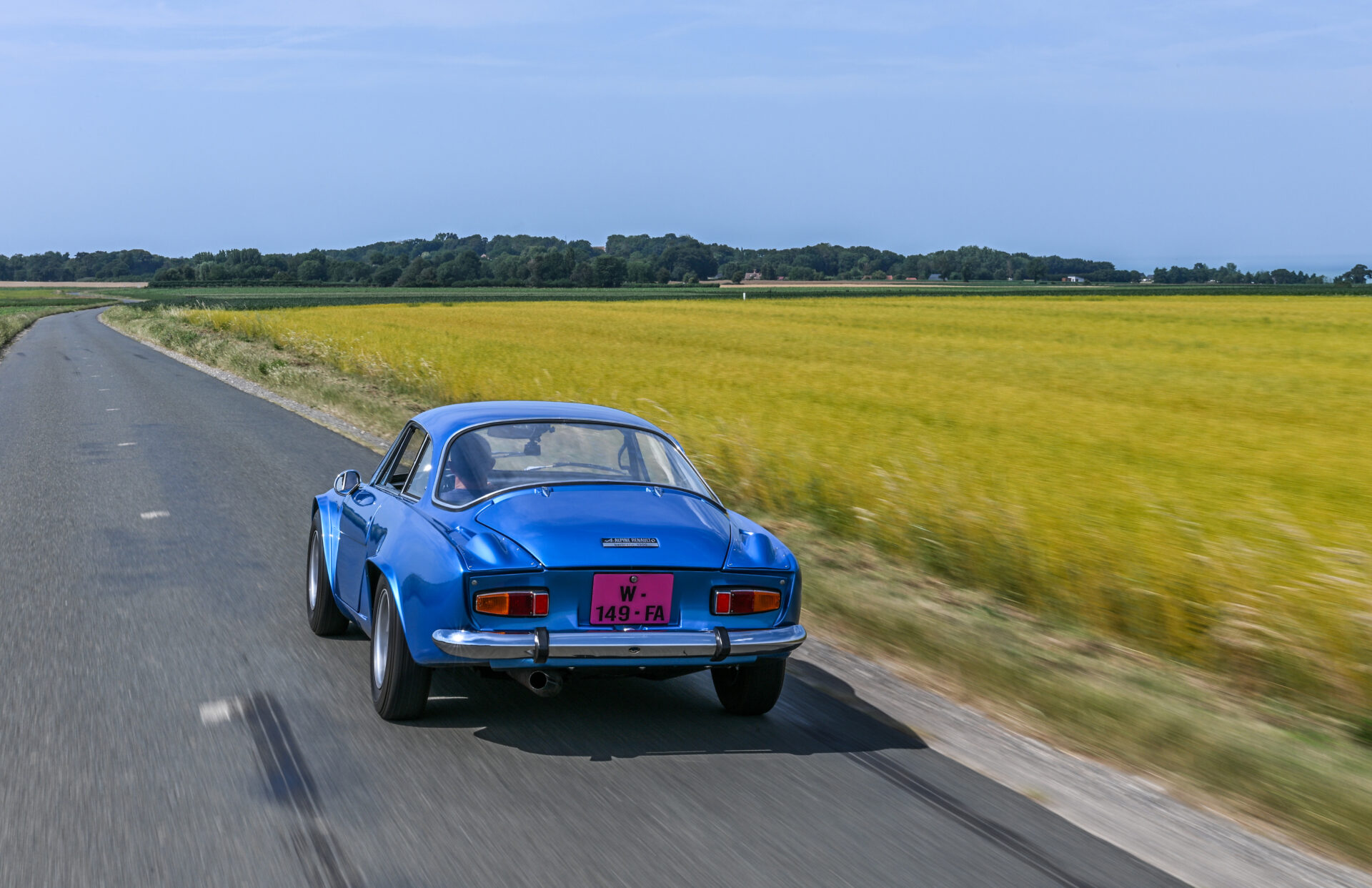
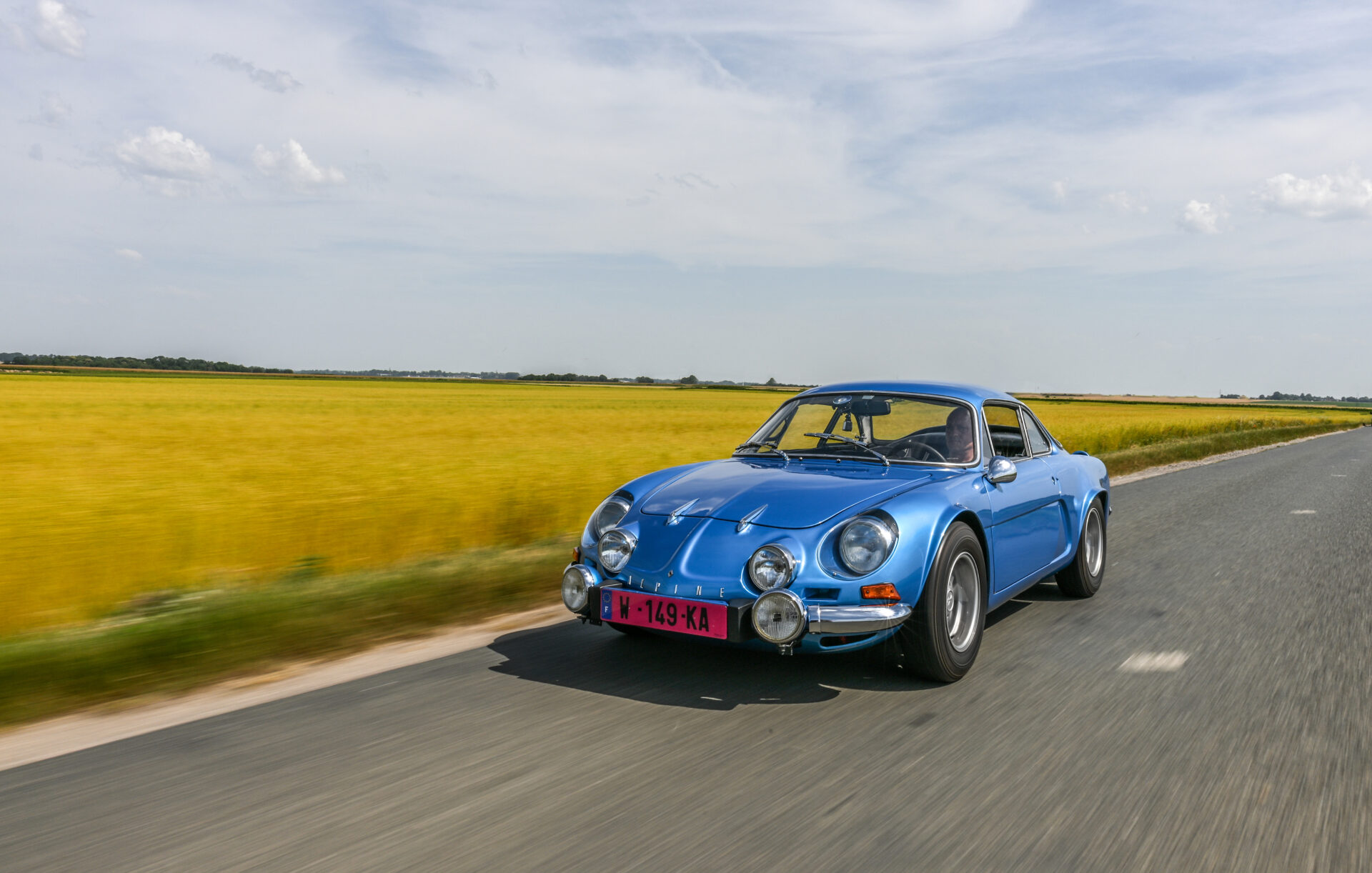
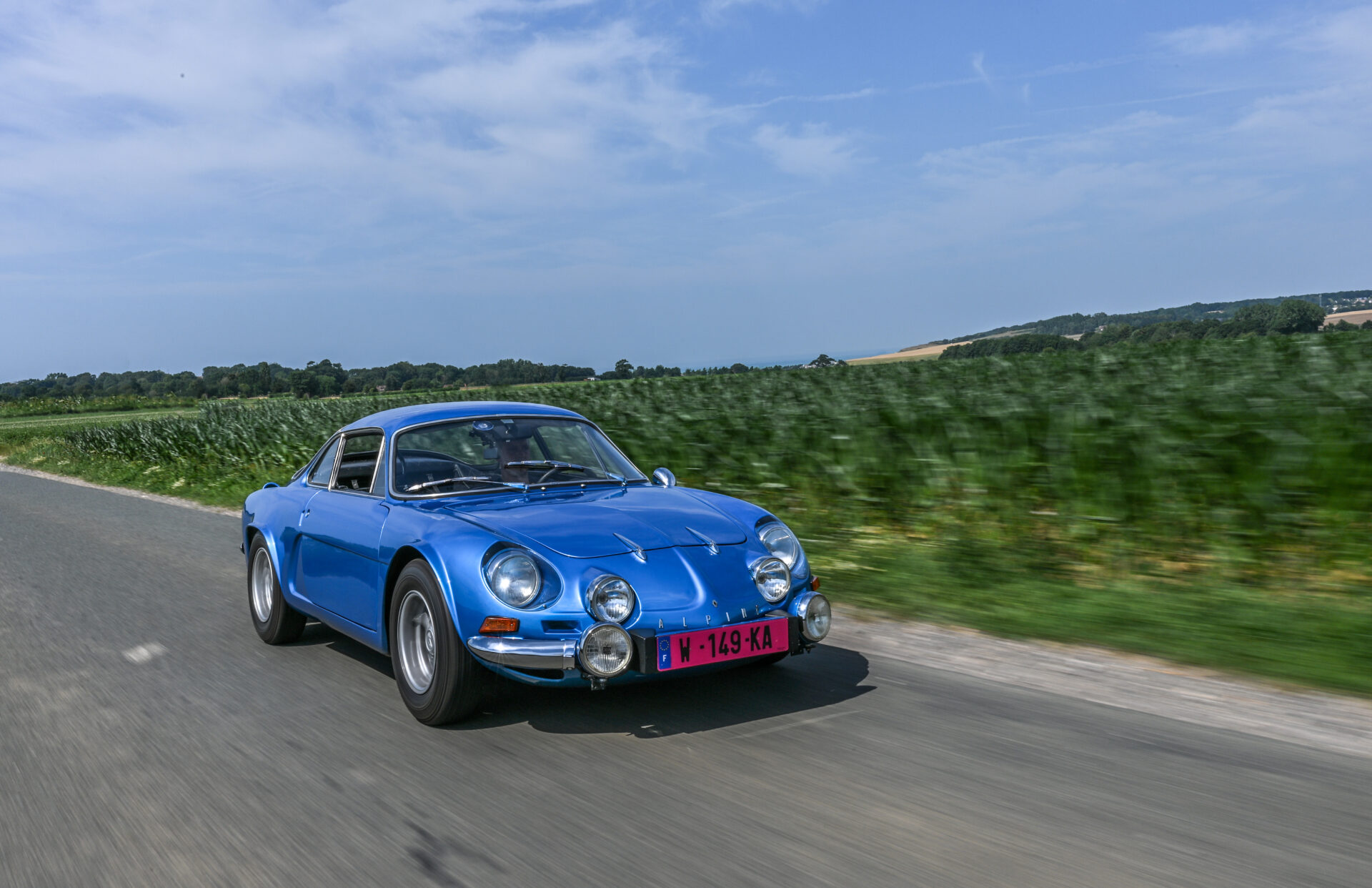
Where the difference with these delightful cabriolets becomes obvious is with the A110 Berlinette 1600 S, a race-bred machine fitted with the Renault 16 TS’s in-line four-cylinder engine, fed by twin twin-choke Weber carburettors. The result: with 125 hp at 6,000 rpm and a weight of 715 kg, this Berlinette is above all a little bombshell. As Jean-Pascal Dauce puts it, “fit it with roll bars and the right tyres, and you have everything you need for rallying.”
Offset pedals
We’re not quite there, there’s no question of sliding through roundabouts or bends on the open Normandy roads, though that doesn’t stop you revving hard. And what feelings, what vibrations! Behind the wheel, next to a gearbox with ratios just tight enough for a proper sporting grand tourer, the driving position is a touch surprising, with the three pedals offset slightly to the right. Legs angled sideways, the left foot on the clutch brushes against the curve of the wheel arch.
“I’m not surprised by this relative discomfort,” replies Jean-Pascal Dauce. “The A110’s pedal box is very narrow and offset towards the centre, but back then the car wasn’t going to adapt to you, it was up to you to adapt to the car!” Message received: five minutes to get comfortable and strap in, to gauge the pedal travel, and off we go for miles of pure automotive joy. No assistance, no beeping, just the almost symphonic sound of the rear-mounted 1600 Renault engine and an ideal distribution of, admittedly modest, mass.
The brand founded in 1955 by Jean Rédélé would hold on to these principles at least until the A310, which shared the same “spirit” as Lotus at the time. They would outlive their creator, since in 2017, ten years after the death of the famous man from Dieppe, Alpine relaunched the A110, which in turn revived Alpine itself, and whose penultimate version, the R70, celebrates the brand’s seventieth anniversary. With 300 hp and 340 Nm of torque, for a weight of 1,085 kg, it’s well worth doing up the four-point Sabelt harness properly. Just like in a fighter jet.