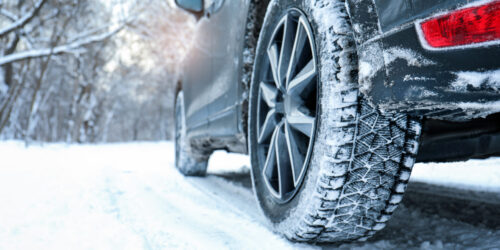
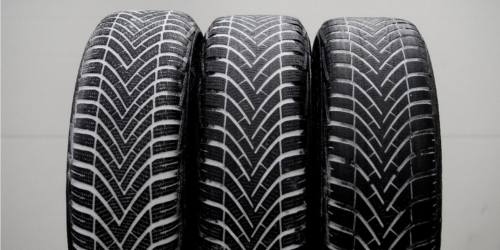
All-season tyres are winning over more and more drivers. For the third year running, the European automobile clubs, including the ACL, have put sixteen models through their paces in size 185/65 R15, a very common fitment on small cars. The result: only one tyre earns a “good” rating, and eight are not recommended.
The all-season principle is appealing: one set of tyres, no seasonal changeover, no storage. But the task is a balancing act. The same tyre has to hold on asphalt at 50°C in midsummer, keep its bite on snow at -15°C, and behave well in spring and autumn, when the road is soaking and the thermometer hovers around zero. All while wearing slowly and without pushing up fuel consumption. Is that balance really achievable? The tests give an unambiguous answer.
One preliminary observation is worth flagging. In this 15-inch size, some big names do not offer their most recent models. Bridgestone is limited to the Weather Control A005-Evo, while its successor, the Turanza All Season 6, is already available in the larger sizes. Michelin does the same: no CrossClimate 3 in 15 inches, only the CrossClimate 2 tested here. In other words, buyers of a small car do not have access to the latest technology available from these manufacturers.
The full ranking
|
Tyre |
EU label | Overall | Safety | Dry | Wet | Winter | Environment |
|
Continental AllSeasonContact 2 |
B/B/B 71 dB | 2.3 | 2.1 | 2.2 | 2.0 | 2.3 |
2.6 |
|
Pirelli Cinturato All Season SF 3 |
C/A/B 71 dB | 2.6 | 2.7 | 2.3 | 2.4 | 2.7 |
2.4 |
|
Michelin CrossClimate 2 |
C/B/B 69 dB |
2.6 | 2.8 | 2.2 | 2.8 | 2.1 |
2.2 |
|
Vredestein Quatrac |
C/B/B 70 dB | 2.9 | 3.1 | 2.5 | 2.4 | 3.1 | 2.4 |
|
Hankook Kinergy 4S 2 |
C/B/B 71 dB | 3.0 | 3.2 | 2.0 | 2.7 | 3.2 |
2.5 |
|
Goodyear Vector 4Seasons Gen-3 |
C/B/B 70 dB | 3.1 | 3.4 | 3.4 | 2.2 | 1.8 |
2.5 |
|
Nokian Tyres Seasonproof 2 |
B/A/A 68 dB | 3.1 | 3.2 | 3.2 | 1.8 | 2.8 |
3.0 |
|
GT Radial ClimateActive |
C/B/B 69 dB | 3.2 | 3.2 | 2.7 | 2.4 | 3.2 |
3.1 |
|
Nexen N’Blue 4Season 2 |
C/B/B 71 dB | 3.6 | 3.6 | 3.6 | 2.9 | 2.9 |
3.0 |
|
Dunlop All Season 2 |
C/C/B 71 dB | 3.7 | 3.7 | 3.7 | 3.0 | 1.7 |
2.9 |
|
Milever All Season Versat MC545 |
C/C/A 67 dB |
4.0 | 4.0 | 4.0 | 3.5 | 2.9 |
3.4 |
|
Norauto 4 Seasons 2 |
C/B/B 71 dB | 4.9 | 4.9 | 2.4 | 3.1 | 4.9 |
2.3 |
|
Bridgestone Weather Control A005-Evo |
C/A/B 70 dB | 5.3 | 5.3 | 3.5 | 1.9 | 5.3 |
2.5 |
|
Mastersteel All Weather 2 |
C/B/B 71 dB | 5.3 | 5.3 | 3.2 | 2.9 | 5.3 |
3.2 |
| Roadhog RGAS02 | C/B/B 71 dB | 5.4 | 5.4 | 2.8 | 3.1 | 5.4 |
3.2 |
| Tomason Allseason | D/C/B 71 dB | 5.5 | 5.5 | 3.3 | 3.3 | 5.5 |
3.1 |
How to read the scores: the scale works like German school marks, where the lowest figure is the best. From 0.6 to 1.5: very good. From 1.6 to 2.5: good. From 2.6 to 3.5: satisfactory. From 3.6 to 4.5: adequate. From 4.6 to 5.5: poor.
The podium: three tyres, three profiles
Continental AllSeasonContact 2 – overall score 2.3, the only “good” in the test.
This is the tyre of balance. It scores well in every safety discipline without ever faltering. On dry roads, the steering feeds back plenty of information, the line is held precisely and there is reserve at the limit: after a sudden avoidance manoeuvre, the car settles back into its lane quickly and cleanly. On wet roads it shines in braking and in handling, and its longitudinal aquaplaning behaviour even earns a “very good” rating, as it lets go very late. In winter conditions it posts good stopping distances on both snow and ice, with solid traction. Its only weak point: a projected mileage of 41,300 kilometres, only just satisfactory, which prevents it from earning a “good” rating on the environmental side. Its fuel consumption, on the other hand, is the lowest in the test (5.4 l/100 km) and its weight of 7.2 kilos remains contained. A clear buy recommendation.
Pirelli Cinturato All Season SF 3 – 2.6.
It falls just short of a “good” rating. On dry roads it convinces: correct steering, a precise line and the shortest braking distance of the leading trio (40.1 metres). On wet roads, its aquaplaning and handling qualities make up for merely average braking (34.9 metres on asphalt). Winter is what costs it the podium: good braking on snow and ice, good traction, but only satisfactory handling on snow, where it combines longitudinal and lateral forces too indifferently. It is a good pupil on the environmental side, however, with an estimated 43,100 kilometres, low wear (57 mg/km/t) and contained consumption. Its weight of 7.6 kilos is slightly above average.
Michelin CrossClimate 2 – 2.6.
The mirror image of the Pirelli. It is the best in the test on the environmental side: the lowest wear measured (48 mg/km/t), a high mileage (43,600 kilometres) and the lightest tyre of the whole field (6.6 kilos, more than ten per cent below average). In winter conditions it excels: its precision and reserve on snow earn it a clear good rating. On dry roads it posts the second-shortest braking distance (39.6 metres). But the wet trips it up: braking and handling only satisfactory, average grip and an indifferent combination of forces, which makes it impossible to place the car precisely on the soaked circuit. There is no way of telling whether the CrossClimate 3 would have done better, as it is not available in this size.
The bottom of the table: winter as the breaking point
The last three in the ranking share the same structural weakness: they are out of their depth on winter roads, with scores between 5.3 and 5.5. Yet that is precisely the season for which many drivers buy an all-season tyre.
Mastersteel All Weather 2 – 5.3.
Satisfactory on dry and wet roads, it collapses on snow. The tyre cannot combine longitudinal and lateral forces properly: the car barely follows the intended line, understeers early then oversteers through the bend, and the limit arrives quickly. Demanding behaviour, and particularly tricky for an inexperienced driver. Paradoxically, it posts the shortest dry braking distance in the test (39.5 metres), proof that a single good performance does not make a good tyre. On wet roads, its lateral aquaplaning figure (2.6 m/s²) is weak. Estimated mileage: 34,600 kilometres, only satisfactory. The manufacturer supplied none of the ISO certifications requested, nor any evidence of membership of the UN Global Compact or of an EcoVadis rating.
Roadhog RGAS02 – 5.4.
The same diagnosis, slightly more pronounced. On snow, the tyre loses grip very early and offers no reserve at the limit. It collects last places: the worst longitudinal aquaplaning speed in the test (74.7 km/h), the worst lateral acceleration in standing water (2.4 m/s²), the longest braking distance on snow (13.1 metres) and the weakest traction on snow (215.9 dN). Estimated mileage: 35,000 kilometres. Here too, no environmental certification was provided.
Tomason Allseason – 5.5, last in the ranking.
The only tyre in the test carrying a D on the EU label for rolling resistance. On snow, precise and safe driving is simply not possible. On wet roads it posts the longest braking distances in the test, on asphalt (38.3 metres) as well as on concrete (44.5 metres). It is also the noisiest tyre measured externally (74.5 dB(A)). Its good braking on ice is not enough to redeem the overall picture. Estimated mileage: 35,900 kilometres.
Three lessons emerge from this test
First observation: the brand guarantees nothing.
The most striking case is the Bridgestone Weather Control A005-Evo, a product from a premium manufacturer that finishes on 5.3. It is excellent in the wet, with 1.9 one of the best scores of the field, a braking distance of 32.6 metres and very good longitudinal aquaplaning behaviour, and its environmental record is good. But on snow it does not convince at all, and that single shortfall is enough to send the overall score plummeting. The Norauto 4 Seasons 2 suffers exactly the same fate: good on dry roads (2.4), a good environmental record (2.3), but handling on snow judged poor, which pushes it back to 4.9.
Second observation: two identical tyres can be given different scores.
A closer look reveals that the Mastersteel All Weather 2 and the Roadhog RGAS02 have exactly the same tread pattern. Checks confirmed it: both come out of the same factory and share the same construction, even though they are sold under different brands. So why the slightly divergent results? Because the material suppliers are not necessarily the same from one batch to the next. The gaps are not spectacular, but they exist. The manufacturer, Sentury Tire, also states that these two models will be replaced by their successors in autumn 2026.
Third observation: the EU label does not tell the whole story
The Nokian Seasonproof 2 carries one of the best labels in the test (B/A/A, 68 dB) and confirms it in the wet, where it takes the best score of the field. But it loses points on dry roads, where it lacks precision, and its projected mileage of 37,100 kilometres holds it back on the environmental side. Conversely, the Continental, with an apparently less flattering label, wins the overall ranking comfortably. The tests regularly show that the label does not faithfully reflect real performance on wet roads.
A final word on the spread of results. Between first place (2.3) and last (5.5) the gap is considerable, and it is decided essentially on driving safety. On the environmental side, by contrast, all sixteen tyres are within a whisker of each other, between 2.2 and 3.4. The difference between a good and a bad all-season tyre is therefore not measured in long-term running costs: it is measured in metres of braking distance and in safety margin at the limit.
Conclusion
This test confirms that the all-season compromise remains hard to pull off. Only one model out of sixteen achieves a convincing level of balance, two others come close, and half the field does not deserve to be recommended. The message is clear: a tyre that excels in one discipline and collapses in another is not a good all-season tyre.
That is not a condemnation of the category. If you drive mainly on secondary roads, occasionally on the motorway, and you are not obsessed with steering precision, a well-chosen all-season tyre does the job perfectly. If, on the other hand, you rack up long motorway journeys, often drive fully loaded or in high temperatures, typically setting off on a summer holiday, the classic summer/winter pairing remains safer.
A few habits are worth recalling
– Always fit four identical tyres.
– Check the pressures regularly, and increase them in line with the manufacturer’s figures when carrying a heavy load.
– On an all-season tyre as on a winter tyre, replace it before the tread drops below 4 millimetres, to keep a margin against aquaplaning.
– Go for the most recent models, which benefit from the latest technical developments. – Finally, check the DOT code: do not buy a new tyre manufactured more than three years ago, and try to obtain four tyres with the same production date.
And above all, do not trust the name on the sidewall or a tread pattern that looks identical. As this test shows, everything is decided in the detail.
Methodology:
The tests were carried out on a Skoda Fabia, at the pressures recommended by the manufacturer (2.5 bar on all four wheels). Each tyre was run in over roughly 400 kilometres before the measurements, and reference tyres ran in parallel to neutralise variations in conditions.
The scoring rests on two pillars. Driving safety accounts for 70% of the overall score, split between wet roads (45%), dry roads (35%) and winter roads (20%). The environmental record carries 30%, covering projected mileage (40%), wear (20%), energy efficiency (20%), noise (10%) and sustainability (10%).
The measurements were taken in deliberately contrasting conditions: on dry roads, in air temperatures of 28 to 36°C with the surface heated to 55°C; on wet roads, between 11 and 20°C; on snow, between -9 and -6°C; and on ice, with the surface between -2 and -1°C. The programme included ABS braking from 100 km/h on dry roads and 80 km/h in the wet, longitudinal (8 mm of water) and lateral (5 mm) aquaplaning, handling on soaked and snow-covered circuits, traction and braking on snow, braking on ice, plus a wear rig simulating almost 4,000 kilometres, cross-checked against readings taken in real traffic.