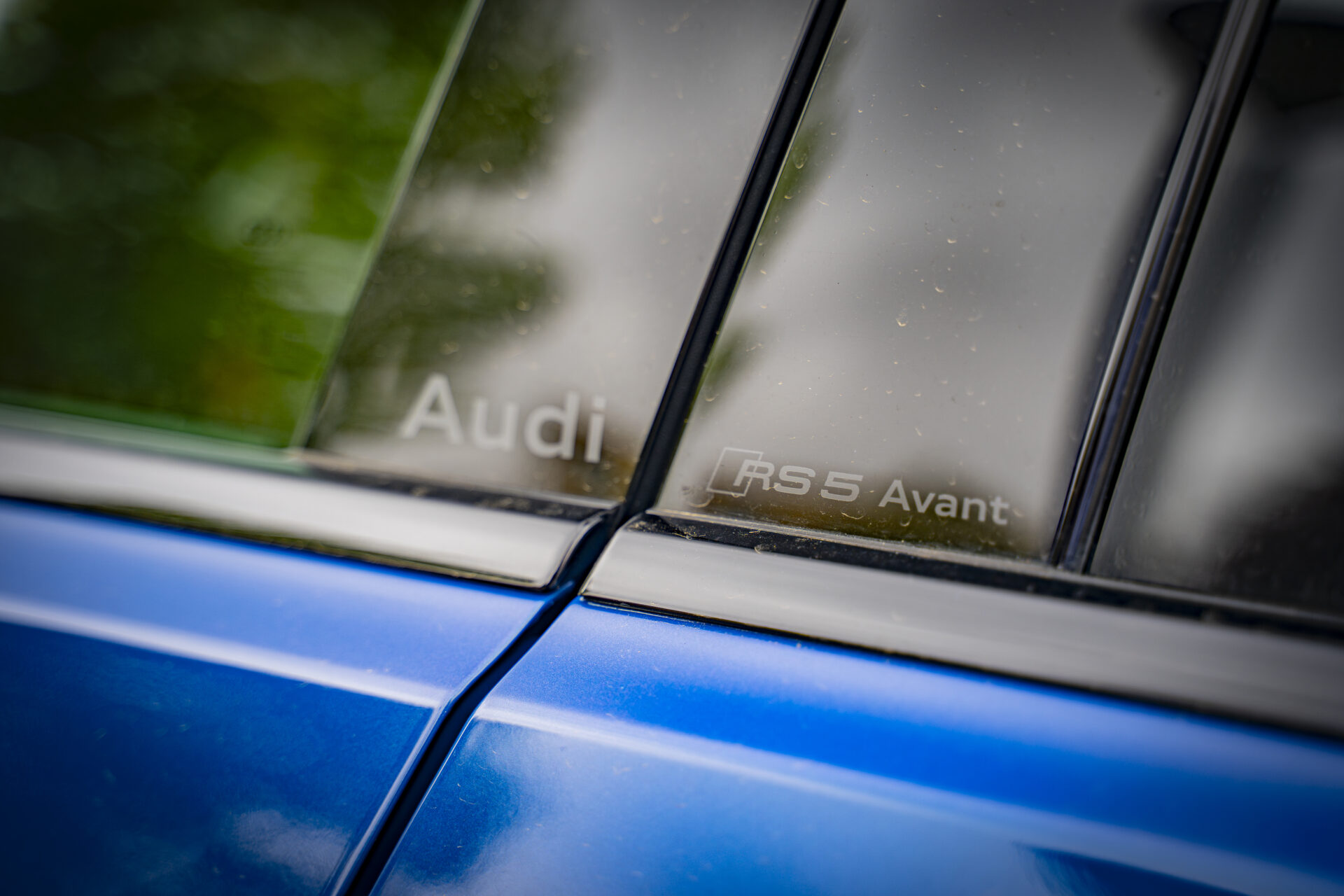
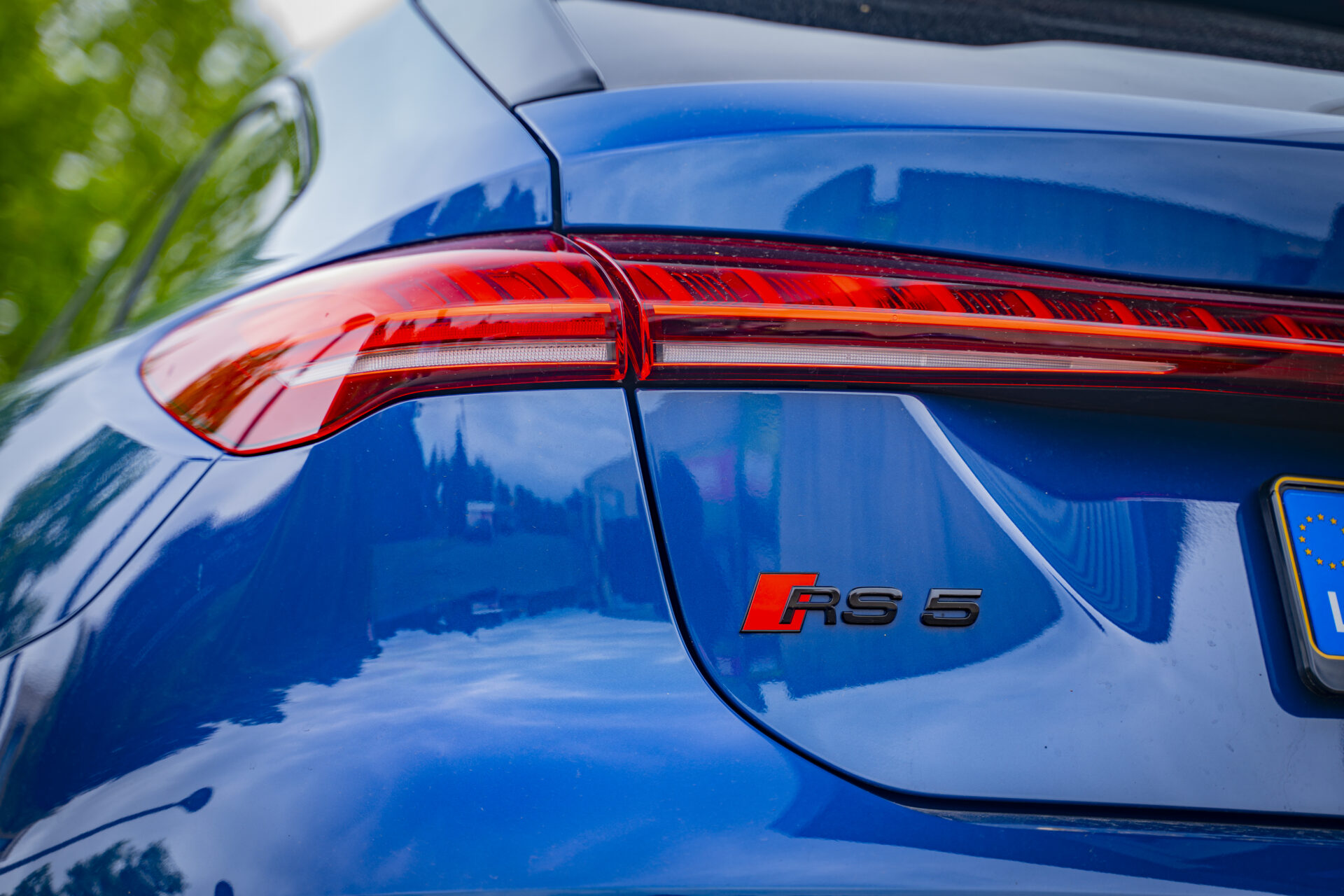
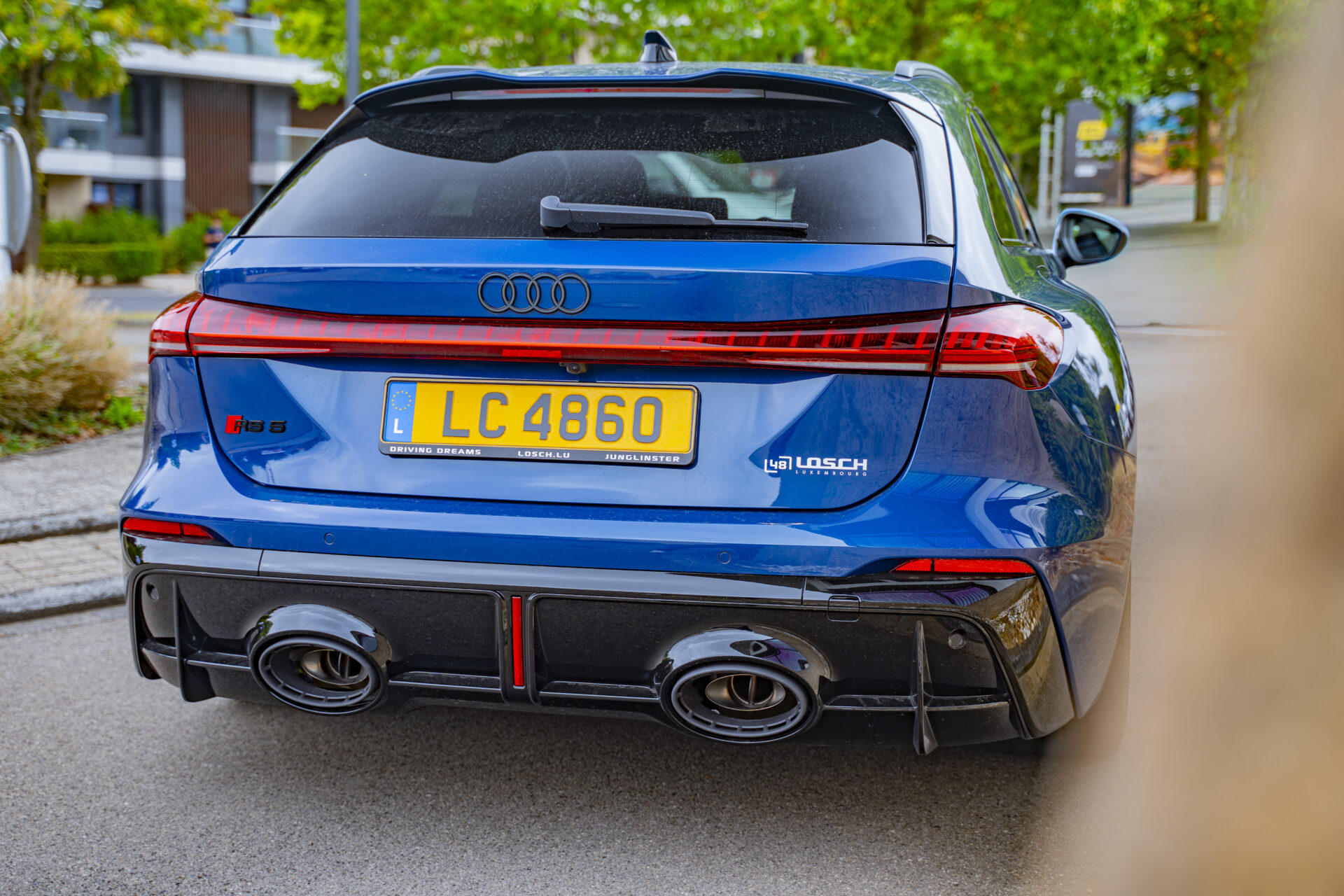
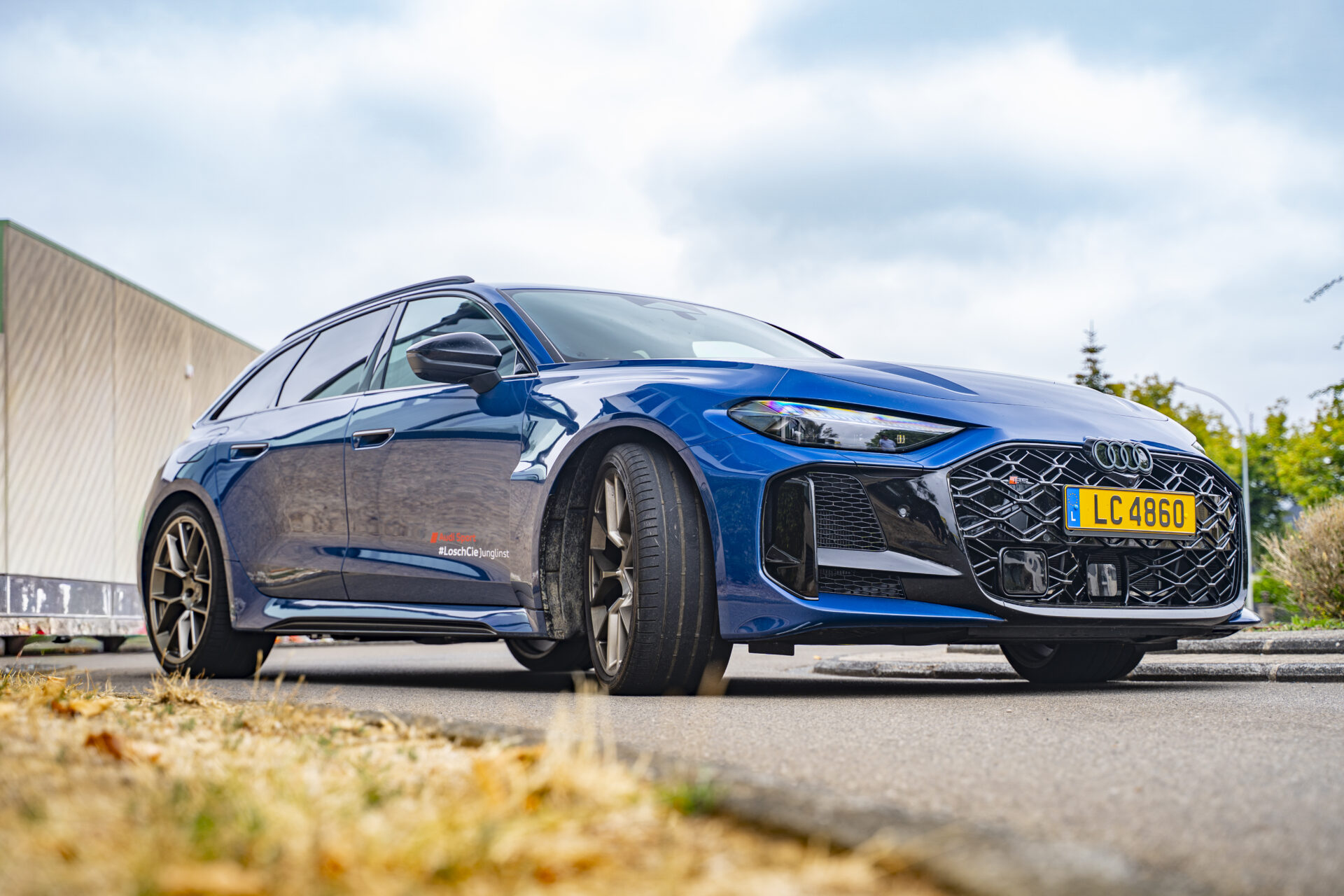
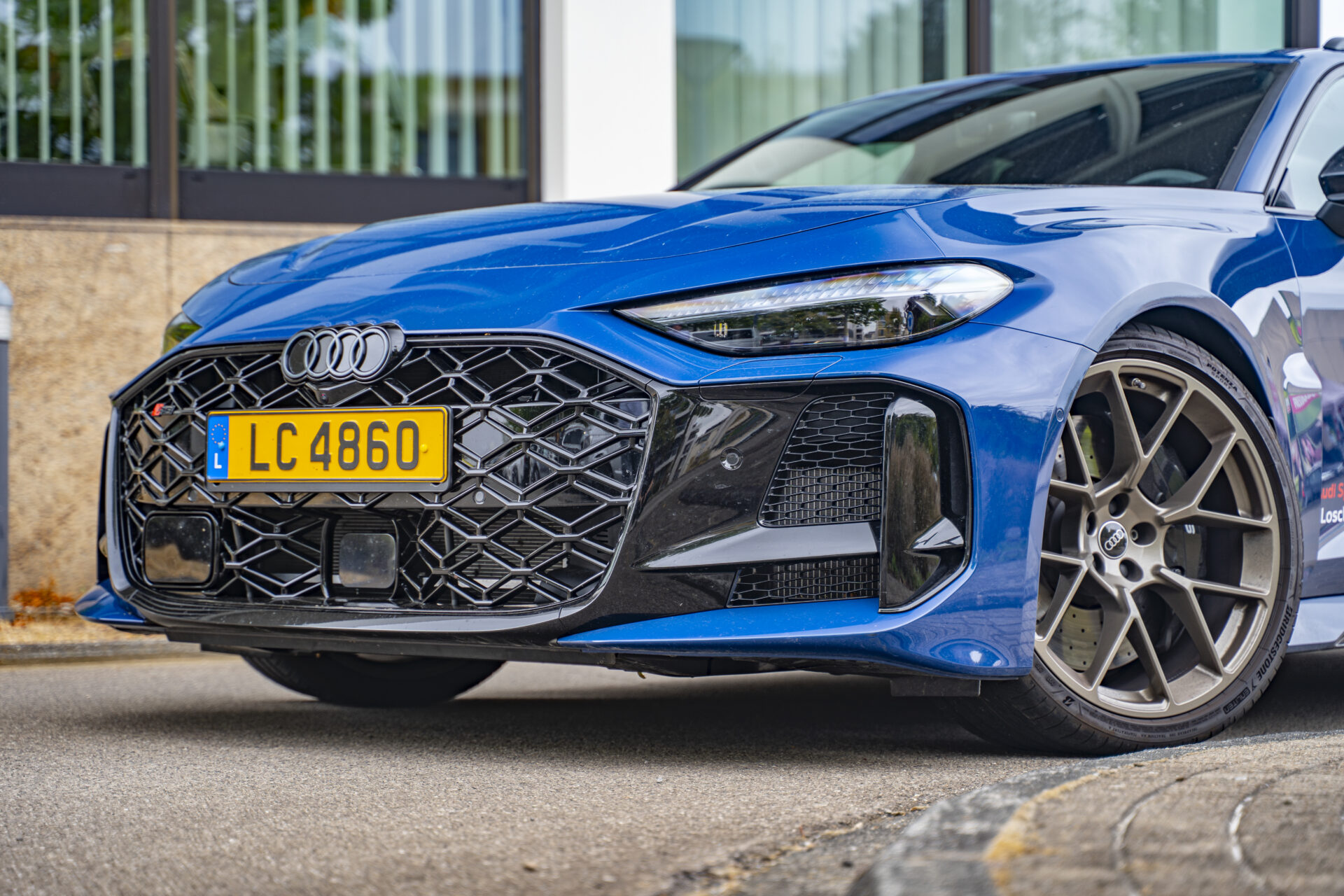
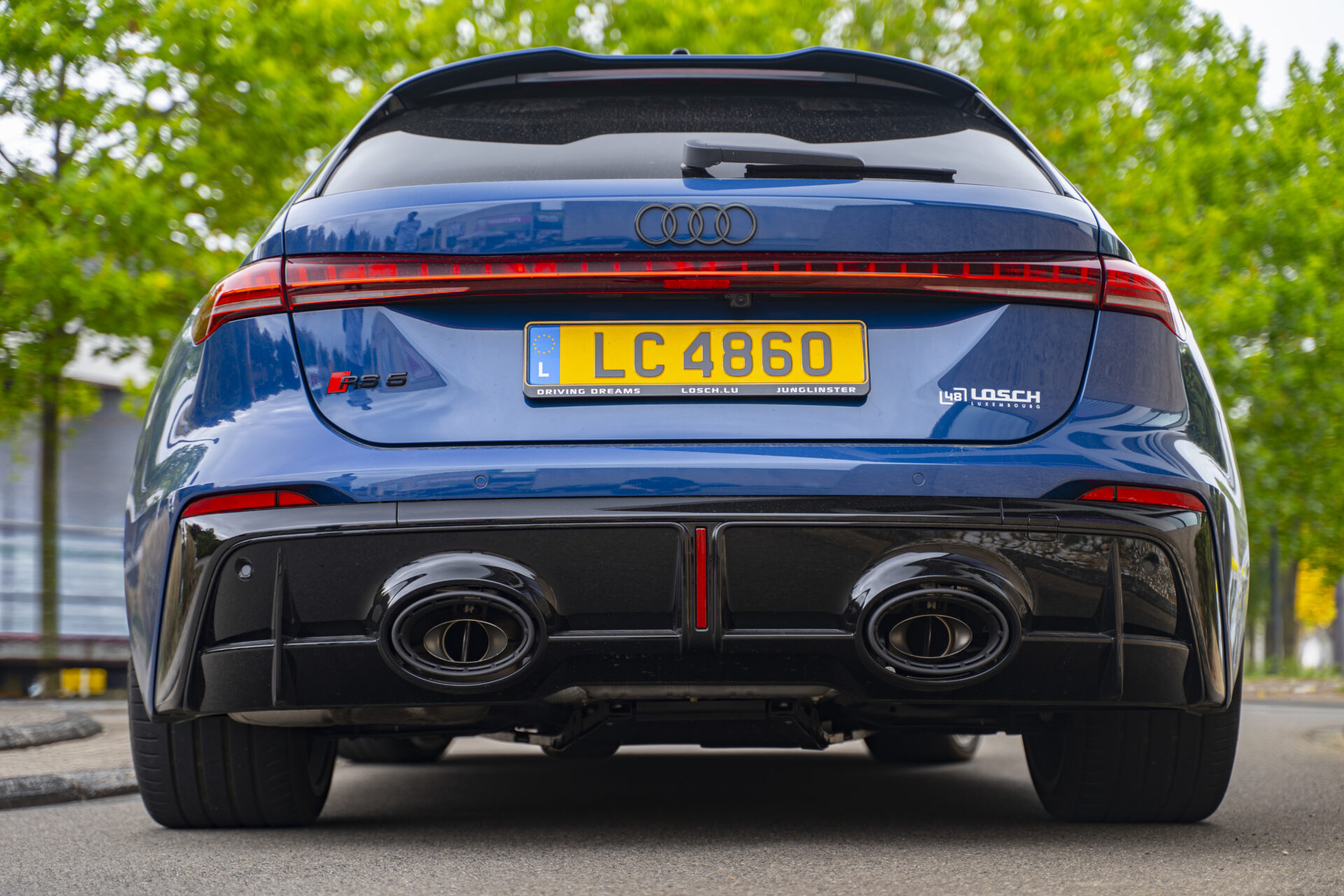
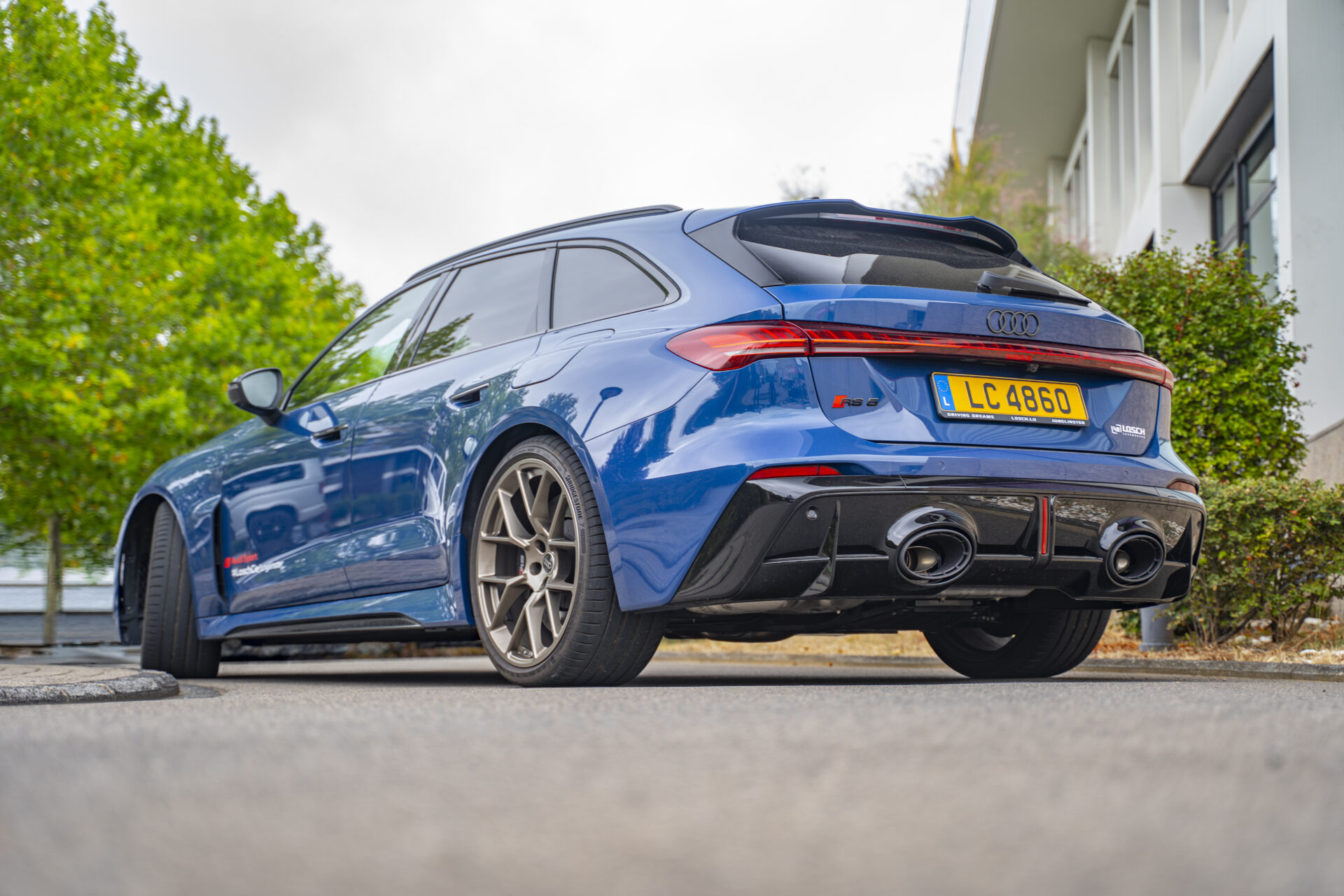
With the RS 5, Audi takes an unprecedented step: the brand’s first model to combine RS DNA with a plug-in hybrid powertrain. Available as a Sedan and as an Avant, the latter embodies the estate version, designed to combine family practicality with top-level performance. We reviewed the manufacturer’s data for this RS 5 Avant, which boasts a combined 639 hp.
Unveiled earlier this year, the RS 5 pairs a 2.9-litre twin-turbo V6 with a 130 kW electric motor, for a combined 470 kW (639 hp) and 825 Nm of torque, with a quattro drivetrain featuring Dynamic Torque Control, a first for a production vehicle. Built in Neckarsulm, it comes in two body styles: at Audi, “Avant” has designated the estate version since the 1970s, while the “Sedan”, or saloon, remains the classic three-box model. The mechanicals are identical; only the boot and rear-end styling differ.
Design and ergonomics
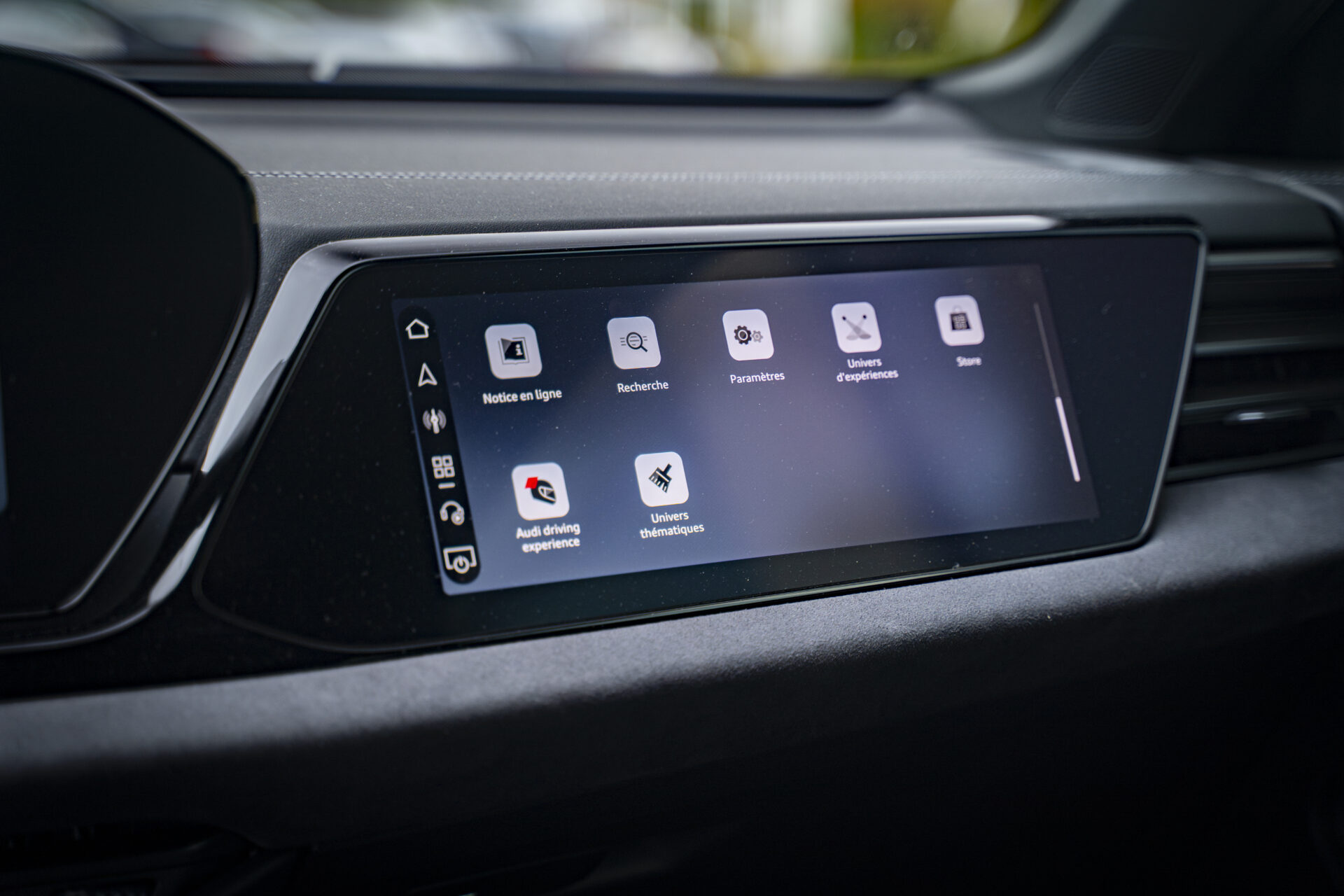
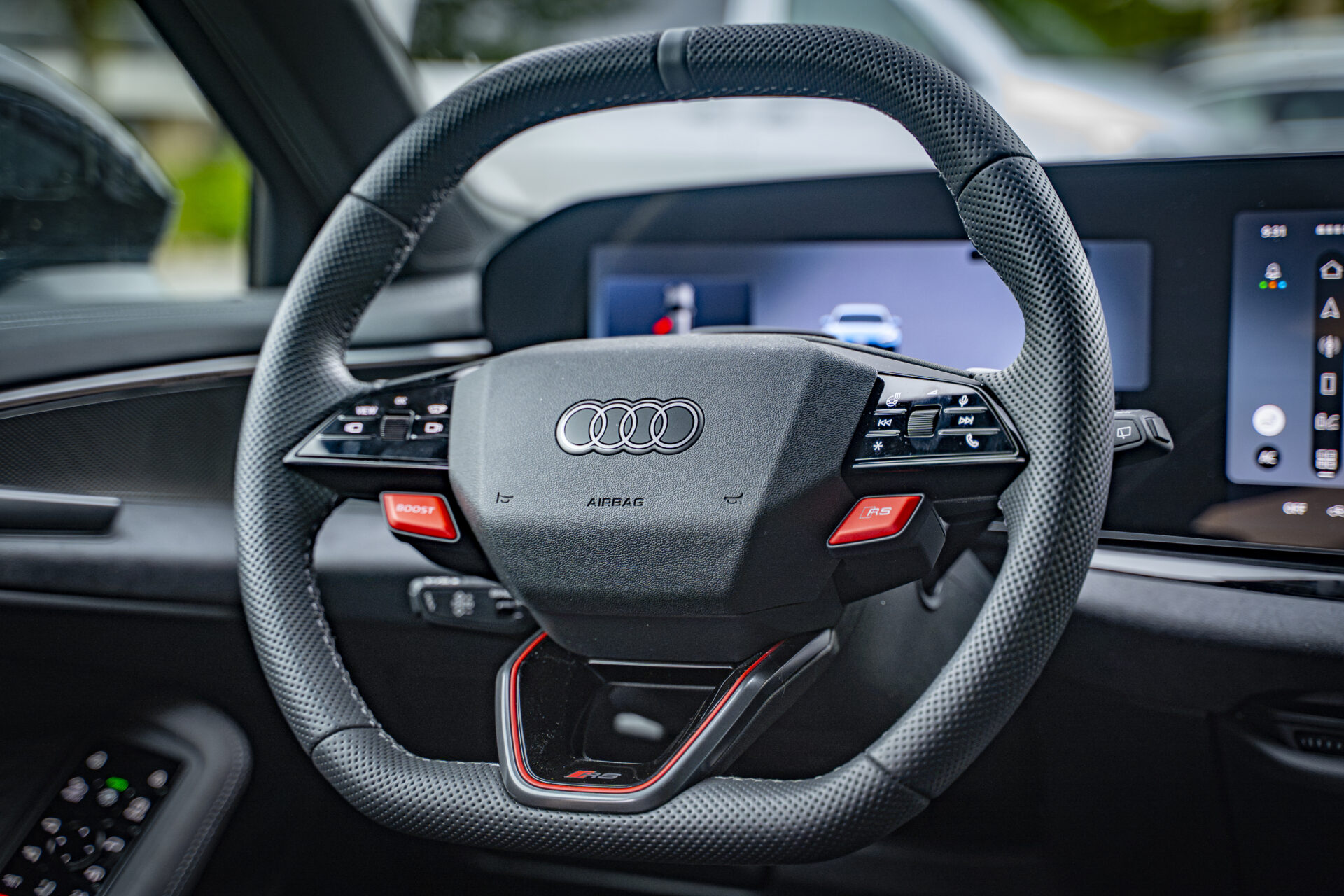
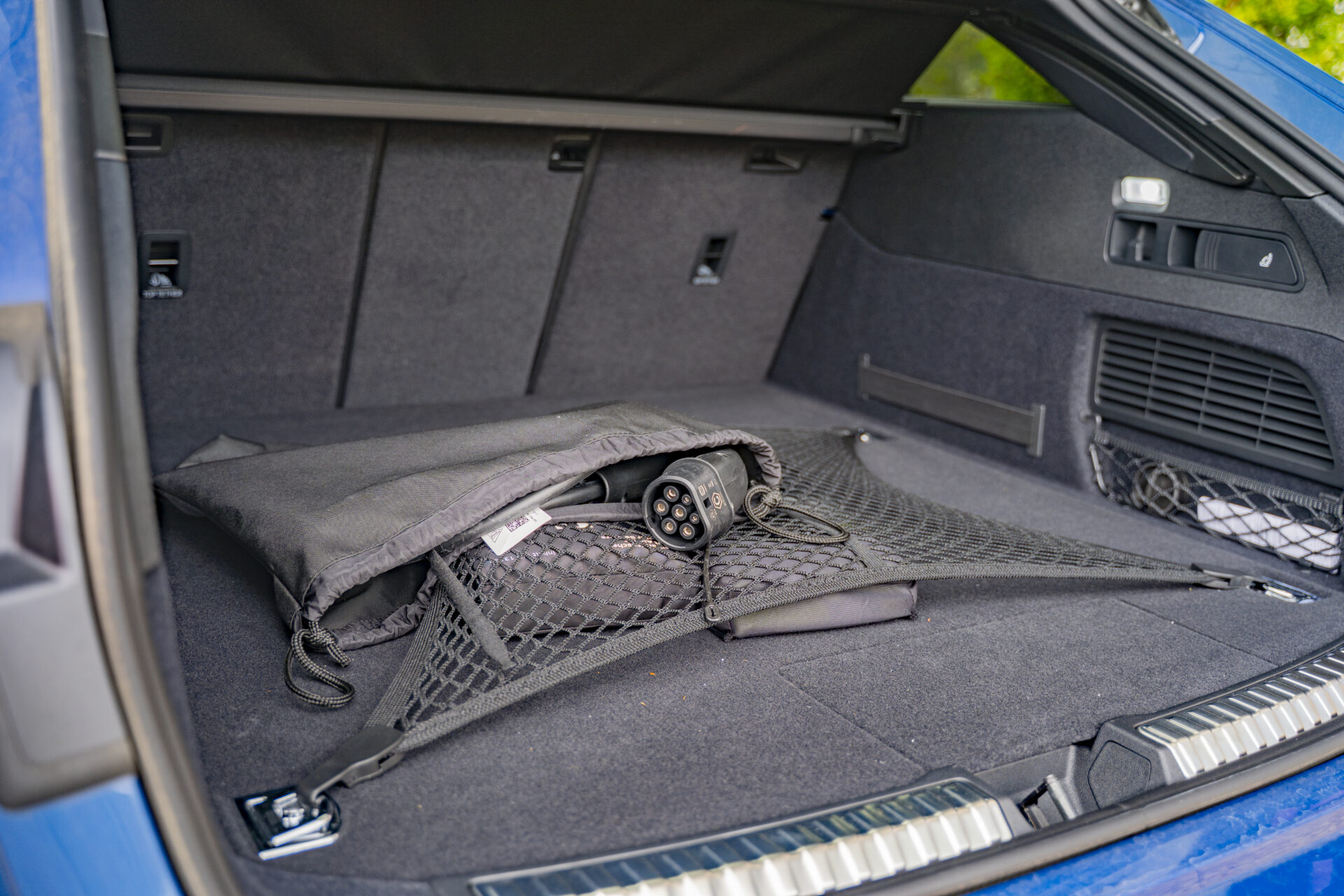
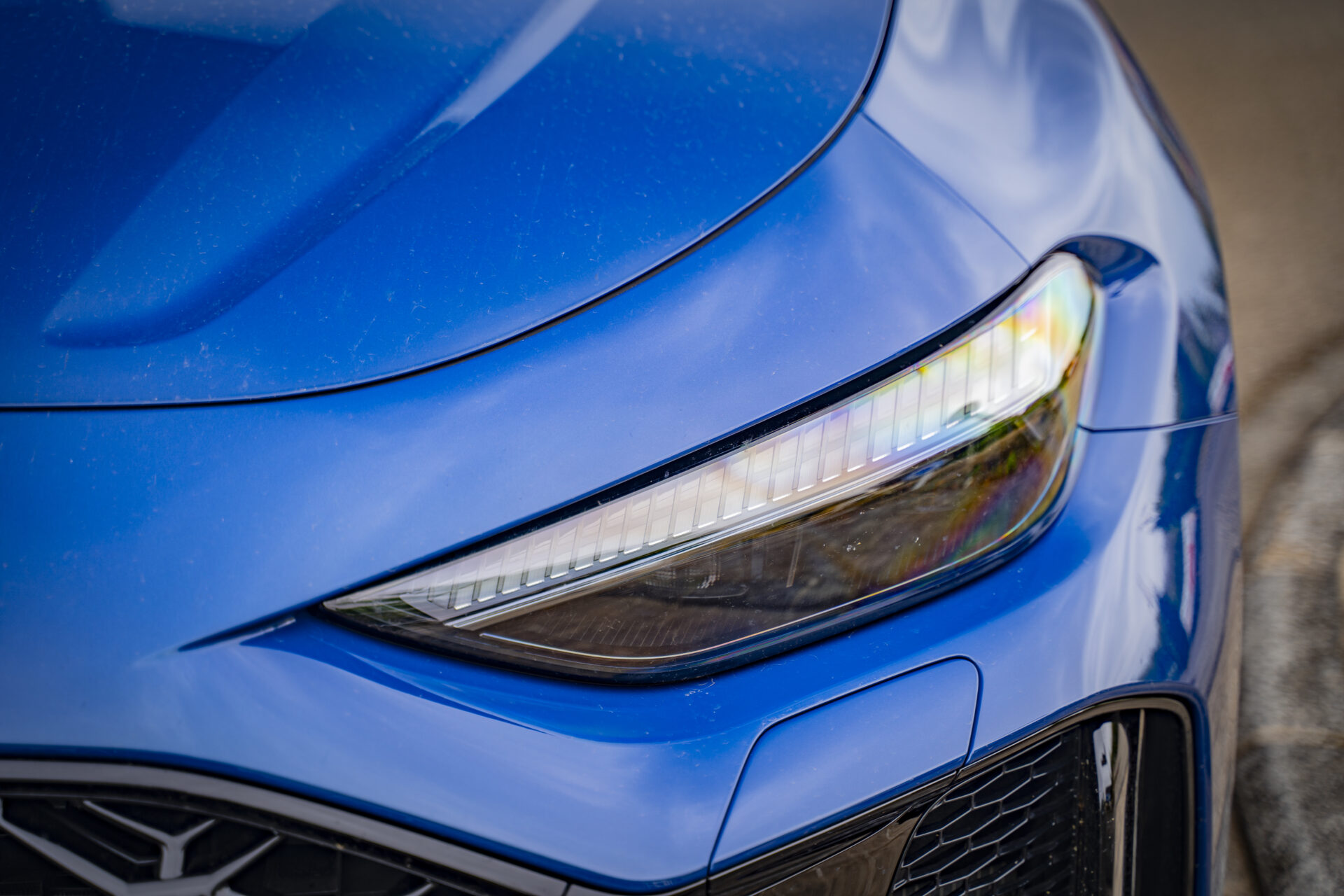
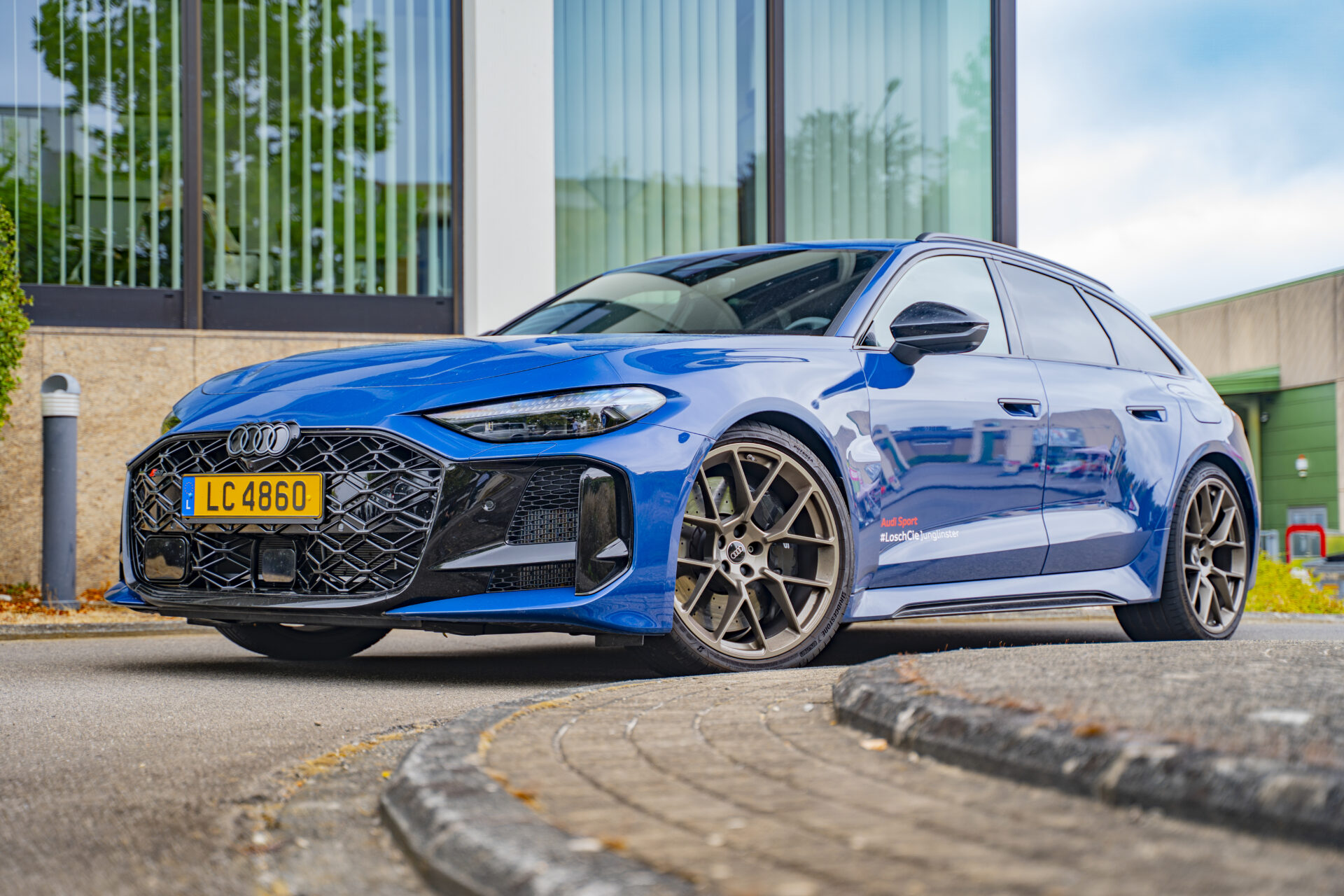
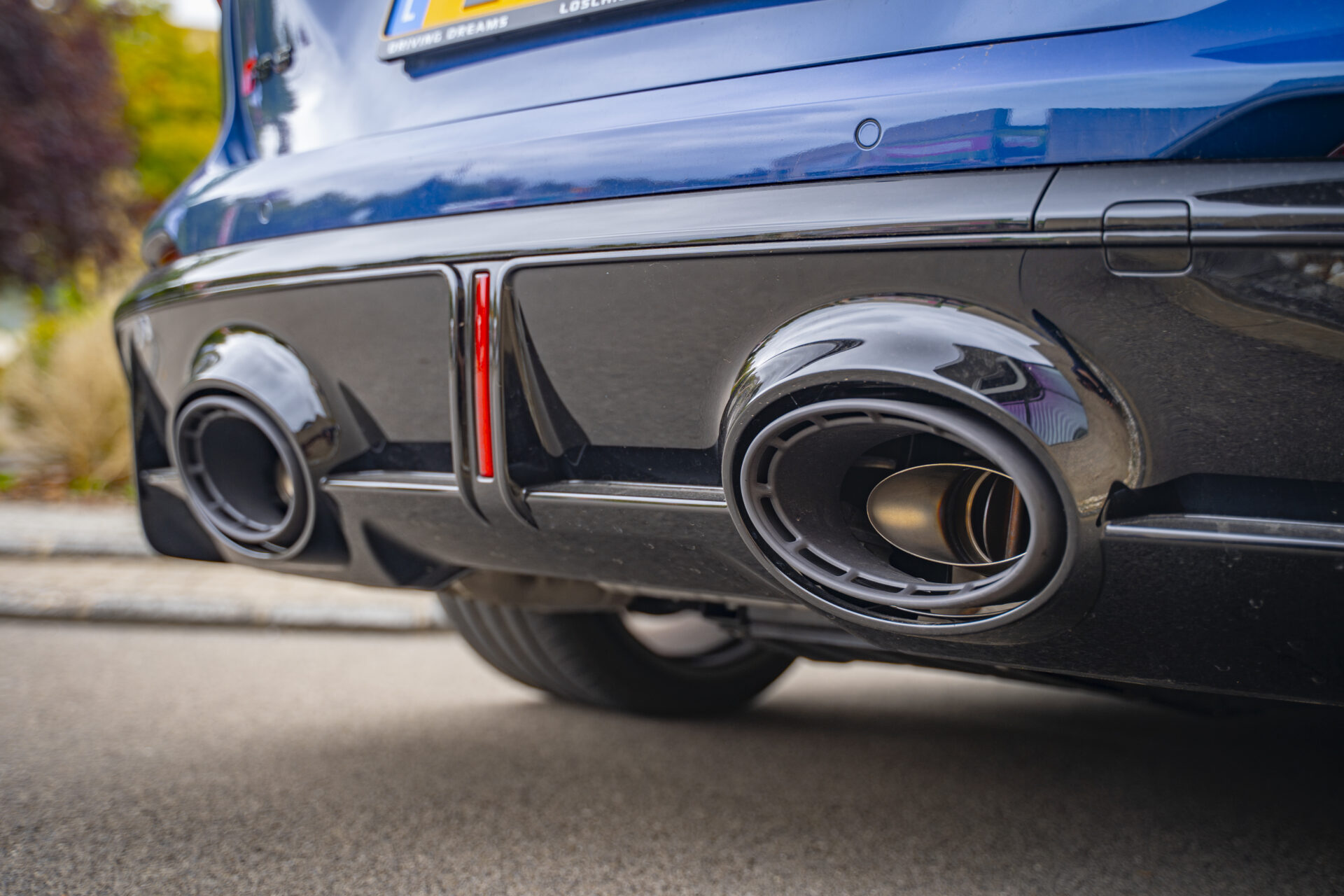
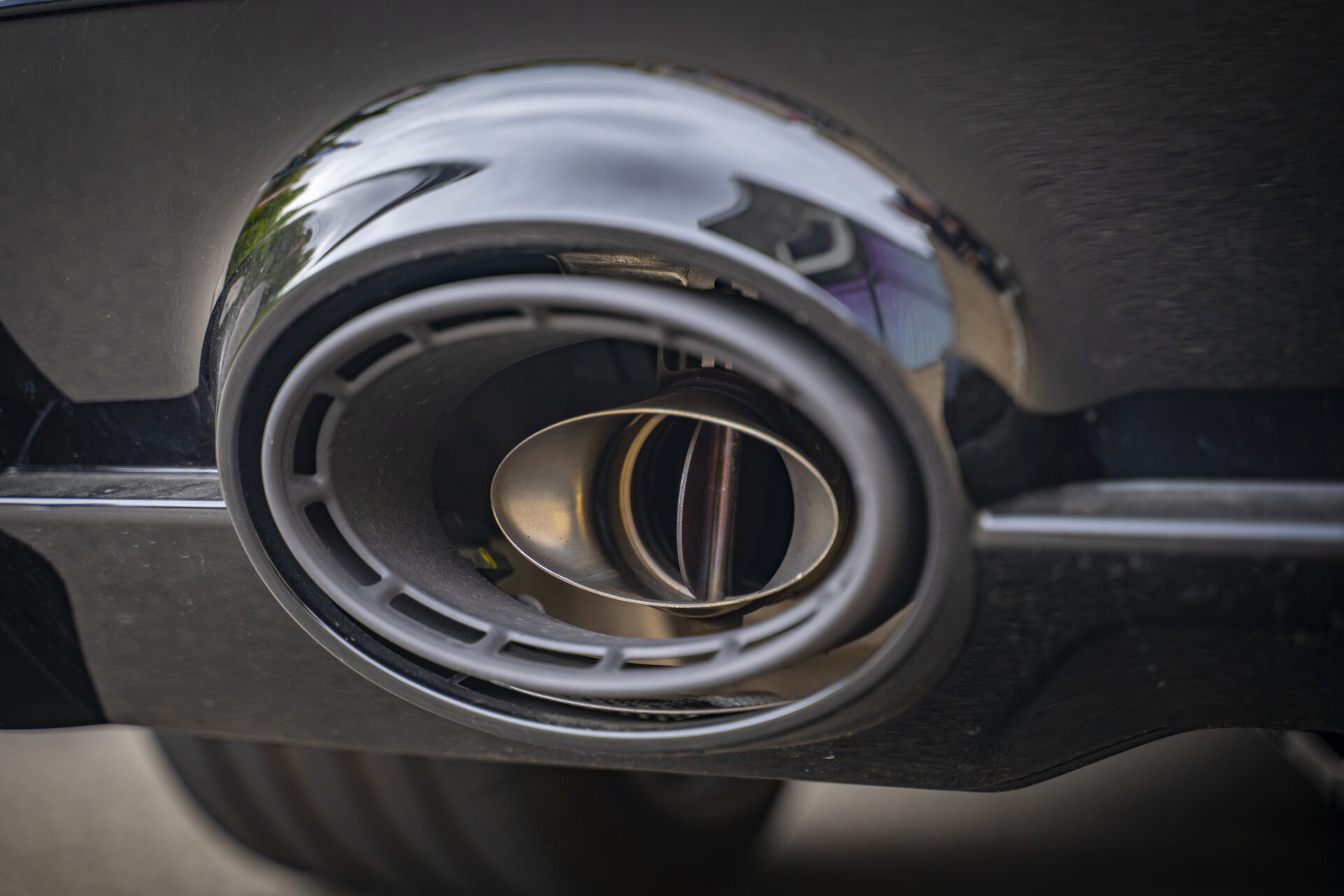
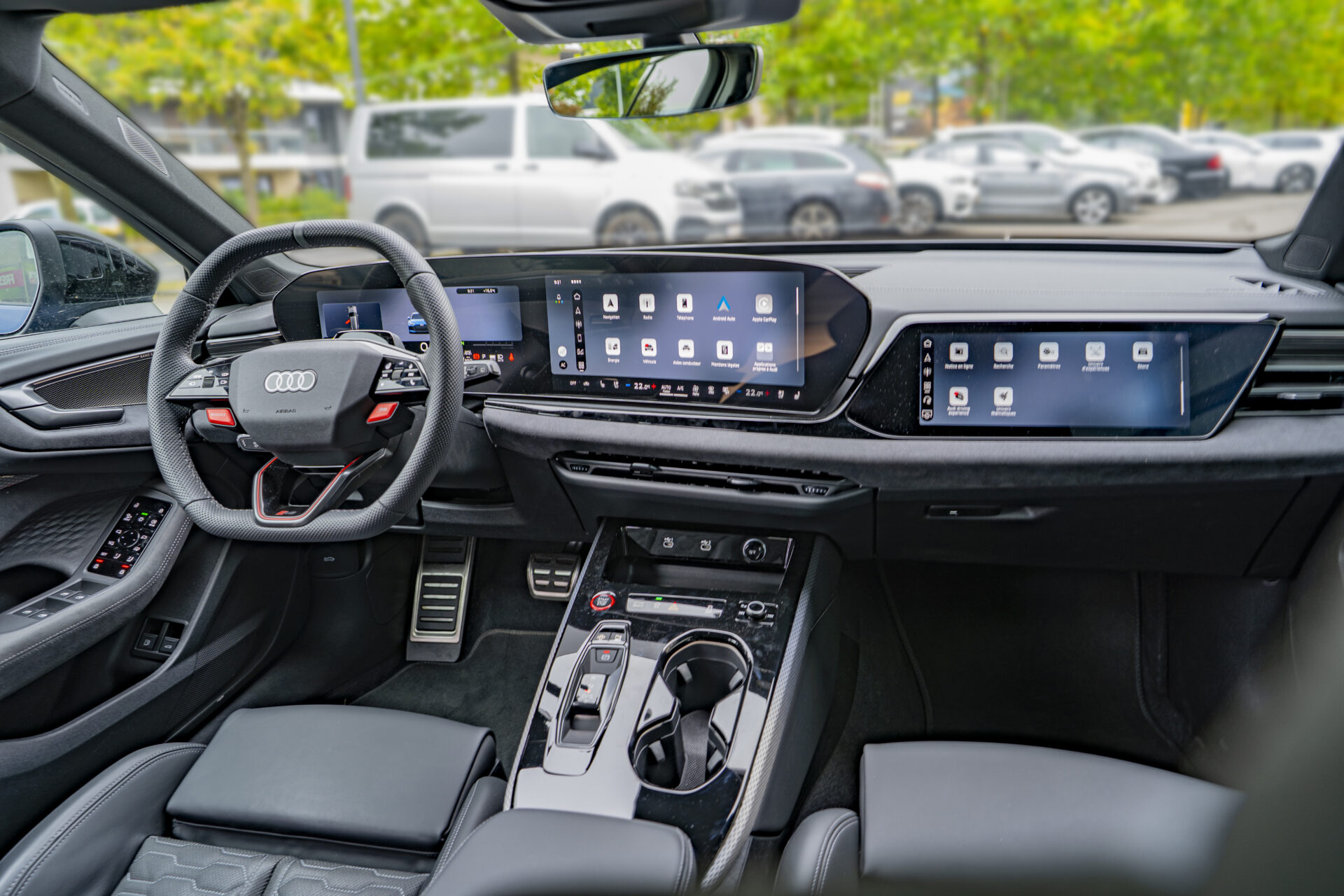
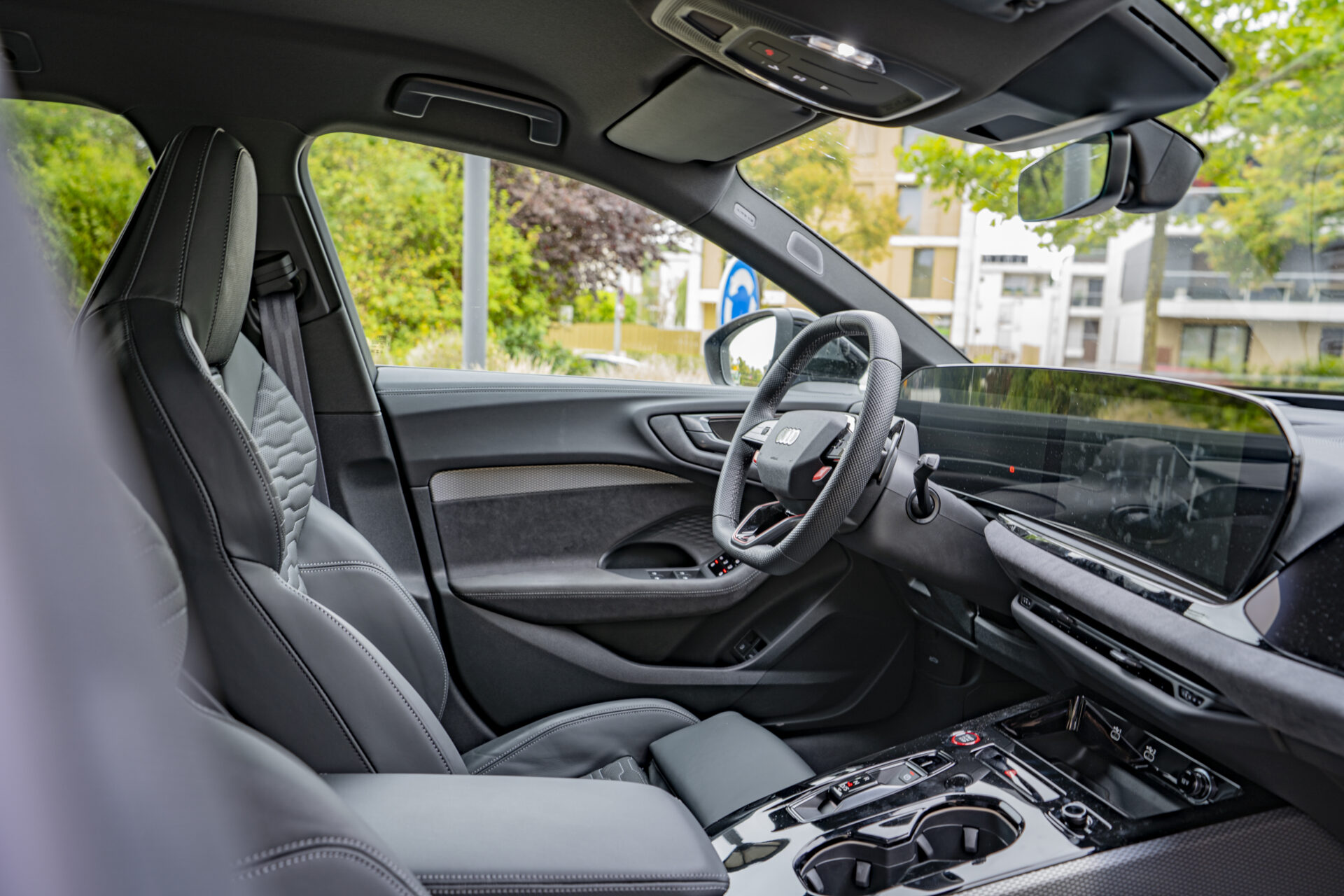
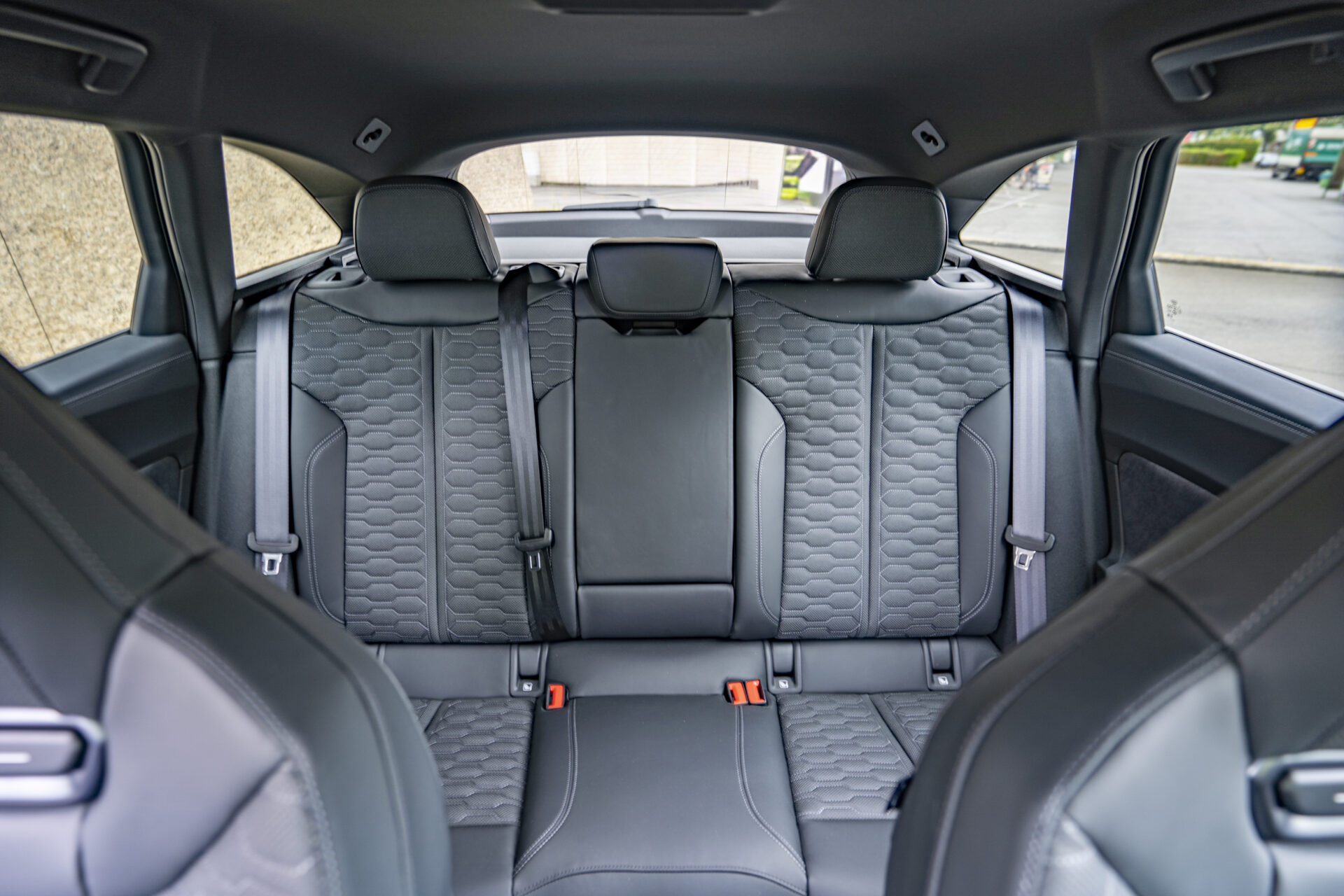
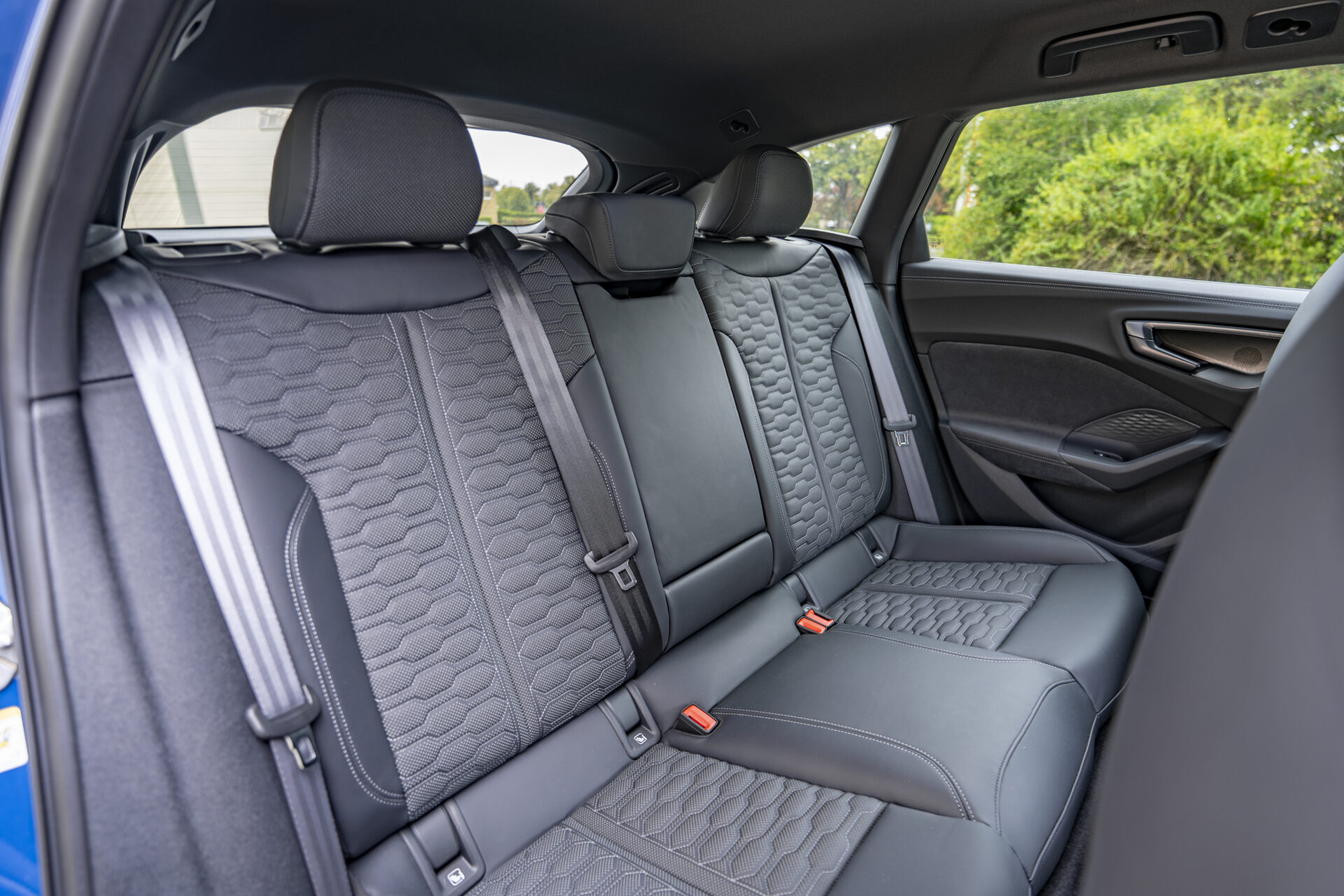
Nine centimetres wider than a standard A5 Avant, it features flared wings, a honeycomb Singleframe grille and matte oval exhaust tips; the optional darkened Matrix LED headlights carry a light signature inspired by the chequered flag. Inside, sports seats, standard massage function and a 14.5-inch MMI display set a premium, RS-focused mood. The boot comes in at 361 litres, expandable to 1,302 litres, smaller than on the standard A5 Avant: the underfloor battery eats into space, with no dedicated storage for the charging cable.
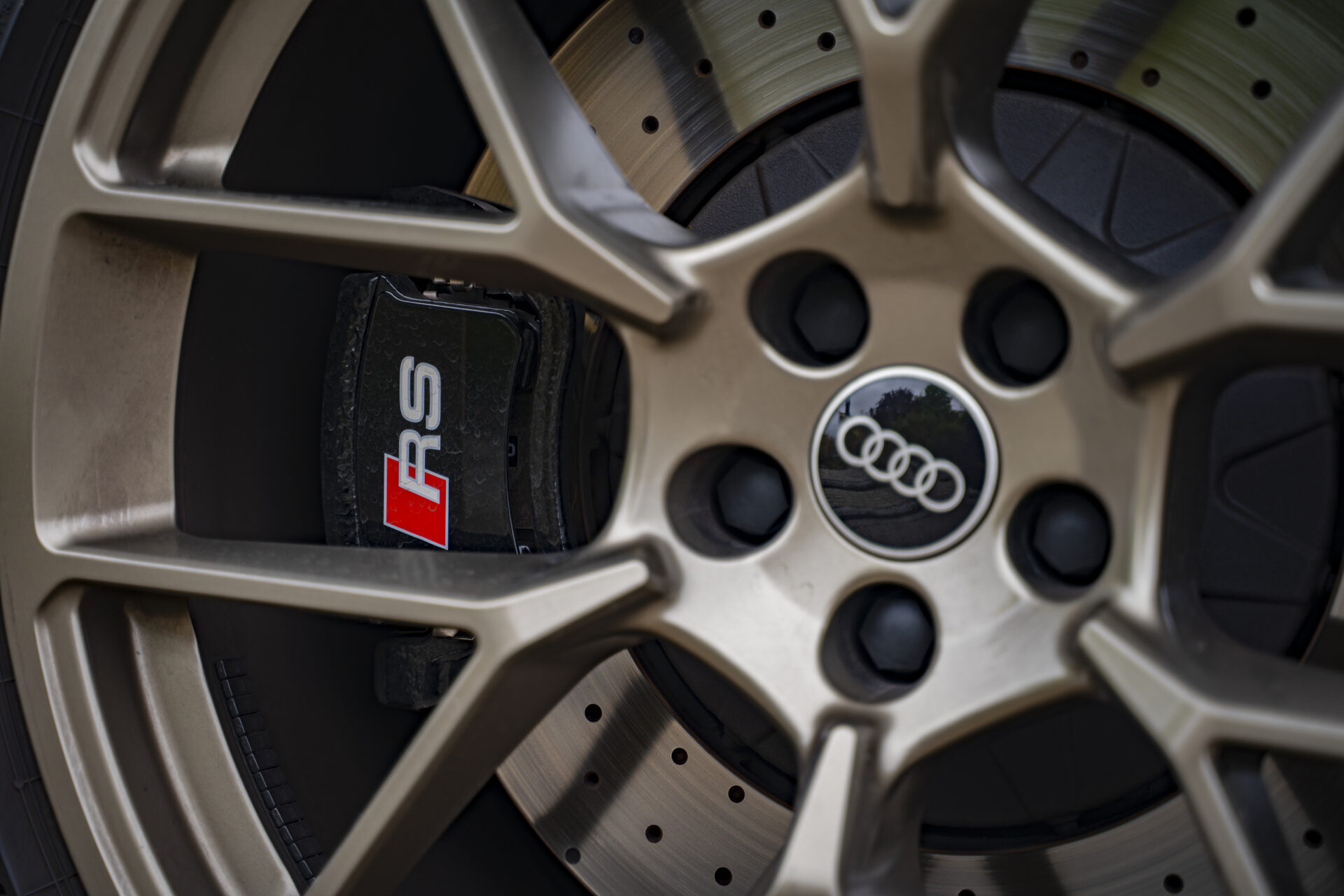
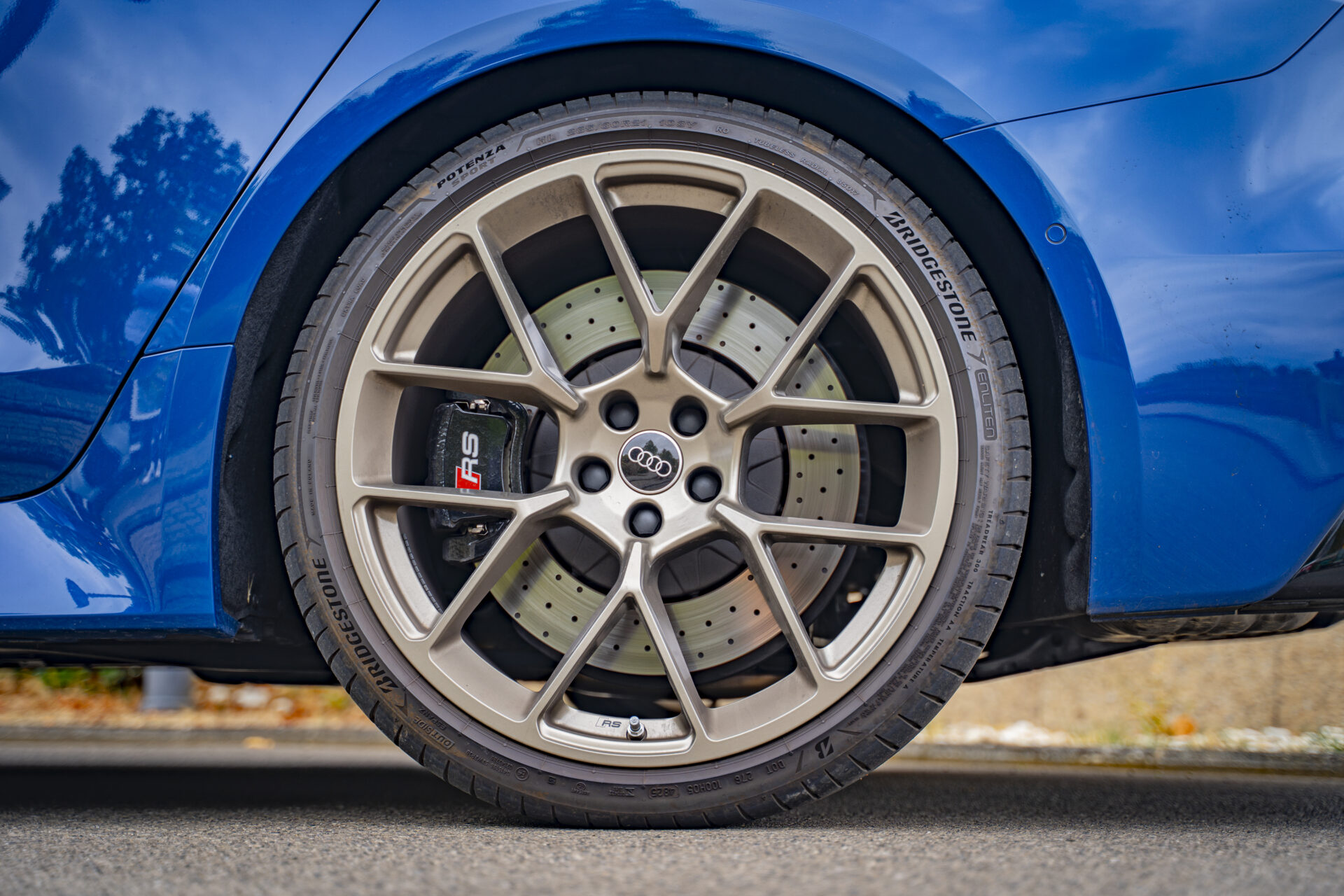
The V6 TFSI develops 375 kW (510 hp) and 600 Nm, paired with a 130 kW (177 hp) electric motor producing 460 Nm, fed by a 25.9 kWh gross (22 kWh net) lithium-ion battery. The quattro drivetrain combines a preloaded centre differential with rear torque vectoring capable of distributing up to 2,000 Nm between the wheels in 15 milliseconds. Eight-speed Tiptronic gearbox, standard RS steel brakes: 0 to 100 km/h in 3.6 seconds, top speed 250 km/h (285 km/h with the Audi Sport package).
Charging that lags a little behind
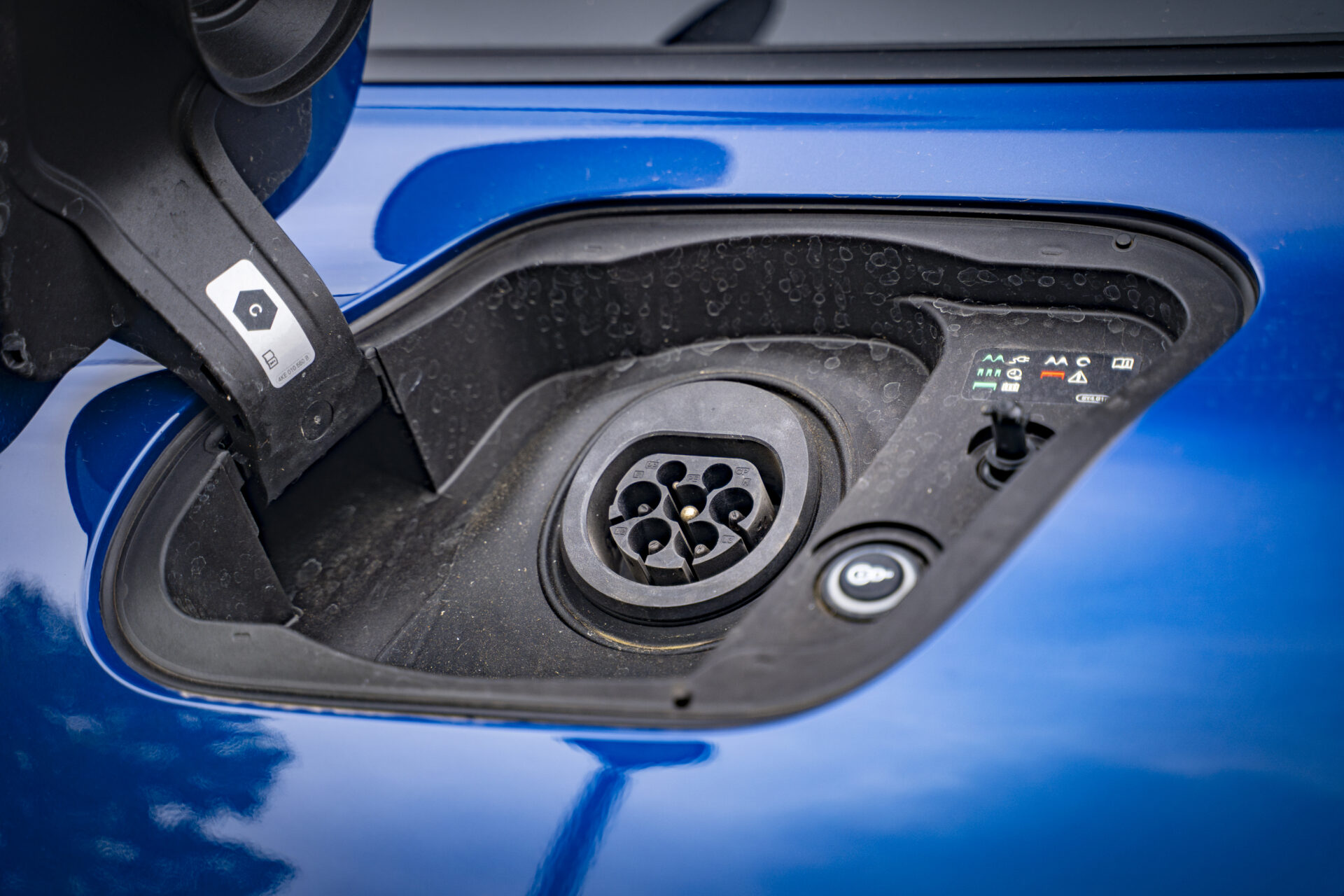
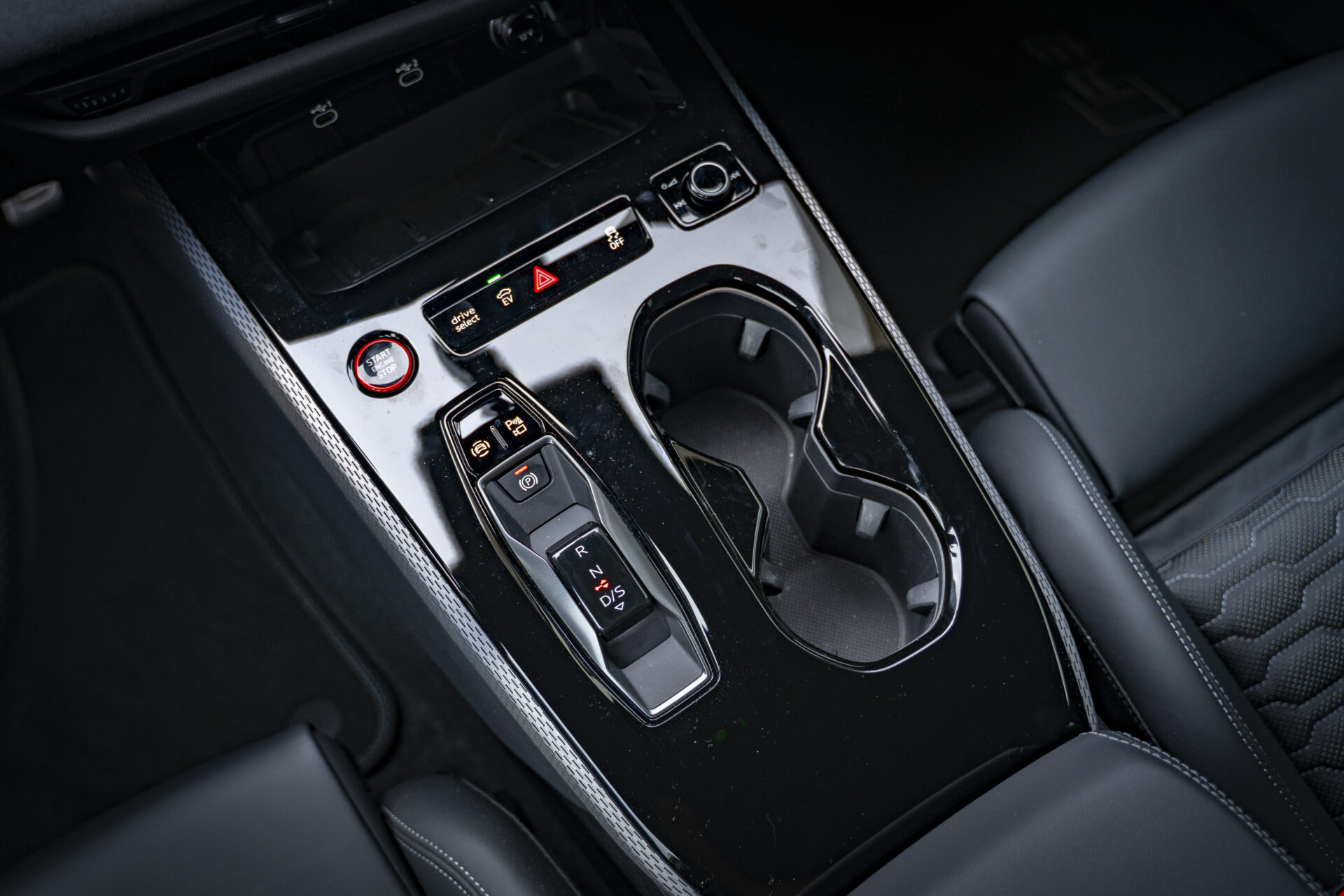
On alternating current, charging tops out at 11 kW, meaning a full charge takes two and a half hours, a figure that’s hard to justify in 2026 when much cheaper models from the group already charge at 50 kW. Two modes are offered: EV for driving in fully electric mode, and Hybrid, where a slider sets a target charge level, allowing electric range to be kept in reserve when approaching a city, for example. In Dynamic mode, the battery never drops below 20%, to preserve the Boost function; in RS Sport and RS Torque Rear, it stays above 90%.
Remarkable agility
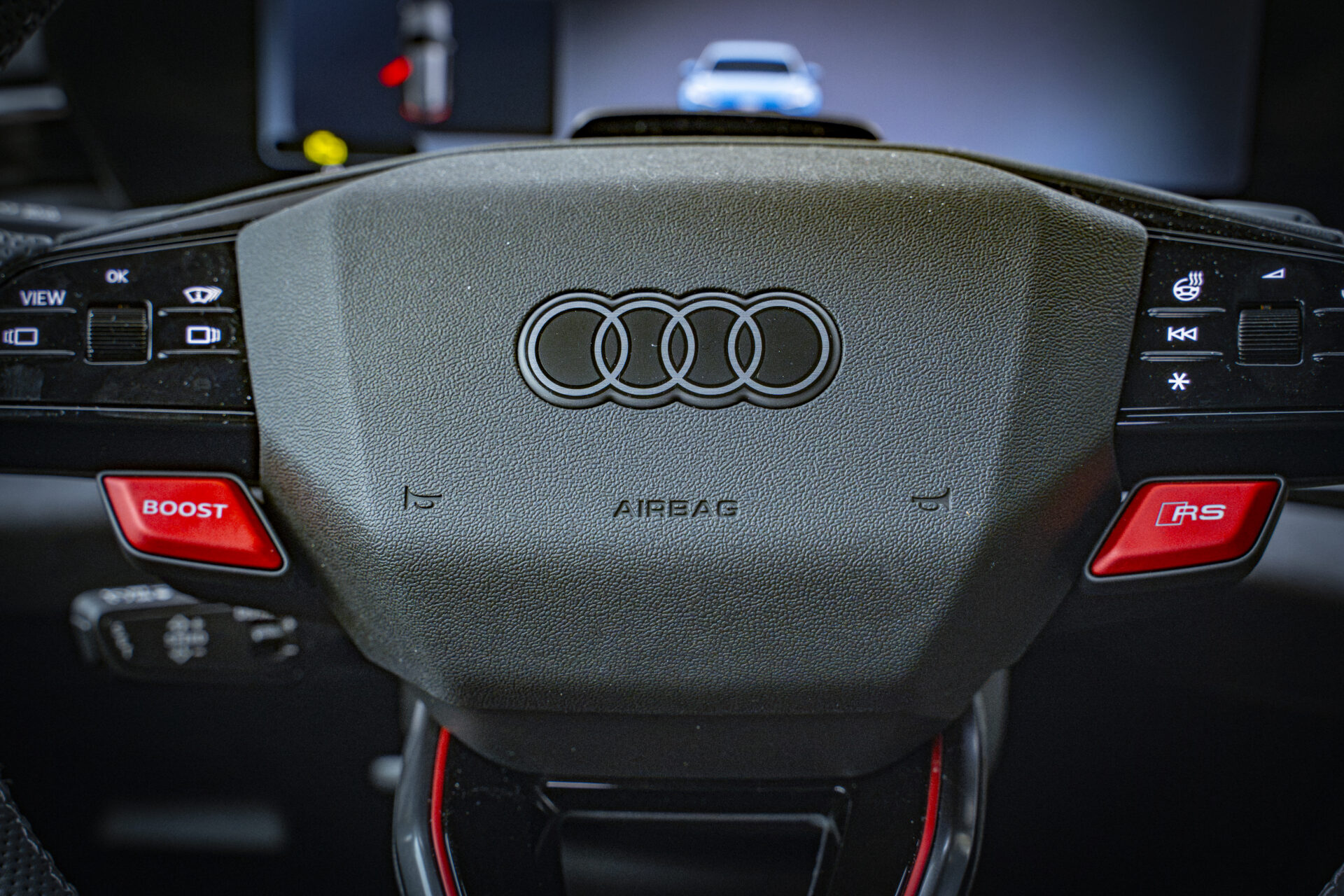
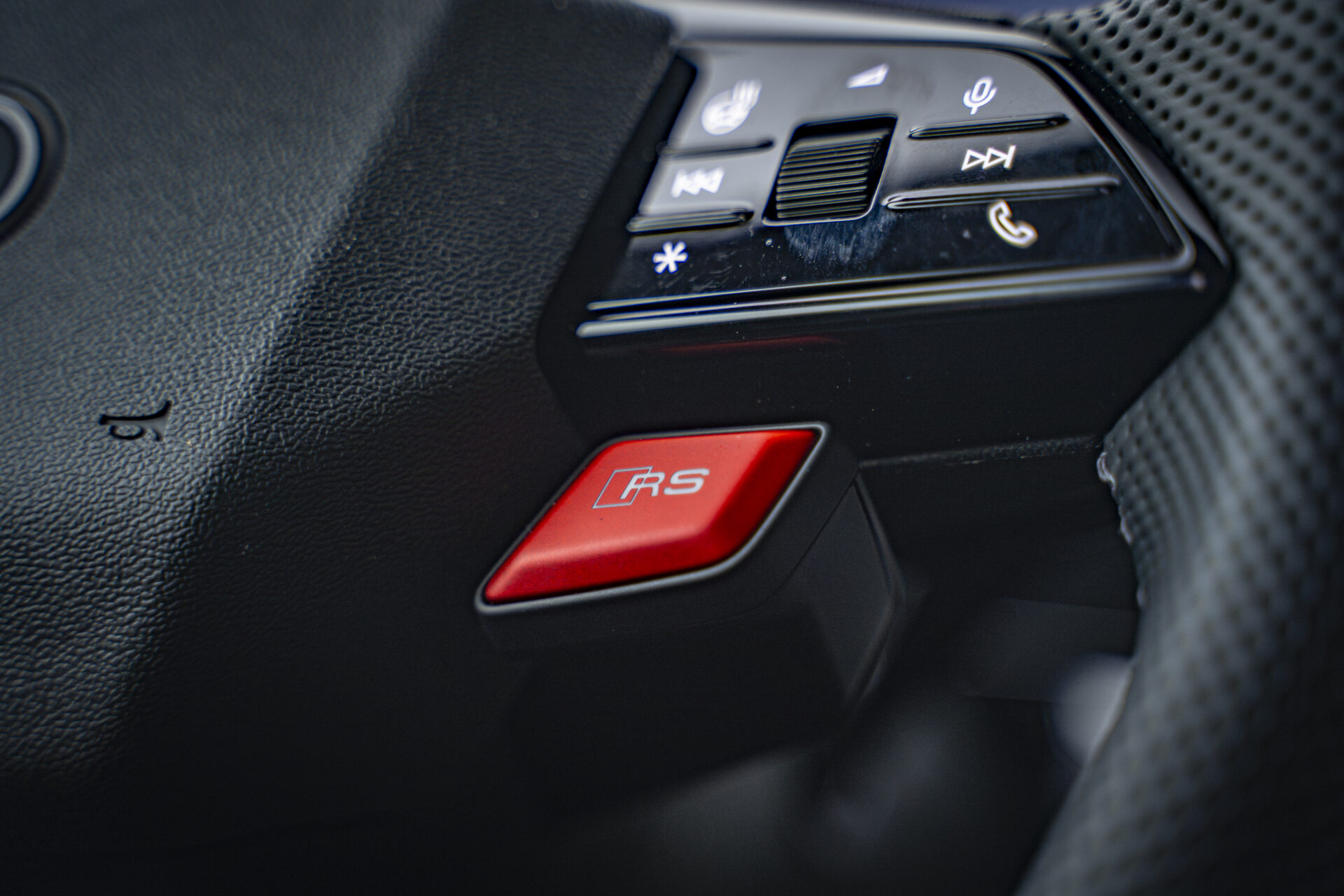
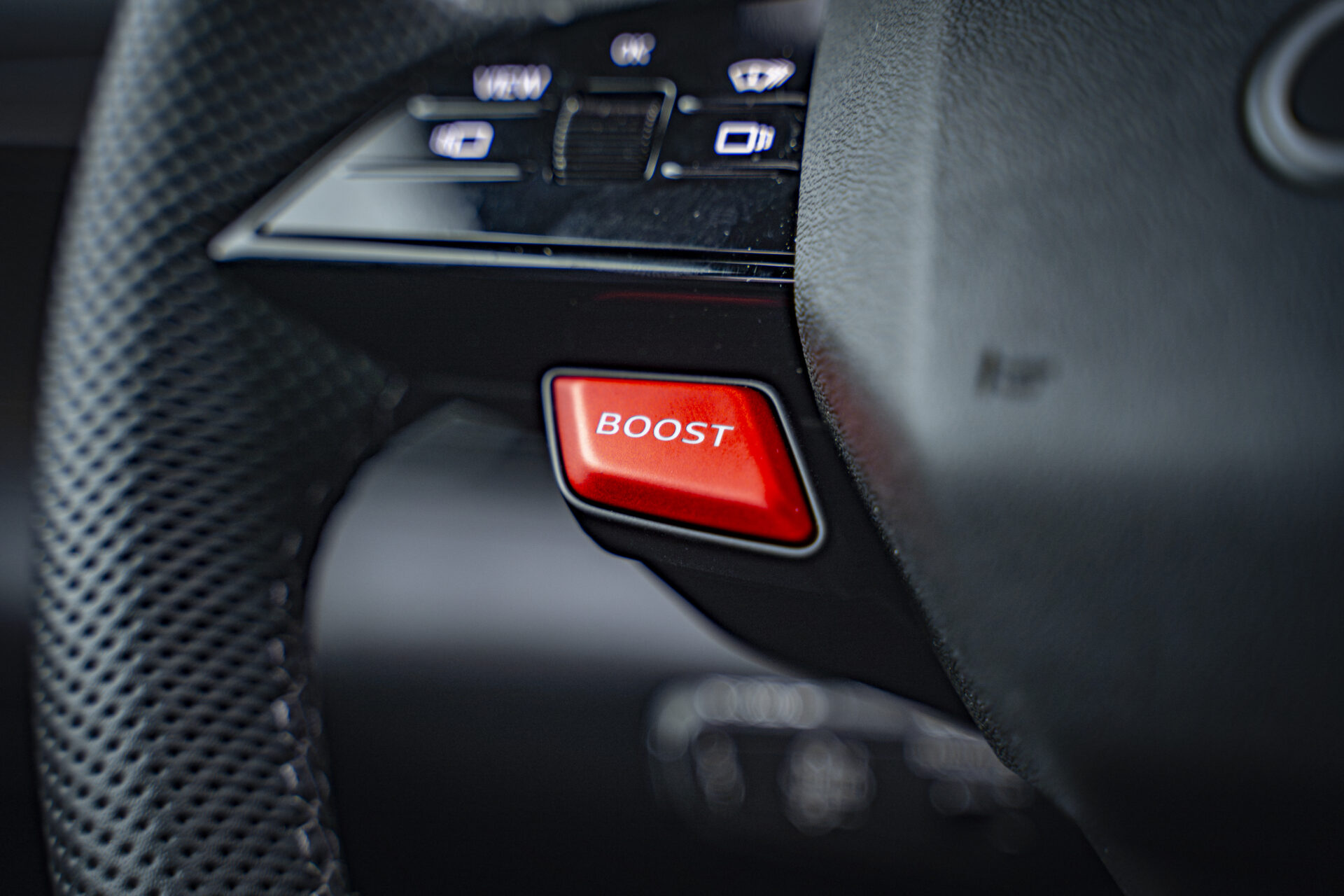
On the road, what really changes the game is this electromechanical rear differential: the car becomes surprisingly agile for its weight, while remaining refined once you’re no longer chasing outright performance, and on track it allows long, controlled slides, a sensation an RS Avant estate hasn’t offered in thirty years. The transition between electric power and the V6 is smooth, and the Boost button unleashes full system power even while driving on electric power alone. The brakes are also impressive, with stopping distances 11% shorter than the previous RS4, with no fading thanks to the optional ceramic brakes. The character range is wide, from a silent electric mode to a radical track mode, and even on poor road surfaces, the comfort is surprising for such a heavy car. The electric range, up to 86 km in town on the WLTP cycle, proves genuinely usable.
Weight remains the number one talking point: 2,370 kilograms unladen for the Avant, a gain in mass that has drawn its share of criticism, as with other high-performance PHEVs in this segment. Even once won over by the handling, you catch yourself thinking the car would be better with 500 kilos less. The boot also suffers because of the battery: 361 litres versus 495 litres on the standard A5 Avant, with no dedicated space for the charging cable. The sound, meanwhile, stays restrained and slightly artificial even in Sport mode. On the other hand, the rear differential changes the dynamic picture entirely, the hybrid transition ranks among the most polished in the segment, and the versatility, from electric mode to track mode, remains unprecedented for an RS.
The Audi Sport DNA remains intact
With this RS 5 Avant, Audi Sport makes a bold bet: injecting plug-in hybrid technology into the RS DNA without betraying its spirit. On paper, it should feel heavy and cumbersome. On the road, however, it feels lighter and livelier than its figures suggest. It takes on a different role: that of a family-friendly grand tourer capable of switching, at the touch of a button, into a formidable track mode.
Technical specifications
Audi RS 5 Avant
Points forts
- The new electromechanical rear differential and the agility it brings
- The smooth transition between the electric motor and the V6
- The everyday versatility, from silent electric mode to track mode
Points faibles
- The weight: 2,370 kg unladen for the Avant
- Boot space reduced by the battery (361 l versus 495 l on the A5 Avant)
- AC charging power limited to 11 kW