“Our gullwing is the icon of the 1950s”
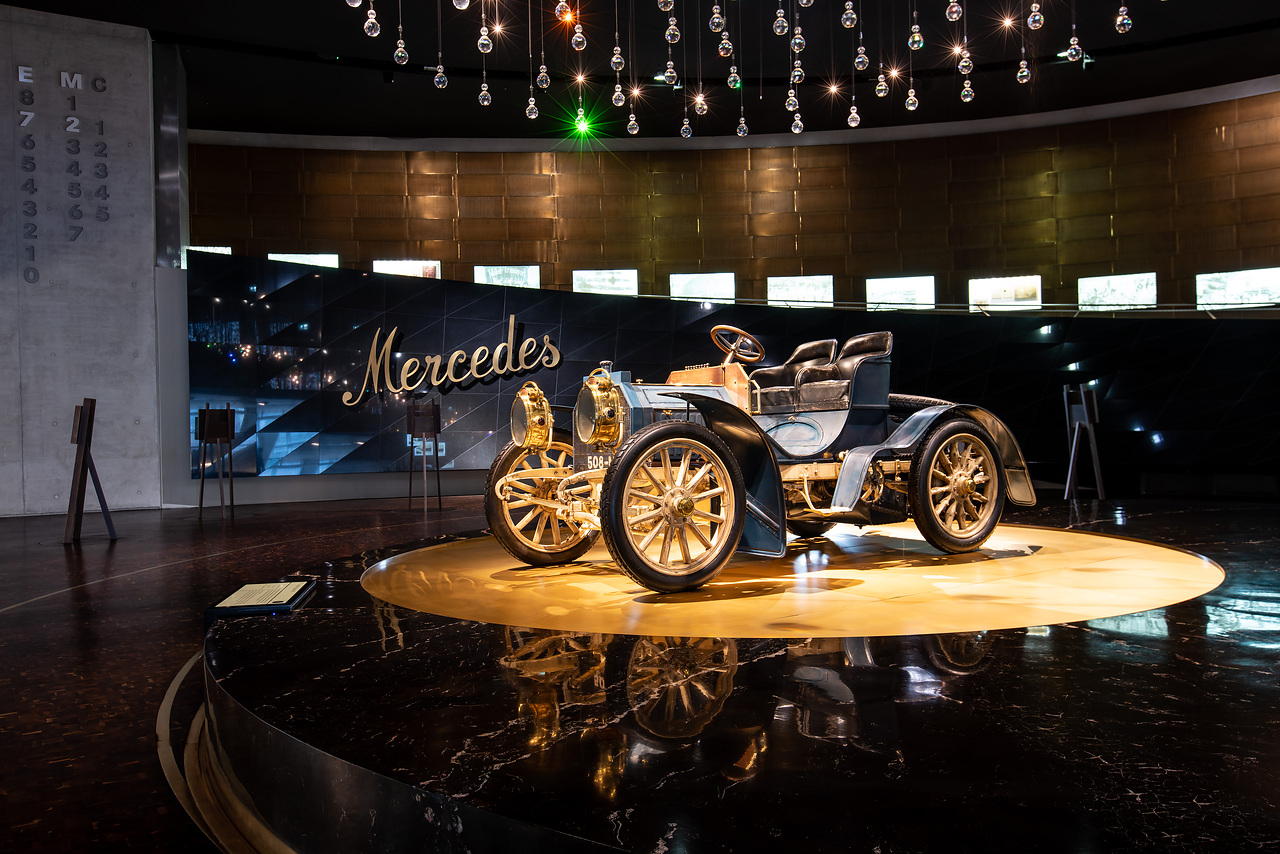
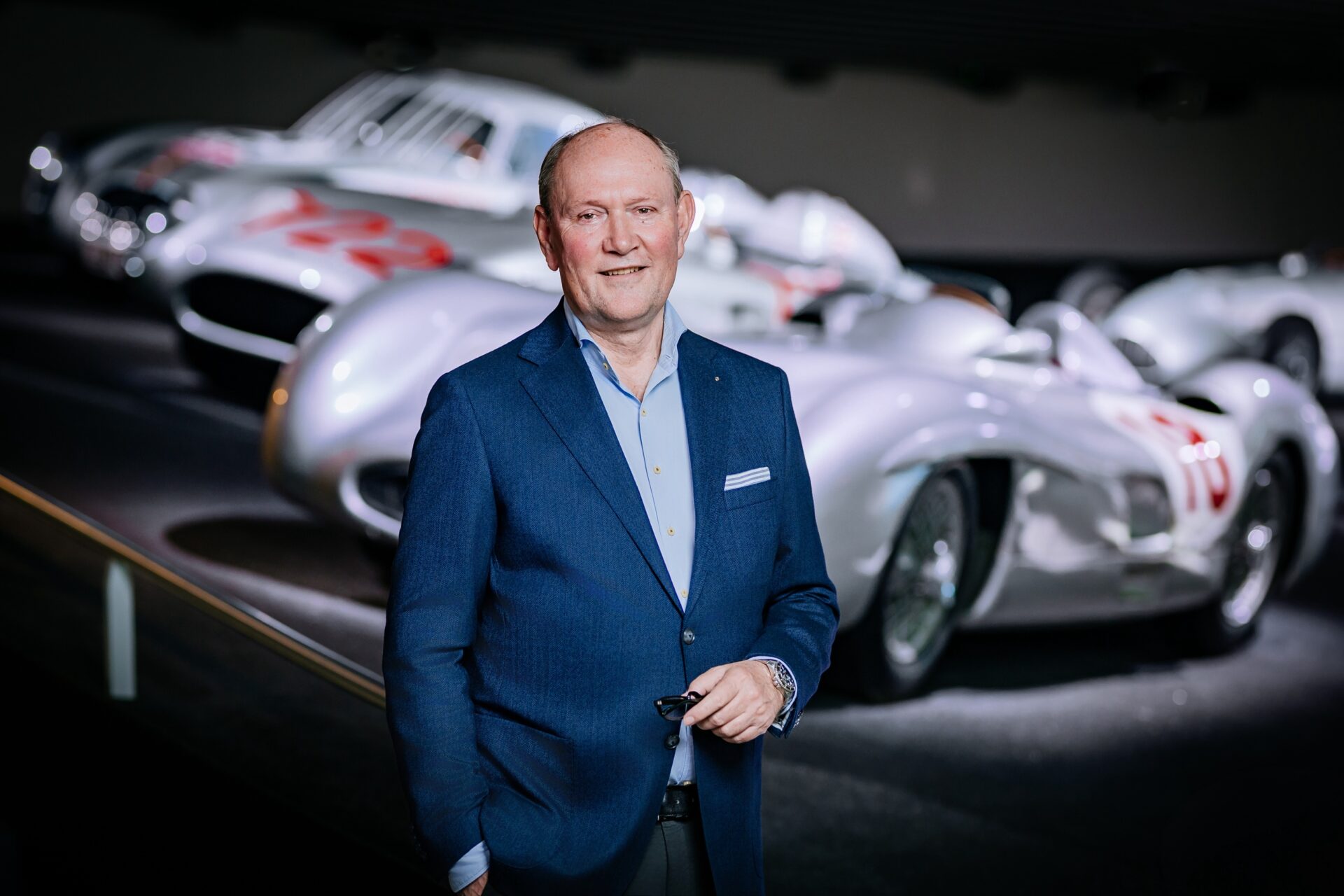
The first automobile with a combustion engine is just one of the precious treasures on show at the Mercedes-Benz Museum in Stuttgart. Marcus Breitschwerdt, CEO of Mercedes-Benz Heritage, on iconic models and a company whose history is marked by new beginnings and change.
Marcus Breitschwerdt
I get to drive models from our collection again and again. Among my favourites is the C 111 with its Wankel engine. A supercar, 350 hp, a top speed of 300 km/h, gullwing doors. I drove it a few years ago in Los Angeles. At a traffic light, someone called out to me: “Oh, it’s a Mercedes! When does it come to the market?” And yet we presented the first C 111 as a test vehicle back in 1969. After more than 50 years, people still think it is something new. We must have done everything right back then, don’t you think?
Marcus Breitschwerdt
The Benz Patent Motor Car was a three-wheeler, which made steering easier. With around 1.5 hp it reached roughly the travelling speed of a horse, although the horse was of course not as enduring. It was a sensation at the time, but people were also sceptical. The breakthrough came thanks to Carl Benz’s wife Bertha. In 1888, with her journey from Mannheim to Pforzheim, she proved that the vehicle could cover almost 100 kilometres.
Marcus Breitschwerdt
The foundation was actually laid by the invention of the automobile in 1886. It reflects the pioneering spirit that prevailed in southern Germany. There was no large-scale industry here, and people knew: I can only afford a major purchase once in my life, and so it has to be able to accompany me for a lifetime. That is why only the best was good enough; technical features were not allowed to become outdated soon afterwards. You achieve that only with the best engineering, the best materials, the best workmanship and timeless design. That is how Gottlieb Daimler and Carl Benz built their products. Around 1900, both were then at the top of the market, with separate companies. Daimler launched the first Mercedes. Since then, we have felt at home at the top with this name, and we meet the highest standards with our products.
Marcus Breitschwerdt
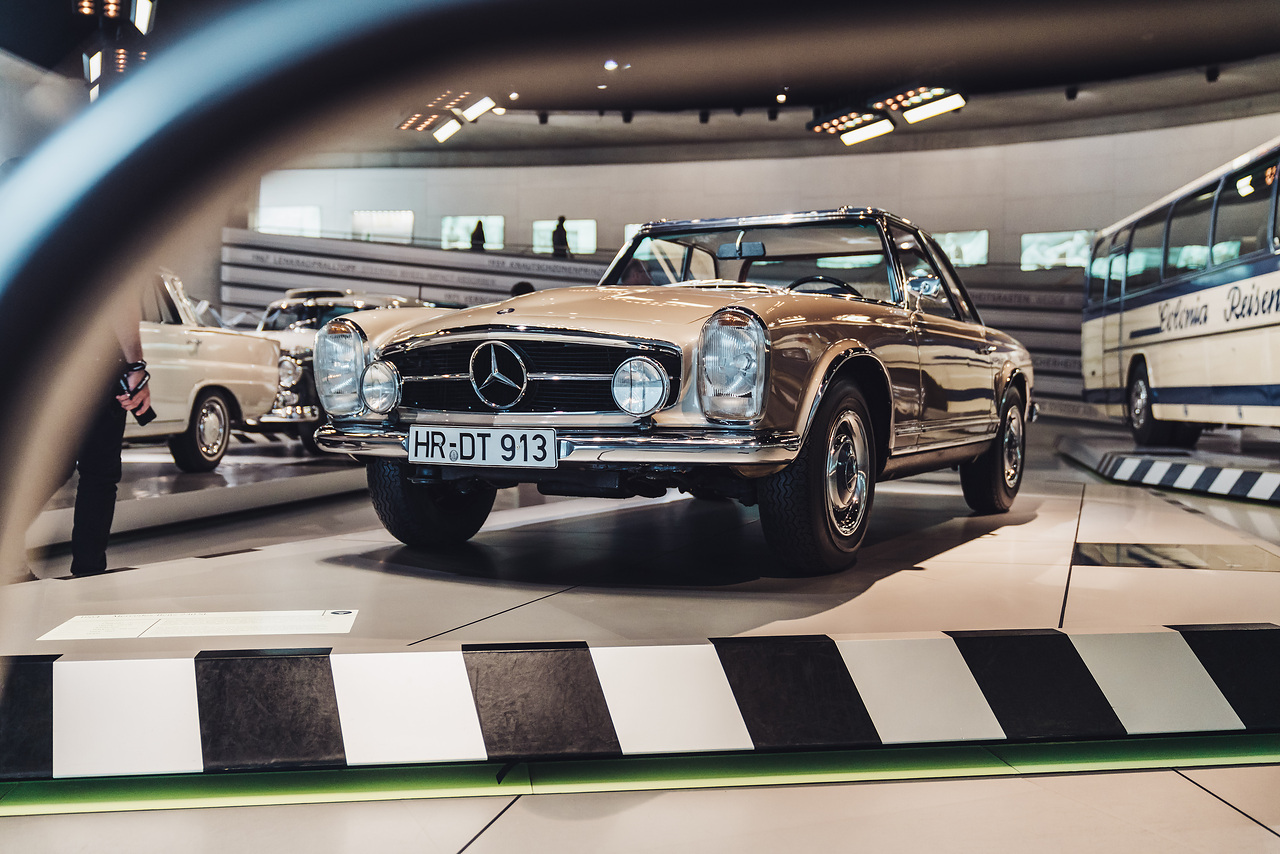
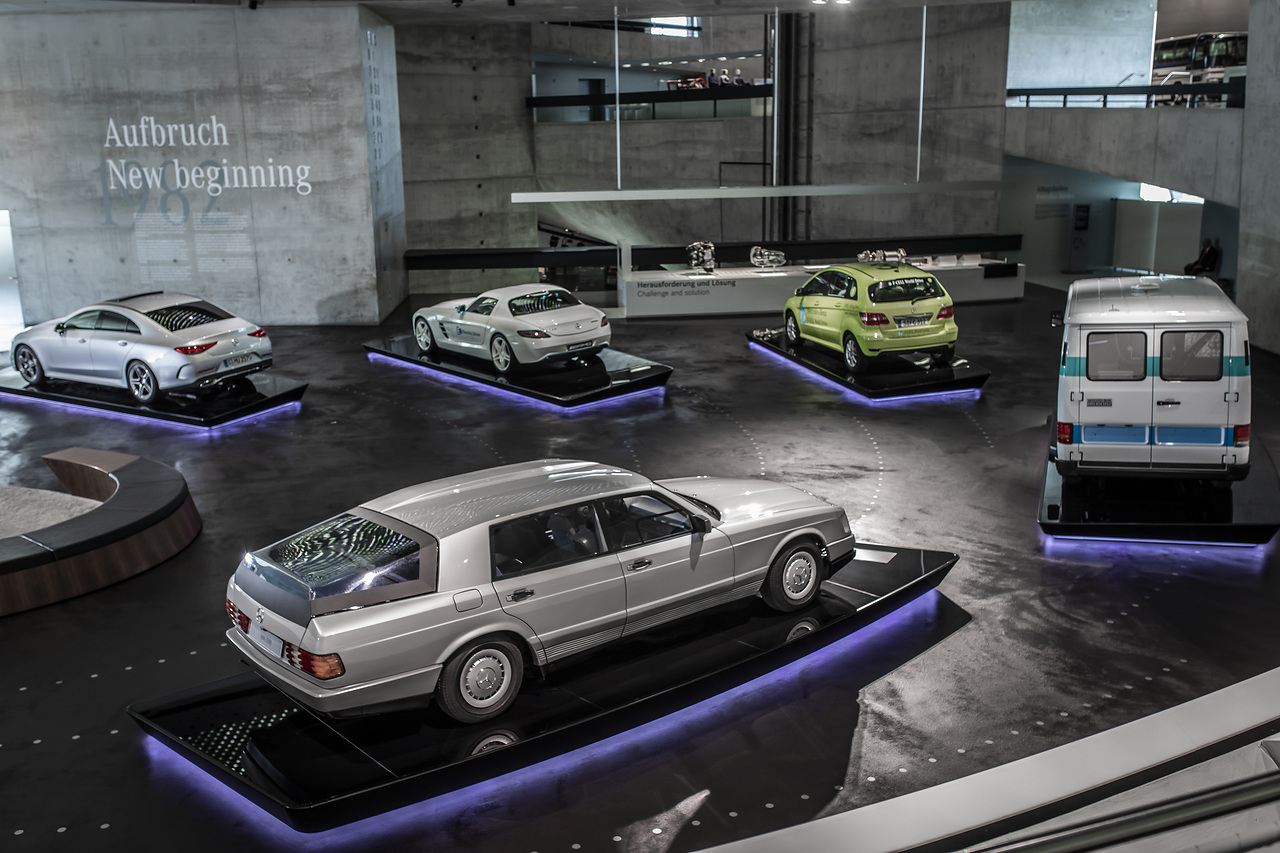
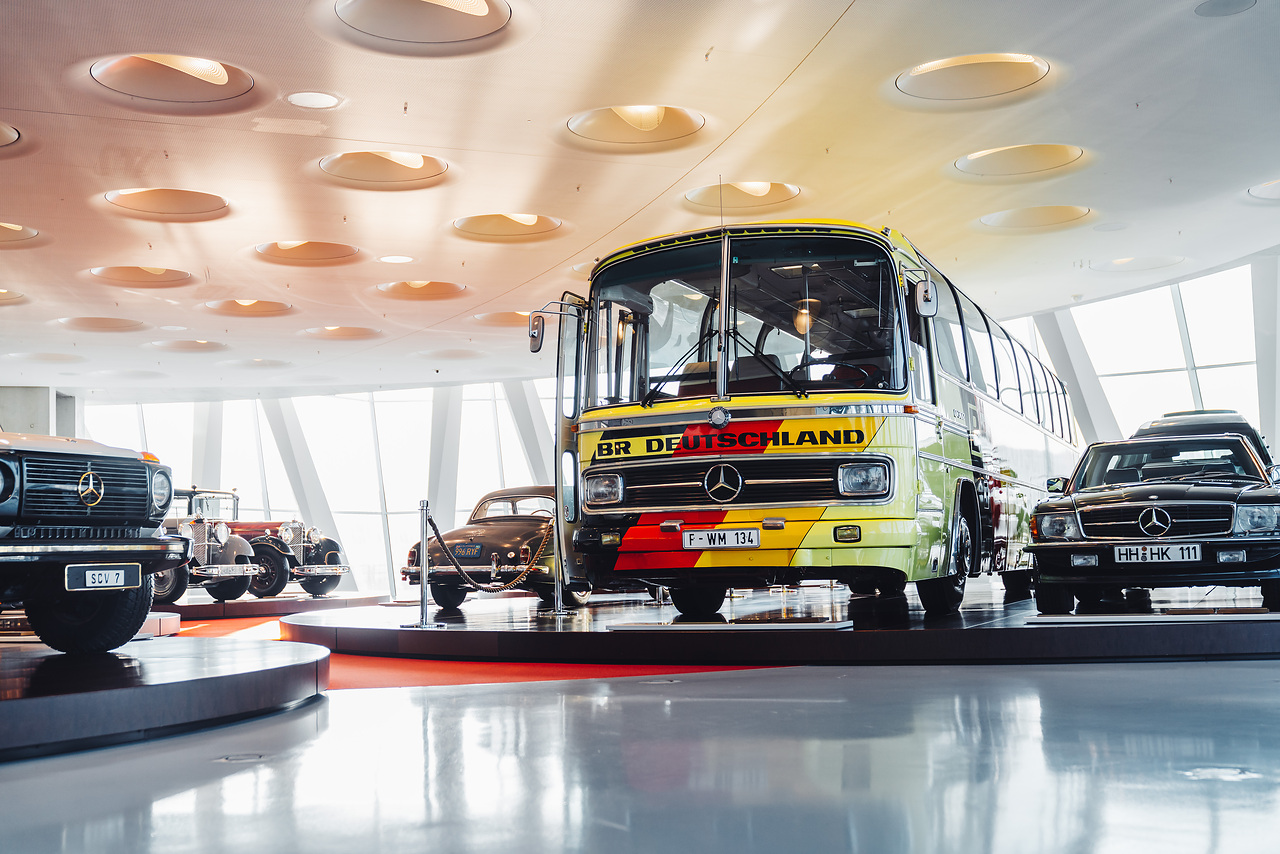
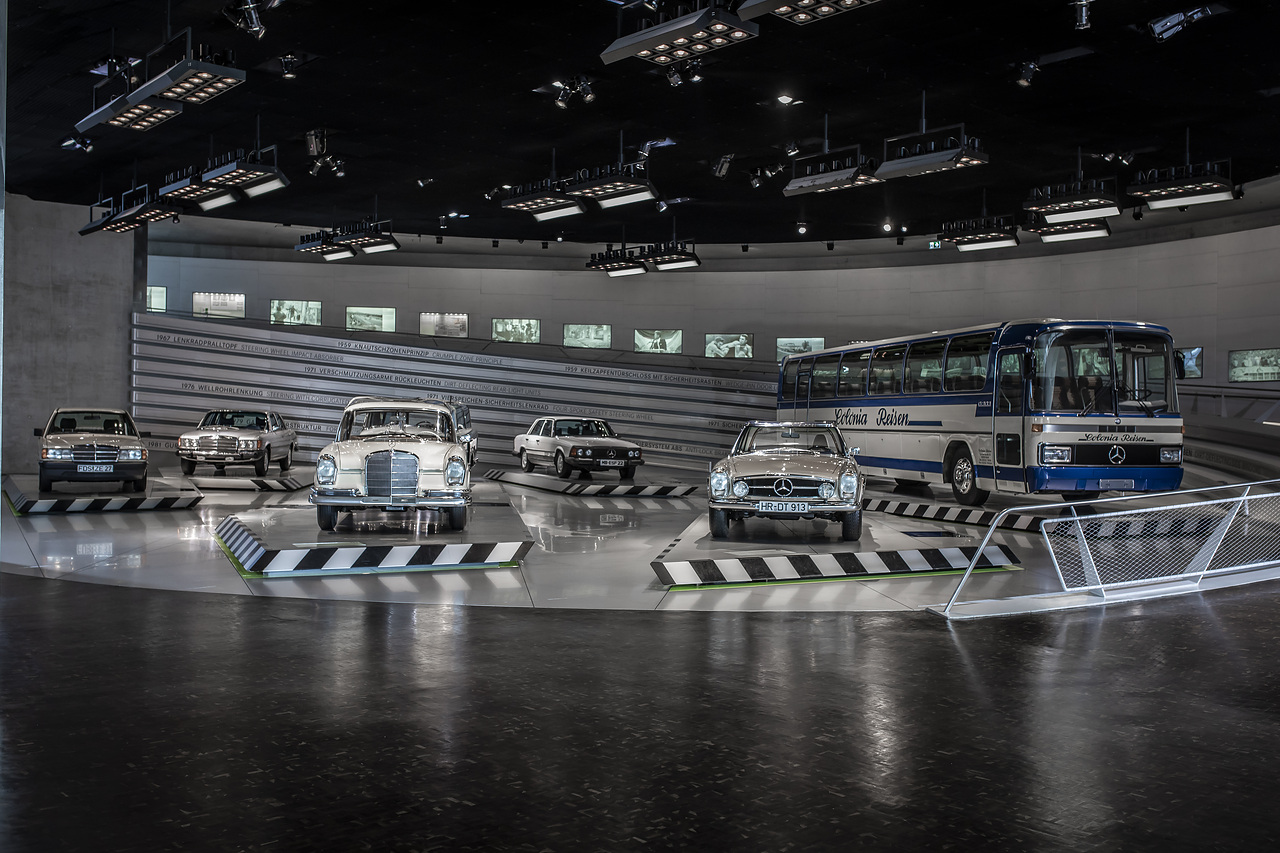
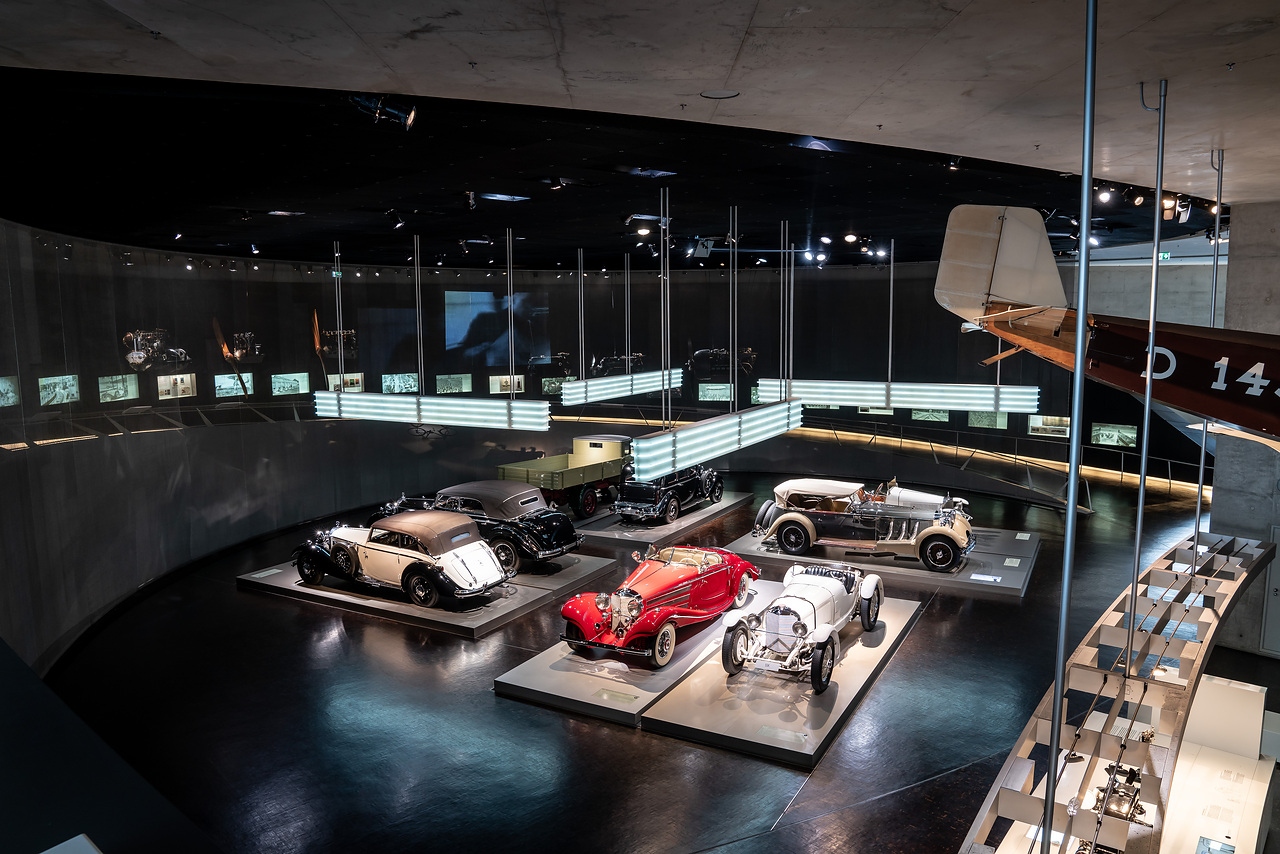
In the museum, our visitors take a journey through time from 1886 to the present day. As they walk from top to bottom, the vehicles of each era are always on the right-hand side. On the left, they are flanked by exhibits and contemporary images showing every decade with its social, cultural and economic events. This also includes the National Socialist era. Our role at that time has been thoroughly examined by historians on a scientific basis, and we also make it transparent in the exhibition. We shed light on this period in several display cases, including the subject of forced labour.
Marcus Breitschwerdt
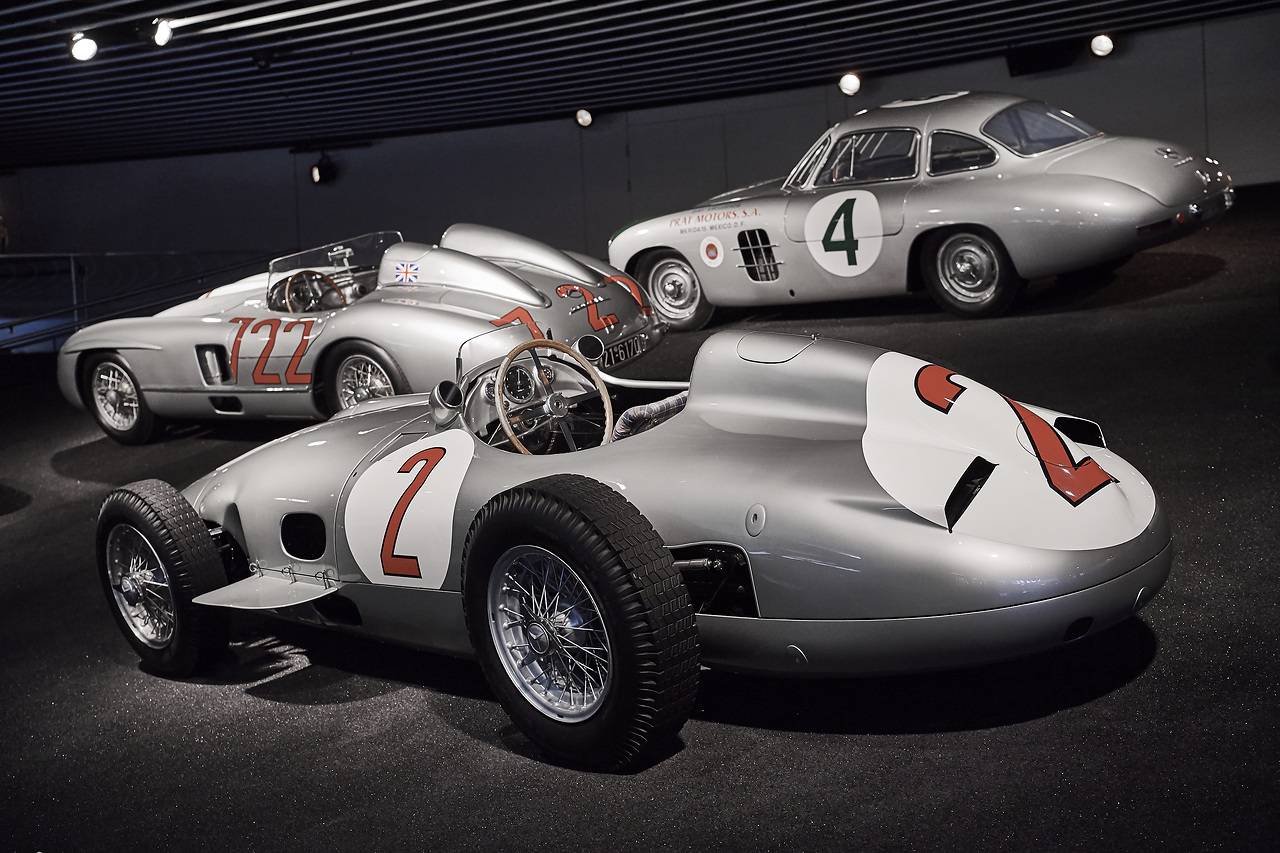
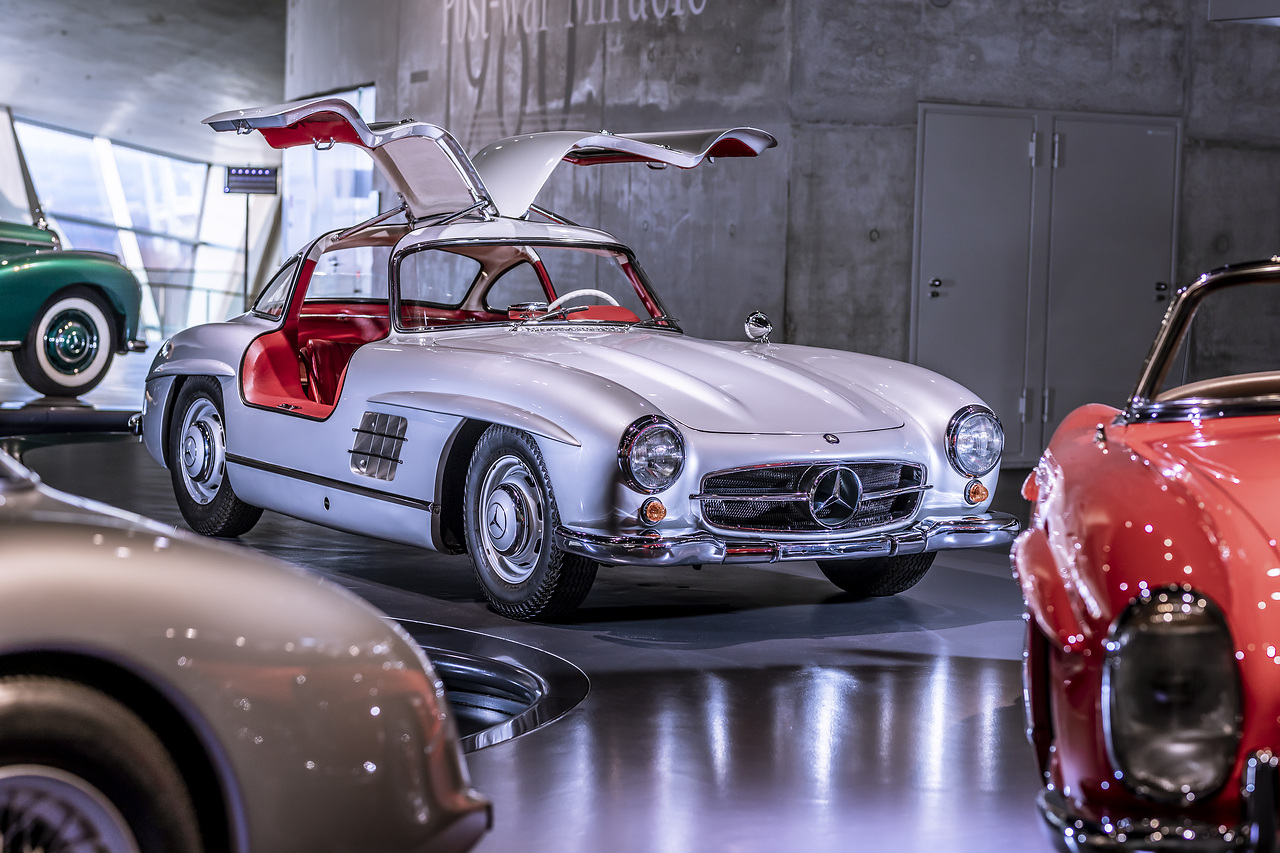
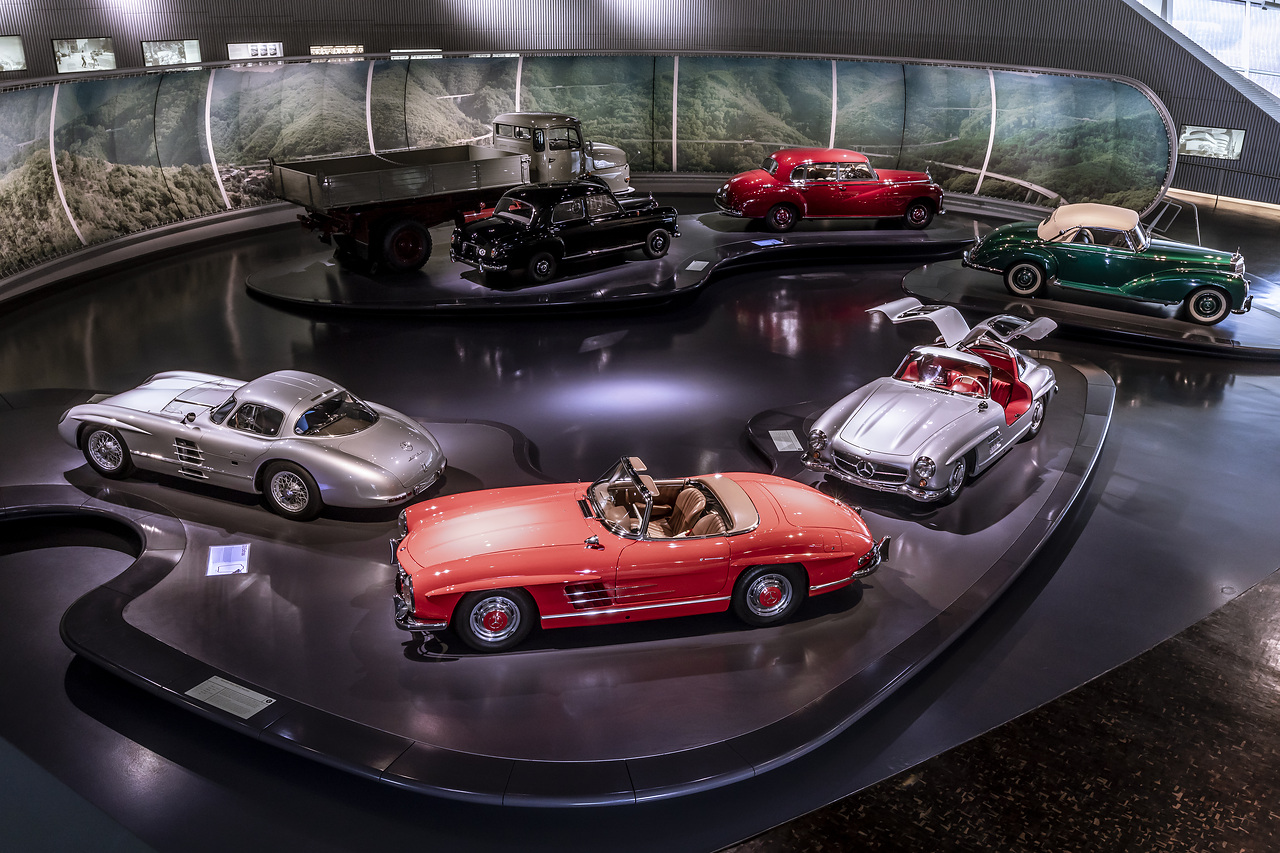
Our gullwing is the icon of the 1950s. Its backstory: in 1952 we built a racing car for the Carrera Panamericana, the 300 SL of the W 194 series. It had a light tubular space frame, which is why only doors that opened upwards could be fitted. The car won all the important races. Our general importer in the USA, Maximilian Hoffman, then travelled to Stuttgart and said: “I can sell a road version of this racing sports car brilliantly.” That is how, in 1954, the production sports car of the same name with the famous gullwing doors came about. People admired it everywhere. The 300 SL showed that cars were being created in Germany that set standards all over the world. In that post-war period, that could not be taken for granted.
Marcus Breitschwerdt
We tried the combination, it did not work well, and so we separated again. We come from a two-brand world, Benz and Mercedes, and today we have sub-brands such as Mercedes-AMG, Mercedes-Maybach and the G-Class. The Mercedes-Benz umbrella brand allows such differentiation because it is based on reliable, authentic values and is robust.
Marcus Breitschwerdt
Electric drive holds tremendous potential for the future, and already for the present. It is our ambition to build the best electric cars in the world, and we will show them with great enthusiasm, in addition to combustion engines, which will certainly remain significant for years to come. At the same time, assistance systems with all their possibilities are an integral part of today’s digitalised cars.
Marcus Breitschwerdt
In the professional roles I have held for the company, I have regularly been able to make use of autonomous driving, namely with a chauffeur. That is great when you can work in the car. Otherwise, my personal opinion is this: as a child I was driven around by my parents for long enough. One of the best days of my life was the day I got my driving licence. I still value that feeling of freedom to this day. Autonomous driving will certainly have its uses and a corresponding spread. But in this increasingly technological world, isn’t it nice to be able to choose to drive yourself?
A collection of incredible value
The Mercedes-Benz Museum in Stuttgart presents around 160 vehicles, from the early days to the present. On display are not only passenger cars but also commercial vehicles and Silver Arrows. The museum shows only part of the Mercedes-Benz collection, which comprises around 1,200 vehicles in total. In 2022, the sale of the so-called Uhlenhaut Coupé for 135 million euros caused a stir. The proceeds went to the beVisioneers funding programme, which supports thousands of young people from all over the world with sustainability projects. The collection includes even more valuable models, such as the 300 SLR with which Stirling Moss won the Mille Miglia in 1955, Breitschwerdt recounts: “I estimate its value at 250 million euros, but we will never sell it.”