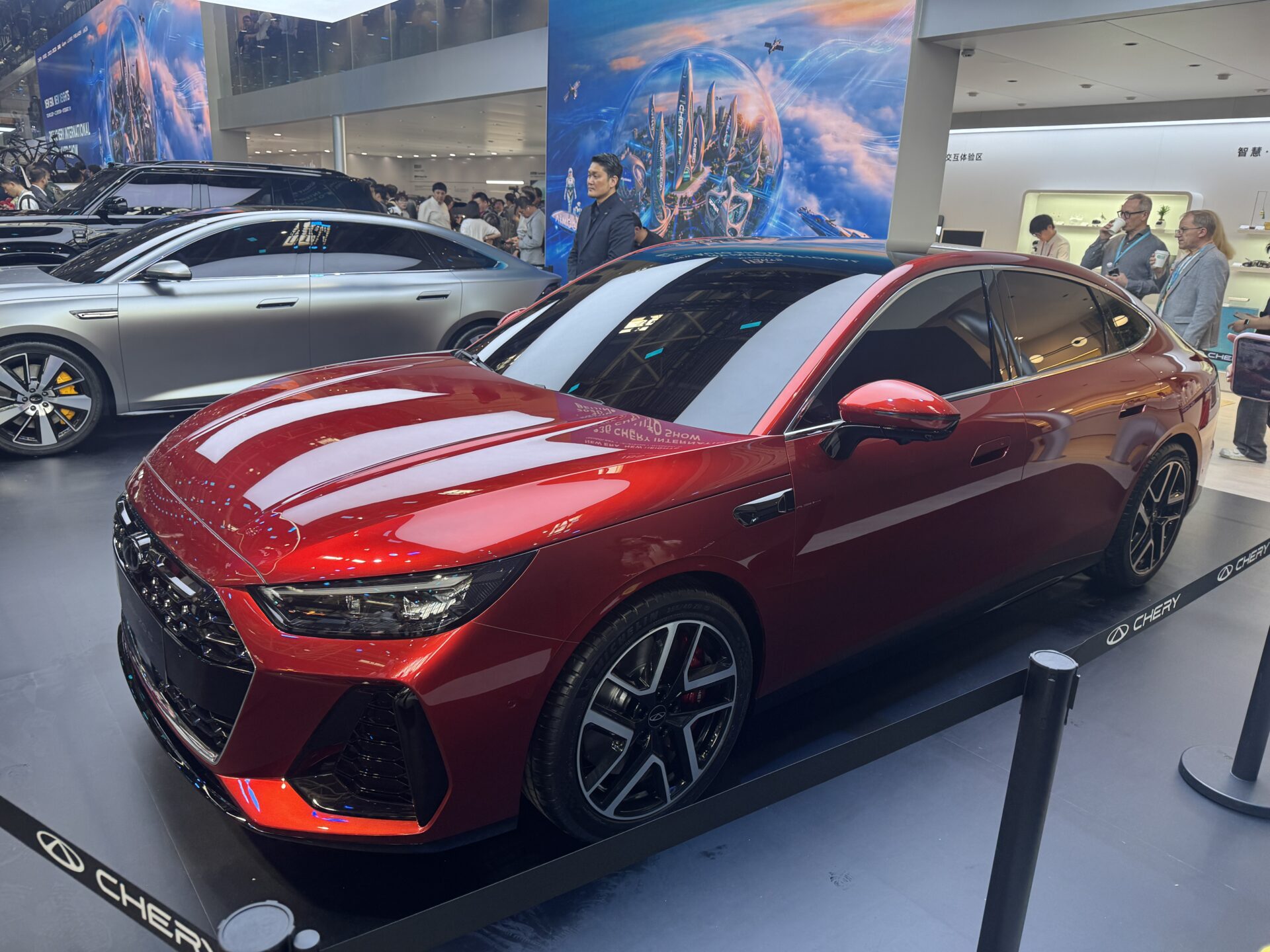
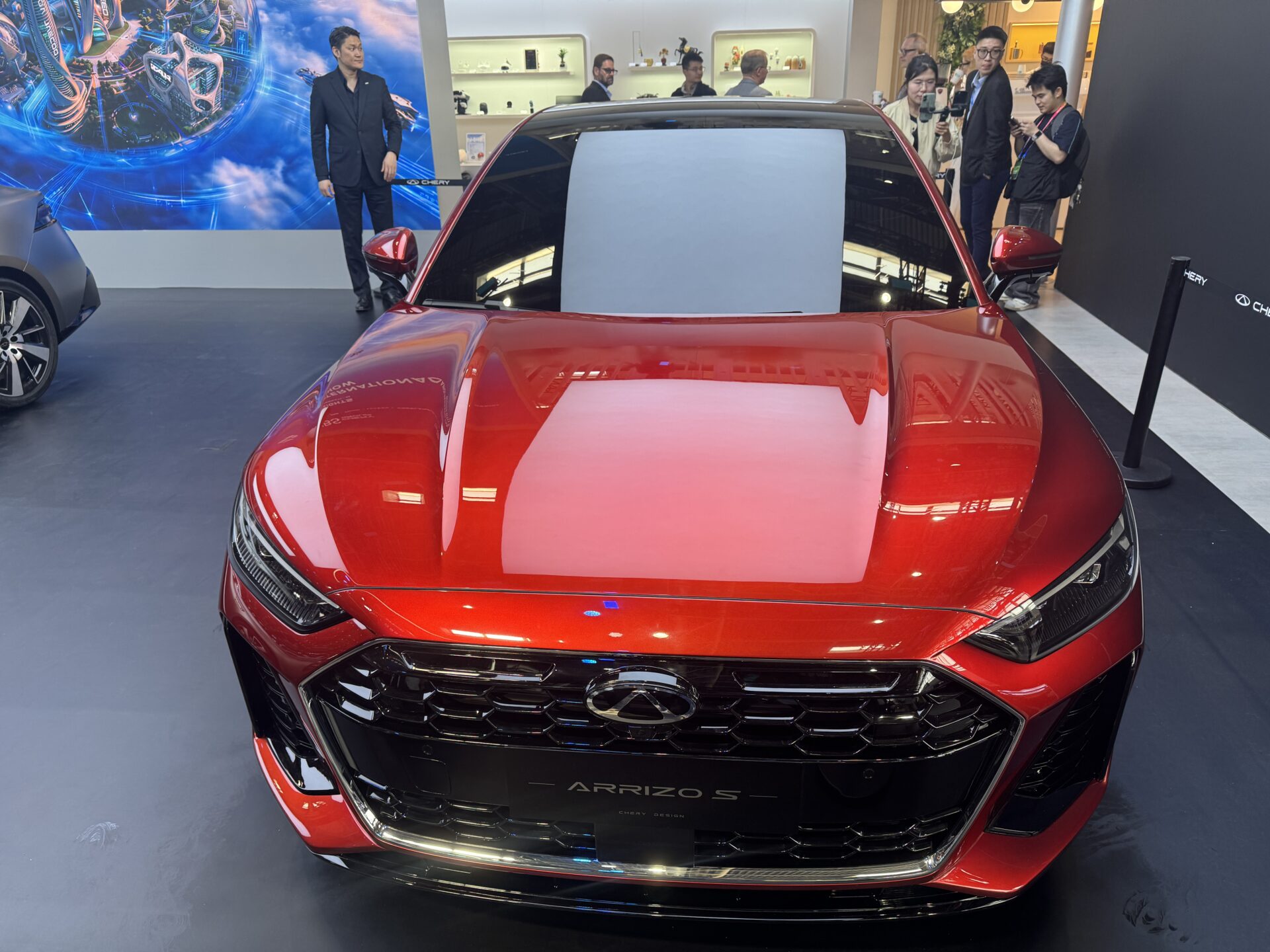
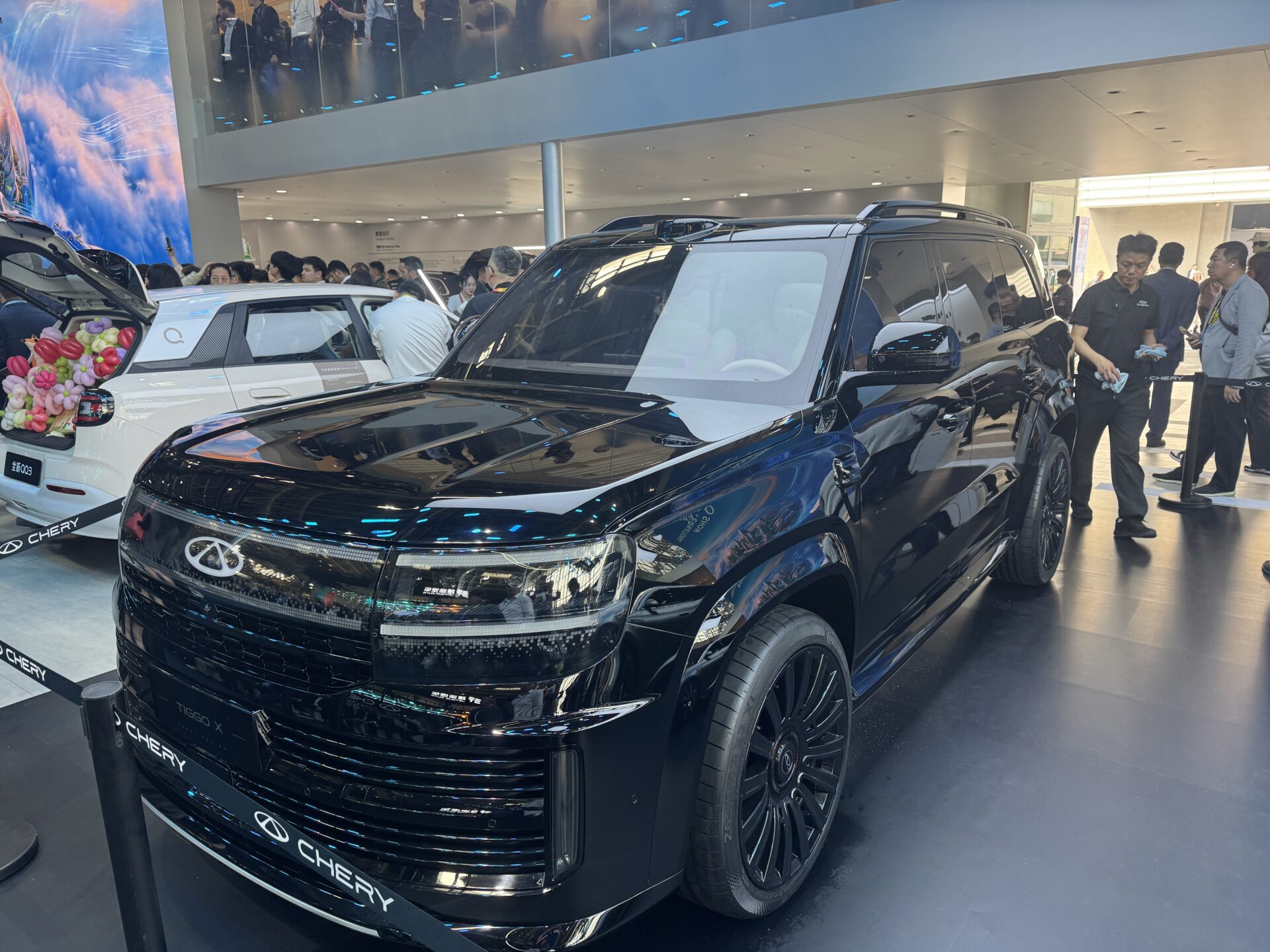
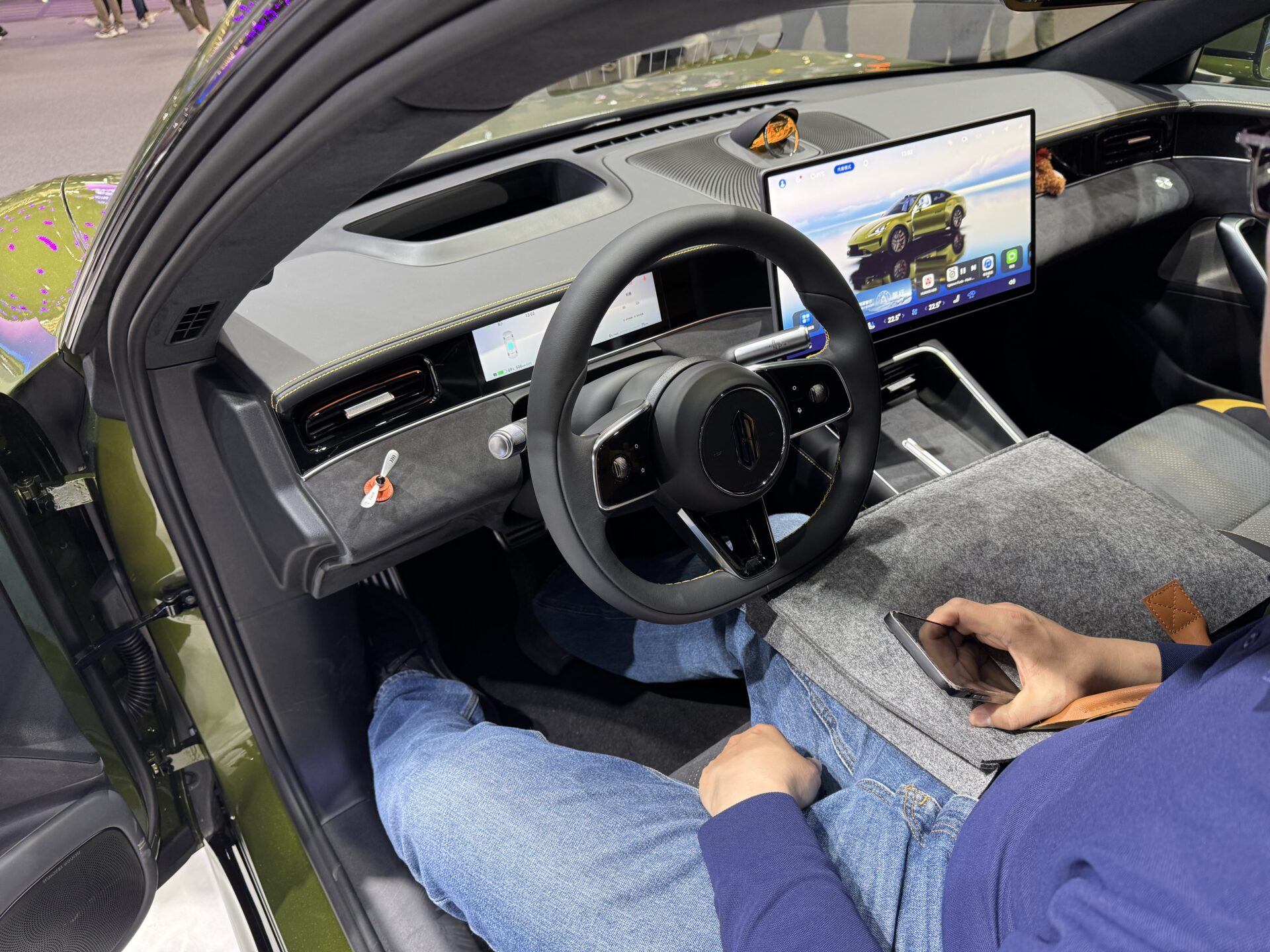
Chinese car brands are not always well known in Europe. On the occasion of the Beijing Motor Show, here is a brief overview of the top 10 Chinese automotive manufacturers.
In 2025, the Chinese automotive market reached a structural turning point: for the first time, new energy vehicles outsold combustion-engine models, with 16.4 million units out of 34.53 million total sales. Domestic brands now control nearly 69% of the local market, at the expense of long-established foreign manufacturers. Here is an overview of the ten manufacturers shaping this new landscape, covering their history, model range, indicative pricing, and export strategy.
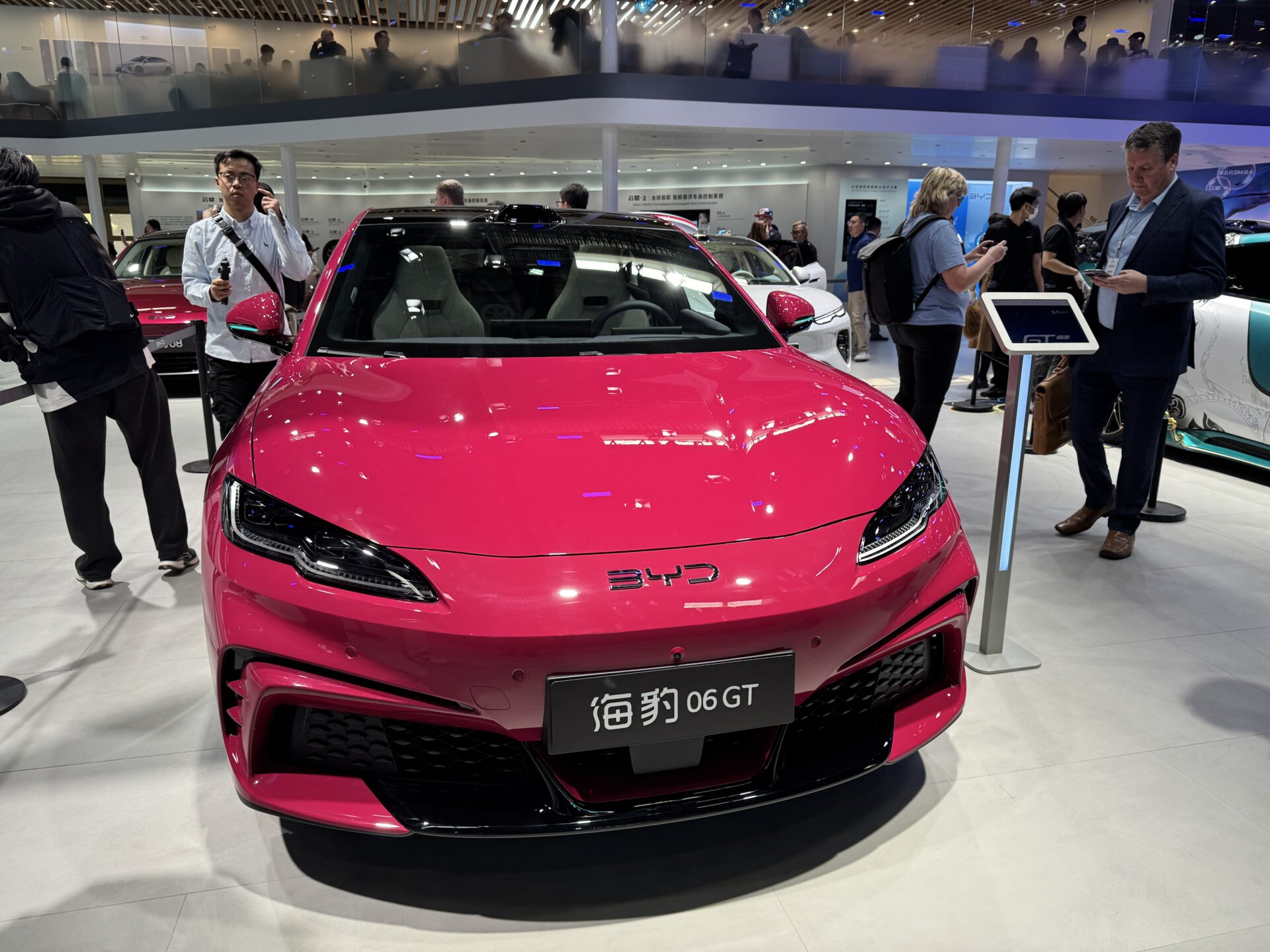
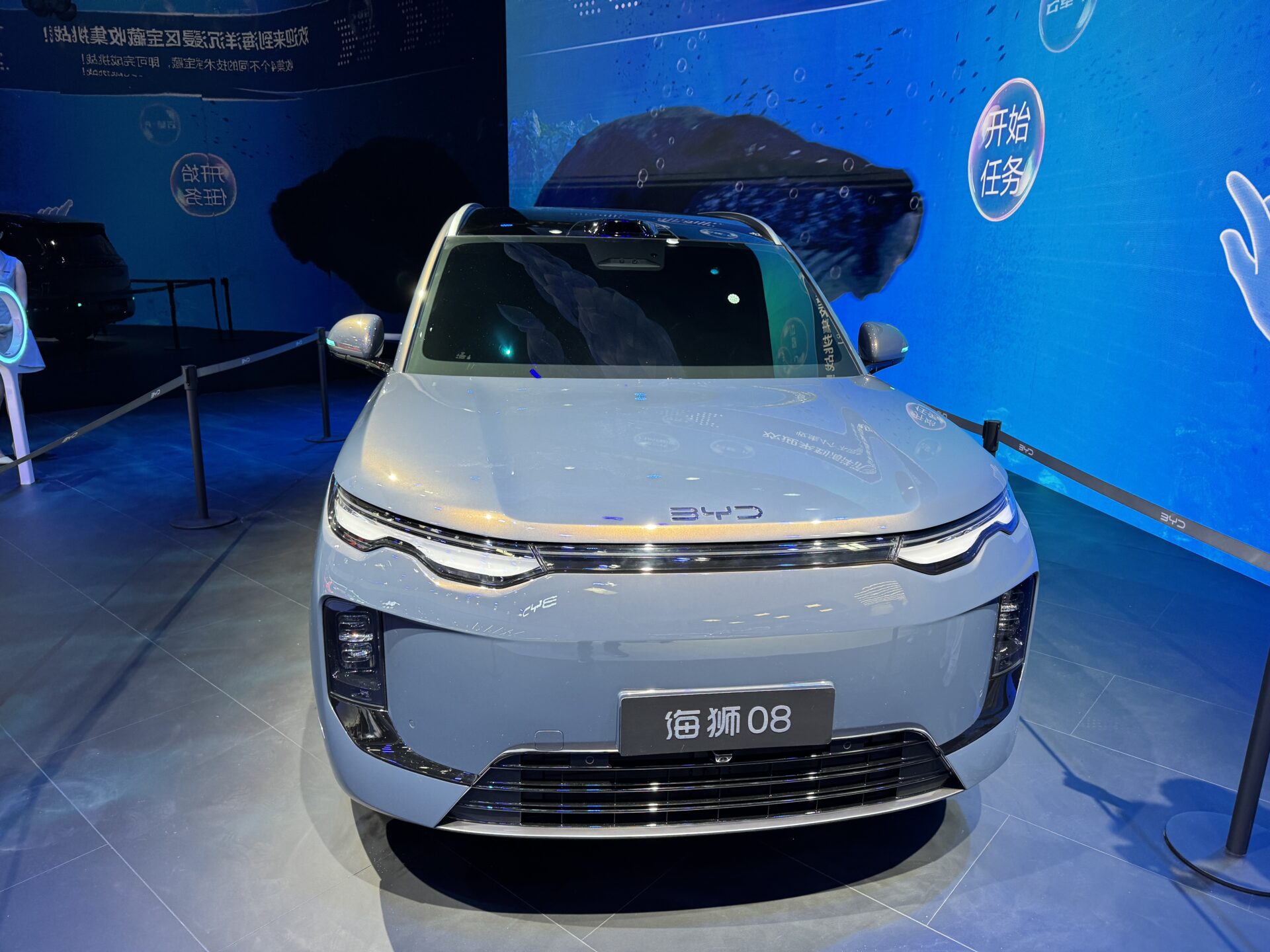
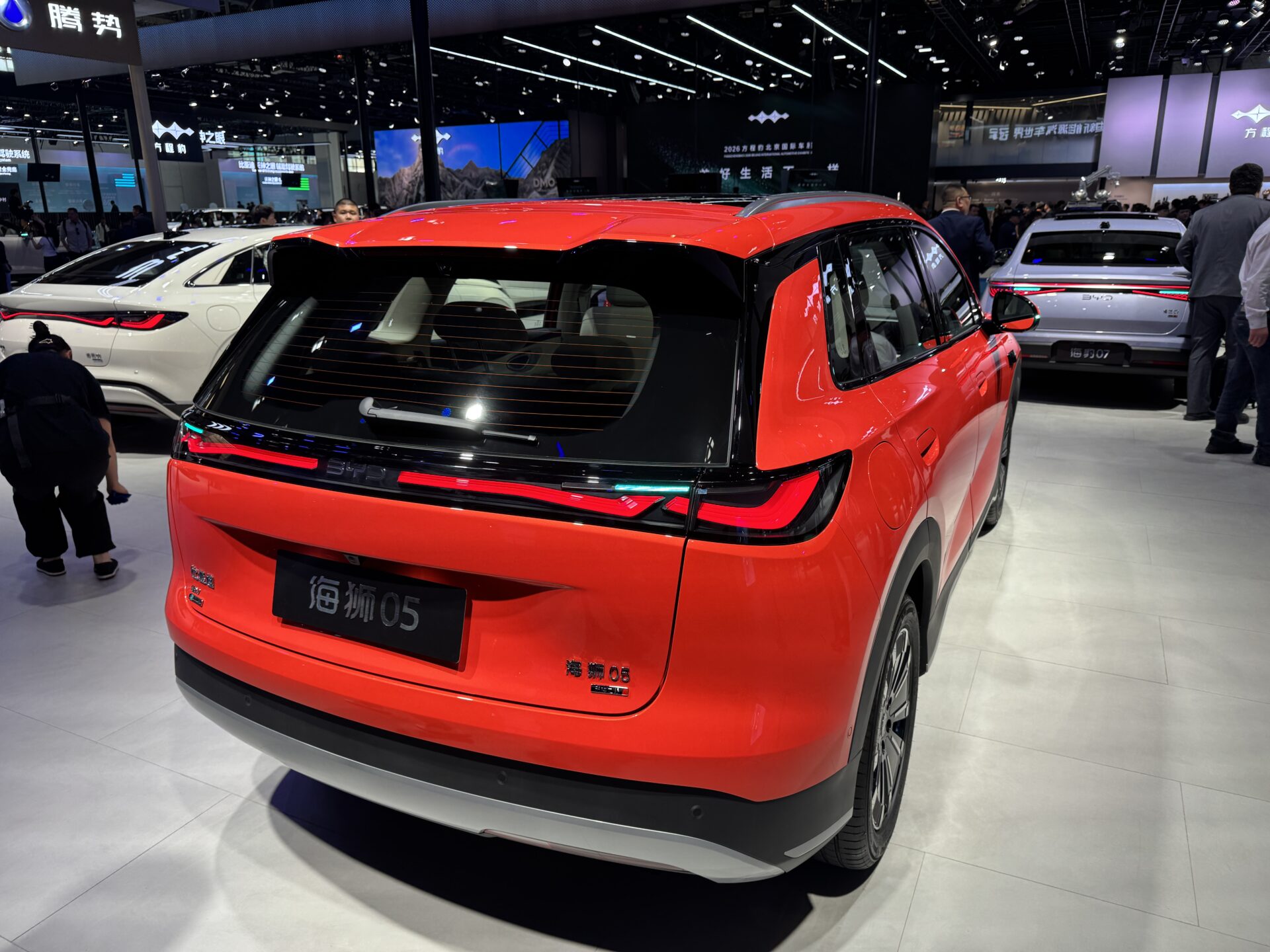
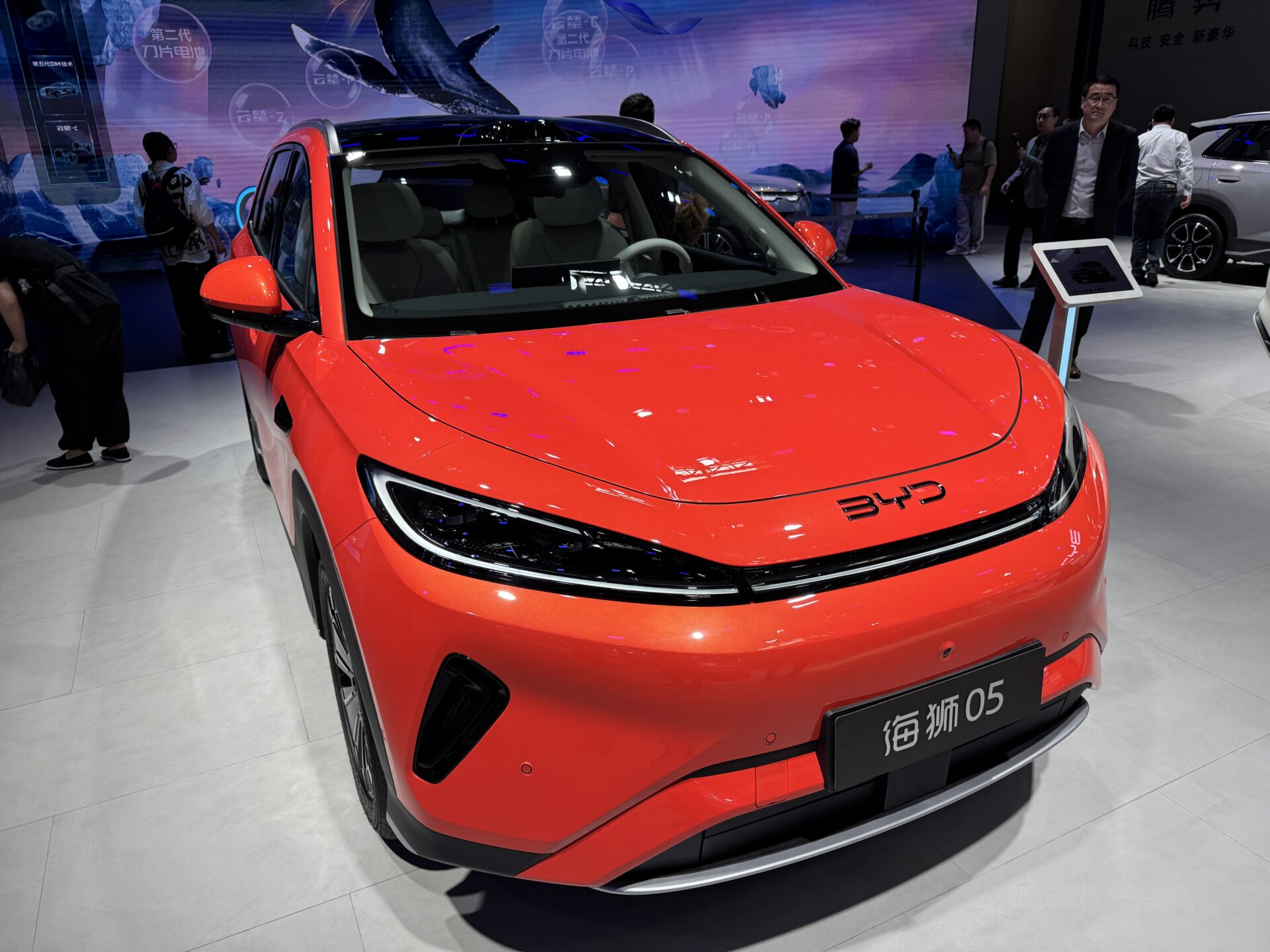
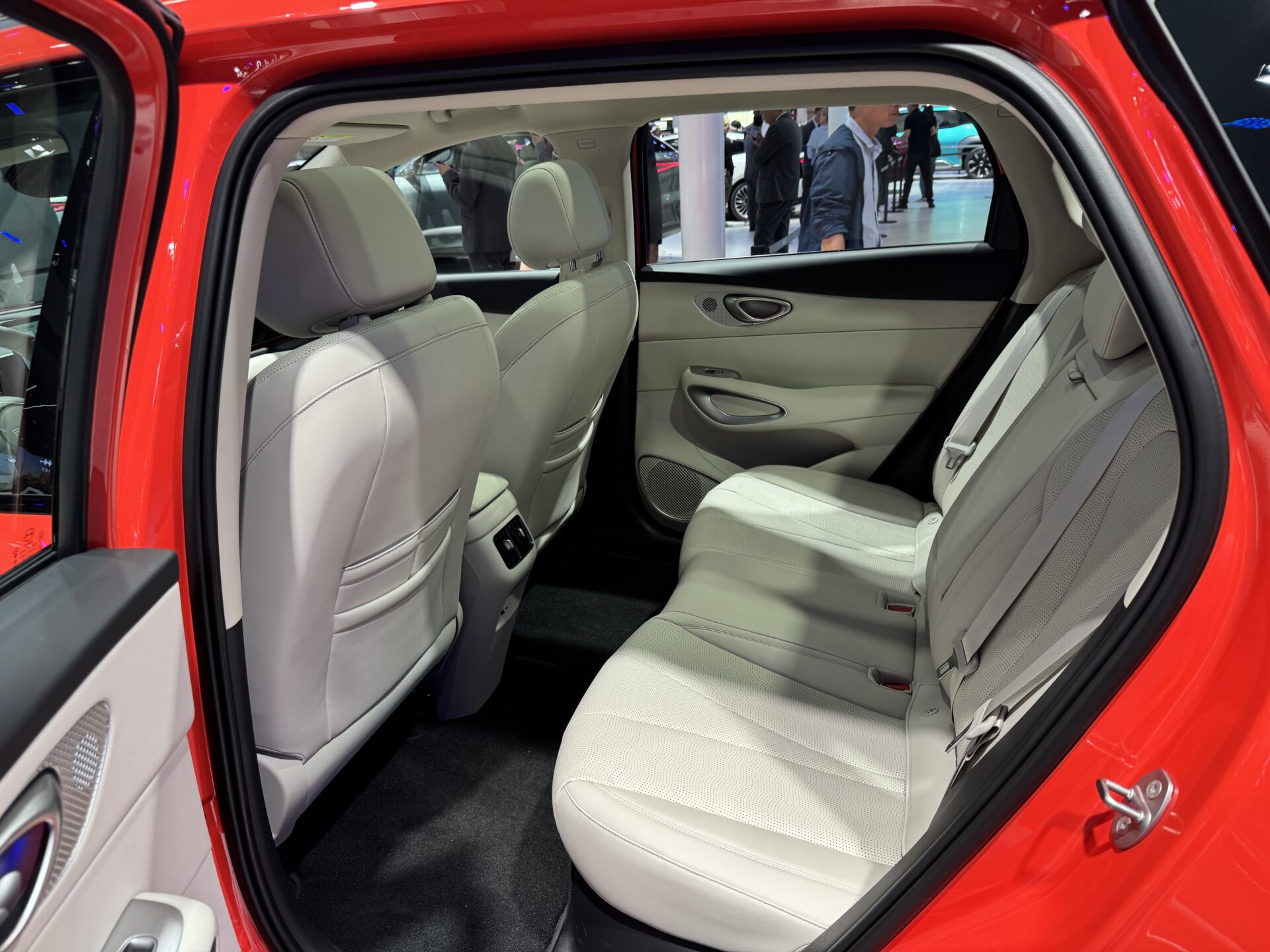
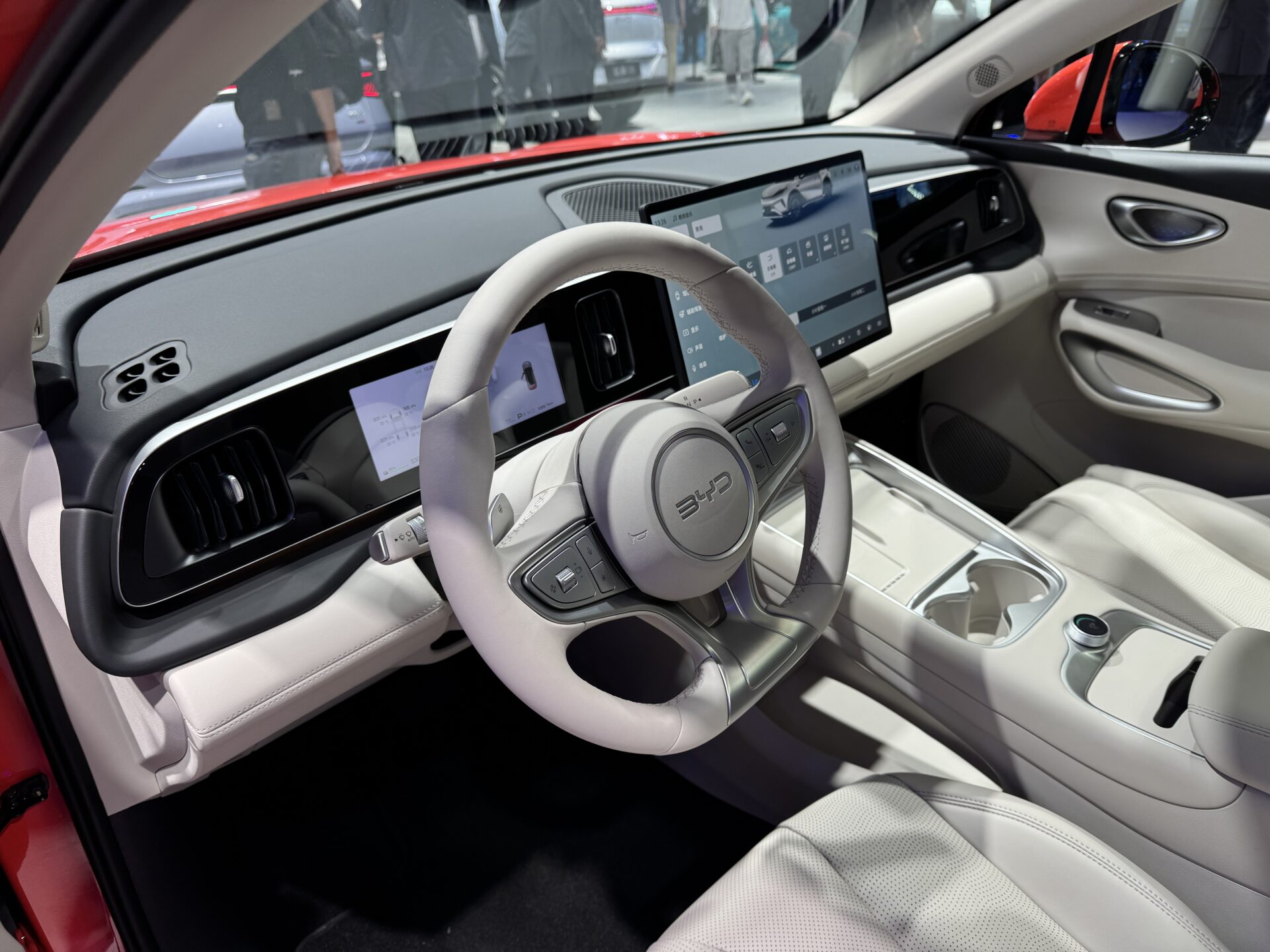
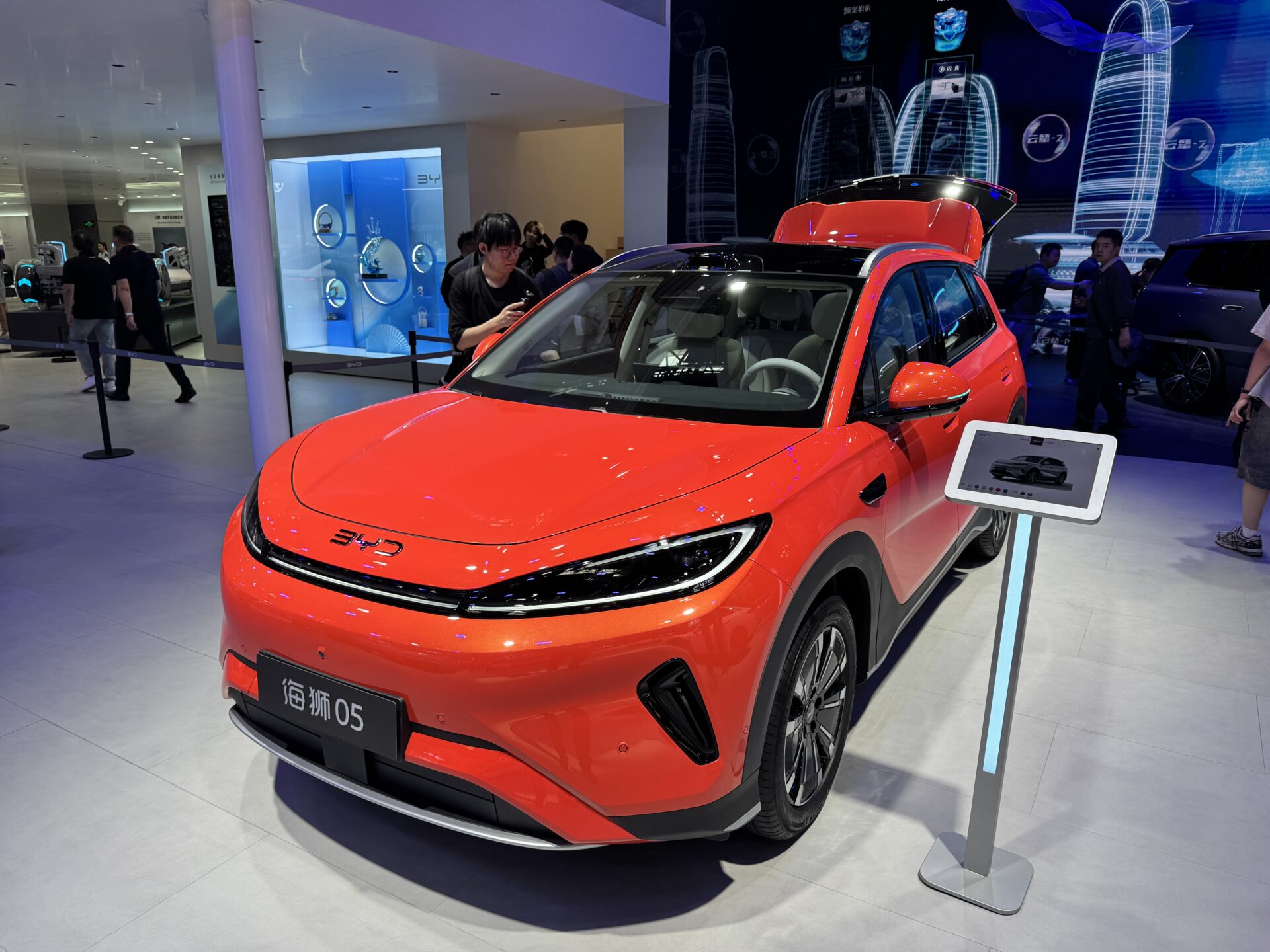
BYD — a leader losing momentum
History:
Founded in 1995 in Shenzhen by Wang Chuanfu with 2.5 million yuan, BYD started out as a manufacturer of mobile phone batteries before entering the automotive industry in 2003. Its first car, the BYD F3, launched in 2005 at around $10,000, drawing heavily from the Toyota Corolla. In 2008, Warren Buffett invested $230 million for a 9.89% stake, giving the brand immediate international visibility. In March 2022, BYD halted all production of pure combustion-engine vehicles to focus exclusively on electric and plug-in hybrid models — a decision that was unprecedented among major global manufacturers at the time.
Range and positioning:
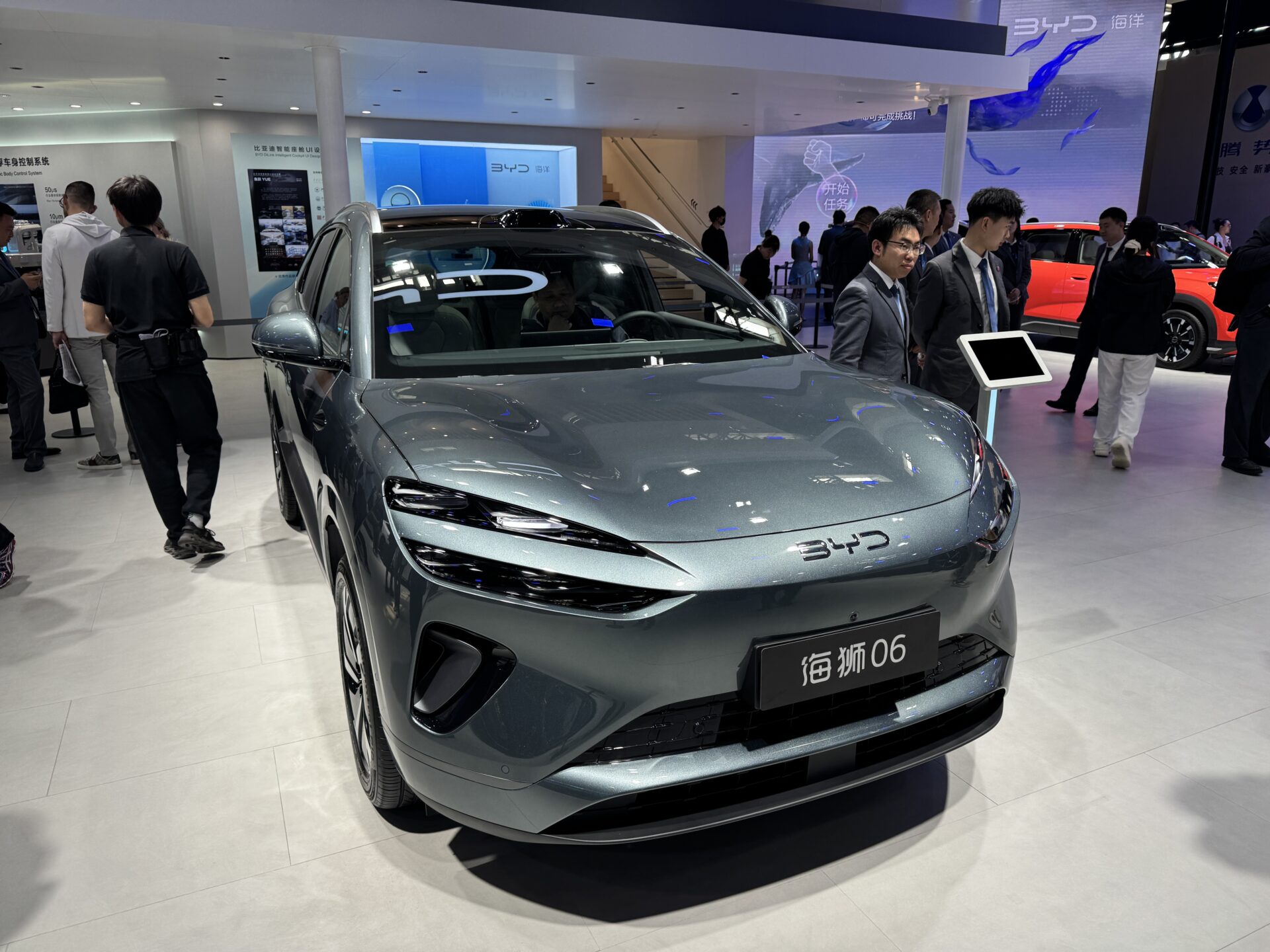
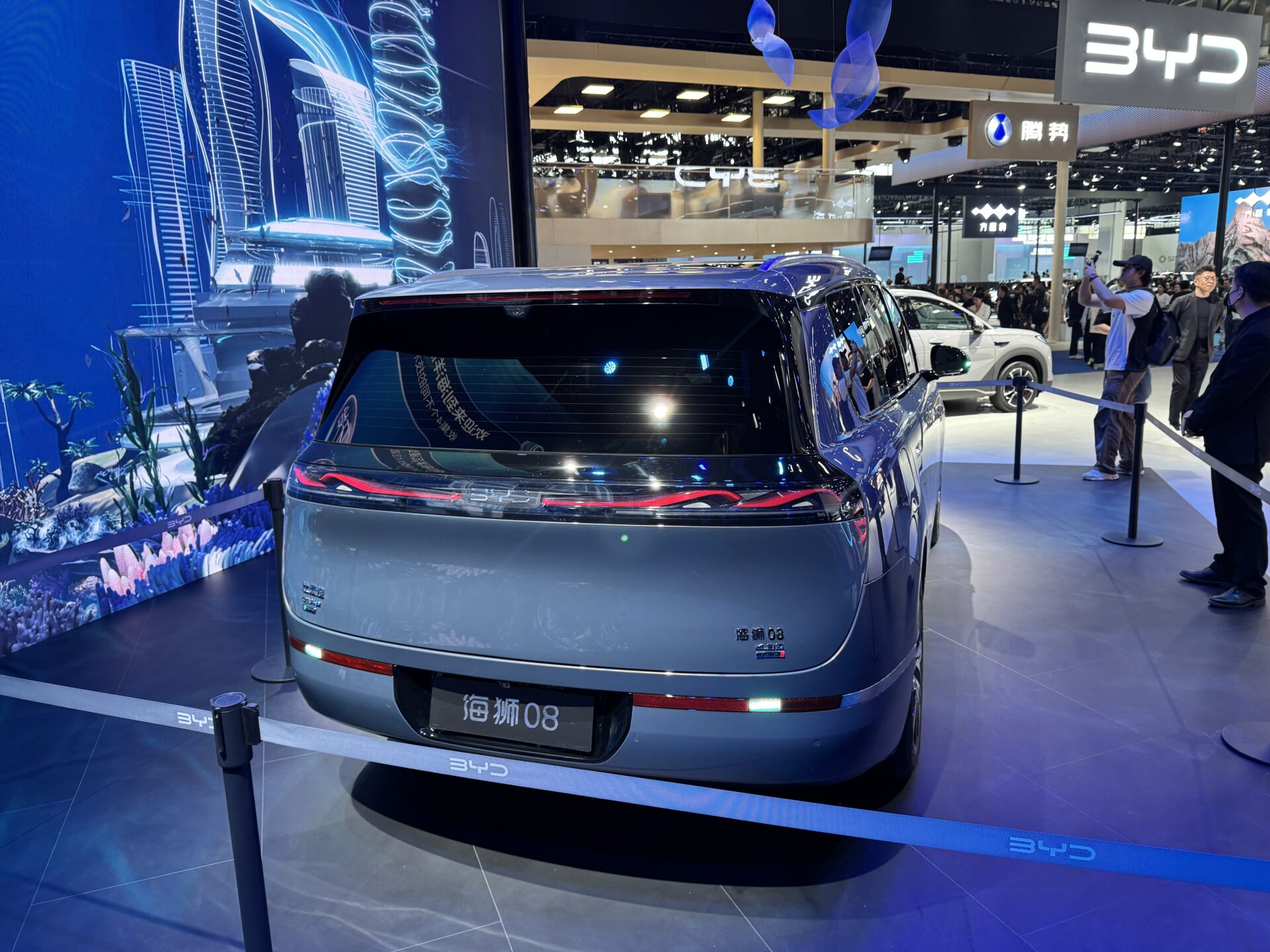
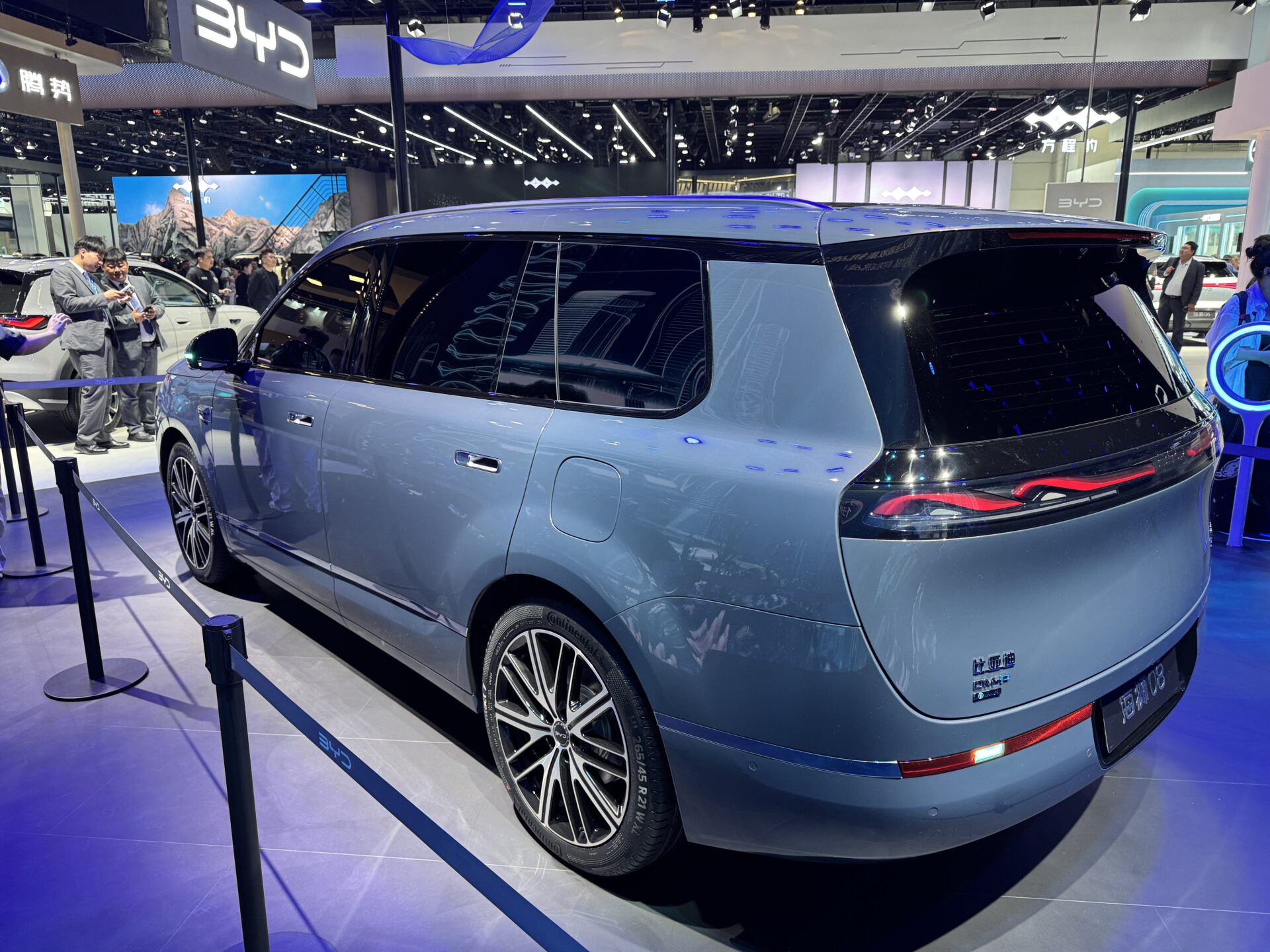
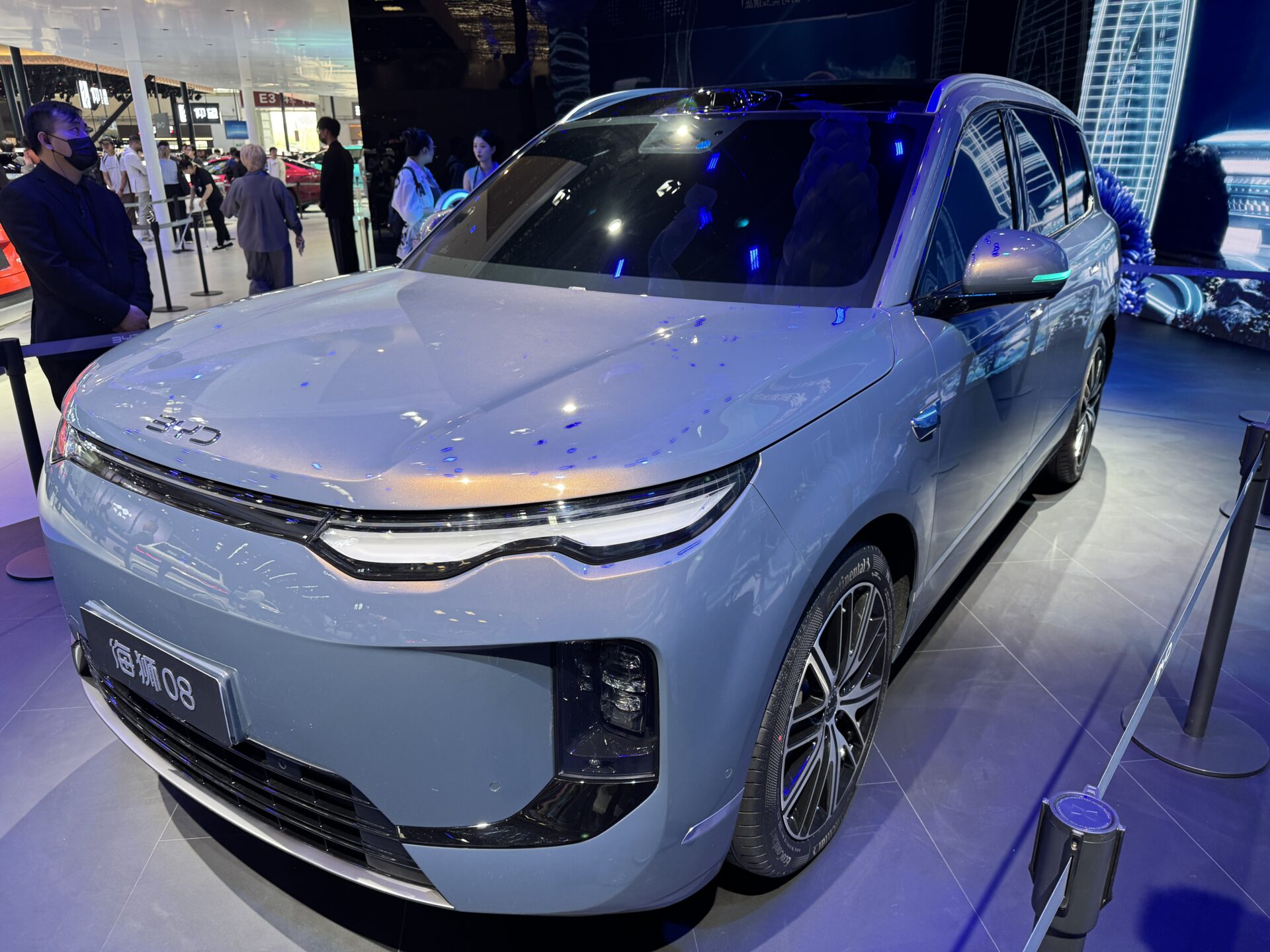
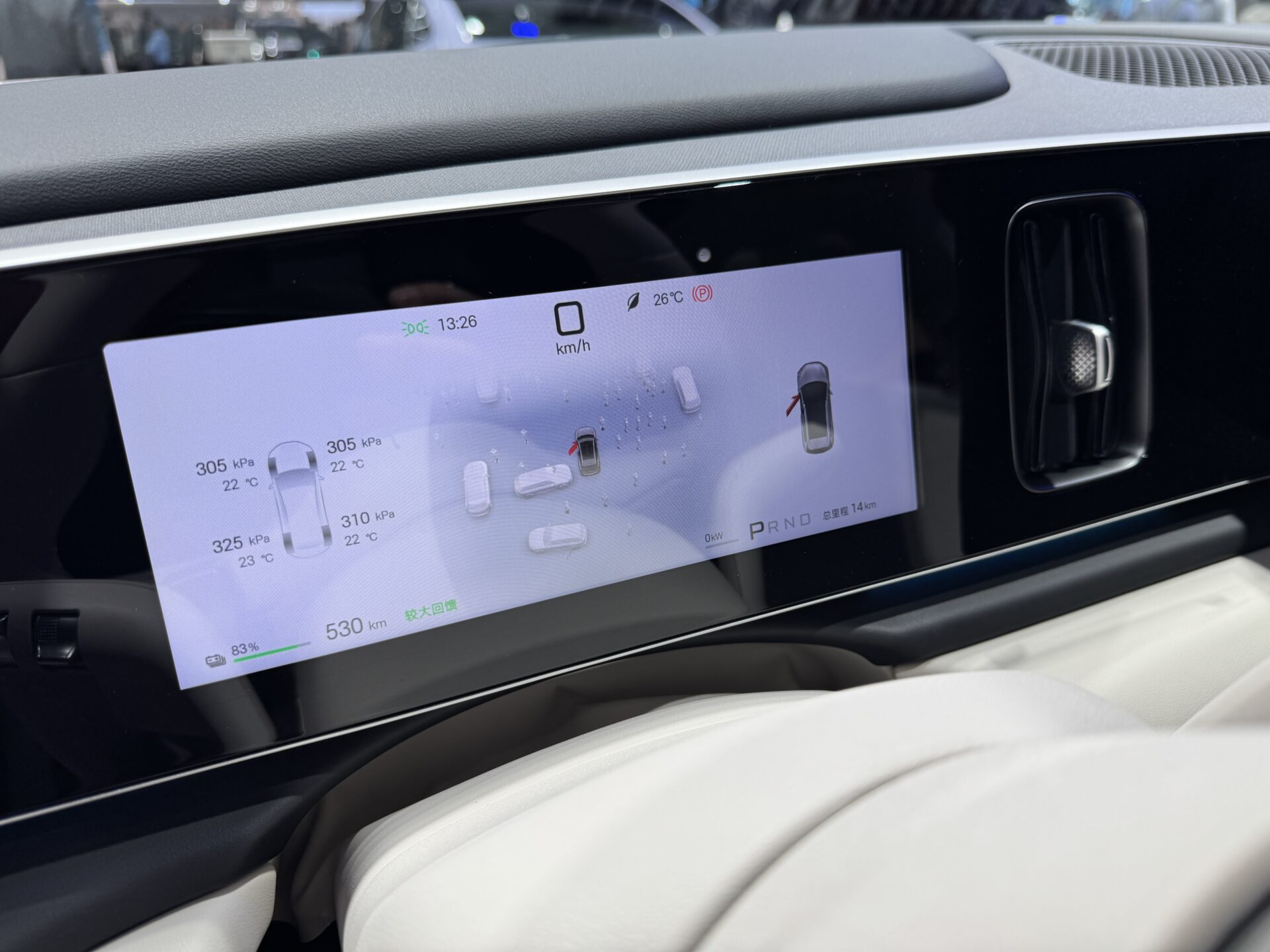
BYD structures its offer around the Dynasty Series (Qin, Han, Song, Tang, Yuan) and the Ocean Series (Seagull, Dolphin, Seal, Sealion). The brand also owns Denza (premium, born from a former joint venture with Mercedes), Fang Cheng Bao (luxury off-road), and Yangwang (ultra-luxury). The entire lineup uses the in-house developed Blade Battery LFP technology, recognised for its thermal safety performance.
Prices in China:
The Seagull city car starts at 55,800 yuan (around €7,100) in its promotional version, making it one of the most affordable electric vehicles on the market. The Qin Plus DM-i saloon is priced at around 63,800 yuan (€8,200). At the top end, the Yangwang U8 exceeds one million yuan (€128,000).
2025 figures:
4,602,436 vehicles sold, down 11.7% against initial targets of 5.5 million. BYD nonetheless holds a 29% market share in the NEV segment in China. On the export front, the brand shifted 1.05 million units, up 145% year on year.
Europe and the rest of the world:
In France, BYD recorded 14,311 registrations in 2025. Its Hungarian plant in Szeged came online to circumvent European customs duties on vehicles imported from China. The Seagull is sold there under the name Dolphin Surf from €22,990. BYD is also present in Brazil (Camaçari plant), Mexico, Thailand and Indonesia, where the Atto 1 ranked among the best-selling electric vehicles in late 2025.
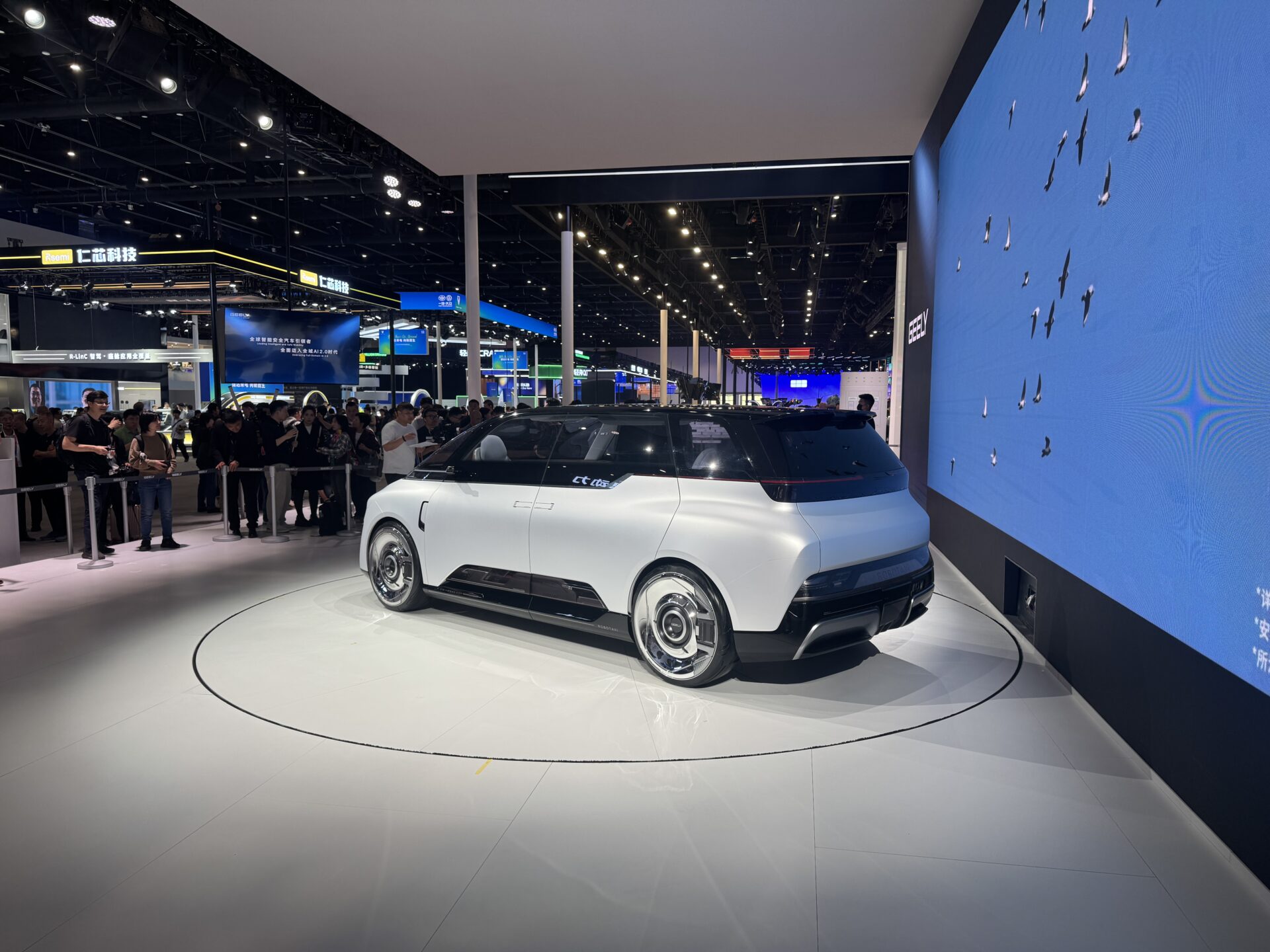
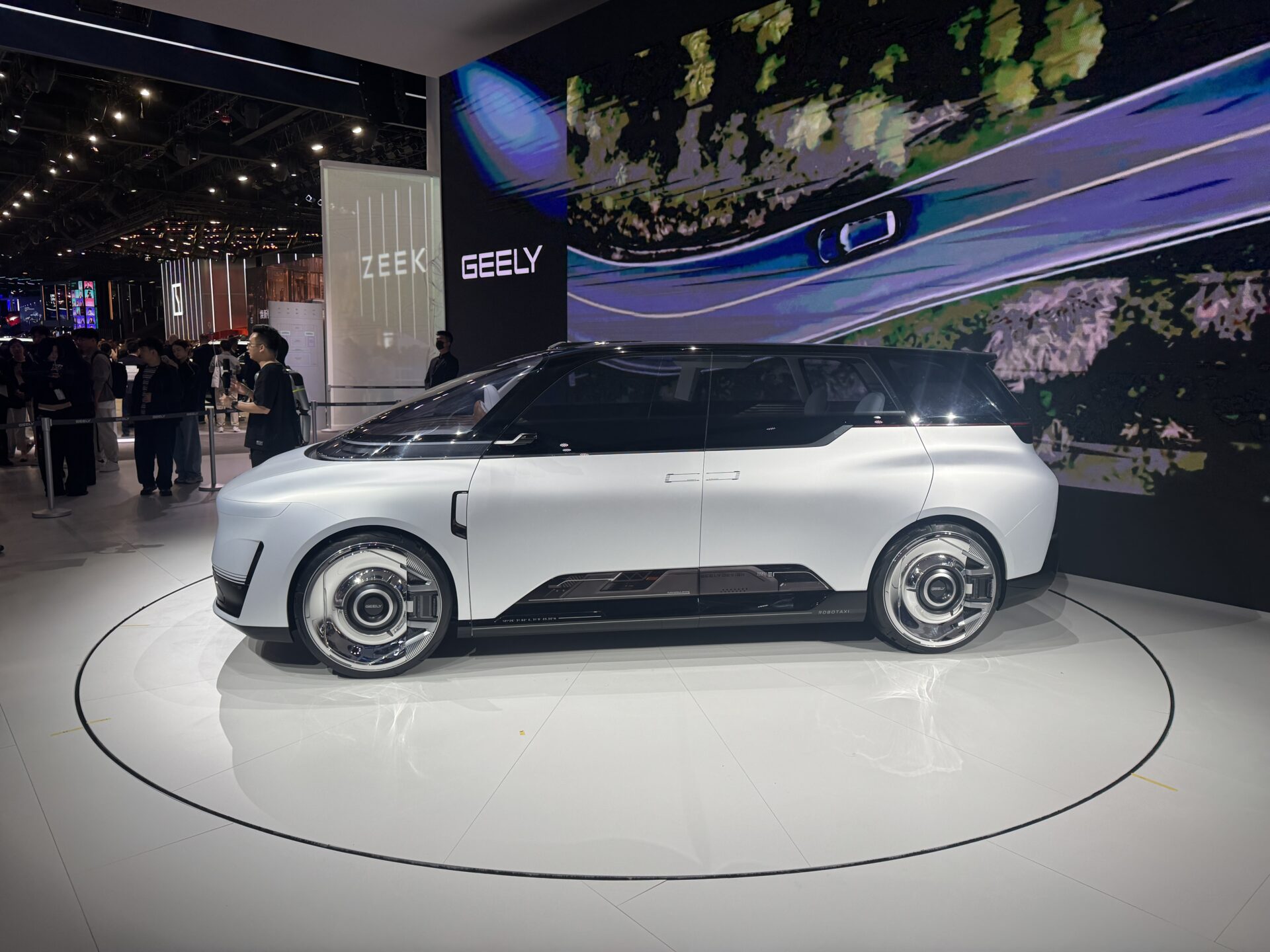
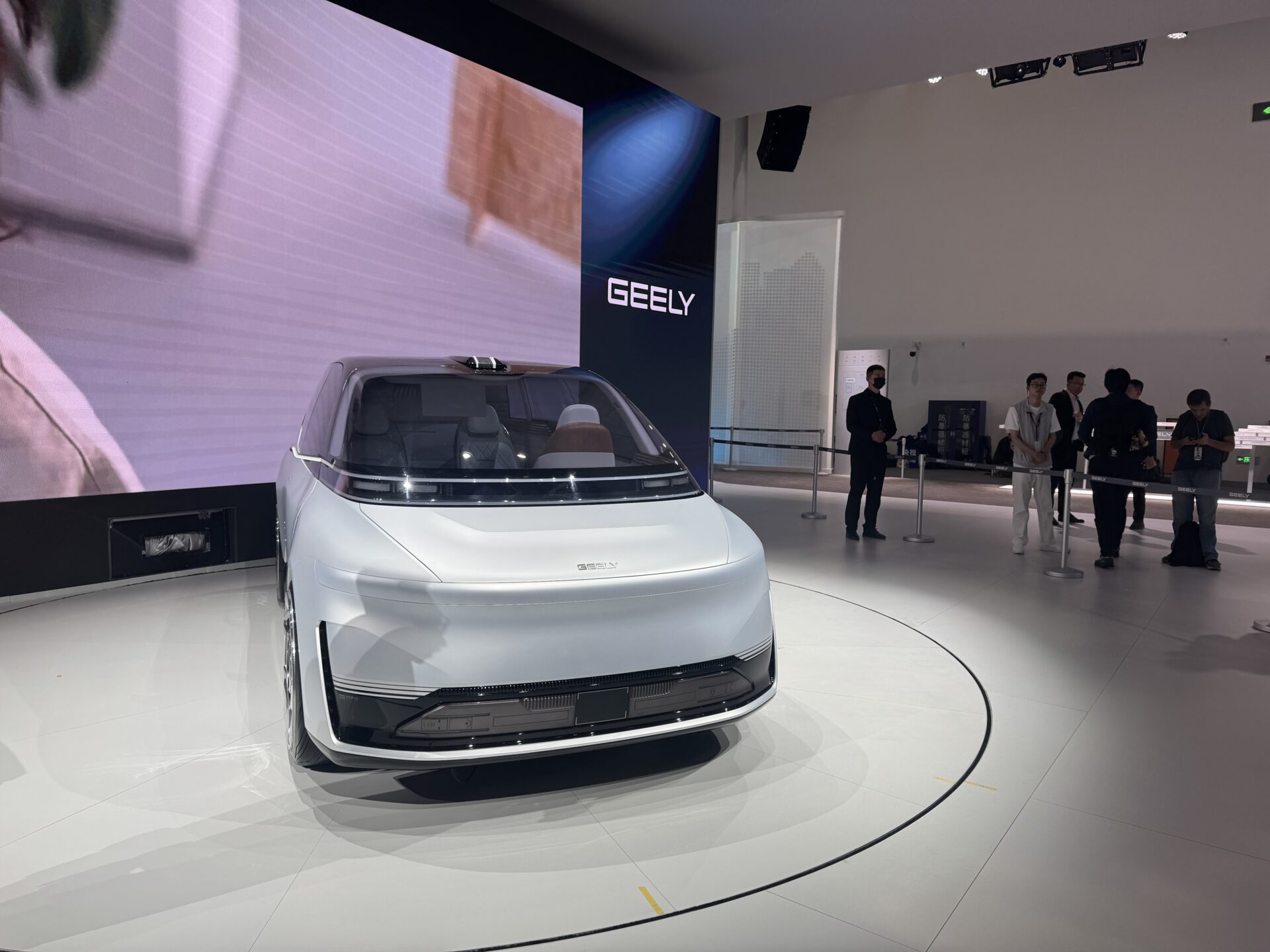
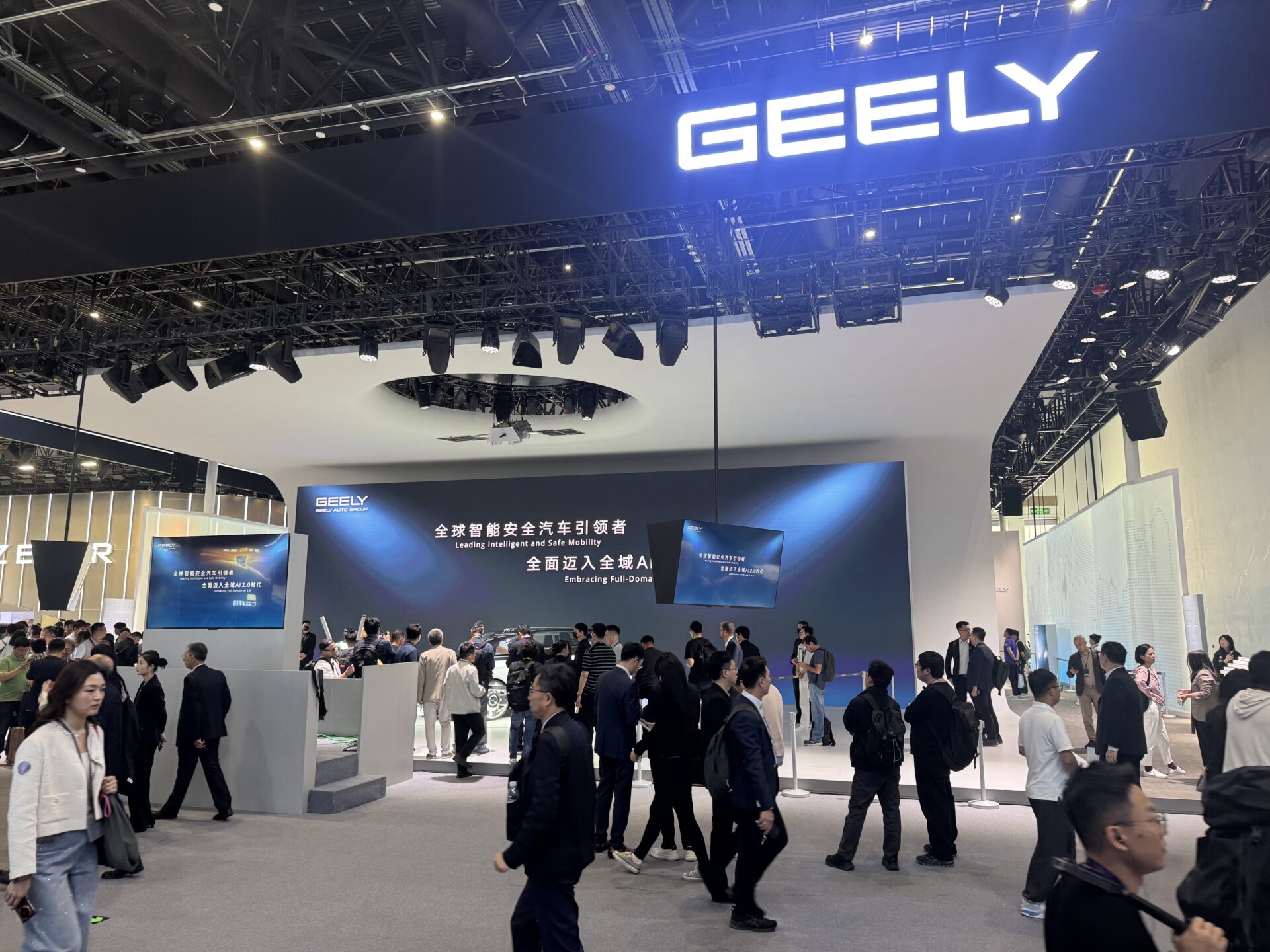
Geely — top of the rankings in 2025
History:
Founded in 1986 by Li Shufu in Taizhou, initially as a manufacturer of refrigerator parts, Geely obtained China’s first private automotive manufacturing licence in 2001. Its masterstroke came in 2010, when the group acquired Volvo Cars from Ford for $1.8 billion — at the time the largest Chinese automotive acquisition abroad. Lotus and Proton followed in 2017, then a 9.7% stake in Daimler AG in 2018. The premium electric brand Zeekr was launched in March 2021.
Range and positioning:
The group operates a broad portfolio: Geely Auto (mainstream), Galaxy (NEV sub-brand), Zeekr (premium electric), Lynk & Co, Volvo Cars, Polestar, Lotus, Proton, Smart, and Farizon for commercial vehicles. In China, Geely maintains an extensive combustion-engine range that allowed it to gain ground on segments BYD vacated during its transition to full electrification.
Prices in China:
The Geely Xingyuan, an electric hatchback that became China’s best-selling vehicle in 2025, starts at around 68,000 yuan (€8,700). The Galaxy range spans from 80,000 to 200,000 yuan (€10,000 to €25,600). Zeekr is positioned between 260,000 and 500,000 yuan (€33,000 to €64,000), targeting Tesla and premium German brands directly.
2025 figures:
Geely Auto delivered 3,024,567 vehicles, up 26%, exceeding its three-million-unit target. Electric vehicle sales grew by 156.8%. Including Volvo, Polestar, Zeekr and other subsidiaries, the group surpassed 4.12 million units, of which 2.3 million were electrified vehicles.
Europe and the rest of the world:
The European strategy runs primarily through Volvo, Polestar, Smart and Zeekr. The latter has been gradually expanding into Sweden, the Netherlands and Germany since 2023, with prices ranging from €52,000 to €65,000. Geely has R&D centres in Gothenburg, Coventry and Frankfurt, as well as design studios in Barcelona and California.
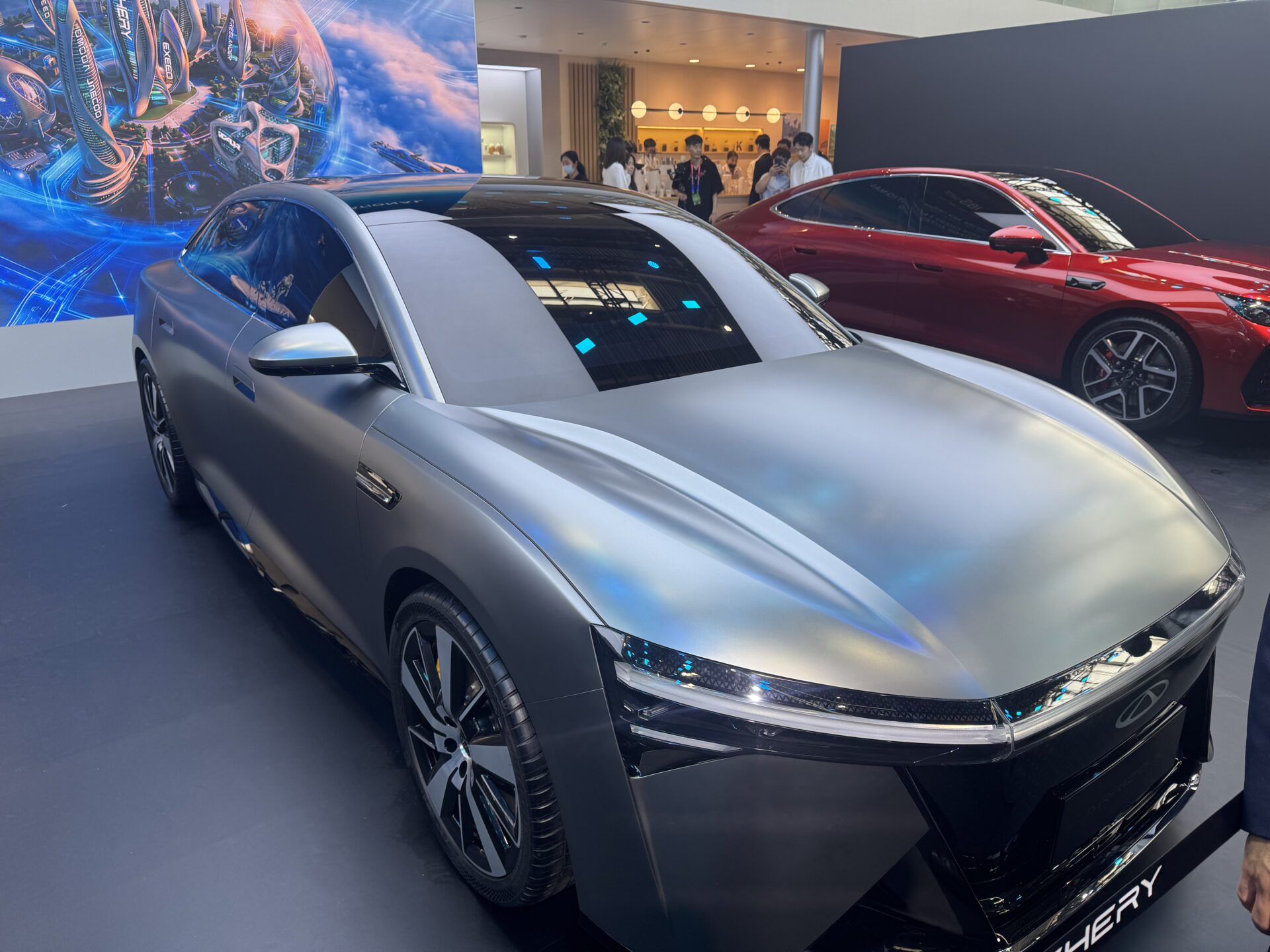
Chery — the export champion
History:
Founded on 8 January 1997 in Wuhu, Anhui province, by municipal officials, Chery remains majority state-owned to this day. Its first model rolled out in 1999. The brand began exporting as early as 2001, ahead of its competitors, and has held the top spot among Chinese passenger vehicle exporters without interruption since 2003. In September 2025, Chery listed on the Hong Kong Stock Exchange, raising $1.2 billion at a valuation of close to $23 billion.
Range and positioning:
The group operates nine brands: Chery (mainstream), Exeed (premium), Jetour (SUV), iCar (electric), Luxeed (developed with Huawei), Karry (commercial vehicles), along with Omoda and Jaecoo, both dedicated specifically to export markets. Chery maintains a substantial combustion-engine range built around the Tiggo (SUV) and Arrizo (saloon) series, equipped with in-house developed turbocharged petrol engines.
Prices in China:
The range spans from 60,000 yuan (€7,700) for small city cars to around 400,000 yuan (€51,000) for top-of-the-range Exeed models. The Omoda 5 and Jaecoo 7, the main export models, sit between 100,000 and 180,000 yuan (€12,800 to €23,000).
2025 figures:
2,631,381 vehicles sold, up 4.1%. NEVs account for around 22% of the total. Total exports exceeded 1.14 million units in 2024, confirming Chery’s position as China’s leading automotive exporter.
Europe and the rest of the world:
Omoda and Jaecoo arrived in the United Kingdom in 2024, already shifting 20,000 units in their first year with over 75 dealers. In April 2024, Chery signed an agreement to assemble the Omoda 5 at the former Nissan plant in Barcelona, with production of 50,000 units planned for 2027, scalable to 150,000 by 2029. Chery is also present in Russia, Brazil, Egypt and Kazakhstan.
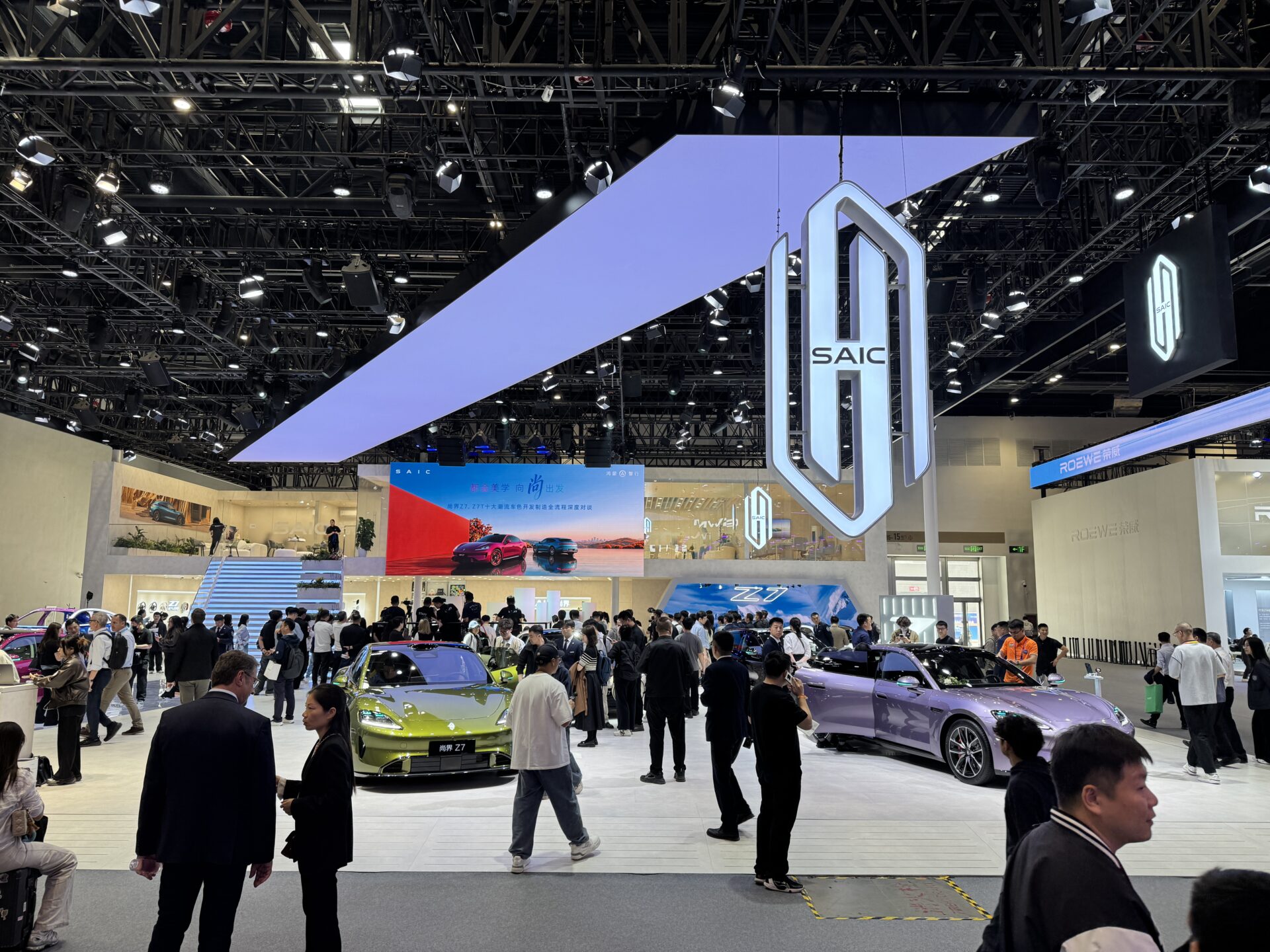
SAIC Motor — Shanghai’s state-owned group
History:
Founded in 1955, SAIC is the oldest of China’s major state-owned automotive groups. In 1984, it established the first ever Sino-foreign automotive joint venture with Volkswagen — a partnership still active four decades later. A second landmark joint venture followed in 1997 with General Motors. Between 2005 and 2007, SAIC acquired the rights to the MG brand following the collapse of the Rover Group, inheriting in the process a British name with strong international recognition.
Range and positioning:
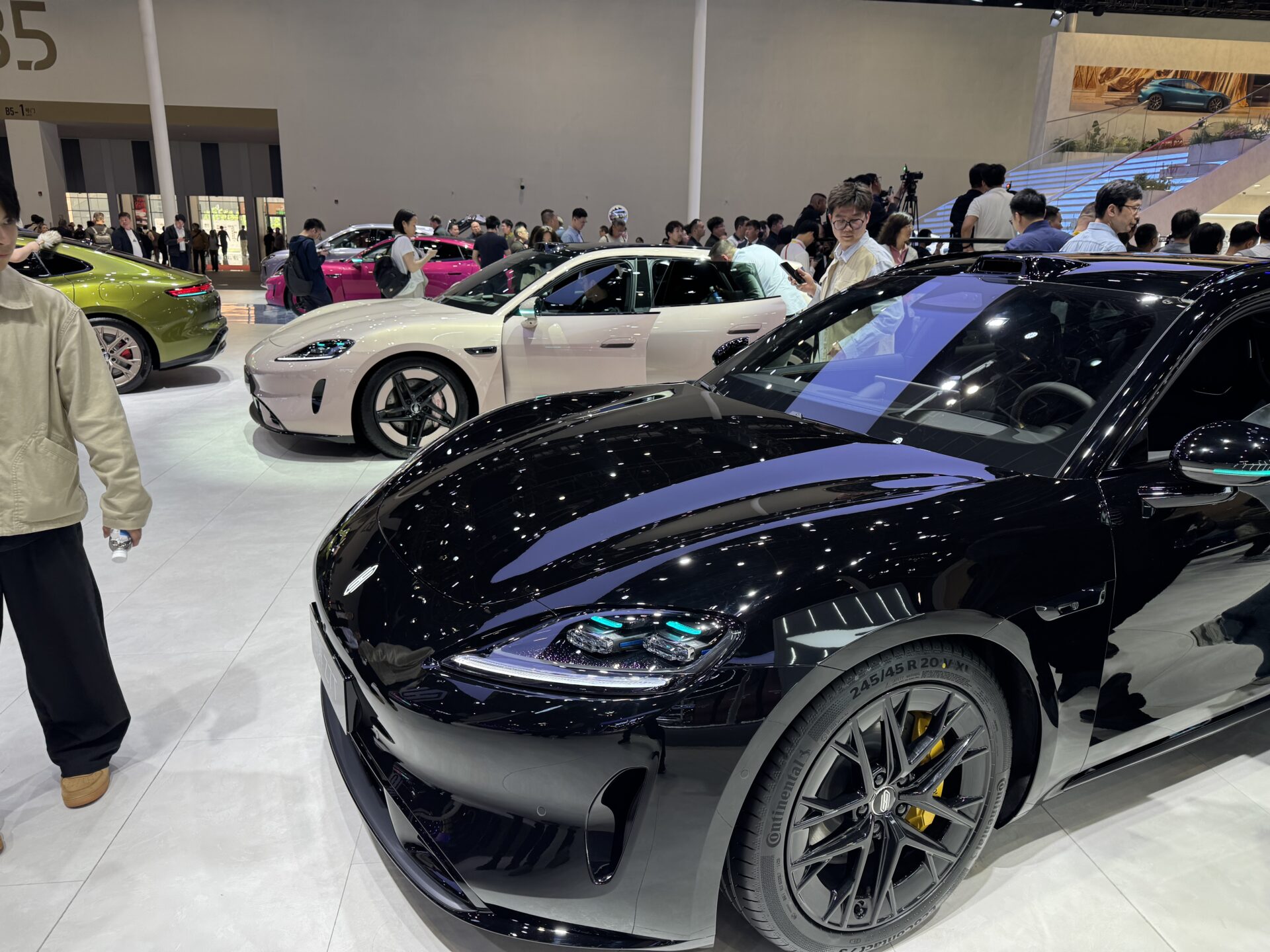
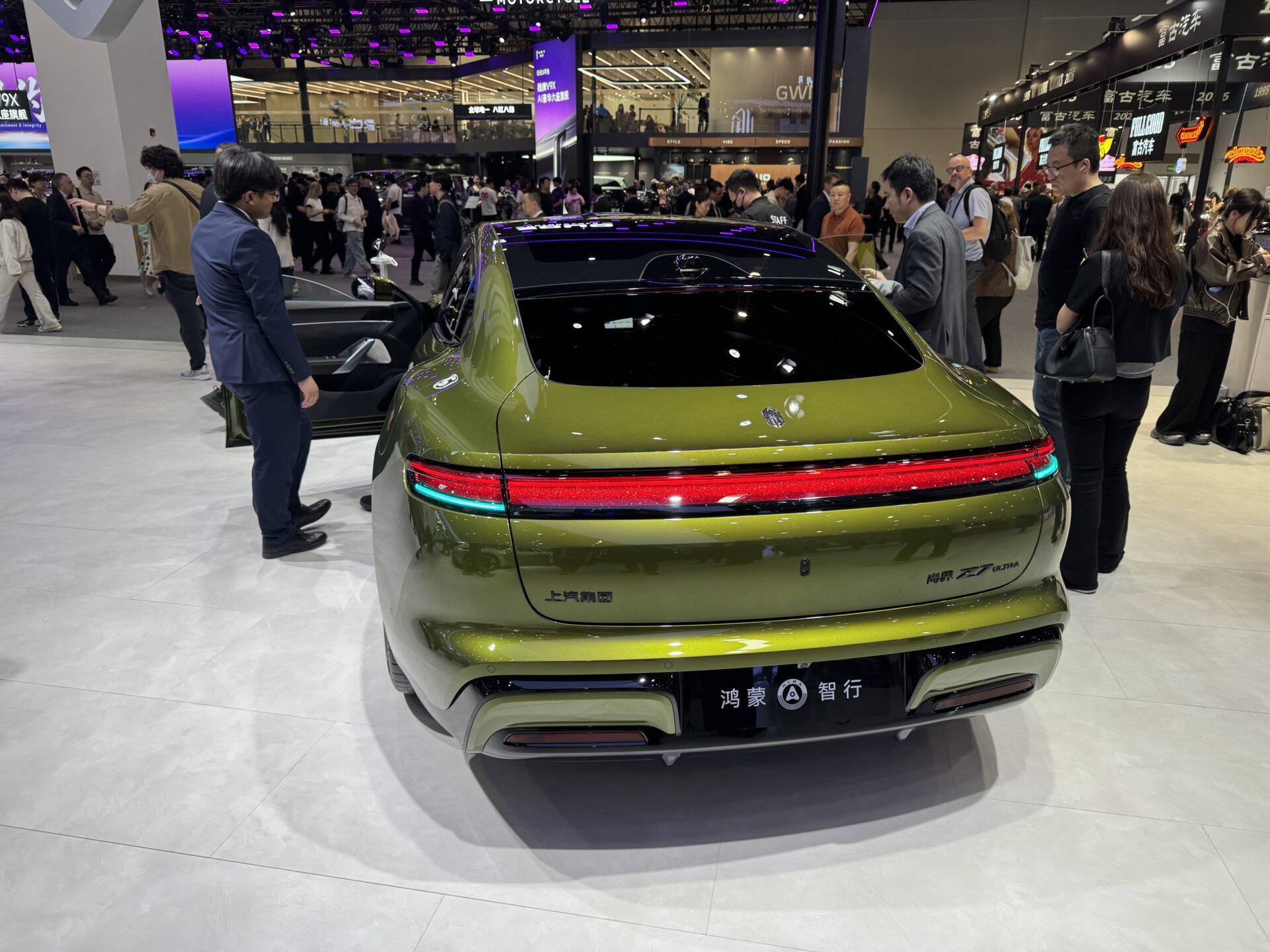
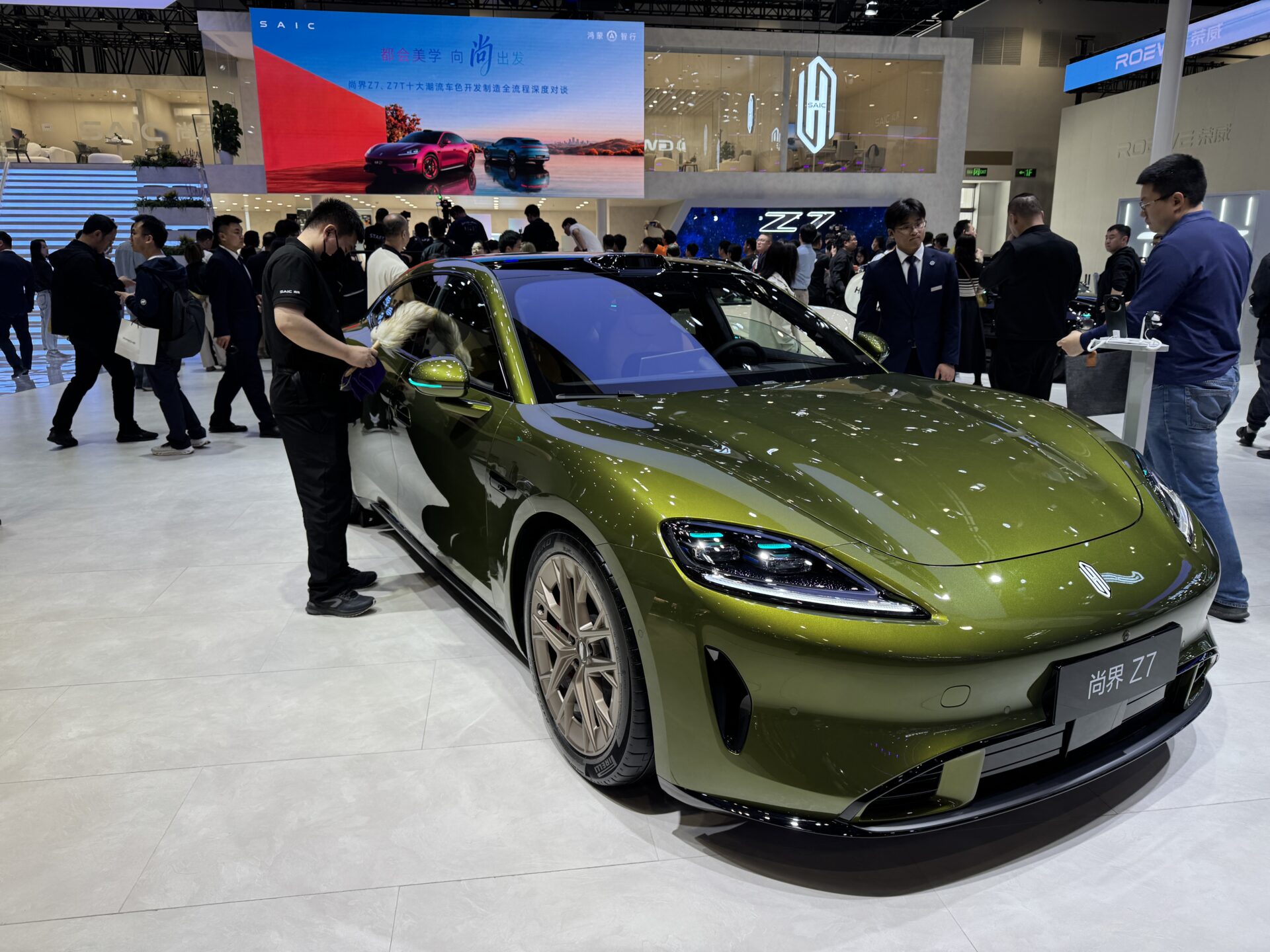
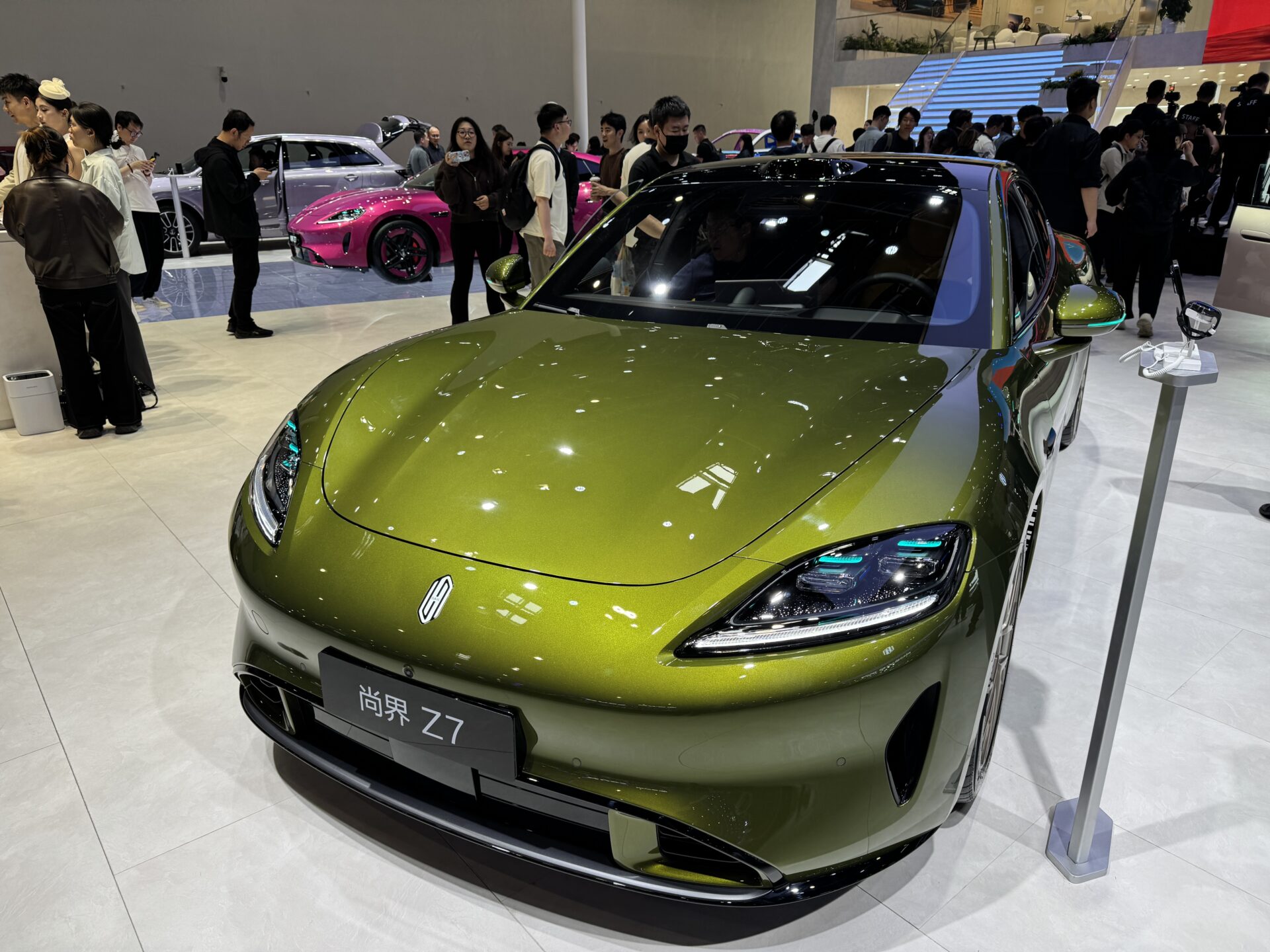
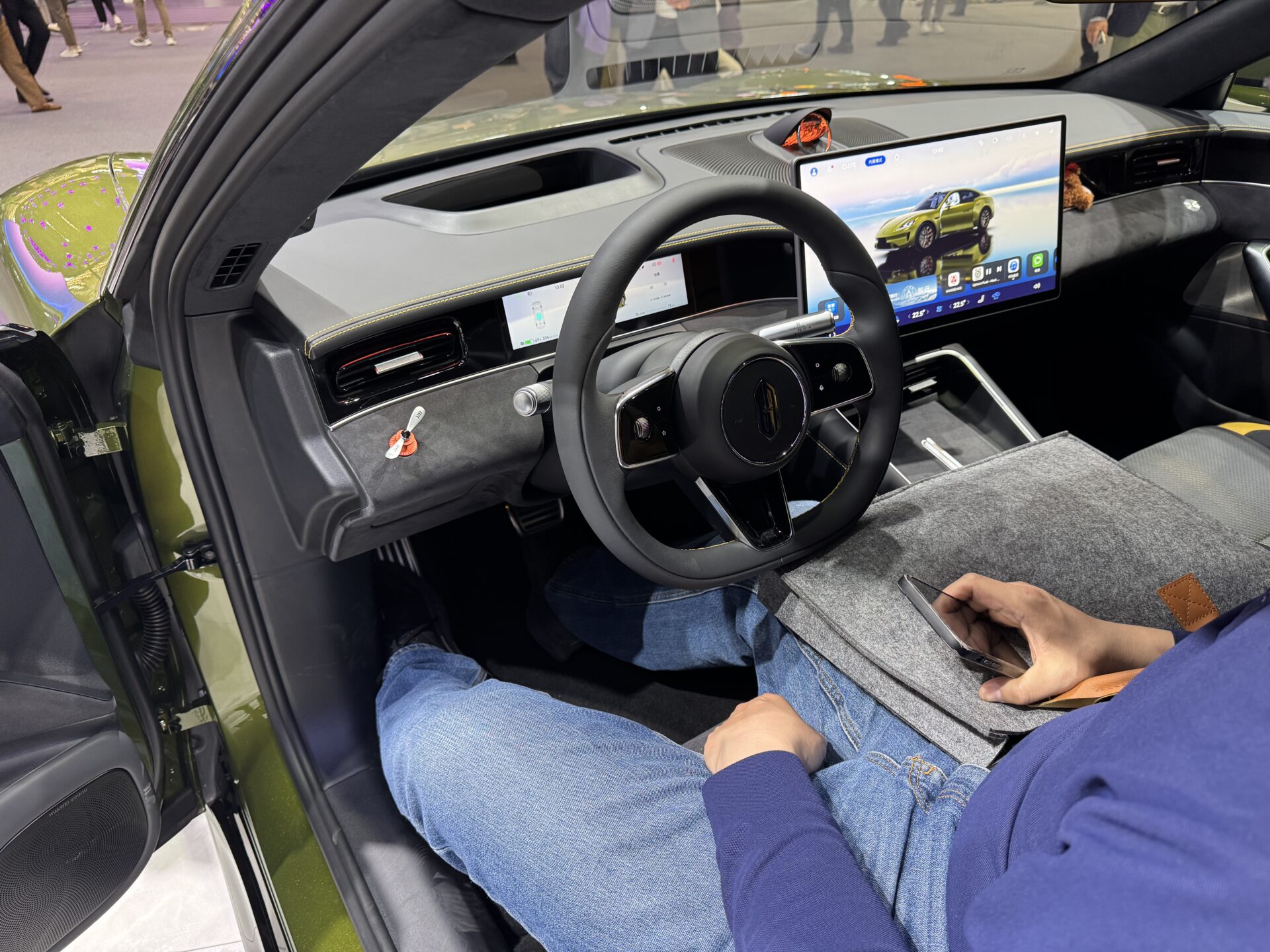
SAIC operates MG, Roewe, IM Motors and Maxus under its own brands, alongside the SAIC-Volkswagen, SAIC-GM and SAIC-GM-Wuling joint ventures. The MG range is the most visible internationally: MG3 (hybrid city car), MG ZS (compact SUV), MG4 (electric compact rivalling the Volkswagen ID.3), Cyberster (electric roadster) and MG S5 EV.
Prices in China:
Roewe and MG models start at around 80,000 yuan (€10,200). IM Motors is positioned between 300,000 and 700,000 yuan (€38,000 to €90,000) in the premium segment.
2025 figures:
The group as a whole sold over five million vehicles. The historic joint ventures with VW and GM recorded declines of around 8 to 16%, offset by the rise of the group’s own brands, most notably MG.
Europe and the rest of the world:
MG represents the most structured Chinese commercial success story in Europe, with a presence in around twenty countries. In 2024, seven out of every ten cars exported from China to Europe carried the MG badge. The brand has a plant in Thailand and another in India, and is present across nine major international markets.
Changan — the reinvention of a historic group
History:
Changan’s history stretches back to 1862, although automotive production only began in 1959. A technology agreement with Suzuki followed in 1984, then a joint venture with Ford in 2001, and later with Mazda. In 2018, Changan announced its plan for a gradual phase-out of combustion engines. A central state-owned manufacturer, it is held by China Weaponry Equipment Group and ranks among China’s five largest automotive groups.
Range and positioning:
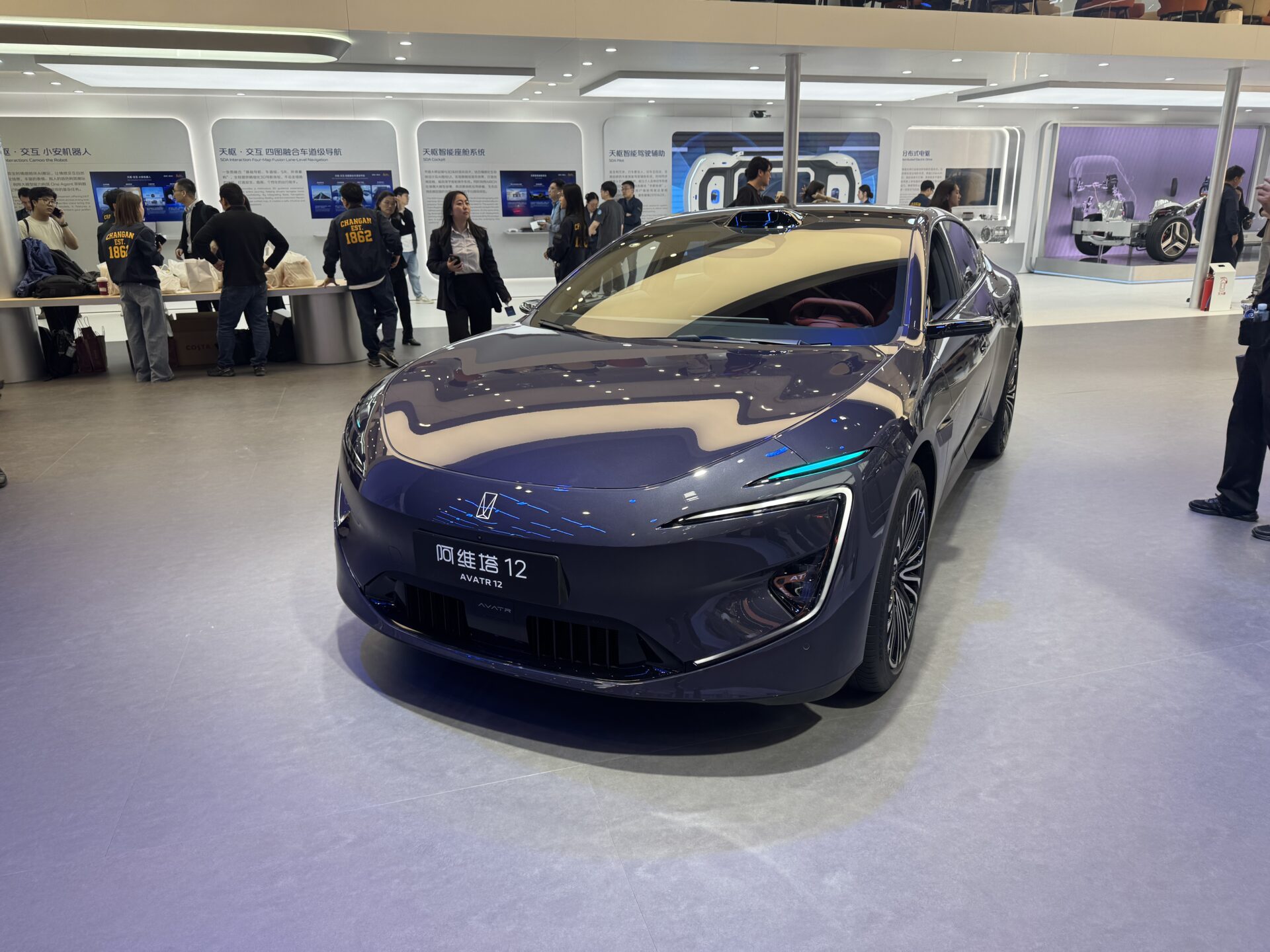
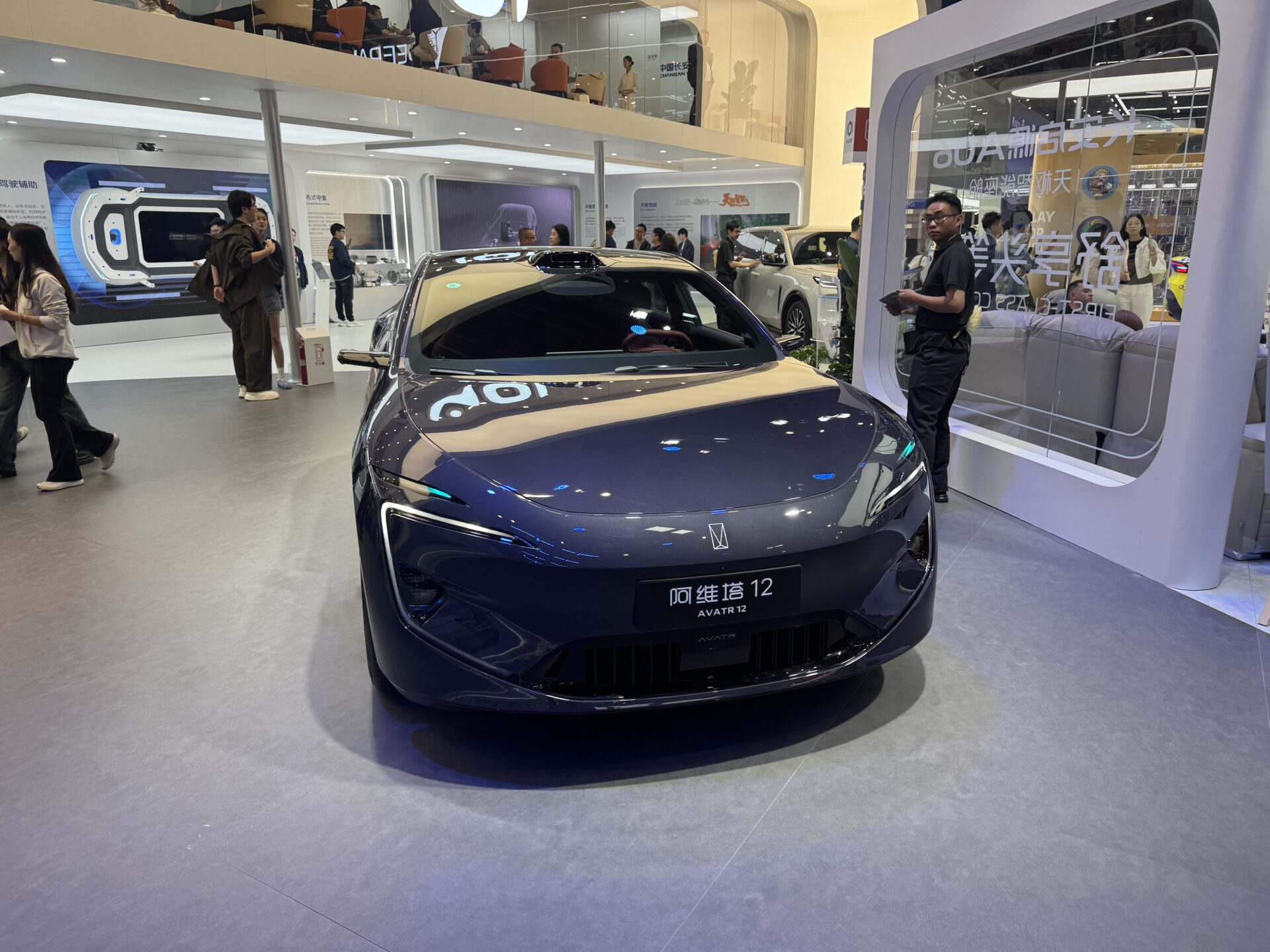
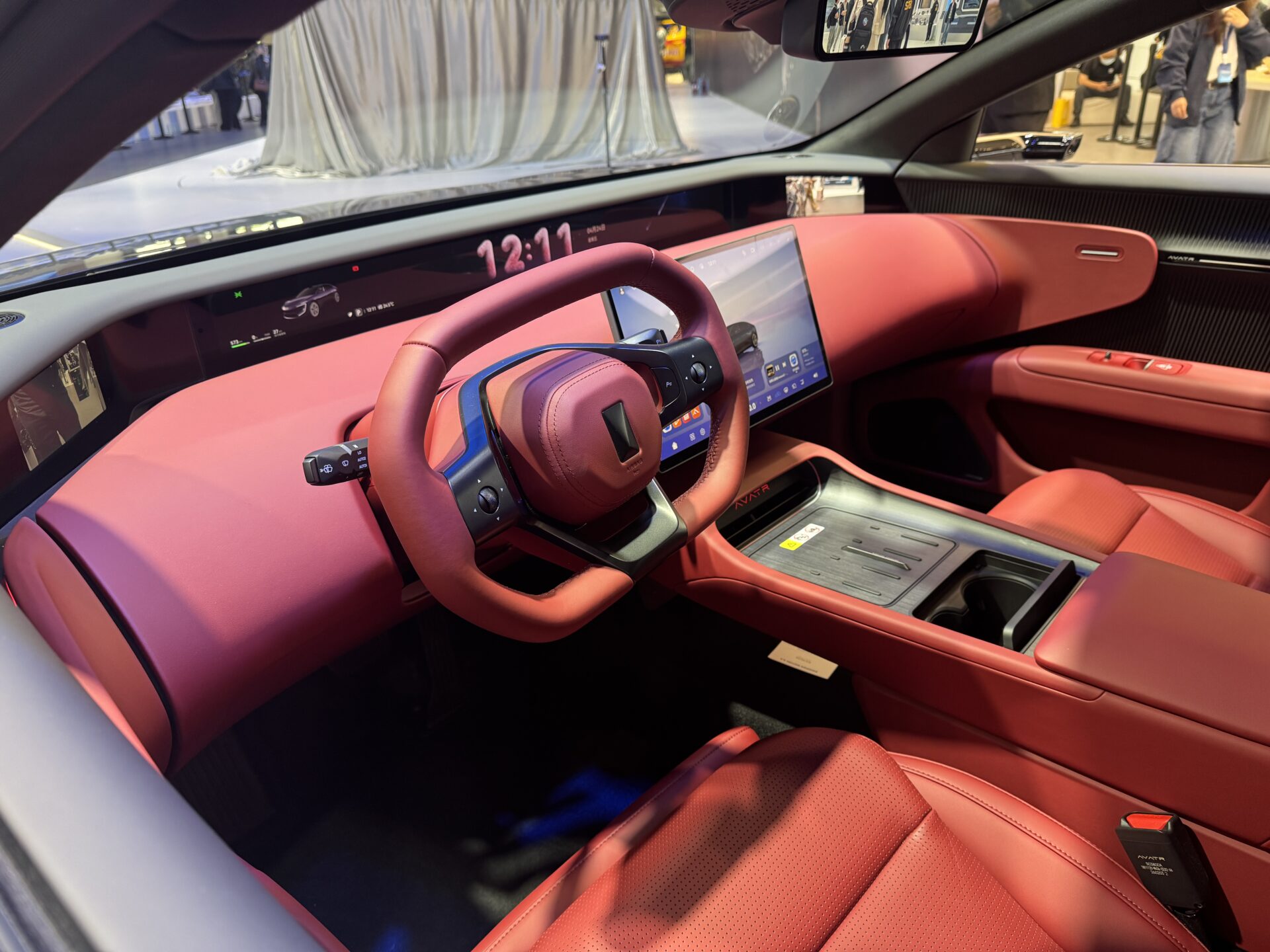
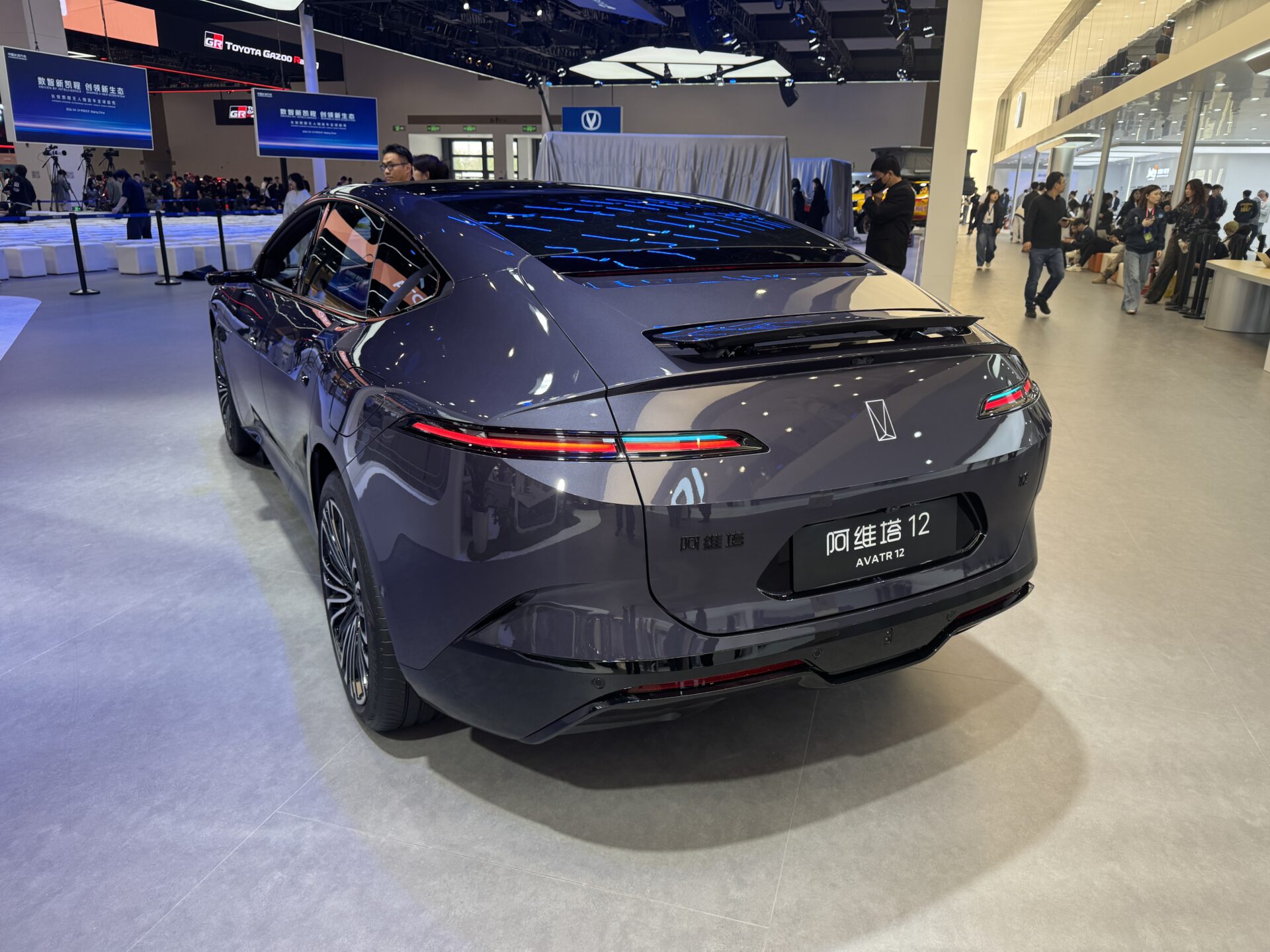
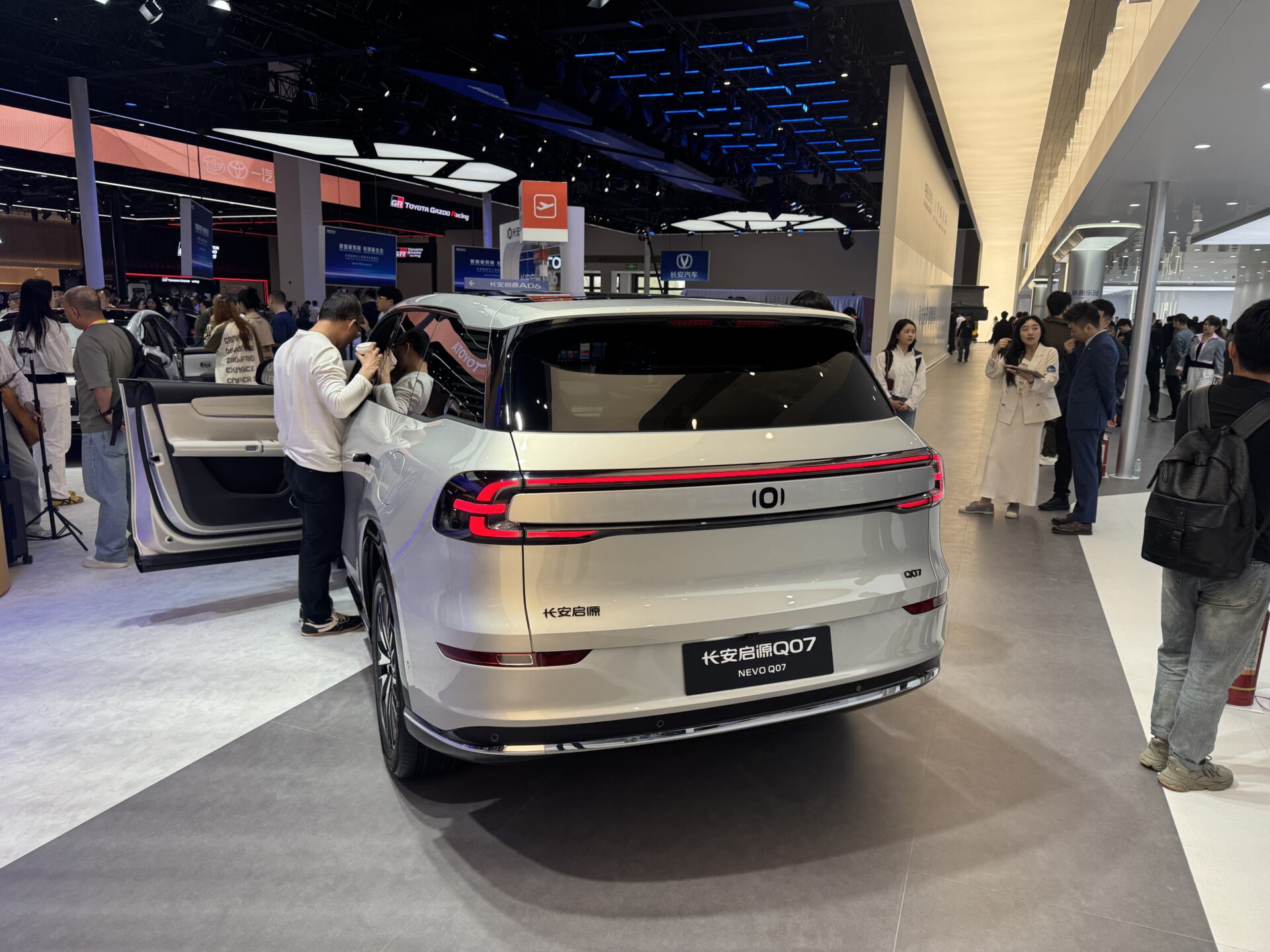
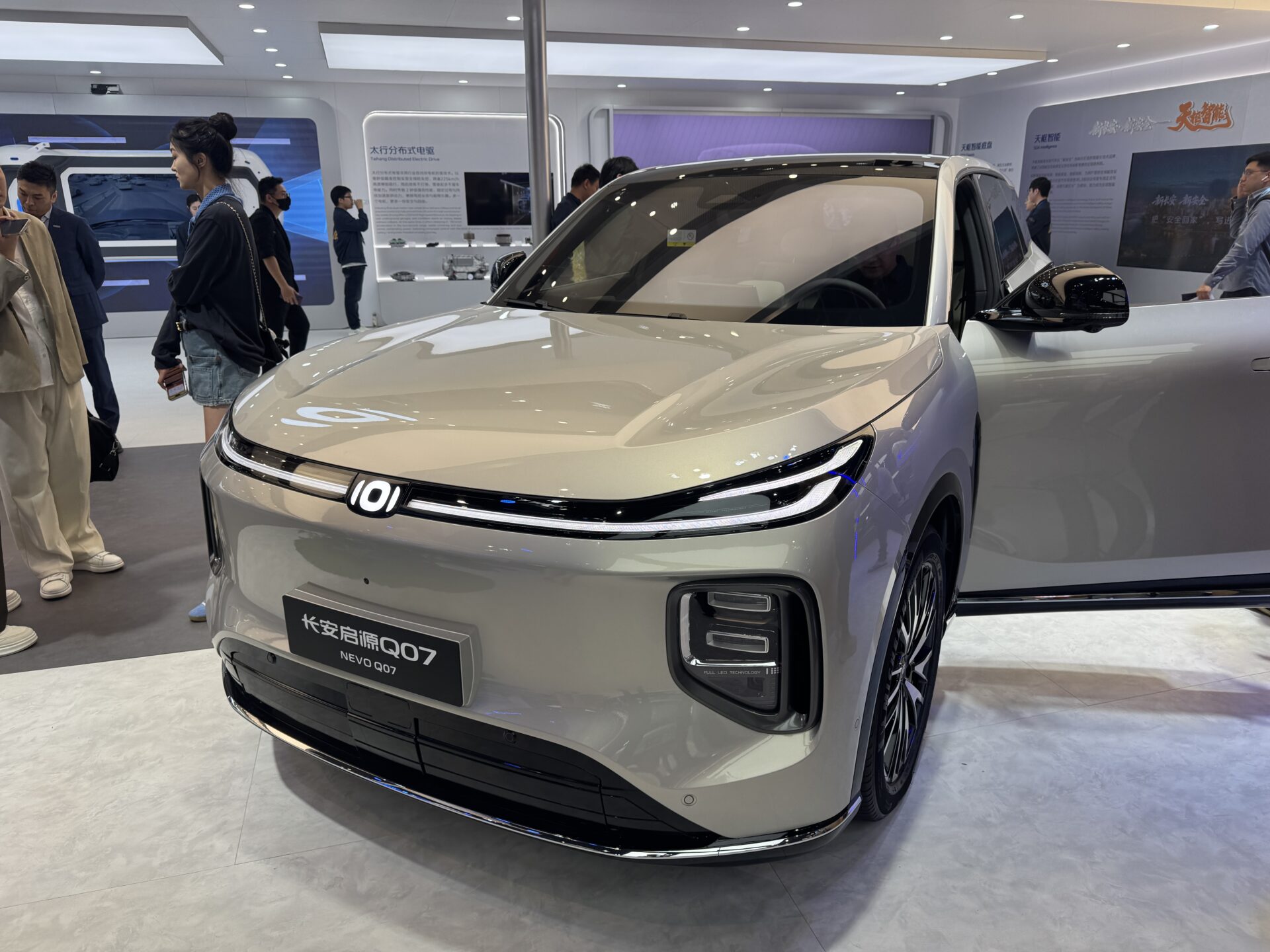
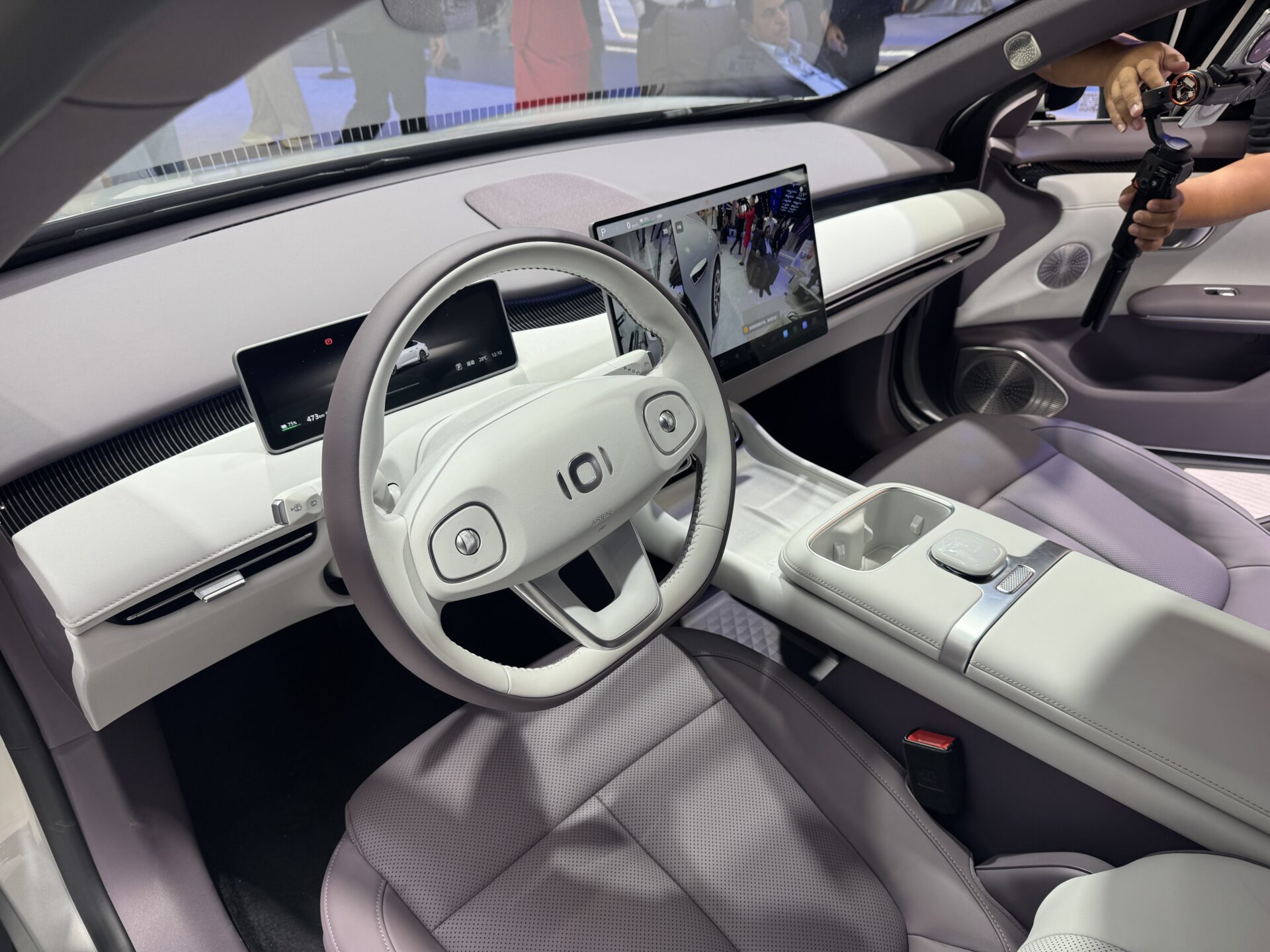
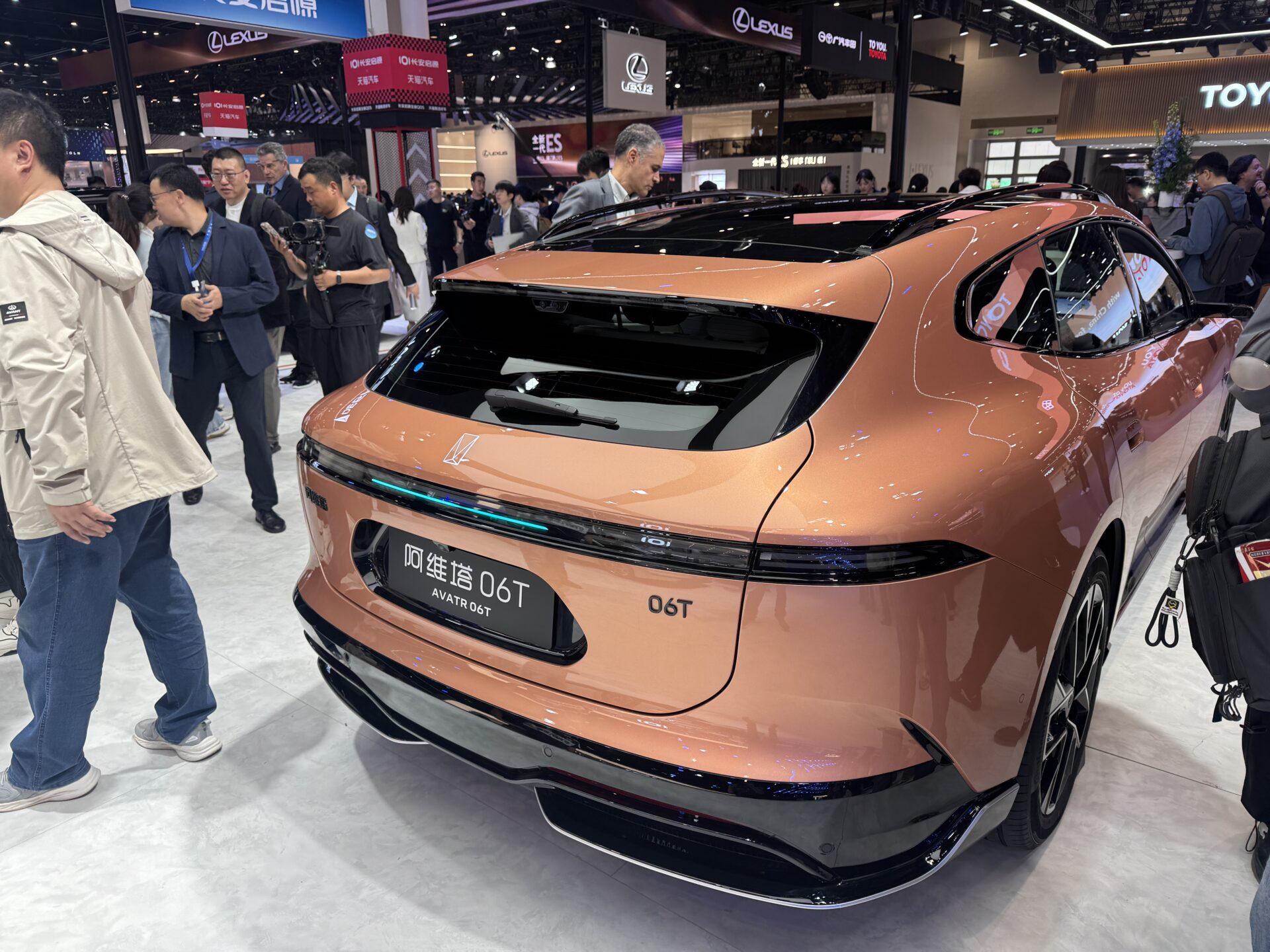
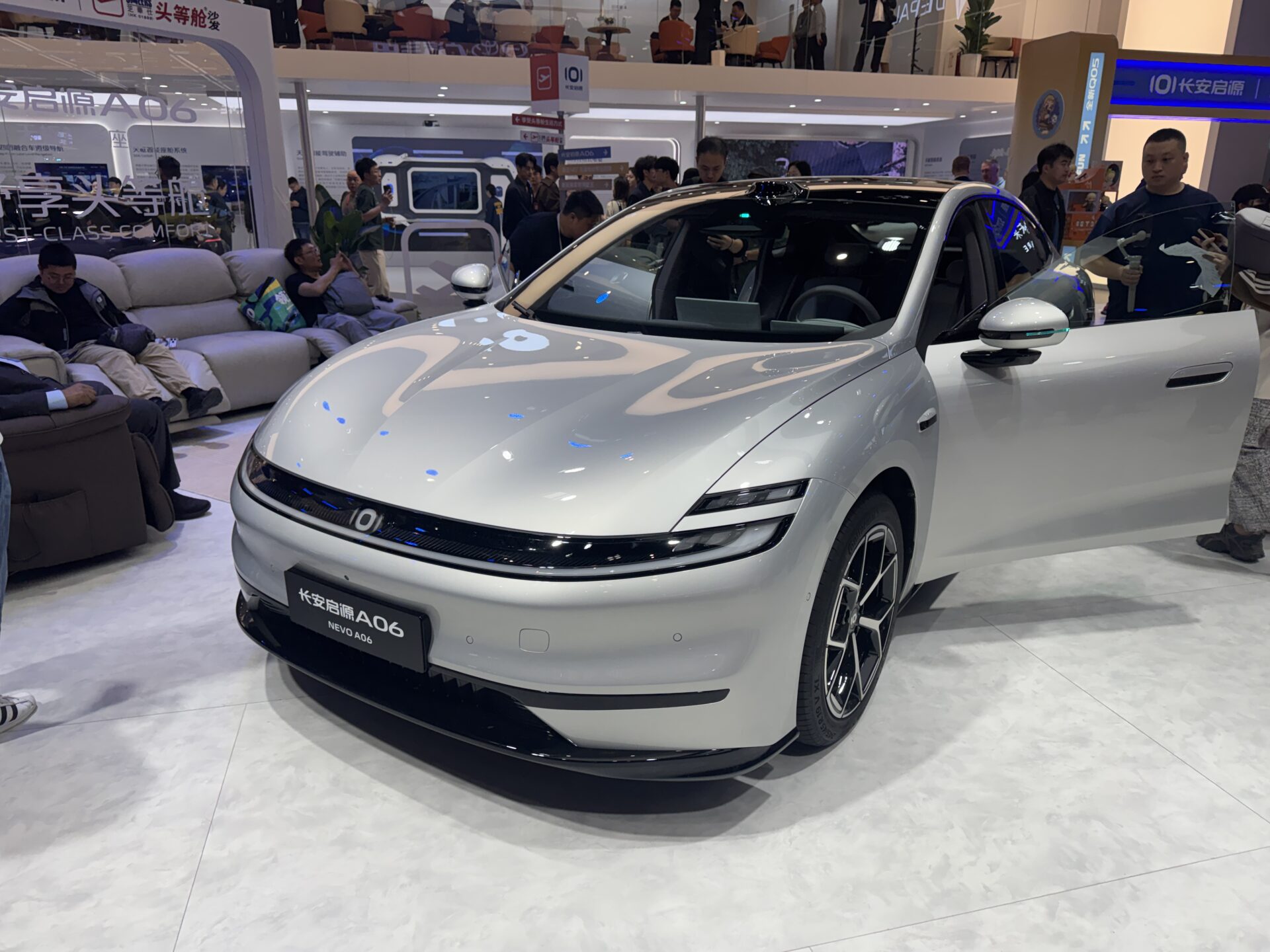
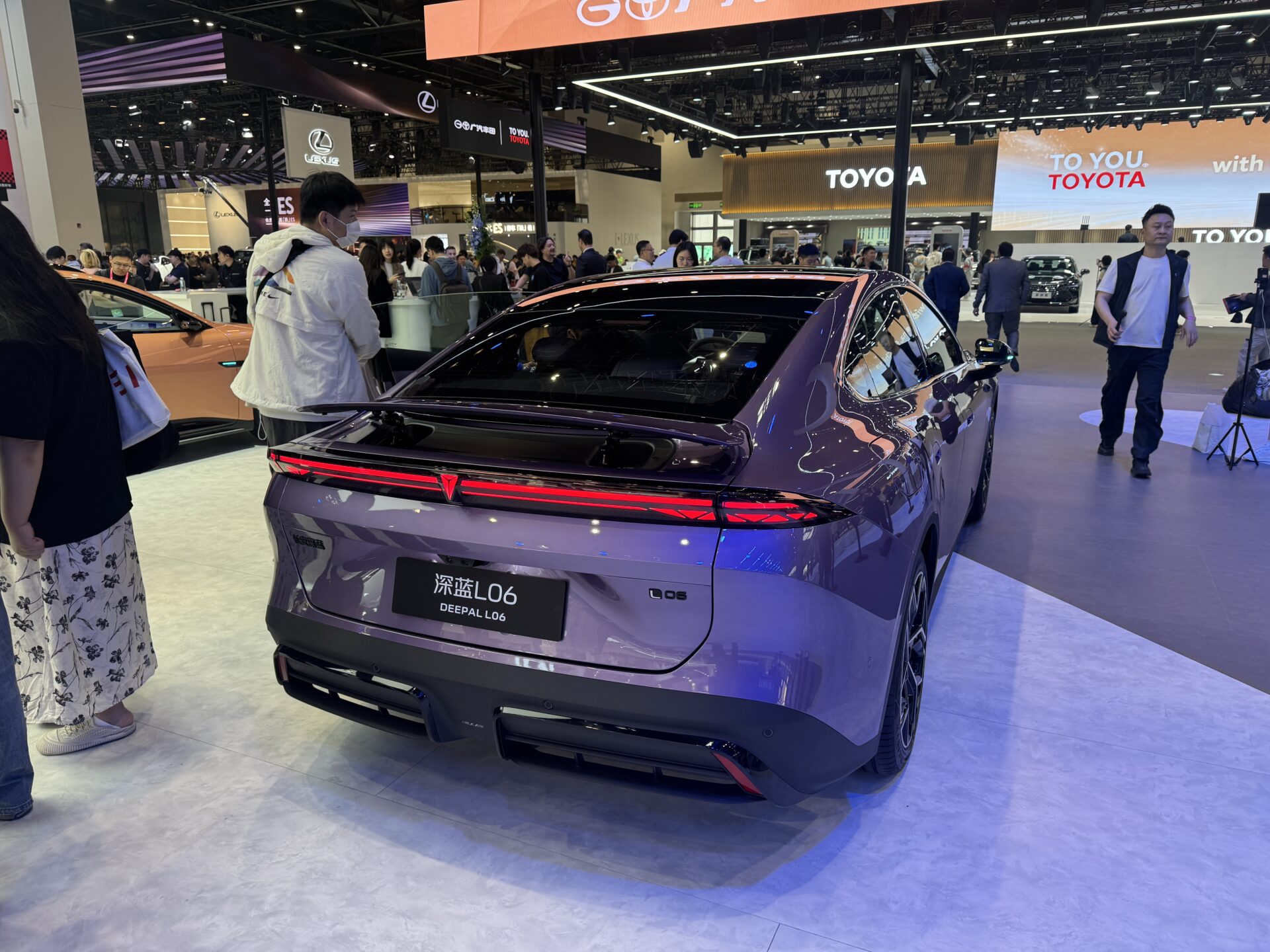
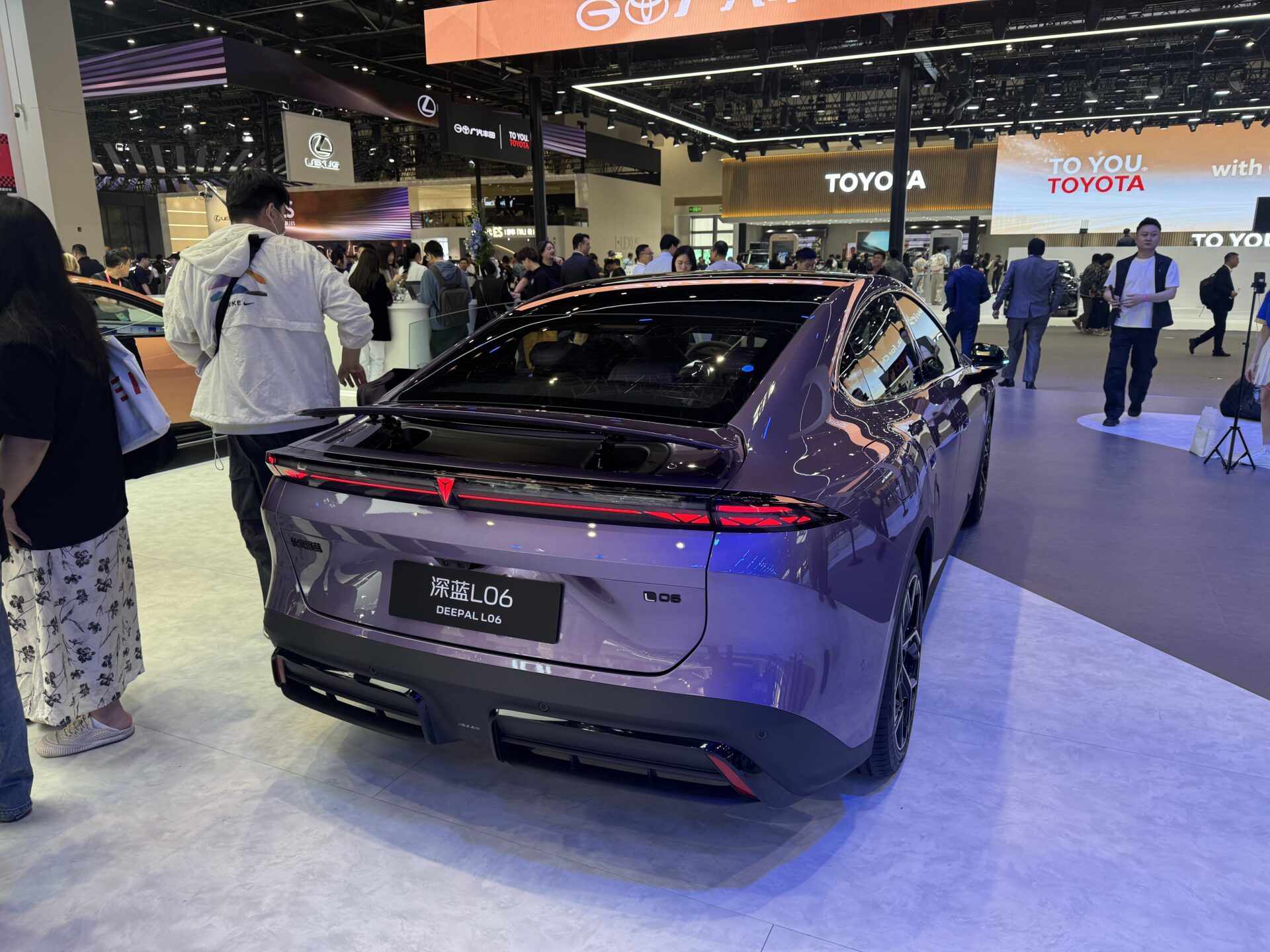
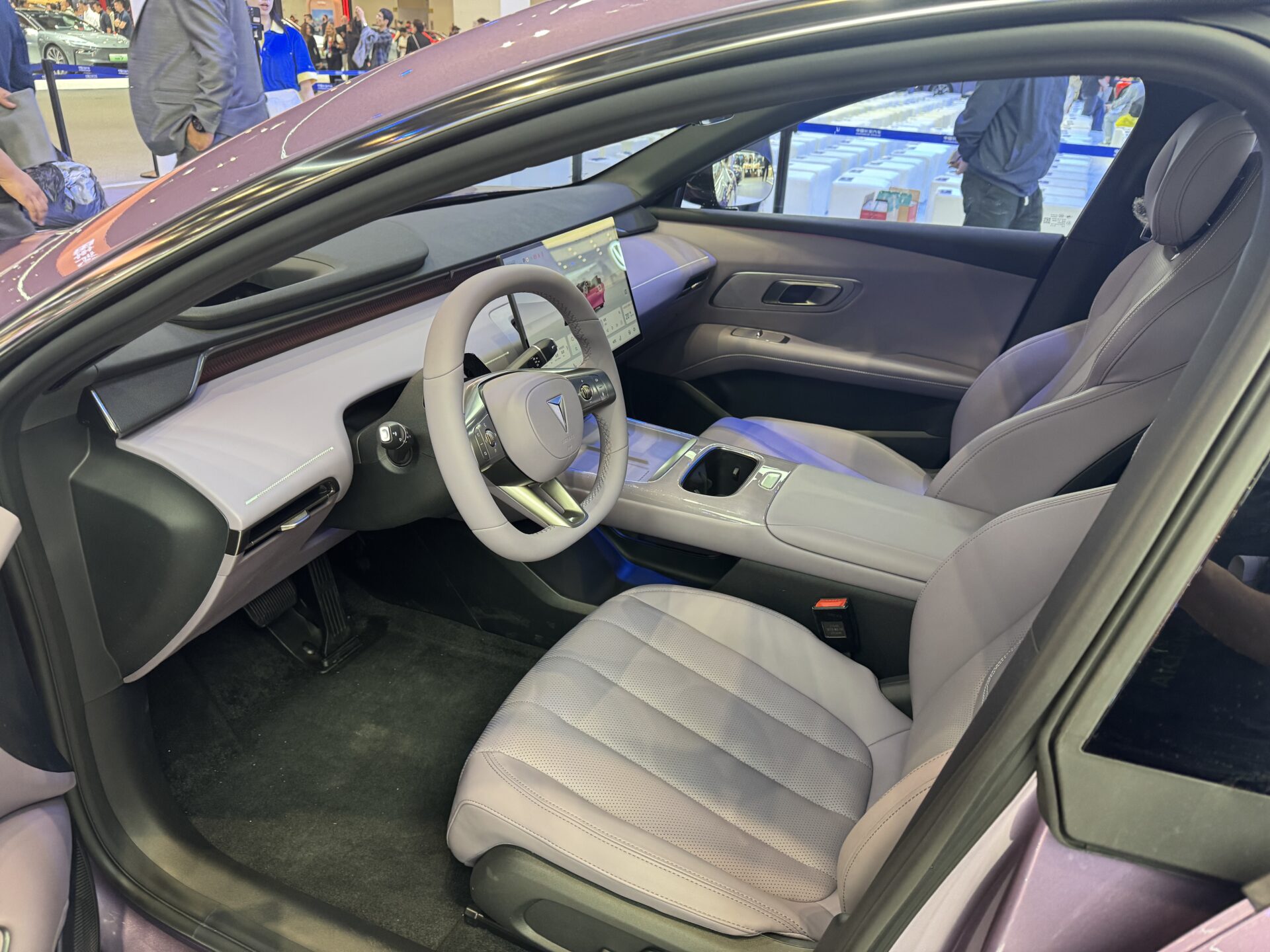
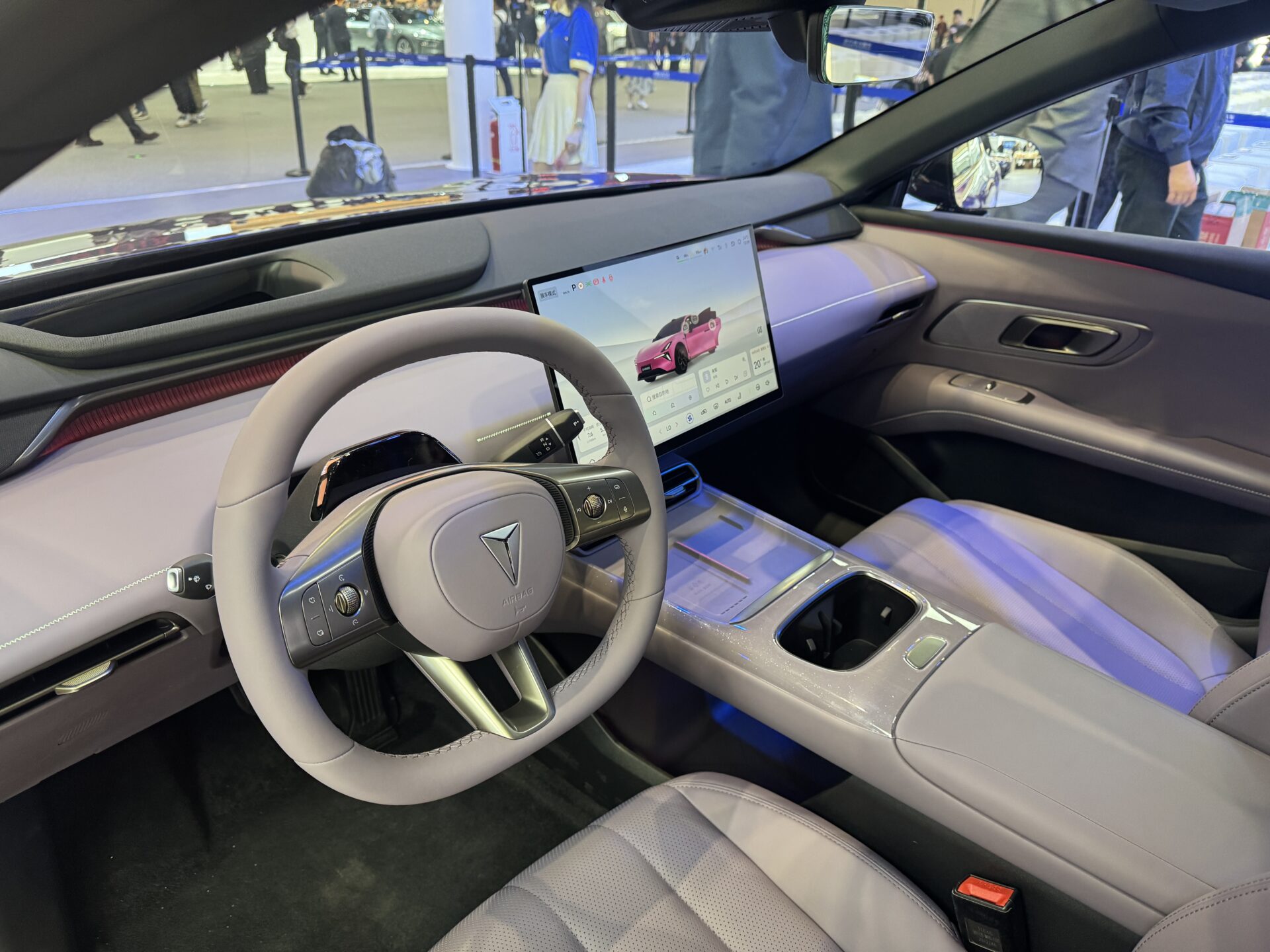
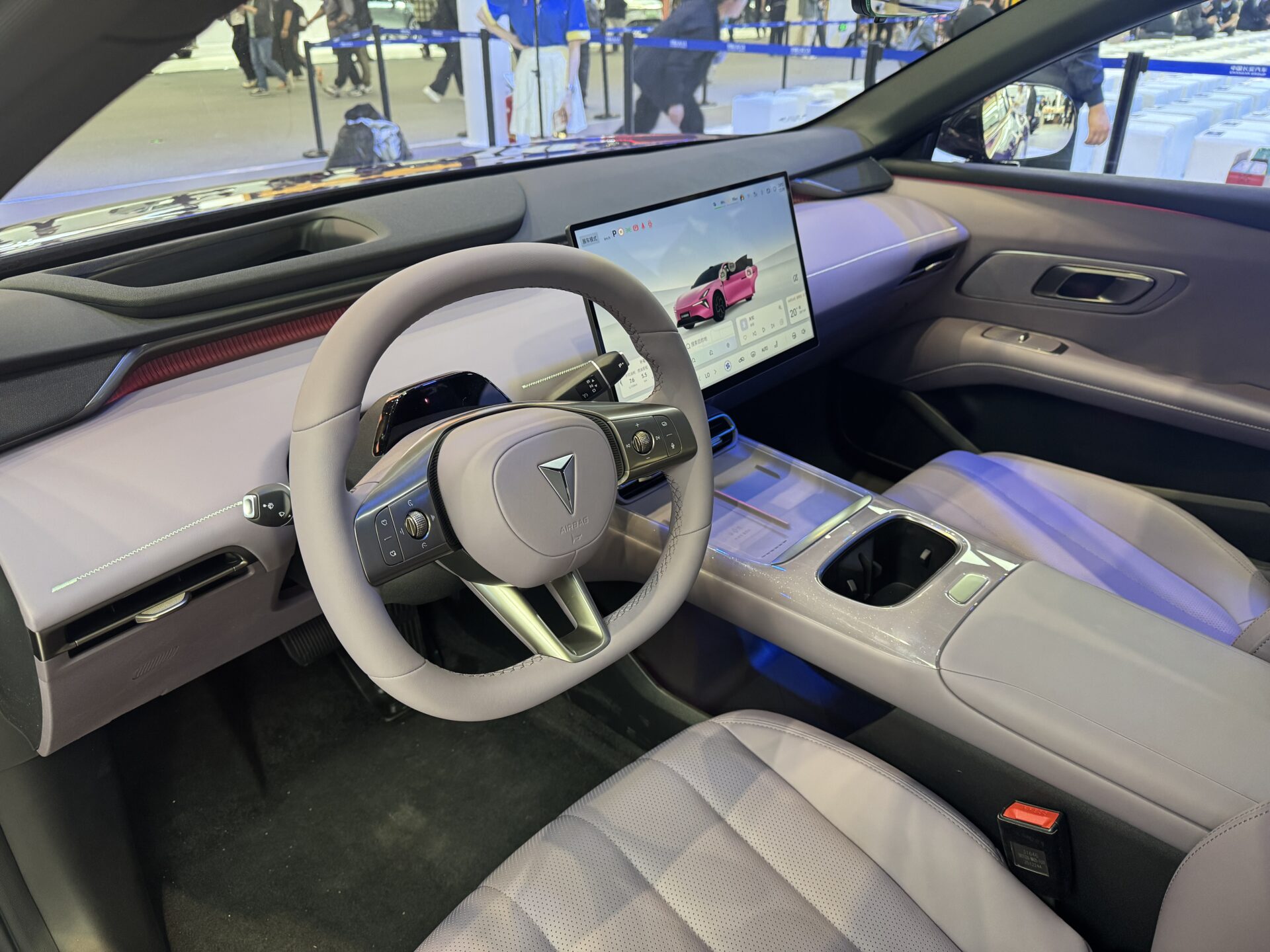
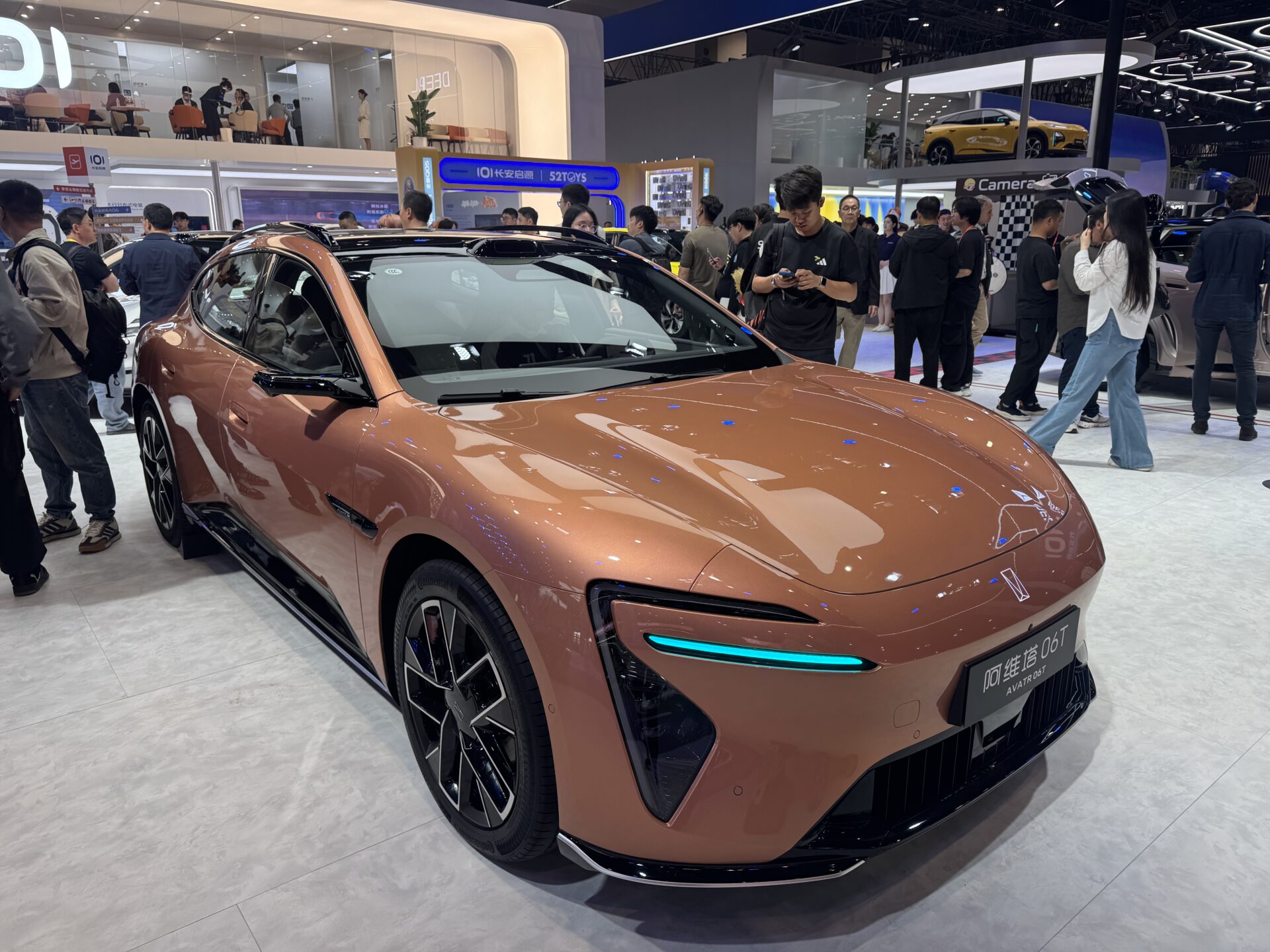
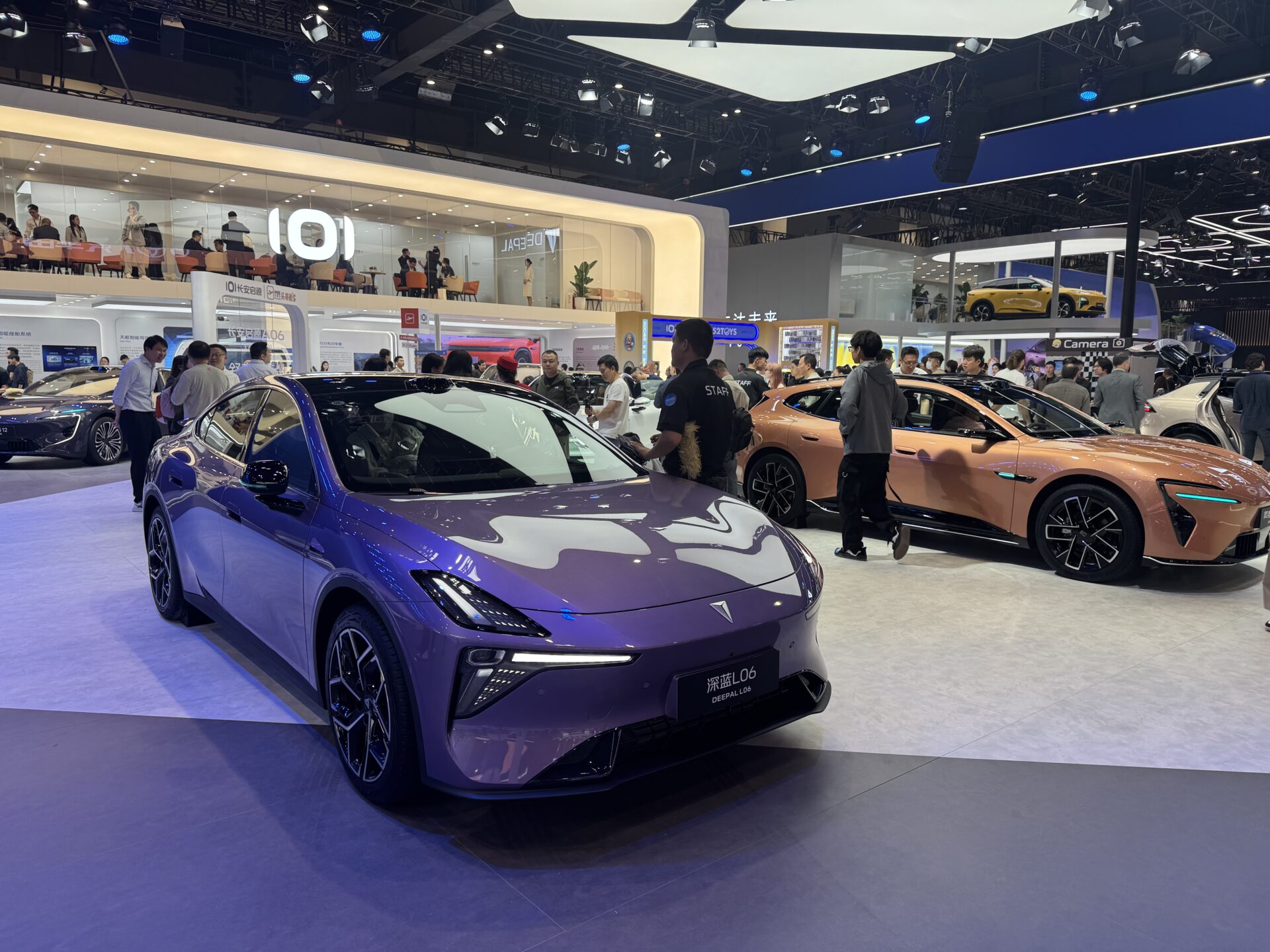
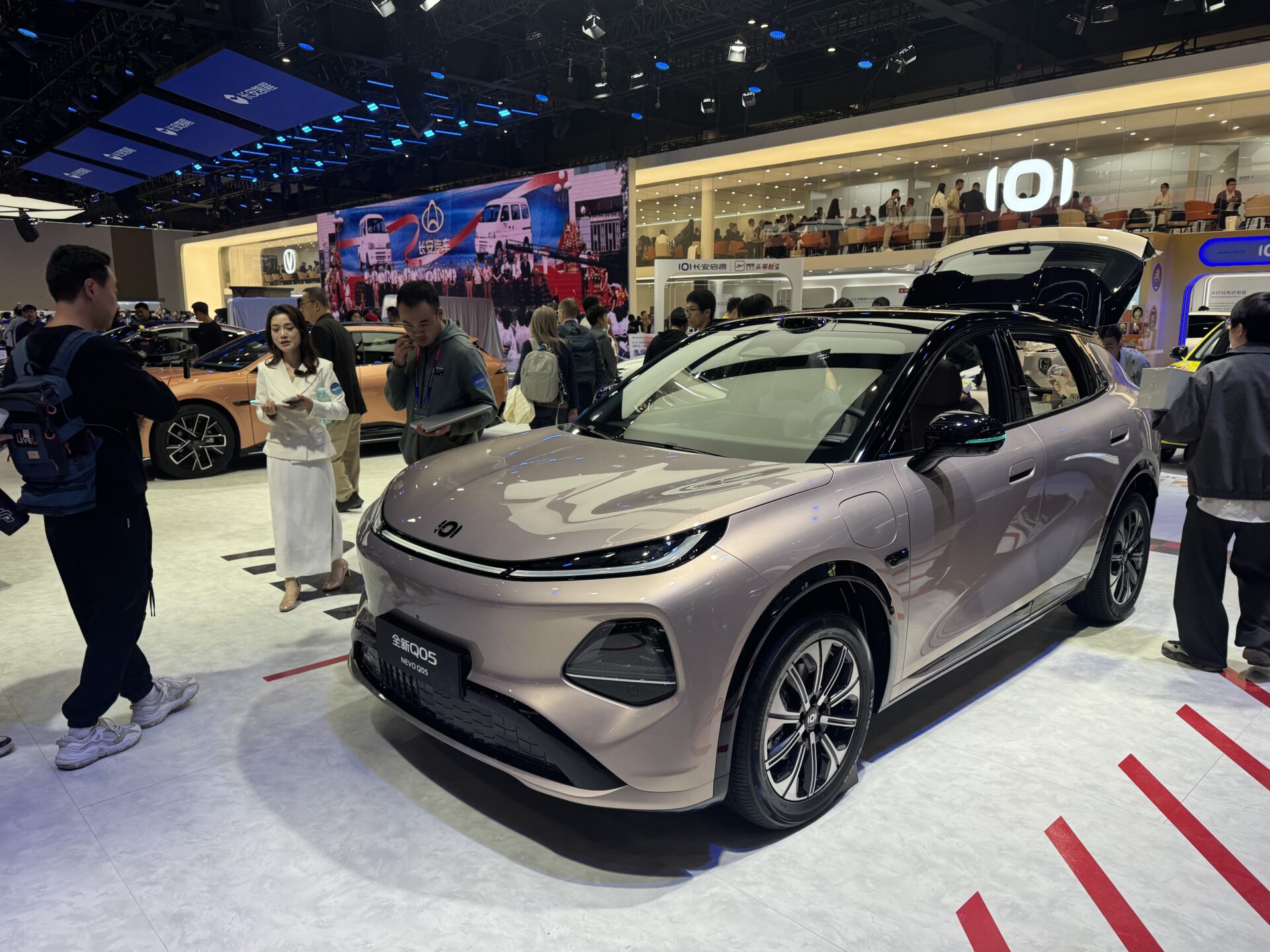
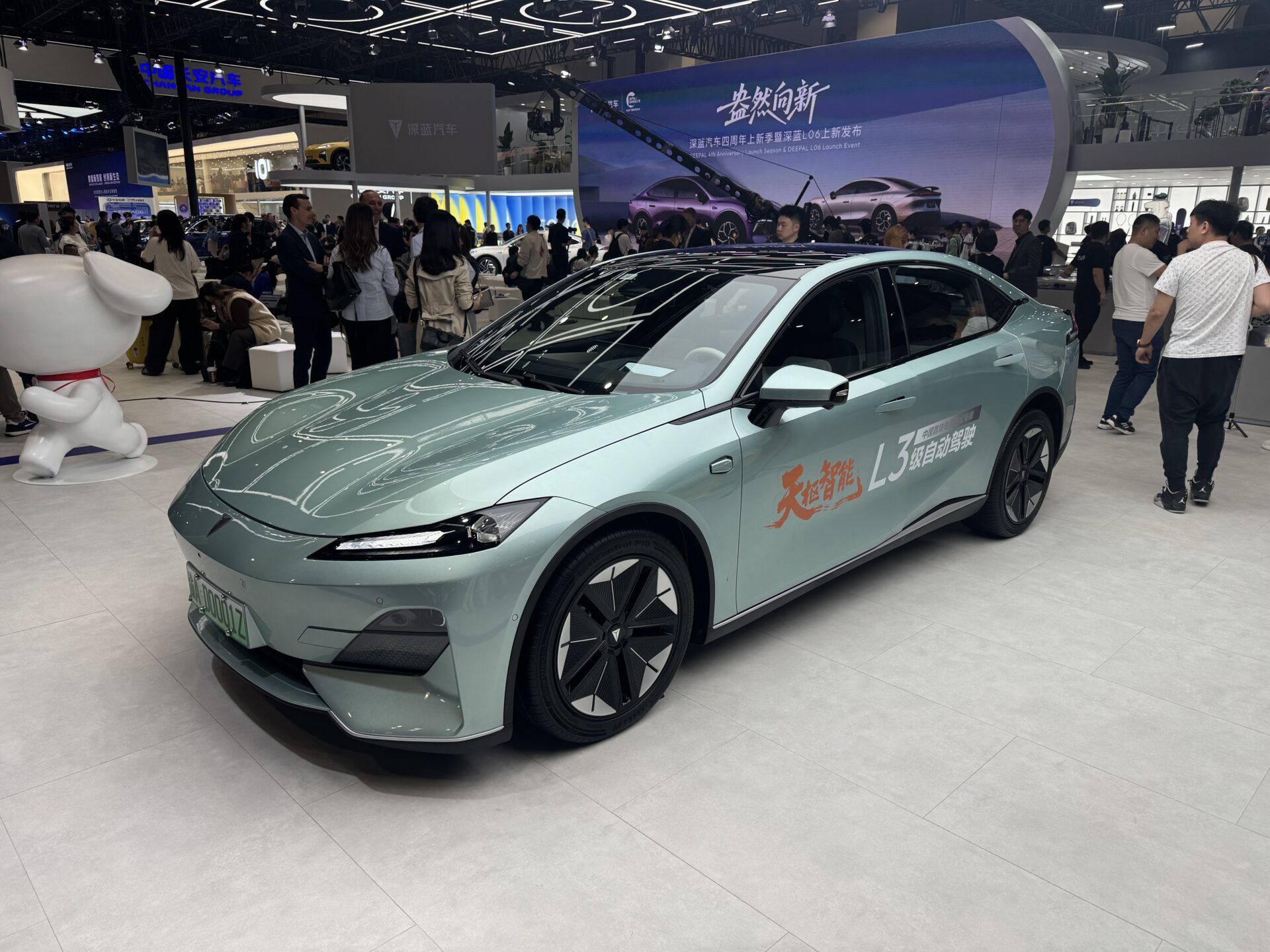
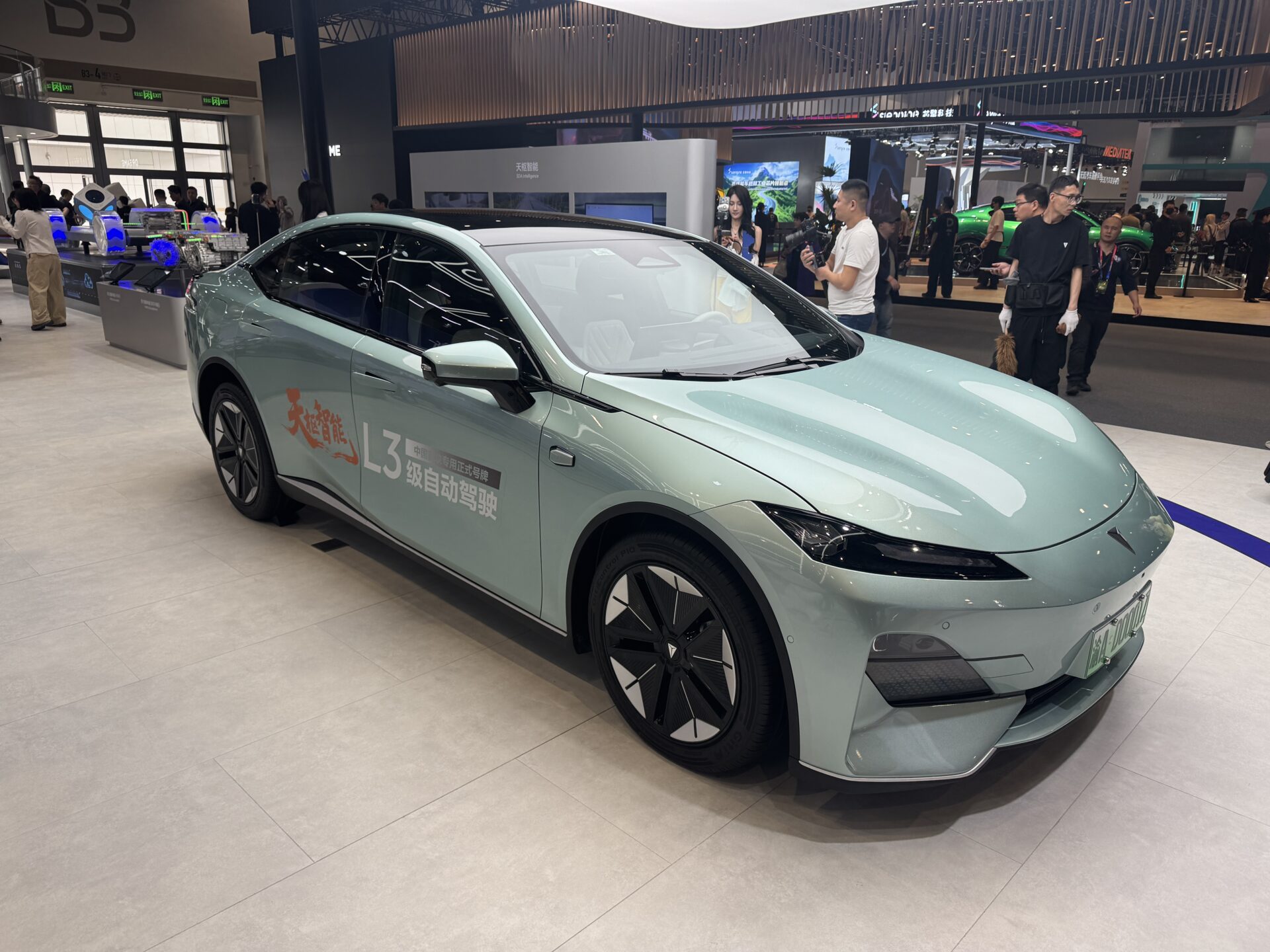
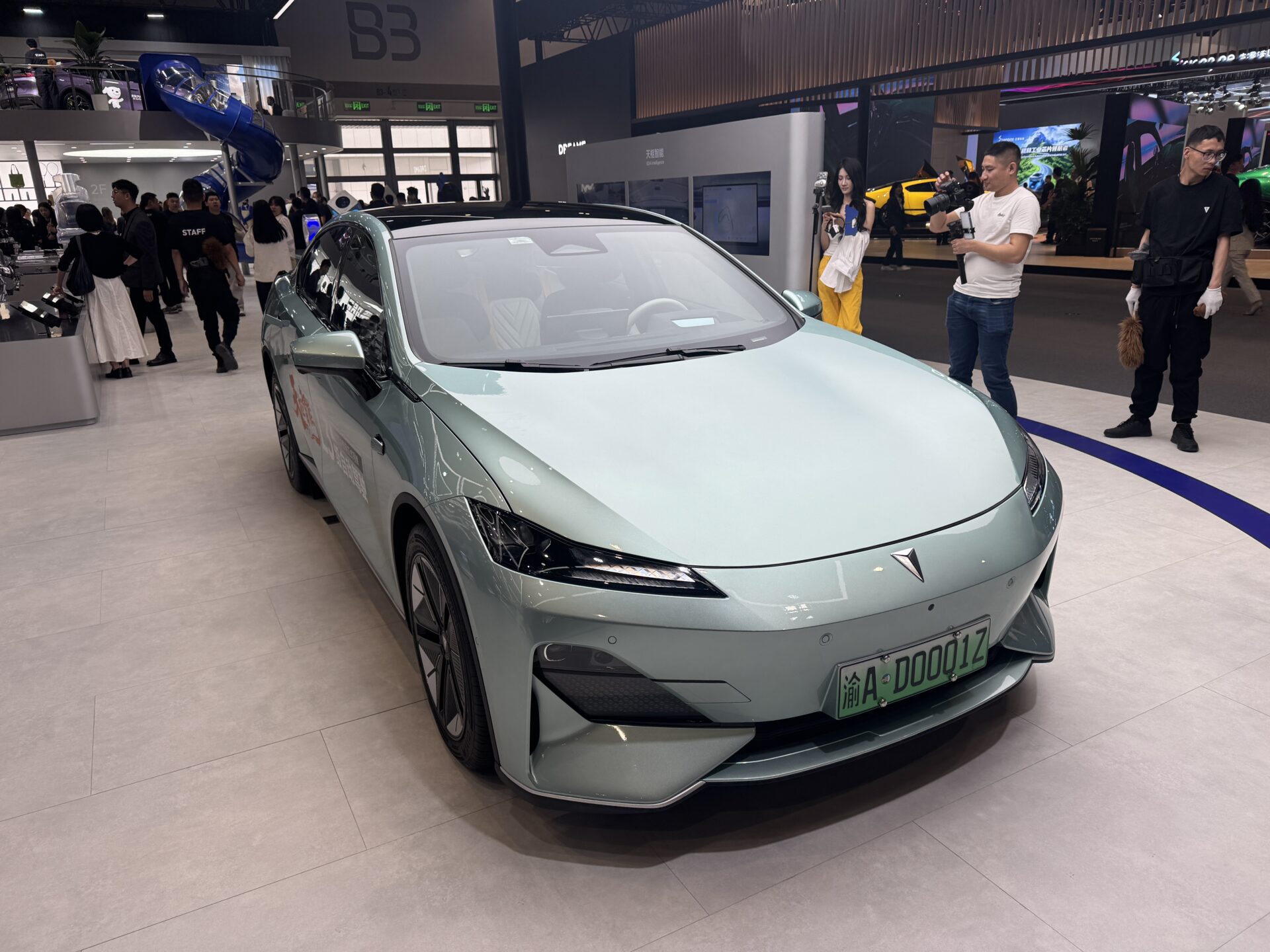
Changan is structured around four main branches: Changan (core combustion and hybrid range, with the CS series for SUVs and UNI for younger buyers), Nevo/Qiyuan (entry-level EV and PHEV), Deepal/Shenlan (mainstream premium EV) and Avatr (luxury EV, a joint venture with CATL incorporating Huawei technologies). The Changan Ford and Changan Mazda joint ventures continue to produce models for the Chinese market.
Prices in China:
The range spans from 80,000 yuan (€10,200) for an electric city car to around 700,000 yuan (€90,000) for a top-of-the-range Avatr 12. The Deepal SL03 starts at around 150,000 yuan (€19,200), as does the Nevo A07 plug-in hybrid.
2025 figures:
The group delivered approximately 2.68 million vehicles in 2024, of which 536,000 were exported. NEV subsidiaries Deepal and Avatr posted combined losses of 5.6 billion yuan in 2024, prompting the group to accelerate its restructuring.
Europe and the rest of the world:
Changan began sales in Germany and the Netherlands in early 2025, followed by the United Kingdom in September 2025 under the Deepal brand. Avatr is expected to launch in Europe in 2026. The group operates 39 plants worldwide, employs 145,000 people and exports to 103 countries.
Changan — the reinvention of a historic group
History:
Changan’s history stretches back to 1862, although automotive production only began in 1959. A technology agreement with Suzuki followed in 1984, then a joint venture with Ford in 2001, and later with Mazda. In 2018, Changan announced its plan for a gradual phase-out of combustion engines. A central state-owned manufacturer, it is held by China Weaponry Equipment Group and ranks among China’s five largest automotive groups.
Range and positioning:
Changan is structured around four main branches: Changan (core combustion and hybrid range, with the CS series for SUVs and UNI for younger buyers), Nevo/Qiyuan (entry-level EV and PHEV), Deepal/Shenlan (mainstream premium EV) and Avatr (luxury EV, a joint venture with CATL incorporating Huawei technologies). The Changan Ford and Changan Mazda joint ventures continue to produce models for the Chinese market.
Prices in China:
The range spans from 80,000 yuan (€10,200) for an electric city car to around 700,000 yuan (€90,000) for a top-of-the-range Avatr 12. The Deepal SL03 starts at around 150,000 yuan (€19,200), as does the Nevo A07 plug-in hybrid.
2025 figures:
The group delivered approximately 2.68 million vehicles in 2024, of which 536,000 were exported. NEV subsidiaries Deepal and Avatr posted combined losses of 5.6 billion yuan in 2024, prompting the group to accelerate its restructuring.
Europe and the rest of the world:
Changan began sales in Germany and the Netherlands in early 2025, followed by the United Kingdom in September 2025 under the Deepal brand. Avatr is expected to launch in Europe in 2026. The group operates 39 plants worldwide, employs 145,000 people and exports to 103 countries.
Wuling — the everyday mini electric
History:
Wuling is a brand of SAIC-GM-Wuling, a joint venture founded in 2002 between SAIC, General Motors and Guangxi Automobile Group. Its origins trace back to the 1950s as a manufacturer of agricultural machinery. In July 2020, the launch of the Hongguang Mini EV at under €4,000 turned the small electric city car market in China upside down, bringing electric mobility within reach of rural and peri-urban communities.
Range and positioning:
The range includes the Hongguang Mini EV (two- and four-door mini city car), the Bingo (one step up), the Air EV exported notably to Southeast Asia, and the Baojun range aimed at families. Wuling also maintains a strong presence in combustion-engine micro-vans for the Chinese rural market.
Prices in China:
The Hongguang Mini EV starts at around 32,000 yuan (€4,100), making it one of the cheapest new vehicles in the world. The Bingo ranges from 55,000 to 90,000 yuan (€7,000 to €11,500). Baojun models sit between 70,000 and 150,000 yuan (€9,000 to €19,200).
2025 figures:
Wuling grew by 6.2% in 2025, climbing two places in the national rankings. The Hongguang Mini EV finished second among China’s best-selling models across all categories, behind the Geely Xingyuan.
Europe and the rest of the world:
In Europe, the brand’s footprint remains limited due to regulatory standards and vehicle size constraints. The Air EV has been produced in Indonesia since 2022 and has made rapid inroads in that market. The brand is also present in Latin America through the GM network, under the Chevrolet badge.
Li Auto — the range-extender hybrid
History:
Li Auto was founded on 24 July 2015 in Beijing by Li Xiang, previously the founder of automotive websites Autohome and PCPop. The first model, the Li ONE, launched in November 2019: a large SUV in which a 1.5-litre combustion engine serves solely as a generator to recharge the battery, never directly driving the wheels. This approach, known as EREV (Extended-Range Electric Vehicle), eliminates range anxiety across China’s vast territory. The company listed on the Nasdaq in July 2020, raising $1.1 billion.
Range and positioning:
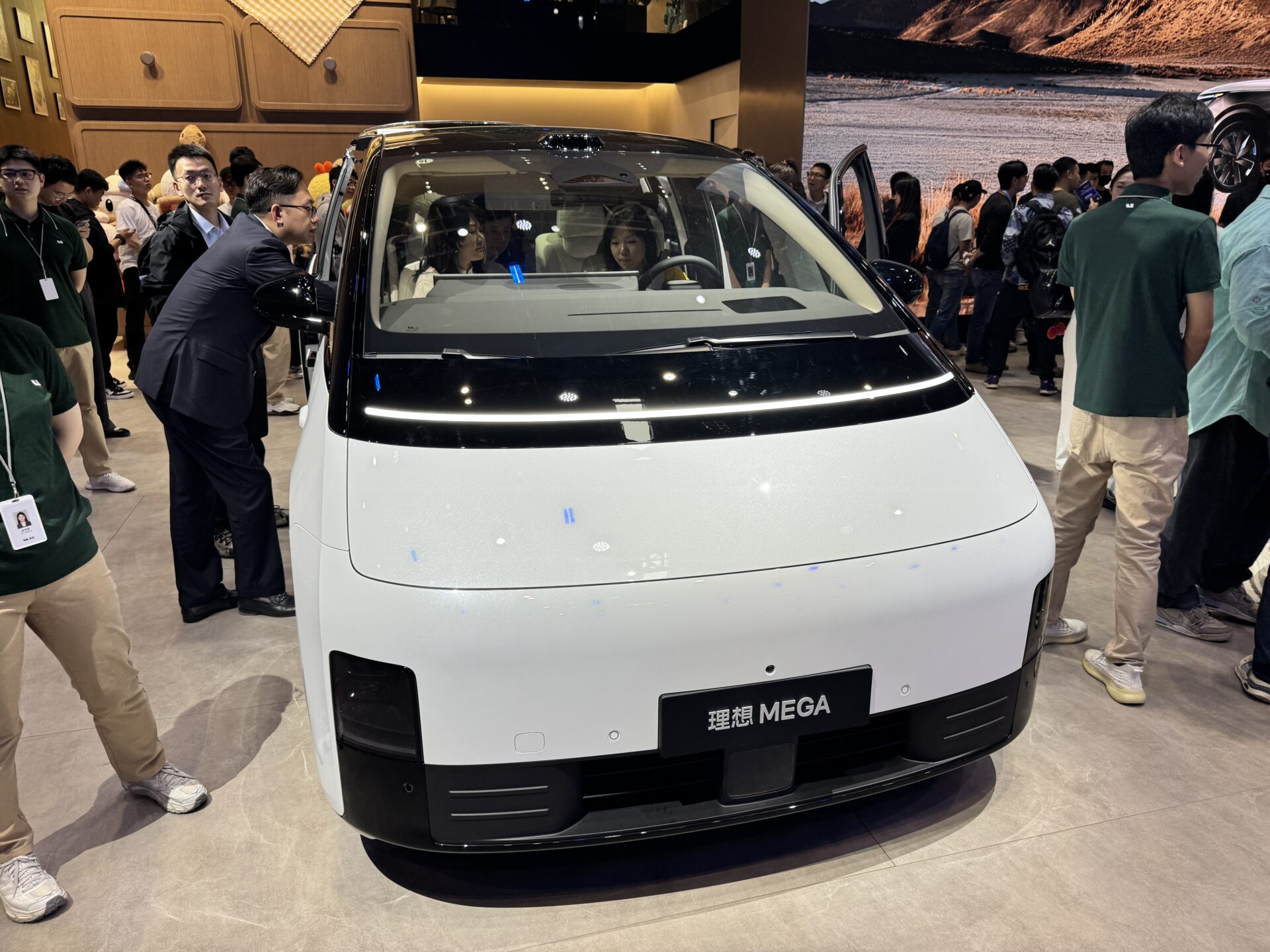
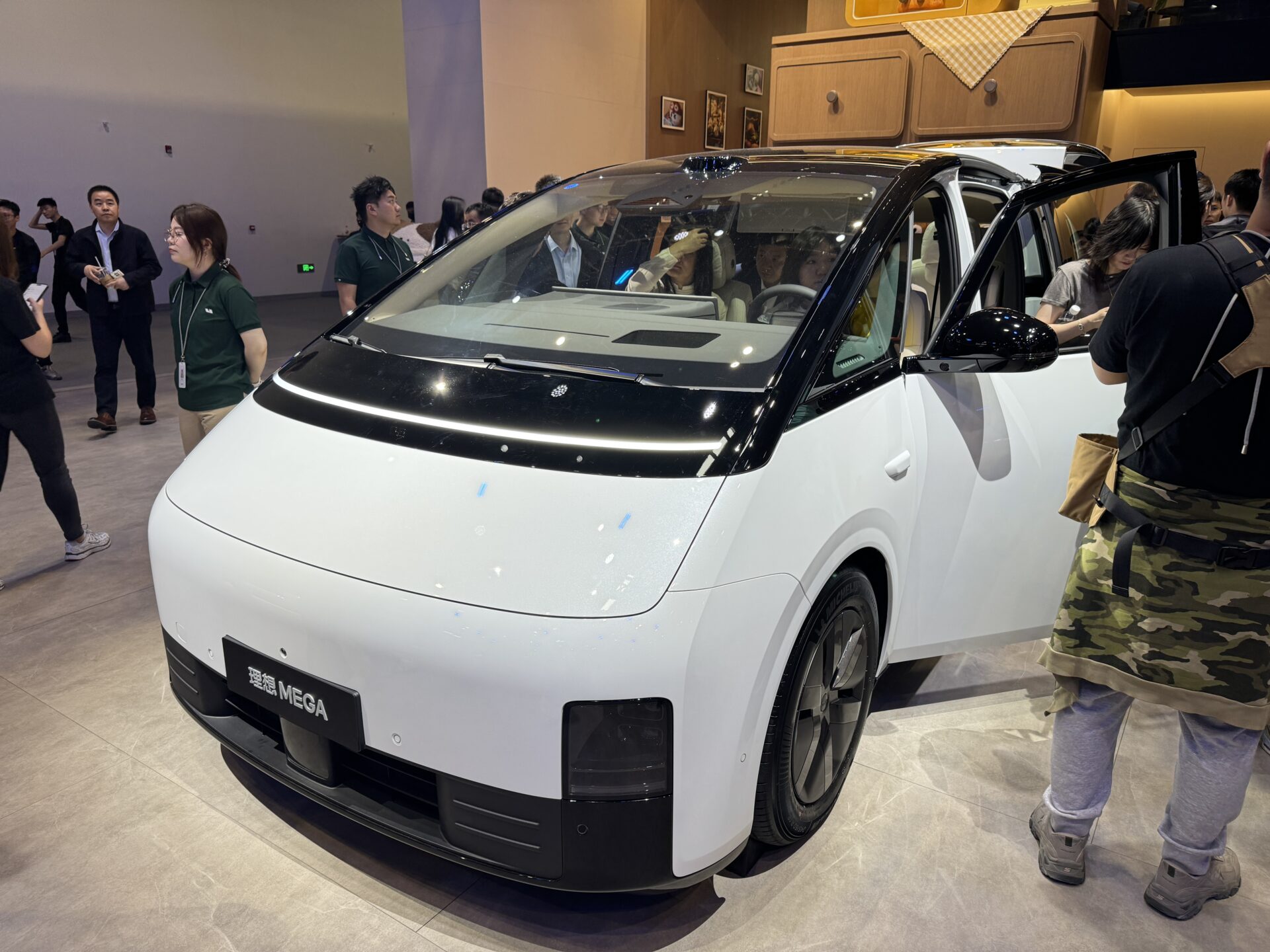
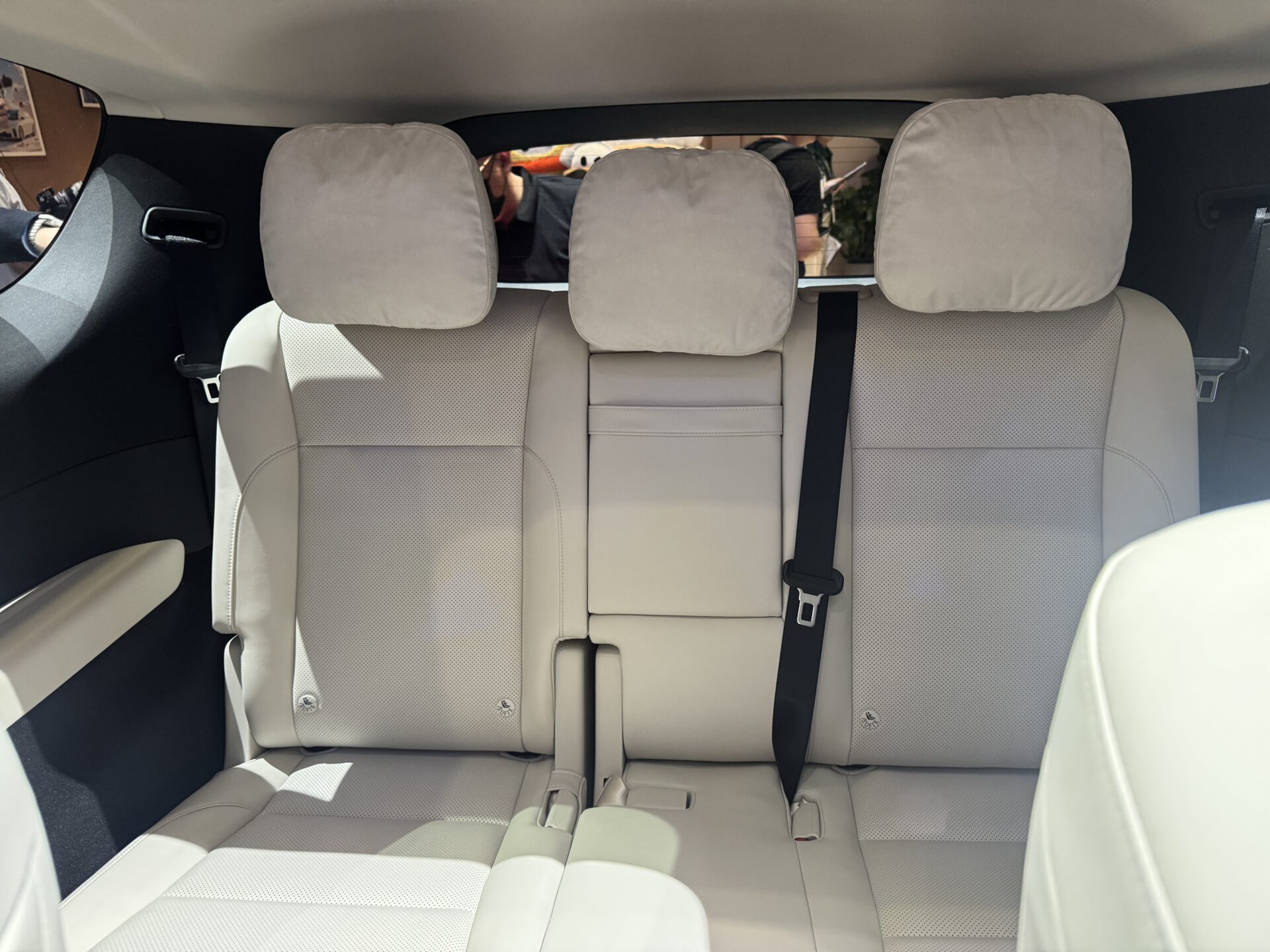
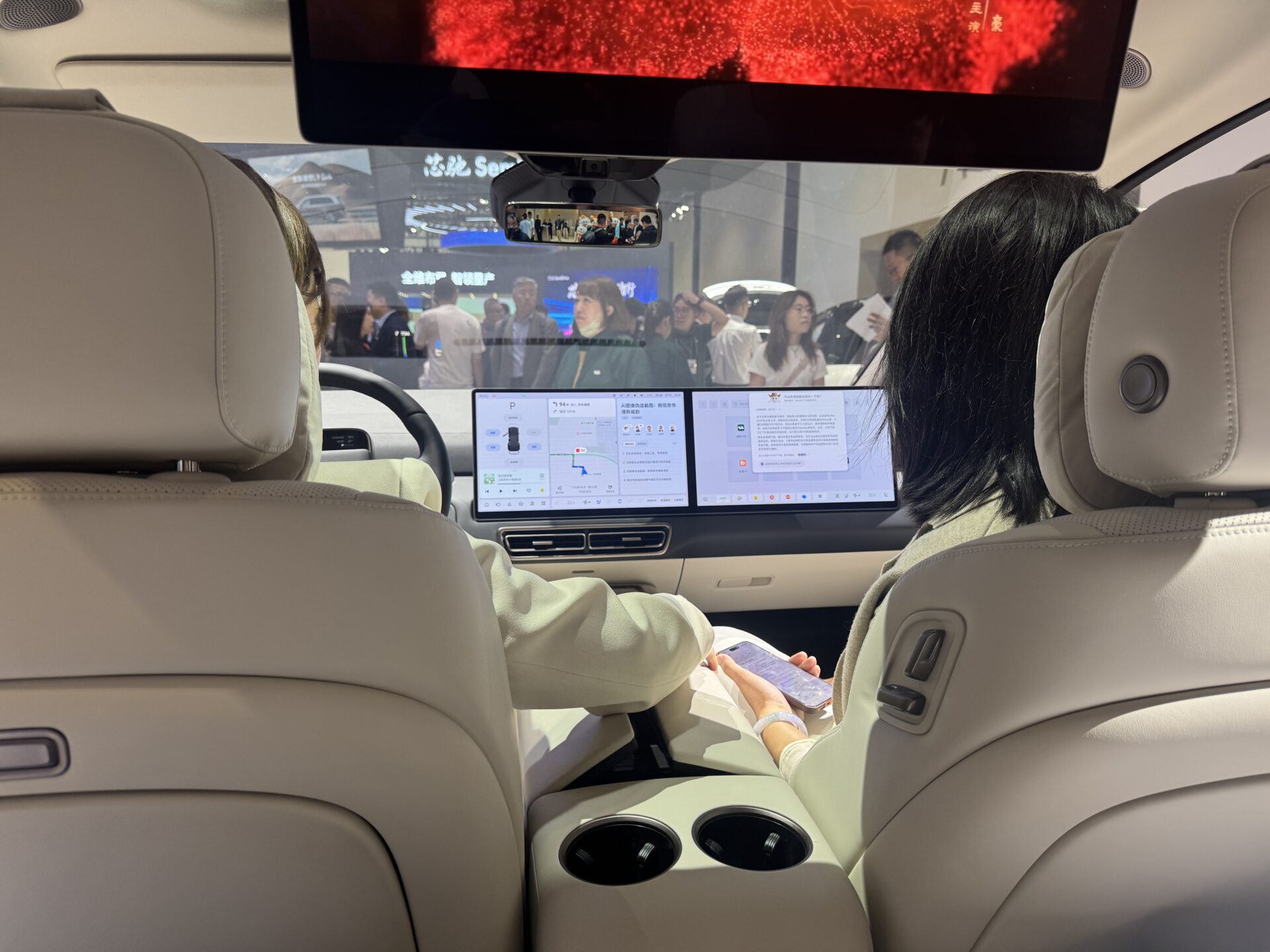
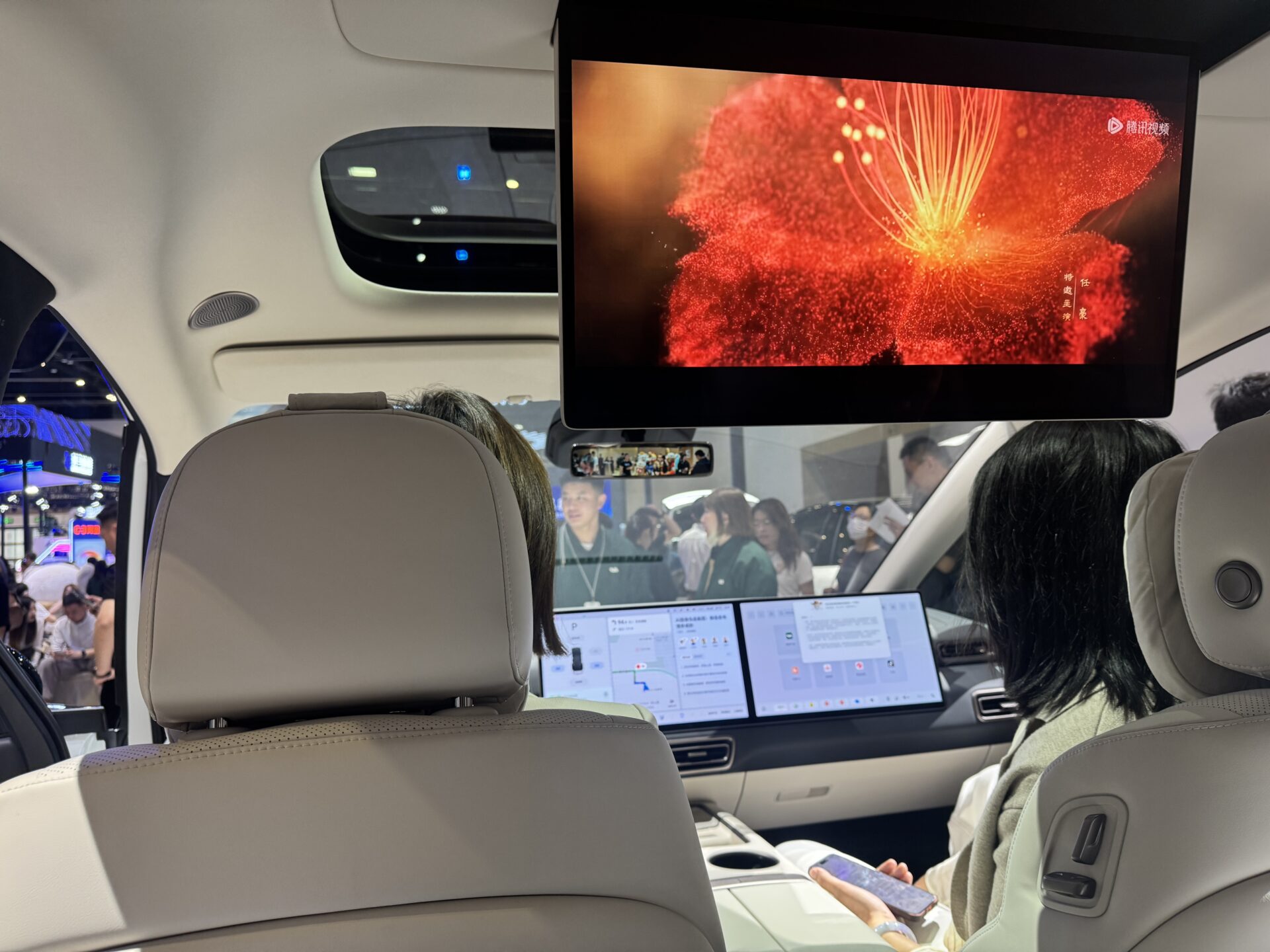
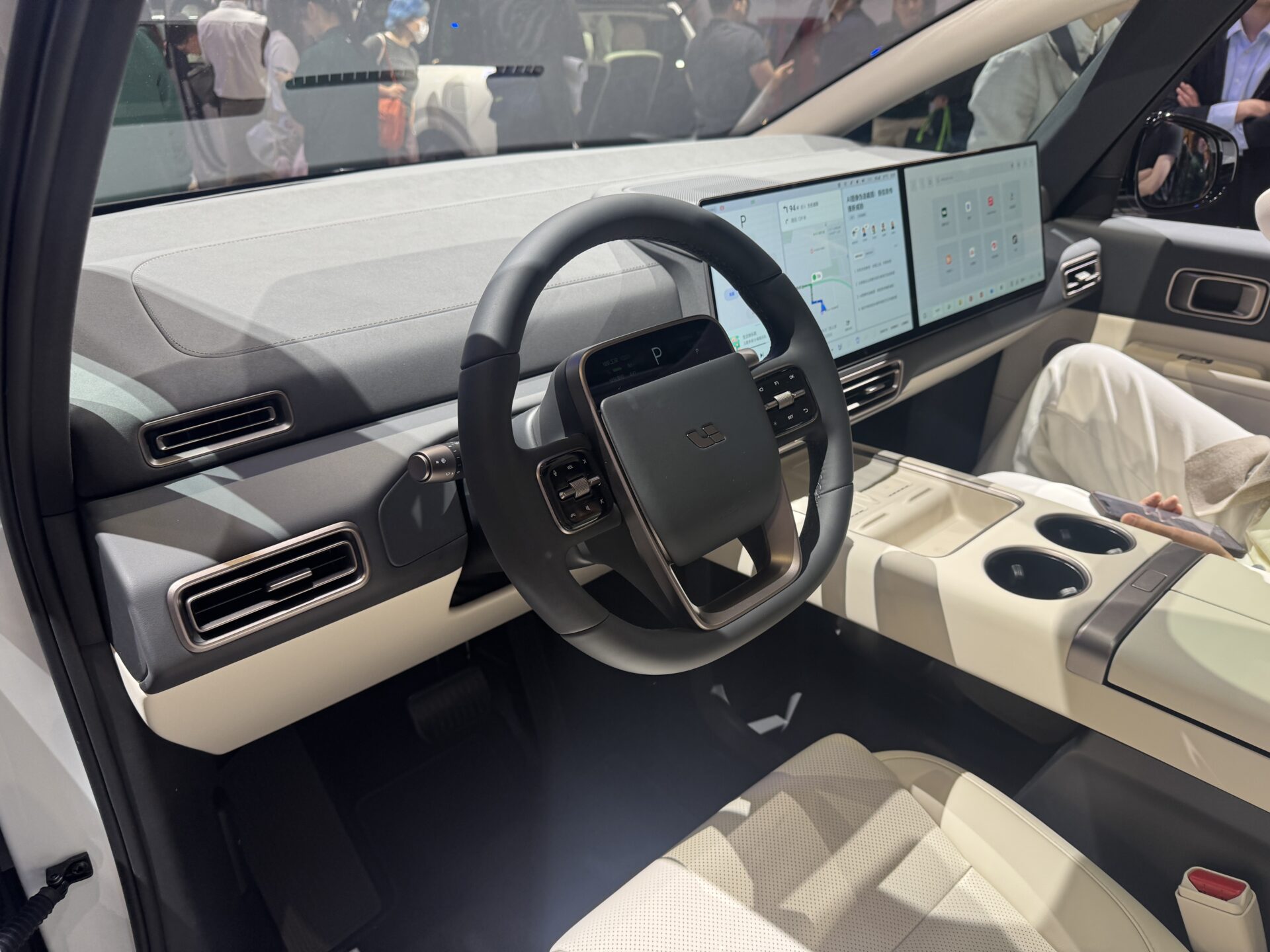
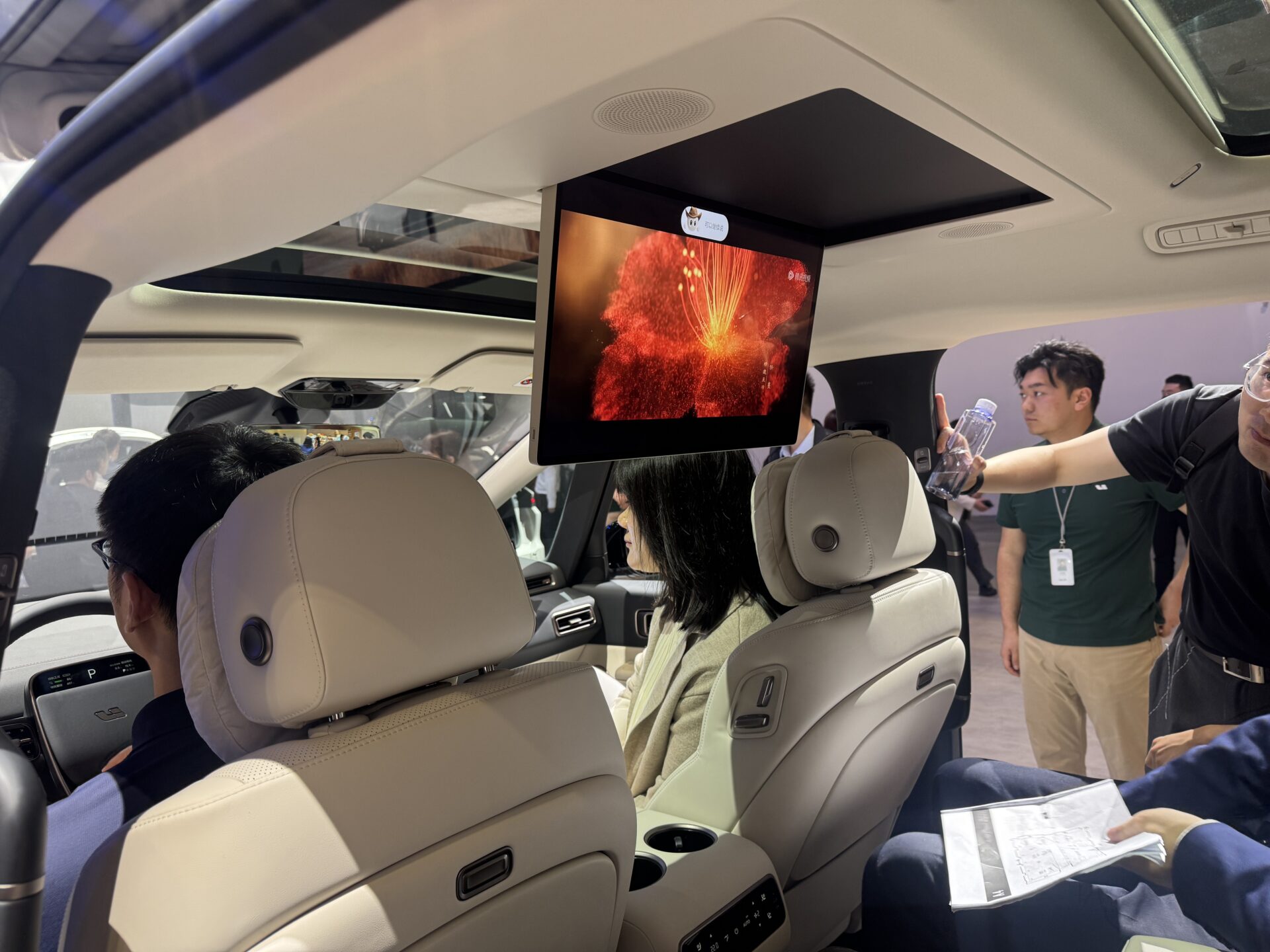
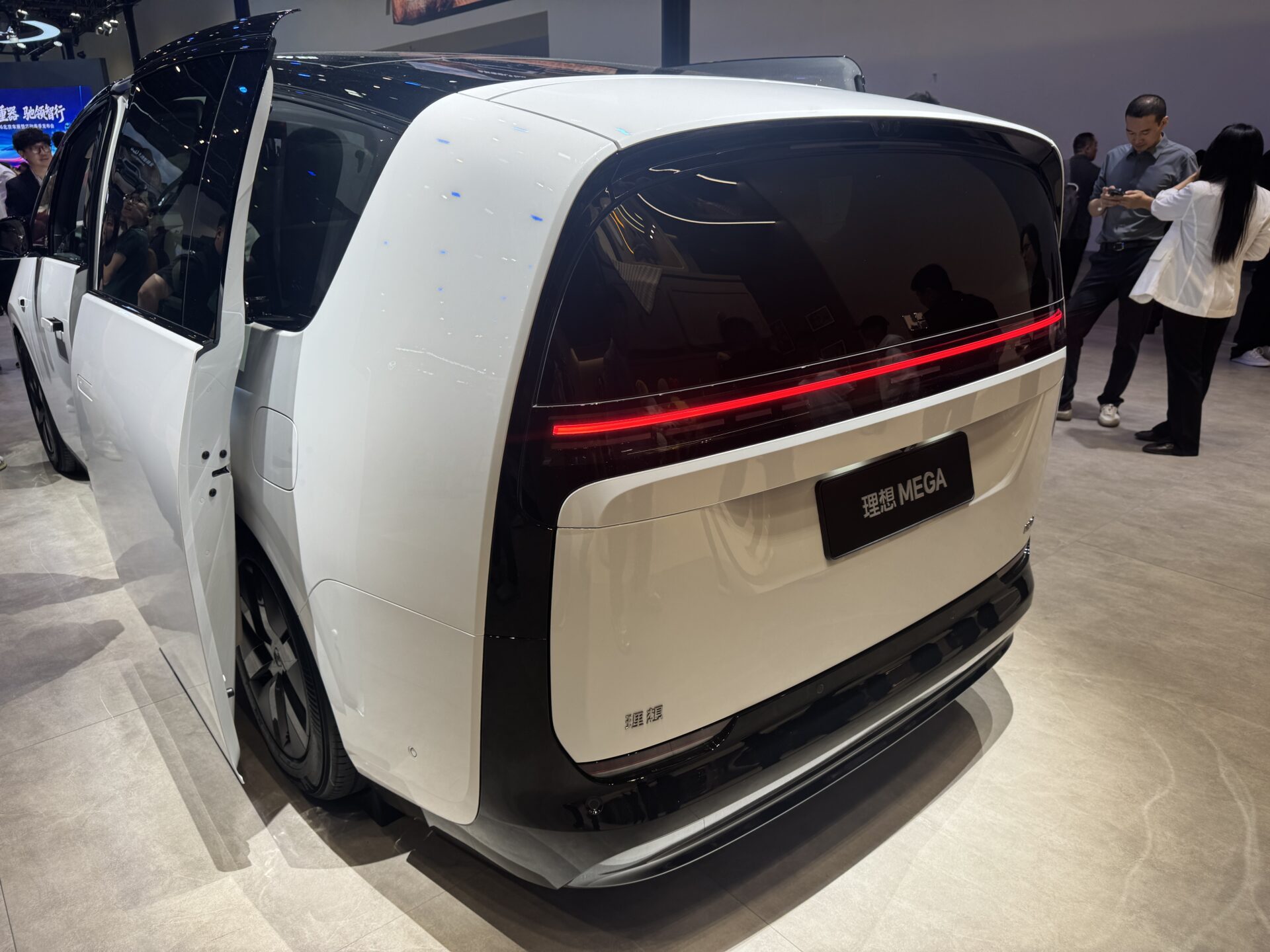
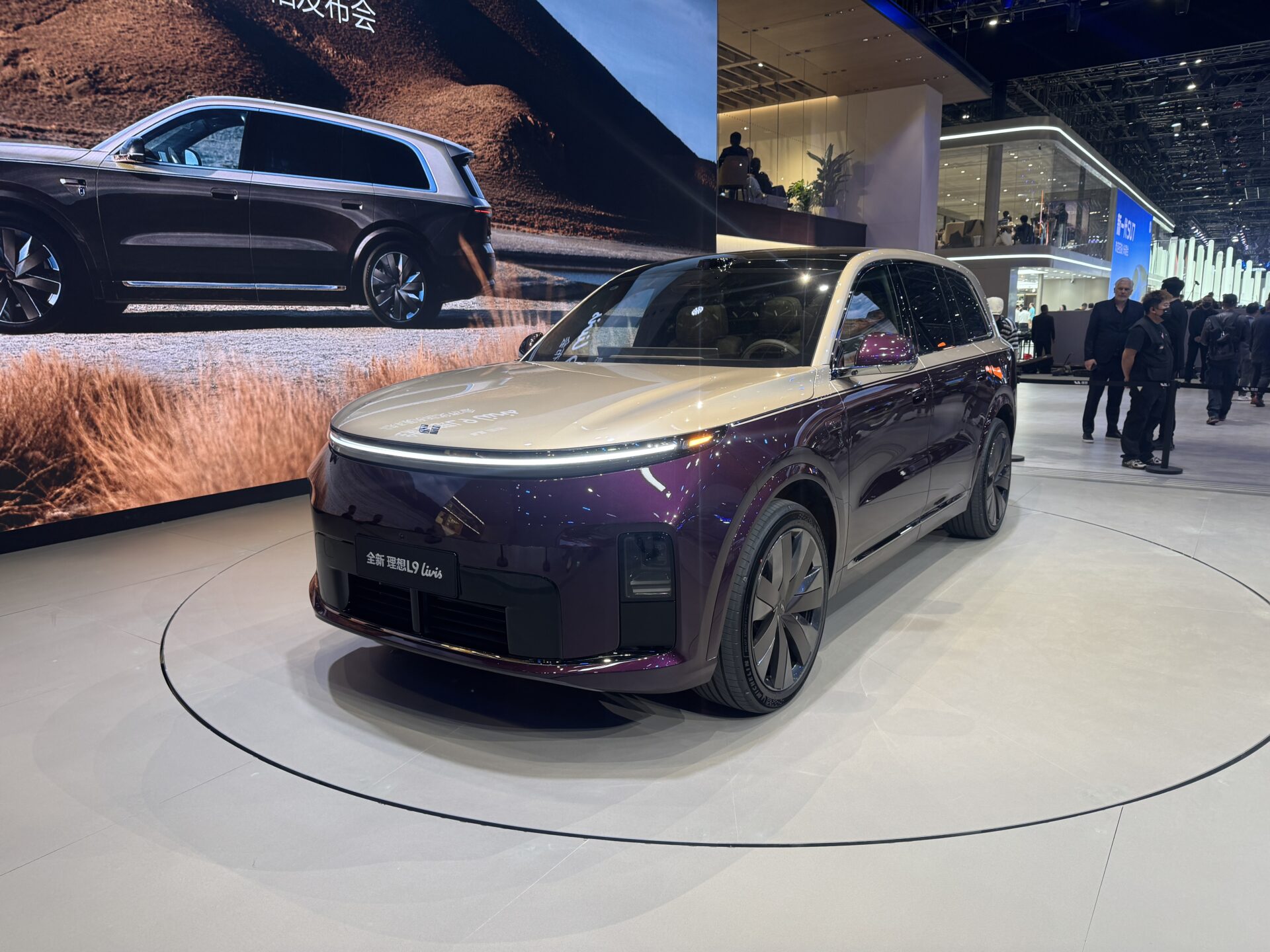
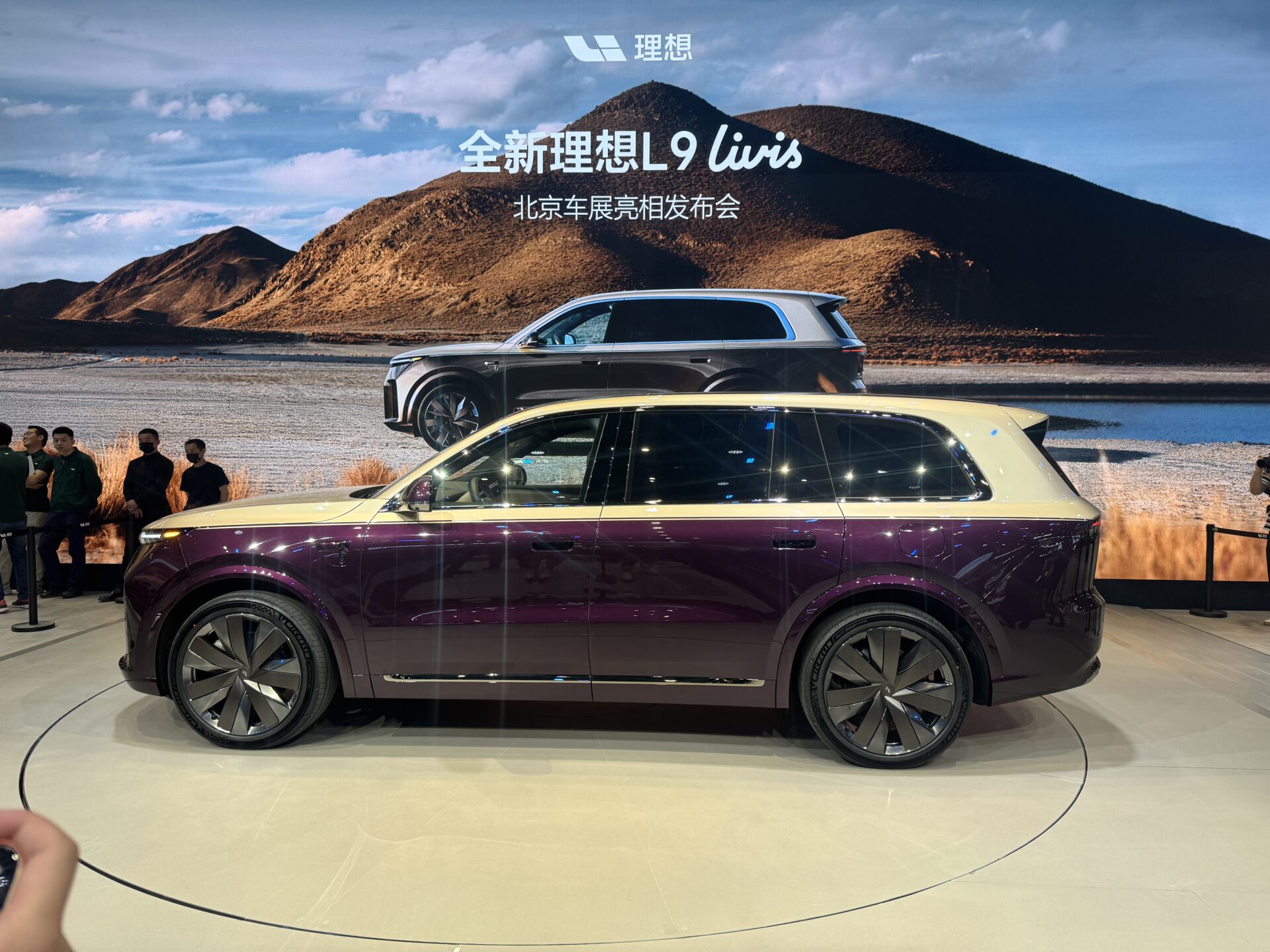
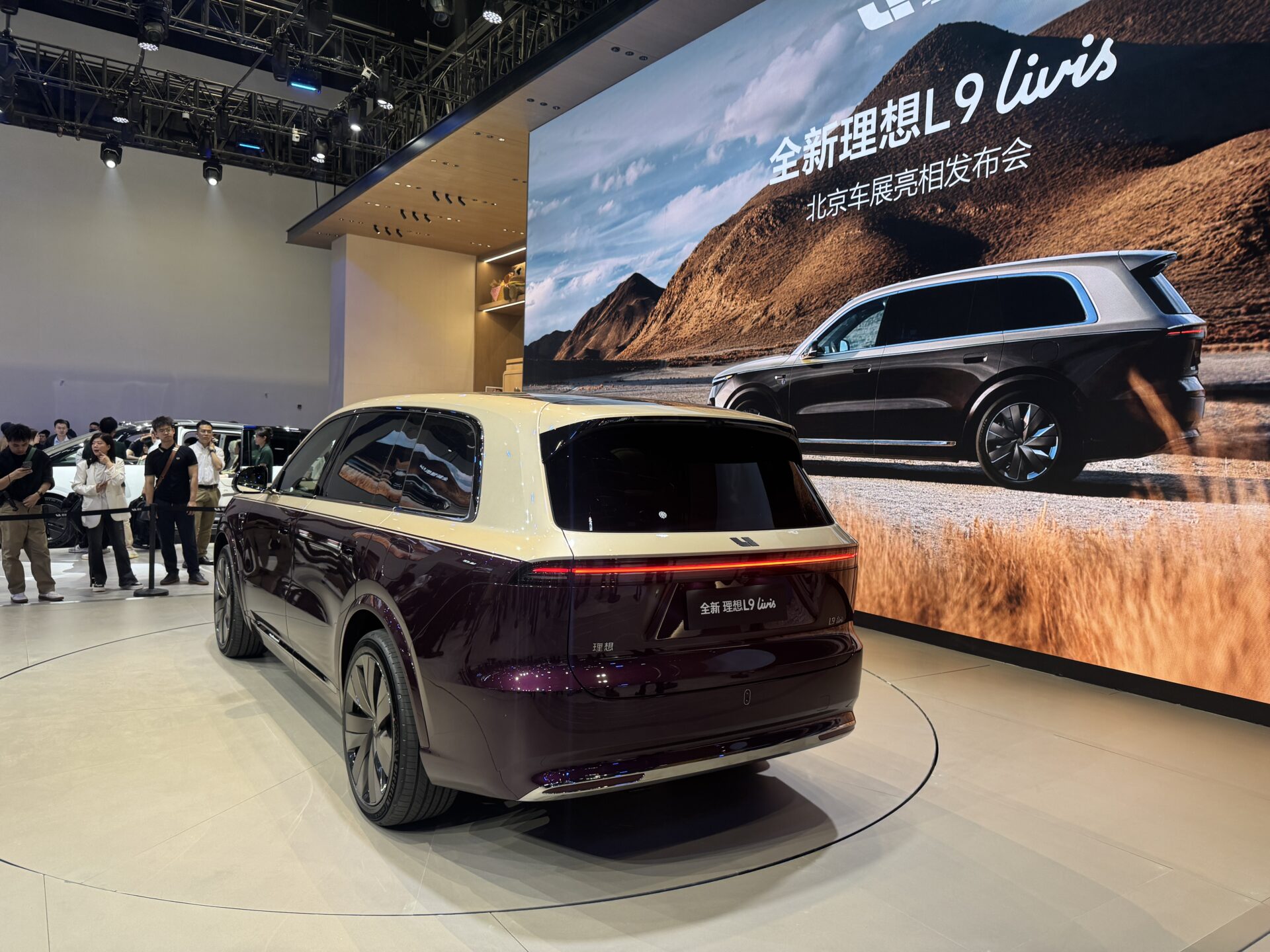
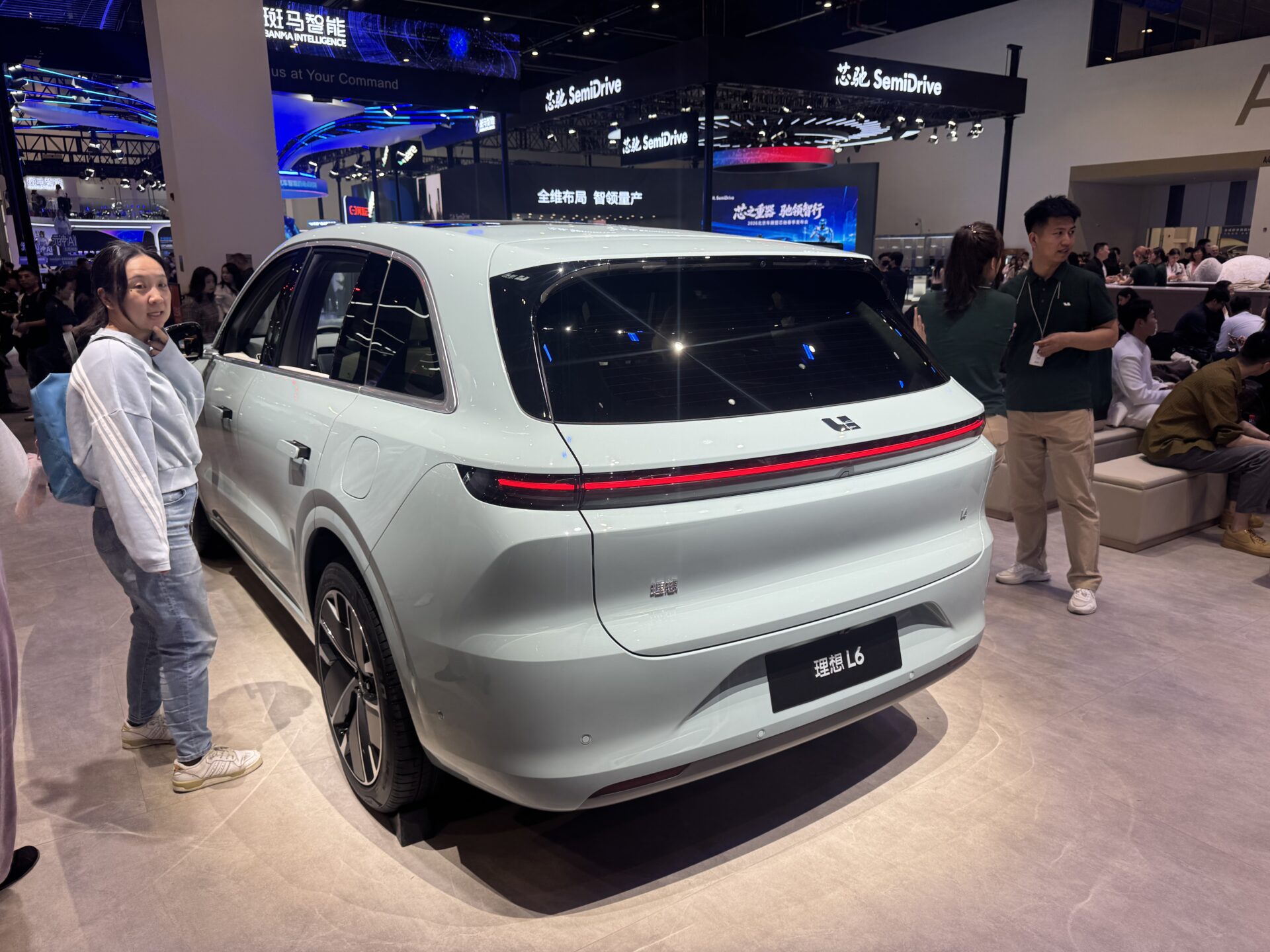
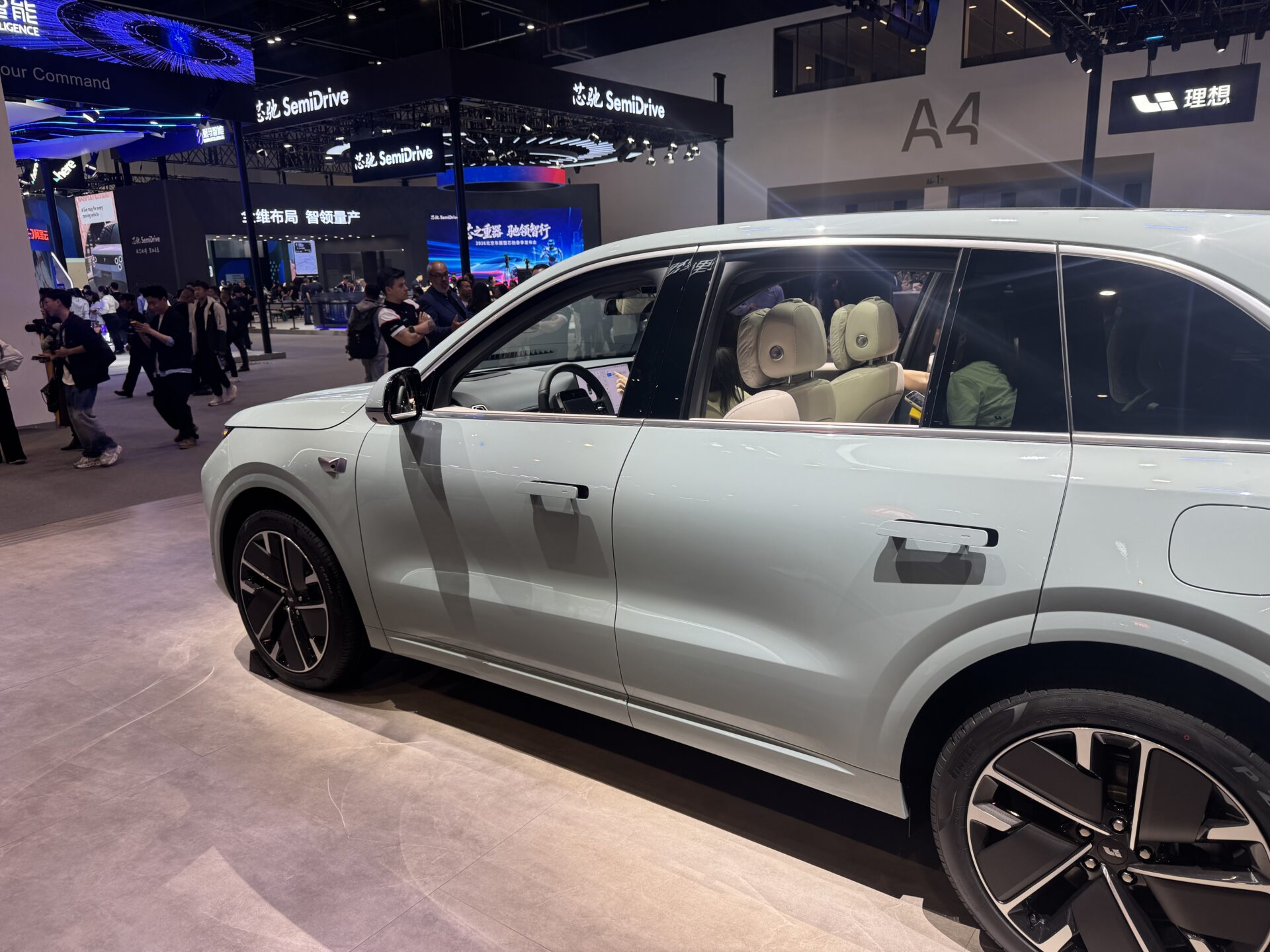
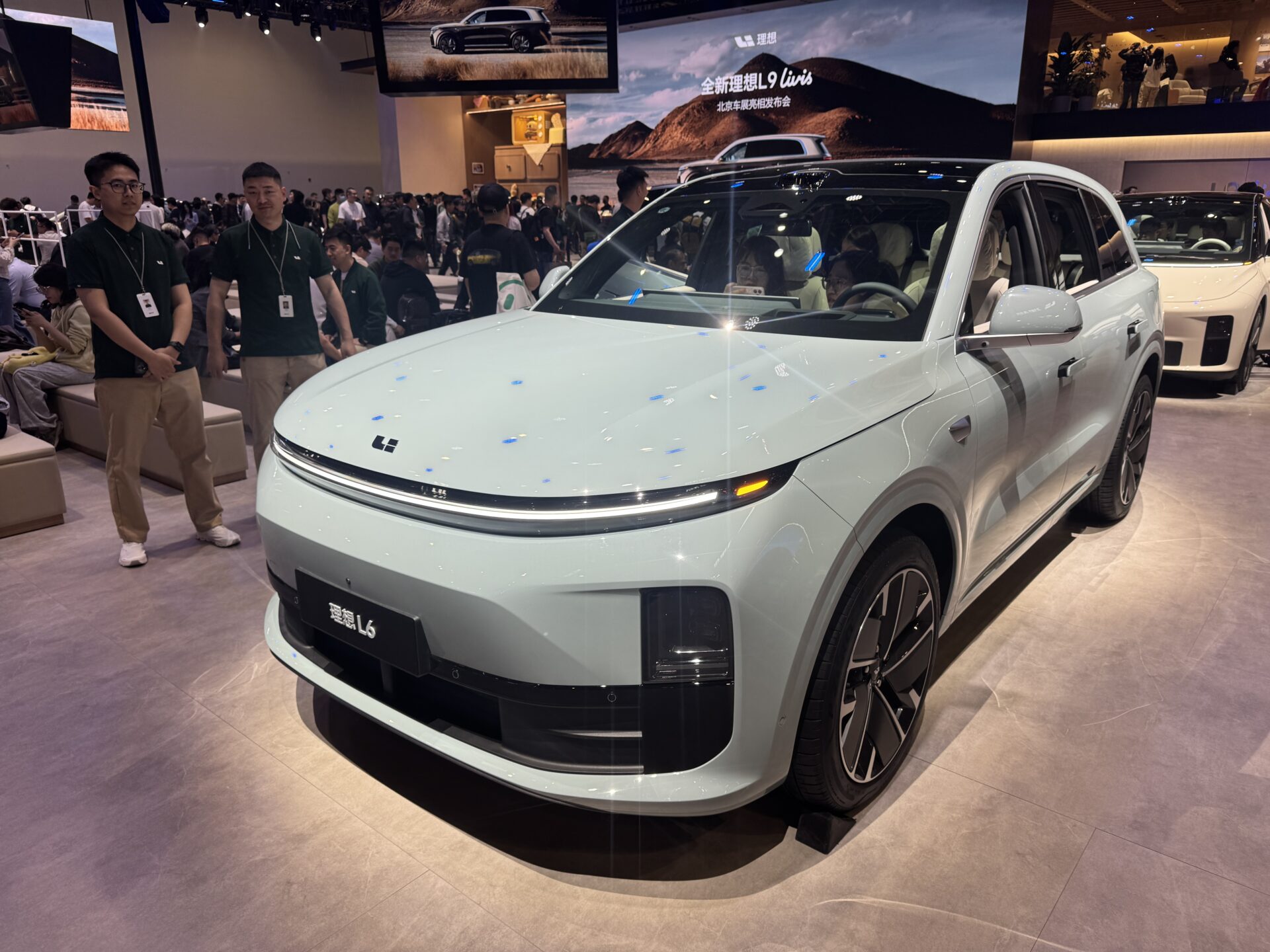
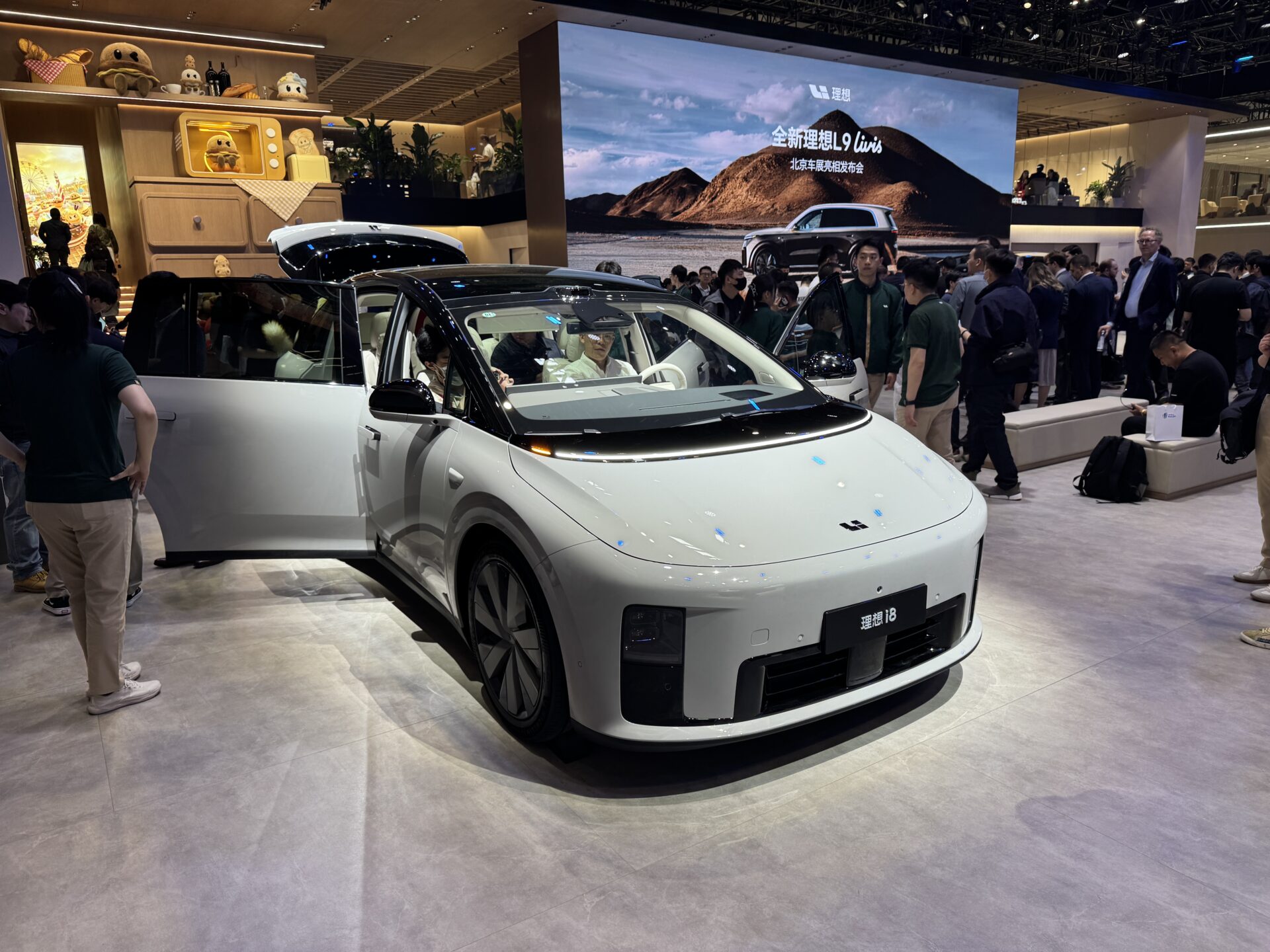
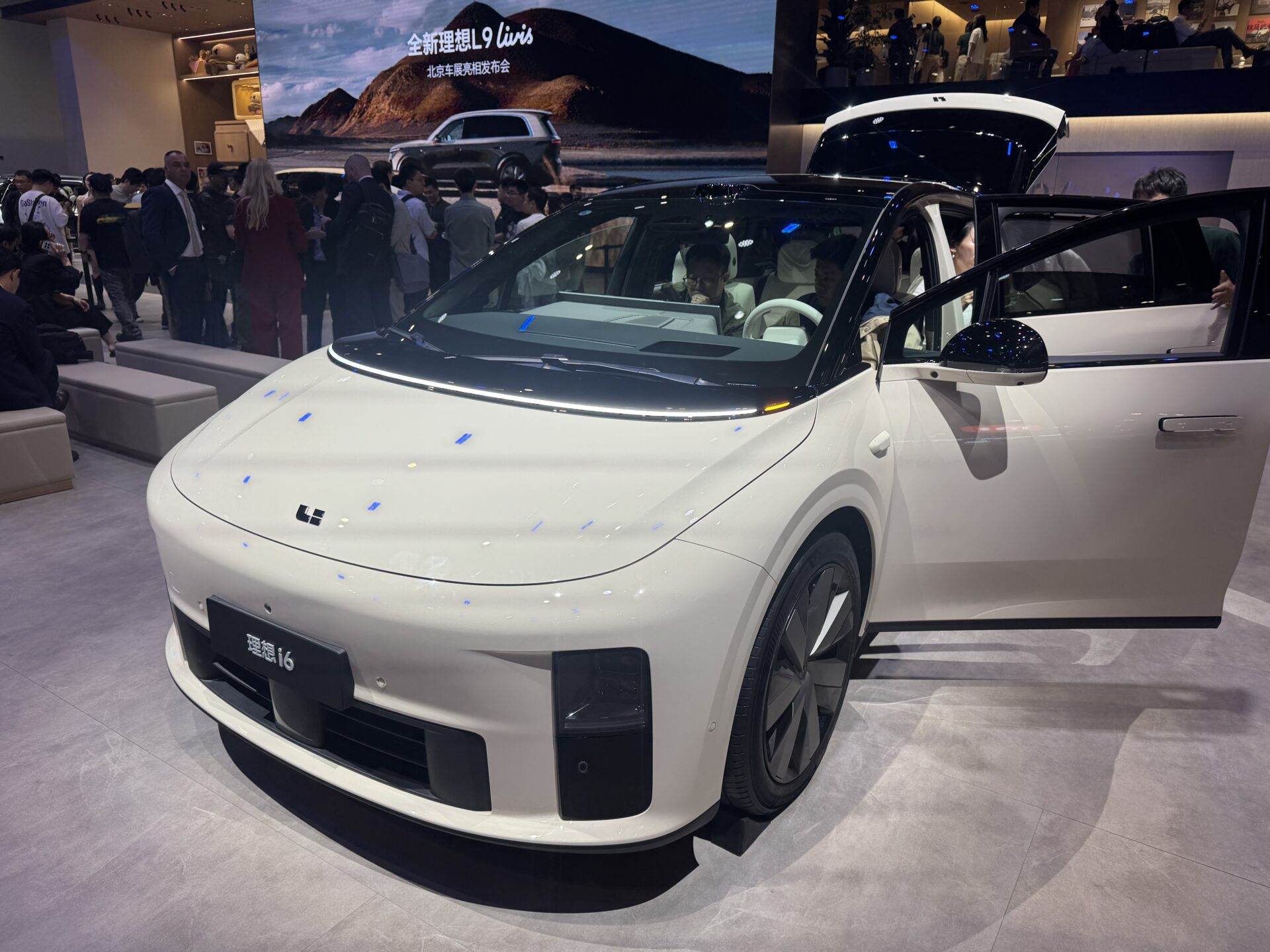
The lineup comprises the L6, L7, L8 and L9 SUVs in EREV configuration, the Mega MPV as a pure electric, and the more recent i6 and i8, also fully electric. The positioning is firmly premium, with a strong emphasis on family use: large dual screens, massaging second-row seats, an onboard refrigerator on the L9, and Dolby Atmos sound. The brand offers no pure combustion-engine models.
Prices in China:
The Li L6 starts at 249,800 yuan (around €32,000), the L7 at around 319,000 yuan (€41,000), the L8 at 359,000 yuan (€46,000) and the L9 at 459,000 yuan (€59,000). The Mega MPV exceeds 550,000 yuan (€70,500).
2025 figures:
Around 406,000 deliveries, with a cumulative total of over 1.54 million since launch. The brand has nonetheless seen its position erode in the face of Aito’s growing presence in the premium large family SUV segment.
Europe and the rest of the world:
Li Auto remains heavily focused on China, with 502 dealerships across 150 cities. A first service centre opened in Almaty, Kazakhstan, in June 2025. Europe and the Middle East are being considered for 2026, though no concrete announcement has been made at this stage.
Xiaomi — a newcomer to the automotive world
History:
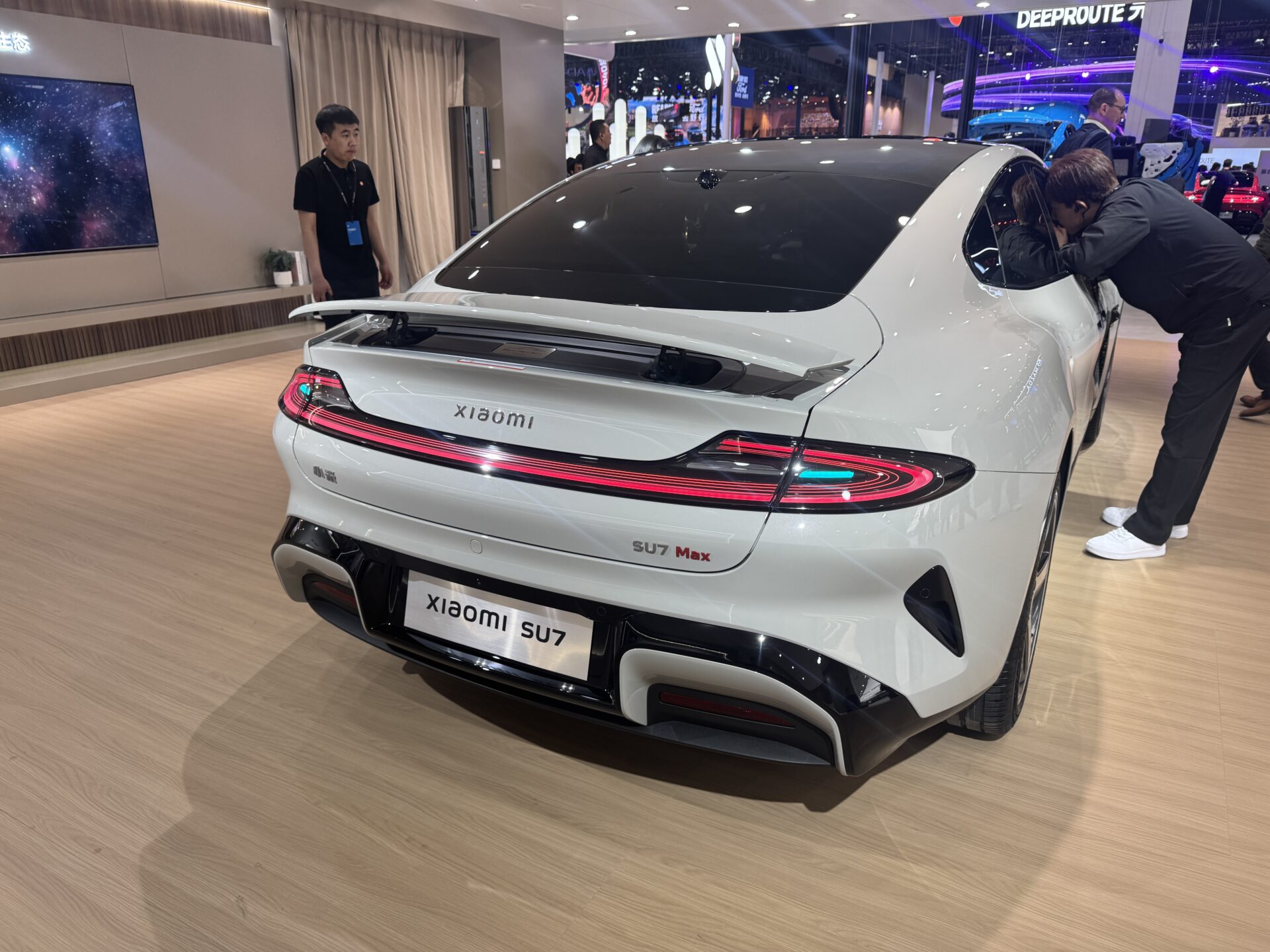
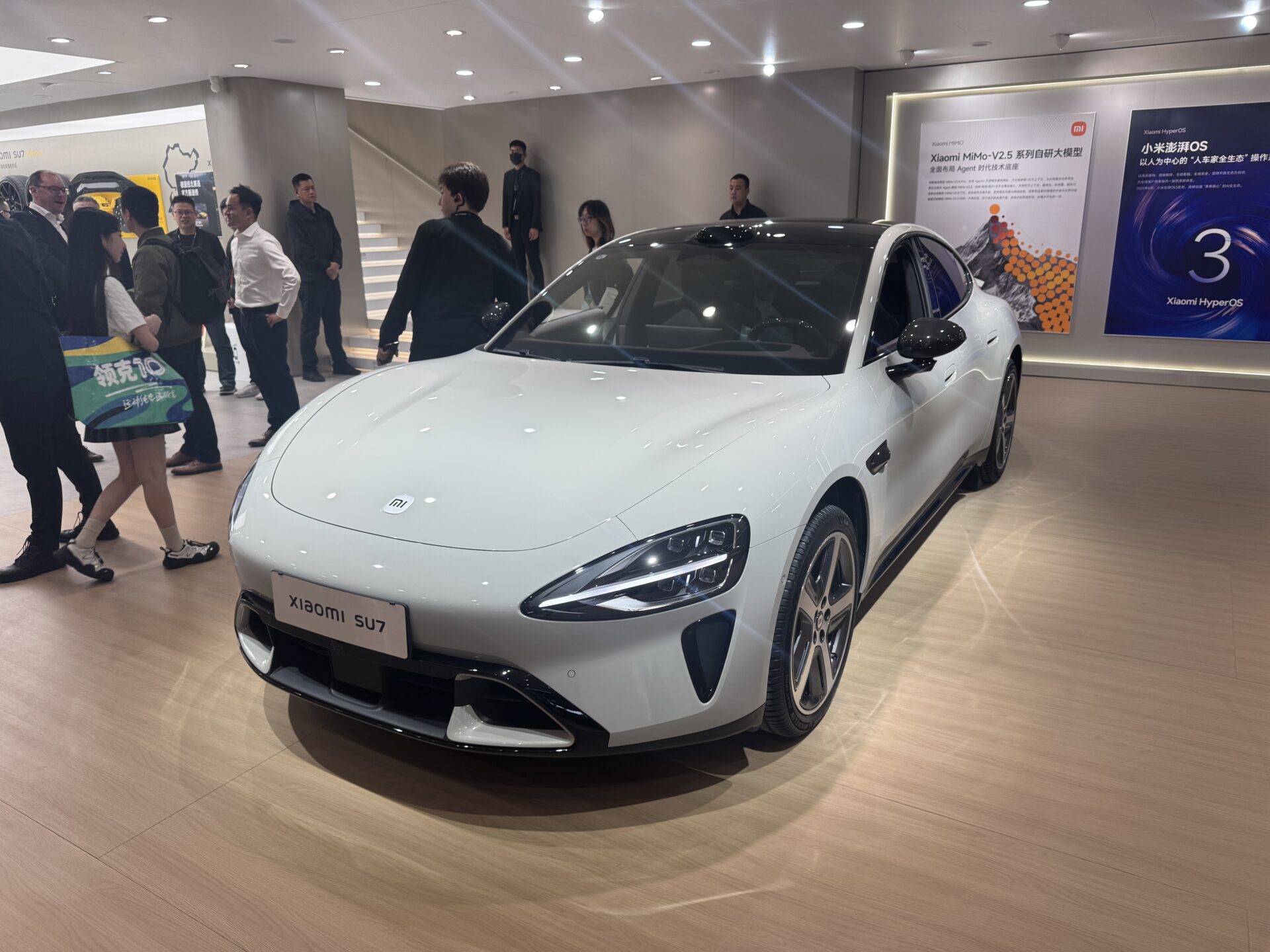
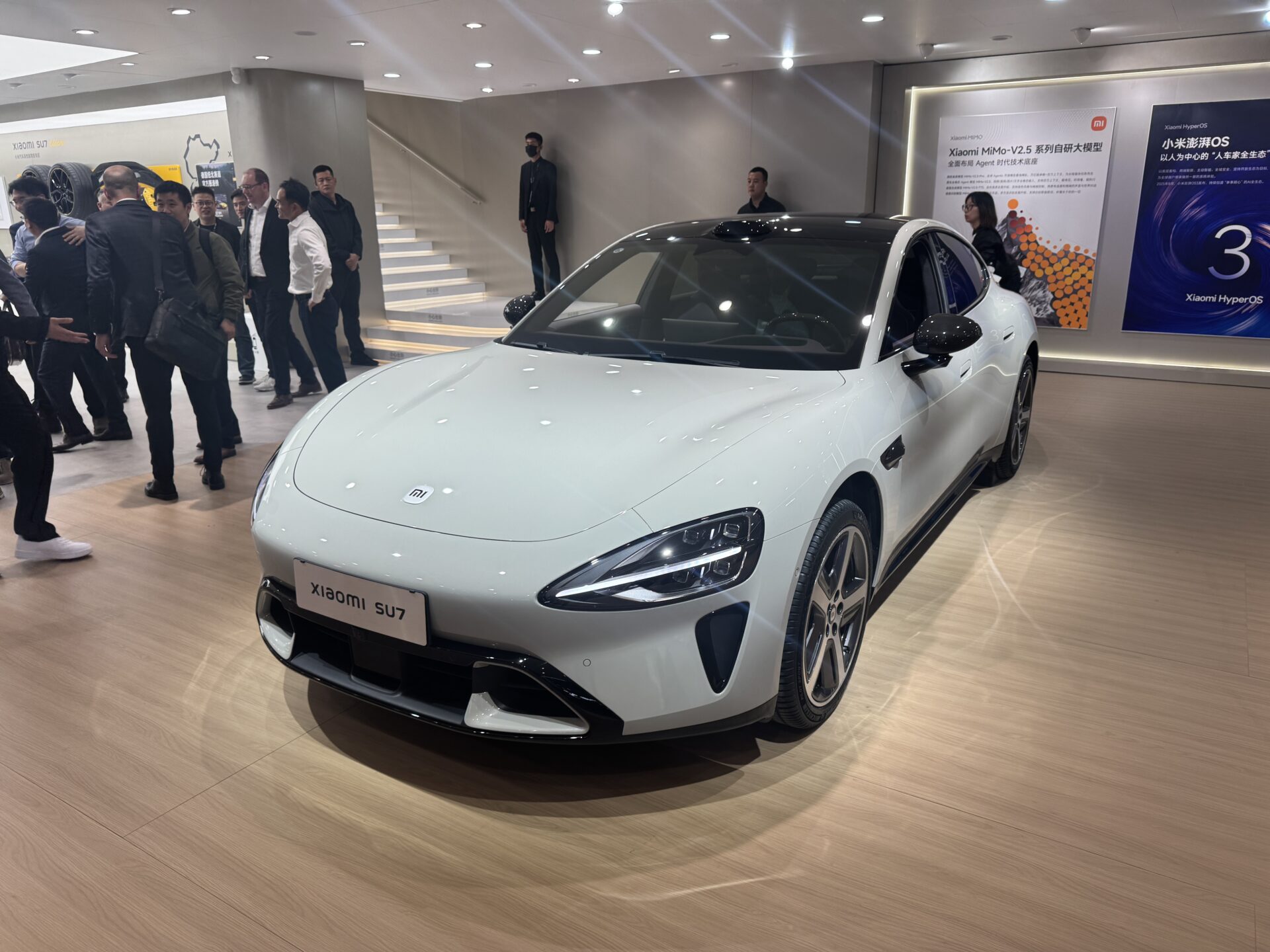
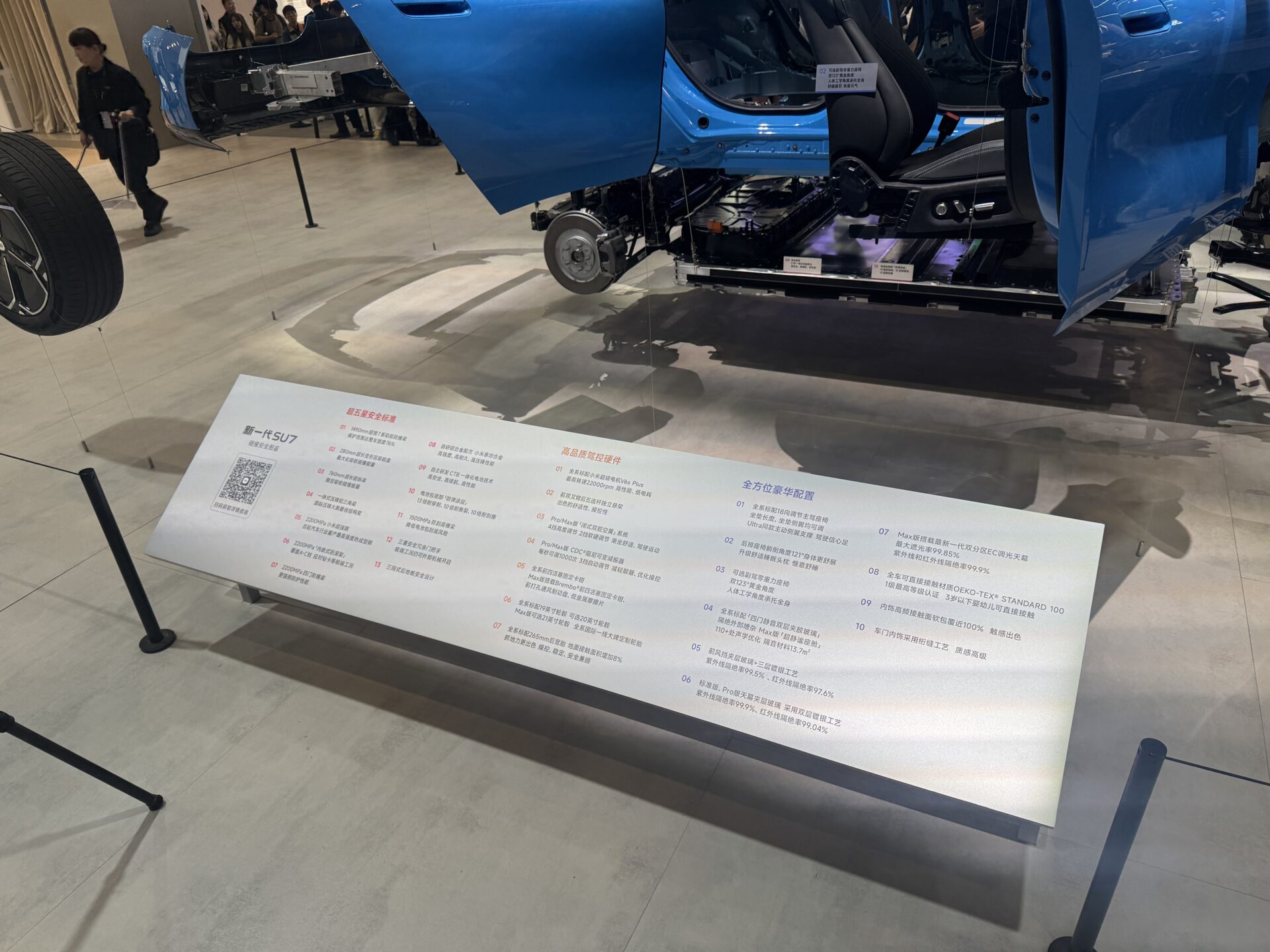
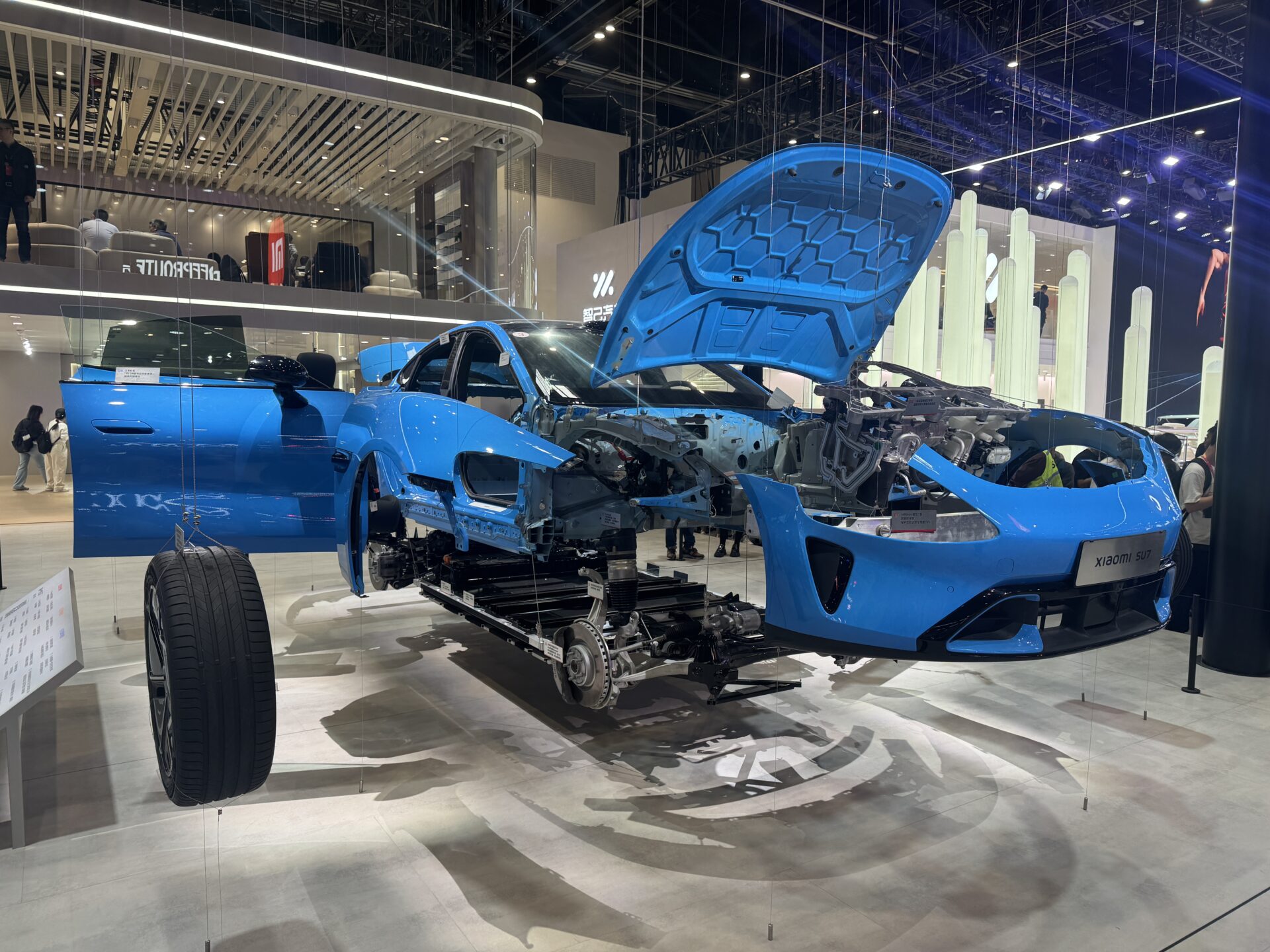
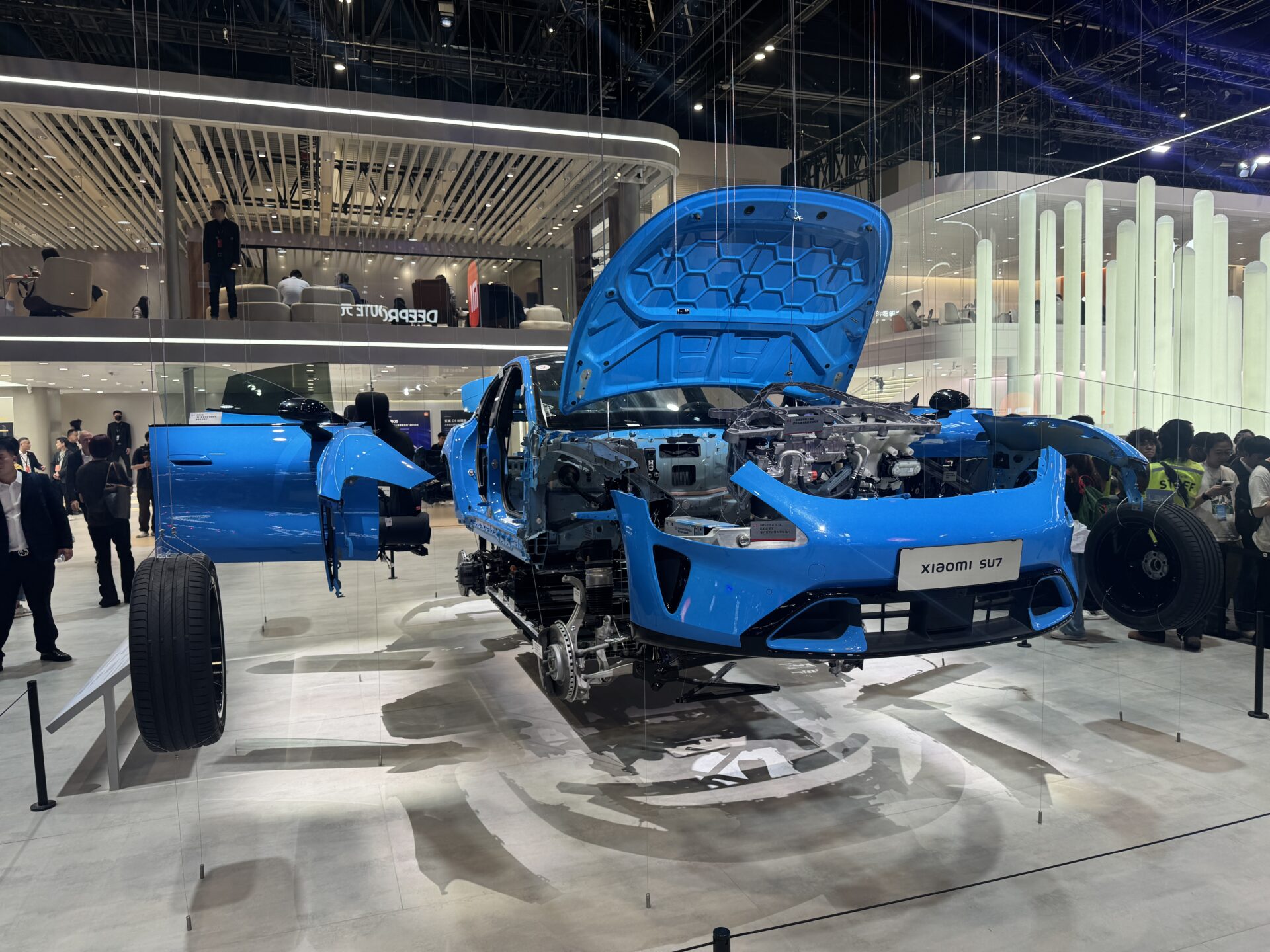
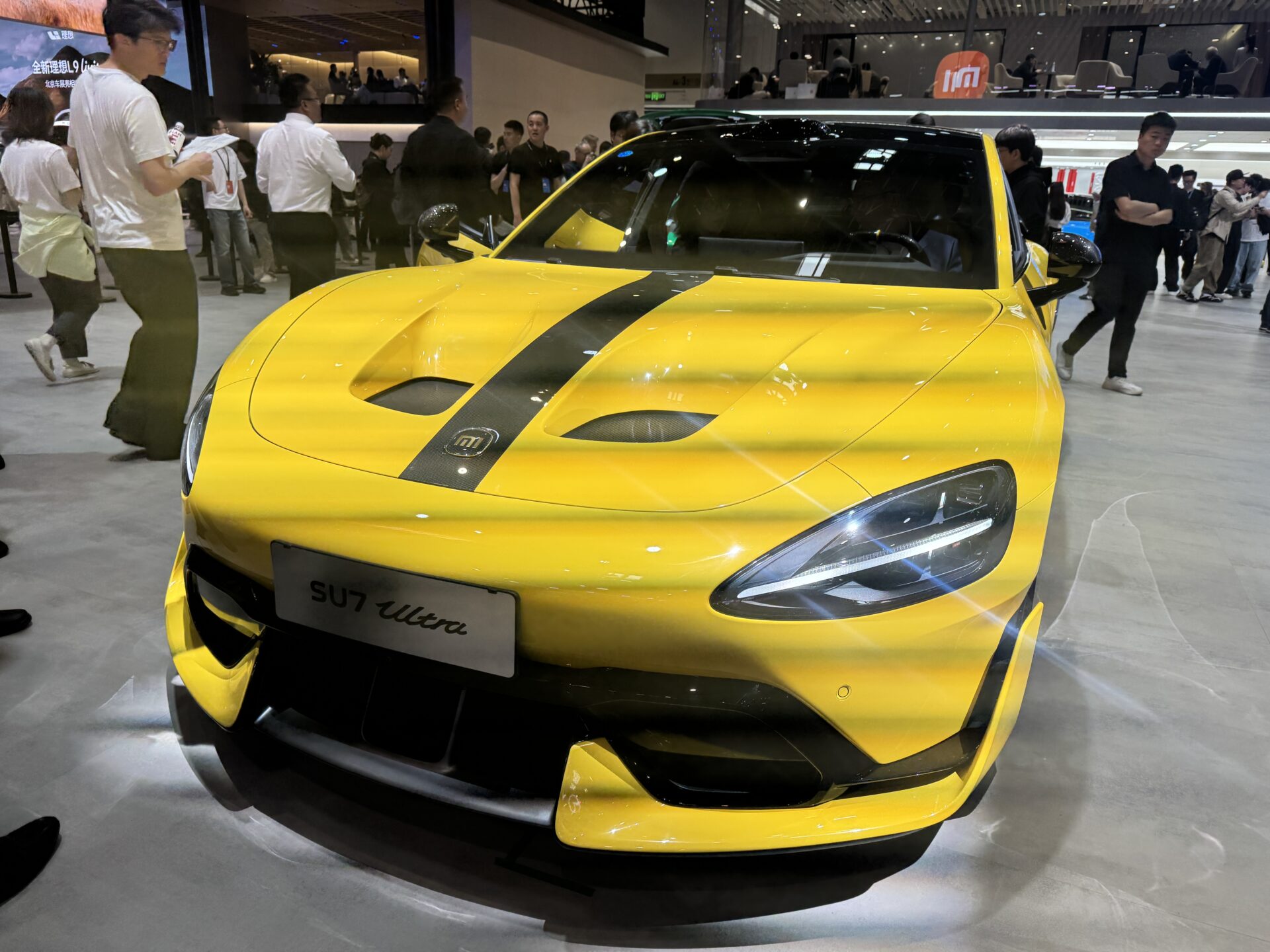
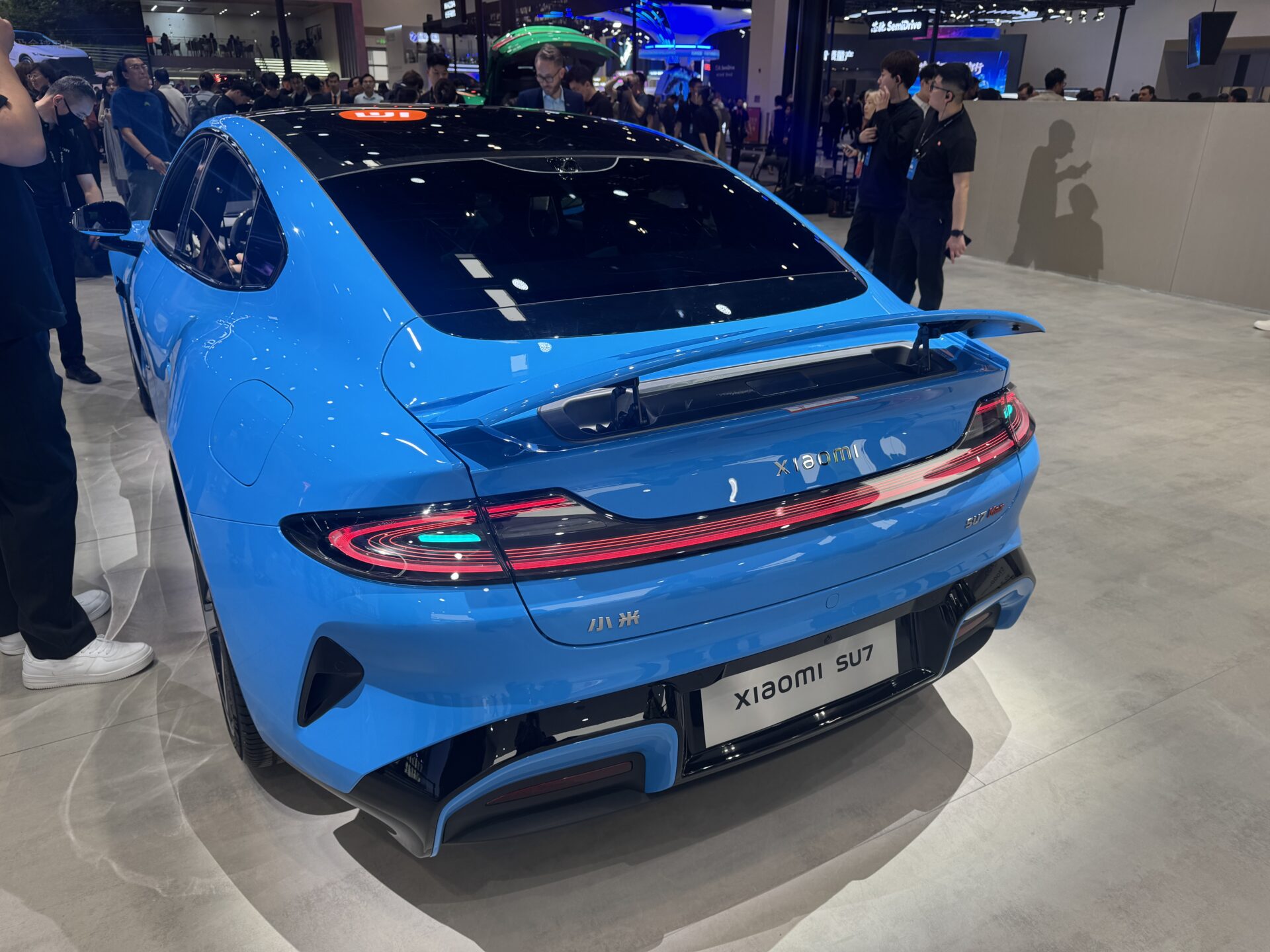
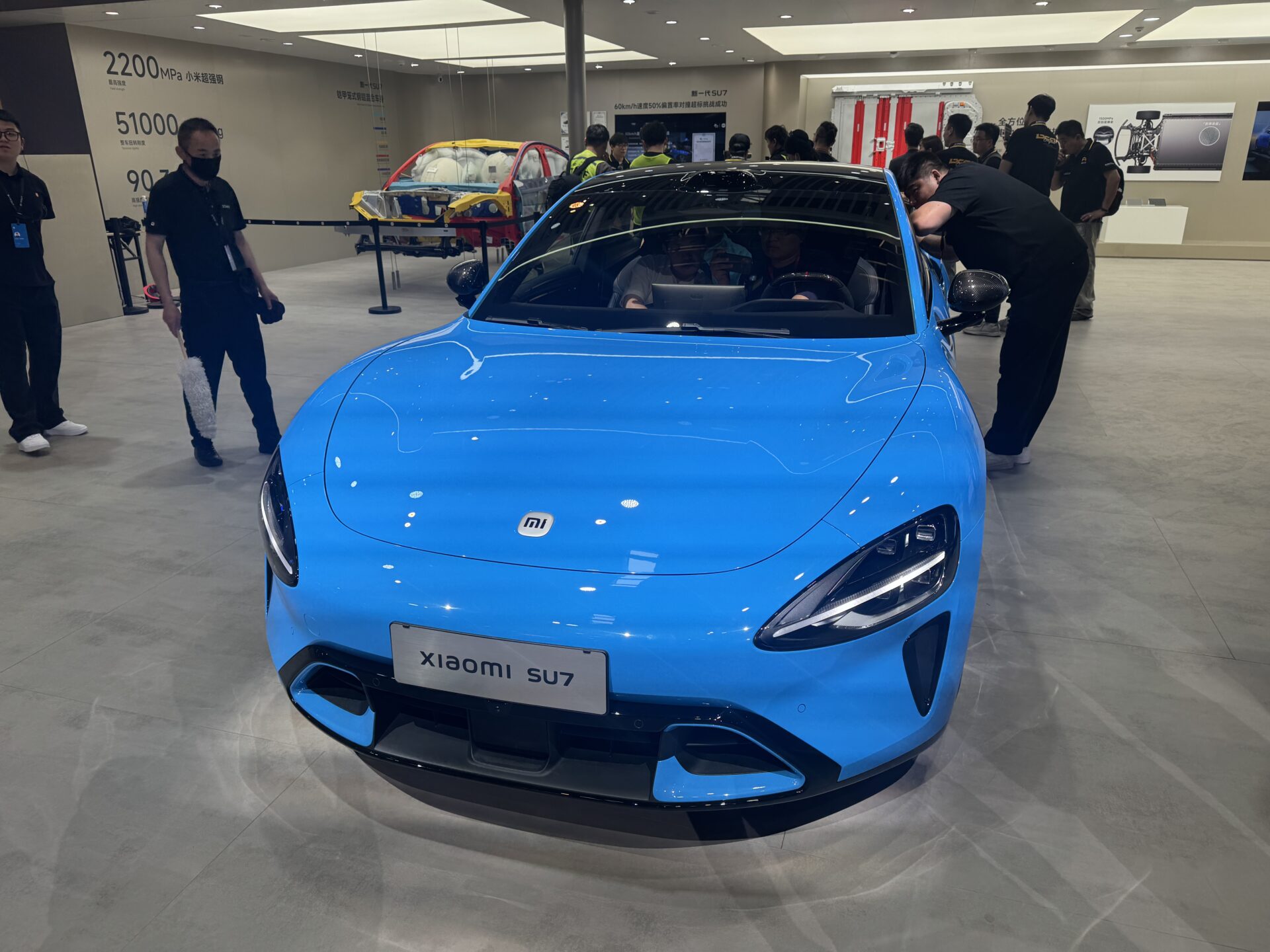
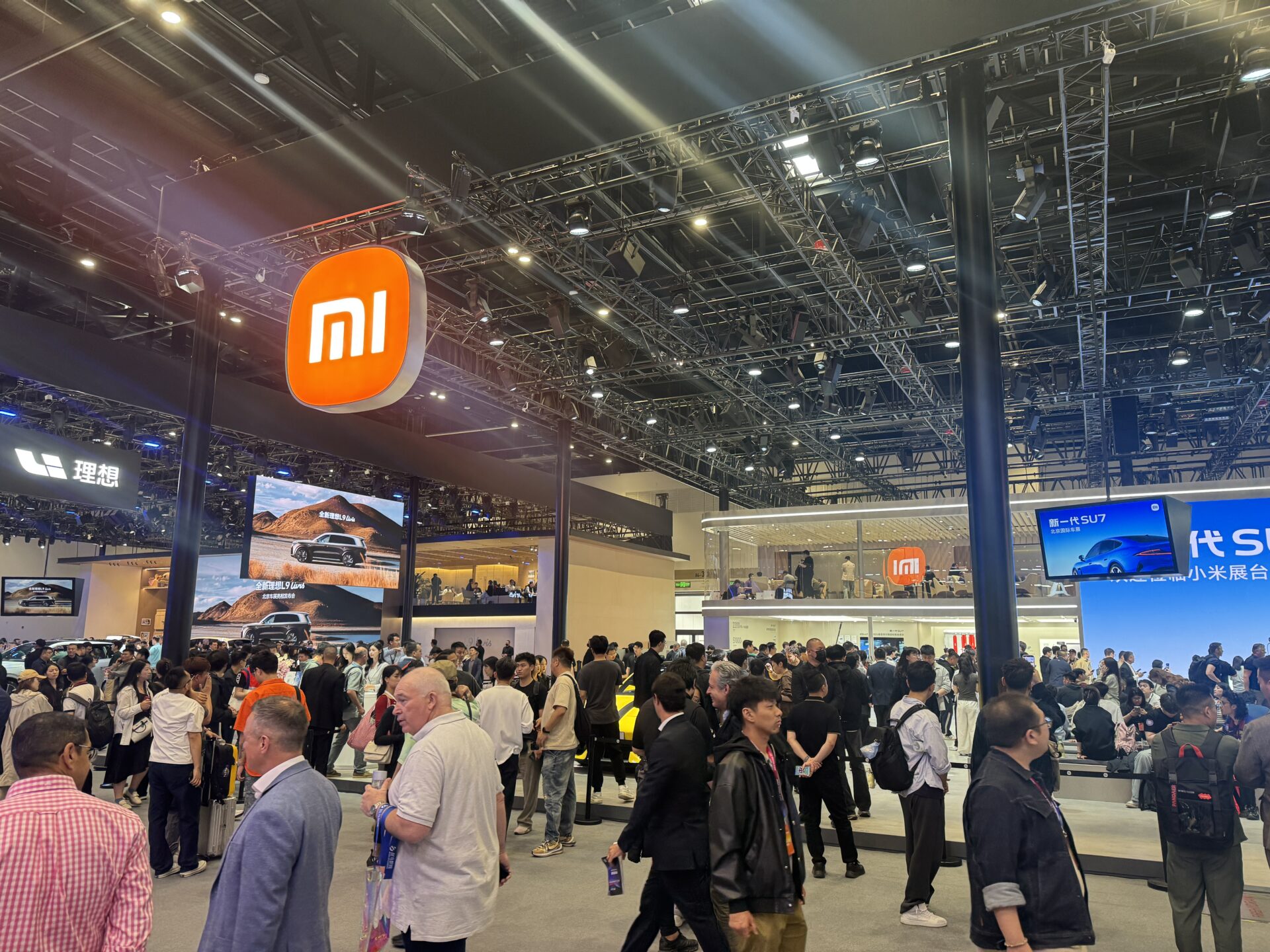
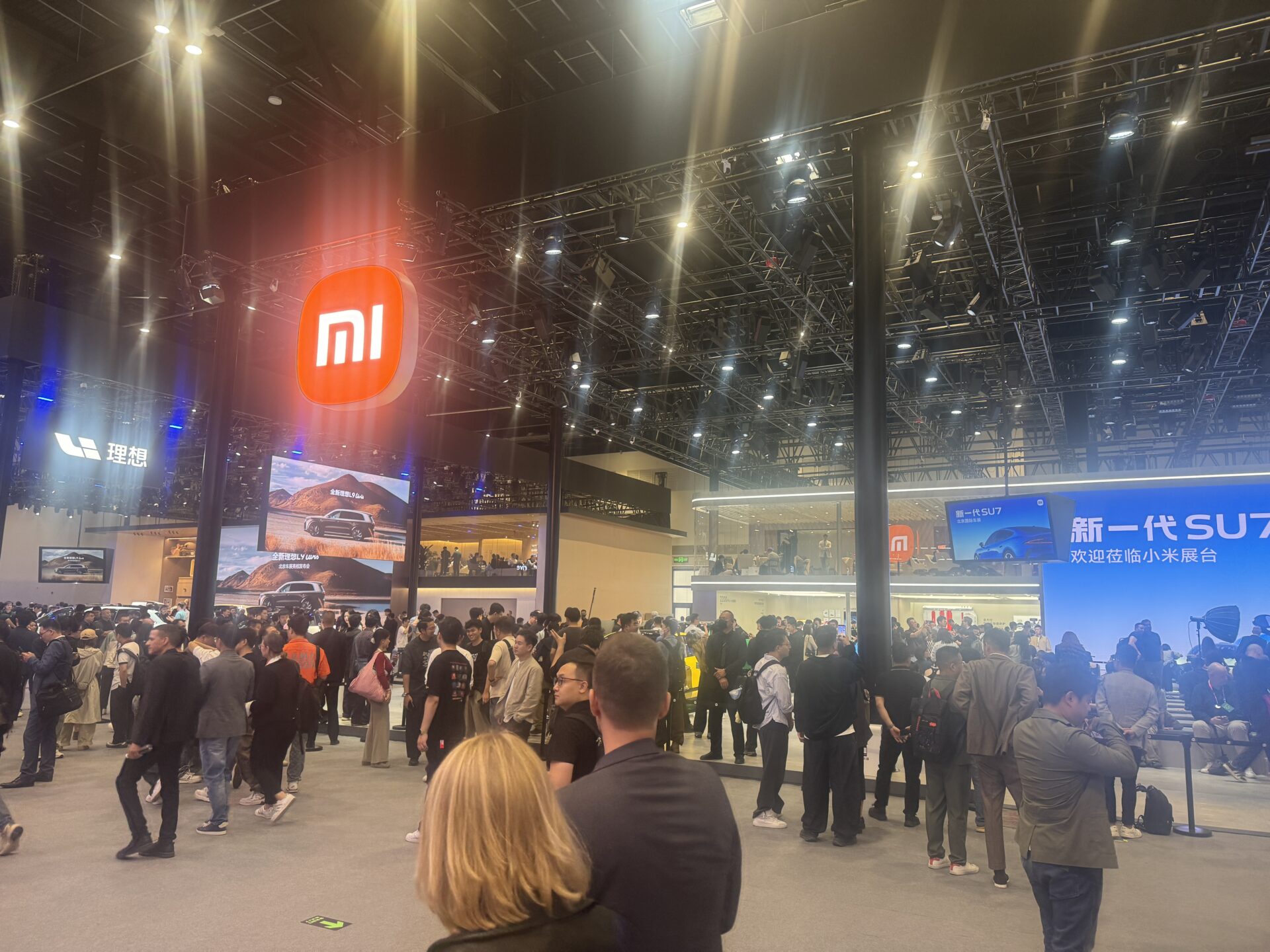
Xiaomi, founded in 2010 by Lei Jun, is primarily known for its smartphones and connected devices. The group announced its entry into the automotive sector in March 2021, pledging an investment of 10 billion yuan. Production approval was granted in August 2023. The SU7 saloon launched on 28 March 2024, and the automotive division turned profitable in November 2025 — just 18 months after the start of sales, a milestone that took other players several years to reach.
Range and positioning:
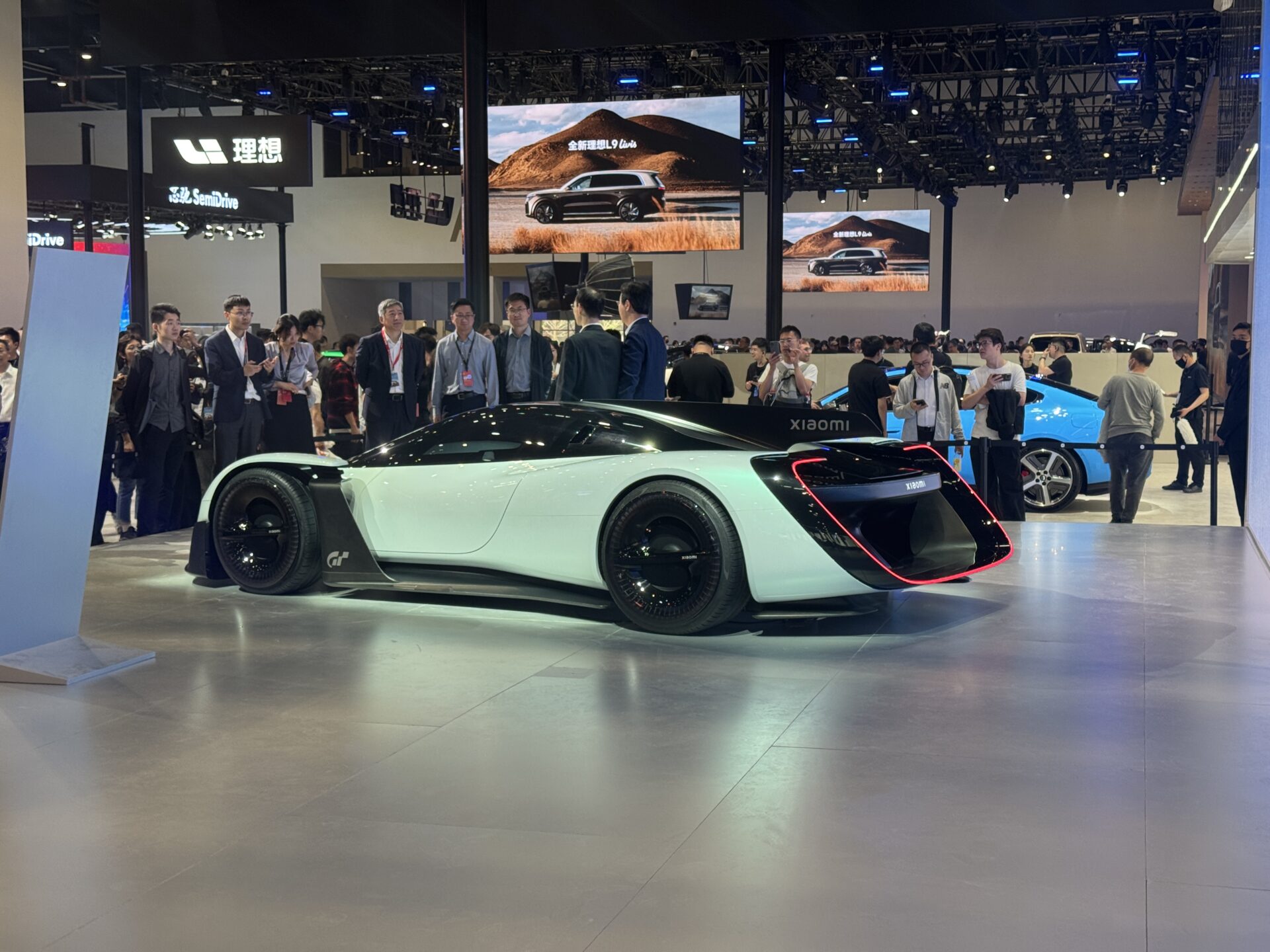
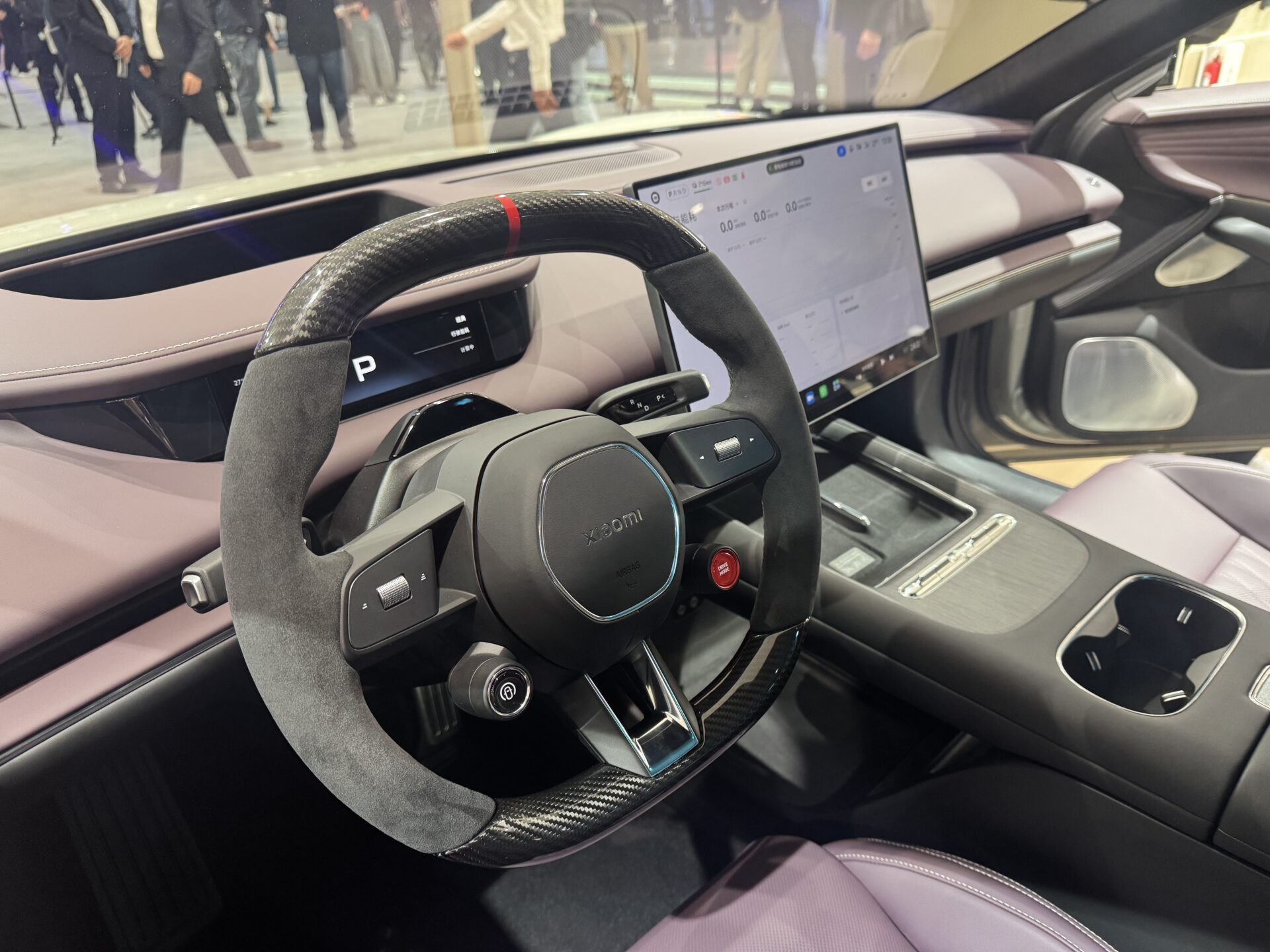
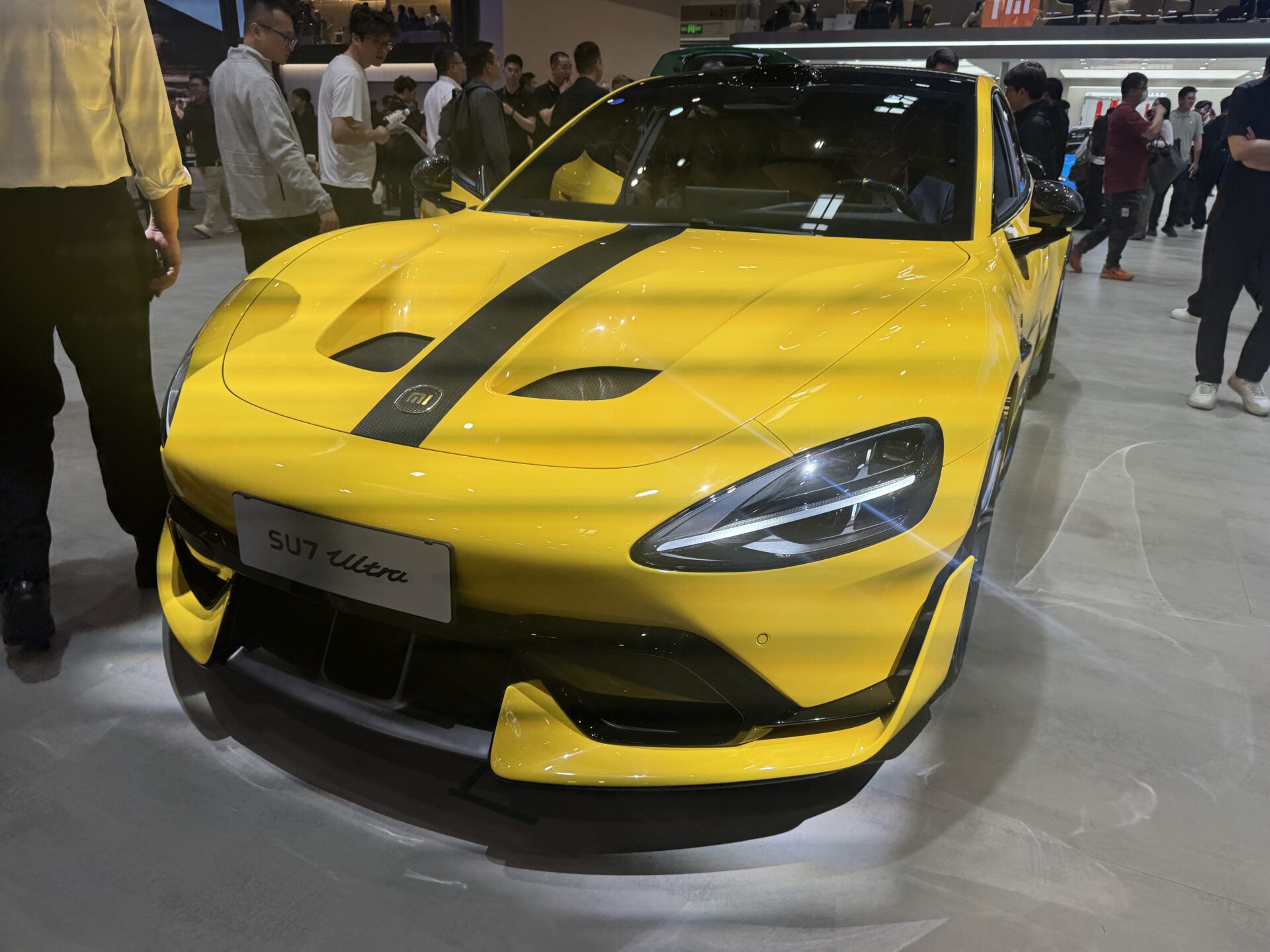
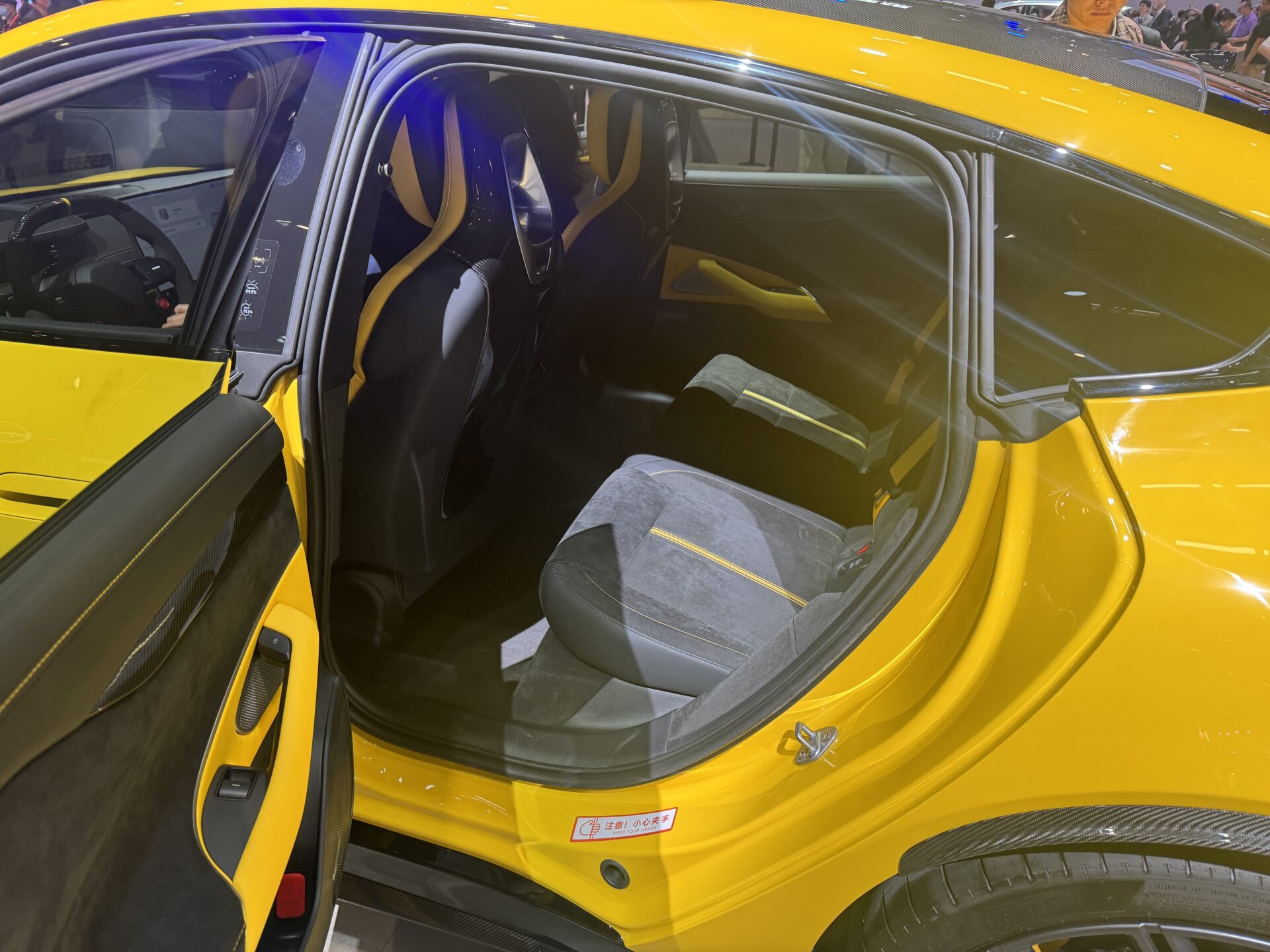
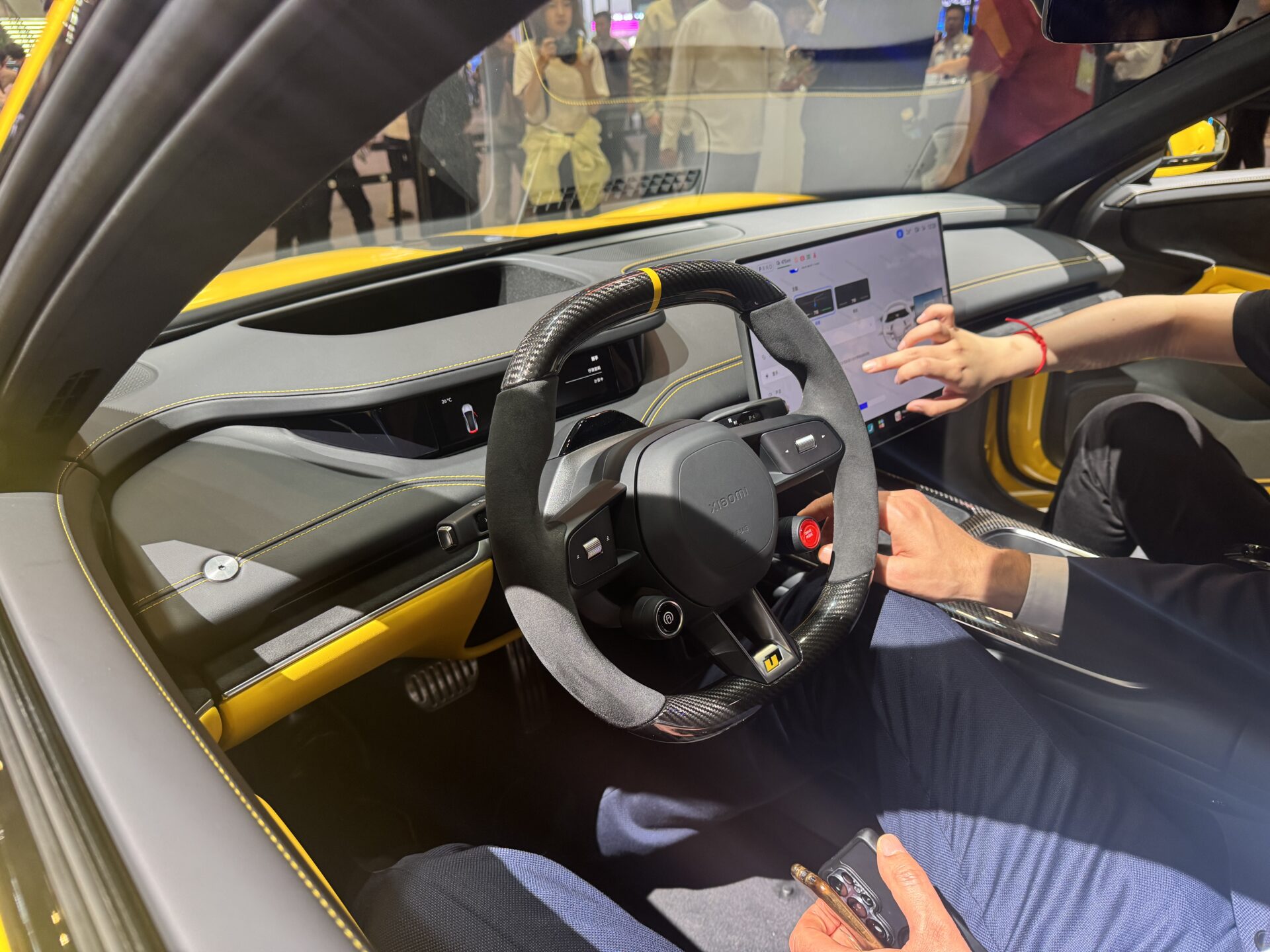
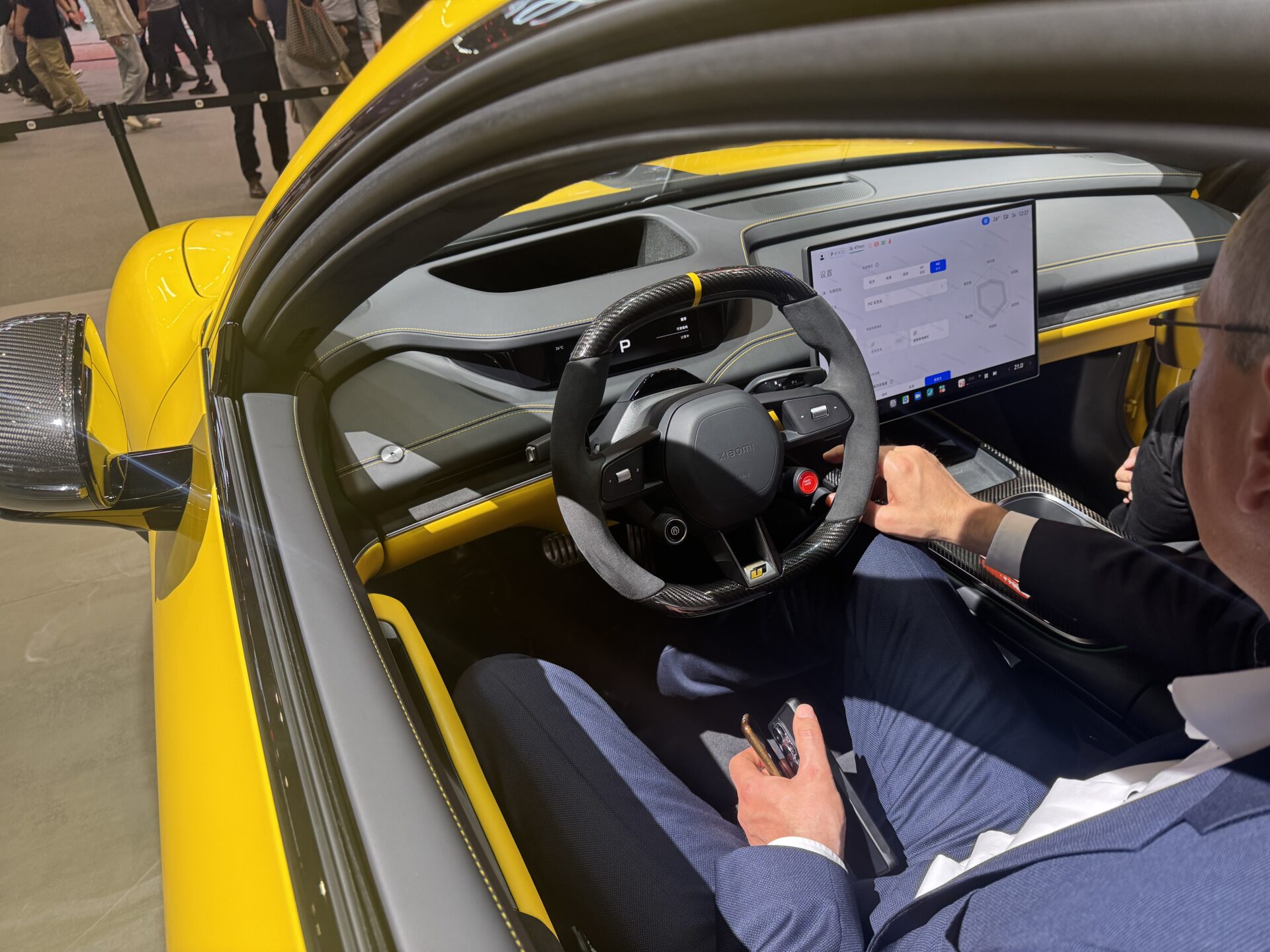
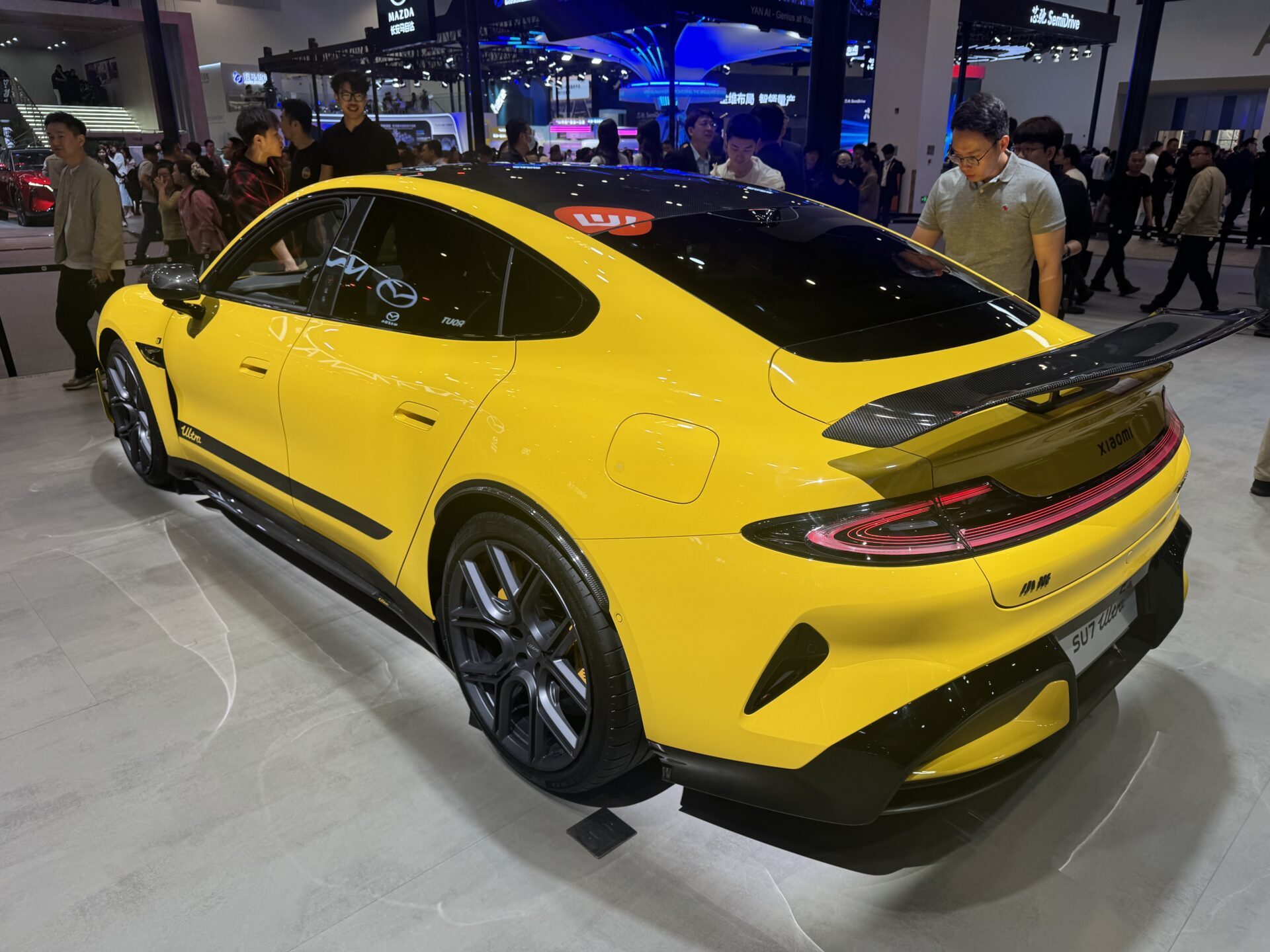
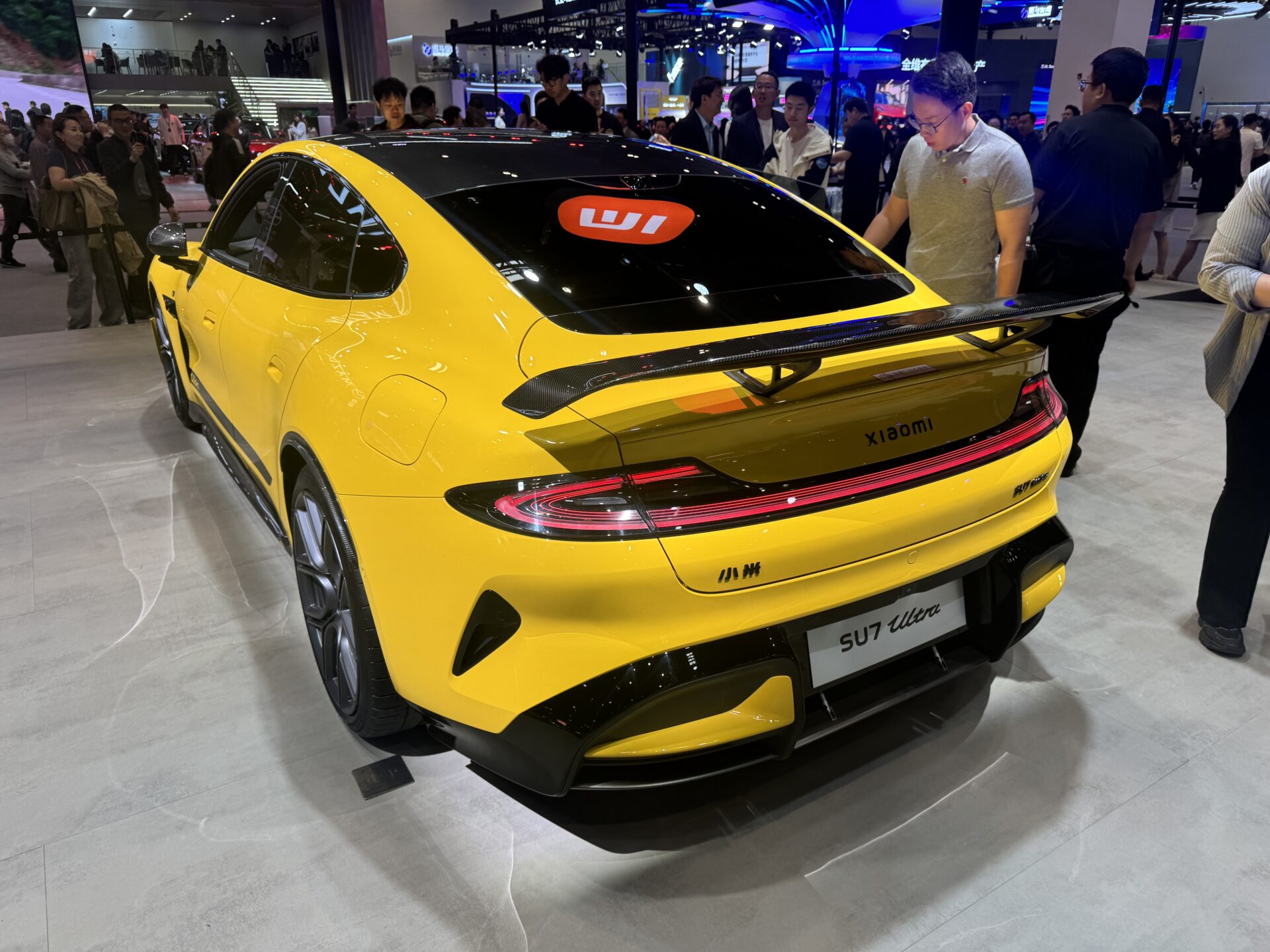
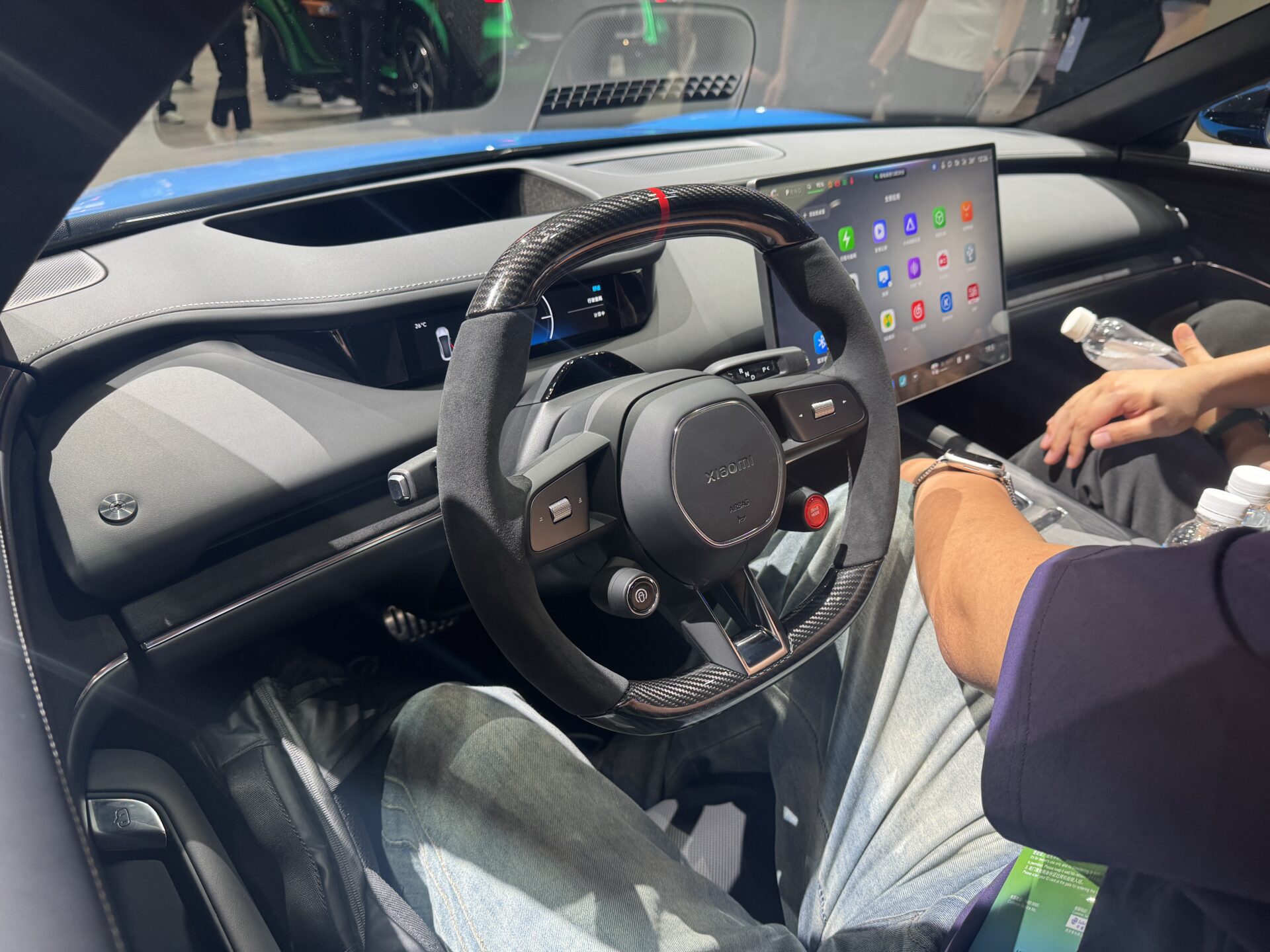
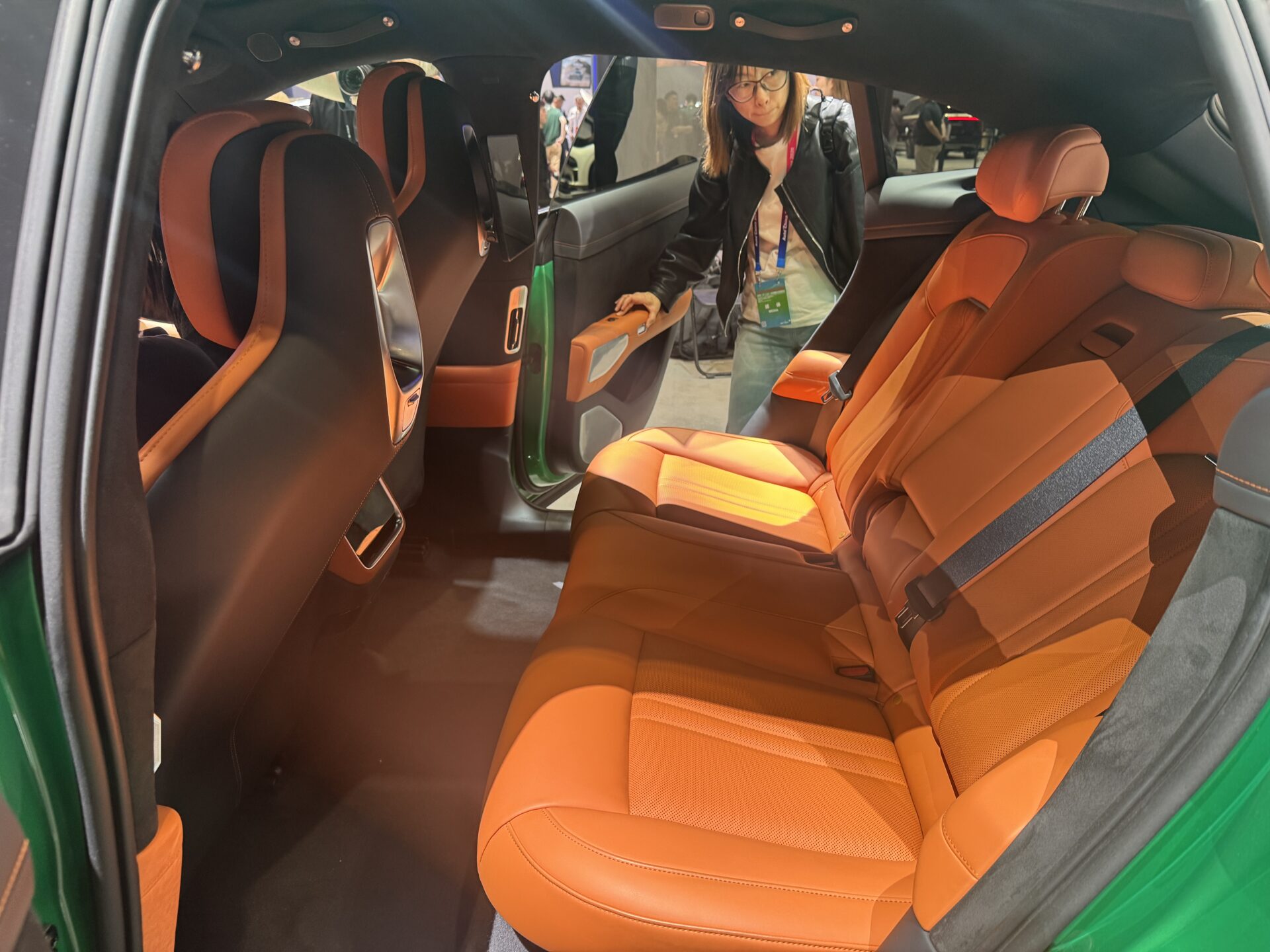
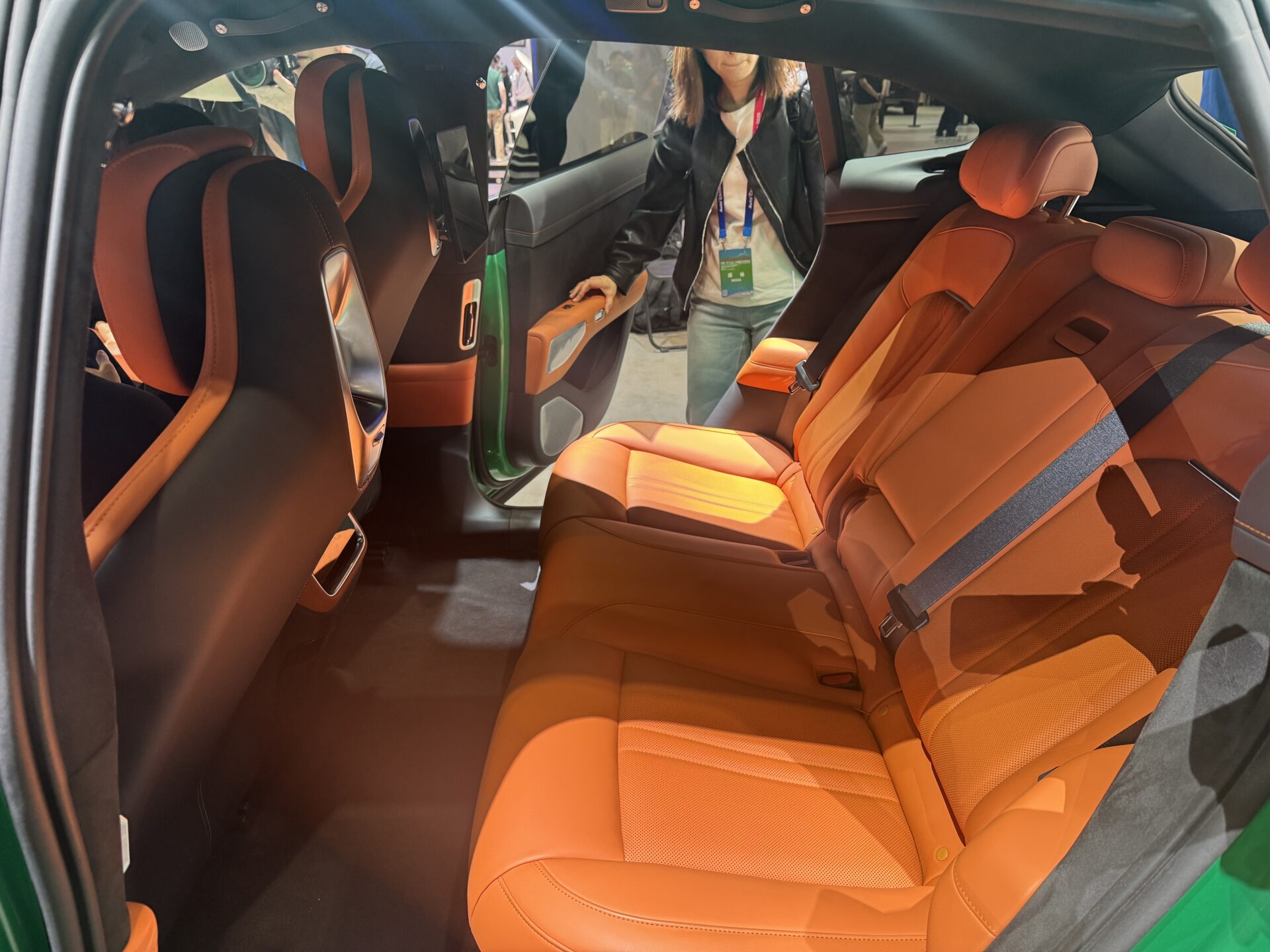
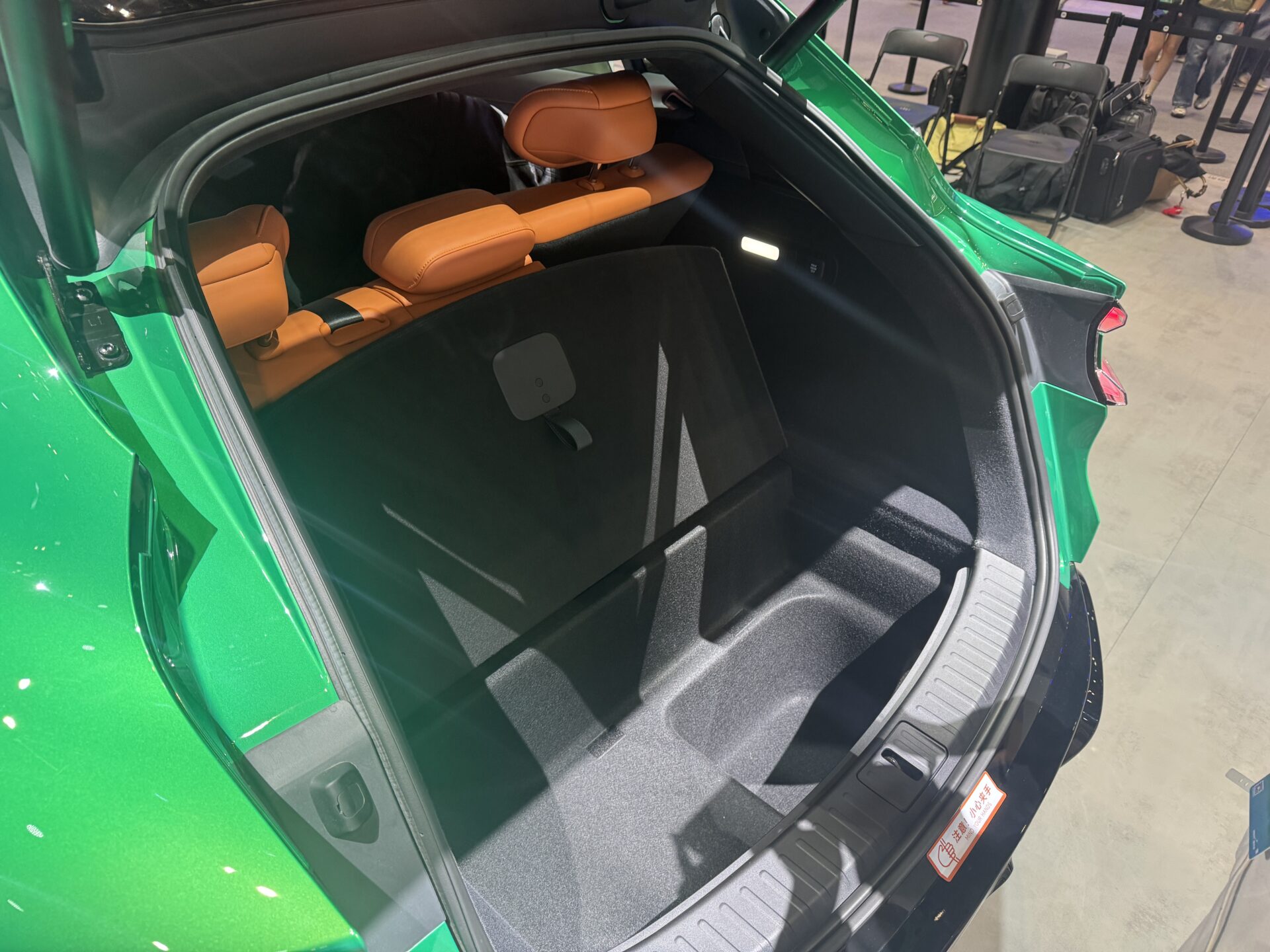
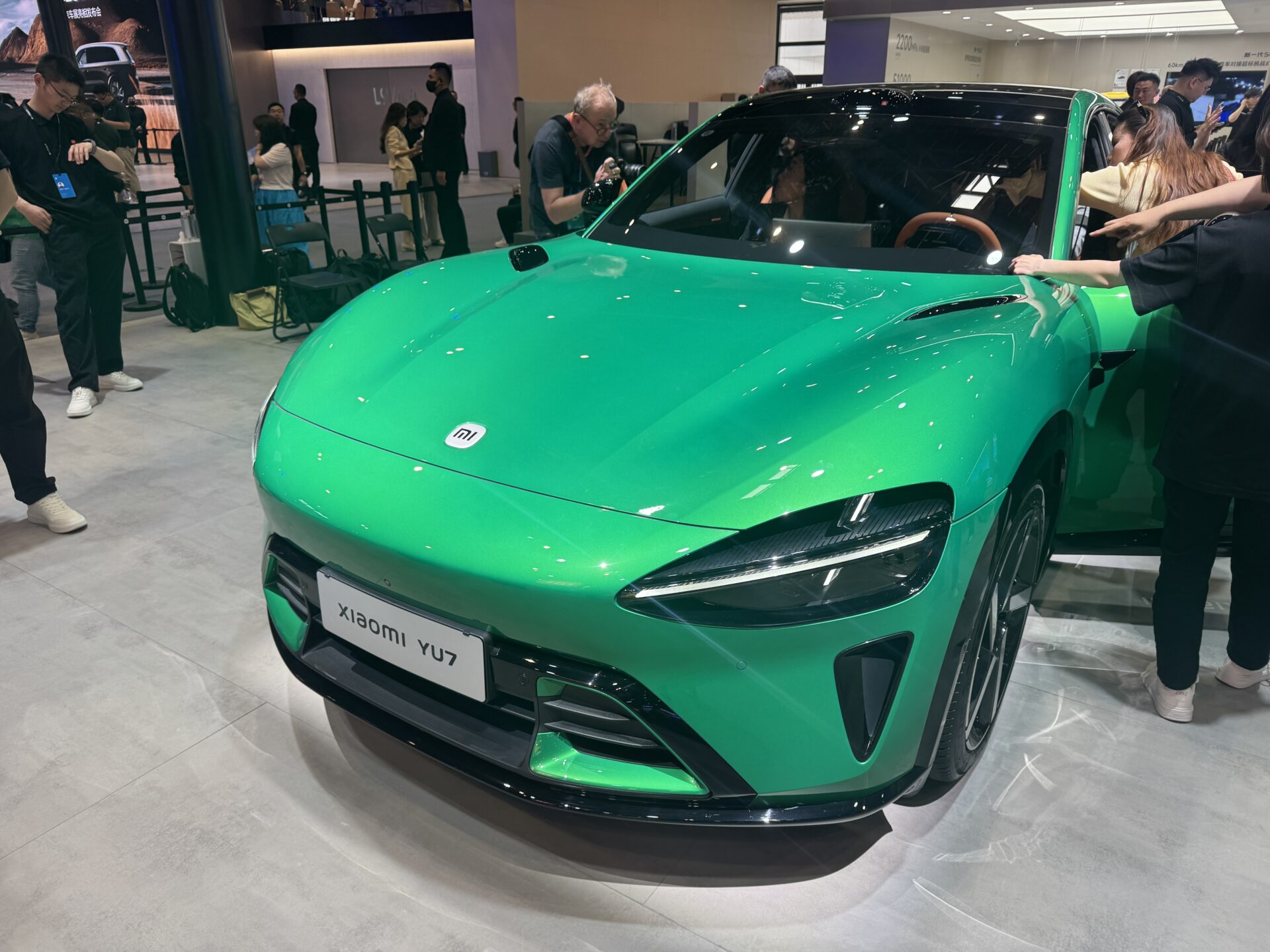
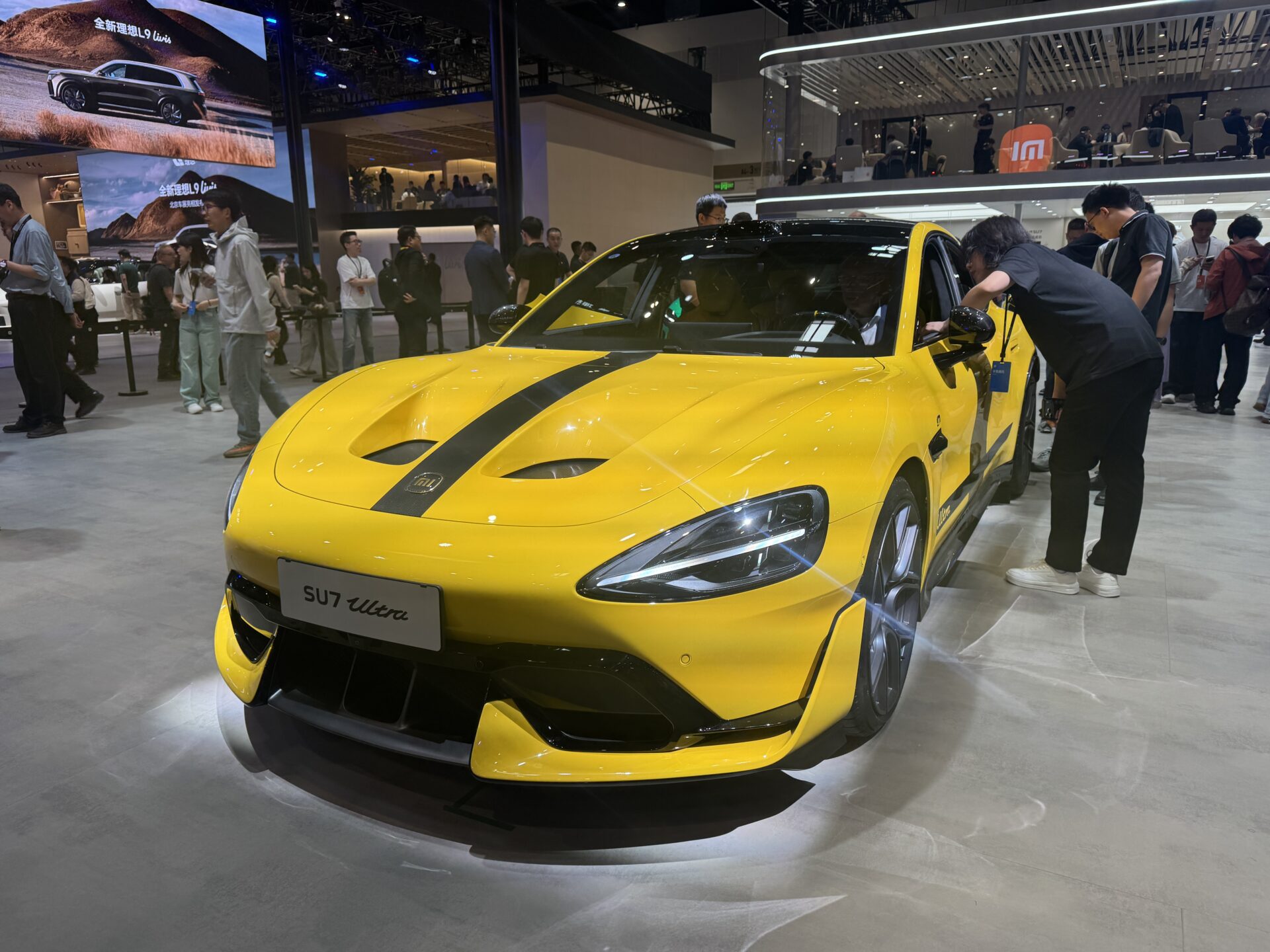
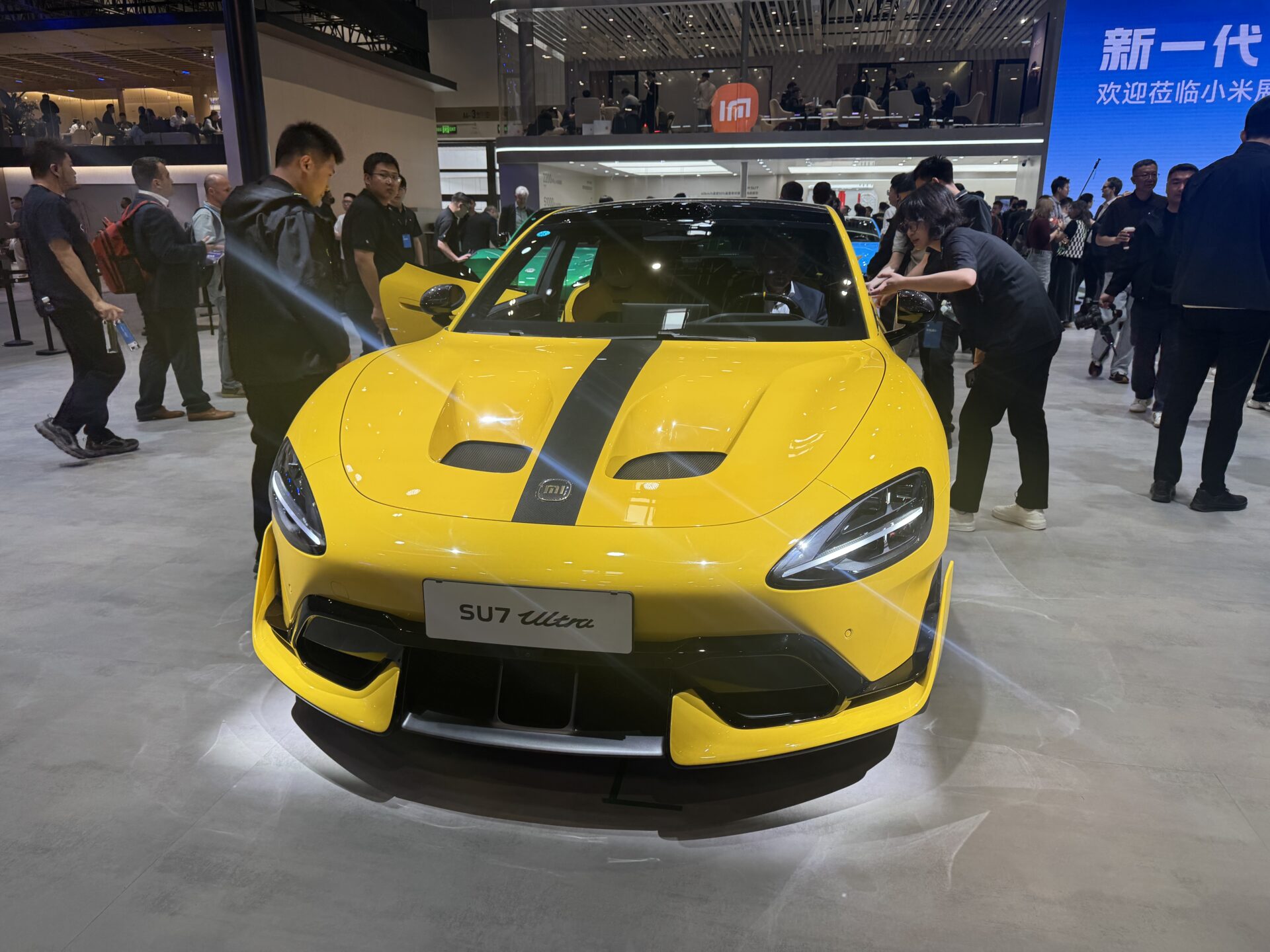
The lineup is fully electric. The SU7 is available in four versions, the most powerful developing 1,548 hp. In June 2025, the SU7 Ultra set a reference lap time on the Nürburgring Nordschleife for a production saloon. The YU7 SUV, launched the same month, generated 200,000 pre-orders in three minutes. Integration with Xiaomi’s HyperOS system — connecting the car to the user’s smartphone and smart home — is a central selling point for buyers already within the Xiaomi ecosystem.
Prices in China:
The standard SU7 starts at 229,900 yuan (€29,500). The SU7 Ultra is priced at 529,900 yuan (€68,000). The YU7 starts at 253,500 yuan (€32,500), some 10,000 yuan less than a Tesla Model Y at equivalent specification.
2025 figures:
411,800 vehicles delivered, up 195%. Xiaomi is targeting 550,000 units in 2026. The YU7 is considered the highest-volume automotive launch of 2025 on the Chinese market.
Europe and the rest of the world:
No sales in Europe before 2027. A first SU7 Ultra was nonetheless registered in Munich in July 2025 for homologation testing. The priority remains consolidating the Chinese market and ramping up output at the two Beijing plants.
Leapmotor — the Stellantis partnership
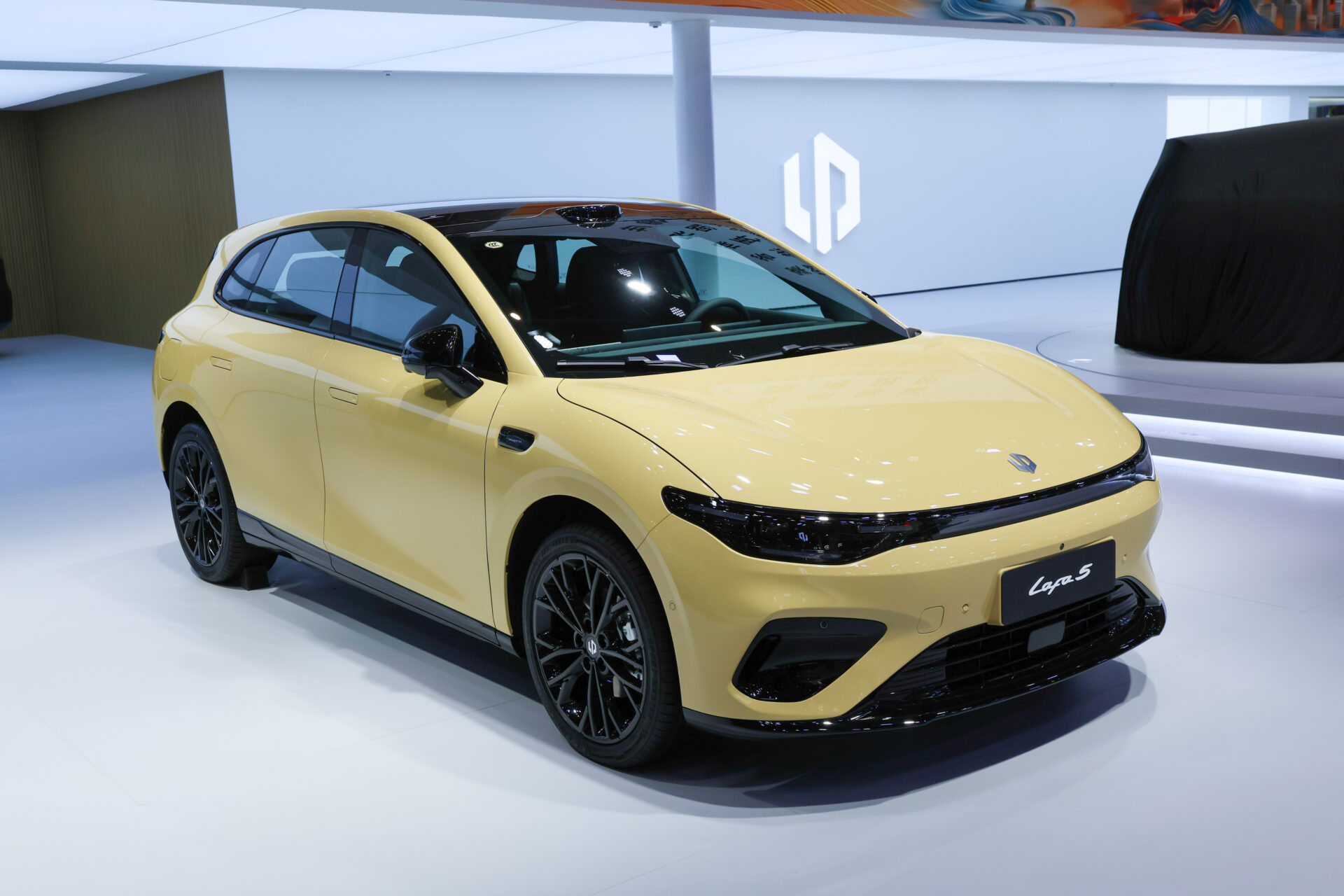
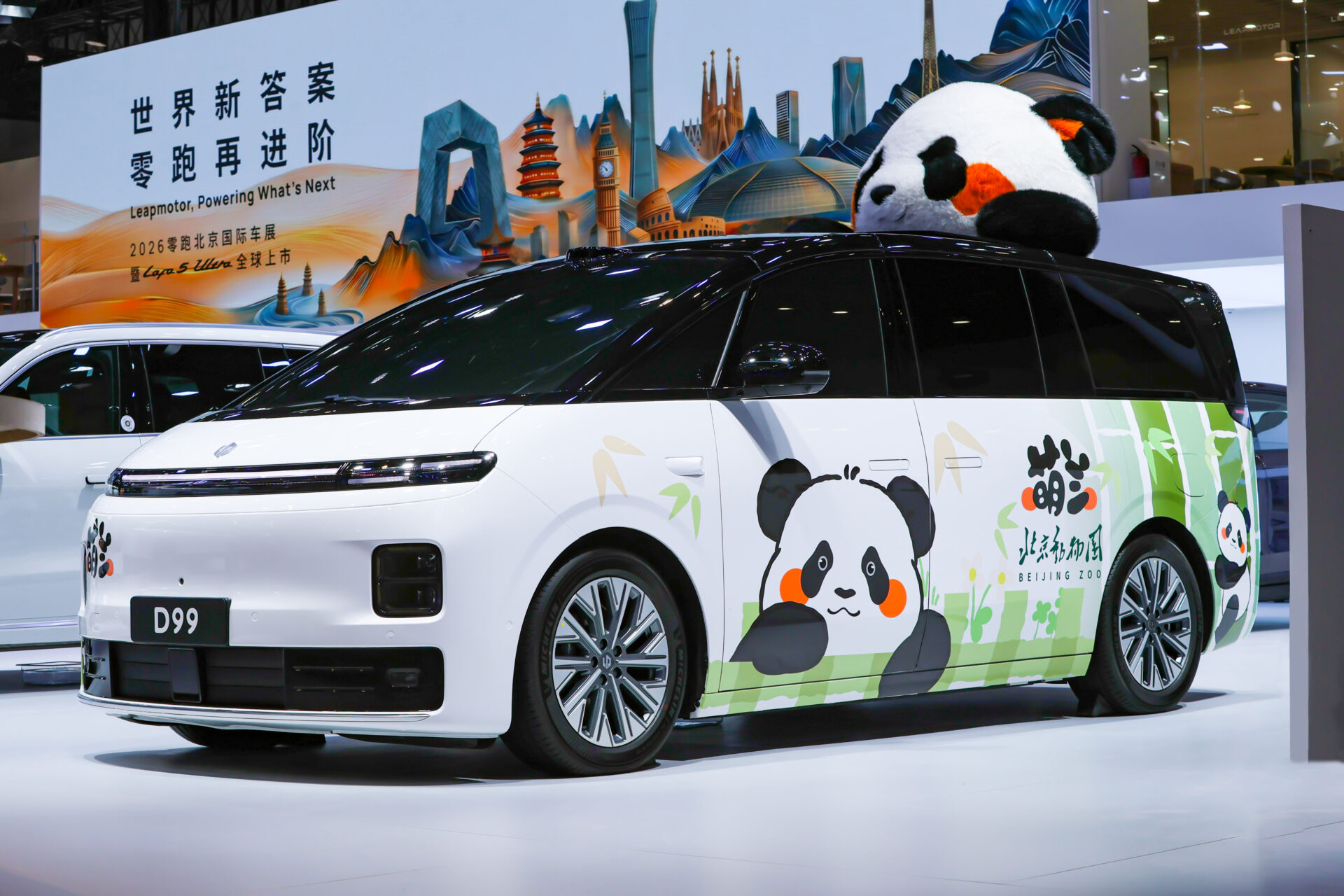
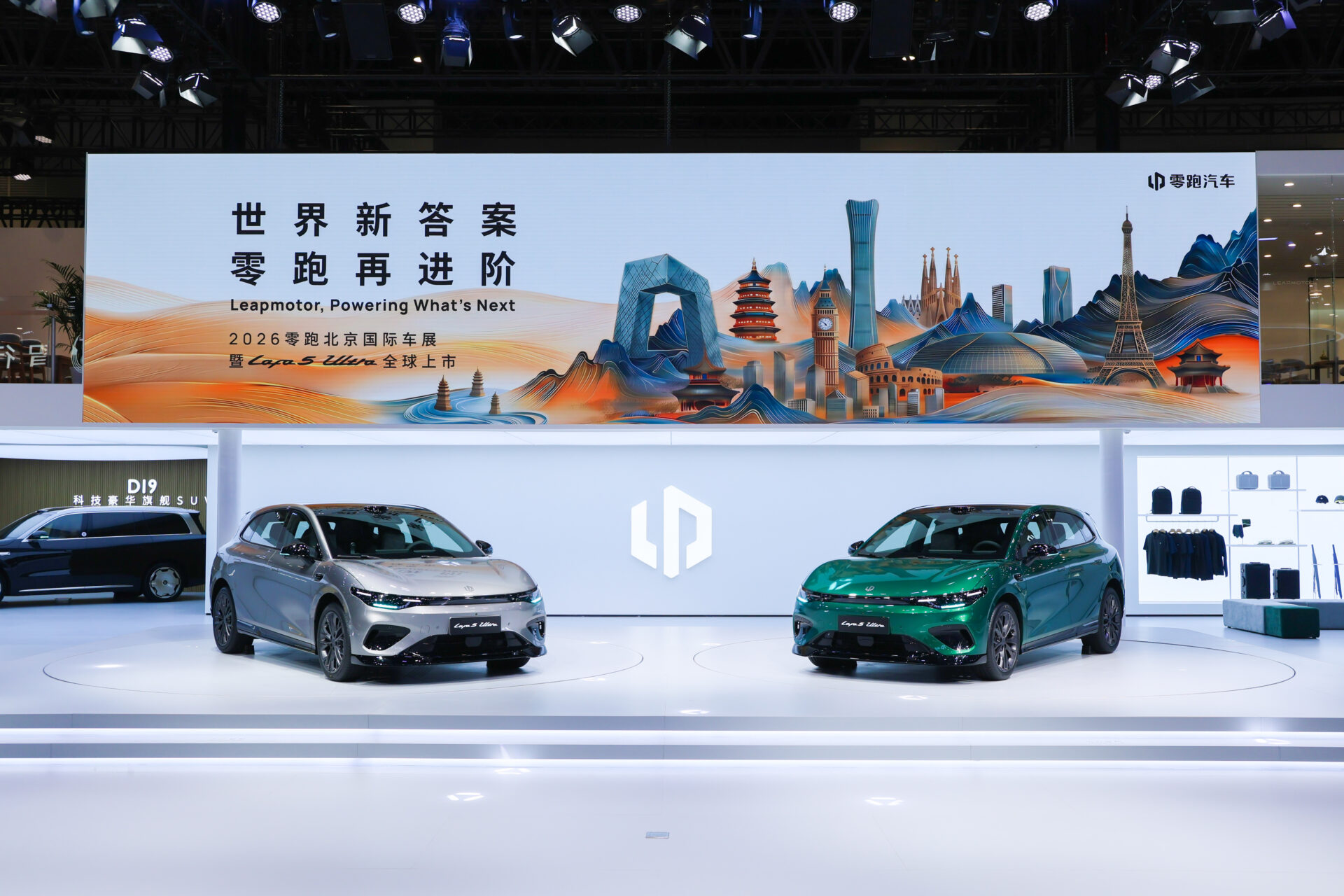
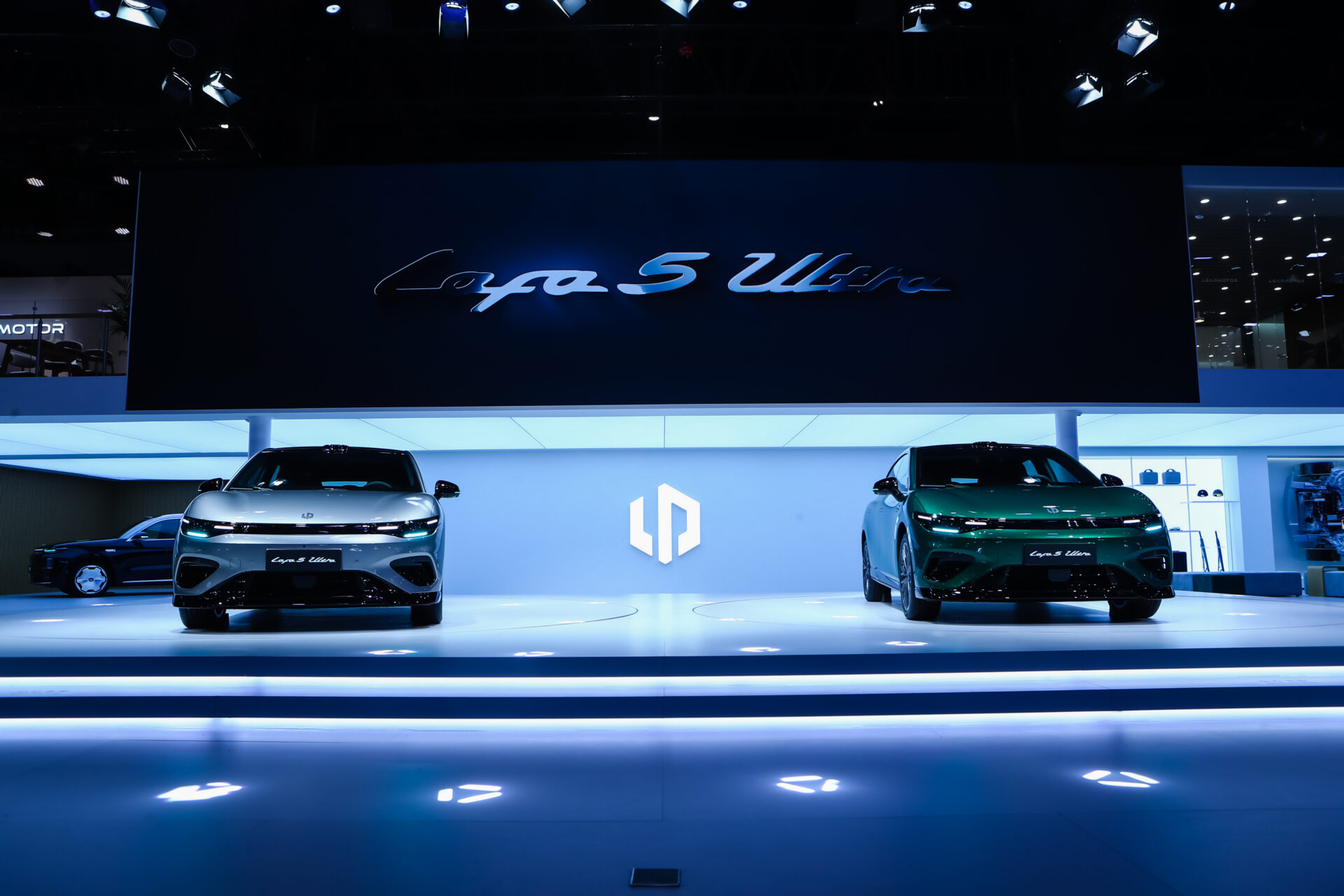
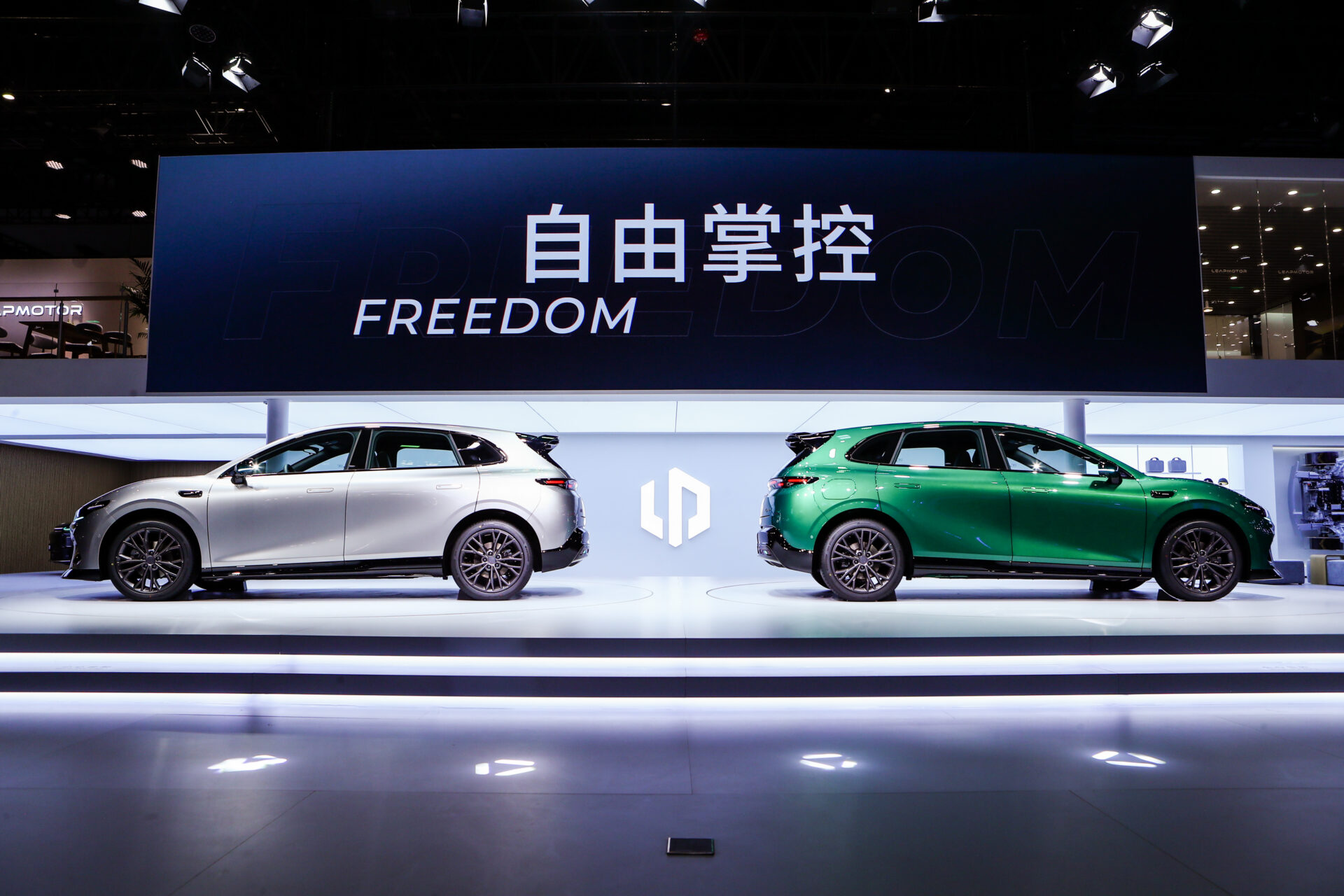
History: Founded in December 2015 in Hangzhou by Zhu Jiangming and Fu Liquan, both co-founders of video surveillance systems manufacturer Dahua Technology, Leapmotor placed vertical integration at the heart of its strategy from the outset: batteries, powertrains, electronics and software all developed in-house. Its first model, the S01 coupé, was a commercial failure. The T03 city car, launched in 2020, rescued the group. In October 2023, Stellantis acquired a 20% stake for €1.5 billion and created the Leapmotor International joint venture, 51% owned by the European group. In December 2025, FAW Group in turn acquired a 5% stake.
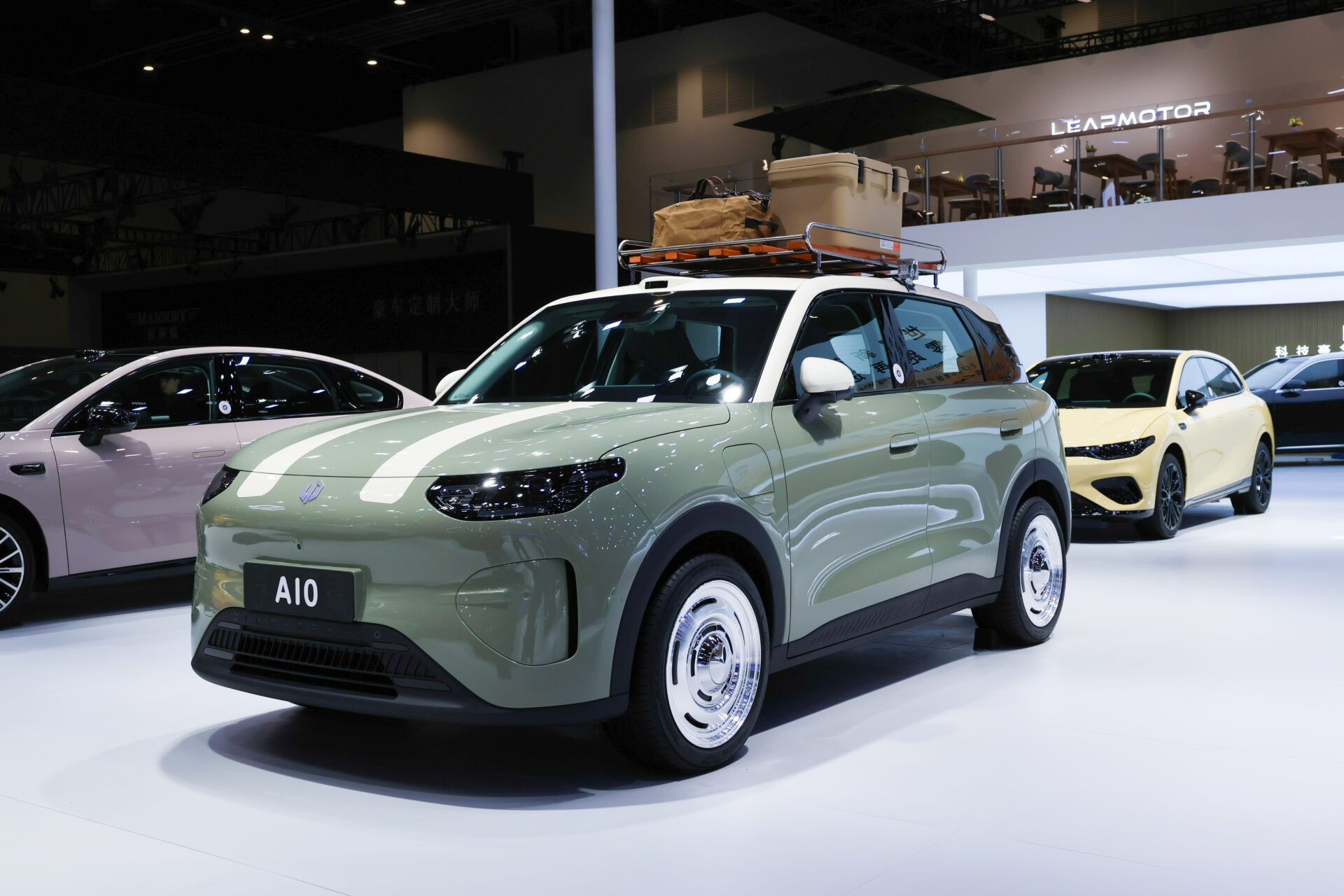
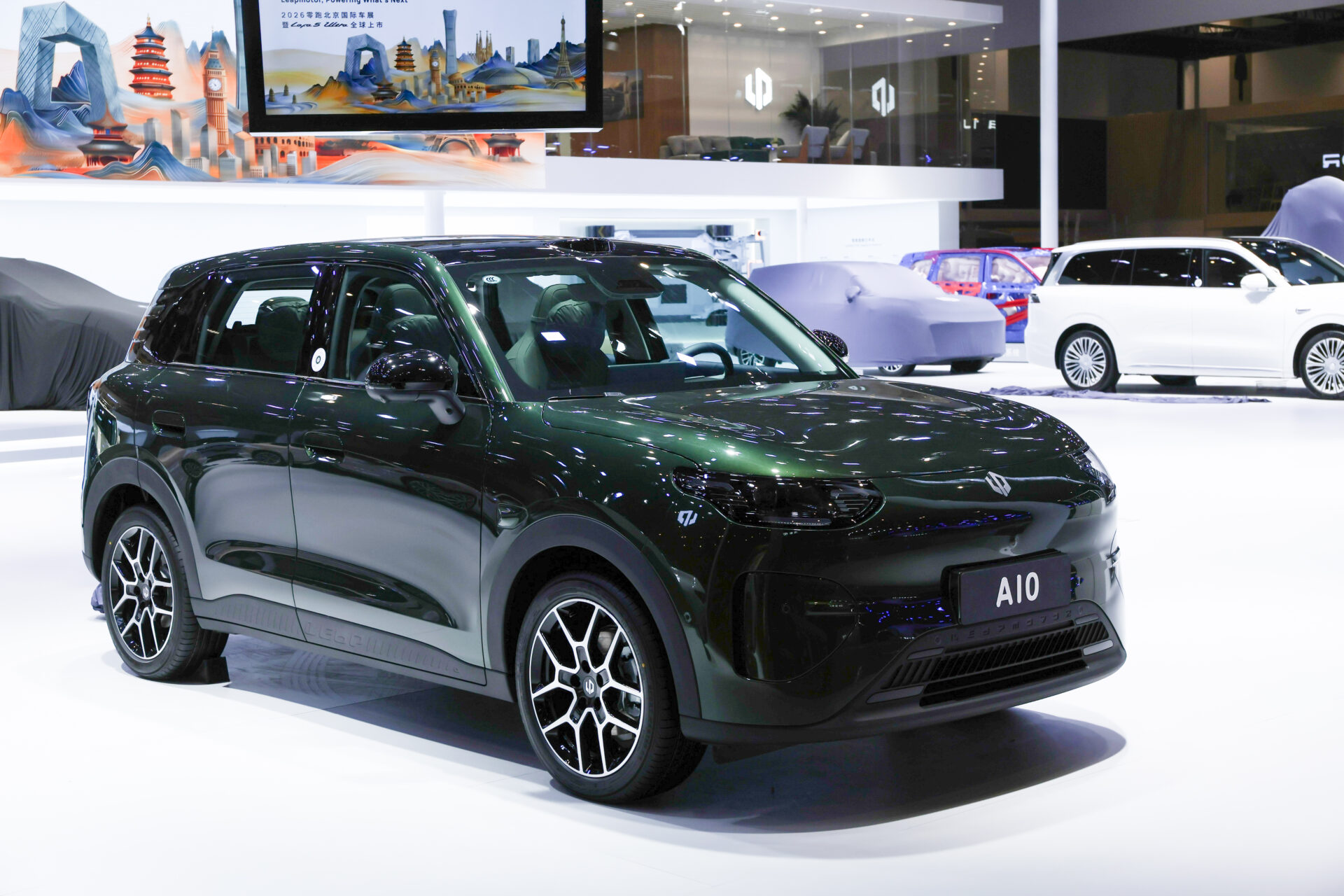
Range and positioning: The lineup is fully electric or EREV, built on the in-house LEAP 3.0 architecture with an 800V platform and cell-to-chassis battery. Current catalogue: T03 (city car), C10 (segment D SUV, the first global model), C11 (mid-range SUV, historically the best-seller), C16 (large six-seat SUV) and the A10, launched in March 2026 in China.
Prices in China: The T03 starts at 49,900 yuan (€6,400). The A10 from 65,800 yuan (€8,400). The C10 at around 130,000 yuan (€16,700). The C16 between 155,800 and 185,800 yuan (€20,000 to €23,800).
2025 figures: Over 520,000 sales, up 83.9%. The brand broke its monthly sales record every month from May to October 2025, peaking at 63,724 units in October.
Europe and the rest of the world: European launch in September 2024 across 13 countries including Luxembourg, through the Stellantis network. The T03 is assembled at the Stellantis plant in Tychy, Poland, bypassing customs duties on Chinese imports. The T03 starts at €18,900, the C10 at €36,400. In March 2026, Leapmotor topped electric vehicle sales in Italy with 5,513 registrations. The brand is also present in the Middle East, Asia-Pacific and South America.
Ce qu'il faut retenir
Le classement 2025 fait ressortir trois évolutions. BYD reste le premier constructeur chinois en volume mais enregistre un recul de 11,7 %, tandis que Geely progresse de 26 % et prend la deuxième place globale. Les grands groupes publics comme SAIC, Changan et GWM maintiennent leurs volumes mais peinent à rentabiliser leurs filiales électriques, et leur présence en Europe reste limitée à quelques exceptions, MG en tête. Enfin, deux acteurs issus de la technologie progressent rapidement : Xiaomi franchit les 400 000 ventes en deux ans de commercialisation, et Leapmotor tire parti de son adossement à Stellantis pour s’imposer comme la marque chinoise la plus accessible en Europe.